

Tigist Nardos Tadesse
College of Agriculture and Veterinary Medicine, Jimma University, P.O. Box 307, Jimma, Ethiopia
LiveDNA: 251.12183
Ali Mohammed Ibrahim
College of Agriculture and Veterinary Medicine, Jimma University, P.O. Box 307, Jimma, Ethiopia
Wosene Gebreselassie Abtew
College of Agriculture and Veterinary Medicine, Jimma University, P.O. Box 307, Jimma, Ethiopia
American Journal of Food Technology
Year: 2015 | Volume: 10 | Issue: 4 | Page No.: 147-157





ABSTRACT
Temperature is the most important environmental factor in the post-harvest life of tomato fruit because it has a tremendous influence on the rate of biological processes, including development of red color and softening of tomato fruit. The objective of this study was to investigate the effect of different storage temperatures on degradation and synthesis of tomato fruit color. The experiment was carried out in the laboratory of post-harvest physiology at Jimma University using CRD arrangement of treatments replicated three times. The experiment had three treatments: tomato fruits stored at 4, 20 and 30°C. The result showed that storage at 4°C significantly (p<0.05) inhibited weight loss, softening and enhancement of lycopene of the fruits during storage compared to 20 and 30°C. Tomato fruits stored at 20 and 30°C showed significant increase in chroma, color index, lycopene, β-carotene, chlorophyll degradation and weight and firmness loss. Also, the rate of reduction in hue angle of fruits stored at 20 and 30°C was low compared to that of the fruits stored at 4°C. Total soluble solids parameter was not affected either by high temperature or low temperature storage. Titratable acid of tomato fruits stored at 4°C had significantly (p<0.05) higher value (0.40%) than fruits stored at 20 and 30°C. The shelf life of the fruits significantly (p<0.05) increased with decreasing storage temperature. The result can serve as a bench mark to warm and humid tropical areas like Jimma in which atmospheric temperature mostly approaches to 30°C.
PDF Abstract XML References Citation
Article History
Received: June 08, 2015;
Accepted: July 23, 2015;
Published: September 12, 2015
How to cite this article
Tigist Nardos Tadesse, Ali Mohammed Ibrahim and Wosene Gebreselassie Abtew, 2015. Degradation and Formation of Fruit Color in Tomato (Solanum lycopersicum L.) in Response to Storage Temperature. American Journal of Food Technology, 10: 147-157.
DOI: 10.3923/ajft.2015.147.157
URL: https://scialert.net/abstract/?doi=ajft.2015.147.157
DOI: 10.3923/ajft.2015.147.157
URL: https://scialert.net/abstract/?doi=ajft.2015.147.157
INTRODUCTION
Temperature is a key factor in determining the quality of tomatoes during post-harvest handling and management. The storage temperatures of subtropical fruits such as tomatoes are evolved by a compromise between temperatures which are low enough to inhibit ripening processes but cause chilling injury and those, which are high enough to avoid chilling injury but do not prevent the continuation of ripening (Couey, 1982). The compromise temperature for most varieties of tomatoes is 12oC but since ripening is not prevented at this temperature, most tomatoes can be stored for only two weeks (Hobson, 1981). Temperatures above 35°C have been known to inhibit fruit ripening (Biggs et al., 1988; Klein and Lurie, 1992). Moreover, storage of fruit at elevated temperatures is not feasible, as there is excessive weight loss and the ability to ripen normally is lost after extended periods at high temperatures (Tsuji et al., 1984).
On the other hand, temperature also influences color uniformity of tomatoes (Grierson and Kader, 1986). Color development depends on a number of factors including temperature, maturity stage and the storage duration (Tijskens and Evelo, 1994). When tomatoes are kept at constant temperature below 8°C, the limiting factor to quality is usually color but above 13oC firmness is more important limiting factor (Tijskens and Polderdijk, 1996). Besides, low temperature (below 13°C) affects the rate of ripening and flavor development in tomatoes (Toor and Savage, 2006). Hence, exposure to chilling temperature will adversely affect tomato flavor (Grierson and Kader, 1986). Chilling injury could be reduced in temperature-sensitive tomatoes by modifying the pattern of temperature exposure, periodically warming the chilled tomato above the chilling temperature, or holding the tomato near the chilling temperature or above 35°C before chilling (Lurie and Klein, 1991).
Color is one of the most important and complex attributes of tomato fruit quality and hence considerable attention has been given to its characterization and measurement. The color of ripening tomatoes is due largely to the presence of a diverse carotenoids pigment system and the appearance is conditioned by the particular pigment types and concentrations. The pigment types and constitution is determined by genetic constitution and environment (Kabelka et al., 2004). The beneficial effects of tomato consumption are generally attributed to carotenoids, which are able to reduce the risk of certain types of cancer, arteriosclerosis and cataract formation (Weisburger, 1998). Lycopene is the major component of carotenoid representing 98% of carotenoid giving the characteristic red color to the fruit. The β-carotene and cryptoxanthin accounting for 2% of carotenoid compound (Rao et al., 1998). Ripening processes are associated with increasing lycopene content. Lycopene is the red pigment in red tomatoes and watermelon (Fish et al., 2002). Lycopene content varies considerably between cultivars, stages of maturity and growing condition (Thompson et al., 2000; Sahlin et al., 2004).
The quality and nutritional value of fresh produce like tomato, is affected by post-harvest handling and storage condition (Sablani et al., 2006). Vegetables are usually harvested when the plant is fresh and high in moisture and are thus distinguished from field crops, which are harvested at the mature stage for grains, pulses, oil seeds, or fiber. This high moisture content of vegetable makes their handling, transportation and marketing a special problem particularly in the tropics. In developing countries like Ethiopia, storage, packaging, transport and handling techniques are practically non-existent with perishable crops and so, this allows for considerable losses of produce. Thus, as more fresh fruits are needed to supply the growing population in developing countries, as more produce is transported to non-producing areas and as more commodities are stored longer to obtain a year round supply, post-harvest loss prevention technology measures become paramount. Tomato fruits require optimum storage temperature for biosynthesis of lycopene during ripening process and there is differential response of cultivar exists for different temperature for the synthesis. However, there is no information in Ethiopian context regarding which temperature is optimum for ripening and extending shelf life. Therefore, the objective of this paper was to investigate the effect of different storage temperatures on degradation and synthesis of tomato fruit color.
MATERIALS AND METHODS
Study area: The study was conducted in post-harvest physiology laboratory of Jimma University College of Agriculture and Veterinary Medicine, Jimma, Ethiopia from June, 2014 to August, 2014.
Experimental material and treatments: Tomato fruits of local cultivar 'Cochoro' were harvested from Melkassa Agricultural Research Center and sown in greenhouse at Jimma University, College of Agriculture and Veterinary Medicine. A non-damaged, fresh and mature green stage tomato fruits were used as a test material. Twenty fruits were assigned per treatment for both non-destructive and destructive measurements. The experiment had three treatments; fruits stored at 4, 20 and 30°C with three replications in a Completely Randomized Design (CRD) arrangement. All fruits under treatment were stored for three weeks. Samples were removed every four days during the ripening period for analysis in order to see the variation on quality parameters among the treatments.
Data collected
Chlorophyll, carotenoids and lycopene content: The content of chlorophyll, lycopene and carotenoids pigments were extracted by mixing 1 g of extracted tomato juice with 15 mL acetone and hexane mix solution (4:6 ratio) at once, then the absorbance of the supernatant containing those pigments were measured at 663, 645, 505 and 453 nm, using spectrophotometer at the same time. From these values, the content of chlorophyll, lycopene and β-carotene in tissues were estimated by the following Eq. 1-3:
 | (1) |
 | (2) |
 | (3) |
where, A663, A645, A505 and A453 are the absorbance at 663, 645, 505 and 453 nm, respectively.
Color of the fruits: During storage, tomato fruits were taken at specified time intervals for color measurements (L, a and b values), which were measured with colorimeter (modal: ACCUprobe, HH06, USA). It was calibrated using white reference plate (a = -409, b = 867, L = 8269). Tomato fruits were scanned for color at two different locations to determine the average L, a and b values during colorimetric measurements. Then color index, Chroma and Hue angle were calculated from L, a and b values scale during storage by using the following Eq. 4-6:
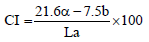 | (4) |
| CI | = | Color index |
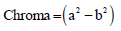 | (5) |
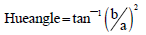 | (6) |
Firmness (g): The firmness of the fruits was measure by using texture analyzer (modal: TA.XT.plus). The firmness was determined by the maximum force exerted to compress the tomato fruit down to 5 mm at 10 mm sec–1 speed from lowering the probe until it touches the tomato skin.
Weight loss (%): Weight loss during post-harvest storage was determined by subtracting sample weights from their previous recorded weights and presented as percentage of weight loss compared to initial weight using the following Eq. 7:
 | (7) |
Total Soluble Solids (TSS): Total soluble solid was measures from the already extracted tomato juice using hand refractometer (model: 45-02).
Titratable Acidity (TA): Tomato juice was extracted from the sample with a juice extractor and clear juice was used for the analysis of TA by the methods described by Maul et al. (2000). Finally, the percentage acidity was determined by using the following Eq. 8:
 | (8) |
| N | = | Number of fruits on the corresponding scale |
Shelf life (%): Shelf life of the fruit was recorded on daily basis until the fruits spoilage level reaches at 30%, which is considered as maximum shelf life limit.
Data analysis: All data were analyzed by using GenStat statistical package 14th Edition (VSN International, 2012). Analysis of variance was used to determine variation among the treatments for the variables recorded.
RESULTS AND DISCUSSION
Firmness and weight loss of tomato fruits during storage: A statistically significant difference was observed in weight loss among the treatments. Tomato fruits stored at 4°C had the lowest (p<0.05) weight loss during the storage time. The highest weight loss percentage was reordered in tomato fruits stored at 30°C followed by stored at 20°C although, no significant difference was seen in between (Fig. 1a). The fruits stored at the chilling temperature (4°C) showed the lowest weight loss compared to the fruits stared at non-chilling temperature (20 and 30°C) (Fig. 1a). The finding is in agreement with previous report of Javanmardi and Kubota (2006). They reported that weight loss of tomatoes stored at higher temperature is higher than tomato stored at low temperature. Hence, storage of tomato fruit at higher temperature is not advisable, as it may result in excessive weight loss (Lurie and Klein, 1992). However, according to Purvis (1984) water loss in fruits stored at chilling temperature is related to chilling injury symptom development during storage. It has been shown that storage duration and temperature has significant effect on weight loss (Kumar et al., 1999).
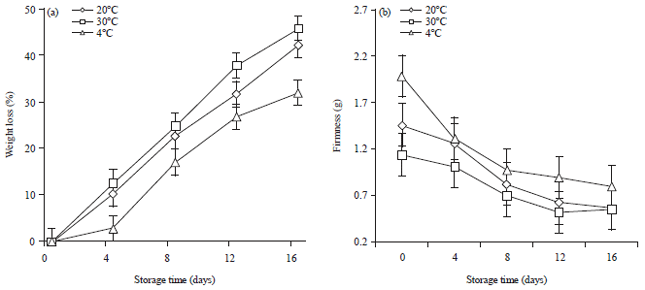 |
| Fig. 1(a-b): | (a) Weight loss and (b) Firmness during 16 days of storage at 4, 20 and 30°C, data is Means±SE |
In addition, Javanmardi and Kubota (2006) reported that higher rate of transpiration in tomato fruits stored at higher temperature in comparison to lower temperature-stored tomatoes could be the main cause for higher weight loss. Moreover, high temperature increases difference in the vapor pressure between the fruit and its surroundings (Leonardi et al., 2000). This difference could be one of the driving factors that induce faster moisture transfer from the tomato fruit to the surrounding air.
Firmness of tomato fruits stored at 4, 20 and 30 progressively decreased during storage time (Fig. 1b). There was a significant (p<0.05) difference among the treatments. Tomato fruits stored at 4°C scored significantly (p<0.05) the highest value of firmness than tomato fruits stored at 20 and 30°C during storage. However, there was no statistically significant difference observed between 20 and 30°C. Tomato fruit firmness continuously decreased during storage and post ripening time was seen to have a good association with increased temperature. Stored at the chilling temperature, firmness was seen to be maintained because of the fact that softening was inhibited during post storage ripening of tomato stored under chilling temperature. This result is in agreement with the results reported by Jackman et al. (1992) and Lana et al. (2005) that described the softening rate of fruits stored at chilling temperature especially (2-8°C) was lower than the fruits stored at non-chilling temperature. Besides, according to the report made by Artes and Escriche (1994), tomato fruits stored at 12°C had acceptable firmness for commercial purposes after storage. Even though, storage at low temperature is a common practice to slowdown softening of the tomato fruit, the reverse can happen at low temperature as a result of chilling injury (Jackman et al., 1992). Tomato fruit is chill-sensitive in which chilling response may vary according to the extent of the damage (Hobson, 1987). Thus, decrease in the firmness of tomato fruits stored at low temperature can happen because of chilling injury (Marangoni et al., 1995).
Total soluble solid titratable acidity and shelf life of tomato fruits during storage: The study revealed that there was a non-significant difference among the treatments on the changes in Total Soluble Solid (TSS) content of tomatoes during storage at 4, 20 and 30°C though the observed TSS content of tomato fruit harvested at green maturity stage was higher at 20 and 30°C (4.40 and 4.29°Brix, respectively) than those stored at 4°C (4.15°Brix) (Table 1).
| Table 1: | Total soluble solid, titratable acidity and shelf life of tomato fruits stored at 4, 20 and 30°C |
 | |
Similar trend of non-significant changes was reported for tomato fruits stored at room temperature for 14 days (Wills and Ku, 2002) and stored at chilling temperature for 10 days (Kagan-Zur and Mizrahi, 1993). It has been reported that TSS increases with color and maturity (Renquist and Reid, 1998) and the changes are also influenced by storage temperature (Znidarcic and Pozrl, 2006).
Titratable Acidity (TA) of tomato fruits stored at 4°C was significantly (p<0.05) higher in value (0.40%) than the fruits stored at 20 and 30°C (0.25 and 0.29%, respectively) (Table 1). No difference was detected between fruits stored at 20 and 30°C. At the higher temperature, the respiration rate as well as ripening rate was higher than at low temperature and that might be the reason why the highest TA percentage was recorded in fruits stored at chilling temperature than those stored at higher temperature. This is in agreement with Lurie and Klein (1990) in which similar results were stated. According to their study, the higher loss of TA in tomatoes could be related to higher respiration and ripening rate where organic acid could be used as a substrate in respiration process. Moreover, another study of Saliba-Colombani et al. (2001) had shown that total sugars were positively correlated to pH and TA. The positive correlation between sugars and pH, on the other hand between sugars and TA, means that plants with high sugars generally have more free organic acids and less hydrogen ion concentration than plants with low sugars. Many other studies support the hypothesis that organic acids are produced within the fruit from stored carbohydrate material (Betancourt et al., 1977). In general, studies suggested that the TA content was decreasing during ripening and storage (De Castro et al., 2005). According to Mohammed et al. (1999) higher fruit acidity is an advantage, as it causes a lower incidence of fungal infection.
The shelf life of the fruits significantly (p<0.05) increased with decreasing storage temperature (Table 1). The longest shelf life was recorded in fruits stored at 4°C (26 days) compared to fruits stored at 20 and 30°C (18 and 16 days) (Table 1). The fruits stored at 4°C could retain quality (<30% spoilage) for 26 days. On the other hand, at 30°C, the tomato fruits were able to retain quality only for 16 day (Table 1). In general, the tomato fruits stored at low temperature had longer shelf life than stored at higher temperature. According to Kalt et al. (1999), to extend the shelf life of fruits and vegetables, their respiratory metabolism should be slowed by low-temperature storage. Therefore, the effectiveness of low temperature in extending the shelf life of green mature tomato usually has a delaying effect on the onset of respiratory climacterics.
Hue angle, chroma and color index of tomato fruit during storage: The value of hue angle of tomato fruits decreased in the course of the storage time. The rate of reduction in hue angle of fruits stored at 20 and 30°C was low compared with that of the fruits stored at 4°C (Fig. 2a). The result indicated that the fruits stored at higher temperature retained the characteristics color of the fruits than the fruits stored at chilling temperature (4°C). There was a significant (p<0.05) difference in chroma of the fruits stored in all storage temperatures in the course of storage time. The rate of increment was significantly (p<0.05) higher in 20 and 30°C stored fruits than in 4°C stored fruits (Fig. 2b).
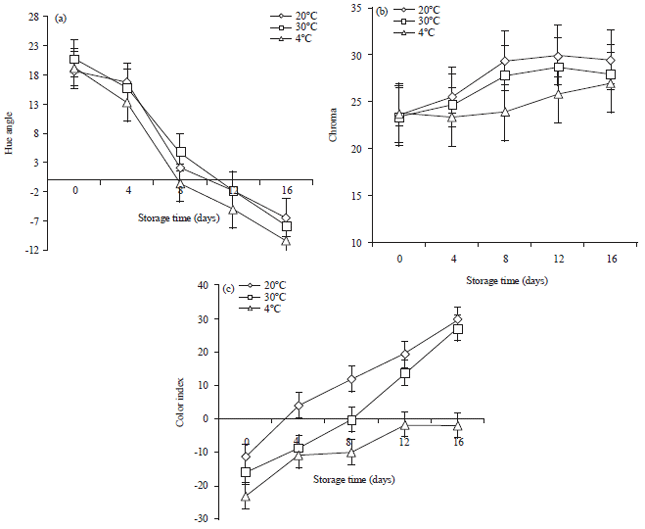 |
| Fig. 2(a-c): | (a) Chroma, (b) Hue angle and (c) Color index during 16 days of storage at 4, 20 and 30°C, data is Means±SE |
This would mean that the final chroma contained in fruits stored at high temperature increased during the storage time hence showing the retention of redness in the tomato fruits (Fig. 2b). Moreover, in this study significant (p<0.05) difference in color index of the fruits stored at 4, 20 and 30°C was observed (Fig. 2c). The increment in color index might be an indication of the development of deep red color in tomato. The result showed that tomatoes stored at 20 and 30°C developed a brighter red color than tomatoes stored at 4°C (Fig. 2c). Color is one of the important quality attributes for consumer acceptability of foods, particularly for fresh fruits and vegetables (Lim et al., 2010). The increase in redness of tomatoes during ripening is due to lycopene accumulation, in association with the internal membrane system (Grierson and Kader, 1986).
Chlorophyll, lycopene and β-carotene content of tomato fruit during storage: The chlorophyll content of the fruits decreased during the storage time (Fig. 3a). In this result, degradation of chlorophyll significantly (p<0.05) higher in the fruits stored at 20 and 30°C than the fruits stored at 4°C. In other words, in the fruits stored at the higher the temperature faster color change took place (Fig. 3a). As observed in the result overall lycopene and β-carotene content of tomatoes stored at 20 and 30°C significantly (p<0.05) higher than that of the fruits stored at 4°C (Fig. 2c and d).
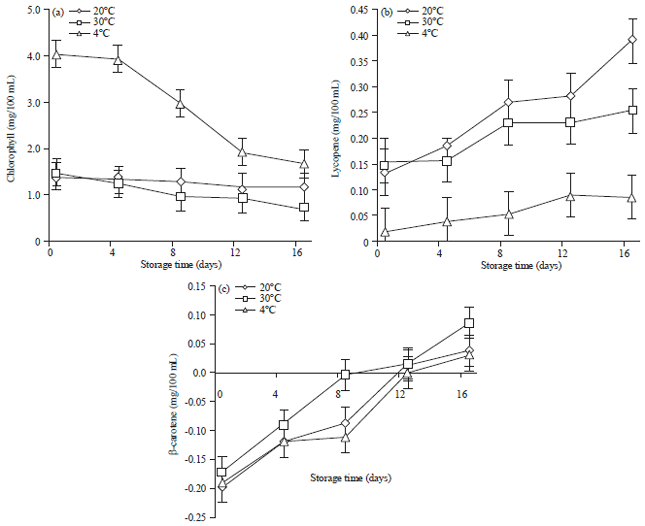 |
| Fig. 3(a-c): | (a) Chlorophyll, (b) Lycopene and (c) β-carotene during 16 days of storage at 4, 20 and 30°C, data is Means±SE |
This implies that the rate of ripening processes which is associated with increasing of lycopene and carotenoids content in tomato fruits stored at low temperature (4°C) were slowed down compared to tomatoes stored at 20 and 30°C. The capability of lycopene and carotenoids synthesis in fruits stored at 4°C might be interrupted due to chilling stress. This effect has also been observed by Aljouni et al. (2001). The authors reported that the lycopene values increased from an initial level of 3.6-9.0 mg/100 g in greenhouse-grown tomatoes during storage at 22°C for a period of 14 days. However, during storage at 4°C, no significant changes were observed in the lycopene content. Similar result was also reported for storage at 4°C that inhibited tomato fruit from ripening (Giovanelli et al., 1999). One of the most noticeable characteristics of ripening is the dramatic increase in the carotenoid content of the fruit. The change in pigmentation is due to a massive accumulation of lycopene within the plastids and the disappearance of chlorophyll. The chloroplasts of mature green fruit change into chromoplasts, which contain lycopene in membrane-bound crystals. Based on the present result it seemed that the temperature also had a large effect on degradation of chlorophyll and lycopene as well as carotenoids development. It has been also reported that the formation of lycopene depends on the temperature range and seems to occur between 12 and 32°C (Leoni, 1992).
The difference in the value of investigated quality parameters between the storage temperatures varied at different points of storage time (Fig. 1 and 2). At some points the difference was small and larger at another point. We considered 16 days of storage time because tomato fruits stored at 30°C were completely spoiled after 16 days. Therefore one should take in to account that the effect of storage temperature in quality parameters can also be determined by the length of storage duration. In our experiment, we fixed the temperature (4, 20 and 30°C) of the storage place while other atmospheric factors like relative humidity of the storage area could also affect the duration of the storage. Our conclusion can be considered as a bench mark to those warm and humid tropical areas like Jimma in which atmospheric temperature mostly approaches to around 30°C. For areas with other climatic situations the longest shelf life should be tested according to its prevailing temperature with respect to quality parameters and specific conclusions should be driven.
CONCLUSION
The study showed that tomato fruits yield significantly higher amount of hue angle, chroma, red color index, lycopene and β-carotene, during high temperature storage than lower temperature (4°C) at Jimma (hot and humid) condition compared to storage at higher temperatures. The difference in quality parameter values between the testing storage temperatures also varied across the storage periods. Storage at 4°C inhibits tomato fruit lycopene enhancement but resulted in less weight loss and higher firmness. According to the study, post-harvest storage does not have any effect on the total soluble solid of tomato fruits. However, titratable acidity and shelf life of tomato fruits stored at 4°C have significantly higher value than fruits stored at non chilling temperature.
ACKNOWLEDGMENT
This study was funded by Jimma University. The provision of greenhouse and laboratory facilities for the study is acknowledged. We also thank Daniel Damtew and Wondemagegn Gebreselassie for their technical assistance in greenhouse work.
REFERENCES
- Artes, F. and A.J. Escriche, 1994. Intermittent warming reduces chilling injury and decay of tomato fruit. J. Food Sci., 59: 1053-1056.
CrossRef - Aljouni, S., S. Kremer and L. Masih, 2001. Lycopene content in hydroponic and non-hydroponic tomatoes during postharvest storage. Food Aust., 53: 195-196.
Direct Link - Betancourt, L.A., M.A. Stevens and A.A. Kader, 1977. Accumulation and loss of sugars and reduced ascorbic acid in attached and detached tomato fruits. J. Am. Soc. Hortic. Sci., 102: 721-723.
Direct Link - Biggs, M.S., W.R. Woodson and A.K. Hander, 1988. Biochemical basis of high temperature inhibition of ethylene biosynthesis in ripening tomato fruits. Physiol. Plant., 72: 572-578.
CrossRefDirect Link - De Castro, L.R., C. Vigneault, M.T. Charles and L.A. Cortez, 2005. Effect of cooling delay and cold-chain breakage on Santa Clara tomato. J. Food Agric. Environ., 3: 49-54.
Direct Link - Fish, W.W., P. Perkins-Veazie and J.K. Collins, 2002. A quantitative assay for lycopene that utilizes reduced volumes of organic solvents. J. Food Compos. Anal., 15: 309-317.
CrossRefDirect Link - Giovanelli, G., V. Lavelli, C. Peri and S. Nobili, 1999. Variation in antioxidant components of tomato during vine and post‐harvest ripening. J. Sci. Food Agric., 79: 1583-1588.
CrossRefDirect Link - Hobson, G.E., 1981. The short-term storage of tomato fruit. J. Hortic. Sci. Biotechnol., 56: 363-368.
Direct Link - Hobson, G.E., 1987. Low-temperature injury and the storage of ripening tomatoes. J. Hortic. Sci. Biotechnol., 62: 55-62.
Direct Link - Jackman, R.L., H.J. Gibson and D.W. Stanley, 1992. Effects of chilling on tomato fruit texture. Physiologia Plantarum, 86: 600-608.
CrossRefDirect Link - Javanmardi, J. and C. Kubota, 2006. Variation of lycopene, antioxidant activity, total soluble solids and weight loss of tomato during postharvest storage. Postharvest Biol. Technol., 41: 151-155.
CrossRef - Kabelka, E., W. Yang and D.M. Francis, 2004. Improved tomato fruit color within an inbred backcross line derived from Lycopersicon esculentum and L. hirsutum involves the interaction of loci. J. Am. Soc. Hort. Sci., 129: 250-257.
Direct Link - Kagan-Zur, V. and Y. Mizrahi, 1993. Long shelf-life small sized (cocktail) tomatoes may be picked in bunches. Scientia Horticulturae, 56:: 31-41.
CrossRefDirect Link - Kalt, W., C.F. Forney, A. Martin and R.L. Prior, 1999. Antioxidant capacity, Vitamin C, phenolics, and anthocyanins after fresh storage of small fruits. J. Agric. Food Chem., 47: 4638-4644.
CrossRefPubMedDirect Link - Klein, J.D. and S. Lurie, 1992. Heat treatments for improved postharvest quality of horticultural crops. HortTechnology, 2: 316-320.
Direct Link - Kumar, A., B.S. Ghuman and A.K. Gupta, 1999. Non-refrigerated storage of tomatoes: Effect of HDPE film wrapping. J. Food Sci. Technol., 36: 438-440.
Direct Link - Lana, M.M., L.M.M. Tijskens and O. van Kooten, 2005. Effects of storage temperature and fruit ripening on firmness of fresh cut tomatoes. Postharvest Biol. Technol., 35: 87-95.
CrossRef - Leonardi, C., S. Guichard and N. Bertin, 2000. High vapour pressure deficit influences growth, transpiration and quality of tomato fruits. Scientia Horticulturae, 84: 285-296.
CrossRefDirect Link - Leoni, C., 1992. Industrial quality as influenced by crop management. Acta Horticulturae, 301: 177-184.
Direct Link - Lim, H.S., K. Ghafoor, S.H. Park, S.Y. Hwang and J. Park, 2010. Quality and antioxidant properties of yellow layer cake containing Korean turmeric (Curcuma longa L.) powder. J. Food Nutr. Res., 49: 123-133.
Direct Link - Lurie, S. and J.D. Klein, 1990. Heat treatment of ripening apples: Differential effects on physiology and biochemistry. Physiologia Plantarum, 78: 181-186.
CrossRefDirect Link - Lurie, S. and J.D. Klein, 1991. Acquisition of low-temperature tolerance in tomatoes by exposure to high-temperature stress. J. Am. Soc. Hortic. Sci., 116: 1007-1012.
Direct Link - Lurie, S. and J.D. Klein, 1992. Ripening characteristics of tomatoes stored at 12oC and 2oC following a prestorage heat treatment. Sci. Horticulturae, 51: 55-64.
CrossRef - Marangoni, A.G., R.L. Jackman and D.W. Stanley, 1995. Chilling‐associated softening of tomato fruit is related to increased pectinmethylesterase activity. J. Food Sci., 60: 1277-1281.
CrossRefDirect Link - Maul, F., S.A. Sargent, C.A. Sims, E.A. Baldwin, M.O. Balaban and D.J. Huber, 2000. Tomato flavor and aroma quality as affected by storage temperature. J. Food Sci., 65: 1228-1237.
CrossRef - Mohammed, M., L.A. Wilson and P.I. Gomes, 1999. Postharvest sensory and physiochemical attributes of processing and nonprocessing tomato cultivars. J. Food Qual., 22: 167-182.
CrossRefDirect Link - Purvis, A.C., 1984. Importance of water loss in the chilling injury of grapefruit stored at low temperature. Scientia Horticulturae, 23: 261-267.
CrossRefDirect Link - Rao, A.V., Z. Waseem and S. Agarwal, 1998. Lycopene content of tomatoes and tomato products and their contribution to dietary lycopene. Food Res. Int., 31: 737-741.
CrossRefDirect Link - Renquist, A.R. and J.B. Reid, 1998. Quality of processing tomato (Lycoperscion esculentum) fruit from four bloom dates in relation to optimal harvest timing. N. Z. J. Crop Hortic. Sci., 26: 161-168.
CrossRefDirect Link - Sablani, S.S., L.U. Opara and K. Al-Balushi, 2006. Influence of bruising and storage temperature on vitamin C content of tomato fruit. J. Food Agric. Environ., 4: 54-56.
Direct Link - Sahlin, E., G.P. Savage and C.E. Lister, 2004. Investigation of the antioxidant properties of tomatoes after processing. J. Food Compos. Anal., 17: 635-647.
CrossRef - Saliba-Colombani, V., M. Causse, D. Langlois, J. Philouze and M. Buret, 2001. Genetic analysis of organoleptic quality in fresh market tomato. I. Mapping QTLs physical and chemical traits. Tag Theor. Applied Genet., 102: 259-272.
CrossRef - Thompson, K.A., M.R. Marshall, C.A. Sims, C.I. Wei, S.A. Sargent and J.W. Scott, 2000. Cultivar, maturity and heat treatment on lycopene content in tomatoes. J. Food Sci., 65: 791-795.
CrossRefDirect Link - Tijskens, L.M.M. and R.G. Evelo, 1994. Modelling colour of tomatoes during postharvest storage. Postharvest Biol. Technol., 4: 85-98.
CrossRefDirect Link - Tijskens, L.M.M. and J.J. Polderdijk, 1996. A generic model for keeping quality of vegetable produce during storage and distribution. Agric. Syst., 51: 431-452.
CrossRefDirect Link - Toor, R.K. and G.P. Savage, 2006. Changes in major antioxidant components of tomatoes during post-harvest storage. Food Chem., 99: 724-727.
CrossRefDirect Link - Tsuji, M., H. Harakawa and Y. Komiyama, 1984. Changes in shelf life and quality of plum fruit during storage at high temperature. J. Jpn. Soc. Hortic. Sci., 52: 469-473.
Direct Link - Weisburger, J.H., 1998. Evaluation of the evidence on the role of tomato products in disease prevention. Proc. Soc. Exp. Biol. Med., 218: 140-143.
Direct Link - Wills, R.B.H. and V.V.V. Ku, 2002. Use of 1-MCP to extend the time to ripen of green tomatoes and postharvest life of ripe tomatoes. Postharvest Biol. Technol., 26: 85-90.
CrossRefDirect Link - Znidarcic, D. and T. Pozrl, 2006. Comparative study of quality changes in tomato cv. Malike (Lycopersicon esculentum Mill.) whilst stored at different temperaturas. Acta Agric. Sloven., 87: 235-243.
Direct Link