

M.D. Salihu
Department of Public Health and Preventive Medicine, Faculty of Veterinary Medicine, Usmanu Danfodiyo University, Sokoto, Nigeria
A.U. Junaidu
Department of Public Health and Preventive Medicine, Faculty of Veterinary Medicine, Usmanu Danfodiyo University, Sokoto, Nigeria
A.A. Magaji
Department of Public Health and Preventive Medicine, Faculty of Veterinary Medicine, Usmanu Danfodiyo University, Sokoto, Nigeria
Y. Yakubu
Department of Public Health and Preventive Medicine, Faculty of Veterinary Medicine, Usmanu Danfodiyo University, Sokoto, Nigeria
Research Journal of Veterinary Sciences
Year: 2012 | Volume: 5 | Issue: 2 | Page No.: 51-58





ABSTRACT
The study was carried out to determine the prevalence and the antimicrobial resistance profile of thermophilic Campylobacter sp. from broiler chickens. A total of 270 cloacal swab samples from randomly selected commercial broiler farms in the state capital were collected and examined for the presence of Campylobacter sp. The prevalence of Campylobacter was 139 (51.5%). Campylobacter jejuni constitute 87 (62.6%) of the positive isolates while C. coli and C. lari accounts for 30 (21.6%) and 22 (15.8%), respectively of the positive isolates. The results of antimicrobial susceptibility testing shows that isolates were resistant to the tested agent except Chloramphenicol. The resistance rates ranges from 11.6 to 32.1%. A total of 92 (82.1%) of the tested isolates showed resistance to one or more antibiotics. Twenty one (18.7%) of the isolates were resistant to single antibiotic, 30 (26.8%) were resistant to two antibiotics while 41 (36.6%) were resistant to more than three antibiotics. Resistance to ampicillin was more accounting for about 32.1% and lowest resistance was observed with erythromycin accounting for 11.6% . All the isolates were susceptible to chloramphenicol. The isolation of antibiotic-resistant strains from broiler chickens is of serious concern to food safety and public health.
PDF Abstract XML References Citation
Article History
Received: November 19, 2011;
Accepted: January 20, 2012;
Published: June 21, 2012
How to cite this article
M.D. Salihu, A.U. Junaidu, A.A. Magaji and Y. Yakubu, 2012. Prevalence and Antimicrobial Resistance of Thermophilic Campylobacter Isolates from Commercial Broiler Flocks in Sokoto, Nigeria. Research Journal of Veterinary Sciences, 5: 51-58.
URL: https://scialert.net/abstract/?doi=rjvs.2012.51.58
URL: https://scialert.net/abstract/?doi=rjvs.2012.51.58
INTRODUCTION
Thermophilic Campylobacter sp., primarily are Campylobacter jejuni and C. coli are among the most common bacteria causing acute human gastroenteritis throughout the world (Snelling et al., 2005; Trachoo and Brooks, 2005; Humphrey et al., 2007; Englen et al., 2007; WHO, 2002; Dipineto et al., 2008). Both species colonize the intestinal mucosa of most warm-blooded animals, including food-producing species and humans (Newell and Fearnley, 2003; Fallon et al., 2003). Many avian species are considered the main reservoirs of Campylobacter sp. (Sahin et al., 2002; Newell and Fearnley, 2003; Saleha, 2004; Lee and Newell, 2006). Poultry meat has been established as an important source of human infection with both C. jejuni and C. coli (Skirrow, 1991; Pearson et al., 1996; Ramabu et al., 2004; Baserisalehi et al., 2006; Salihu et al., 2009a; Frederick and Huda, 2011. A significant association exists between Campylobacter infection in humans and consumption of contaminated poultry products as reported by Altekruse et al. (1999), Stern et al. (2001) and Friedman et al. (2004). Epidemiological studies have examined risk factors for the infection with Campylobacter such as the presence of other animals on the farm, contamination of previous flocks as well as vertical transmission (Gregory et al., 1997; Newell and Fearnley, 2003).
Several studies have revealed high level of antimicrobial resistance in thermophilic Campylobacter sp. in poultry and humans. In animals and humans, the use of antibiotics may cause an increase in the resistance of their enteric flora. Resistant bacteria from animals can reach the human population by direct contact and also via food products of animal origin (Fallon et al., 2003; Van de Bogaard and Stobberingh, 2000). The consumption of poultry meat has been commonly associated with the development of Campylobacter enteritis (Deming et al., 1987; Evans, 1992; Van de Giessen et al., 1992). Resistance among Campylobacter isolates from broilers may have implications for the treatment of poultry-acquired Campylobacter infections (Fallon et al., 2003). There is dearth of information on the prevalence and antimicrobial resistance profiles among thermophilic Campylobacter isolates of poultry origin in Nigeria.
The study was carried out to determine the prevalence of thermophilic Campylobacter species and the antimicrobial resistance profiles of the isolates from broiler flocks.
MATERIALS AND METHODS
The study area was Sokoto state which is the second largest livestock producer in Nigeria. There are various species of livestock in the state these includes various species of poultry. Commercial poultry production is gradually gaining acceptance in the state. However, there are more commercial poultry farming activities in Sokoto the capital city of the state than other parts of the state. Most households and major restaurants and fast food centers within Sokoto metropolis depends on the commercial broiler poultry farms in Sokoto for broiler poultry meat supply.
Sample collection: A total of 270 cloacal swab samples from randomly selected commercial broiler farms in the state capital were collected. The samples were collected in August, 2009 and cover a period of 20 days. The collected samples were individually packed and transported on ice to the Veterinary Public Health laboratory of Usmanu Danfodiyo University, Sokoto within 3 hours of collection.
Isolation and identification: The Campylobacter species were isolated from cloacal swab samples using a direct plating method. The swabs were cultured on modified Charcoal Cefoperazone deoxycholate Agar, mCCDA (Oxoid) supplemented with selective supplement (SR155, Oxoid). The plates were incubated under microaerophilic conditions generated using Campygen® (oxoid), for 48 h at 42°C. Isolates that were small, curved, catalase and oxidase positive, Gram negative bacilli were presumed Campylobacter sp. The presumed Campylobacter isolates were identified to species level based on hydrolysis of sodium hippurate and indoxylacetate, production of H2S in triple sugar iron agar and susceptibility to cephalotin and nalidixic acid as described by On and Holmes (1992) and ISO (2006). Among the thermophilic strains those that hydrolysed hippurate were identified as C. jejuni, while strains that are hippurate negative and showing a positive indoxyl acetate hydrolysis were identified as C. coli. Campylobacter strains that showed negative indoxyl acetate hydrolysis are identified as C. lari (ISO, 2006).
Antimicrobial susceptibility testing: A total of 112 (80%) of the Campylobacter isolates comprising C. jejuni (70), C. coli (24) and C. lari (18) were tested for resistance to streptomycin (10 μg), erythromycin (15 μg), Ciprofloxacin (5 μg), ampicillin (10 μg), tetracycline (30 μg) and chloramphenicol (30 μg) by the agar disc diffusion method. All the antimicrobial discs were sourced from Oxoid. A suspension of approximately 0.5 Mcfarland standard prepared in Mueller Hinton agar (Oxoid) supplemented with 5% (V/V) defibrinated sheep blood and incubated at 37°C for 48 h microaerobically. The inhibition zones were recorded and interpreted according to the guidelines of National Committee of Clinical Laboratory Standard (NCCL, 1999) and methods of Khosravi et al. (2009) and Jafari et al. (2009).
RESULTS
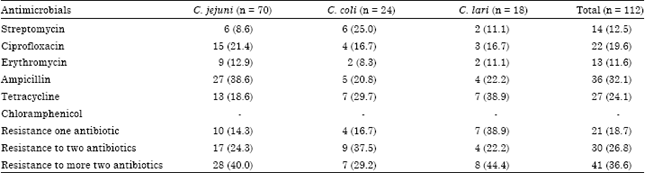
Prevalence of thermophilic campylobacter: Out of the 270 cloacal swabs processed, 139 (51.5%) were positive for thermophilic Campylobacter sp. Campylobacter jejuni constitute 87 (62.6%) of the positive isolates while C. coli and C. lari accounts for 30 (21.6) and 22(15.8%), respectively of the positive isolates (Table 1). The results of antimicrobial susceptibility testing shows that isolates were resistant to the tested agents except Chloramphenicol. The resistance rates ranges from 11.6 to 32.1%. The resistance pattern of the isolates to the antimicrobial agents is as shown in Table 2. A total of 92 (82.1%) of the tested isolates showed resistance to one or more antibiotics. Twenty one (18.7%) of isolates were resistant to single antibiotic, 30 (26.8%) were resistant to two antibiotics while 41 (36.6%) were resistant to more than three antibiotics. Resistance to ampicillin was more accounting for about 32.1% and lowest resistance was observed with erythromycin accounting for 11.6% (Table 2). All the isolates were susceptible to chloramphenicol.
DISCUSSION
The prevalence of Campylobacter sp. in this study is 51.5% (139/270) and this is in line with findings of similar studies carried out in other countries (Jozwiak et al., 2006; Parisi et al., 2007; Baserisalehi et al., 2007; Cokal et al., 2009).
| Table 1: | Prevalence of Campylobacter sp. isolates from broiler poultry |
 | |
| Table 2: | Antimicrobial resistant Campylobacter strains isolated from broiler poultry |
 | |
| Values in bracket indicate percentage | |
Campylobacter jejuni, C. coli and C. lari were the species isolated in this study. The isolation of these Campylobacter sp. from broiler is of public health importance, as these species of Campylobacter are known to cause infection in humans. These species have been reported in other species of animal including cattle (Salihu et al., 2009a), goats (Salihu et al., 2009b), Sheep (Salihu et al., 2009c) free range chickens (Salihu et al., 2009d), dogs and cats (Salihu et al., 2010). Litter materials from broiler poultry farms in the study area are usually collected for use as manure in the farms; this may contaminate the soil and water body around the farms.
Although, Campylobacter infections are usually self-limiting and antibiotics are not required, severe cases often require treatment. Antibiotic-resistant Campylobacter species from animals can colonise or infect the human population via occupational exposure or through the food chain (Van de Bogaard and Stobberingh, 2000; Fallon et al., 2003).
In this study, the campylobacter isolates were resistant to all the antimicrobial agents used except Chloramphenicol. The level of resistance of the isolates to ampicillin in this study is 32.1% which is also the highest resistance level observed. This observation correlate with the work of Narvarro et al. (1993) who reported that ampicillin and other β-lactams are usually not recommended for the treatment of Campylobacter species infection due to high incidence of resistant to the drug family by the organisms. The resistance pattern of C. jejuni observed in this study is in line with the report of Fallon et al. (2003), but in contrast to the report of Cokal et al. (2009) who reported that C. jejuni strains from broilers were susceptible to ampicillin. Erythromycin was considered as the drug of choice for the treatment of C. jejuni infections and in this study, the level of resistance of the isolates to erythromycin is generally low and similar to the findings of Luccy et al. (2000), who reported 9.7% resistance to erythromycin by poultry campylobacter isolates. However, 9 (12.9) and 2 (8.3%) of C. jejuni and C. coli, respectively were showed resistance to erythromycin. This observation is contrary to the observations of Cabrita et al. (1992) and Aarestrup et al. (1997) who reported higher levels of resistance to erythromycin by C. coli isolates from food animals. Higher levels of resistance to erythromycin by Campylobacter from clinical isolates have been reported (Rautelin et al., 1991; Jozwiak et al., 2006). Aminoglycoside resistance has been reported less frequently in C. jejuni and C. coli (Trieber and Taylor, 2000). The resistance levels of Campylobacter isolates to streptomycin in this study is higher than the report of Cabrita et al. (1992) and Fallon et al. (2003) who reported lower resistance between 0 and 6% for C. jejuni and C. coli from broilers. Tetracyclines have been listed as an alternative drug for treatment of Campylobacter gastroenteritis in the past and are widely used both therapeutically and subtherapeutically as feed additives for livestock and poultry (Trieber and Taylor, 2000). Resistance to tetracycline ampicillin was second in this study. In a similar study in Irish, Luccy et al. (2000) reported 19.4% tetracycline resistance for poultry isolates. Fallon et al. (2003) also reported 20.5% for C. jejuni and 18.2% for C. coli. However, in Taiwan, tetracycline resistance level is high with 83% of C. jejuni and 90% of C. coli isolates from chicken products (Li et al., 1993). All campylobacter isolates tested in this study were susceptible to chloramphenicol. Some studies have reported rare resistance to chloramphenicol by campylobacter isolates from livestocks and humans (Trieber and Taylor, 2000; Moore et al., 2001; Aquino et al., 2002; Fallon et al., 2003; De Vega et al., 2005). The zero resistance of Campylobacter to chloramphenicol observed in this study may be due to the banned on the use of the drug for both human and livestock. However, a study by Baserisalehi et al. (2007) recorded resistance to chloramphenicol by Campylobacter isolates from India and Iran.
It is obvious that the irrational usage of antimicrobials in animal production can lead to development of resistance in zoonotic bacteria; products from such animals can be source of transmission of resistance pathogens to humans. About 36.6% of the isolates were resistance to multiple (more than two antibiotics) antibiotic agent and most of the multiple drug resistant isolates were C. lari and C. jejuni (44.4 and 40.0%), respectively.
The results of this study have shown that Campylobacter isolates from broiler poultry are resistant to antimicrobial agent. The isolation of antibiotic-resistant strains from broiler is of serious concern to food safety and public health.
REFERENCES
- Aarestrup, F.M., E.M. Nielsen, M. Madsen and J. Engberg, 1997. Antimicrobial susceptibility patterns of thermophilic Campylobacter spp. from humans, pigs, cattle and broilers in Denmark. Antimicrob. Agents Chemother., 41: 2244-2250.
PubMedDirect Link - Adzitey, F. and N. Huda, 2011. Campylobacter in poultry: Incidences and possible control measures. Res. J. Microbiol., 6: 182-192.
CrossRef - Altekruse, S.F., S. Yang, B.B. Timbo and F.J. Angulo, 1999. A multi-state survey of consumer food-handling and food-consumption practices. Am. J. Prev. Med., 16: 216-221.
Direct Link - Aquino, M.H.C., A.L.L. Filgueiras, M.C.S. Ferreira, S.S. Oliveira, M.C. Bastos and A. Tibana, 2002. Antimicrobial resistance and plasmid profiles of Campylobacter jejuni and Campylobacter coli from human and animal sources. Lett. Applied Microbiol., 34: 149-153.
CrossRefPubMedDirect Link - Baserisalehi, M., N. Bahador and B.P. Kapadnis, 2006. Effect of heat and food preservatives on survival of thermophilic Campylobacter isolates in food products. Res. J. Microbiol., 1: 512-519.
CrossRefDirect Link - Baserisalehi, M., N. Bahador and B.P. Kapadnis, 2007. Isolation and characterization of Campylobacter spp. from domestic animals and poultry in South of Iran. Pak. J. Biol. Sci., 10: 1519-1524.
CrossRefPubMedDirect Link - Cabrita, J., J. Rodrigues, F. Braganca, C. Morgado, I. Pires and A.P. Goncalves, 1992. Prevalence, biotypes, plasmid profile and antimicrobial resistance of Campylobacter isolated from wild and domestic animals from Northeast Portugal. J. Applied Microbiol., 73: 279-285.
CrossRef - Cokal, Y., V. Caner, A. Sen, C. Cetin and N. Karagenc, 2009. Campylobacter spp. and their antimicrobial resistance patterns in poultry: An epidemiological survey study in Turkey. Zoonoses Public Health, 56: 105-110.
CrossRef - Dipineto, L., A. Gargiulo, L.M. De Luca Bossa, L. Rinaldi, L. Borrelli, L.F. Menna and A. Fioretti, 2008. Prevalence of thermotolerant Campylobacter in pheasants (Phasianus colchicus). Avian Pathol., 37: 507-508.
CrossRefPubMedDirect Link - Englen, M.D., A.E. Hill, D.A. Dargatz, S.R. Ladely and P.J. Fedorka-Cray, 2007. Prevalence and antimicrobial resistance of Campylobacter in US dairy cattle. J. Applied Microbiol., 102: 1570-1577.
CrossRefPubMedDirect Link - Evans, S.J., 1992. Introduction and spread of thermophilic campylobacters in broiler flocks. Vet. Rec., 131: 574-576.
PubMed - Friedman, C.R., R.M. Hoekstra, M. Samuel, R. Marcus and J. Bender et al., 2004. Risk factors for sporadic Campylobacter infection in the United States: A case-control study in foodnet sites. Clin. Infect. Dis., 38: S285-S296.
CrossRefPubMedDirect Link - De Vega, G., E. Mateo, A.F. de Aranguiz, K. Colom, R. Alonso and A. Fernandez-Astorga, 2005. Antimicrobial susceptibility of Campylobacter jejuni and Campylobacter coli strains isolated from humans and poultry in North of Spain. J. Biol. Sci., 5: 643-647.
CrossRefDirect Link - Gregory, E., H. Barnhart, D.W. Dreesen, N.J. Stern and J.L. Corn, 1997. Epidemiological study of Campylobacter spp. in broilers: Source, time of colonization and prevalence. Avian Dis., 41: 890-898.
CrossRefDirect Link - Humphrey, T., S. O'Brien and M. Madsen, 2007. Campylobacters as zoonotic pathogens: A food production perspective. Int. J. Food Microbiol., 117: 237-257.
CrossRefPubMedDirect Link - Jafari, N.J., R. Ranjbar, M.T. Haghi-Ashtiani, M. Abedini and M. Izadi, 2009. The study of prevalence and antimicrobial susceptibility of tracheal bacterial strains isolated from pediatric patients. Pak. J. Biol. Sci., 12: 455-458.
CrossRefPubMedDirect Link - Jozwiak, A., O. Reichart and P. Laczay, 2006. The occurrence of Campylobacter species in Hungarian broiler chickens from farm to slaughter. J. Vet. Med. B, 53: 291-294.
PubMed - Khosravi, A.D., F. Ahmadi, S. Salmanzadeh, A. Dashtbozorg and E.A. Montazeri, 2009. Study of bacteria isolated from orthopedic implant infections and their antimicrobial susceptibility pattern. Res. J. Microbiol., 4: 158-163.
CrossRefDirect Link - Lee, M.D. and D.G. Newell, 2006. Campylobacter in poultry: Filling an ecological niche. Avian Dis., 50: 1-9.
CrossRefPubMedDirect Link - Li, C.C., C.H. Chin, J.I. Wu, Y.C. Huang and T.Y. Lin, 1993. Antimicrobial susceptibilities of Campylobacter jejuni and Campylobacter coli using E-test in Taiwan. Scand. J. Infect. Dis., 30: 39-42.
PubMedDirect Link - Luccy, B., C. Feurer, P. Greer, P. Moloney, B. Cryan and S. Fanning, 2000. Antimicrobial resistance profiling and DNA Amplification Fingerprinting (DAF) of thermophilic Campylobacter spp. in human, poultry and porcine samples from the Cork region of Ireland. J. Applied Microbiol., 89: 727-734.
PubMed - Moore, J.E., M. Crower, N. Heaney and E. Crothers, 2001. Antibiotic resistance in Campylobacter spp. isolated from human faeces (1980-2000) and foods (1997-2000) in Northern Ireland: An update. J. Antimicrob. Chemother., 48: 455-457.
CrossRefDirect Link - Narvarro, F., E. Miro, B. Mirelis and G. Prats, 1993. Campylobacter spp. antibiotic susceptibility. J. Antimicrob. Chemother., 32: 906-907.
Direct Link - Newell, D.G. and C. Fearnley, 2003. Sources of Campylobacter colonization in broiler chickens. Applied Environ. Microbiol., 69: 4343-4351.
CrossRefDirect Link - On, S.L. and B. Holmes, 1992. Assessment of enzyme detection tears useful in identification of Campylobacteria. J. Clin. Microbiol., 30: 746-749.
Direct Link - Parisi, A., S.G. Lanzilotta, N. Addante, G. Normanno, G. Di Moduqno, A. Danbrosio and C.O. Montaqna, 2007. Prevalence, molecular characterization and antimicrobial resistance of thermophilic Campylobacter isolates from cattle, hens, broilers and broiler meat in south-eastern Italy. Vet. Res. Commun., 31: 113-123.
PubMed - Pearson, A.D., M.H. Greenwood, R.K.A. Feltham, T.D. Healing, J. Donaldson, D.M. Jones and R.R. Colwell, 1996. Microbial ecology of Campylobacter jejuni in a United Kingdom chicken supply chain: Intermittent common source, vertical transmission and amplification by flock propagation. Applied Environ. Microbiol., 62: 4614-4620.
Direct Link - Ramabu, S.S., N.S. Boxall, P. Madie and S.G. Fenwick, 2004. Some potential sources for transmission of Campylobacter jejuni to broiler chickens. Lett. Applied Microbiol., 39: 252-256.
CrossRef - Rautelin, H., O.V. Renkonen and T.U. Kosunen, 1991. Emergence of fluoroquinolone resistance in Campylobacter jejuni and Campylobacter coli in subjects from Finland. Antimicrob. Agents Chemother., 35: 2065-2069.
Direct Link - Saleha, A.A., 2004. Epidemiological study on the colonization of chickens with Campylobacter in broiler farms in Malaysia: Possible risk and management factors. Int. J. Poult. Sci., 3: 129-134.
CrossRefDirect Link - Salihu, M.D., J.U. Abdulkadir, S.I. Oboegbulem, G.O. Egwu, A.A. Magaji, M. Lawal and Y. Hassan, 2009. Isolation and prevalence of Campylobacter species in cattle from Sokoto State, Nigeria. Vet. Italiana, 45: 501-505.
PubMed - Salihu, M.D., A.U. Junaidu, S.I. Oboegbulem, G.O. Egwu, F.M.Tambuwal and Y. Yakubu, 2009. Prevalence of Campylobacter species in apparently healthy goats in Sokoto state (Northwestern) Nigeria. Afr. J. Microbiol. Res., 3: 572-574.
Direct Link - Salihu, M.D., A.U. Junaidu, S.I Oboegbulem and G.O. Egwu, 2009. Prevalence and biotypes of Campylobacer species Isolated from sheep in Sokoto state, Nigeria. Int. J. Anim. Vet. Adv., 1: 6-9.
Direct Link - Salihu, M.D., A.U. Junaidu, S.I. Oboegbulem, G.O. Egwu, A.A. Magaji, M.B. Abubakar and A. Ogbole, 2009. Prevalence of Campylobacter spp. in Nigerian indigenous chicken in Sokoto State Northwestern Nigeria. Internet J. Vet. Med., Vol. 7.
Direct Link - Salihu, M.D., A.A. Magaji, J.U. AbdulKadir and A. Kolawale, 2010. Survey of thermophilic Campylobacter species in cats and dogs in North-Western Nigeria. Vet. Ital., 46: 425-430.
PubMed - Sahin, O., T.Y. Morishita and Q. Zhang, 2002. Campylobacter colonization in poultry: Sources of infection and modes of transmission. Anim. Health Res. Rev., 3: 95-105.
CrossRefPubMedDirect Link - Snelling, W.J., M. Matsuda, J.E. Moore and J.S.G. Dooley, 2005. Campylobacter jejuni. Lett. Applied Microbiol., 41: 297-302.
CrossRefDirect Link - Stern, N.J., P. Fedorka-Cray, J.S. Bailey, N.A. Cox and S.E. Craven et al., 2001. Distribution of Campylobacter spp. in selected U.S. poultry production and processing operations. J. Food Protect., 64: 1705-1710.
PubMedDirect Link - Trachoo, N. and J.D. Brooks, 2005. Attachment and heat resistance of Campylobacter jejuni on Enterococcus faecium biofilm. Pak. J. Biol. Sci., 8: 599-605.
CrossRefDirect Link - Van de Bogaard, A.E. and E.E. Stobberingh, 2000. Epidemiology of resistance to antibiotics: Links between animals and humans. Int. J. Antimicrob. Agents, 14: 327-335.
CrossRefPubMedDirect Link - WHO, 2002. The increasing incidence of human campylobacteriosis. Report and Proceedings of a WHO Consultation of Experts, Copenhagen, Denmark, 21-25 November 2000. WHO/CDS/CSR/APH Publication No. 2001.7, World Health Organization, Geneva, Switzerland, pp: 1-137. http://whqlibdoc.who.int/hq/2001/who_cds_csr_aph_2001.7.p
- Skirrow, M.B., 1991. Epidemiology of Campylobacter enteritis. Int. J. Food Microbiol., 12: 9-16.
CrossRefPubMedDirect Link