

Daha Tijjani Abdurrahaman
Limkokwing University of Creative Technology, Cyberjaya, Malaysia
LiveDNA: 234.23303
Acheampong Owusu
University of Ghana Business School, Legon, Accra, Ghana
Bakare Akeem Soladoye
Limkokwing University of Creative Technology, Cyberjaya, Malaysia
K. Ramanathan Kalimuthu
Limkokwing University of Creative Technology, Cyberjaya, Malaysia
Asian Journal of Scientific Research
Year: 2018 | Volume: 11 | Issue: 3 | Page No.: 415-427





ABSTRACT
Objective: The study aimed to examine the effects of celebrity brand-endorsement (CB-endorsement) on attitude as well as the purchase intention of Generation Y-ers in Nigeria using an adapted model of Ohanian. Materials and Methods: Using the quantitative approach, structural equation modelling engaging SmartPLS 3.2.7 was used to investigate the relationships among the research constructs. A probabilistic random sampling technique (stratified) of 273 millennial students, from six selected federal institutions of higher learning in the Northwest and Southwest region of Nigeria, was used. Results: Results revealed that expertise of a celebrity does not influence Nigeria’s Generation Y-ers intention to purchase the endorsed product. Attractiveness and trustworthiness of a celebrity, on the other hand, influence Generation Y-ers purchase intention. However, attitude does not mediate between the independent variables and the dependent variables. The study utilizes student Generation Y-ers mostly residing in the urban areas. Conclusion: Based on the findings, the researchers recommended to the practitioners alternatives to the practice of CB-endorsement. Future research opportunity and constraints are also outlined.
PDF Abstract XML References Citation
Article History
Received: February 20, 2018;
Accepted: April 18, 2018;
Published: June 15, 2018
Copyright: © 2018. This is an open access article distributed under the terms of the Creative Commons Attribution License , which permits unrestricted use, distribution and reproduction in any medium, provided the original author and source are credited.
How to cite this article
Daha Tijjani Abdurrahaman, Acheampong Owusu, Bakare Akeem Soladoye and K. Ramanathan Kalimuthu, 2018. Celebrity-Brand Endorsement: A Study on its Impacts on
Generation Y-ers in Nigeria. Asian Journal of Scientific Research, 11: 415-427.
DOI: 10.3923/ajsr.2018.415.427
URL: https://scialert.net/abstract/?doi=ajsr.2018.415.427
DOI: 10.3923/ajsr.2018.415.427
URL: https://scialert.net/abstract/?doi=ajsr.2018.415.427
INTRODUCTION
Promoting brands via celebrities is trending among organizations in Nigeria, especially those in the telecommunication sector. However, it has been found that several products have failed to attract customer’s attention despite being endorsed by celebrities1. The enormous investments organizations put in advertising comes with intended goals and purposes. This is because corporations attempt to outmanoeuvre one another to gain and attract customers’ support. The fraction of advertisements in the world featuring-endorsers has doubled over the decade to about 17%2. Over the years, most academic literature have established that the use of CB-endorsers in advertisement is on the rise2,3.
For example, a review of some CB-endorsement deals in Nigeria by Osae-Brown4 discovered CB-endorsement as a rapidly growing business trend which is just a confirmation of the benefits, brands get from CB-endorsement. According to data obtained from her review, in 2012 alone, several companies, mostly telecommunication companies signed numerous endorsement deals with local celebrities to endorse their brands.
Nigeria’s telecom industry-mobile service providers is developing as one of the greatest advertising spenders. Advertising has turned into a mainstream activity for most telecom operators5. Despite the economic recession in Nigeria, the telecom industry contributed 9.8% to the country’s Gross Domestic Product (GDP) in the second quarter, representing 5% growth from the first quarter6,7. Furthermore, investments in the telecommunications as at July, 2016 were US$ 68 billion, which shows that the industry contributes significantly to Nigeria’s GDP. The mobile industry which has less than 19.5 million subscribers in 2005 now boasts of 151 million customers6 serving as a huge market for advertisers8.
The moment when consumers recognize and acknowledge a credible source or endorser promotes a product, consumers automatically think that the product endorsed is reliable too as the credible endorser would not want to associate himself with any product or brand that lacks credibility1. Undeniably, studies have shown that "people are likely to patronise products and services endorsed by celebrities than those that are not"1.
In Nigeria, far too little attention has been paid to endorsements deals by local celebrities. Furthermore, according to Wolburg and Pokrywczynski9, Generation Y-ers are sensitive and mindful of several advertising strategies than their immediate predecessors (Gen X-ers). Most importantly Gen Y-ers are technology-savvy and knowledgeable. Therefore, these technologies are challenging to persuade and penetrate. As the Generation Y-ers is opposed to strategies of conventional marketing, the use of CB-endorsers via the habitual and traditional advertising has not been exceptionally successful for this particular cohort10.
In general, to the researchers’ knowledge, there has been little or no studies on the determinants of purchase intention of Generation Y-ers (mediated by attitude) in Nigerian context and especially concerning or related to telecom providers’ promotional advertisements, focusing on Generation Y-ers. The underlying assumption in this study is CB-endorsement in Nigeria’s telecommunication industry-mobile service providers-is likely to affect or influence Generation Y-ers to purchase the endorsed product.
The primary motivation for this research is to analyze the purchasing behaviour and conducts of Generation Y-ers in Nigeria by utilizing the source credibility model dimensions. Consequently, this study further aimed to investigate the mediating effects of attitude construct on the source credibility dimensions. This is with respect to the utilization and practice of using celebrities to endorse products through different platforms such as electronic media, newspapers and traditional billboards in Nigeria.
Collectively, the study aimed to accomplish the objective of providing empirical insights into the roles of CB-endorser in persuading Generation Y-ers to purchase an endorsed product. It is projected that the framework will provide relevant contemporary guidelines to managers and researchers with a better and innovative approach in targeting this generation in the services and marketing area.
Underpinning theories: The study is governed by prominent underpinning theories, precisely: The Elaboration Likelihood Model (ELM)11, the Theory of Reasoned Action12, the Source Credibility Model13 and Source Attractiveness Theory14,15. The research model as shown in Fig. 1 was derived from these theories and extant literature.
Background of CB-endorsement in Nigeria: According to Ben-Nwankwo16, the expressions "celebrity endorsement and brand ambassador" were not rampant in Nigeria until a couple of years. The pattern of signing major Nigerian celebrities to endorse in the telecommunication industry-mobile service providers-that began a little over two decades back has gained and attracted relevance and importance. The pattern is not surprising considering the fact that there is an increase in exposure to television and the Nigerians’ love for football. Managers of Nigeria’s leading mobile telecommunication brands are engaging professionals from music, sports, Nollywood and Kannywood to assist in positioning and placing their brand to reach wider audiences.
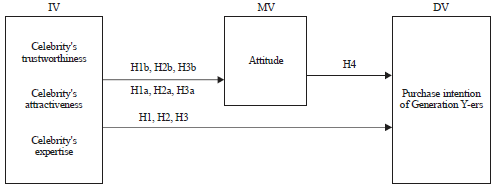 | |
| Fig. 1: | Research model |
IV: Independent variable, MV: Mediating variable, DV: Dependent variable | |
The huge success and popularity of the Nigerian movie industry (Nollywood) and (Kannywood predominantly in Northern Nigeria) is likewise offering impulse and impetus to brand ambassadorship4. Okhai (a film creator) additionally cited Funke4, asserting that the benefit of CB-endorsement, is not just to the endorser alone, rather to the general development of Nigeria’s music and film industry (Nollywood and Kannywood). CB-endorsement, particularly by Nigerian artists is helping in national growth and development. It is far better than using foreign CB-ambassadors to endorse Nigerian or ‘Made in Nigeria’ products. Okhai further added that a few presidents from other countries welcome Nigerian Nollywood and Kannywood superstars to assist and endorse their political campaigns and support their rallies.
After the "Super Eagles" (Nigeria’s National Football Team) won the African Cup of Nations tournament that was held in South Africa in 2013, it was expected that the endorsement deals for celebrities might boom into a billion Naira market towards the end of the year 2013 for the inexperienced ‘CB-ambassadors’. This claim was affirmed, as numerous celebrities’ signed new deals and those with deals already renewed to more jaw-dropping deals.
Celebrities, due to their relevance and popularity, therefore, are believed to have characteristically, the ability and power to influence buyers to swap their loyalties to the endorsed brands.
Ekeh17 opined that most companies were not prepared to allocate substantial budget to support the celebrity branding. Conversely, a recent study by Oyeniyi18, on celebrity endorsements and product performance of Nigerian consumer markets, has shown significance relationship between endorsed products and purchase intention. In light of such studies, today, companies in Nigeria keenly part with a large outlay of money to guarantee that celebrities are viable and use them to promote brands particularly using the electronic/social media to establish brand awareness, enhance visibility and for better brand positioning in a cluttered marketplace.
Development of conceptual framework
Link between celebrity’s trustworthiness and purchase intention: Trustworthiness is known as "the degree of confidence in the communicators’ intent to communicate the assertions he/she considers most valid"17. Ohanian19 argued that "trustworthiness of a celebrity endorser have no relationship with the purchase intentions of the related brand by the consumer". Ohanian19 further argued that "trustworthiness of a celebrity endorser have no relationship with the purchase intentions of the related brand by the consumer."
Numerous scientific studies show that a CB-endorser that is linked with extreme trustworthiness boast of better or superior message acceptance than any CB-endorser linked with average or subdued trustworthiness19,20. Moreover, findings of a seminal report by Hovland et al.13, suggested numerous scientific studies that analyzed the positive strength of trustworthiness on attitude. In these studies, credibility is defined as the synthesis between the source’s Expertise "source has knowledge of the topic" and trustworthiness "source can be trusted to provide accurate information about the topic." Another study by Wang and Scheinbaum20 found that trustworthiness of a celebrity would lift brand credibility and attitude toward a positive intention to purchase the endorsed products.
However, Hoekman21 had a different view, submitting that, "the trustworthiness is of vital importance for effective endorsers. If consumers believe what the endorser is promoting and they trust him or her, the believability of the advertisement is higher and attitude of the consumers will increase. When a celebrity comes negatively into the news, this can affect the believability and the trustworthiness of the endorser. Also, it will negatively influence the brand image and sales of the related product." Based on the evidence presented from previous literature, the researchers hypothesized that:
| H1: | Trustworthiness of a celebrity endorser influences purchase intention |
| H1a: | Trustworthiness of a celebrity endorser significantly affects the attitude of Generation Y-ers |
Link between celebrity’s attractiveness and purchase intention: Bashour22 defined physical attractiveness as, "the visual properties of a face that is pleasing to the visual sense of an observer." Scientific studies have discovered that consumers are prone to establish a favourable notion in relation to personalities that are attractive, through several findings signifying that good-looking or alluring endorsers thrive more in attracting the buyers’ intention to acquire or purchase than those endorsers who are not alluring23. McGuire14 later affirmed this in "source attractiveness theory" when evaluating the attractiveness of a celebrity. Similarly, Chao et al.24, Wang and Scheinbaum20, Suki25, Ong and Ong26 and Dom et al.27 echoed that the source’s attractiveness is significant and decisive feature or quality as to why celebrities perform drastically better than non-celebrities in providing tremendous communication efficaciousness. Patzer28 and Caballero et al. 29 further added that, amongst the most sustainable and outstanding qualities and personalities of an individual is their physical attractiveness. Therefore, it is hypothesized that:
| H2: | Attractiveness of a celebrity endorser influences purchase intention |
| H2a: | Attractiveness of a celebrity endorser significantly affects the attitude of Generation Y-ers |
Link between celebrity’s expertise and purchase intention: Hovland and Weiss30 defined the expertise of a celebrity as "the extent to which a communicator is perceived to be a source of valid assertions. "Numerous studies showed how the CB-endorser’s expertise or competence is essential in influencing the intentions and attitudes to purchase the brand endorsed31-33.
Expert celebrities have a tendency to be more reliable and credible as celebrities seem to be competent and resourceful external information seekers34.
Recent studies such as Suki25, Ong and Ong26 and Dom et al.27 have found expertise of a celebrity to influence purchase intention positively.
Based on the evidence presented from previous literature, it is hypothesized that:
| H3: | Expertise of a celebrity endorser positively influences purchase intention of Generation Y-ers |
| H3a: | Expertise of a celebrity endorser significantly affects the attitude of Generation Y-ers |
Mediating effect of attitude: To understand clearly the attitude of consumers towards mobile advertisement, the researchers provide an initial overview of the attitudes of consumers on advertising as a whole. A study by Bauer et al.35 asserted that "the attitude of the consumer’s towards advertising as whole influences their attitude towards advertisement". The consumers are daily exposed to several advertisements. Therefore, it can be expected that consumers establish an unwavering attitude towards advertising.
The attitude of a consumer towards an advertisement is a vital determinant of advertising efficaciousness and intention to purchase36. Most consumers that are happy with an advert tend to have a positive attitude towards the advertised product37. Nevertheless, Heath and Stipp38 suggested that emotions are best transferred when the attention paid is much less, due to the fact that less attention entails objection. Heath and Stipp38 further added to the impact of being drained or irritated as a consequence of showing an advertisement too often. Hence, the behaviour of a viewer by paying lesser attention to the adverts they have seen is less likely to improve their emotional influence. Unlike Heath and Stipp38 and Schlosser et al.39 argued that customers are inherently inclined to have a positive mindset to an advertisement in general, as they have a tendency to enjoy promotional advertisement as it is an enlightening method that drives their choice in decision-making.
The attitude construct has many dimensions, which includes, attitude towards the brand and advertisement40. Other dimensions include, towards endorsement41, towards mobile advertising42 and towards celebrity27. This study tends to focus on the attitude construct as a whole, however, the interpretation of what attitude constitutes is based on the four dimensions of attitude as earlier mentioned. The justification for including the attitude constructs comes from suggestions by Pornpitakpan43. Hence, in this research, attitude generally refers to the negative or positive feeling/reaction about an object or item.
Reviewing recent studies, Anridho and Liao44 findings were in accord with Sheeraz et al.45, as a statistically significant relationship between attitude and intentions were found. The authors asserted that the moment a brand is established to be credible, the attitudes of the consumers towards the brand is highly likely to be positive which in turn trigger positive intentions to patronise the brand. Another major finding from their study shows that, when the customers have an attitude that is considered favourable toward the brand, it automatically means their intentions in purchasing is equally high. The same outcome was reported in the study of Suki25 which demonstrated that "the effect of endorser credibility on attitude toward the brand and purchase intentions of the consumer in Muslim and Non-Muslim consumers." Other similar studies such as Hung et al.46, Tan et al.47 and Sharma and Singh48 and Ko and Jin49 have found attitude to influence buyers’ purchase intention positively. Jin et al.50 suggested to explore further the correlation between the constructs and purchase intention, therefore, there is a need to explore it with an intervening construct especially in the context of services.
As a result of the strong theoretical backings, it appears logical to include attitude as a mediating predictor in the projected conceptual framework.
Taking into consideration, the amount of research on the impact of attitude on purchase intention, four hypothesis were presented. These assumptions were in line with those proposed by Till and Busler33, Hung et al.46, Tan et al.47, Sharma and Singh48 and Ko and Jin49.
| H1b: | Attitude mediates the direct relationship between attractiveness of a celebrity endorser and purchase intention |
| H2b: | Attitude mediates the relationship between trustworthiness of a celebrity endorser and purchase intention |
| H3b: | Attitude mediates direct relationship of expertise of celebrity endorser to purchase intention |
| H4: | Attitude has a positive effect on purchase intention |
MATERIALS AND METHODS
The study is quantitative in nature and contributes towards understanding the consumers’ attitude towards the advertisements (attitude), their choice of celebrities and what triggers purchase intention from Generation Y-ers. The study was restricted to four significant brands of mobile telecommunication service providing companies in Nigeria, namely-Airtel, MTN, 9Mobile (formerly Etisalat) and GLO mobile and the celebrities chosen by these companies to endorse their products.
Sampling: Based on the data available from the National Bureau of Statistics (NBS), there were around 50 million Generation Y-ers aged 15-34 years51. Through stratified random sampling technique, 300 Generation Y-ers students were sampled using G-power. The study location spans across two geopolitical zones. Three states from the South-West (Lagos, Osun and Ogun), two from the North-West (Kano and Jigawa) were sampled due to time and financial constraint of covering the whole country.
Data collection: From the three hundred questionnaires distributed, two hundred and thirty-seven representing seventy-nine percent were retrieved. Data were collected from universities, polytechnics and colleges of education using ‘drop and gather’ or ‘drop-off’ questionnaire over a period of one month.
Measurements: The questions administered were adopted from Ohanian15 list of proposed (semantic differential) adjectives as measurement scale of the model’s constructs. Ohanian’s semantic differential scale has been employed by several researchers for e.g., Pornpitakpan43, Van der Veen52 , Christine53 and Pornpitakpan54 and were comparable to the scales proposed by Feick and Higie55 and Walker and Langmeyer et al.56. The refined questionnaire consisted of 49 questions in six parts with a dedicated section each for every construct including the demographic profile. The first part feature questions related to the demographic profile of the respondents. The subsequent part, represented the independent variables (2 through 5) and used Ohanian’s semantic differential measurement scales.
For the mediating variable construct, scales were derived from the past studies of Mackenzie and Lutz36, Wang et al.57, Yi58 and Lafferty and Goldsmith59 and modified to the measured attitude of Generation Y-ers. Whereas, questions on the dependent variable in section six of the questionnaire asked about the respondents’ likelihood of purchasing the endorsed product. The measurement scale used was similar to the ones used by Pornpitakpan43, Pornpitakpan54, Wang et al.57, Yi58 and Lafferty and Goldsmith59 using 5-point semantic differential with choices ranging from ‘strongly agree’ to ‘strongly disagree’.
Statistical analysis: The study used statistical package for the social sciences (SPSS version 23) to analyze the descriptive statistics, normality and removal of outliers. Conversely, the study embraced partial least structural equation modelling (SEM) for the inferential data analysis using SmartPLS 3.2.760.
The PLS-SEM has been utilized in several fields of research, like behavioural sciences61. Other area of studies that used PLS-SEM includes, advertising and marketing62,63, management information system64-66 and business strategy67.
RESULTS
The subsequent part extensively explains the findings of this study.
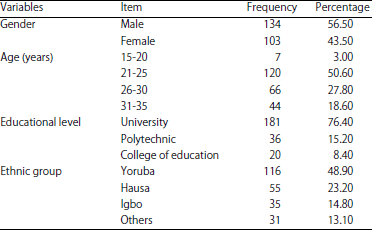
Demographic profile of respondents: An overview of the demographic profile of respondents is presented in Table 1, results obtained showed that 237 respondents participated in the survey. For the gender distribution, figures obtained indicated that 134 respondents represented that 56.5% were males and 103 represented that 43.5% were females. The cohort of Generation Y-ers aged between 21-25 years dominated the age range of the respondents with 120 valid responses, which represented 50.6%. By contrast, this was followed by 66 respondents aged 26-30 representing 27.8%, 44 respondents were aged between 31-35 years representing 18.6% and 7 respondents were aged between 15-20 years, which represents meagre 3% of total respondents.
Further analysis showed results obtained for the ethnicity of the respondents, it was apparent that the highest represented tribe is the Yoruba, which reported 116 respondents representing 48.9% of total respondents. The result further showed that Hausa was the second highest tribe that was represented by 55 respondents representing 23.2% of the total respondents. Thirty-five of respondents were Igbos, which represents 14.8%. Other tribes (combined) were represented by 31 respondents signifying 13.1%. The result showed that the predominant tribes in the two regions were duly represented.
Regarding the educational level of the respondents’, the results showed that majority of the respondents were university students (181) representing 76.4%. The remaining were 36 polytechnic students representing 15.2%. On the other hand, with 20 respondents, college of education students’ represent 8.4% of the total respondents (Fig. 2).
The inferential statistics were analyzed in two segments (the measurement model and the structural model) as recommended by Hair et al.68.
| Table 1: | Demographic profile of respondents |
 | |
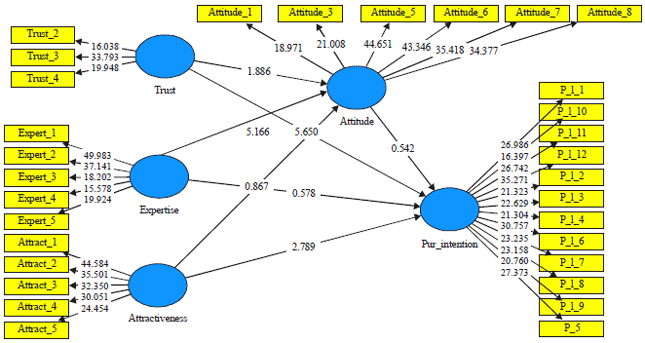 | |
| Fig. 2: | Research model showing the bootstrapping results |
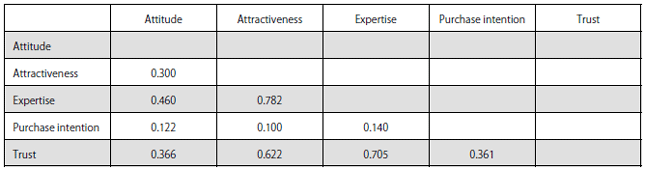 | |
| Fig. 3: | Discriminant validity-HTMT |
| Table 2: | Constructs validity and reliability |
 | |
AVE: Average variance extracted, VIF: Variance inflation factor | |
| Table 3: | f2 effect sizes |
 | |
Assessing the measurement and structural models: As seen from Table 2, both Cronbach Alpha and Composite reliability indicated that the constructs were reliable as they meet the acceptable threshold of 0.7 and above69. Furthermore, no multicollinearity issue was detected, all Variance Inflation Factor (VIF) values were within the acceptable threshold of less than five.
Assessing the construct validity and reliability: Additionally, the convergent validity of the constructs was evaluated with the average variance extracted (AVE) criterion. All the constructs met the 0.5 and above-threshold in line with the Bagozzi et al.70 and Fornell and Lacker71 criterion.
The researchers adopted the new approach proposed by Henseler et al.72, to further evaluate the data for presence or lack of discriminant validity.
Assessing the discriminant validity of the constructs-heterotrait-monotrait (HTMT): The findings of discriminant validity (HTMT) are shown in Fig. 3. To achieve discriminant validity, all constructs must have an HTMT value below (0.90) between two reflective constructs to signify that discriminant validity has been established72. All constructs were below the threshold of 0.90. Therefore, discriminant validity has been achieved.
Coefficient of determination (R2): The coefficient of determination (R2) values are shown in Table 2. The R2 denotes the effects of all the exogenous latent variables on an endogenous construct73,68. The combined effect of trust, expertise and attractiveness on attitude is 0.201. This means trust, expertise and attractiveness explain 20.1% of the variance of attitude. Moreover, the combined effect of trust, expertise, attractiveness and attitude on purchase intention is 0.149. This means that trust, expertise, attractiveness and attitude explain 14.9% of the variance of purchase intention. Thus, the model has a weak predictive quality.
Additionally, the blindfolding procedure was used to evaluate the model’s predictive relevance, represented as Stone-Geisser’s Q2 value74. All the dependent variable indicators indicated values above zero from Table 2, the Q2 value of purchase intention is 0.015 and that of attitude is 0.094 which implied that the model has small predictive relevance for this constructs75.
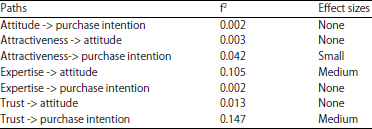
Assessing the constructs f2 effect sizes: Table 3 shows the effect sizes of each of the exogenous latent variables on the endogenous constructs. According to Hair et al.76 and Cohen77, a guideline for evaluating f2, values of "0.02, 0.15 and 0.35", respectively, "represent small, medium and large effects" of "the exogenous latent variable".
| Table 4: | Path coefficients (hypotheses testing for direct and indirect effect) |
 | |
*p<0.1 | |
| Table 5: | Indirect effects (hypotheses testing for mediation) detail of the each author with his/her contribution in this study |
 | |
In this study, trust construct emerged as having the most substantial effect on purchase intention with an f2 value of 0.147. In addition, attractiveness has a small effect size on purchase intention with an f2 value of 0.042. Similarly, expertise has a medium effect size on attitude with an f2 value of 0.105.
However, latent variables (attitude and expertise) have no effect on purchase intention, also, attractiveness and trustworthiness have no impact on attitude.
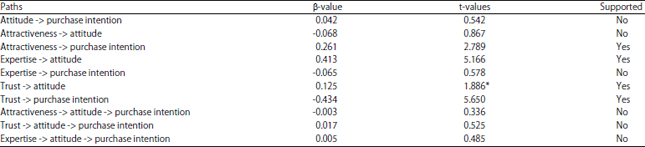
Assessing the constructs path coefficients (hypotheses testing without mediation effects): The bootstrapping method was employed to test the direct effects (hypotheses) of the model. Results from Table 4 indicates that the path relationship between attractiveness -> purchase_intention (β = 0.261, t = 2.789) was significant. Also, the path relationship between expertise -> attitude (β = 0.413, t = 5.166) was significant. Additionally, the path relationship between trust -> attitude (β = 0.125, t = 1.866) was significant at 10% level. Lastly, the path relationship between trust -> purchase intention (β = -0.434, t = 5.650) was also significant.
Therefore, hypotheses H1, H2, H1a and H3a were accepted. However, the path relationship between attitude -> purchase intention and the indirect path between attractiveness, expertise, trustworthiness and attitude were insignificant. Therefore, hypotheses H3, H2a, H1b, H2b, H3b and H4 were rejected.
Assessing the indirect effects (Hypotheses testing for mediation): From Table 5, the mediation (indirect) effects of the model were observed. These were: (1) The relationship between attractiveness and purchase intention through the
mediation effect of attitude, (2) The relationship between expertise and purchase intention through the mediation effect of attitude and (3) The relationship between trust and purchase intention through the mediation effect of attitude. Going by the recommendation of Preacher and Hayes75, Preacher and Hayes78, all three indirect effects-mediation were not supported.
DISCUSSION
The results from the analysis are impressive, as several correlations that were previously established by prominent studies were not supported in the present study.
The findings showed that there exist a significant relationship between expertise and attitude. However, no meaningful relationship was found between the attractiveness of an endorser and change in the attitude of Generation Y-ers. In addition, the findings show a significant relationship exists between trustworthiness, attractiveness and purchase intention. However, no significance was found in the relationship between the expertise of celebrity and purchase intention. Surprisingly, the findings further revealed an insignificant result on the hypothesised relationship between attitude and purchase intention. Taken collectively, the result of the mediation analysis showed that attitude does not mediate the direct link between source credibility dimensions and purchase intention of Nigerian Generation Y-ers.
Results obtained from bootstrapping the direct path between source credibility dimensions and purchase intention showed that, for the direct path relationships, only two constructs (attractiveness and trustworthiness) were found to be positively correlated with purchase intention. The findings were consistent with previous studies of Wang and Scheinbaum20, Hoekman21, Suki25, Ong and Ong26, Hovland and Weiss30 and McGinnies and Ward79. Therefore, hypotheses H1 and H2 were supported. For H1 (trustworthiness), the findings showed that Generation Y-ers in Nigeria pay high attention to a trustworthy endorser and thus he/she can influence their purchase intention of a specific product. Looking at hypothesis 2 (attractiveness), the findings showed that Generation Y-ers were attracted to an attractive local endorser, in other words, this means that an attractive endorser influences Nigerian Generation Y-ers to purchase the endorsed mobile products.
However, the third dimension of source credibility (expertise) direct path to purchase intention was found to be insignificant which deviates from earlier hypothesised studies19. The finding raised an important question as the result implied that the Generation Y-ers do not seem to agree that being an expert celebrity endorser translates into believability. Notwithstanding, the result was found to be similar to what was obtained in the studies of Ong and Ong26, Stafford80, Van der Veen81 and Stafford et al.82. Hence, hypothesis 3a is not supported. The inconsistencies in the results with past studies might be due to cultural settings, respondents’ generational cohort differences (when technology was not as rampant as in today’s world as older generations had no gadgets and social media) and background. Hence, people were not obsessed with attractiveness and personal traits such as trust. In today’s world, Generation Y-ers’ follow their idols/celebrities (mostly because they are attracted to them) on social media platforms such as Facebook, Twitter, Snapchat, Instagram etc., only to keep up with the lifestyle and personality. This trend might explain the reason why people have a soft spot for these celebrities in their heart as the findings shows.
The findings on direct path relationship between trustworthiness (H1a), expertise (H3a) and attitude was significant, which means, the Nigerian Generation Y-ers tend to form a positive attitude towards endorsers who are perceived as trustworthy and expert in their fields. In other words, trustworthiness and expertise of a celebrity endorser lead to a positive attitude. This is in line with Sheeraz45, Horovitz83, McCormick84, Bergkvist et al.85 and Samat et al.86. Hence, managers should look carefully at this constructs when engaging an endorser. However, for H2a, which investigates the direct relationship of a celebrity’s attractiveness and attitude, the result was insignificant. From the obtained results, findings showed that engaging an attractive celebrity does not necessarily leads to a positive attitude. In simpler terms, this means that when managers acquire services of an attractive endorser just for their physical attractiveness, Nigeria’s Generation Y-ers tend to have a negative attitude towards the brand’s advertisement and the product endorsed. This was contrary to the findings of prominent studies on this phenomenon such as Kahle and Homer23. However, this result was in line with Till and Busler33.
Hypothesis 1a posited that trustworthiness of a celebrity endorser significantly affects the attitude of Generation Y-ers. Trustworthiness was perceived to measure part of the celebrity endorsement success. The hypothesis was tested by testing the path coefficients between the trustworthiness construct and attitude. The path coefficient from trustworthiness to attitude is positive (0.125) and significant, therefore, the hypothesis was supported. This means that a trustworthy endorser might influence the Generation Y-ers to form a positive attitude towards the product, hence, leading to purchase intention. The findings correspond with previous studies of Caballero et al.29. However, hypothesis 2a’s path coefficient was negative (-0.068) and insignificant. This shows that physical attractiveness of celebrity endorser alone does not translate to a positive attitude towards a brand or advertisement. The possible explanation for this finding that deviates from previous studies of Patzer28 might be that, the item(s) used, for e.g., (sexy, not-sexy) in measuring the constructs might be too sensitive for Generation Y-ers due to religion and tradition where they seldom shy away from openly talking on such topics. Nevertheless, the findings were in agreement with those of Caballero et al.29.
For Hypothesis 3a, it was posited that the expertise of a celebrity endorser would affect the attitude of Generation Y-ers. Expertise was perceived to measure part of the celebrity endorsement success. The hypothesis was tested by analyzing the path coefficients between the expertise construct and attitude. The path coefficient from expertise to attitude was positive (0.413) and significant, therefore, the hypothesis was supported. The findings validated and corresponded with previous studies of Fishbein and Ajzen12, Kahle and Homer23, Till and Busler33 and Stafford et al.82.
For the indirect path relationships testing the mediating effect of attitude on the purchase intention of Generation Y-ers, three hypotheses were proposed (H1b, H2b and H3b). All three obtained results were found to be insignificant. This was not in line with previous studies of Goldsmith32, Burke and Edell87 and Mitchell 88. None of the three dimensions of source credibility model straddled a zero (Table 5) in the bootstrapping, which indicated the absence of mediating effect as recommended by Preacher and Hayes78. Hence, hypotheses H1b, H2b and H3b were not supported. Nonetheless, the findings were partially supported by the study of Sheeraz et al.45, who found a partial mediation in their study of Pakistani university students’ attitude to purchase intention. The result means that attitude does not drive or changes the Generation Y-ers opinion on the direct relationship that exists between the independent and dependent variables.
Lastly, for hypothesis 4, the attitude construct has always been established to be a major predictor of purchase intention33. However, in the present study, the result was found to be insignificant. Hence, hypothesis 4 was not supported. Although this is an exciting and unexpected finding, it is unclear why this transpires. Perhaps, the use of Generation Y-ers or Millennials who are a difficult marketing target to penetrate could be a reason. Due to their access to digital and social media, the Millennials, in particular, have an extensive awareness of the latest development in several advertising strategies. Hence, conventional use of CB-endorsers might not entice them to form a favourable attitude towards a brand89. The case of negative information of Halonen-Knight and Hurmerinta90 could be another reason for leading to this negative outcome and should not be discarded. Furthermore, culture and context might contribute to the result obtained.
Taken collectively, the results from the findings indicated that the strategy has little or no impact on the target, an outcome that could be partly influenced by the numerous negative publicity associated with the company’s chosen endorsers.
CONCLUSION
Evidence that emerged from the findings in this study revealed that the costly and overwhelming use of CB-endorsement strategy, which is highly embraced by telecommunication companies’ marketing managers and advertisers in Nigeria, is not yielding meaningful results as expected. Specifically, this study would be of much interest to managers who pay large outlay of cash to engage or secure the services of such professionals. Sequel to the findings, managers are enjoined to channel the resources being expended on this method of advertising to projects that have direct and positive impact on the lives of the Generation Y-ers, for instance, scholarships, skill acquisition projects and other corporate social responsibility interventions.
SIGNIFICANCE STATEMENT
This study has thrown more insights into the factors managers should consider when choosing a CB-endorser. Focusing on the mediating effect, the general implication to managers, promoters and advertisers as obtained from the findings of this study, shows that the Generation Y-ers’ attitude to this forms of advertisement is negative. As a recommendation, future researchers could analyze who amongst the locally celebrated celebrity has more influence in persuading the Generation Y-ers to purchase the endorsed product. Focus on students or targets from rural areas or both to enhance generalization of the model could also be investigated.
ACKNOWLEDGMENT
The researchers would like to extend their gratitude to Limkokwing University for providing the necessary support in carrying out this study.
REFERENCES
- Apejoye, A., 2013. Influence of celebrity endorsement of advertisement on students' purchase intention. J. Mass Commun. Journalism, Vol. 3.
CrossRefDirect Link - Torn, F., 2012. Revisiting the match-up hypothesis: Effects of brand-incongruent celebrity endorsements. J. Curr. Iss. Res. Advert., 33: 20-36.
CrossRefDirect Link - Eisend, M. and T. Langner, 2010. Immediate and delayed advertising effects of celebrity endorsers' attractiveness and expertise. Int. J. Advertising, 29: 527-546.
CrossRefDirect Link - Wolburg, J.M. and J. Pokrywczynski, 2001. A psychographic analysis of generation Y college students. J. Advertising Res., 41: 33-52.
CrossRefDirect Link - Lazarevic, V., 2012. Encouraging brand loyalty in fickle generation Y consumers. Young Consum., 13: 45-61.
CrossRefDirect Link - McGuire, W.J., 1986. The vicissitudes of attitudes and similar representational constructs in twentieth century psychology. Eur. J. Soc. Psychol., 16: 89-130.
CrossRefDirect Link - Ohanian, R., 1990. Construction and validation of a scale to measure celebrity endorsers' perceived expertise, trustworthiness and attractiveness. J. Advertis., 19: 39-52.
Direct Link - Oyeniyi, O., 2014. Celebrity endorsements and product performance: A study of nigerian consumer. Manage. Market. J., 12: 41-51.
Direct Link - Ohanian, R., 1991. The impact of celebrity spokespersons' perceived image on consumers' intention to purchase. J. Advertising Res., 31: 46-54.
Direct Link - Wang, S.W. and A.C. Scheinbaum, 2017. Trustworthiness Trumps attractiveness and expertise: Enhancing brand credibility through celebrity endorsement. J. Advertising Res., Vol. 58.
CrossRefDirect Link - Bashour, M., 2006. An objective system for measuring facial attractiveness. Plast. Reconst. Surg., 118: 757-774.
CrossRefDirect Link - Kahle, L.R. and P.M. Homer, 1985. Physical attractiveness of the celebrity endorser: A social adaptation perspective. J. Consum. Res., 11: 954-961.
CrossRefDirect Link - Chao, P., G. Wuhrer and T. Werani, 2005. Celebrity and foreign brand name as moderators of country-of-origin effects. Int. J. Advertising, 24: 173-192.
CrossRefDirect Link - Suki, N.M., 2014. Does celebrity credibility influence muslim and non-muslim consumers' attitudes toward brands and purchase intention? J. Islamic Market., 5: 227-240.
CrossRefDirect Link - Ong, Z.Q. and D.L.T. Ong, 2015. The impact of celebrity credibility on consumer’s purchase intention toward the footwear industry in Malaysia: The mediating effect of attitude toward advertisement. Inform. Manage. Bus. Rev., 7: 55-63.
Direct Link - Dom, S.M.S.M., H.S. Binti Ramli, A.L.L. Chin and T.T. Fern, 2016. Determinants of the effectiveness of celebrity endorsement in advertisement. J. Dev. Areas, 50: 525-535.
CrossRefDirect Link - Caballero, M.J., J.R. Lumpkin and C.S. Madden, 1989. Using physical attractiveness as an advertising tool: An empirical test of the attraction phenomenon. J. Advert. Res., 29: 16-22.
Direct Link - Daneshvary, R. and R.K. Schwer, 2000. The association endorsement and consumers' intention to purchase. J. Consum. Market, 17: 203-213.
CrossRefDirect Link - Goldsmith, R.E., B.A. Lafferty and S.J. Newell, 2000. The influence of corporate credibility on consumer attitudes and purchase intent. Corporate Reput. Rev., 3: 304-318.
CrossRefDirect Link - Till, B.D. and M. Busler, 2000. The match-up hypothesis: Physical attractiveness, expertise and the role of fit on brand attitude, purchase intent and brand beliefs. J. Advertising, 29: 1-13.
CrossRefDirect Link - Hutchinson, J.W. and D.L. Moore, 1984. Issues surrounding the examination of delay effects in advertising. ACR N. Am. Adv. Res., 11: 650-655.
Direct Link - Bauer, H.H., T. Reichardt, S.J. Barnes and M.M. Neumann, 2005. Driving consumer acceptance of mobile marketing: A theoretical framework and empirical study. J. Electron. Commerce Res., 6: 181-192.
Direct Link - Mackenzie, S.B. and R.J. Lutz, 1989. An empirical examination of the structural antecedents of attitude toward the ad in an advertising pretesting context. J. Market., 53: 48-65.
CrossRefDirect Link - Sicilia, M., S. Ruiz and N. Reynolds, 2006. Attitude formation online: How the consumer's need for cognition affects the relationship between attitude towards the website and attitude towards the brand. Int. J. Market Res., 48: 139-154.
Direct Link - Heath, R.G. and H. Stipp, 2011. The secret of television's success: Emotional content or rational information? After fifty years the debate continues. J. Advertising Res., 51: 112-123.
CrossRefDirect Link - Schlosser, A.E., S. Shavitt and A. Kanfer, 1999. Survey of internet users’ attitudes toward internet advertising. J. Interact. Market., 13: 34-54.
CrossRefDirect Link - MacKenzie, S.B., R.J. Lutz and G.E. Belch, 1986. The role of attitude toward the ad as a mediator of advertising effectiveness: A test of competing explanations. J. Marketing Res., 23: 130-143.
CrossRefDirect Link - Wahid, N.A. and M. Ahmed, 2011. The effect of attitude toward advertisement on Yemeni female consumers attitude toward brand and purchase intention. Global Bus. Manage. Res. Intl. J., 3: 21-29.
Direct Link - Javadi, M., S. Amirosadat, R. Balochiyan and F. Liravi, 2012. Factors influencing users attitude toward mobile advertising in the city of Isfahan. Aust. J. Basic Applied Sci., 6: 78-84.
Direct Link - Pornpitakpan, C., 2004. The effect of celebrity endorsers' perceived credibility on product purchase intention: The case of Singaporeans. J. Int. Consum. Market., 16: 55-74.
CrossRefDirect Link - Anridho, N. and Y.K. Liao, 2013. The mediation roles of brand credibility and attitude on the performance of cause-related marketing. Int. J. Soc. Sci. Edu., 4: 226-276.
Direct Link - Sheeraz, M., A.K. Khattak, S. Mahmood and N. Iqbal, 2016. Mediation of attitude toward brand in the relationship between service brand credibility and purchase intentions. Pak. J. Commerce Soc. Sci., 10: 149-163.
Direct Link - Hung, Y., T.M. de Kok and W. Verbeke, 2016. Consumer attitude and purchase intention towards processed meat products with natural compounds and a reduced level of nitrite. Meat Sci., 121: 119-126.
CrossRefDirect Link - Tan, C.S., H.Y. Ooi and Y.N. Goh, 2017. A moral extension of the theory of planned behavior to predict consumers’ purchase intention for energy-efficient household appliances in Malaysia. Energy Policy, 107: 459-471.
CrossRefDirect Link - Sharma, A. and D. Singh, 2017. Brand attitude mediates the relationship between self brand connection and product involvement: A case of adolescent consumers. Int. Edu. Res. J., 3: 481-484.
Direct Link - Ko, S.B. and B. Jin, 2017. Predictors of purchase intention toward green apparel products: A cross-cultural investigation in the USA and China. J. Fashion Market. Manage.: Int. J., 21: 70-87.
CrossRefDirect Link - Jin, N., S. Lee and J.H. Jun, 2015. The role of brand credibility in predicting consumers' behavioural intentions in luxury restaurants. Anatolia, 26: 384-396.
CrossRefDirect Link - Van der Veen, R., 2009. Celebrity endorsement effectiveness for print destination advertising. Eur. J. Tourism Res., 2: 186-189.
Direct Link - Feick, L. and R.A. Higie, 1992. The effects of preference heterogeneity and source characteristics on ad processing and judgements about endorsers. J. Advertising, 21: 9-24.
CrossRefDirect Link - Walker, M., L. Langmeyer and D. Langmeyer, 1992. Celebrity endorsers: Do you get what you pay for? J. Consumer Market., 9: 69-76.
CrossRefDirect Link - Wang, K.C., A.T. Hsieh and W.Y. Chen, 2002. Is the tour leader an effective endorser for group package tour brochures? Tourism Manage., 23: 489-498.
CrossRefDirect Link - Yi, Y., 1990. Cognitive and affective priming effects of the context for print advertisement. J. Advertising, 19: 40-48.
Direct Link - Lafferty, B.A. and R.E. Goldsmith, 1999. Corporate credibility’s role in consumers’ attitudes and purchase intentions when a high versus a low credibility endorser is used in the ad. J. Bus. Res., 44: 109-116.
CrossRefDirect Link - Bass, B.M., B.J. Avolio, D.I. Jung and Y. Berson, 2003. Predicting unit performance by assessing transformational and transactional leadership. J. Appl. Psychol., 88: 207-218.
CrossRefPubMedDirect Link - Bakare, A.S., A. Owusu and D.T. Abdurrahaman, 2017. The behavior response of the nigerian youths toward mobile advertising: An examination of the influence of values, attitudes and culture. Cogent Bus. Manage. Vol.4.
Direct Link - Abdurrahaman, D.T. and Z. Osman, 2017. Development of conceptual framework for Nigerian generation Y-ers' purchase intention and response towards indigenous celebrity-endorsed products: A PLS-SEM study on selected mobile service providers in Nigeria. J. Administrative Bus. Stud., 3: 49-59.
CrossRef - Owusu, A., G.C. Agbemabiasie, D.T. Abdurrahaman and B.A. Soladoye, 2017. Determinants of business intelligence systems adoption in developing countries: An empirical analysis from Ghanaian banks. J. Internet Bank. Commerce, Vol. 22.
Direct Link - Owusu, A., 2017. Business intelligence systems and bank performance in Ghana: The balanced scorecard approach. Cogent Bus. Manage., Vol. 4.
CrossRefDirect Link - Owusu, A., A. Ghanbari-Baghestan and A. Kalantari, 2017. Investigating the factors affecting business intelligence systems adoption: A case study of private universities in Malaysia. Int. J. Technol. Diffusion, Vol. 8.
CrossRefDirect Link - Hulland, J., 1999. Use of Partial Least Squares (PLS) in strategic management research: A review of four recent studies. Strat. Manage. J., 20: 195-204.
CrossRefDirect Link - Hair Jr., J.F., M. Sarstedt, L. Hopkins and V.G. Kuppelwieser, 2014. Partial least squares structural equation modeling (PLS-SEM): An emerging tool in business research. Eur. Bus. Rev., 26: 106-121.
CrossRefDirect Link - Nunnally, J.C., 1975. Psychometric theory-25 years ago and now. Educat. Res., 4: 7-21.
CrossRefDirect Link - Bagozzi, R.P., Y. Yi and S. Singh, 1991. On the use of structural equation models in experimental designs: Two extensions. Int. J. Res. Market., 8: 125-140.
CrossRefDirect Link - Fornell, C. and D.F. Larcker, 1981. Structural equation models with unobservable variables and measurement error: Algebra and statistics. J. Market. Res., 18: 382-388.
CrossRefDirect Link - Henseler, J., C.M. Ringle and M. Sarstedt, 2015. A new criterion for assessing discriminant validity in variance-based structural equation modeling. J. Acad. Marketing Sci., 43: 115-135.
Direct Link - Geisser, S., 1974. A predictive approach to the random effect model. Biometrika, 61: 101-107.
CrossRefDirect Link - Preacher, K.J. and A.F. Hayes, 2004. SPSS and SAS procedures for estimating indirect effects in simple mediation models. Behav. Res. Meth. Instrum. Comput., 36: 717-731.
CrossRefDirect Link - Cohen, J., 1988. Statistical Power Analysis for the Behavioral Sciences. 2nd Edn., Routledge, New York, USA, ISBN: 9780203771587, Pages: 567.
CrossRefDirect Link - Preacher, K.J. and A.F. Hayes, 2008. Asymptotic and resampling strategies for assessing and comparing indirect effects in multiple mediator models. Behav. Res. Methods, 40: 879-891.
CrossRefDirect Link - McGinnies, E. and C.D. Ward, 1980. Better liked than right: Trustworthiness and expertise as factors in credibility. Personality Soc. Psychol. Bull., 6: 467-472.
CrossRefDirect Link - Stafford, M.R., 1998. Advertising sex-typed services: The effects of sex, service type and employee type on consumer attitudes. J. Advertising, 27: 65-82.
CrossRefDirect Link - Van der Veen, R., 2008. Analysis of the implementation of celebrity endorsement as a destination marketing instrument. J. Travel Tourism Market., 24: 213-222.
CrossRefDirect Link - Stafford, M.R., T.F. Stafford and E. Day, 2002. A contingency approach: The effects of spokesperson type and service type on service advertising perceptions. J. Advertising, 31: 17-35.
CrossRefDirect Link - McCormick, K., 2016. Celebrity endorsements: Influence of a product-endorser match on Millennials attitudes and purchase intentions. J. Retail. Consum. Serv., 32: 39-45.
CrossRefDirect Link - Bergkvist, L., H. Hjalmarson and A.W. Magi, 2016. A new model of how celebrity endorsements work: Attitude toward the endorsement as a mediator of celebrity source and endorsement effects. Int. J. Advertising, 35: 171-184.
CrossRefDirect Link - Samat, M.F., H. Hashim and R.N.R. Yusoff, 2015. Endorser credibility and its influence on the attitude toward social media advertisement in Malaysia. Rev. Integrat. Bus. Econ. Res., 4: 144-159.
Direct Link - Burke, M.C. and J.A. Edell, 1989. The impact of feelings on ad-based affect and cognition. J. Marketing Res., 26: 69-83.
CrossRefDirect Link - Mitchell, A.A., 1986. The effect of verbal and visual components of advertisements on brand attitudes and attitude toward the advertisement. J. Consum. Res., 13: 12-24.
CrossRefDirect Link - Halonen-Knight, E. and L. Hurmerinta, 2010. Who endorses whom? Meanings transfer in celebrity endorsement. J. Prod. Brand Manage., 19: 452-460.
CrossRefDirect Link
Dinh Duyen Reply
Dear Mr./Ms,
I'm doing a research study relating to the impact of celebrity endorsement. I'm so interested in your adopted framework model.
How can I have further information about your study report, as well as the survey questionnaire?
Hope you can support us to complete our research. Thank you very much.
I'm looking forward to hearing from you.
Best regards,
Dinh Duyen.