






Nguyen Thi Pha
Institute of Food and Biotechnology, Can Tho University, Xuan Khanh, Ninh Kieu, Can Tho, Vietnam
Bui Minh Sang
Institute of Food and Biotechnology, Can Tho University, Xuan Khanh, Ninh Kieu, Can Tho, Vietnam
Mai Thanh Thao
Institute of Food and Biotechnology, Can Tho University, Xuan Khanh, Ninh Kieu, Can Tho, Vietnam
Tran Dinh Gioi
Cuu Long Delta Rice Research Institute, Thoi Thanh, Thoi Lai, Can Tho, Vietnam
LiveDNA: 84.41891
ORCID: 0000-0001-6798-3185
Asian Journal of Plant Sciences
Year: 2023 | Volume: 22 | Issue: 4 | Page No.: 628-636
ABSTRACT
Background and Objective: Balsam (Impatiens balsamina Linn.) is a popular ornamental plant with beautiful colored flowers and decorated plant shapes. This research has been conducted on the application of chemical mutagens ethyl methane sulfonate (EMS) in breeding balsam flowers to create diverse variations and enhance the decorative and aesthetic value of this plant species. Materials and Methods: Seeds of purple balsam flower were treated with EMS at different concentrations (0, 0.4, 0.6 and 0.8% v/v) for 3 days before incubation and sowing in pots. The studied parameters include germination rate, mortality rate compared to the control (%), survival ability through different stages (%), frequency and mutation efficiency, as well as the morphological characteristics of balsam flowers. Results: All doses of EMS treatments reduced the germination rate and plant survival rate. The EMS treatment changed the plant height and leaf length but had no significant effect on the stem diameter, leaf width and leaf area of balsam plants. A total of 10 morphological mutations were detected. In which, mutant related to floral color such as E3 (dark purple), E5 (pinkish-orange) and E9 (pale purple with partial loss of pigmentation in the lower petal margin), especially E7 (light pink) and E8 (reddish-purple) with more flowers than that of the control, indicating their potential to develop into new varieties. Conclusion: Ten morphological mutations were detected and several of them had various noteworthy characteristics that potential to develop into new varieties. The treatment concentration of 0.6% EMS for 3 days was the most suitable option with the highest mutation frequency and efficiency of 14.28 and 0.71%, respectively.
PDF Abstract XML References Citation
Copyright: © 2023. This is an open access article distributed under the terms of the Creative Commons Attribution License , which permits unrestricted use, distribution and reproduction in any medium, provided the original author and source are credited.
How to cite this article
Nguyen Thi Pha, Bui Minh Sang, Mai Thanh Thao and Tran Dinh Gioi, 2023. Effect of Ethyl Methane Sulfonate on the Mutants Inducement in Balsam Plants (Impatiens balsamina Linn.). Asian Journal of Plant Sciences, 22: 628-636.
DOI: 10.3923/ajps.2023.628.636
URL: https://scialert.net/abstract/?doi=ajps.2023.628.636
DOI: 10.3923/ajps.2023.628.636
URL: https://scialert.net/abstract/?doi=ajps.2023.628.636
INTRODUCTION
Impatiens balsamina Linn., also referred to as garden balsam or impatiens, is a globally cultivated ornamental plant with highly valued for its aesthetically pleasing flower colors, attractive morphology and medicinal properties1. In Vietnam, Impatiens balsamina is widely grown for both ornamental and medicinal purposes. Mutations, defined as alterations in the DNA sequence occurring during an organism’s lifespan, play a pivotal role in driving biological evolution by introducing genetic variation that can be inherited by subsequent generations2. However, spontaneous mutations in cultivated crops are rare, necessitating the use of mutagenic agents to induce genetic diversity for target traits in breeding programs3. By harnessing the power of mutagenesis, new plant varieties could be bred and developed in a compressed timeframe4.
Ethyl methane sulfonate (EMS), with the chemical formula CH3SO3C2H5, is a well-known chemical mutagen that has been extensively studied for its ability to induce mutations in various organisms, including fungi, plants, insects and mammalian cells5. The EMS exerts its mutagenic effects by chemically modifying nucleotides through interactions with DNA, particularly through guanine alkylation, leading to random nucleotide substitutions6,7. In plants, EMS treatment has been associated with a wide range of phenotypic alterations, including floral and stem mutations, changes in flowering time and specifically, modifications in flower shape, size and abundance. This study aims to investigate the impact of ethyl methane sulfonate on the occurrence of mutations in Impatiens balsamina Linn., with the objective of identifying lines displaying distinct morphological characteristics that contribute to enhanced genetic diversity in terms of flower types, colors and leaf patterns.
MATERIALS AND METHODS
Materials: Seeds of healthy and pathogen-free Impatiens balsamina Linn. plants with purple floral pigmentation derived from the tissue culture laboratory of the Food and Biotechnology Institute were selected for the experimental materials. Seeds of uniform size were carefully selected to ensure consistency in the experimental setup. The study was conducted from February, 2022 to May, 2023 at the Plant Biotechnology and Food Technology Laboratory, Can Tho University.
Methodology: A total of 120 seeds were divided into four cloth bags, each containing 30 seeds, and soaked in distilled water for 2 hours at room temperature (28 - 32°C). Drained the water and immersed the seeds in Ethyl Methane Sulfonate (EMS) solutions (0%, 0.4%, 0.6%, and 0.8%) for three days. The seeds were then thoroughly rinsed with distilled water, repeated four times to remove any chemical residues on the seed surface. After that, the seeds were incubated to germinate on moist filter paper-lined Petri dishes. Once the seeds had germinated, they were sown in pre-prepared pots in the net house. Each treatment was sown in 3 pots, with 9-10 seeds per pot and watered once a day.
Observation parameters: Record germination rate (%), lethality rate compared to control (%) and survival rate (%) of plants 15 days after sowing and at the flower establishment stage (13 weeks old) as follows:
| • | Percentage of germination (GR) was calculated using the formula of Roychowdhury and Tah8: | |
| ||
| • | Lethality rate compared to the control (LOC) was calculated using the formula of Roychowdhury and Tah8: | |
| ||
| • | Percentage of survival plants (SPR) was calculated using the formula of Roychowdhury and Tah8: | |
| ||
| • | Mutation frequency (MF) is calculated by the formula of Rao and Rao9: | |
| ||
| • | Mutant efficiency and effectiveness were calculated according to the formula of Rao and Rao9: | |
| ||
| • | Plant height at flowering (cm) measured from the ground surface to the highest point of the plant (tip of the leaf) | |
| • | Stem diameter (cm) use a palme ruler to measure the diameter of the stem | |
| • | Leaf length (cm), leaf width (cm) and leaf area (cm2) recorded and measured by Toupview software (version 4.11.19728) | |
| • | Chlorophyll mutants were recorded such as albina, xantha, chlorine and viridis | |
| • | Morphological mutations on flowers were recorded including flower diameter (cm), number of petals, flower color, flower structure, number of flowers on plant and flower weight |


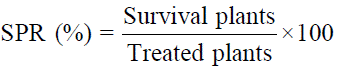

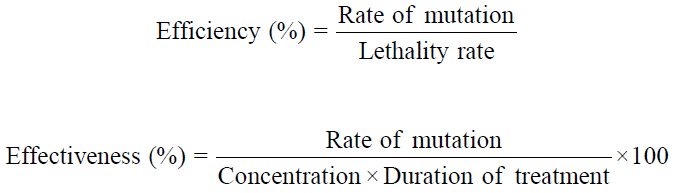
Statistical analysis: The collected data were processed using Microsoft Excel 2013 software. The statistical Minitab 16 software was used to analyze the variance and test the difference between the mean of the treatments at a 5% significance level.
RESULTS
Effect of ethyl methane sulphonate on germination rate and plant survival
Germination rate of balsam seeds treated with EMS: The EMS mutagenic agent affected germination rate, growth and development, as well as plant vigor. After mutation treatment, the germination rate gradually decreased from 0.4% EMS (96.7%) to 0.6 EMS (93.3%) and the lowest was in 0.8% EMS treatment (90%). The plant survival rate in the M1 generation was investigated at 15 days after sowing and flower establishment to determine the most effective concentration and time of EMS treatment. Data on this issue were shown in Table 1 and Fig. 1.
Plant survival rate at 15 days after sowing: After being treated with EMS, the plant survival rate at 15 days after sowing ranged from 86.7% (0.8% EMS) to 96.7% (0.4% EMS). Thus, balsam plant viability decreased when the concentration of the mutagen increased.
Plant survival rate at flower establishment: Similar to 15 days after the sowing date, at the flower establishment stage, the plant survival rate also decreased when increasing the concentration of the mutagenic substance, whereby the survival rate ranged from 70% (0.8% EMS) to 80% (0.6 and 0.4% EMS).
Mortality rate compared with the control: For the EMS-treated population, the lethality rate compared with the control was highest in the 0.8% EMS treatment with 30% and this rate decreased to 20% in the remaining 2 mutant treatments.
Influence of ethyl methane sulphonate on mutation frequency and efficiency: During the experimental set-up, no spontaneous mutants were observed in the control treatment. However, the mutagenic treatments displayed distinct differences in all mutation frequency, effectiveness and efficiency, as outlined in Table 2.
Mutation frequency: Assessing the impact of EMS on the morphological characteristics of plants, ten different mutations have been detected. The corresponding frequencies of each mutation with different morphologies were determined. In the total of four treatments, the concentration of 0.8% EMS exhibited the highest mutation frequency at 14.81%, with the occurrence of three flower types: E1, E3, E6 and one chlorophyll mutation at a rate of 3.70% each. Following that, the 0.6% EMS concentration induced a mutation frequency of 14.28%, with the appearance of four flower types: E2, E4, E8 and E9, each at a rate of 3.57%. The lowest mutation frequency was observed at the 0.4% EMS concentration, with 6.90% occurrence of two flower types: E5 and E6, both at a rate of 3.45% (Table 2).
Mutation efficiency and effectiveness: Different treatment concentrations have a great influence on mutation effectiveness and efficiency. When increasing the concentration, the mutation effectiveness tended to increase and was highest in the treatment of 0.6% EMS. However, the difference between treatments was not too large, especially in the treatment 0.4% EMS and 0.8% EMS with efficiencies of approximately 0.24 and 0.26%, respectively.
From the results of Table 2, it was shown that, when increasing the concentration of EMS from low to medium level, the mutation efficiency and effectiveness tend to increase, but when the concentration reaches a high level, they tend to decrease. Mutation effectiveness ranges from 0.24% (0.4% EMS) to 0.33% (0.6% EMS). The mutant efficiency ranged from 0.34% (0.4% EMS) to 0.71% (0.6% EMS). The 0.6% treatment gave the highest mutation effectiveness and efficiency. The 0.8% EMS treatment had effectiveness (0.26%) and efficiency (0.49%) a little higher than that of the 0.4% EMS treatment (0.24 and 0.34%).
 |
| Fig. 1(a-d): | Plant vigor in all treatments at 15 days after sowing, (a) Control, (b) 0.4% of EMS treatment, (c) 0.6% of EMS and (d) 0.8% of EMS |
| Table 1: | Germination rate and plant survival at different growth and development stages |
| Number of survival plants at different stages (%) | ||||
| Treatment | Number of germination seeds (%) | 15 days after sowing | Flower establishment | Mortality rate compared with control (%) |
| Control | 30 (100) | 30 (100) | 30 (100) | - |
| 0.4% EMS | 29 (96.7) | 29 (96.7) | 24 (80) | 20 |
| 0.6% EMS | 28 (93.3) | 27 (90.0) | 24 (80) | 20 |
| 0.8% EMS | 27 (90.0) | 26 (86.7) | 21 (70) | 30 |
| Table 2: | Mutation frequency and efficiency of Impatiens balsamina induced by EMS |
| Treatment | Number of observed plants | Number of mutation plants | Mutation frequency (%) | Mutation effectiveness (%) | Mutation efficiency (%) |
| 0.4% EMS | 29 | 2 | 06.90 | 0.24 | 0.34 |
| 0.6% EMS | 28 | 4 | 14.28 | 0.33 | 0.71 |
| 0.8% EMS | 27 | 4 | 14.81 | 0.26 | 0.49 |
Effect of ethyl methane sulphonate on some agronomic traits: Agronomic traits play a crucial role in evaluating the effects of mutagenic substances. The data concerning several agronomic characteristics have been presented in Table 3.
Plant height: The plant heights of Impatiens balsamina treated with different concentrations of EMS were observed ranging from 74.05 cm to 80.42 cm and significantly different from one another. The plant heights treated by the two treatments 0.4% EMS (80.42 cm) and 0.6% EMS (79.38 cm) were higher than that of the control treatment (75.27 cm). However, when the concentration level increased to 0.8% EMS, there was an inhibitory effect on plant height, making the plant height of this treatment shorter but this difference was not significant compared to the control (74.05 cm).
Stem diameter: The diameter of the stem in each treatment was relatively consistent, the data recorded at the time of flowering showed that the cross-sectional area of the stem among treatments was not significantly difference (Table 3). In the mutagenic treatments, the stem diameter ranged from 14.01 mm to 14.37 mm, the difference was not significant compared to the control (14.36 mm).
Leaf size: The size and shape of the leaves were illustrated in Table 3 and Fig. 2. The leaf length between treatments was significantly different. Treatments of 0.4 and 0.8% EMS had leaf lengths of 9.81 and 10.27 cm, respectively, longer than that of the control (8.87 cm). Longer petioles, more rigid and pointed leaf tips in these treatments were also found. An intermediate leaf length (9.37 cm) was observed in the 0.6% EMS treatment and was not significantly different from the other mutant treatments and the control.
Leaf width in the various treatments ranged from 1.90 to 1.99 cm but the difference was not statistically significant.
Leaf area: Although there was a difference in leaf length of the mutant treatments compared with the control, the leaf area fluctuated very little (10.07-10.94 cm2) and the difference was not statistically significant. In general, EMS chemicals have a certain effect on leaf size, increasing leaf length but not significantly affecting leaf width and area.
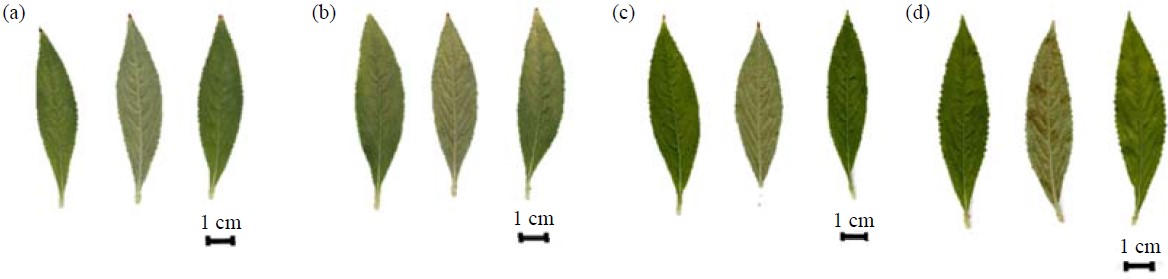 |
| Fig. 2(a-d): | Leaf shape and size in different EMS treatments, (a) Control, (b) 0.4% EMS, (c) 0.6% EMS and (d) 0.8% EMS |
| Table 3: | Effect of EMS on plant height, stem diameter, leaf size and leaf area | ||||
| Treatment | Plant height (cm) | Stem diameter (mm) | Leaf length (cm) | Leaf wide (cm) | Leaf area (cm2) |
| Control | 75.27b | 14.36 | 8.87b | 1.94 | 10.07 |
| 0.4% EMS | 80.42a | 14.01 | 9.81a | 1.94 | 10.88 |
| 0.6% EMS | 79.38a | 14.06 | 9.37ab | 1.99 | 10.64 |
| 0.8% EMS | 74.05b | 14.37 | 10.27a | 1.90 | 10.94 |
| Mean | 77.25 | 14.20 | 9.52 | 1.94 | 10.59 |
| F-value | 9.85 | 0.49 | 6.69 | 0.85 | 1.17 |
| p-value | 0.00 | 0.69 | 0.00 | 0.47 | 0.32 |
| CV (%) | 6.22 | 9.49 | 12.17 | 10.07 | 17.99 |
| CV (%): Coefficient of variation, p-value: Probability value, F-value: F test and Value of any traits assigned by the same superscript alphabets in a column were not significantly different at p<0.05 | |||||
Effects of ethyl methane sulphonate on floral and leaf morphological traits: The variations in leaf morphology, flower diameter, flower color, durability, flower quantity and flower weight of the mutation form under the influence of EMS were presented in Table 4, Fig. 3 and 4.
Chlorophyll mutations: Among various EMS treatments, only one chlorophyll mutant was observed, characterized by green leaves with intermittent white streaks and smaller leaf size, as shown in Fig. 4a in the 0.8% EMS treatment, with a frequency of 3.70%.
Flower diameter: In terms of size, the flower diameter at full bloom ranges from 30.37±0.15 mm to 35.67±0.55 mm. The overall flower size of types E2 (34.20±0.40 mm), E7 (35.37±0.38 mm) and E8 (35.67±0.55 mm) were larger flower diameters than that of the control flowers (32.57±0.20 mm) and the other types. Flower type E4 (31.70±0.56 mm) and E5 (30.37±0.15 mm) were smaller than the control.
Number of floral petals: The number of petals after blooming in the E6 mutant was observed. The loss-of-petal mutant caused this flower form to decrease to 4 petals (Fig. 3a), while the remaining and control flower forms have 5 petals (Fig. 3b).
Floral petal color: The corolla control flowers had a purple color with bright white near the base of the petals (Fig. 4b). The E2 flower was almost the same petal color as the control but a little paler color and lost bright white in petal bases (Fig. 4d). The E3 flower form was dark purple with whiter petal bases compared with the control flowers (Fig. 4e). The E5 flower form had a slightly pinkish-orange color, with some remaining purple stripes on the petals (Fig. 4g). The flower forms E1, E4 and E6 had similar petal colors to the control but without bright white petal bases (Fig. 4c, f and h, respectively). The E7 flower form had a light pink color, with some remaining purple stripes on the petals (Fig. 4i). The E8 flower form had a reddish-purple color, with a bright yellow stripe appearing near the base of the petals (Fig. 4j). The E9 flower form had a color similar to the control, but the lower petal edges lost some pigment and were whiter in the petal bases (Fig. 3c and 4k). The surface structures of the petal in the control, E5, E6, E7 and E9 flower forms showed slight folding, while the E1 and E2 flower forms were flatter petal surfaces. In the E3, E4 and E8 mutations, the surface of the petals appears to have more folds inward than the rest of the flower forms and in the E9 flowers, the margins of the upper and lower petals were not lobed.
Number of flowers per plant: The number of flowers per plant among the mutant types was observed with a large difference, ranging from 77 flowers (E5) to 151 flowers (E8). Based on the number of flowers (Table 4), mutant flowers can be divided into two groups. The first group contained mutant plants with fewer flowers than the control plants (89 flowers), including E3 (79 flowers), E4 (78 flowers), E5 (77 flowers), E6 (81 flowers) and E9 (79 flowers), these flowers usually occur singly on the leaf axils and the flower stalks tend to be longer.
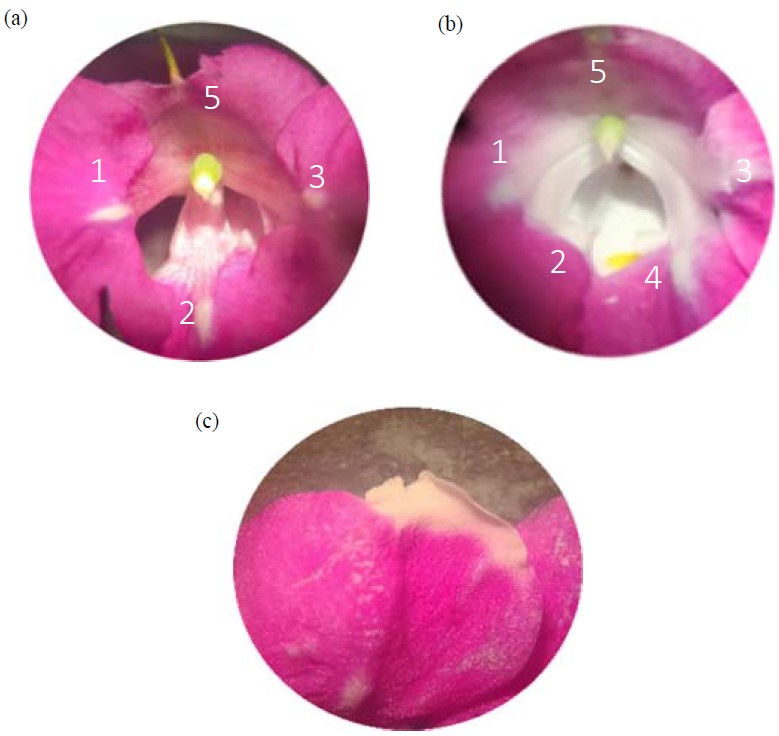 |
| Fig. 3(a-c): | Mutation in the number of petals and loss of pigment at the edges of the petals, (a) Number of petals in E6 mutant, (b) Number of petals in control and (c) Loss of pigment at the edges of the petals (E9) |
| Table 4: | Characteristics of 9 different floral morphological mutants | |||||
| Floral morphological mutants | Floral diameter (mm) | Floral color | No. of petals | Floral durability (days) | No. of flowers | Floral weight (mg) |
| Control | 32.57±0.20 | Purple+white | 5 | 5.67 | 89 | 0.323±0.007 |
| E1 | 32.43±0.15 | Purple | 5 | 4.67 | 99 | 0.323±0.002 |
| E2 | 34.20±0.40 | Pale purple | 5 | 4.33 | 92 | 0.333±0.021 |
| E3 | 32.83±0.50 | Dark purple | 5 | 5.33 | 79 | 0.326±0.021 |
| E4 | 31.70±0.56 | Purple | 5 | 5.33 | 78 | 0.315±0.048 |
| E5 | 30.37±0.15 | Pink+orange | 5 | 6.67 | 77 | 0.316±0.005 |
| E6 | 32.63±0.67 | Purple | 4 | 7.00 | 81 | 0.313±0.061 |
| E7 | 35.37±0.38 | Pink+purple | 5 | 6.33 | 101 | 0.336±0.030 |
| E8 | 35.67±0.55 | Red purple | 5 | 6.67 | 151 | 0.338±0.021 |
| E9 | 32.17±0.35 | Purple+white | 5 | 5.33 | 79 | 0.317±0.019 |
The second group contained mutant plants with more flowers than the control plants (89 flowers), including E1 (99 flowers), E7 (101 flowers) and E8 (151 flowers), these mutants had clusters of flowers consisting of 3-4 flowers instead of 2-3 flowers in control plants. The number of flowers on the plant is one of the most important traits to be considered when breeding ornamental plants. The increase in the number of flowers helps to improve the aesthetic value of the plants. In the case of this study, the second group may be potential promising lines for new varieties development.
Durability of flowers: Regarding the longevity of the flowers in different floral mutant forms, it ranged from 4.33 to 7.00 days. In general, the floral mutant forms can be divided into two groups based on flower durability. The first group included E1 mutant (4.67 days), E2 (4.33 days), E3 (5.33 days), E4 (5.33 days) and E9 mutant (5.33 days), which had shorter flower longevity compared with that of the control (5.67 days). On the other hand, the second group consisted of E5 mutant (6.67 days), E6 (7 days), E7 (6.33 days) and E8 mutant (6.67 days), which had longer flower durability than the control.
Floral weight: The flower weight of the mutant plants ranged from 0.313±0.061 mg (E6 mutant) to 0.338±0.021 mg (E8 mutant). The E6 mutant had the lightest weight, which is possible due to the lost number of petals from 5 to 4. The E4, E5 and E9 mutants also gave flower weight from 0.315±0.048 to 0.317±0.019 mg, lighter than that of the control (0.323±0.007 mg).
 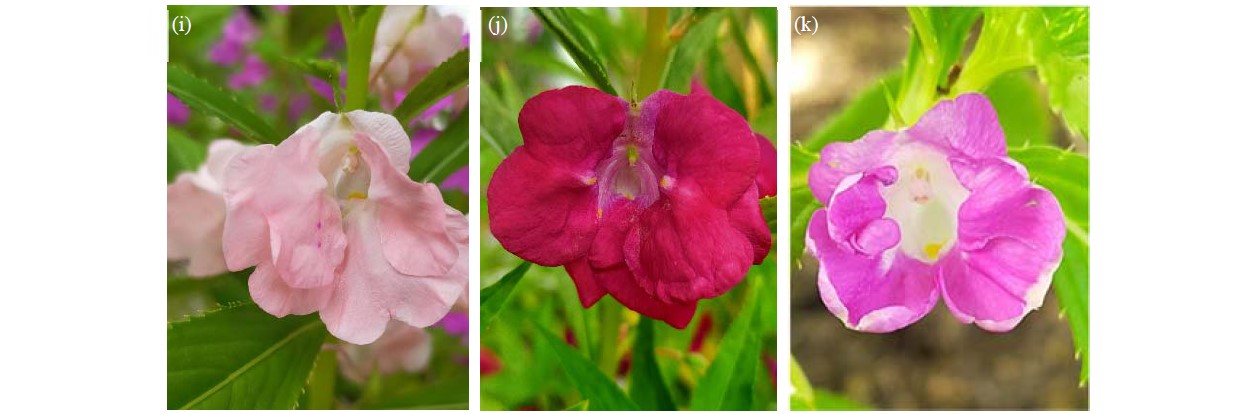 |
| Fig. 4(a-k): | Morphology of Impatiens balsamina flower mutants treated with EMS, (a) Chlorophyl mutant, (b) Control, (c) E1 mutant, (d) E2 mutant, (e) E3 mutant, (f) E4 mutant, (g) E5 mutant, (h) E6 mutant, (I) E7 mutant, (j) E8 mutant and (k) E9 mutant |
The E8 mutant was the heaviest floral weight because the petals of this mutant were thick and had many deep folds. The remaining flower mutants had very little difference in weight from that of the control (0.323±0.002 to 0.336±0.030 mg) including E1, E2, E3 and E7. In general, it can be seen that floral weight was not completely influenced by flower diameter, but partly influenced by the number of petals, petal thickness and folds in petals.
DISCUSSION
In this study, the Impatiens balsamina seeds treated with EMS decreased the germination rate from 96.7% (in 0.4% EMS treatment) to 90% (0.8% EMS treatment) and the plant survival rate from 20% (in 0.4 and 0.6% EMS) to 30% (in 0.8% EMS) at flower establishment stage. The cause of plant death may be due to the effect of EMS on the seed meristems during germination. According to Ananthaswamy et al.10 chromosomal aberrations affected inducible enzymes such as catalase and lipase enzymes as well as hormone activity, thereby reducing germination rate and plant viability.
The survival rate of plants through different stages most clearly reflects the influence of the mutant agent ethyl methane sulphonate on the viability of the plants. Compared with 15 days after sowing, the survival rate in the flower establishment stages decreased more quickly. This indicated that the effect of chemical mutagen treatments lasted throughout the growth and development of Impatiens balsamina. In fact, many crop plants live about 50-60 days after sowing but die in the pre-and during the flowering period. This phenomenon can be explained by the fact that EMS causes not only immediate embryonic germ cell death but also meristem death when the cells divide.
The balsam seeds treated with 0.4 to 0.8% of EMS before sowing produced mutation frequency ranging from 6.90 to 14.81%, with mutation effectiveness from 0.24 to 0.33% and mutation efficiency arranged from 0.34 to 0.71%. In general, when increasing the concentration of EMS from 0.4 to 0.6%, the mutation frequency, effectiveness and efficiency increased, but all of them decreased when the concentration of EMS reached 0.8%. This result was consistent with the announcement of Rao and Rao9 indicated that increasing the concentration and time of mutation treatment with chemicals will enhance the mutation frequency, effectiveness and efficiency but only up to a certain threshold, depending on the plant's genetic type. Beyond that threshold, the mutation frequency, effectiveness and efficiency will be decreased when increasing the concentration and treatment time. With the results of current study, the 0.6% EMS treatment showed the highest mutation effectiveness (0.33%) and efficiency (0.71%) among the tested concentrations. Therefore, this dosage level is considered appropriate for inducing mutations in the Impatiens balsamina plants.
The plant height treated with 0.4 and 0.6% EMS was higher than that of the control, while the leaf length of the 0.4 and 0.8% EMS mutant treatments was longer than that of the control. It can be seen that, in the arranged concentrations of EMS, low and medium concentrations have a stimulating effect on plant height. The stimulatory effects of mutagenic chemicals could be due to an increase in the rate of cell division or cell elongation as reported by Joshi et al.11. Ethyl methanesulfonate chemical had a negligible effect on stem diameter, leaf width and leaf area of Impatiens balsamina.
Chlorophyll mutations are commonly used to determine the mutagenic potential of a chemical as they serve as important indicators in assessing genetic changes in mutated populations12. A total of 10 morphological mutations were detected in the current research (1 chlorophyll mutant and 9 floral morphological mutants). Among them, mutations related to flower colors such as E3 (dark purple), E5 (slightly pinkish-orange) and E9 (pale purple with partial loss of pigment on the lower petal edges) are particularly noteworthy. Especially, the E7 (pale pink) and E8 mutants (reddish-purple) also produced more flowers than the control, indicating their potential to develop into new varieties. These findings were consistent with Yongfu et al.13 publications, which investigated EMS-induced mutations in the light-red flowered plant species Impatiens balsamina. In this study, more than ten mutation types have been detected and the various flower color and a number of flowers have also been recorded.
These results of the current study indicated that EMS treatment at 0.6% in three days of pre-germination seed can be used to induce mutant in Impatiens balsamina. Various morphological types of plant and flower were obtained. These will serve as a valuable resource for the development of novel floral varieties and further advancements in breeding programs. The lack of genotyping analysis of these materials was the limitation of this study and should be carried out in the future.
CONCLUSION
Treatment with EMS chemicals led to a decrease in the germination rate and plant survival rate. The EMS treatment changed the plant height and leaf length but had no significant effect on the stem diameter, leaf width and leaf area of Balsam plants. A total of 10 morphological mutations were detected. In which, mutant related to floral colors such as E3 (dark purple), E5 (pinkish-orange) and E9 (pale purple with partial loss of pigmentation in the lower petal margin), especially E7 (light pink) and E8 (reddish-purple) with more flowers than that of the control, indicating their potential to develop into new varieties. The 0.6% EMS treatment for 3 days was the most suitable to induce mutant in Impatiens balsamina Linn.
SIGNIFICANCE STATEMENT
The study aims to induce mutation on Impatiens balsamina Linn. by EMS chemical mutagen. A total of 10 morphological mutations were detected. Among them, mutations related to pigment change with various colors and producing more flowers were remarkable value and indicated their potential to develop into new varieties.
REFERENCES
- Panda, P., A. Nigam and G.P. Rao, 2021. Multilocus gene analysis reveals the presence of two phytoplasma groups in Impatiens balsamina showing flat stem and phyllody. 3 Biotech, Vol. 11.
CrossRefDirect Link - Lu, Z., J. Cui, L. Wang, N. Teng and S. Zhang et al., 2021. Genome-wide DNA mutations in arabidopsis plants after multigenerational exposure to high temperatures. Genome Biol., Vol. 22.
CrossRefDirect Link - Singer, S.D., J.D. Laurie, A. Bilichak, S. Kumar and J. Singh, 2021. Genetic variation and unintended risk in the context of old and new breeding techniques. Crit. Rev. Plant Sci., 40: 68-108.
CrossRefDirect Link - Chaudhary, J., A. Alisha, V. Bhatt, S. Chandanshive and N. Kumar et al., 2019. Mutation breeding in tomato: Advances, applicability and challenges. Plants, Vol. 8.
CrossRefDirect Link - Amini, M., 2014. Ethyl Methanesulfonate. In: Encyclopedia of Toxicology, Wexler, P. (Ed.), Academic Press, Cambridge, Massachusetts, ISBN: 9780123864550, pp: 522-524.
CrossRefDirect Link - Sarmiento, F.B., J.A. Leigh and W.B. Whitman, 2011. Genetic Systems for Hydrogenotrophic Methanogens. In: Methods in Enzymology, Rosenzweig, A.C. and S.W. Ragsdale (Eds.), Academic Press, Cambridge, Massachusetts, ISBN: 978-0-12-385112-3, pp: 43-73.
CrossRefDirect Link - Altindal, D. and N. Altindal, 2018. Effect of ethyl methanesulfonate (EMS) applications on the growth of sunflower (Helianthus annuus L. cv. Palancı-I) in vitro saline conditions. J. Iğdır Univ. Inst. Sci. Technol., 8: 351-359.
CrossRefDirect Link - Roychowdhury, R. and J. Tah, 2011. Assessment of chemical mutagenic effects in mutation breeding programme for M1 generation of carnation (Dianthus caryophyllus). Res. Plant Biol., 1: 23-32.
Direct Link - Rao, G.M. and V.M. Rao, 1983. Mutagenic efficiency, effectiveness and factor of effectiveness of physical and chemical mutagens in rice. Cytologia, 48: 427-436.
CrossRefDirect Link - Ananthaswamy, H.N., U.K. Vakil and A. Sreenivasan, 1971. Biochemical and physiological changes in gamma-irradiated wheat during germination. Radiat. Bot., 11: 1-12.
CrossRefDirect Link - Joshi, N., A. Ravindran and V. Mahajan, 2011. Investigations on chemical mutagen sensitivity in onion (Allium cepa L.). Int. J. Bot., 7: 243-248.
CrossRefDirect Link - Raina, A. and Samiullah Khan, 2020. Mutagenic effectiveness and efficiency of gamma rays and sodium azide in M2 generation of cowpea [Vigna unguiculata (L.) Walp.]. bioRxiv.
CrossRefDirect Link - Yongfu, Z., L. Guizhi, X. Yingmei, H. Heping, Y. Lixin and L. Jiani, 2015. Study on mutagenic effects of ethyl methane sulfonate on impatiens balsamina. North. Hortic., 21: 83-89.
Direct Link