

Mervat H. Hussein
Department of Botany, Faculty of Science, Mansoura University, Egypt
Ghada S. Abou-ElWafa
Department of Botany, Faculty of Science, Mansoura University, Egypt
Sami A. Shaaban-Dessuuki
Department of Botany, Faculty of Science, Mansoura University, Egypt
Nagwa I. Hassan
Department of Botany, Faculty of Science, Mansoura University, Egypt
International Journal of Pharmacology
Year: 2015 | Volume: 11 | Issue: 5 | Page No.: 432-439


ABSTRACT
The physico-chemical characterization of the cyanobacterium Nostoc carneum extracellular polysaccharide (EPS) was studied. Two sugars moieties glucose (105.5 mg g-1 EPS) and xylose (215.2 mg g-1 EPS) were involved in the polysaccharide composition as well as the presence of sulfate, uronic acids and protein. The in vitro antioxidant assays (reducing power and DPPH) showed that N. carneum EPS possess antioxidant activity. Fourier Transformed Infrared (FT-IR) spectra of EPS showed a specific absorbance of O-H and –NH stretching, asymmetrical-symmetrical C-H stretching, Presence of sulfur containing functional groups and carboxylic acids. The thermal gravimetric and differential scanning calorimetric analyses confirmed that polysaccharide thermal stability was around 237°C. Nostoc carneum exopolymer showed pseudoplastic non-Newtonian fluid behavior in the aqueous solutions as well as increasing viscosity with increasing concentration.
PDF Abstract XML References Citation
Article History
Received: April 13, 2015;
Accepted: May 23, 2015;
Published: June 19, 2015
How to cite this article
Mervat H. Hussein, Ghada S. Abou-ElWafa, Sami A. Shaaban-Dessuuki and Nagwa I. Hassan, 2015. Characterization and Antioxidant Activity of Exopolysaccharide Secreted by Nostoc carneum. International Journal of Pharmacology, 11: 432-439.
DOI: 10.3923/ijp.2015.432.439
URL: https://scialert.net/abstract/?doi=ijp.2015.432.439
DOI: 10.3923/ijp.2015.432.439
URL: https://scialert.net/abstract/?doi=ijp.2015.432.439
INTRODUCTION
Microbial Exopolysaccharides (EPSs) are biosynthetic polymers mainly consisting of carbohydrates secreted by bacteria (Freitas et al., 2009) and cyanobacteria (Parikh and Madamwar, 2006). According to Sutherland (2001) these exopolymers comprise 2 categories: Homopolysaccharides and heteropolysaccharides. Arskold et al. (2007) found that the heteropolysaccharides involve high molecular mass hydrated molecules consisting of numerous sugar residues and their biosynthesis is due to the coordinated action of various glycosyl transferases. These microbial Exopolysaccharides have features appropriate for economic purposes due to the presence of excessive number of different monomers, strong anionic nature as well as high hydrophobicity (Mota et al., 2013). During cellular metabolism many Reactive Oxygen Species (ROS) are produced. Presence of these ROS led to apoptosis, gene expression, cell signaling and ion transportation (Afonso et al., 2007). Therefore, antioxidants may have an important function in human protection from different oxidative damages associated to cancer, diabetes, cardiovascular disease and neurodegenerative diseases (Lin and Beal, 2003). The significance of these biopolymers may be as a result of their high application potential in food, cosmetic, pharmaceutical and oil industries, as well as their usage as thickening, stabilizing and emulsifying agents. In pharmaceutical industry they can be used as, as antiviral (Hayashi et al., 1996a, b; Singh and Das, 2011), anti-inflammatory agents and testing cytotoxicity of leukemia cells through apoptosis and ion absorption applications (Moreno et al., 2000; Shah et al., 2000; Singh and Das, 2011). This study is aimed at characterizing the physical and chemical properties as well as antioxidant activity of the EPS produced by N. carneum to ascertain their economic potentiality.
MATERIALS AND METHODS
Cyanobacterial strain isolation and identification: Cyanobacterial strain was isolated from cultivated soil in Mansoura District. Culture Purification was according to Andersen (2005), Desikachary (1959) and Van Landingham and Collins (1982).
Culture conditions: Nostoc carneum was grown in axenic cultures at 28±2°C. under continuous illumination (3000 Lux) in 500 mL conical flasks, containing 200 mL BG11media (Rippka et al., 1979) for 49 days incubation period.
Exopolysaccharide extraction: After culture centrifugation (4,500 g, 10 min) the EPS was precipitated by an equal volume of isopropanol and dried at 37°C (Reddy et al., 1996; Pawar et al., 2013).
Chemical characterization of EPS: Protein content was estimated according to Lowry et al. (1951). Carbohydrate content was estimated by phenol sulfuric acid method (Dubois et al., 1956). Meta-hydroxydiphenyl method (Blumenkratz and Asboe-Hansen, 1973; Filisetti-Cozzi and Carpita, 1991) was used to estimate the uronic acid content of exopolysaccharide. Sulfate content was estimated according to APHA. (1998). The EPS hydrolysis and composition analysis was achieved according to Chen et al. (1997) using a High Performance Liquid Chromatography (HPLC) system. Antioxidant activity assays: Ferric Reducing antioxidant power was measured according to method described by Qiao et al. (2009). The free radical scavenging activity of EPS was measured against 2 mM 1,1-Diphenyl-2-Picryl-Hydrazyl (DPPH)radicals using method of Hsu (2006).
Physical characterization of EPS: The UV-visible spectrum of EPS was recorded between 200 and 800 nm on a Lambda 35 spectrophotometer.
Fourier transform infrared spectrometry: FT-IR spectrum was recorded on The Mattson 5000FT-IR spectrometer in the frequency range of 400-4000 cm-1 (Wang et al., 2004).
Thermal gravimetric analysis: The TGA was carried on a thermo analyzer of the type 50-H. The TGA was obtained in the range of 25-800°C under nitrogen atmosphere.
Differential scanning calorimetry: The pyrolysis pattern of the EPS was investigated using a differential scanning calorimeter (60-A). The thermo gram was obtained in the range of 25-250°C.
Rheological property analysis of EPS: The dynamic rheological measurement of extracted EPS solutions (5, 10 and 15 mg mL-1 EPS) was carried out on BROOKFIELDDV-3 Ultra Programmable Rheometer (Fernandes et al., 1991).
RESULTS
Chemical composition of EPS: Under previously mentioned growth conditions, the EPS yield reached 1.121 g L-1 within 49 days. This EPS contained 54% carbohydrate. The monosaccharide portions composed of xylose and glucose in molar ratio 4.3:2.1. Protein, sulfate and uronic acids contents are shown in Table 1.
Antioxidant activity assays: The reducing capacity of N. carneum EPS using k3Fe (CN)6 reduction method (Fig. 1) increased with increasing EPS concentration. At the concentration of 10 mg mL-1, the reducing capacity (absorbance at 700 nm) of EPS was 0.450 nm. The free radical scavenging activity of EPS (DPPH assay) demonstrated that EPS exhibits a similar curve of antioxidant activity compared to ascorbic acid. The IC50 value (32 μg mL-1) of EPS is higher than that of ascorbic acid (24 μg mL-1) (Fig. 2). The IC50 was low and results in high level of ascorbic acid equivalent antioxidant capacity AEAC (75 mg AA/100 g). This result indicated that N. carneum EPS has an inhibitory effect on the DPPH radical.
Physical properties of EPS: The extracted EPS was light yellow odorless powder, water-soluble giving clear homogeneous liquid. The ultraviolet scan spectrum analysis of the EPS solution showed a maximum absorption peak at 234 nm as shown in Fig. 3.
Fourier Transform Infrared (FT-IR) spectrometry characterization: The FT-IR of EPS, obtained from Nostoc carneum reveals characteristic functional groups (Fig. 4) showing peaks at 3419, 2931, 2364, 2147, 1650, 1558, 1419, 1305, 1250, 1151, 1075, 1038, 921, 877, 674, 637 and 605 cm-1.
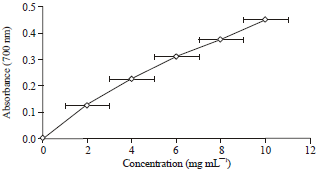 | |
| Fig. 1: | Reducing capacity of extracted EPS |
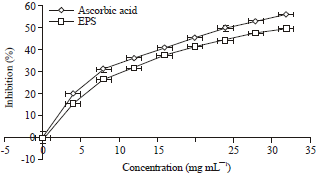 | |
| Fig. 2: | DPPH free radical scavenging activity of N. carneum EPS |
| Table 1: | Chemical analysis and monosaccharide composition of EPS (mg g-1 EPS) |
 | |
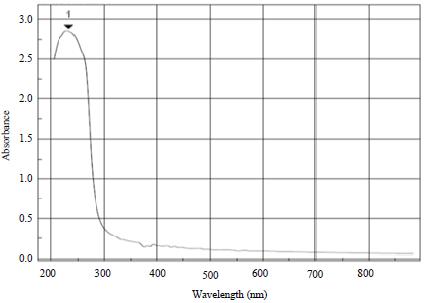 | |
| Fig. 3: | UV-absorbance spectrum of aqueous solution of EPS |
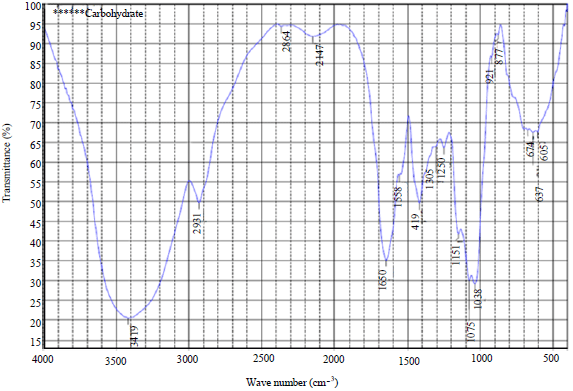 | |
| Fig. 4: | FT-IR analysis of exopolysaccharide extracted from Nostoc carneum |
Thermal characteristics of extracted polysaccharide
Thermogravimetric analysis: The thermo gram of the TGA analysis of N. carneum EPS showed that degradation occurred in three well-distinct steps (Fig. 5). In the first phase (phase I) the EPS powder showed a weight loss of 16% as the temperature raised from 25-155°C. At progressive increasing temperature, the weight remained relatively constant until the system reached 237°C, when the polysaccharide started to decompose (phase II) until approximately 378°C. At this point, the total weight loss reached about 39%. The third phase (phase III) occurred from 378-562°C with an additional 32% weight loss this decomposition continued with a further loss of mass about 0.739% at temperature 627-649°C.
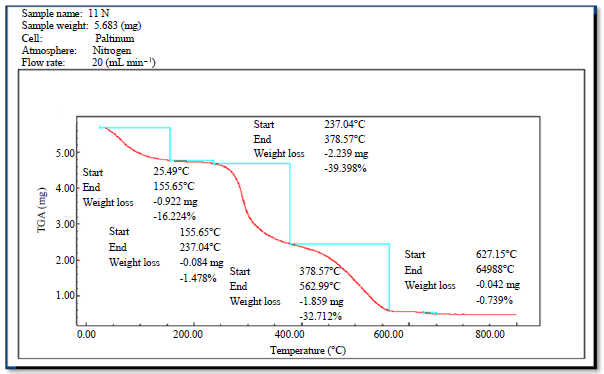 | |
| Fig. 5: | Thermogravimetric analysis (TGA) of EPS |
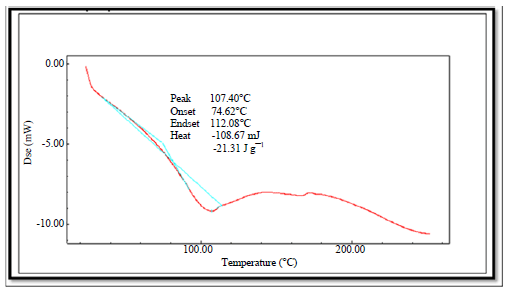 | |
| Fig. 6: | Differential scanning calorimetry (DSC) analysis of EPS |
Differential scanning calorimetry analysis: Differential scanning calorimetry was employed to recognize thermal transitions of EPS. The DSC thermogram exhibited the characteristic exothermic transition of the exopolymer with crystallization temperature (Tc) 107.4°C (on set temperature 74.62°C) and 108.67 mJ latent energy of crystallization as shown in Fig. 6.
Rheological property analysis of extracted EPS: Viscosity of N. carneum EPS solutions (5, 10 and 15 mg mL-1) as a function of shear rate achieved maxima of 24.2, 70.1 and 140 cP viscosity, respectively at shear rate of 40 sec-1 (Fig. 7). While with increasing shear rate to 500 sec-1, viscosity values decreases dramatically to 11.8, 25.1 and 28.9 cP, respectively. Figure 8 shows the flow curves (representation of the shear stress as a function of shear rate) for aqueous EPS solutions with different concentrations.
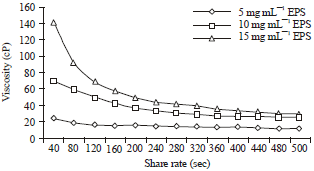 | |
| Fig. 7: | Viscosity as a function of shear rate of aqueous solutions of N. carneum EPS at concentrations 5, 10 and 15 mg mL-1 EPS |
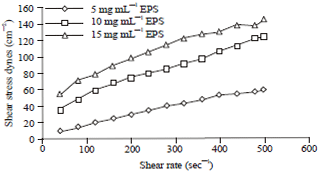 | |
| Fig. 8: | Flow curve of the shear stress vs. shear rate of N. carneum EPS at concentrations 5, 10 and 15 mg mL-1 EPS |
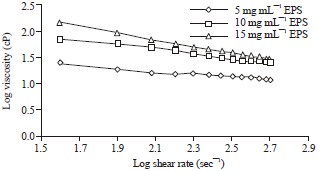 | |
| Fig. 9: | Log-log plot of the viscosity vs. shear rate of 5, 10 and 15 mg mL-1 EPS |
For all EPS solutions, the shear stress tended to level off and approximate a restrictive stable value as a decrease in shear rate towards zero at low range of shear rates, demonstrating that these polymer systems exhibit a finite magnitude of yield stress. It is also revealed that the larger values of yield stress were obtained with increasing polymer concentration. As presented in Fig. 9 the EPS showed pseudoplastic or shear thinning property in aqueous solutions. The highest viscosities and the prominent shear thinning properties were recorded in the following descending manner 15, 10 and 5 mg mL-1 EPS. Rheogram of Fig. 10 showed that torque percent increased with increasing spindle speed (RPM).
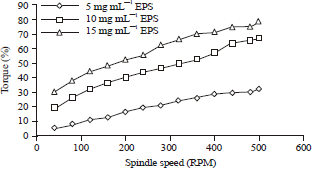 | |
| Fig. 10: | Rheogram of the Torque vs. spindle speed of N. carneum EPS at concentrations 5, 10 and 15 mg mL-1 EPS |
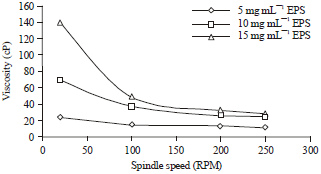 | |
| Fig. 11: | Rheogram of the viscosity dependence of spindle speed (RPM) for aqueous N. carneum EPS concentrations 5, 10 and 15 mg mL-1 EPS |
Figure 11 explained viscosity of N. carneum EPS aqueous solutions and spindle speed (RPM) relationship. It is obvious that with increasing spindle speed viscosity decreased.
DISCUSSION
Chemical analysis of EPS: The identification of two neutral sugars (xylose and glucose) and uronic acids in EPS of N. carneum confirmed earlier reports on complex composition of cyanobacterial EPS (De Philippis and Vincenzini, 1998).
The majority of the cyanobacterial EPSs are constituted of as a minimum one uronic acid, several numerous neutral sugars (ranging from 2-10) in combination with protein molecules (Otero and Vincenzini, 2003; Parikh and Madamwar, 2006). The HPLC analysis of N. carneum EPS revealed two monosaccharides(xylose and glucose) in molar ratio 4.3:2.1. Huang et al. (1998) reported that Nostoc sp. EPS composed of xylose and glucose but in different ratios. Parikh and Madamwar (2006) indicated the presence of xylose as well as ribose in Nostoc sp., Nostoc commune and Nostoc carneum. Challouf et al. (2011) and Ozturk et al. (2014) documented that cyanobacterial exopolysaccharides are distinguished with the existence of pentoses in addition to their anionic nature because of the occurrence of acidic sugars (glucuronic and/or galacturonic acids) and anionic organic (acetyl, pyruvil) and inorganic (phosphate and sulfate) substituents.
Antioxidant activity assays: Reducing capacity is an important assay in estimating antioxidant activity (Duh et al., 1999). In ferric reducing antioxidant power, the antioxidant activity established on the capability of the antioxidant fractions in the EPS solutions to reduce ferric (III) to ferrous (II) in a redox-linked colourimetric reaction (Li et al., 2006) that includes single electron transfer. The direct correlation between antioxidant activity and the reducing capacity had been documented by Qiao et al. (2009). The DPPH molecule that has a nitrogen free radical is readily destroyed by a free radical scavenger. This assay was used to investigate the potentiality of the oxidative compounds operating as proton radical scavengers or hydrogen donors (Singh and Rajini, 2004). In the DPPH assay, the N. carneum EPS reduce DPPH radical to the yellow coloured diphenyl picryl hydrazine.
Physical analysis of EPS: The ultraviolet scan spectrum analysis of the N. carneum EPS indicated the presence of proteins and nucleic acids due to absorption peak at wave length 234 nm according to Okajima-Kaneko et al. (2007). UV-vis spectroscopy analysis illustrated that the maximum wave length area of absorption spectra was 200-234 nm due to n-σ* and or π-π* transitions, which characterizes functional groups like amine, carboxyl, carbonyl and ester as suggested by Yun and Park (2003).
FT-IR characterization of EPS: The weak absorption band (Fig. 4) at 2931 cm-1 is characteristic band of the C-H stretching vibration of CH2, the band at 1419 cm and 1305 cm-1 of the C-H bending of CH2 or CH3, all bands were typical of carbohydrates (Yee et al., 2004; Parikh and Madamwar, 2006; Khattar et al., 2010; Ozturk et al., 2014).
The peak at 3419 cm-1 can be assigned to the stretching vibration of the hydroxyl (–OH) or amine (–NH) groups (Parikh and Madamwar, 2006; Khattar et al., 2010; Mota et al., 2013; Ozturk et al., 2014). The amine and amide groups strengthens that the biopolymer is not only composed of polysaccharides but also some peptides and/or proteins as documented by Pagnanelli et al. (2000).
The peak at 1250 cm-1 can be related to the asymmetrical S = O stretching vibration (Mota et al., 2013). The bands 2364 and 2147 cm-1 can be attributed to the stretching vibration of C ≡ C and C ≡ N.
The presence of a carboxylic acid is detected by a band at 1650 which revealed the presence of (-COOH) groups (Parikh and Madamwar, 2006; Ozturk et al., 2014), Whereas, the band at 1151 is due to the asymmetrical and symmetrical C-O-S vibration (De Philippis and Vincenzini, 1998; Parikh and Madamwar, 2006). These data supported the presence of sulfate groups in the Nostoc carneum exopolysaccharide, as reported for other cyanobacterial exopolymers (Mahner et al., 2001; Yee et al., 2004; Zou et al., 2008). The peak at 1038 and 1075 cm-1 might be due to the contribution of C-O bond of polysaccharide. The bands lie in the range of 1000-1125 cm-1 is characteristic of uronic acids and O-acetyl ester linkage bond (Ozturk et al., 2014). Trabelsi et al. (2009) and Khattar et al. (2010) reported that the occurrence of numerous bands fewer than 1,000 cm-1 possibly due to several visible bands and/or to the presence of probable linkages between monosaccharides. These results suggested that EPS from Nostoc carneum contain uronic acids, sulfate groups and peptides in their composition which were further confirmed by chemical analysis of EPS.
Thermal characteristics of extracted EPS
Thermogravimetric analysis TGA: Thermogram of TGA illustrated that the decomposition of N. carneum EPS take place in three definite phases (Fig. 3). The present results are in agreement with results of EPS produced by Cyanothece sp. ATCC 51142 and Nostoc spp., (Parikh and Madamwar, 2006) and cyanothece. ccy 0110 (Mota et al., 2013). In phase I the N. carneum EPS exhibited a weight loss of 16% at rising temperature from 25-155°C, possibly because of desorption of physically absorbed water. Elevated level of carboxyl group in the EPS raised the decomposition of the 1st phase (30-120°C) as carboxyl group is bound to more water molecules as indicated by Kumar et al. (2004). With increasing temperature above 155°C, the EPS weight remained constant until temperature reached 237°C, then the polysaccharide began to degrade as a result of removal of structure water (phase II) until approximately 378°C with 39% weight loss. Temperature characteristic of the third phase (phase III) were recognized between 378-562°C with 32% EPS weight loss that can be referred to depolymerization accompanied by the rupture of C-O and C-C bonds in the ring units resulting in the evolution of CO, CO2 and H2O. Rising temperature from 627-649°C resulted in 0.739% weight loss due to formation of polynuclear aromatic and graphitic carbon structures. The high thermo stability of N. carneum EPS might be due to existence of sulfate groups and uronic acids that prevented complete decomposition of the polymer (Pooja and Chandra, 2009; Alves et al., 2010; Mota et al., 2013).
Differential scanning calorimetry: With increasing temperature, the amorphous solid will become less viscous and at a certain temperature the particles free enough to organize themselves into a crystalline state, known as the crystallization temperature (Dean, 1995; Mishra et al., 2011). This transition from amorphous solid to crystalline solid is an exothermic process and differential scanning calorimetric analysis exhibited an important thermal transition of EPSs as proposed by Mishra et al. (2011) and Singh et al. (2011).
Rheological properties of EPS: Rheological characterization of the N. carneum EPS (Fig. 7-11) showed decrease in viscosity with increasing shear rate while viscosity increased with increasing exopolymer concentration. This is expressive of a typical non-Newtonian pseudoplastic behavior or shear thinning property in aqueous solutions (Picout and Ross-Murphy, 2003). This rheological pattern was also illustrated by exopolysaccharides of a number of other cyanobacteria and algae (De Philippis and Vincenzini, 1998; Tuinier et al., 1999; Moreno et al., 2000; Bhatnagar et al., 2012). The viscous performance of exopolymer is reliant on its structure and mass as indicated by Freitas et al. (2009). Khattar et al. (2010) suggested that the shear thinning behavior of EPS was a result of hydrodynamic forces produced during the shear breakdown of EPS structural units. This previous character is essential for different treats, such as mixing, pouring and pumping where various operative shear rates are applied. In addition, it was reported in 2011 that polysaccharides with pseudoplastic, non-Newtonian and shear thinning behavior are appropriate for food industries.
CONCLUSION
The physico-chemical analyses of N. carneum exopoly- saccharide revealed its heteropolymeric nature with the presence of protein moieties. These extracted exopolymer had a complex composition that constituted of two neutral sugars (xylose and glucose) and uronic acid. FT-IR confirmed that EPS was a type of polyanionic polysaccharide that contained carboxyl, carbonyl and sulfate groups. Rheological investigations revealed the non-Newtonian, pseudoplastic shear thinning properties which recommends their significant applications in pharmaceutical and food industries.
REFERENCES
- Afonso, V., R. Champy, D. Mitrovic, P. Collin and A. Lomri, 2007. Reactive oxygen species and superoxide dismutases: Role in joint diseases. Joint Bone Spine, 74: 324-329.
CrossRef - Alves, A., S.G. Caridade, J.F. Mano, R.A. Sousa and R.L. Reis, 2010. Extraction and physico-chemical characterization of a versatile biodegradable polysaccharide obtained from green algae. Carbohydr. Res., 345: 2194-2200.
CrossRefDirect Link - Arskold, E., M. Svensson, H. Grage, S. Roos, P. Radstrom and E.W. van Niel, 2007. Environmental influences on exopolysaccharide formation in Lactobacillus reuteri ATCC 55730. Int. J. Food Microbiol., 116: 159-167.
CrossRefDirect Link - Bhatnagar, M., S. Pareek, J. Ganguly and A. Bhatnagar, 2012. Rheology and composition of a multi-utility exopolymer from a desert borne cyanobacterium Anabaena variabilis. J. Applied Phycol., 24: 1387-1394.
CrossRefDirect Link - Blumenkratz, N. and G. Asboe-Hansen, 1973. New Method for quantitative determination of uronic acids. Anal. Biochem., 54: 484-489.
CrossRef - Challouf, R., L. Trabelsi, R.B. Dhieb, O. El Abed and A. Yahia et al., 2011. Evaluation of cytotoxicity and biological activities in extracellular polysaccharides released by cyanobacterium Arthrospira platensis. Braz. Arch. Biol. Technol., 54: 831-838.
CrossRefDirect Link - Chen, M., W.W. Wu, D. Nanz and O. Sticher, 1997. Leonticins D-H, five triterpene saponins from Leontice kiangnanensis. Phytochemistry, 44: 497-504.
CrossRefDirect Link - De Philippis, R. and M. Vincenzini, 1998. Exocellular polysaccharides from cyanobacteria and their possible applications. FEMS Microbiol. Rev., 22: 151-175.
CrossRefDirect Link - DuBois, M., K.A. Gilles, J.K. Hamilton, P.A. Rebers and F. Smith, 1956. Colorimetric method for determination of sugars and related substances. Anal. Chem., 28: 350-356.
CrossRefDirect Link - Duh, P.D., P.C. Du and G.C. Yen, 1999. Action of methanolic extract of mung bean hulls as inhibitors of lipid peroxidation and non-lipid oxidative damage. Food Chem. Toxicol., 37: 1055-1061.
CrossRefDirect Link - Fernandes, H.L., F. Lupi, M.M. Tome, I. Sa-Correia and J.M. Novais, 1991. Rheological behaviour of the culture medium during growth of the microalga Botryococcus braunii. Bioresour. Technol., 38: 133-136.
CrossRefDirect Link - Filisetti-Cozzi, T.M.C.C. and N.C. Carpita, 1991. Measurement of uronic acids without interference from neutral sugars. Anal. Biochem., 197: 157-162.
CrossRefDirect Link - Freitas, F., V.D. Alves, M. Carvalheira, N. Costa, R. Oliveira and M.A. Reis, 2009. Emulsifying behaviour and rheological properties of the extracellular polysaccharide produced by Pseudomonas oleovorans grown on glycerol byproduct. Carbohydr. Polym., 78: 549-556.
CrossRefDirect Link - Hayashi, K., T. Hayashi and I. Kojima, 1996. A natural sulfated polysaccharide, calcium spirulan, isolated from Spirulina platensis: In vitro and ex vivo evaluation of anti-herpes simplex virus and anti-human immunodeficiency virus activities. AIDS Res. Hum. Retroviruses, 12: 1463-1471.
CrossRefDirect Link - Hayashi, T., K. Hayashi, M. Maeda and I. Kojima, 1996. Calcium spirulan, an inhibitor of enveloped virus replication, from a blue-green alga Spirulina platensis. J. Nat. Prod., 59: 83-87.
CrossRefPubMedDirect Link - Hsu, C.Y., 2006. Antioxidant activity of extract from Polygonum aviculare L. Biol. Res., 39: 281-288.
CrossRefPubMedDirect Link - Huang, Z., Y. Liu, B.S. Paulsen and D. Klaveness, 1998. Studies on polysaccharides from three edible species of nostoc (cyanobacteria) with different colony morphologies: Comparison of monosaccharide compositions and viscosities of polysaccharides from field colonies and suspension cultures. J. Phycol., 34: 962-968.
CrossRefDirect Link - Khattar, J.I.S., D.P. Singh, N. Jindal, N. Kaur, Y. Singh, P. Rahi and A. Gulati, 2010. Isolation and characterization of exopolysaccharides produced by the cyanobacterium Limnothrix redekei PUPCCC 116. Applied Biochem. Biotechnol., 162: 1327-1338.
CrossRefDirect Link - Kumar, C.G., H.S. Joo, J.W. Choi, Y.M. Koo and C.S. Chang, 2004. Purification and characterization of an extracellular polysaccharide from haloalkalophilic Bacillus sp. I-450. Enzyme Microb. Technol., 34: 673-681.
CrossRefDirect Link - Li, Y., C. Guo, J. Yang, J. Wei, J. Xu and S. Cheng, 2006. Evaluation of antioxidant properties of pomegranate peel extract in comparison with pomegranate pulp extract. Food Chem., 96: 254-260.
CrossRefDirect Link - Lin, M.T. and M.F. Beal, 2003. The oxidative damage theory of aging. Clin. Neurosci. Res., 2: 305-315.
CrossRefDirect Link - Lowry, O.H., N.J. Rosebrough, A.L. Farr and R.J. Randall, 1951. Protein measurement with the folin phenol reagent. J. Biol. Chem., 193: 265-275.
CrossRefPubMedDirect Link - Mahner, C., M.D. Lechner and E. Nordmeier, 2001. Synthesis and characterisation of dextran and pullulan sulphate. Carbohydr. Res., 331: 203-208.
CrossRefDirect Link - Mishra, A., K. Kavita and B. Jha, 2011. Characterization of extracellular polymeric substances produced by micro-algae Dunaliella salina. Carbohydr. Polym., 83: 852-857.
CrossRefDirect Link - Moreno, J., M.A. Vargas, J.M. Madiedo, J. Munoz, J. Rivas and M.G. Guerrero, 2000. Chemical and rheological properties of an extracellular polysaccharide produced by the cyanobacterium Anabaena sp. ATCC 33047. Biotechnol. Bioeng., 67: 283-290.
CrossRefDirect Link - Mota, R., R. Guimaraes, Z. Buttel, F. Rossi and G. Colica et al., 2013. Production and characterization of extracellular carbohydrate polymer from Cyanothece sp. CCY 0110. Carbohydr. Polym., 92: 1408-1415.
CrossRefDirect Link - Okajima-Kaneko, M., M. Ono, K. Kabata and T. Kaneko, 2007. Extraction of novel sulfated polysaccharides from Aphanothece sacrum (sur.) Okada and its spectroscopic characterization. Pure Applied Chem., 79: 2039-2046.
CrossRefDirect Link - Otero, A. and M. Vincenzini, 2003. Extracellular polysaccharide synthesis by Nostoc strains as affected by N source and light intensity. J. Biotechnol., 102: 143-152.
CrossRefDirect Link - Ozturk, S., B. Aslim, Z. Suludere and S. Tan, 2014. Metal removal of cyanobacterial exopolysaccharides by uronic acid content and monosaccharide composition. Carbohydr. Polym., 101: 265-271.
CrossRefDirect Link - Pagnanelli, F., M.P. Petrangeli, L. Toro, M. Trifoni and F. Veglio, 2000. Biosorption of metal ions on Arthrobacter sp.: Biomass characterization and biosorption modeling. Environ. Sci. Technol., 34: 2773-2778.
CrossRefDirect Link - Parikh, A. and D. Madamwar, 2006. Partial characterization of extracellular polysaccharides from cyanobacteria. Bioresour. Technol., 97: 1822-1827.
CrossRefDirect Link - Pawar, S.T., A.A. Bhosale, T.B. Gawade and T.R. Nale, 2013. Isolation, screening and optimization of exopolysaccharide producing bacterium from saline soil. J. Microbiol. Biotechnol. Res., 3: 24-31.
Direct Link - Picout, D.R. and S.B. Ross-Murphy, 2003. Rheology of biopolymer solutions and gels. Scient. World J., Vol. 3.
CrossRefDirect Link - Pooja, K.P. and T.S. Chandra, 2009. Production and partial characterization of a novel capsular polysaccharide kp-eps produced by Paenibacillus pabuli strain atskp. World J. Microbiol. Biotechnol., 25: 835-841.
CrossRefDirect Link - Qiao, D.L., C.L. Kea, B. Hua, J.G. Luo, H. Ye and Y. Sun, 2009. Antioxidant activities of polysaccharides from Hyriopsis cumingii. Carbohyd. Polym., 78: 199-204.
CrossRef - Reddy, K.J., B.W. Soper, J. Tang and R.L. Bradley, 1996. Phenotypic variation in exopolysaccharide production in the marine, aerobic nitrogen-fixing unicellular cyanobacterium Cyanothece sp. World. Microbiol. Biotechnol., 12: 311-318.
CrossRefDirect Link - Rippka, R., J. Deruelles, J.B. Waterbury, M. Herdman and R.Y. Stanier, 1979. Generic assignments, strain histories and properties of pure cultures of cyanobacteria. Microbiology, 111: 1-61.
CrossRefDirect Link - Shah, V., A. Ray, N. Garg and D. Madamwar, 2000. Characterization of the extracellular polysaccharide produced by a marine cyanobacterium, Cyanothece sp. ATCC 51142 and its exploitation toward metal removal from solutions. Curr. Microbiol., 40: 274-278.
CrossRefDirect Link - Singh, N. and P.S. Rajini, 2004. Free radical scavenging activity of an aqueous extract of potato peel. Food Chem., 85: 611-616.
CrossRef - Singh, R.P., M.K. Shukla, A. Mishra, P. Kumari, C.R.K. Reddy and B. Jha, 2011. Isolation and characterization of exopolysaccharides from seaweed associated bacteria Bacillus licheniformis. Carbohydr. Polym., 84: 1019-1026.
CrossRefDirect Link - Singh, S. and S. Das, 2011. Screening, production, optimization and characterization of cyanobacterial polysaccharide. World J. Microbiol. Biotechnol., 27: 1971-1980.
CrossRefDirect Link - Sutherland, I.W., 2001. Microbial polysaccharides from gram-negative bacteria. Int. Dairy J., 11: 663-674.
CrossRefDirect Link - Trabelsi, L., N. M'sakni, H.B. Ouada, H. Bacha and S. Roudesli, 2009. Partial characterization of extracellular polysaccharides produced by cyanobacterium Arthrospira platensis. Biotechnol. Bioprocess Eng., 14: 27-31.
CrossRefDirect Link - Van Landingham, S.L. and G.B. Collins, 1982. Guide to the identification, environmental requirements and pollution tolerance of freshwater blue-green algae (Cyanophyta). EPA-600/3-S2-073, Environmental Monitoring and Support Laboratory, Office of Research and Development, US Environmental Protection Agency, USA.
- Wang, Y., M. Zhang, D. Ruan, A.S. Shashkov, M. Kilcoyne, A.V. Savage and L. Zhang, 2004. Chemical components and molecular mass of six polysaccharides isolated from the sclerotium of Poria cocos. Carbohydr. Res., 339: 327-334.
CrossRefDirect Link - Yee, N., L.G. Benning, V.R. Phoenix and F.G. Ferris, 2004. Characterization of metal-cyanobacteria sorption reactions: A combined macroscopic and infrared spectroscopic investigation. Environ. Sci. Technol., 38: 775-782.
CrossRefDirect Link - Yun, U.J. and H.D. Park, 2003. Physical properties of an extracellular polysaccharide produced by Bacillus sp. Cp912. Lett. Applied Microbiol., 36: 282-287.
CrossRefDirect Link - Zou, C., Y. Du, Y. Li, J. Yang, T. Feng, L. Zhang and J.F. Kennedy, 2008. Preparation of lacquer polysaccharide sulfates and their antioxidant activity in vitro. Carbohydr. Polym., 73: 322-331.
CrossRefDirect Link
Bertha O. Arredondo-Vega Reply
Hi,
I´m interested a copy of your paper.
Best regards. Bertha Olivia
Editor
Dear Bertha Olivia,
Thank you for your interest in the paper. I am glad to hear that you would like to have a copy of it. You can download the PDF or read the full-text HTML version for free on our website.
Please let me know if you have any trouble accessing the paper, and I will be happy to assist you.