

Imtiaz Ahmed
Fish Nutrition Research Laboratory, Department of Zoology, University of Kashmir, Hazratbal, Srinagar, India
Zubair Ahmad Sheikh
Fish Nutrition Research Laboratory, Department of Zoology, University of Kashmir, Hazratbal, Srinagar, India
American Journal of Food Technology
Year: 2017 | Volume: 12 | Issue: 1 | Page No.: 1-13





ABSTRACT
Objective: The aim of the present study is to work out the seasonal variations in the hepato-gonadosomatic indices and hemato-biochemical composition of snow trout, Schizothorax niger in order to provide season wise nutritional status of the fish. Methodology: Live fish, S. niger were collected from fish market in early morning and brought in plastic containers to wet-laboratory and were stocked for overnight in 75 L plastic trough fitted with continuous flow-through system. Blood sample was collected from the caudal vain using disposable heparinized syringes for hematological analysis, later on fishes were sacrificed for biochemical analysis. Results: In the present study, the substantial differences in hemato-biochemical composition of S. niger between the seasons were observed. Significantly (p<0.05) higher moisture content (76.86%) was found in winter, maximum protein (17.53%) and fat (5.56%) contents were recorded during summer and the higher ash content (3.20%) was observed in winter. While lowest nitrogen free extract content was reported during summer. The maximum hemoglobin content (9.82 g dL–1) was found during summer and lowest (7.10 g dL–1) Hb content was reported during winter. Significant (p<0.05) increase in red blood cell counts (2.28×106 mm–3) was noticed in summer and the lowest RBC count (1.24×106 mm–3) was reported in winter. The haematocrit (HCT) content (39.07%) was found highest during summer and lowest HCT (24.29%) content was noted during winter. Significantly (p<0.05) higher WBC count observed in summer (9.46×103 mm–3) while lowest WBC count (4.68×103 mm–3) was observed in winter. The maximum value (57.13 pg cell–1) of mean corpuscular hemoglobin and mean corpuscular hemoglobin concentration (29.25%) contents were recorded during winter. Significantly (p<0.05) highest hepatosomatic index (HSI) content (6.99) was observed in autumn, whereas no significant (p>0.05) difference in HSI was found among the remaining three seasons. The maximum gonadosomatic index (GSI) value (17.93) was recorded during spring followed by winter (15.41). While significantly (p<0.05) lowest (10.48) GSI was noticed during autumn. Conclusion: The results suggest that S. niger is very rich in protein and fat content and promises to be a favorable prized food fish. Thus its conservation and culture should be encouraged.
PDF Abstract XML References Citation
Article History
Received: January 11, 2016;
Accepted: August 07, 2016;
Published: December 15, 2016
How to cite this article
Imtiaz Ahmed and Zubair Ahmad Sheikh, 2017. Study on the Seasonal Variation in the Chemical Composition, Hematological Profile, Gonado-somatic Index and Hepato-somatic Index of Snow Trout, Schizothorax niger from the Freshwater Dal Lake, Kashmir. American Journal of Food Technology, 12: 1-13.
DOI: 10.3923/ajft.2017.1.13
URL: https://scialert.net/abstract/?doi=ajft.2017.1.13
DOI: 10.3923/ajft.2017.1.13
URL: https://scialert.net/abstract/?doi=ajft.2017.1.13
INTRODUCTION
One of the major problem being faced by the world especially the developing countries including India is the provision of adequate quantum of quality food particularly the quality protein diet to their increasing population. It is a well-known fact that the population of the world is increasing day by day while at the same time the resources of food production are declining rapidly. This leads to the shortage of the food materials resulting scarcity of food in the world, which could only be overcome by utilizing the available aquatic resources especially from fisheries sector. Nutritional studies have estimated that at least one third of the total requirement of protein in the daily diet must come from animal sources especially from fish and fisheries by-products, which are important for human nutrition1.
Fish biochemical composition means the quantity of macro and micro nutrients in fish carcass2, which is traditionally used as an indicator of nutritional value of the fish3-5. Proximate body composition is used to quantify moisture, protein, fat, ash and Nitrogen Free Extraction (NFE) contents of fish which are considered as major components of fish meat6. These major nutrients are considered as the indicators of the ecological condition that integrates both feeding condition and habitat quality of the fish7-9 and can also have important implications in the study of fish bioenergetics10 as well as the study of contaminants related to the propensity of many compounds to be linked to lipid levels11. Therefore, the biochemical analysis of fish is very important for providing significant information to feed formulation industry and other industries, which are associated for the production of tailor made fish product for human consumption.
Apart from biochemical composition of fish, various indices such as condition factor (K), hepatosomatic index (HSI) and gonadosomatic index (GSI) play an important role to provide initial clue about the health condition of fish populations and as an indicator for the nutritional or the physiological status of the fish12-15. Precise information about these indices such as K, HSI and GSI are also necessary for the analysis of seasonal variation in hemato-biochemical composition of the fish. These parameters provide substantial information about the health status of fish as well as the cyclic changes taking place during the year. Among these parameters, the condition factor provides a well-being state of the fish and also reflects feeding condition16. While the GSI is a most vital parameter which provides significant information about the cyclic changes in gonads taking place during different seasons.
Besides biochemical composition of fish and various indices, the information on hematological parameters of fish are of utmost importance as the accurate knowledge of hematological parameters is an important tool that can be used as an effective and sensitive index to monitor physiological and pathological changes occurring in fishes. These parameters also act as bioindicators in monitoring of water quality because of the response of the fishes to the various changes in the aquatic environment17. Fish can be affected directly (lower level of biological organization) or indirectly (food chain and the behavior of the fish) with the changes in both biotic and abiotic factors18,19.
Now a days the study of these hematological parameters provide comprehensive tool that can support initial health evaluation of fish and give a reliable information on metabolic disorders, deficiencies and chronic stress status before some clinical symptoms appear20. Generally, the hematological indices are closely related to the response of the fish to the environment by creating significant influence on the hematological parameters21. They can also provide substantial diagnostic information once the reference value is established under standard conditions. Besides assessing the health of a fish, various hematological parameters also reveal physiological adaptation of their natural habitat and are thus useful in determining systematic relationship.
Many studies have revealed the usefulness of analyzing hematological parameters in the assessment of fish health and biomarkers useful for monitoring environment quality and fish inhabiting polluted ecosystem22. Furthermore, seasonal variation challenges the mechanism of the survival of fish especially in the winter season, when specific immune response of the fish is suppressed consequently making them widely susceptible to opportunistic pathogens23. Therefore, knowledge of hematological parameters along with biochemical parameters could contribute to the evaluation of resistance against infectious diseases and thereby making it possible to increase survival rate and reduction in the cost necessary for culture24.
Schizothorax niger locally known as ‘Ale gad’ mostly prefers to live in stagnant water and being truly lacustrine fish does not show any spawning migration. It mainly feeds on detritus, attached plants (including algal) coating of stones and rocks and the associated invertebrate fauna. It grows slowly and attain maturity at the age of 2 years. Schizothorax niger prefers clean and cold pockets of water and roots of willow trees in lakes for egg-laying. The fish is reported to be herbi-omnivore in feeding habit as it feeds on macrophytes of various families such as Bacillariophycea, Pherphycea and Chlorophycea etc., besides feeding on zooplanktons. Being an important food fish of this region its plays an important role in capture fishery of the flat land lakes of the valley especially in the world famous Dal, Manasbal and Wular lakes and also fetch high attention from tourism industry as support fish due to its famous habitats.
Although, some study related to the seasonal changes in oocytes of this fish and other aspects of its reproductive biology and ponderal index has been carried out in past25 but no information related to other aspects of this fish species has been reported. Therefore, the present study has been carried out to study the seasonal variations in the hepatosomatic indices and hemato-biochemical composition of snow trout, S. niger in the Kashmir valley. The present study provides valuable information about seasonal variations in hemato-biochemical composition of S. niger so as to distinguish their season wise nutritional status and to provide a choice based information from the consumer point of view.
MATERIALS AND METHODS
Collection of fish: Live fish, Schizothorax niger commonly called as ‘Ale gad’ were collected from fish market in early hours of morning and these live fishes were brought in plastic containers to wet-laboratory, Department of Zoology, University of Kashmir. These were stocked in 75 L plastic trough water volume 60 L filled with a continuous flow-through system for overnight in order to reduce the stress level of the fish, which might be occurred during transport process. After overnight acclimatization, blood sample was collected from the caudal vein using a sterile plastic disposable heparinized syringe (2-3 mL) having 0.5×16 mm microlance needle and transferred into heparinized vials immediately on ice26,27. Fish were not anaesthetized prior to blood sampling, as they were calm due to low water temperature, hence there was no danger of tissue trauma, handling stress and thus processed for hematological determination.
After the collection of blood, the fishes were sacrificed and their length and weight was taken. The average length of the fish was recorded within the range from 26-36 cm and weight was recorded within the range of 300-430 g. After that the fishes were first wrapped in cloth for external dryness. For biochemical studies, the following parameters such as moisture, protein, fat, ash and Nitrogen Free Extract (NFE) contents were analyzed by using standard methods28, methods for dry matter (oven drying at 105±1°C for 22-24 h), crude protein (N-Kjeldhal×6.25), crude lipid (solvent extraction with petroleum ether B.P. 40-60°C) by using Soxtec extraction technique (FOSS Avanti automatic 2050, Sweden) and ash (oven incineration at 650°C for 2-4 h) were determined. While NFE was computed by taking the sum of values for moisture, protein, fat and ash contents and subtracted this from 100.
Condition indices and hematological parameters
Condition factor (K): Condition factor (K) was estimated by the following equation29:
 |
where, M and L are body weight and total length of the fish.
Gonadosomatic index (GSI): The GSI was estimated as the quotient between the weight of gonad and total weight of fish30:
 |
where, Lw and Bw are gonad weight and total weight of the fish.
Hepatosomatic index (HSI): The HSI were calculated using following equation31:
 |
where, Lw and Bw are liver weight and total weight of the fish.
Hematological analysis: Following hematological parameters were analyzed in the present study, hemoglobin (Hb), total Red Blood Cell (RBC) count, total White Blood Cell (WBC) count, haematocrit (HCT), Mean Corpuscular Hemoglobin (MCH), Mean Corpuscular Hemoglobin Concentration (MCHC) and Mean Corpuscular Volume (MCV), respectively.
Hemoglobin estimation (Hb): Hemoglobin concentration of blood was determined by using Drabkin32 method. Twenty microliters of blood were mixed with 5 mL of Drabkin solution (Loba chemie, India) and left to stand for at least 15 min. Hemoglobin concentration was determined by using digital hemoglobin meter (Systronics, India). Hemoglobin standard (Ranbaxy, India) was used for comparing the values. Prior to reading the Hb concentration, hemoglobin test samples were centrifuged to remove dispersed nuclear material.
Total Red Blood Cell (RBC) count and White Blood Cell (WBC) count: For Red Blood Cell (RBC) count a blood sample (20 μL) was taken with the help of micro pipette (Finpipette, Finland) and diluted with Natt and Herrick33 diluent (1:200). The diluted sample was placed in a Neubauer improved haemocytometer (Marienfeld-Superior, Lauda-Konigshofen, Germany) and then the blood cells were counted using a light microscope (Magnus-MLM, India).
The following equation was used to calculate RBC count:
 |
where, dilution factor is one in 200, depth is 1/10 mm and area counted = 80/400 = 1/5 sq.
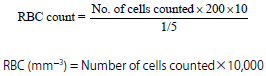 |
White Blood Cell (WBC) count was done with the same technique as used during the RBC count and following equation was used for the calculation of WBC count:
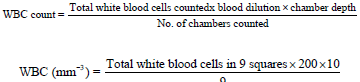 |
Haematocrit (HCT%): Haematocrit (HCT %) was estimated on the basis of sedimentation of blood. Heparinised blood (50 μL) was taken in a micro-haematocrit capillary (Na-heparinised) and spun in a micro-haematocrit centrifuge (RM-12C, REMI, India) at 12,000 rpm for 5 min to obtain haematocrit values. The haematocrit values were measured using a haematocrit reader and the HCT values were presented as percentage34.
Erythrocyte Indices (MCH, MCHC and MCV): The erythrocyte indices including Mean Corpuscular Hemoglobin (MCH), Mean Corpuscular Hemoglobin Concentration (MCHC) and Mean Corpuscular Volume (MCV) were calculated according to Dacies and Lewis35.
Mean Corpuscular Hemoglobin (MCH): The MCH is the content of the hemoglobin of the average red cell.
 |
Mean Corpuscular Hemoglobin Concentration (MCHC): The MCHC in gram percentage for 100 mL erythrocytes was calculated as:
 |
Mean Corpuscular Volume (MCV): The MCV is the average volume of red cells and is calculated as:
MCV = HCT (%)×10 cubic microns/RBC (millions per microlitre)
Statistical analysis: The whole body moisture, protein, fat, ash, Nitrogen Free Extract (NFE) contents, hematological parameters and hepatosomatic indices were subjected to one-way analysis of variance (ANOVA)36,37. To determine the significant differences (p<0.05) among the means, Tukey’s HSD test38 was employed. The values are represented as Mean±Standard Error of the mean (SEM).
RESULTS
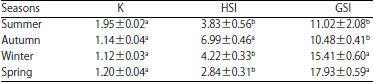
The seasonal variations in condition factor (K), gonadosomatic index (GSI) and hepatosomatic index (HSI) of Schizothorax niger is presented in Table 1. In the present study the condition factor of S. niger used for analysis is calculated within the range from 1.13-1.21 in all the seasons and no significant (p>0.05) difference in condition factor was observed. Significantly (p<0.05) highest HSI (6.99) was observed in autumn season as compared to other three seasons, which showed insignificantly (p>0.05) lower HSI values. In the present study, the highest GSI (17.93) was recorded during spring season followed by winter season whereas, the lower GSI values were recorded during autumn and summer season. However, no significant (p>0.05) difference in GSI values were observed in between spring, winter, autumn and summer seasons, respectively.
In general the body composition of S. niger showed considerable monthly variation among their major biochemical constituents, which showed a well defined seasonal cyclic pattern.
| Table 1: | Seasonal variations in condition factor (K), hepatosomatic index (HSI) and gonadosomatic index (GSI) of Schizothorax niger* |
 | |
*Mean values±SEM (n = 12), Mean values sharing the same superscript are insignificantly different (p>0.05) | |
Overall, the substantial difference in various biochemical constituents of S. niger between the seasons were observed in the present study and the results are presented in Table 2. The body moisture content of S. niger was found to be significantly (p<0.05) higher (76.86%) in winter season, whereas the lowest body moisture content was recorded in summer season. However, the body moisture content values recorded among the three seasons i.e., spring, summer and autumn did not shows any significant (p>0.05) difference among each other. The maximum body protein content (17.53%) was recorded during summer season, which was significantly (p<0.05) higher compared to remaining three seasons. After summer season the next higher protein content (16.26%) was registered during autumn season, while significantly (p<0.05) lowest (12.92%) body protein content was observed in S. niger during winter season.
Similarly, whole body fat content also produced some significant (p<0.05) difference among the seasons. The maximum fat content (5.56%) was observed during summer season, which was significantly (p<0.05) different with the fat content obtained from the remaining seasons. After summer season, the next higher value of body fat content (5.14%) was reported in the autumn season which was not significantly (p>0.05) different with the fat value recorded during spring season. Whereas, significantly (p<0.05) lowest body fat content (3.18%) was recorded during winter season.
The body ash content was found to be significantly (p<0.05) higher (3.20%) during winter season, which was not significantly (p>0.05) different with the ash value recorded during autumn season. While the remaining two seasons had not mark any influence on the body ash content of S. niger. These seasons showed an insignificantly (p>0.05) lower values of ash content as compared to winter and autumn season. Significantly (p<0.05) lowest (2.55%) value of NFE content was recorded in summer season as compared to all the other seasons. Although, the S. niger could not produce any significant difference in their NFE content in the remaining three seasons i.e., spring, autumn and winter. However, during these seasons the fish showed higher values of their NFE content.
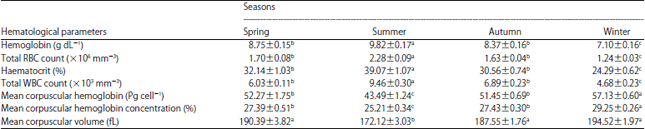
In addition to the biochemical analysis of S. niger, the seasonal variations in hematological parameters such as hemoglobin (Hb), Red Blood Cell (RBC) count, haematocrit (HCT), White Blood Cell (WBC) count, Mean Corpuscular Hemoglobin (MCH), Mean Corpuscular Hemoglobin Concentration (MCHC) and Mean Corpuscular Volume (MCV) were also studied and the results are presented in Table 3.
The Hb content of S. niger was found to be significantly (p<0.05) higher (9.82 g dL–1) in summer season followed by spring and then by autumn season whereas, significantly (p<0.05) lowest Hb content (7.10 g dL–1) was reported during winter season. However, no significant (p>0.05) difference in the Hb content could be seen in between spring and autumn season. The RBC count were also found to be significantly (p<0.05) higher in summer season (2.28×106 mm–3) as compared to all the seasons. While significantly (p<0.05) lowest RBC count was observed during winter season (1.24×103 mm–3). However, an insignificant (p>0.05) intermediate values of RBC counts of S. niger were observed during spring and autumn season.
The haematocrit content (39.07%) was found to be significantly (p<0.05) highest during summer season, whereas significantly (p<0.05) lowest value of HCT (24.29%) content was observed during winter season.
| Table 2: | Showing seasonal variations in moisture, protein, fat, ash and Nitrogen Free Extract (NFE) contents of Schizothorax niger between different seasons* |
 | |
*Mean values±SEM (n = 12), Mean values sharing the same superscript are insignificantly different (p>0.05) | |
| Table 3: | Showing variations in hematological parameters of Schizothorax niger during different seasons of the year* |
 | |
*Mean values±SEM (n = 12), Mean values sharing the same superscript are insignificantly different (p>0.05) | |
However, no significant (p>0.05) difference in the HCT values were recorded among other seasons i.e., autumn and spring, where intermediate values were recorded, which were insignificantly (p>0.05) different among each other. The total WBC count of S. niger also showed seasonal variation and significantly (p<0.05) higher values were recorded in summer (9.46×103 mm–3), while lower value of WBCs count were observed in winter season (4.68×103 mm–3). Whereas, the autumn (6.89×103 mm–3) and spring (6.03×103 mm–3) seasons could only register medium values, which remained insignificantly (p>0.05) different among each other. The highest value of Mean Corpuscular Hemoglobin (MCH) content (57.13 pg cell–1) was estimated in winter season, while the lower MCH value was recorded in summer season (43.49 pg cell–1). The remaining two seasons i.e., autumn and spring did not show any significant (p<0.05) difference in their MCH content and remained almost similar in both the seasons. Mean Corpuscular Hemoglobin Concentration (MCHC) also showed somewhat similar trend to that of MCH value of S. niger. During the present study, it was observed that S. niger had the highest Mean Corpuscular Volume (MCV) during winter season (194.52 fL). However, no significant (p>0.05) difference in MCV values were seen between the autumn, winter and spring season. While significantly (p<0.05) lowest (172.12 fL) MCV value was observed during summer season, which was found to be significantly lowest (p<0.05) as compared to all the seasons.
DISCUSSION
Several studies have shown significant changes in the body composition of the fish due to age, diet, feeding, frequency, migration, ration, seasons, sex, starvation and temperature39-52.
The condition factor is used to express the relative health and robustness of the fish and is one of the most important parameters, which also indicate physiological state of the fish16,53. In the present study, the condition factor (K) of S. niger during the entire studies was found within the range from 1.13-1.21 in all the seasons (Table 1). Liver is one of the major component of viscera and its weight and fat content are affected by season, sexual maturity and the nutritional status of the fish. Significantly highest hepatosomatic index (6.99) was observed in autumn season, whereas no significant difference in HSI of S. niger was observed among the remaining three seasons. Although, a numerical and gradual decrease in HSI from winter, summer and spring seasons were noticed in the present study (Table 1). The maximum GSI value (17.93) was recorded during spring season followed by winter (15.41) season. Although, no significant (p>0.05) difference in GSI values was observed between spring and winter seasons. However, these values were significantly higher as compared to the GSI values achieved during summer (11.02) and autumn (10.48) season. Where, both seasons produced an insignificantly lower GSI values. The higher GSI values recorded during the present study in spring season depicts that the liver has a weight loss during reproductive period which may indicate the mobilization of hepatic reserves for gonadal maturation16, therefore, the same period might be the pre-spawning period of this fish species.
The variation in heamato-serological parameters may indicate a response of fish seasonal changes in the environment or may reflect a alteration of some physiological traits reflecting a reproductive cycle. Furthermore, changes in some haemato-serological parameters may indicate changes induced by stress and disease, or an immune response or a pathological problem of the fish54,55. The variation in these parameters may also depend on the fish species, age and cycle of sexual maturity56,57. Thus, the hemato-serological composition of a species acts as an effective tool to assess the nutritional quality of fish as well as its edible values.
Moisture is one of the major constituent and most important variable of fish body, which varies considerably during different season and is very difficult to be determined accurately58. The variation in moisture content is mostly correlated with the changes in other constituents especially the fat content of the fish. As far as the biochemical analysis is concerned the moisture (water) is essential for all living systems because it present in the form of body fluids which act as medium of transport for nutrients, metabolites etc.
During all the season the moisture content was recorded with in range from 71.92-76.87% in the present study (Table 2) with highest (76.87%) values of body moisture content was recorded during winter season. However, excepting winter season, no significant difference in the body moisture content of S. niger were observed among the remaining three seasons. Contrary to this, the present study, showed a wide variation in the body moisture contents of S. niger during the month wise study, where in between the season some months showed significant difference in their body moisture content, though at the same time some insignificant differences in the moisture content in between the months of the same season were also seen. Moisture content shows an inverse relationship with that of fat content as one increases, the other decreases59-62. The present finding is in agreement with the findings of the above workers. Clark and Almy63 while conducting a detailed study on the analysis of the edible portions of fishes and also found inverse relationship between moisture and fat content, while protein content was varied little with the season. The changes in moisture can be attributed to changes in fat level directly and to spawning and feeding intensity indirectly.
The protein content being the second major component in the body of the fish and is generally reported in the range of 12-25% in freshwater fish species. In case of S. niger during the present study the highest protein content (17.53%) was observed during summer season (Table 2) and showed its peak in the month of July (18.47%) followed by August. The maximum protein content in the body of fish during summer season coincides with a period of intense feeding on such organisms, which are rich in protein. While a fall in protein content may likewise be attributed to a fall in the rate of feeding and the scarcity of food in the gut. The seasonal variation in the protein content of the fishes has also been reported in the past by many workers64-66. Protein content usually remained higher throughout the year except winter season, where lower protein content was noticed. The lower protein value recorded in the winter season is presumably due to the non availability of preferable food and low temperature, which could affect the metabolic activities of the fish. Protein and fat values were also found inversely proportional to moisture content thereby suggesting that the depletion in moisture content is compensated both by fat and protein.
In the present study, the maximum body fat content (5.56%) of S. niger was recorded during summer season and showed its highest peak (6.41%) in the month of June (Table 2) followed by autumn season (5.14%), which was not significantly different with the fat content recorded during spring season. While the lowest body fat content was observed in winter season (3.18%). The highest fat content observed in the present study during spring season seems to coincide with the availability of preferable food and hence high rate of feeding during this period. Presumably a high deposition of fat content during this period is in the form of reservoir food. The effect of food on the body composition of fish especially fat content of the fishes has been studied in the past and the changes in the fat content have been attributed to the presence or absence of plankton etc. The other factors which seem to affect the fat cycle in the body of fishes is the maturity and spawning. The fat content of the fish is also known to vary with seasons. Deka et al.67 reported that the highest body fat content was recorded during retreating monsoon season. Iles and Wood68 reported that the fat content of herring, Elupea pallasi, varies between 4-20% with different seasons. The present study, depicts almost similar pattern in the body fat content of S. niger with respect to the season, where maximum fat content was reported during summer season especially in the month of June which is the post-spawning season of S. niger. More or less similar results were also found in gonia, Labeo gonius52.
The fishes were generally classified on the basis of their fat content69, which means that fat content is one of the most important aspect of fish biochemical composition and its quantity will determine the quality of the fish. Salam70 reported that the fat content of different fish species varied from 3.25% in singhi, Heteropnuestes fossilis to 5.41% in Indian river shad, Gudusia chapra. The present result is in agreement with the above study in respect to the variation in fat content among different seasons. During the present study, the inverse relationship between fat and moisture content has also been observed. The inverse relationship between fat and moisture content has also been reported in some prawn species71,72.
The high fat content reported during summer is due to the warm water, which is less dense and contains abundant food resources for fish. Where as in winter, when the water is cold and dense and food is less abundant fat content decreases. Pearse59 reported the variations in biochemical composition of two common freshwater fishes, the yellow perch, Perca flavescens and the brook trout, Salvelinus fontinalis, at various ages, seasons and under varying conditions of nutrition and he finally suggested that fat content increased during summer and decreased during winter.
In general, the high values for the fat were observed during the spawning months. Spawning, whether occurring after long migrations or not calls for higher levels of energy. As long as spawning continues, the fish loses lots of energy. After spawning is over the fish resumes aggressive feeding behavior, which might be the cause of high fat content during this season. The fat reserves are more in a fully ripe fish, which has to perform breeding, migration and undergo spawning exertion73. Jafri74 made a similar observation in Indian major carp, Cirrhina mrigala and reported ripening of gonads were associated with a rapid increase in fat. Taylor75 suggested that seasonal variations in fat may be correlated with hydrostatic functions believed to be serving the fat to the bodies of the fishes. He mentioned diminishing specific gravity consequent upon increasing fatness probably constitutes a strong directive influence governing the movements of fishes. Krzynowek76 reported that the fat content of some fish species might vary by approximately 10% according to the season. The percentage of body fat is known to depend on the life cycle stage and energy intake of the fish77 and higher temperature periods are characterized by faster growth rates and large feed intakes78.
Ash content of S. niger was reported higher (3.20%) during winter season followed by autumn season (3.02%). While remaining two season spring and summer comparatively produced lower ash contents and reported with in the range from 2.42-2.63% (Table 2). The values of ash content obtained during the present study is in agreement with the findings of Tzikas et al.62, reported that during pre-spawning and spawning season when growth dependent on the utilization of stores of nourishment in the eggs, fat and nitrogen are used up, ash remains fairly constant. In contrary to this Jafri74 stated that although there was no direct relationship between the ash cycle and feeding or spawning activities of C. mrigala, however, a slight increase in ash content was observed during winter season. This could be due to the reason that during winter season less food is available to the fish, so muscle content is low in the fish and as a result ash content increases a bit. The highest values of ash content obtained in the present study during winter season may also be attributed to the high mineral demand of the body.No significant differences in the Nitrogen Free Extract (NFE) content of S. niger was observed in the present study among the seasons except summer season, where significant lower value of NFE content was reported. Although numerically high NFE values were recorded in the remaining three seasons especially during spring and winter but these values were not significantly different from each other. The nitrogen free extract calculated in the present study were reported within the range of 2.55-3.99% among all the seasons. Similar observations related to the NFE contents have also been made by Mba et al.79 in two freshwater and two brackish water fishes.
Hematology offers an easily collected diagnostic gizmo of fish pathology57,80,81. On the other hand, it is important to establish reference ranges for hematological parameters including hemoglobin (Hb), Red Blood Cell (RBC) and White Blood Cell (WBC) numbers. These are the most significant parameters, which can be use in diagnosis of fish diseases, health status and in the detection of any ecological and geographical differences between the species. The hematological parameters were also analyzed in the present study (Table 3). In natural habitats, fish species deal with different factors such as varied water chemistry, pollution, malnutrition, infection and disease. To cope with such challenges they adapt themselves in such environmental conditions by changing their physiological activities57,82. Although, all these factors are closely linked to fish health therefore, it is essential to establish and identify the causes of the diseases in fish which now-a-days are posing a serious challenge for the researchers and aqua-farmers. Water quality is an important factor, which is responsible for variations in fish hematology, since fish live in close association with their environment26,83.
In the present study generally higher values of blood parameters were recorded in summer, whereas lower values were recorded in winter season (Table 3). This results are in conformity with the observations made by earlier workers in the past, while studying different fish species such as Pleuronectes platessa84 and Capoeta trutta85, three cyprind fishes26,57. Moreover, this study further attributes that during summer time, because of high metabolic rate due to high ambient temperature and reproductive activities, most of the hematological parameters like Hb, RBC and HCT have also shown higher values than other seasons. The lowest value, on the other hand was recorded during winter season might be due to low ambient temperature and low metabolic rate. Similar finding were also reported in the past26,86-88.
The percentage of hematocrit content and RBC count of S. niger increased during summer season was in consistent with the results reported in tench fish81,89. Furthermore, high number of RBC must be related to the respiratory compensation mechanism. This compensation is necessary for fish to keep high oxygen availability to tissues. At low temperatures, a decrease in RBC in cyprinids, Phreatichthys andruzzii90 was reported, which characterized the smallest erythropoiesis in winter91. The higher RBC values found in summer with respect to the remaining three seasons were also correlated with the highest HCT content found in summer and the same has also been observed in trout subjected to low oxygen concentration92. The Hb, RBC, HCT values observed in S. niger during different season were significantly higher in the summer and lower in the winter season. Considering that fish are ectothermic vertebrates capable of adapting to changes in ambient temperature and taking into account that at evaluated temperatures there is an increase in metabolic activity and that oxygen concentration in water reduces during this time93,94, fish tend to show an increase in Hb and RBC concentration due to hypoxia95-98. The decrease in Hb, RBC and HCT in winter could be attributed to the decrease in winter temperature leading to the increase in oxygen concentration89,99. The hematological values observed during the present study are similar to the values reported for other fishes81,100,101.
The WBC count was reported maximum in summer season (Table 3) with decline in winter. It is also vary according to environmental quality102. The cells are directly associated with specific and unspecific immunological responses103, nutritional status104, parasitism105 and the presence of infectious agents106. On the contrary, leucopenia is also observed to be associated with water quality as suggested by LeaMaster et al.102 in case of fish. Changes in these parameters in fish may be due to high water temperature, which allows the decomposition of organic matter thus mobilizing WBCs to other organs. So there is seasonal variation in blood parameters like WBCs. The increased WBC in summer is an indication that this season of the year is more favorable physiologically for effective immune system in the fish100. The MCH values did not show any marked difference between seasons, which is in agreement with the findings of Orun et al.26. However, MCHC and MCV decreased during summer, which could be explained with the effects of body size and ecological conditions.
The results obtained for the hematological parameters of S. niger in the present study showed clearly an oscillation of hematological parameters during the seasonal cycle. These oscillations were more substantial in the periods of the year with low temperatures, mainly in the winter indicating unfavorable environmental conditions for adequate immunological activity in the S. niger in its natural habitat, making it vulnerable to pathogenic agents. Therefore, the warm temperatures of spring and summer lead to enhanced hematological parameters and thus, phagocytic activity showing that these seasons are physiologically favorable for the immune system of the fish. Hence, this information can certainly be utilized in future studies in aquaculture (vaccination, reproductive and health management).
The present study indicates that biochemical, hematological parameters and hepatosomatic index of S. niger are evidently related to both endogenous and exogenous factors like reproductive stage, seasonal variation and fish size. However, among these factors, the exogenous ones mostly season have a significant influence on hematological parameters of the fish, while changes in biochemical parameters are mostly associated with other factors including spawning, availability of food and water chemistry etc.
CONCLUSION AND FUTURE RECOMMENDATION
The data obtained in the present study would be useful for further study and also provides valuable baseline information for conducting micro level biochemical analysis of this fish species. The information obtained on moisture, protein, fat, ash (minerals) and NFE contents and how they vary from season to season are important for the fish used as food by consumers. It also facilitates the selection of most appropriate season having higher protein contents for human consumption. The results also suggest that S. niger is very rich in protein and fat content and promises to be a favorable food fish. Indeed its high protein and fat content makes it a prized food fish of the valley. Thus its conservation and culture should be encouraged.
Further study on amino acid, fatty acid, minerals and vitamins analysis of this fish will not only help to established full nutritional profile of this fish species but also be useful to know the role of this fish species for medicinal and bio-prospecting of this species.
ACKNOWLEDGMENTS
The authors are grateful to the Head, Department of Zoology, University of Kashmir, Hazratbal, Srinagar, India for providing necessary laboratory facilities and also gratefully acknowledge the Department of Science and Technology (DST), Govt of India, New Delhi for providing the financial support for the establishment of Fish Nutrition Research and Feed Technology Laboratory (Wet-Lab.) in the Department of Zoology.
REFERENCES
- Ferdose, A. and M.B. Hossain, 2011. Nutritional value of wild, cultured and frozen prawn Macrobrachium rosenbergii (De Man, 1879). Int. J. Nat. Sci., 1: 52-55.
CrossRefDirect Link - Dempson, I.B., C.J. Schwarz, M. Shears and G. Furey, 2004. Comparative proximate body composition of Atlantic salmon with emphasis on parr from fluvial and lacustrine habitats. J. Fish Biol., 64: 1257-1271.
CrossRefDirect Link - Vlieg, P. and D.R. Body, 1988. Lipid contents and fatty acid composition of some New Zealand freshwater finfish and marine finfish, shellfish and roes. New Zeal. J. Mar. Freshwater Res., 22: 151-162.
CrossRefDirect Link - Rasmussen, R.S., 2001. Quality of farmed salmonids with emphasis on proximate composition, yield and sensory characteristics. Aquacult. Res., 32: 767-786.
CrossRefDirect Link - Suleiman, B. and S.A. Abdullahi, 2014. Effects of local processing method (Kilishi) on nutrient profiles of Heterotis niloticus and Hyperopisus bebe occidentalls, in Zaria. J. Aquat. Sci., 24: 16-20.
Direct Link - Jobling, M., 1980. Effects of starvation on proximate chemical composition and energy utilization of plaice, Pleuronectes platessa L. J. Fish Biol., 17: 325-334.
CrossRefDirect Link - Wicker, A.M. and W.E. Johnson, 1987. Relationships among fat content, condition factor and first-year survival of Florida largemouth bass. Trans. Am. Fisher. Soc., 116: 264-271.
CrossRefDirect Link - Hartman, K.J. and F.J. Margraf, 2008. Common relationships among proximate composition components in fishes. J. Fish Biol., 73: 2352-2360.
CrossRefDirect Link - Van Pelt, T.I., J.F. Piatt, B.K. Lance and D.D. Roby, 1997. Proximate composition and energy density of some North pacific forage fishes. Comp. Biochem. Physiol. Part A: Physiol., 118: 1393-1398.
CrossRefDirect Link - Lanno, R.P., B.E. Hickie and D.G. Dixon, 1989. Feeding and nutritional considerations in aquatic toxicology. Hydrobiologia, 188: 525-531.
CrossRefDirect Link - Bolger, T. and P.L. Connolly, 1989. The selection of suitable indices for the measurement and analysis of fish condition. J. Fish. Biol., 34: 171-182.
CrossRefDirect Link - Blackwell, B.G., M.L. Brown and D.W. Willis, 2000. Relative weight (Wr) status and current use in fisheries assessment and management. Rev. Fish. Sci., 8: 1-44.
CrossRefDirect Link - Zin, T., A.A. Than and T.T. Naing, 2011. Fecundity (F), gonadosomatic index (GSI), hepatosomatic index, (HSI), condition factor (K) and length-weight relationship (LWR) in Channa orientalis Bloch & Schneider, 1801. Univ. Res. J., 4: 47-62.
Direct Link - Borkovic, S.S., S.Z. Pavlovic, T.B. Kovacevic, A.S. Stajn, V.M. Petrovic and Z.S. Saicic, 2008. Antioxidant defence enzyme activities in hepatopancreas, gills and muscle of Spiny cheek crayfish (Orconectes limosus) from the River Danube. Comp. Biochem. Physiol. Part C: Toxicol. Pharmacol., 147: 122-128.
CrossRefPubMedDirect Link - Osman, A.G.M., I.A. Mekkawy, J. Verreth and F. Kirschbaum, 2007. Effects of lead nitrate on the activity of metabolic enzymes during early developmental stages of the African catfish, Clarias gariepinus (Burchell, 1822). Fish Physiol. Biochem., 33: 1-13.
CrossRefDirect Link - Osman, A.G.M., S. Wuertz, I.A. Mekkawy, H.J. Exner and F. Kirschbaum, 2007. Lead induced malformations in embryos of the African catfish Clarias gariepinus (Burchell, 1822). Environ. Toxicol., 22: 375-389.
CrossRefPubMedDirect Link - Bahmani, M., R. Kazemi and P. Donskaya, 2001. A comparative study of some hematological features in young reared sturgeons (Acipenser persicus and Huso huso). Fish Physiol. Biochem., 24: 135-140.
CrossRefDirect Link - Gabriel, U.U., G.N.O. Ezeri and O.O. Opabunmi, 2004. Influence of sex, source, health status and acclimation on the haematology of Clarias gariepinus (Burch, 1822). Afr. J. Biotechnol., 3: 463-467.
CrossRefDirect Link - Handy, R.D. and M.H. Depledge, 1999. Physiological responses: Their measurement and use as environmental biomarkers in ecotoxicology. Ecotoxicology, 8: 329-349.
CrossRefDirect Link - Mann, J.J., Y.Y. Huang, M.D. Underwood, S.A. Kassir and S. Oppenheim et al., 2000. A serotonin transporter gene promoter polymorphism (5-HTTLPR) and prefrontal cortical binding in major depression and suicide. Arch. Gen. Psychiatry, 57: 729-738.
CrossRefDirect Link - Hart, P.R. and G.J. Purser, 1995. Effects of salinity and temperature on eggs and yolk sac larvae of the greenback flounder (Rhombosolea tapirina Gunther, 1862). Aquaculture, 136: 221-230.
CrossRefDirect Link - Malhotra, Y.R., 1970. Studies on the seasonal changes in the ovary of Schizothorax niger Heckel from Dal Lake in Kashmir. Jap. J. Ichthyol., 17: 110-116.
Direct Link - Orun, I., M. Dorucu and H. Yazlak, 2003. Haematological parameters of three cyprinid fish species from Karakaya Dam Lake, Turkey. Online J. Biol. Sci., 3: 320-328.
CrossRefDirect Link - Lavanya, S., M. Ramesh, C. Kavitha and A. Malarvizhi, 2011. Hematological, biochemical and ionoregulatory responses of Indian major carp Catla catla during chronic sublethal exposure to inorganic arsenic. Chemosphere, 82: 977-985.
CrossRefDirect Link - Richter, H., C. Luckstadt, U.L. Focken and K. Becker, 2000. An improved procedure to assess fish condition on the basis of length-weight relationships. Arch. Fish. Mar. Res., 48: 226-235.
Direct Link - Afonso-Dias, I., C. Reis and J.P. Andrade, 2005. Reproductive aspects of Microchirus azevia (Risso, 1810) (Pisces: Soleidae) from the South coast of Portugal. Scientia Marina, 69: 275-283.
CrossRefDirect Link - Rajaguru, A., 1992. Biology of two co-occurring tonguefishes, Cynoglossus arel and C. lida (Pleuronectiformes: Cynoglossidae), from Indian waters. Fish. Bull., 90: 328-367.
Direct Link - Drabkin, D., 1946. Spectrophotometric studies XIV. The crystallographic and optical properties of the hemoglobin of man in comparison with those of other species. J. Biol. Chem., 164: 703-723.
Direct Link - Natt, M.P. and C.A. Herrick, 1952. A new blood diluent for counting the erythrocytes and leucocytes of the chicken. Poult. Sci., 31: 735-738.
CrossRefDirect Link - Zaragoza, O.D.R., M.H. Rodriguez and L.F.B. Ramirez, 2008. Thermal stress effect on tilapia Oreochromis mossambicus (Pisces: Cichlidae) blood parameters. Mar. Freshwater Behav. Physiol., 41: 79-89.
CrossRefDirect Link - Snedecor, G.W. and W.G. Cochran, 1967. Statistical Methods. 6th Edn., Oxford and IBH Publishing Co. Pvt. Ltd., New Delhi, India, Pages: 593.
Direct Link - Coutinho, F., H. Peres, I. Guerreiro, P. Pousao-Ferreira and A. Oliva-Teles, 2012. Dietary protein requirement of sharpsnout sea bream (Diplodus puntazzo, Cetti 1777) juveniles. Aquaculture, 356-357: 391-397.
CrossRefDirect Link - Chang, V.M. and D.R. Idler, 1960. Biochemical studies on sockeye salmon during spawning migration: XII. Liver glycogen. Can. J. Biochem. Physiol., 38: 553-558.
CrossRefDirect Link - Groves, T.D.D., 1970. Body composition changes during growth in young sockeye (Oncorhynchus nerka) in fresh water. J. Fish. Res. Board Can., 27: 929-942.
CrossRefDirect Link - Niimi, A.J., 1972. Changes in the proximate body composition of largemouth bass (Micropterus salmoides) with starvation. Can. J. Zool., 50: 815-819.
CrossRefDirect Link - Elliott, J.M., 1976. Body composition of brown trout (Salmo trutta L.) in relation to temperature and ration size. J. Anim. Ecol., 45: 273-289.
CrossRefDirect Link - Craig, J.F., 1977. The body composition of adult perch, Perca fluviatilis in Windermere, with reference to seasonal changes and reproduction. J. Anim. Ecol., 46: 617-632.
CrossRefDirect Link - Grayton, B.D. and F.W.H. Beamish, 1977. Effects of feeding frequency on food intake, growth and body composition of rainbow trout (Salmo gairdneri). Aquaculture, 11: 159-172.
CrossRefDirect Link - Weatherley, A.H. and H.S. Gill, 1983. Protein, lipid, water and caloric contents of immature rainbow trout, Salmo gairdneri Richardson, growing at different rates. J. Fish Biol., 23: 653-673.
CrossRefDirect Link - Kamal, D., A.N. Khan, M.A. Rahman and F. Ahamed, 2007. Biochemical composition of some small indigenous fresh water fishes from the river Mouri, Khulna, Bangladesh. Pak. J. Biol. Sci., 10: 1559-1561.
CrossRefPubMedDirect Link - Ashraf, M., A. Zafar, A. Rauf, S. Mehboob and N. Aziz, 2011. Nutritional values of wild and cultivated silver carp (Hypophthalmichthys molitrix) and grass carp (Ctenopharyngodon idella). Int. J. Agric. Biol., 13: 210-214.
Direct Link - Sutharshiny, S. and K. Sivashanthini, 2011. Proximate composition of three species of Scomberoides fish from Sri Lankan waters. Asian J. Clin. Nutr., 3: 103-111.
CrossRefDirect Link - Begum, M. and M.H. Minar, 2012. Comparative study about body composition of different SIS, shell fish and ilish; commonly available in Bangladesh. Trends Fish. Res., 1: 38-42.
Direct Link - Siddique, M.A.M., P. Mojumder and H. Zamal, 2012. Proximate composition of three commercially available marine dry fishes (Harpodon nehereus, Johnius dussumieri and Lepturacanthus savala). Am. J. Food Technol., 7: 429-436.
CrossRefDirect Link - Ama-Abasi, D. and A. Ogar, 2013. Proximate analysis of snakehead fish, Parachanna obscura, (Gunther 1861) of the Cross River, Nigeria. J. Fish. Aquat. Sci., 8: 295-298.
CrossRefDirect Link - Begum, A., M.H. Minar, M. Sarower-E-Mahfuj and M. Begum, 2013. Monthly variation of biochemical composition of Gonia (Labeo gonius) collected from Bangladeshi water. Int. J. Life Sci. Biotechnol. Pharma Res., 2: 227-232.
Direct Link - Salam, A. and P.M.C. Devies, 1994. Body composition of Northern pike (Esox lucius L.) in relation to body size and condition factor. Fish. Res., 19: 193-204.
CrossRefDirect Link - Horak, P., I. Ots and A. Murumagi, 1998. Haematological health state indices of reproducing great tits: A response to brood size manipulation. Funct. Ecol., 12: 750-756.
CrossRefDirect Link - Perdikaris, C., C. Nathanailides, E. Gouva, U.U. Gabriel and K. Bitchava et al., 2010. Size-relative effectiveness of clove oil as an anaesthetic for rainbow trout (Oncorhynchus mykiss Walbaum, 1792) and goldfish (Carassius auratus Linnaeus, 1758). Acta Vet. BRNO, 79: 481-490.
CrossRefDirect Link - Hrubec, T.C., S.A. Smith and J.L. Robertson, 2001. Age-related changes in hematology and plasma chemistry values of hybrid striped bass (Morone chrysops × Morone saxatilis). Vet. Clin. Pathol., 30: 8-15.
CrossRefDirect Link - Pradhan, S.C., A.K. Patra, B. Sarkar and A. Pal, 2012. Seasonal changes in hematological parameters of Catla catla (Hamilton 1822). Comp. Clin. Pathol., 21: 1473-1481.
CrossRefDirect Link - Pearse, A.S., 1925. The chemical composition of certain fresh-Water fishes. Ecology, 6: 7-16.
CrossRefDirect Link - Tzikas, Z., I. Amvrosiadis, N. Soultos and S. Georgakis, 2007. Seasonal variation in the chemical composition and microbiological condition of Mediterranean horse mackerel (Trachurus mediterraneus) muscle from the North Aegean Sea (Greece). Food Control, 18: 251-257.
CrossRefDirect Link - Clark, E.D. and L.H. Almy, 1918. A chemical study of food fishes the analysis of twenty common food fishes with especial reference to a seasonal variation in composition. J. Biol. Chem., 33: 483-498.
Direct Link - Gokce, M.A., O. Tasbozan, M. Celik and S.S. Tabakoglu, 2004. Seasonal variations in proximate and fatty acid compositions of female common sole (Solea solea). Food Chem., 88: 419-423.
CrossRefDirect Link - Munshi, A.B., S.A. Ali and S. Shakir, 2005. Seasonal variations in biochemical composition of sardines and mullet from Pakistani Waters. J. Chem. Soc. Pak., 27: 190-193.
Direct Link - Boran, G. and H. Karacam, 2011. Seasonal changes in proximate composition of some fish species from the black sea. Turk. J. Fish. Aquat. Sci., 11: 1-5.
CrossRefDirect Link - Deka, B.K., R. Mahanta and U.C. Goswami, 2012. Impact of seasonal and habitat variation on composition of total lipid content in muscle and liver of Labeo gonius (Ham.). Int. J. Scient. Res., 2: 1-4.
Direct Link - Iles, T.D. and R.J. Wood, 1965. The fat/water relationship in North Sea herring (Clupea harengus) and its possible significance. J. Mar. Biol. Assoc. United Kingdom, 45: 353-366.
CrossRefDirect Link - Pillay, K.K. and N.B. Nair, 1973. Observations on the biochemical changes in gonads and other organs of Uca annulipes, Portunus pelagicus and Metapenaeus affinis (Decapoda: Crustacea) during the reproductive cycle. Mar. Biol., 18: 167-198.
CrossRefDirect Link - Samyal, A., Y. Bakhtiyar, A. Verma and S. Langer, 2011. Studies on the seasonal variation in lipid composition of muscles, hepatopancreas and ovary of freshwater prawn, Macrobrachium dayanum (Henderson) during reproductive cycle advance. J. Food Sci. Technol., 3: 160-164.
Direct Link - Jones, S., 1941. An interesting case of migration of the stone-licking fish, Garra mullya (Sykes), for breeding. Curr. Sci., 10: 445-446.
Direct Link - Garcia, B., F.M. Rueda, M.D. Hernandez, F. Aguado, M.A. Egea and F. Faraco, 2001. Growth and Conversion Index of Sharpsnout seabream (Diplodus puntazzo, 1789). In: Feedlot Tanks, Fernandez-Palacios, H. and M. Zquiredo (Eds.). Monographs of the Canarian Institute of Marine Science, Las Palmas de Gran Canaria, Spain.
- De Pedro, N., A.I. Guijarro, M.A. Lopez-Patino, R. Martinez-Alvarez and M.J. Delgado, 2005. Daily and seasonal variations in haematological and blood biochemical parameters in the tench, Tinca tinca Linnaeus, 1758. Aquacult. Res., 36: 1185-1196.
CrossRefDirect Link - Ikechukwu, O.A. and C.L. Obinnaya, 2010. Haematological profile of the African lungfish, Protopterus annectens (Owen) of Anambra River, Nigeria. J. Am. Sci., 6: 123-130.
Direct Link - Casillas, E. and L.S. Smith, 1977. Effect of stress on blood coagulation and haematology in rainbow trout (Salmo gairdneri). J. Fish Biol., 10: 481-491.
CrossRefDirect Link - Preston, A., 1960. Red blood values in the plaice (Pleuronectes platessa L.). J. Mar. Biol. Assoc. UK., 39: 681-687.
CrossRefDirect Link - Orun, I. and A.U. Erdeml, 2002. A study on blood parameters of Capoeta trutta (Heckel, 1843). J. Biol. Sci., 2: 508-511.
CrossRefDirect Link - Das, B.C., 1964. Age-related trends in the blood chemistry and hematology of the Indian carp (Catla catla). Gerontologia, 10: 47-64.
PubMedDirect Link - Adebayo, O.T., O.A. Fagbenro, C.B. Ajayi and O.M. Popoola, 2007. Normal haematological profile of Parachanna obscura as a diagnostic tool in aquaculture. Int. J. Zool. Res., 3: 193-199.
CrossRefDirect Link - Guijarro, A.I., M.A. Lopez-Patino, M.L. Pinillos, E. Isorna and N. De Pedro et al., 2003. Seasonal changes in haematology and metabolic resources in the tench. J. Fish Biol., 62: 803-815.
CrossRefDirect Link - Frangioni, G., R. Berti and G. Borgioli, 1997. Hepatic respiratory compensation and haematological changes in the cave cyprinid, Phreatichthys andruzzii. J. Comp. Physiol. B, 167: 461-467.
CrossRefDirect Link - Hofer, R., M. Stoll, N. Romani, F. Koch and H. Sordyl, 2000. Seasonal changes in blood cells of Arctic char (Salvelinus alpinus L.) from a high mountain lake. Aquat. Sci., 62: 308-319.
CrossRefDirect Link - Snieszko, S.F., 1974. The effects of environmental stress on outbreaks of infectious diseases of fishes. J. Fish Biol., 6: 197-208.
CrossRefDirect Link - Siddiqui, A.Q. and S.M. Nasim, 1979. The hematology of mrigal, Cirrhina mrigala (Ham.) (Teleostei: Cyprinidae). Anat. Anz., 146: 262-269.
PubMedDirect Link - Andersen, N.A., J.S. Laursen and G. Lykkeboe, 1985. Seasonal variations in hematocrit, red cell hemoglobin and nucleoside triphosphate concentrations, in the European eel Anguilla anguilla. Comp. Biochem. Physiol. Part A: Physiol., 81: 87-92.
CrossRefDirect Link - Soldatov, A.A., 1996. The effect of hypoxia on red blood cells of flounder: A morphologic and autoradiographic study. J. Fish Biol., 48: 321-328.
CrossRefDirect Link - Wells, R.M.G., J. Baldwin, R.S. Seymour, K. Christian and T. Brittain, 2005. Red blood cell function and haematology in two tropical freshwater fishes from Australia. Comp. Biochem. Physiol. Part A: Mol. Integr. Physiol., 141: 87-93.
CrossRefDirect Link - Das, P.C., S. Ayyappan and J.K. Jena, 2006. Haematological changes in the three Indian major carps, Catla catla (Hamilton), Labeo rohita (Hamilton) and Cirrhinus mrigala (Hamilton) exposed to acidic and alkaline water pH. Aquaculture, 256: 80-87.
CrossRefDirect Link - Rehulka, J., B. Minaiik and E. Rehulkova, 2004. Red blood cell indices of rainbow trout Oncorhynchus mykiss (Walbaum) in aquaculture. Aquacult. Res., 35: 529-546.
CrossRefDirect Link - Santos, A.A., M.I. Egami, M.J.T. Ranzani-Paiva and Y. Juliano, 2009. Hematological parameters and phagocytic activity in fat snook (Centropomus parallelus): Seasonal variation, sex and gonadal maturation. Aquaculture, 296: 359-366.
CrossRefDirect Link - Fallah, F.J., H. Khara, J.D. Roohi and M.S. Boorani, 2014. Hematological parameters of pike Esox lucius in relation to different ages and seasons. Comp. Clin. Pathol., 23: 949-953.
CrossRefDirect Link - LeaMaster, B.R., J.A. Brock, R.S. Fujioka and R.M. Nakamura, 1990. Hematologic and blood chemistry values for Sarotherodon melanotheron and a red hybrid tilapia in freshwater and seawater. Comp. Biochem. Physiol. Part A: Physiol., 97: 525-529.
CrossRefDirect Link - Barros, M.M., L.E. Pezzato, G.K. Kleemann, H. Hisano and G.J.M. Rosa, 2002. [Levels of vitamin C and iron for Nile tilapia (Oreochromis niloticus)]. Revista Brasileira Zootecnia, 31: 2149-2156.
CrossRefDirect Link - Martins, M.L., F. Pilarsky, E.M. Onaka, D.T. Nomura and J. Fenerick Jr. et al., 2004. [Haematology and acute inflammatory response of Oreochromis niloticus (Osteichthyes: Cichlidae) submitted to a single and consecutive stress of capture]. Boletim Instituto Pesca, 30: 71-80.
Direct Link - Martin, L.B., Z.M. Weil and R.J. Nelson, 2008. Seasonal changes in vertebrate immune activity: Mediation by physiological trade-offs. Philos. Trans. R. Soc. London B: Biol. Sci., 363: 321-339.
CrossRefDirect Link