

K. Sriputhorn
Applied Taxonomic Research Center, Department of Biology, Faculty of Science, Khon Kaen University, Khon Kaen 40002, Thailand
L. Sanoamuang
Faculty of Science, Mahasarakham University, Maha Sarakham 44150, Thailand
International Journal of Zoological Research
Year: 2011 | Volume: 7 | Issue: 2 | Page No.: 138-146





ABSTRACT
We evaluated the potential of adult fairy shrimp, Streptocephalus sirindhornae, as live food for growth and enhancing the carotenoid contents in the giant freshwater prawn Macrobrachium rosenbergii. Completely randomized cultures of 6-months-old prawns were treated individually with 5 different food ratios (adult fairy shrimp to dry shrimp diet; 0: 100, 25: 75, 50: 50, 75: 25 and 100: 0) for 60 days in circular black plastic containers containing 20 L of water. The diet was fed at a rate of 3% of the prawn body weight per day. Each food concentration was experimented with 12 replicates and the whole experiment (5 treatments) using a total of 60 individuals. The results showed that the initial lengths (11.9-13.0 cm) and weights (23.20-31.65 g) of the experimental prawns with the 5 food ratios were not significantly different. However, length (0.87 cm) and weight (15.14 g) gains of the prawns fed pure fairy shrimp treatment (100: 0) were significantly different from those of the other dietary treatments (p<0.05). The prawns fed with the pure fairy shrimp had the highest specific growth rate of 0.84%, the lowest food conversion ratio of 1.38 and the highest survival rate of 84.75%. The prawns fed with pure fairy shrimp contained the highest total carotenoids of 4.144 μg g-1 of fresh weight with large amounts of astaxanthin and β-carotene, which was 2.8 times of those fed with pure dry diet treatment (p<0.05). Present results indicate improved growth performances and elevated carotenoid contents of prawns suggesting fairy shrimp as promising feeds in freshwater aquaculture.
PDF Abstract XML References Citation
Article History
Received: July 13, 2010;
Accepted: September 09, 2010;
Published: October 19, 2010
How to cite this article
K. Sriputhorn and L. Sanoamuang, 2011. Fairy Shrimp (Streptocephalus sirindhornae) as Live Feed Improve Growth and Carotenoid Contents of Giant Freshwater Prawn Macrobrachium rosenbergii. International Journal of Zoological Research, 7: 138-146.
DOI: 10.3923/ijzr.2011.138.146
URL: https://scialert.net/abstract/?doi=ijzr.2011.138.146
DOI: 10.3923/ijzr.2011.138.146
URL: https://scialert.net/abstract/?doi=ijzr.2011.138.146
INTRODUCTION
Fairy shrimp are microcrustaceans in the order Anostraca, usually appear in temporary pools or seasonally-flooded depressions. They are well-adapted to living in arid areas where water is present for only part of the year. Their eggs (or cysts) will survive drought for several years and hatch about 24 h after rains fill the pools where they live. Three species of fairy shrimp (Streptocephalus sirindhornae Sanoamuang, Murugan, Weekers and Dumont; Branchinella thailandensis Sanoamuang, Saengphan and Murugan; and Streptocephalus siamensis Sanoamuang and Saengphan) have been discovered from Thai freshwaters (Sanoamuang et al., 2000, 2002; Sanoamuang and Saengphan, 2006). Since then attempts have been made to culture these species in order to use them as new live feed for freshwater aquatic animals such as prawns, shrimp and ornamental fish (Saengphan et al., 2005, 2006; Sanoamuang et al., 2006; Boonmak et al., 2007; Plodsomboon and Sanoamuang, 2007; Sriputhorn and Sanoamuang, 2007; Saengphan and Sanoamuang, 2009). Cultures of S. sirindhornae and B. thailandensis can be done in circular outdoor, concrete ponds (diameter of 1 m, volume of water of 150 L) at an initial density of 50 nauplii L-1 (Saengphan et al., 2006). Mass cultures of S. sirindhornae were also done successfully in rectangular, earthen ponds (1,600-3,200 m2) at an initial density of 1,250 individual’s m-2 (Saengphan et al., 2006). Cyst production of S. sirindhornae and B. thailandensis under static conditions at room temperature (21-34°C) can be as high as 18,685 and 6,699 cysts female-1, respectively (Boonmak et al., 2007). These species are characterized by high cyst hatchability (76-99%), short life spans (ca. 1 month), high fecundities and they are easy to culture (Saengphan et al., 2005, 2006). Furthermore, fairy shrimp cysts can be harvested easily for further use and storage. In addition, B. thailandensis was reported to contain a higher protein content of 64.9% (Saengphan et al., 2006) compared to 56.4% in Artemia sp. (Tunsutapanich et al., 1993). Velu et al. (2003) demonstrated that Streptocephalus dichotomus Baird had a high level of total carotenoids (114.3 μg g-1 dry wt.) compared with that of a cladoceran Moina micrura (29.5 μg g-1 dry wt.). Fairy shrimp are also cooked and consumed by local people in North-East Thailand (Sanoamuang and Dumont, 2000).
Freshwater prawn farming is an important industry in many Asian countries, which contributes to over 98% of the global freshwater prawn production (Asaduzzaman et al., 2009). The giant freshwater prawn, Macrobrachium rosenbergii (de Man), is one of the most popular prawn species used for commercial farming in Asia including Thailand (New, 2005; Thanh et al., 2009). In 2005, the production in Thailand was evaluated to be 30,000 t at a value of US$ 79,096,000 ranking third in producers behind China (99,111 t) and India (42,820 t; Schwantes et al., 2009). Prawn farming is concentrated along irrigation canals and mostly use formulated, protein-rich pellets, thus it requires frequent water exchange to maintain suitable water quality. One of the farming problems was the discharge of nutrient-rich effluent waters into public waterways, resulting in eutrophication and poor public water quality (Alam, 2007; Schwantes et al., 2009).
In order to reduce reliance on live feed Artemia spp. in aquaculture, researches have been conducted over the last decade to find an alternative to live feed (Gonzalez et al., 2008). The suitability of decapsulated cysts and adults of fairy shrimp Streptocephalus dichotomus as a sole diet was successfully introduced to ornamental angelfish Pterophyllum scalare larvae (Velu and Munuswamy, 2003), gold fish Carassius auratus, respectively (Velu and Munuswamy, 2007) and juvenile fish Oreochromis mossambicus (Prasath et al., 1994). Nauplii of S. proboscideus were used for larviculture of tilapia (Oreochromis aureus) by Ali and Dumont (1995) and Persian sturgeon (Acipenser persicus) by Namin et al. (2007). In this study, we used adult fairy shrimp, S. sirindhornae as a live food to test their suitability in enhancing growth and carotenoid contents in the giant freshwater prawn M. rosenbergii. This was an attempt to use their high nutritional value and to avoid water quality deterioration that is otherwise caused by pellet feeds.
MATERIALS AND METHODS
Experimental design and cultivation of prawns: The experiment was carried out at the Applied Taxonomic Research Center, Khon Kaen University, Khon Kaen Province, North-East Thailand, during 15 March and 14 May 2007. One-month old juveniles of giant freshwater prawn, Macrobrachium rosenbergii (mean initial wet weight 1.65 mg) obtained from a commercial hatchery in Suphan Buri Province, central Thailand were stocked at a density of 50 juveniles m-2 in earthen ponds for 2 months. After that they were then reared at a density of 8 individuals m¯2 until the age of 6 months. A locally formulated and prepared pellet diet (0.3-0.4 mm size) was provided as food, containing the following components: 35% protein, 45% carbohydrate, 3% fat, 2% vitamin/mineral, 4% ash, 12% moisture. The diet was fed at a rate of 3% of the prawn body weight (Chetawan et al., 2002) during acclimation and experimentation per day. Five prawn culture treatments were set up with 5 ratios of food concentrations for a period of 60 days. The food ratios of adult fairy shrimp to dry diet in the treatments were 0: 100, 25: 75, 50: 50, 75: 25 and 100: 0. The 6-month old prawns were randomly selected to culture individually in circular black plastic containers containing 20 L of freshwater. Each food concentration was experimented with 12 replicates and the whole experiment (5 treatments) using a total of 60 individual males. Only male prawns were used because the 6-month old females will produce mainly eggs instead of meat. During the experiment, specimens were subjected to the following conditions; water renewal rate of 50% on alternate days; photoperiod, 12 h light: 12 h dark; water temperature 30±6°C.
Culture of fairy shrimp: Cysts of fairy shrimp, Streptocephalus sirindhornae were obtained from the Applied Taxonomic Research Center. They were incubated in 3 L plastic containers with dechlorinated freshwater that was exchanged in 48 h intervals. One-day old nauplii were transferred to a 1,600 m2 earthen pond with a volume of 960 m3 at a density of 1,250 individuals m-2. To stimulate the production of natural algae to feed the fairy shrimp, 160 L of 7 day old Chlorella sp. were transferred into the pond together with 70 kg of dried chicken faeces and 10 kg of N-P-K (16- 20-0). Cultures of Chlorella sp. were performed using the procedure of Saengphan et al. (2005). After 25 days, adult fairy shrimp (2-3 cm long) were chosen to feed the prawns according to the experimental design.
Water quality measurements: Water quality variables and nutrients (Mean±SE) in culture containers of adult M. rosenbergii fed with 5 different food ratios for 60 days were measured shortly before the water exchange every other day. Water temperature, pH and Dissolved Oxygen (DO) were determined using a thermometer, WTW pH meter (model 3150l) and WTW Oxygen meter (model Oxl 3400l) (WTW, Weilheim, Germany). Total ammonia nitrogen and total nitrite and alkalinity were determined according to methods of Boyd and Tucker (1993) and American Public Health Association (1981). All physicochemical parameters were determined at 15.00 h every 5 days of the experiment.
Measurement of parameters: The experimental prawns were measured and individually weighted every 5 days for 60 days. Body length was measured with a Vernier caliper (to the nearest 0.1 mm) and weight was determined by a precision balance (to the nearest 0.1 mg) after removing excess water with tissue paper. Specific Growth Rate (SGR), Feed Conversion Ratio (FCR) and Survival Rate (SR) were evaluated during the 60-day trial. Performance was measured as a function of weight increase and by calculation of the following parameters:
 |
where, Wt is the final weight (g), Wi is the initial weight and T is the duration of experiment (days).
 |
Total carotenoid contents from the prawn meat were analyzed using high performance liquid chromatography (Rodriguez-Amaya and Kimura, 2004). Water quality analyses were done every 5 days according to procedures of the American Public Health Association (1981) standard methods.
Data analysis: Data were analyzed by analysis of variance (ANOVA), using the methods described by (Sokal and Rohlf, 1981). When significance was demonstrated, Duncan’s multiple range test (Duncan, 1955) was used to identify which means differed significantly from each other. Significance was declared at p = 0.05.
RESULTS
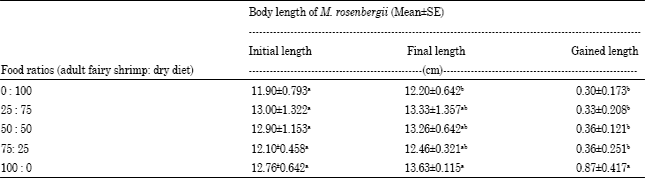
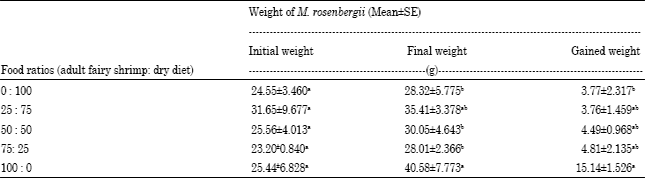
Gained body lengths and weights of the adult prawns fed with 5 different food ratios (fairy shrimp: dry diet; 0:100, 25:75, 50:50, 75:25 and 100:0) for 60 days are shown in Table 1 and 2, respectively. Although, the mean initial lengths (11.9-13.0 cm) and weights (23.20-31.65 g) of the experimental prawns with the 5 food ratios were not significantly different, the length (0.87 cm) and weight (15.14 g) gains of the pure fairy shrimp treatment (100:0 food ratio) were significantly different from those of the other dietary treatments (p<0.05) (Table 1, 2).
Specific growth rates, food conversion ratios and survival rates of the adult prawns fed with 5 different food ratios are presented in Table 3. The prawns fed with the pure fairy shrimp treatment had the highest specific growth rate of 0.84%, which was significantly different from that of the other treatments (p<0.05).
| Table 1: | Body length increments of adult Macrobrachium rosenbergii fed with 5 different food ratios for 60 days |
 | |
| Values followed by the same letter(s) are not significantly different (p>0.05) | |
| Table 2: | Weight increments of adult Macrobrachium rosenbergii fed with 5 different food ratios for 60 days |
 | |
| Values followed by the same letter(s) are not significantly different (p>0.05) | |
| Table 3: | Specific growth rates, food conversion ratios and survival rates of adult Macrobrachium rosenbergii fed with 5 different food ratios for 60 days |
 | |
| Values are Mean±SE. Values followed by the same letter(s) are not significantly different (p>0.05) | |
| Table 4: | Total carotenoid, β-carotene and astaxanthin contents of adult Macrobrachium rosenbergii fed with 5 different food ratios for 60 days |
 | |
| Values are Mean±SE. Values followed by the same letter(s) are not significantly different (p>0.05) | |
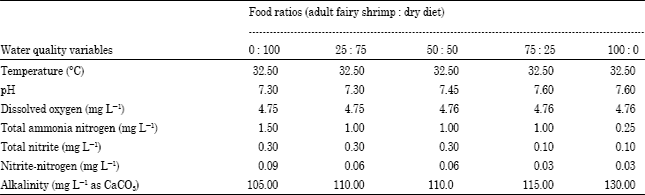
| Table 5: | Water quality variables and nutrients (mean±SE) in culture containers of adult Macrobrachium rosenbergii fed with 5 different food ratios for 60 days (average measures before water exchange every other day) |
 | |
The prawns fed with the pure fairy shrimp treatment had the lowest food conversion ratio of 1.38, which was significantly different from that of the other treatments (p<0.05). Survival rate of the prawns fed with 5 food ratios ranged from 74.96% to 84.75%. The prawns fed with the pure fairy shrimp treatment had the highest survival rate of 84.75%, which was significantly different from that fed with the pure dry diet treatment (74.96%, p<0.05).
Table 4 shows total carotenoid, β-carotene and astaxanthin contents of the adult prawns fed with 5 different food ratios. The prawns fed with the pure fairy shrimp treatment contained the highest total carotenoids of 4.14 μg g-1 fresh weight with large amounts of astaxanthin and β-carotene, which was 2.8 times of that fed with the pure dry diet treatment (p<0.05). In addition, the prawns fed with the pure fairy shrimp treatment showed a darker orange-red coloration than that of the other treatments.
Water quality data of the prawn cultures fed with 5 different food ratios are presented in Table 5. The total ammonia nitrogen and total nitrite recorded from the pure dry diet treatment (1.5 and 0.3 mg L-1, respectively) were higher than those of the pure fairy shrimp treatment (0.25 and 0.1 mg L-1). The other parameters of the 5 dietary treatments showed no statistical differences.
DISCUSSION
The current study clearly demonstrated that feeding the adult prawn M. rosenbergii with the live, adult fairy shrimp S. sirindhornae at an appropriate period led to significantly improved growth performances and carotenoid contents of the prawn. A similar study by Velu and Munuswamy (2008) has shown that M. rosenbergii post larvae can be fed with S. dichotomous nauplii as evident by increase in length, weight and survival percentage. Analysis of nutritional composition of S. dichotomous nauplii reveals that they are rich in protein, lipid, essential amino acids and essential fatty acids (Velu and Munuswamy, 2008). The survival rate of the prawns fed with the pure fairy shrimp treatment was highest (84.75%), this value was significantly different from that fed with the pure dry diet treatment (74.96%). A similar study by Chetawan et al. (2002) has shown that the survival rate of individually grown older prawns (2-4 month old) is usually higher (70-80%) than that of younger prawns (1-2 month old; 20-40%). Soundarapandian et al. (2008) also recorded a lower survival rate of 40% from a monoculture of M. rosenbergii juveniles in earthen ponds at stocking density of 3.3 ind. m-2 in Parangipettai Farm, Tamil Nadu, India. This supports the study of Angeles et al. (2009), in which astaxanthin-injected mature M. rosenbergii at 1.34 nmol g-1 BW-1 had significantly higher survival rates leading to an improvement in the prawn resistance against bacterium Lactococcus garvieae infection.
The prawns fed with the pure fairy shrimp treatment contained carotenoids with 2.8 times higher contents than that fed with the pure dry diet treatment. Similarly, feeding of diets supplemented with carotenoids to a marine prawn Penaeus japonicus for 60 days resulted in an accumulation of carotenoids especially astaxanthin in the prawn tissue (Yamada et al., 1990). Moreover, the P. japonicus prawns fed astaxanthin diet had a higher rate of survival than those fed β-carotene or algal meal diets (Chien and Jeng, 1992). An experiment on effect of dietary astaxanthin on growth, survival and stress tolerance of Litopenaeus vannamei post larvae suggested that astaxanthin was a necessary ingredient for larval development (Niu et al., 2009). A possible explanation for the record of high carotenoid contents in the meat of the prawns fed with the pure fairy shrimp treatment (4.14 μg g-1 fresh weight) is the fairy shrimp itself containing high concentrations of carotenoids. Relative abundance of carotenoid pigments in fairy shrimp S. dichotomous has been reported by Velu et al. (2003). The carotenoid content in S. sirindhornae was as high as 25.43 μg g-1 fresh weight compared with 5.18 μg g-1 fresh weight in a cladoceran Moina micrura (unpublished data). Our results conform to the study of Velu et al. (2003) which demonstrated that the fairy shrimp Streptocephalus dichotomus had a high carotenoid content of 114.3 μg g-1 dry weight in comparison with 29.5 μg g-1 dry weight in M. micrura. These authors also reported that canthaxanthin (45.73%), astaxanthin (30.17%) and β-carotene (8.78%) as the major carotenoid pigments in S. dichotomus (Velu and Munuswamy, 2007), whereas we found astaxanthin and β-carotene are the major pigments in the prawns fed with the pure fairy shrimp treatment. Studies conducted in the laboratory show that intake of fairy shrimp as live food improves pigmentation in adult prawns (this study), prawn larvae and gold fish (Dumont and Munuswamy, 1997), as well as in flower horn fish (Sanoamuang et al., 2006).
Fairy shrimp collected from some natural habitats are characteristically identified by the bright orange/red pigmentation of their bodies (Sanoamuang et al., 2006). This color is presumably due to the deposition of carotenoids (specifically astaxanthin) from their natural food sources. As prawns are unable to form or convert intermediary precursor pigments to caratenoids, diets containing carotenoids must be fed and carotenoids will be stored in their tissue. Previous studies suggest that carotenoids, especially astaxanthin accumulated in the consumers, play an important role in enhancing body coloration, reproduction, immunity, survival and antioxidants (Miki, 1991; Linan-Cabello et al., 2002; Velu et al., 2003). Thus, the relatively high content of carotenoids in our experimental prawns increasing their nutritional value is expected to lead to a higher market price of the prawn.
Water quality in prawn cultures is strongly dependent on the decomposition of the remaining un-ingested food. The high concentrations of the total ammonia nitrogen and nitrite (1.5 and 0.3 mg L-1) recorded from the cultured water of the pure dry diet treatment, were due to decomposition processes of the uningested dry pellet remains. The treatments with live fairy shrimp (0.25 and 0.1 mg L-1 ammonia nitrogen and nitrite, respectively) were less affected by decomposition processes.
Present results suggest that the fairy shrimp S. sirindhornae can be used as a suitable and nutritionally adequate food for growth and enhancing carotenoid contents in the prawn M. rosenbergii. In addition, the water quality in the prawn cultures after feeding with pure fairy shrimp was more appropriate than the treatments using non-viable dry feeds.
ACKNOWLEDGMENTS
This study was supported by the Thailand Research Fund (Grant Number: RDG5020069) and the Commission on Higher Education (CHE-RES-RG Program). The authors wish to thank Dr. Khomsorn Lomthaisong for his help with the extraction of carotenoids. Dr. Hans-U. Dahms and Dr. Alejandro M. Maeda-Martinez are thanked for critical readings on the manuscript.
REFERENCES
- Alam, S.M.N., 2007. Biological and chemical products use in extensive shrimp farming in Southwest Bangladesh. J. Fish. Aquatic Sci., 2: 56-62.
CrossRefDirect Link - Angeles, Jr. I.P., Y.H. Chien and M.M. Tayamen, 2009. Effects of different dosages of astaxanthin on giant freshwater prawn Macrobrachium rosenbergii (De Man) challenged with Lactococcus garvieae. Aquac. Res., 41: 70-77.
CrossRef - Asaduzzaman, M., M.A. Wahab, M.C.J. Verdegem, S. Benerjee, T. Akter, M.M. Hasan and M.E. Azim, 2009. Effects of addition of tilapia Oreochromis niloticus and substrates for periphyton developments on pond ecology and production in C/N-controlled freshwater prawn Macrobrachium rosenbergii farming systems. Aquaculture, 287: 371-380.
CrossRefDirect Link - Chetawan, K., P. Phansri and K. Poonsook, 2002. Study of water quality and soil sediments in culture ponds of Macrobrachium rosenbergii in Kalasin Province, Thailand. Proceedings of Conference for Biotechnology for Development of Thai Agriculture, May 23-24, Rimpao Hotel, Kalasin, Thailand, pp: 213-217.
- Chien, Y.H. and S.C. Jeng, 1992. Pigmentation of Kuruma prawn, Penaeus japonicus Bate, by various pigment sources and levels and feeding regimes. Aquaculture, 102: 333-346.
CrossRef - Dumont, H.J. and N. Munuswamy, 1997. The potential of freshwater anostraca for technical applications. Hydrobiologia, 358: 193-197.
CrossRef - Gonzalez, A., J.D. Celada, R. Gonzalez, V. Garcia, J.M. Carral and M. Saez-Royuela, 2008. Artemia nauplii and two commercial replacements as dietary supplement for juvenile signal crayfish, Pacifastascus leniusculus (Astacidae), from the onset of exogenous feeding under controlled conditions. Aquaculture, 281: 83-86.
- Linan-Cabello, M.A., J. Paniagua-Michel and P.M. Hopkins, 2002. Bioactive roles of carotenoids and retinoids in crustaceans. Aquacult. Nutr., 8: 299-309.
CrossRef - Miki, W., 1991. Biological functions and activities of animal carotenoids. Pure Applied Chem., 63: 141-146.
Direct Link - Namin, I., J.U. Arshad and Z. Ramezanpoor, 2007. Mass culture of fairy shrimp Streptocephalus proboscideus (Crustacea-Anostraca) and its use in larviculture of the Persian sturgeon, Acipenser persicus. Aquac. Res., 38: 1088-1092.
CrossRef - New, M.B., 2005. Freshwater prawn farming: Global status, recent research and a glance at the future. Aquacult. Res., 36: 210-230.
CrossRefDirect Link - Niu, J., L.X. Tian, Y.J. Liu, H.J. Yang, C.X. Ye, W. Gao and K.S. Mai, 2009. Effect of dietary astaxanthin on growth, survival and stress tolerance of post larvae shrimp, Litopenaeus vannamei. J. World Aquacult. Soc., 40: 795-802.
CrossRef - Prasath, E.B., N. Munuswamy and A.K.A. Nazar, 1994. Preliminary studies on the suitability of a fairy shrimp Streptocephalus dichotomus as live food in aquaculture. J. World Aquacult. Soc., 25: 204-207.
CrossRef - Saengphan, N. and L. Sanoamuang, 2009. Effect of food concentrations on growth and survival of the fairy shrimp Branchinella thailandensis Sanoamuang, Saengphan and Murugan. Burapha Sci. J., 14: 19-28.
Direct Link - Saengphan, N., R.J. Shiel and L.O. Sanoamuang, 2005. The cyst hatching pattern of the Thai fairy shrimp, Branchinella thailandensis Sanoamuang, Saengphan and Murugan, 2002 (Anostraca). Crustaceana, 78: 513-523.
CrossRefDirect Link - Sanoamuang, L.O., G. Murugan, P.H.H. Weekers and H.J. Dumont, 2000. Streptocephalus sirindhornae, new species of freshwater fairy shrimp (Anostraca) from Thailand. J. Crustacean Biol., 20: 559-565.
Direct Link - Sanoamuang, L. and N. Saengphan, 2006. A new species of Streptocephalus fairy shrimp (Crustacea, Anostraca) with tetrahedral cysts from central Thailand. Int. Rev. Hydrobiol., 91: 250-256.
CrossRef - Sanoamuang, L.O., N. Saengphan and G. Murugan, 2002. First record of the family Thamnocephalidae (Crustacea: Anostraca) from Southeast Asia and description of a new species of Branchinella. Hydrobiologia, 486: 63-69.
CrossRefDirect Link - Schwantes, V.S., J.S. Diana and Y. Yi, 2009. Social, economic and production characteristics of giant river prawn Macrobrachium rosenbergii culture in Thailand. Aquaculture, 287: 120-127.
CrossRef - Soundarapandian, P., K. Balamurugan and N.J. Samuel, 2008. Preliminary observations on freshwater prawn farming of Macrobrachium rosenbergii (De Man) in Tamil Nadu. Int. J. Zool. Res., 4: 72-76.
CrossRefDirect Link - Thanh, N.M., R.W. Ponzoni, N.H. Nguyen, N.T. Vu, A. Barnes and P.B. Mather, 2009. Evaluation of growth performance in a diallel cross of three strains of giant freshwater prawn (Macrobrachium rosenbergii) in Vietnam. Aquaculture, 287: 75-83.
Direct Link - Velu, C.S., B. Czeczuga and N. Munuswamy, 2003. Carotenoprotein complexes in entomostracan crustaceans (Streptocephalus dichotomus and Moina micrura). Comp. Biochem. Phys. B., 135: 35-42.
PubMed - Velu, C.S. and N. Munuswamy, 2003. Nutritional evaluation of decapsulated cysts of fairy shrimp (Streptocephalus dichotomus) for ornamental fish larval rearing. Aquac. Res., 34: 967-974.
CrossRef - Velu, C.S. and N. Munuswamy, 2007. Composition and nutritional efficacy of adult fairy shrimp Streptocephalus dichotomus as live feed. Food Chem., 100: 1435-1445.
CrossRef - Velu, C.S. and N. Munuswamy, 2008. Evaluation of Streptocephalus dichotomus nauplii as a larval diet for freshwater prawn Macrobrachium rosenbergii. Aquacult. Nutr., 14: 331-340.
CrossRef - Yamada, S., Y. Tanaka, M. Sameshima and Y. Ito, 1990. Pigmentation of prawn (Penaeus japonicus) with carotenoids. I. Effect of dietary astaxanthin, β-carotene and canthaxanthin on pigmentation. Aquaculture, 87: 323-330.
CrossRef - Ali, A.J. and H.J. Dumont, 1995. Suitability of Decapsulated Cysts and Nauplii of Streptocephalus proboscideus (Crustacea: Anostraca) as Food for Tilapia, Oreochromis aureus Larvae: A Preliminary Study. In: Larvi`95, Fish and Shellfish Larviculture Symposium, Lavens, Lavens, P., E. Jaspers and I. Roelants (Eds.). European Aquaculture Society, Belgium, pp: 328-332.