

Yong Wang
Department of Orthopedics, Taizhou Municipal Hospital, Taizhou, 318000, China
Xiao-Ping Zhao
Department of Orthopedics, Taizhou Municipal Hospital, Taizhou, 318000, China
Jian-Wei Ruan
Department of Orthopedics, Taizhou Municipal Hospital, Taizhou, 318000, China
International Journal of Pharmacology
Year: 2015 | Volume: 11 | Issue: 5 | Page No.: 456-462





ABSTRACT
Aceclofenac is a non steroidal anti inflammatory drug which is used to manage the chronic pain and inflammation in the patients of rheumatoid arthritis. But it is associated with short half-life (2-3 h) and gastro-intestinal side effects. To overcome these problems the transdermal delivery of aceclofenac can be investigated for prolonged relief from pain and local inflammation in arthritis. The transdermal films of aceclofenac were prepared using two different permeation enhancers (A nonionic surfactant-Span-20 and a terpene-d limonene) in two different concentrations with solvent evaporation method. The prepared transdermal films were subjected to physicochemical evaluations, ex vivo permeation and in vivo anti-inflammatory studies. The prepared matrix type transdermal films showed high drug content ranging from 94.90±1.40 to 98.20±2.60 with completely flat surface and the folding endurance in the range of 120.0±9.24 to 182.0±4.20. The scanning electron microscopy showed that the drug particles were dispersed in the matrix of the film and was found to be projected on the surface of film also. The ex vivo permeation study in the modified Franz diffusion apparatus through excised rat abdominal skin in pH 7.4 phosphate buffer showed prolonged drug permeation ranging from 61.02-93.4%. The films prepared with permeation enhancers showed greater percent drug permeated at the end of 24 h. The d-limonene showed the greater permeation enhancement effect as compared to that of Span 20. Increasing the concentration of enhancers showed the increased permeation of the drug. The transdermal films were found to be non-irritant to the skin in primary skin irritation test on Wistar rats. The transdermal films with permeation enhancers showed the greater anti inflammatory activity in carrageenan induced hind rat paw edema model. It was concluded that the transdermal films of aceclofenac have the great potential for the use in treatment of arthritis. And d-limonene can have greater effect on increasing the drug flux and eliciting the anti-inflammatory effect as compared to that of Span 20 for the transdermal delivery of aceclofenac.
PDF Abstract XML References Citation
Article History
Received: December 05, 2014;
Accepted: March 12, 2015;
Published: June 19, 2015
How to cite this article
Yong Wang, Xiao-Ping Zhao and Jian-Wei Ruan, 2015. Transdermal Drug Delivery System of Aceclofenac for Rheumatoid Arthritis and the Effect of Permeation Enhancers: In vitro and in vivo Characterization. International Journal of Pharmacology, 11: 456-462.
DOI: 10.3923/ijp.2015.456.462
URL: https://scialert.net/abstract/?doi=ijp.2015.456.462
DOI: 10.3923/ijp.2015.456.462
URL: https://scialert.net/abstract/?doi=ijp.2015.456.462
INTRODUCTION
Rheumatoid Arthritis (RA) is an autoimmune and progressive systemic inflammatory disease, in which the immune system attacks joint tissues and potentially other body parts due to unknown causes (Xu et al., 2007; Meera et al., 2008). Though RA affects the majority of the geriatric patients and is the major problem for those patients, it may begin at any age. Rheumatoid Arthritis is associated with fatigue, chronic joint pains (which may involve nociceptive as well as non-nociceptive components, including neuropathic components) and prolonged stiffness after rest. There is no cure for RA but new effective drugs are increasingly available to treat the disease and prevent deformed joints (Woolf, 2011; Van Laar et al., 2012). To improve the quality of life of arthritic patients managing moderate to severe chronic pain remains challenging for various reasons (Perrot, 2009). In RA, the non Steroidal Anti Inflammatory Drugs (NSAIDs) are prescribed to reduce mild to moderate pain and local inflammation such as gout (Dray, 2008). The conventional oral administration of NSAIDs is associated with gastrointestinal disturbances and considerable plasma-drug level fluctuation leading to the chances of overdosage. Moreover, the high dosing frequency is desired for the majority of NSAIDs to provide the prolonged relief from pain and inflammation.
To minimize the GI disturbances and to improve the bioavailability of the drug various novel approaches of delivering the NSAIDs have been investigated. The Transdermal Drug Delivery Systems (TDDS) of NSAIDs are the potential alternative measure of drug delivery with the added advantage of higher site specific delivery (in case of RA), circumventing of hepatic first pass effect, avoidance of gastric irritation/discomfort, no drug-drug interaction, prolonged drug release, controlled therapeutic responses and improved patient compliance (Tanner and Marks, 2008; Guy, 1996, 2007; Heyneman et al., 2000). Among the various TDDSs transdermal films/patches are the most recently developed dosage forms which are very much suited for chronic pain and inflammation management of arthritic patients (Padula et al., 2007). An ideal transdermal patch should have flexibility, elasticity and softness. But at the same time it must have adequate strength to follow the body contours. It must also possess the good adhesive strength for the prolonged retention on the skin for the desired duration of action. The use of various permeation enhancers can improve the drug flux across the skin (Thong et al., 2007). The various chemicals used to improve the penetration across the skin are alcohols, Terpenes, surfactants etc. (Jantharaprapap and Stagni, 2007).
Aceclofenac is a NSAID used in the treatment of RA. It acts as a potent inhibitor of Cyclooxygenase (COX) which in associated with the production of mediators of pain i.e., prostaglandins. Aceclofenac inhibits synthesis of the inflammatory cytokines interleukin (IL)-1 and tumor necrosis factor and prostaglandin E2 (PGE2) production (FitzGerald and Patrono, 2001; Blot et al., 2000). It is associated with short half-life of about 2-3 h and gastro-intestinal side effects like gastrointestinal disturbances, peptic ulceration and gastrointestinal bleeding (Gupta et al., 2010; Grau et al., 1991; Semalty et al., 2010).
To overcome these problems the transdermal delivery of aceclofenac can be investigated for prolonged drug delivery to the inflammation site (specifically).
The present study deals with the development of transdermal films of aceclofenac using two different permeation enhancers (in two different concentrations). The performance of the prepared films with enhancer was compared with that of one without the enhancer. A nonionic surfactant-Span-20 and a terpene d limonene were taken as enhancers. The prepared transdermal films were subjected to physicochemical evaluations, ex vivo permeation and in vivo anti-inflammatory studies.
MATERIALS AND METHODS
Materials: Aceclofenac, Ethyl Cellulose (EC), Poly vinyl pyrrolidone K-30 (PVP-K30), d limonene, carrageenan and Span-20 (Sorbitan monolaurate-20) were purchased from Sigma Aldrich, US. All other chemicals were of analytical grade.
Methods: Preparation of aceclofenac transdermal films: Matrix type transdermal films loaded with aceclofenac were prepared using solvent evaporation technique (Table 1).
An aqueous solution of polyvinyl alcohol (4% w/v) was used to prepare the backing membrane. The aqueous solution of polyvinyl alcohol (PVA) was poured onto cylindrical glass molds followed by drying at 50°C for 4 h. Required amount of polymers (EC and PVP K-30) were dissolved in the Dichloromethane: Methanol (1:1) solvent (in a beaker) with agitation of about 500 rpm using a magnetic stirrer. Aceclofenac (drug), PEG 400 (plasticizer), Span-20 and d-limonene (as permeation enhancers) were incorporated to the above solution under continuous stirring. After the mixing, the solution was cast onto the PVA backing membrane on a horizontal plane and kept overnight to obtain a cast film. After complete drying, the transdermal patches of 20 mm diameter were cut, wrapped in aluminum foil and stored in desiccator till further evaluation. Evaluation of prepared transdermal films were done as followed.
Drug-excipient compatibility study: To assess the compatibility of drug and excipients Thin Layer Chromatography (TLC) was performed. After activation the silica gel-coated TLC plates were developed for the drug excipients and their physical mixture in the mobile phase of hydrochloric acid: water: glacial acetic acid: ethyl acetate (1:1:6:11).
| Table 1: | Composition of transdermal films of aceclofenac |
 | |
| *Percentage w/w of the total weight of polymer, **Total weight of polymers taken was 500 mg | |
| Table 2: | Compatibility study using the TLC method |
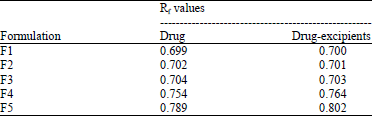 | |
The Rf values were calculated from the chromatograms.
Thickness: The thickness of the film was determined using a screw-gauge (Mitutoyo MMO-25DS) at three different site in circular cast (n = 3).
Weight uniformity: Each patch (20 mm dia) was weighed individually and then the average weight of film was taken (n = 3).
Flatness: Longitudinal strips were cut from each film from three different location of the each film. The length of each strip after waiting for 2 h was measured and the variation (if any) was noted. The variation in length indicates the nonuniformity in flatness. The percentage nonuniformity or percentage constriction was calculated as:

where, L1 is the initial length of each strip and L2 is the final length of each strip. The percentage flatness was calculated as:
Flatness (%) = 100-constriction (%)
Folding endurance: It was determined by repeatedly folding a small strip of size (2×2 cm) of film at the same place till it broke. The mean value (of three readings) and standard deviation of folding endurance (the number of times, the film could be folded at the same place without breaking) were shown in Table 2.
Percentage moisture content: The films were weighed individually and kept in a desiccators containing activated silica at room temperature for 24 h. Individual films were weighed repeatedly until they showed a constant weight after exposing the prepared patches to 84% relative humidity (saturated potassium chloride solution). The percentage of moisture content was calculated as the difference between initial and final weight with respect to final weight.
Drug content: The drug content was determined by taking three patches (n = 3) of each formulation to which 100 mL of methanol (separately) was added with continuous stirring for 2 h so as to dissolve the complete patch. The solutions were filtered, diluted suitably and analyzed at 274 nm in a UV spectrophotometer (Lambda 25, Perkin Elmer, US). The average (in percentage) of drug contents of three films was noted.
Surface morphology: To detect the surface morphology, SEM of the films was performed by Scanning Electron Microscope (JEOL JSM 5600, Japan).
Ex vivo permeation studies: The ex vivo permeation studies of the films of aceclofenac through an excised rat abdominal skin were carried out using the Franz diffusion cell. A 2.0 cm diameter patch of each formulation under study was placed in intimate contact with the excised skin. The contents of receptor compartment filled with 25 mL of pH 7.4 phosphate buffer were stirred with a magnetic stirrer at 400 rpm at the temperature of 37±1°C. The samples were withdrawn at different time intervals, filtered, diluted suitably and then analyzed using UV spectrophotometer at 274 nm and replaced with the equal volume of fresh media.
In vivo study
Animals: The healthy male Wistar rats (150-200 g) were used for the study. The rats were kept in cages in standard environmental conditions of light and temperature. The rats were allowed free access to drinking water and standard diet. Rats were used after acclimatization for 3-4 days.
Primary skin irritancy studies: To assess the irritant effect or any chance of edema with the use of transdermal patches, primary skin irritancy test was performed. The healthy male rats (150-200 g) were divided into four groups of three rats each. A 5 cm2 area of dorsal portion of all the rats were shaved and cleaned with spirit. After 12 h of shaving, non-medicated patch was applied to the group I (control) using an adhesive tape USP. To the group II and III (both test) transdermal patch formulation F3 and F5 were applied. To the group IV (standard) 0.8% (v/v) aqueous solution of formaldehyde (irritant) was applied. The application sites were observed for any erythema and edema on skin surface for 7 days after application and the scoring was done (Draize et al., 1944; Mamatha et al., 2010).
In vivo anti-inflammatory study: The two selected formulations were subjected to in vivo anti-inflammatory study using the standard carrageenan induced hind rat paw edema model. Rats were divided in four groups of three rats each.
The dorsal surface of rats was shaved 12 h before commencing the study. The control group (group I) received the nonmedicated (blank) patches. To the group II and III Patches F3 and F5 were applied on the dorsal sides of the rats. The group IV received the formulation F1 (patch with drug but without any permeation enhancer). To induce the paw edema, after half an hour of the application of patches all the rats were injected (subplantar) with 0.1 mL of a 1% w/v homogeneous suspension of carrageenan (in double-distilled water) in the right paws. The hind paw volume was measured immediately (0 h) and at different time intervals, using a plethysmometer (Model 7150, UGO Basile, Italy) and expressed as percentage of edema relative to the initial hind paw volume. Percentage of inhibition of edema was calculated using the following equation:

Statistical analysis: Results were expressed as Mean±Standard deviations and the significance of the difference observed was analyzed by the Student’s t-test.
RESULTS
The transdermal films of aceclofenac were formulated for use in patients of rheumatoid arthritis for prolonged relief. The effect of two different permeation enhancers (d-limonene and Span 20) was also studied.
Compatibility study: The drug and all the excipients were found to be compatible on the basis of TLC studies. The Rf values were almost similar for the drugs and the excipients (Table 2).
Physicochemical evaluation: The thickness, weight, folding endurance, percentage of moisture content and drug content of the prepared transdermal patches have been reported in Table 3.
All the formulations of transdermal films showed uniform thickness throughout. The film thickness was found to be in the range of 0.144±0.023 to 0.210±0.014 mm. Weight of patches (20 mm dia) of different formulation were in the range of 128±2.242 to 135±4.262 mg. As no constriction in any film was observed it was inferred that all the films were 100% flat. Folding endurance was measured manually by folding the film repeatedly at a point till they broke. Folding endurance value was higher than 120.0 for all the formulations. The folding endurance was found to be in the range of 120.0±9.24 to 182.0±4.20.
Percentage of moisture content was found to be in the range of 1.95±0.30 to 3.02±0.29. The formulations with permeation enhancers showed higher percentage of moisture content.
The drug was found to be uniformly dispersed in the transdermal films. The percentage of drug content was found to be in the range of 94.90±1.40 to 98.20±2.60 for the formulations.
Surface morphology: The surface morphology was observed with the help of SEM photographs of the formulations (Fig. 1). SEM of the transdermal films showed that drug was not only dispersed in the matrix of the film but also found to be projected on the surface of film. There was no visual difference in the SEM of different formulations. The film surface was not very smooth but the rough matrix was very much uniform the pattern.
Ex vivo permeation study: The ex vivo permeation study was performed in the modified Franz diffusion apparatus in pH 7.4 phosphate buffer. The films prepared with permeation enhancer F2 to F5 showed greater percent drug release at the end of 24 h (Fig. 2).
| Table 3: | Physicochemical evaluation of transdermal films of aceclofenac |
 | |
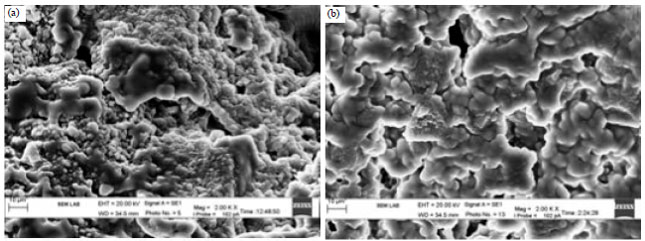 | |
| Fig. 1(a-b): | SEM of transdermal films of aceclofenac prepared with EC and PVP K-30 (a) Using permeation enhancer-d-limonene (F3) and (b) Using permeation enhancer-Span-20 (F5) |
| Table 4: | Primary skin irritation test of transdermal films of aceclofenac |
 | |
| ap<0.05, significant compared with formalin, *Erythema scale: 0: None, 1: Slight, 2: Well defined, 3: Moderate and 4: Scar formation, **Edema scale: 0: None, 1: Slight, 2: Well defined, 3: Moderate and 4: Severe | |
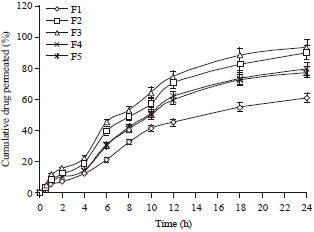 | |
| Fig. 2: | Ex vivo permeation study of transdermal films of aceclofenac through rat abdominal skin |
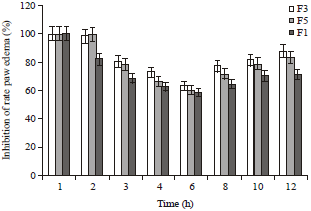 | |
| Fig. 3: | Anti-inflammatory activity of the prepared films using carrageenan induced hind rat paw edema model (p<0.01, significant compared with control, values corresponding to 4-12 h were significant as compared to control; n = 3) |
The transdermal films F2 and F3 (prepared with d limonene) showed greater percent drug release. The drug permeation was prolonged with the transdermal film formulations. The permeation enhancement effect was found to be dominant with d-limonene as compared to Span 20. The cumulative (%) drug permeated at the end of 24 h was found to be 61.02, 89.94, 93.4, 77.24 and 79.5% for F1, F2, F3, F4 and F5, respectively. In d-limonene and Span-20 containing films F3 and F5, respectively was found to be showing higher drug release as compared to their other formulations.
In vivo study
Primary skin irritation test: The prepared film formulations containing d-limonene (F3) and Span 20 (F5) were selected for the study. Both the formulations were found to be non-irritant to the skin because it showed erythema and edema score less than 2 (Mamatha et al., 2010; Draize et al., 1944) (Table 4).
In vivo anti-inflammatory study: The anti-inflammatory activity of the prepared films was evaluated using the standard carrageenan induced hind rat paw edema model. The results showed that the patches prepared with permeation enhancers (F3 and F5) showed greater percent inhibition as compared to that of F1 (without permeation enhancer). The transdermal films showed 87.55±2.50 and 83.24±2.29% inhibition of rat paw edema at the end of 12 h for formulation F3 and F5, respectively (Fig. 3). On the other hand the film F1 which did not have any permeation enhancer showed 71.44±1.84% inhibition of rat paw edema at the end of 12 h.
DISCUSSION
For the patients of rheumatoid arthritis, delivering the drugs in transdermal films may not only increase the patient compliance but also provide the immediate and prolonged release of the drug. In the present study, the transdermal films of aceclofenac were prepared and the effect of two permeation enhancers in increasing the flux of the drug was studied. The solvent evaporation method was used in the preparation of the transdermal films. The ratio of the polymers was kept constant. All the films showed good physical properties along with the clinically feasible good percent drug content. Solvent evaporation method generally provides products with good percentage of drug content. As indicated by SEM, the drug was not only dispersed in the matrix but also was available in the surface as appendages which might be responsible for the initial good release followed by the slow and prolonged release of the drug.
The transdermal films prolonged the drug release (up to 24 h) thereby minimizing the dosage frequency unlike the conventional oral drug delivery. The use of a single patch for the whole day is expected to be more patient friendly as compared to the frequent oral dosing of the tablets. As far as the drug release was concerned, the permeation enhancers or the penetration enhancers play important role of accelerating the drug release across the skin (when included in the transdermal delivery systems). Transdermal delivery of drugs can be enhanced through use of chemical enhancers, iontophoresis, electroporation, ultrasound, microneedles, jet injection and thermal poration (Marwah et al., 2014; Kumar and Philip, 2007). Out of these various methods of transdermal enhancement of drug permeation, the use of chemical enhancers has been reported to be the best method of increasing transport across the skin. The method is simple to adopt and cost effective.
Various chemical agents act as permeation enhancers. The permeation/penetration enhancers may have one or more mechanism: Disrupting the lipid leading to increase in the humidity of Stratum Corneum (SC) lipids like oleic acid, denaturing proteins, changing the conformation of intercellular keratin and interacting with the intercellular lipid to distort their geometry e.g., solvent like dimethyl sulphoxide, solubilizing lipids of the SC e.g., the non-ionic surfactant like tween-20, Span 20 modifying the solvent nature of the SC and decreasing the lag time for permeation e.g., like terpene menthol, d-limonene (Jantharaprapap and Stagni, 2007).
In the present study d-limonene and Span-20 (Sorbitan monolaurate-20) were used as permeation enhancers. Both the enhancers increased the permeation to greater extent as compared to the film without any enhancer. Increasing the concentration increased the drug permeation in both the cases. This was found to be in good agreement with previous studies (Mamatha et al., 2010; Mukherjee et al., 2005). In some previous studies d-limonene has been reported to be the very promising penetration enhancer (Yang et al., 2013; Mamatha et al., 2010). In a previous study, the effect of various different enhancers (like polyethylene glycol 600, Span 20, oleic acid, R-(+)-limonene, alpha-bisabolol and 1,8-cineole) were studied on the flux of sumatriptan succinate (Femenia-Font et al., 2005). In this particular study also, the limonene (R-(+)-limonene) showed the greatest ability to enhance the flux (even greater than Span 20). The d-limonene is the member of the class of terpene-based skin penetration enhancers (like p-cymene, geraniol, eugenol, menthol, terpineol, carveol, carvone, fenchone and verbenone). The terpene based enhancers are reported to be nontoxic to the skin. These enhancers do not affect the stability and biological activity of the drugs like proteins and peptides even (Varman and Singh, 2012). The present study showed the dominant permeation enhancement of limonene over the nonionic surfactant Span 20.
In the anti-inflammatory activity the transdermal films with permeation enhancers showed greater activity in inhibiting the rat paw edema as compared to that of without enhancer. These data are in good tune with the ex vivo permeation study. The enhanced permeation of the drug across the skin showed greater anti-inflammatory activity which can lead to greater to antiarthritic activity.
CONCLUSION
The study investigated the feasibility of using transdermal films for the treatment of arthritis. It was concluded that the transdermal films of aceclofenac have the great potential for the treatment of arthritis. The transdermal films of aceclofenac can deliver the therapeutic concentration of the drug in a slow and prolonged manner so as to deliver the drugs for the whole day. Moreover, the use of penetration enhancers (like limonene and Span 20) may bring the radical improvement in the drug flux. The terpene based enhancers (like limonene) showed the greater effect of increasing the flux and anti-inflammatory activity as compared to that of nonionic surfactants (Span 20).
REFERENCES
- Xu, H.M., W. Wei, X.Y. Jia, Y. Chang and L. Zhang, 2007. Effects and mechanisms of total glucosides of paeony on adjuvant arthritis in rats. J. Ethnopharmacol., 109: 442-448.
CrossRefPubMedDirect Link - Meera, S., N.S. Kumar and V.S.S.S. Guptatyam, 2008. Screening of anti-arthritic, anti-inflammatory and analgesic activity of a polyherbal formulation. Int. J. Pharmacol., 4: 398-402.
CrossRefDirect Link - Woolf, C.J., 2011. Central sensitization: Implications for the diagnosis and treatment of pain. Pain, 152: S2-S15.
CrossRefDirect Link - Van Laar, M., J.V. Pergolizzi Jr., H.U. Mellinghoff, I.M. Merchante and S. Nalamachu et al., 2012. Pain treatment in arthritis-related pain: Beyond NSAIDs. Open Rheumatol. J., 6: 320-330.
CrossRefPubMedDirect Link - Perrot, S., 2009. Should we switch from analgesics to the concept of Pain Modifying Analgesic Drugs (PMADs) in osteoarthritis and rheumatic chronic pain conditions? Pain, 146: 229-230.
CrossRefPubMedDirect Link - Dray, A., 2008. New horizons in pharmacologic treatment for rheumatic disease pain. Rheum. Dis. Clin. North Am., 34: 481-505.
CrossRef - Tanner, T. and R. Marks, 2008. Delivering drugs by the transdermal route: Review and comment. Skin Res. Technol., 14: 249-260.
CrossRef - Guy, R.H., 2007. Transdermal science and technology: An update. Drug Delivery Syst., 22: 442-449.
CrossRefDirect Link - Guy, R.H., 1996. Current status and future prospects of transdermal drug delivery. Pharmaceut. Res., 13: 1765-1769.
CrossRef - Padula, C., S. Nicoli, V. Aversa, P. Colombo, F. Falson, F. Pirot and P. Santi, 2007. Bioadhesive film for dermal and transdermal drug delivery. Eur. J. Dermatol., 17: 309-312.
Direct Link - Thong, H.Y., H. Zhai and H.I. Maibach, 2007. Percutaneous penetration enhancers: An overview. Skin Pharmacol. Physiol., 20: 272-282.
CrossRef - Jantharaprapap, R. and G. Stagni, 2007. Effects of penetration enhancers on in vitro permeability of meloxicam gels. Int. J. Pharmaceut., 343: 26-33.
CrossRef - Gupta, V., S.K. Shukla, S.M. Shrivastava, S. Shukla and K. Kumar et al., 2010. Studies of in vitro evaluation and formulation of aceclofenac loaded PLGA microspheres. Int. J. Pharmacol., 6: 726-731.
CrossRefDirect Link - Grau, M., J. Guasch, J.L. Montero, A. Felipe, E. Carrasco and S. Julia, 1991. Pharmacology of the potent new non-steroidal anti-inflammatory agent aceclofenac. Arzneimittelforschung, 41: 1265-1276.
PubMed - FitzGerald, G.A. and C. Patrono, 2001. The coxibs, selective inhibitors of cyclooxygenase-2. N. Engl. J. Med., 345: 433-442.
CrossRefDirect Link - Blot, L., A. Marcelis, J.P. Devogelaer and D.H. Manicourt, 2000. Effects of diclofenac, aceclofenac and meloxicam on the metabolism of proteoglycans and hyaluronan in osteoarthritic human cartilage. Br. J. Pharmacol., 131: 1413-1421.
CrossRefDirect Link - Semalty, A., M. Semalty, B.S. Rawat, D. Singh and M.S.M. Rawat, 2010. Development and evaluation of pharmacosomes of aceclofenac. Indian J. Pharm. Sci., 72: 576-581.
CrossRefPubMedDirect Link - Marwah, H., T. Garg, A.K. Goyal and G. Rath, 2014. Permeation enhancer strategies in transdermal drug delivery. Drug Delivery, (In Press).
CrossRefDirect Link - Kumar, R. and A. Philip, 2007. Modified transdermal technologies: Breaking the barriers of drug permeation via the skin. Trop. J. Pharm. Res., 6: 633-644.
CrossRefDirect Link - Mamatha, T., J.V. Rao, K. Mukkanti and G. Ramesh, 2010. Development of matrix type transdermal patches of lercanidipine hydrochloride: Physicochemical and in-vitro characterization. DARU, 18: 9-16.
PubMedDirect Link - Draize, J.H., G. Woodward and H.O. Calvery, 1944. Methods for the study of irritation and toxicity of substances applied topically to the skin and mucous membranes. J. Pharmacol. Exp. Ther., 82: 377-390.
Direct Link - Mukherjee, B., M.S. Kanupriya, S. Das and B. Patra, 2005. Sorbitan monolaurate 20 as a potential skin permeation enhancer in transdermal patches. J. Applied Res., 5: 96-107.
Direct Link - Yang, Z., Y. Teng, H. Wang and H. Hou, 2013. Enhancement of skin permeation of bufalin by limonene via reservoir type transdermal patch: Formulation design and biopharmaceutical evaluation. Int. J. Pharmaceut., 447: 231-240.
CrossRef - Varman, R.M. and S. Singh, 2012. Investigation of effects of terpene skin penetration enhancers on stability and biological activity of lysozyme. AAPS PharmSciTech, 13: 1084-1090.
CrossRef - Femenia-Font, A., C. Balaguer-Fernandez, V. Merino, V. Rodilla and A. Lopez-Castellano, 2005. Effect of chemical enhancers on the in vitro percutaneous absorption of sumatriptan succinate. Eur. J. Pharmaceut. Biopharmaceut., 61: 50-55.
CrossRefDirect Link