

Kassinee Sitthiwong
Faculty Of Agriculture, Kagawa University, Japan
Toshiyuki Matsui
Faculty Of Agriculture, Kagawa University, Japan
Nobuyuki Okuda
Faculty Of Agriculture, Kagawa University, Japan
Yusuke Kosugi
Faculty Of Agriculture, Kagawa University, Japan
Biotechnology
Year: 2007 | Volume: 6 | Issue: 2 | Page No.: 184-192





ABSTRACT
Changes in carbohydrate content and the activity and gene expression of sucrose synthase (SS; EC 2.4.1.13) were studied in vegetable soybean (Glycine max (L.) Merr. cvs. ‘Ajigen’ and ‘Fuuki’) stored at 20°C for 10 days. After vegetable soybean is harvested, there was a progressive deterioration as shown in the reduction of sugars in both cultivars throughout the experimental period. In addition, SS activity decreased after 2 days of storage and increased with some fluctuations thereafter in both cultivars throughout the storage period. SS activity was higher in ‘Fuuki’ than ‘Ajigen’. To understand the molecular basis of induction of SS during posharvest senescence, the partial clone cDNA, GmSS (Glycine max sucrose synthase; AB213027) consisted of 607 nucleotides was isolated from vegetable soybean seeds. The GmSS gene showed highest identity at nucleotide and amino acid levels with mung bean at 94 and 98%, respectively. A radial phylogenetic tree of the amino acid sequence of GmSS (AB213027) and SS from mung bean (D10266) are strongly clustered in a subgroup, belonging to Fabaceae family. Although the level of transcripts was not consistent with enzyme activity, the expression was found in both cultivars throughout the experimental period. The inconsistency between the SS activity and gene expression may be due to post-transcriptional regulatory and/or encoded with another distinct isoforms of SS genes. Another result for this inconsistency between SS activity and gene expression could be due to the regulation of sugars by other harvest related genes.
PDF Abstract XML References
How to cite this article
Kassinee Sitthiwong, Toshiyuki Matsui, Nobuyuki Okuda and Yusuke Kosugi, 2007. Cloning and Sequencing of Sucrose Synthase cDNA from Vegetable Soybean and its Expression During Storage at 20°C. Biotechnology, 6: 184-192.
DOI: 10.3923/biotech.2007.184.192
URL: https://scialert.net/abstract/?doi=biotech.2007.184.192
DOI: 10.3923/biotech.2007.184.192
URL: https://scialert.net/abstract/?doi=biotech.2007.184.192
INTRODUCTION
Vegetable soybean (Glycine max (L.) Merr.) is generally harvested as green pods at the R6 stage when the seeds are approximately 80% mature and have 60-65% moisture levels. It belongs to the same specie as grain or field soybeans, but it has larger seed, sweeter flavor, smoother texture and better digestibility (Rackis, 1978). It contains nutritious and phytochemicals beneficial to humans. Due to these nutraceutical benefits of soybean, the demand for soyfoods may continue to increase over the long term.
During handling and storage, the changes in chemical composition like sugar and organic acid contents signal the initial stage of deterioration limiting postharvest life. The decrease in sucrose content in harvested crops is inevitable during storage such as in asparagus (Irving and Hurst, 1993) and broccoli (Downs and Somerfield, 1997).
In plant tissues, degradation of sucrose involves two different enzymes, invertase (EC 3.2.1.26) and sucrose synthase (SS; EC 2.4.1.13). Invertase catalyse irreversible hydrolysis of sucrose to glucose and fructose whereas SS is a cytosolic and reversible enzyme that catalyses sucrose degradation and supplies UDP-glucose and ADP-glucose for the synthesis of starch and cell wall polysaccharides. SS catalyzes in vivo and in vitro the synthesis and cleavage of sucrose (sucrose + UDP ↔ UDP-glucose + D-fructose) (Geigenberger and Stitt, 1993). Sucrose is the primary form of assimilated carbon within plants, transported from source tissues to sink tissues. The cleavage of sucrose at the sink tissue by SS provides the precursors subsequently used for a diverse array of biosynthetic pathways, including the synthesis of cell wall polysaccharides and starch. In sink storage tissues such as developing seed or tuber, the SS pathway of sucrose cleavage is usually associated with starch biosynthesis. SS is one of the key enzymes in the plant carbohydrate metabolism utilizing the conserved energy of the transport metabolite sucrose for the formation of nucleotide sugars as precursors for starch and cellulose biosynthesis (Zrenner et al., 1995).
Sucrose synthase genes have been isolated from various plants, from starch-storing plants such as maize (Werr et al., 1985; Huang et al., 1994), pea (Barratt et al., 2001), potato (Salanoubat and Belliard, 1987), rice (Wang et al., 1992a), wheat (Marana et al., 1990) and sucrose-storing plants such as sugarbeet (Hesse and Willmitzer, 1996) and sugarcane (Lingle and Dyer, 2001) as well as Arabidopsis thaliana (Chopra et al., 1992; Martin et al., 1993). Many studies have demonstrated the existence of multiple forms of SS, e.g., two enzymes, SS1 and SS2, have been characterized from cucumber (Gross and Pharr, 1982), maize (Echt and Chourey, 1985; Nguyen-Quoc et al., 1990) and sugarcane (Buczynski et al., 1993). The two genes encoding sucrose synthase in maize are Sh (Shrunken) and Sus (Courey and Nelson, 1976; Courey, 1981). The genes encoding the two isozymes are differentially expressed. Homologous pairs of sucrose synthase genes have also been characterized from the monocot plants barley (Martinez de Ilarduya et al., 1993), rice (Wang et al., 1992b) and wheat (Marana et al., 1988). In contrast, in several dicot plants, such as tomato (Wang et al., 1993), potato (Salanoubat and Belliard, 1987), mung bean (Arai et al., 1992) and bean (Heim et al., 1993), sucrose synthase appears to be encoded by only one gene. Recently three genes encoding sucrose synthase isoforms have been isolated from maize (Carlson et al., 2002), pea (Barratt et al., 2001) and citrus fruit (Komatsu et al., 2002).
There are very few reports regarding the changes in SS activity and sugar distribution during postharvest senescence in vegetable soybean at the molecular level. Thus, this study was conducted to further understand SS gene expression in relation to changes in sugar content and its metabolizing enzyme, SS changing storage at 20°C.
MATERIALS AND METHODS
Plant material: Two vegetable soybean cultivars (‘Ajigen’ and ‘Fuuki’) were grown in the field at the Faculty of Agriculture, Kagawa University. The pods were harvested at 42 days after anthesis and stored in perforated plastic bags with 10 holes at 20°C for 10 days. After 48 h intervals, pods were taken out from storage, shelled, frozen immediately in liquid nitrogen and stored at -30 and -83°C until sucrose synthase analysis and sugar determination and extraction of total RNA were performed, respectively.
Extraction and assay of SS: Approximately 5 g of fresh-weight seed sample were added with 1% of polyvinylpolypyrrolidone (PVPP) and 1 g sea sand. The mixture was homogenized using a cooled mortar and pestle with 10 mL of 0.3 M K-P buffer (pH 7.8) containing 1 M ascorbate, 1 M MgCl2, 1 M DTT and 0.1 M EDTA. The homogenate was then filtered through four layers of cotton cloth and the filtrate was centrifuged at 12,000 x g, at 2°C for 20 min. The total supernatant was dialyzed with 0.3 M K-P buffer (pH 7.8), diluted 40 times for 12 h and the inner solution was used as the crude enzyme. These extractions were carried out under 0-4°C.
SS activity was assayed at 37°C by the method described by Hubbard (Hubbard et al., 1989) with slight modifications. Reaction mixtures (70.75 μL) contained 50 mM Hepes-NaOH buffer (pH 7.5), 15 mM MgCl2, 25 mM fructose and 25 mM UDP-glucose. The mixtures were incubated for 30 min at 37°C and the reaction was terminated with the addition of 70 μL of 30% KOH. Tubes were kept at 100°C for 10 min to destroy any unreacted fructose. After cooling, 2 mL of anthrone reagent (150 mg anthrone in 100 mL of 70% H2SO4) was added and incubated in a 40°C water bath for 15 min. After cooling, color development was measured at OD 620 nm. The soluble protein content was determined by the method of Lowry (Lowry et al., 1951) using bovine serum albumin as the standard. The enzyme activity was measured as micromole of sucrose produced per minute per milligram of protein.
Carbohydrate determination: Approximately 2 g of fresh-weight seeds sample was mixed with 1 g of sea sand and homogenized in a cooled mortar and pestle. Ten milliliter of distilled water was added to the homogenate and centrifuged at 12,000 x g, at 2°C for 10 min. The mixture was filtered through a cellulose nitrate membrane filter (0.2 μm pore size). Soluble sugars were analyzed by HPLC using a stainless steel column (10.7 mm IDx30.0 cm) packed with silica gel (gel pack C610). The mobile phase (filtered water) was pumped through the column at a flow rate of 1.0 mL min-1. The pressure was adjusted to 14-15 kg/cm2 and the temperature to 60°C. A RI monitor (Hitachi L-3300) was used. Sucrose, glucose and fructose were identified by their retention times and were quantified according to standards.
RNA isolation: Total RNA was isolated according to the Hot Borate method of Wan and Wilkins (1994). Three grams of frozen vegetable soybean seeds were ground to fine powder in liquid nitrogen with a precooled mortar and pestle. The frozen powder was transferred to a 50 mL tube containing 10.5 mL (3.5 mL/g tissue) of hot borate extraction buffer consisting of 0.2 M sodium borate (Borax), 30 mM GEDTA (EGTA), 1% (w/v) sodium dodecyl sulfate (SDS), 1% (w/v) deoxycholic acid sodium salt, 10 mM dithiothreitol (DTT), 1% (v/v) nonidet® P-40 and 2% polyvinyl-pyrrolidone (PVP-40). The homogenate was incubated with 315 μL (105 μL/g tissue) proteinase K at 42°C with gentle shaking on a rotary shaker for 1.5 h, added with 840 μL (280 μL/g tissue) 2 M KCl and incubated on ice for 1 h. After centrifugation at 12,000 x g at 4°C for 20 min, 1/3 volume of cold 8 M LiCl was added to the supernatant and the RNA was precipitated at 4°C for 16 h. The RNA was pelleted by centrifugation at 12,000 x g at 4°C for 20 min, washed twice with 5 mL cold 2 M LiCl by resuspension and centrifugation at 12,000 x g at 4°C for 10 min. The pellets were dissolved in 2 mL of 10 mM Tris-HCl buffer (pH 7.5) and extracted with 100 μL of K-acetate (pH 5.5). The sample was incubated on ice for 15 min and centrifuged at 12,000 x g at 4°C for 10 min. The RNA in the supernatant was finally precipitated with 100% cold ethanol, incubated at -83°C overnight and collected by centrifugation at 10,000 x g for 30 min. The pellets containing the RNA were washed with 70% cold ethanol and dissolved in sterile water.
Amplification of poly (A+) RNA by RT-PCR: The first strand cDNA was synthesized from 5 μg of the total RNA by reverse transcriptase with Oligo-(dT) primer according to the instructions of SUPERSCRIPTTM First Strand Synthesis System for RT-PCR (Invitrogen Life Technologies, USA). The PCR mixture (25 μL) contained 1 μL of the first strand cDNA reaction product, 1x PCR buffer (Promega, USA), 1.5 mM MgCl2 (Promega, USA), 0.2 mM each of dNTP (Roche, Germany), 25 U Taq DNA polymerase (Promega, USA) and 0.4 μM of each primer. The primers 5’-TTG GGA TAC CCT GAC ACC GG-3’ (upstream) and 5’-ACA ACA CGG TAG AGT CCA GG-3’ (downstream) were designed and synthesized on the basis of the amino acid domains (LGYPDTG and PGLYRVV, respectively) conserved from various SS genes in the database. The PCR procedure started with 4 min at 95°C and was carried out for 35 cycles of 40 sec at 95°C, 40 sec at 57°C, 40 sec at 72°C and then ended with 5 min at 72°C with ASTEC Program Temperature Control System PC-700. The PCR products were confirmed by gel electrophoresis using 1% agarose gel stained with ethidium bromide and visualized under UV light.
Cloning and sequencing of cDNA: The amplified cDNA was ligated to the plasmid pT7Blue T- vector (Novagen, Inc., USA) using DNA Ligation Kit v2.1 (Takara Bio, Inc., Japan) and cloned into E. coli (DH5α Competent Cell) (Takara Bio, Inc., Japan). Transformed colonies were blue/white screened on LB agar containing X-gal, IPTG and ampicillin sodium. White colonies were screened for insert size. The plasmid containing the cDNA cloned was isolated using QIAprep® Spin Miniprep Kit (QIAGEN Sciences, USA). The cloned cDNA was sequenced using BigDye® Terminator v3.1 Cycle Sequencing Kit (Applied Biosystems, USA) on the ABI 3100 Genetic Analyzer (Applied Biosystems, USA).
Sequence data analysis: Nucleotide sequencing, homology analysis were carried out using computer software BioEdit (Hall, 1999). Database search were performed using the Basic Local Alignment Search Tool (BLAST) in the National Center for Biotechnology Information (NCBI) website. The radial phylogenetic tree construction was performed by using computer software BioEdit (Hall, 1999) with TreeView ver. 1.6.6 and EMBL-EBI/ ClustalW softwares.
Preparation of the dioxigenin (DIG)-dUTP labeled PCR probe: The DIG-labeled PCR probed was prepared following the instructions of the PCR DIG Lebeling Mix Kit (Roche, Germany) using cloned SS cDNA as template.
Northern blot analysis: Total RNA (10 μg per lane) was separated on 1% agarose gel (Type II: Medium EEO) (Sigma, USA) containing 1x MOPS and 2% formaldehyde. After electrophoresis for 30 min, RNA was visualized with ethidium bromide under UV light to confirm equal loading of RNA in each lane. RNA was transferred overnight to a positively charged nylon membrane HybondTM- N+ (Amersham Pharmacia Biotech) by capillary action with 20x SSC. The blots were dried and exposed under UV irradiation to fix RNA. The prehybridization was performed at 50°C for 3 h in a solution containing 5x SSPE, 5x Denhardt’s solution, formamide, 0.5% SDS and 1 mg mL-1 denatured salmon sperm DNA. Hybridization was carried out at 50°C for 24 h using the gene specific DIG labeled PCR probe using the same prehybridization buffer. Following hybridization, the blots were washed twice with 2x SSPE containing 0.1% SDS for 10 min at room temperature, then at 65°C with 1x SSPE containing 0.1% SDS for 15 min and finally with 0.1x SSPE containing 0.1% SDS at 65°C for 10 min. For anti-DIG antibody conjugation, the blots were also washed with Buffer A containing maleic acid buffer and Tween 20 at room temperature and was blocked with 10% blocking reagent in maleic acid buffer for 30 min. Subsequently, the membrane was incubated with Anti-DIG-AP (Roche, Germany) in blocking buffer for 30 min. Hybridization signals were detected by color reaction using 5-bromo-4-chloro-3-indolyl-phosphate (BCIP) and 4-nitroblue tetrazolium chloride (NBT) as the substrates. Levels of transcripts were measured using computer software Image J (Abramoff et al., 2004).
Gene bank accession number: The nucleotide sequence of partial cDNA was submitted to the DDBJ/EMBL/ GenBank nucleotide sequence database and was designated as GmSS with accession number AB213027.
RESULTS
Sucrose synthase activity: SS activity decreased after 2 days of storage and increased with some fluctuations thereafter in both cultivars throughout the storage period. SS activity was higher in ‘Fuuki’ than ‘Ajigen’ (Fig. 1).
| Table 1: | Percent homology of nucleotide and deduced amino acid sequences between SS from vegetable soybean and other plants in database |
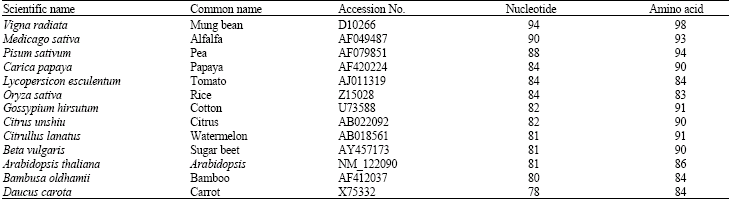 | |
| Glycine max (Vegetable soybean) (AB213027) is calculated as 100% | |
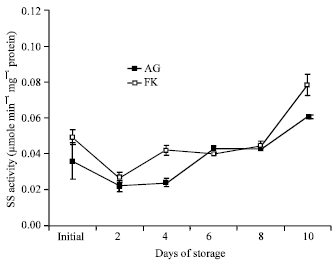 | |
| Fig. 1: | Changes in sucrose synthase (SS) activity of two vegetable soybean cultivars (‘Ajigen’ and ‘Fuuki’) during storage at 20°C for 10 days. Each point |
Changes in soluble sugar contents: Sucrose content rapidly declined after 2 days of storage and decreased gradually with few fluctuations thereafter throughout the storage period in both cultivars (Fig. 2). There was no significant difference in fructose and glucose content in both cultivars. However, both sugars (fructose and glucose) decreased with few fluctuations until the end of the storage period. Among the three sugars, sucrose content was found significantly higher than that of fructose and glucose. Glucose was present but in smaller amount than sucrose and fructose.
Isolation and identification of cDNA clone: The cDNA clone designated as GmSS (Glycine max sucrose synthase; AB 213027) is a partial clone consisted of 607 nucleotides (Fig. 3). The cDNA is highly homologous to the SS genes of other plants in the database (Table 1).
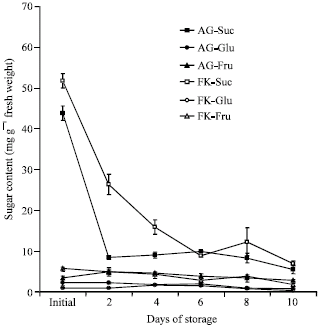 | |
| Fig. 2: | Changes in soluble sugar contents of two vegetable soybean cultivars (‘Ajigen’ and ‘Fuuki’) during storage at 20°C for 10 days. Each point represents the mean of 3 replications. Vertical bars indicate SE. SE bars were not shown when masked by the graph symbols. Legend as shown in Fig. 1 |
It showed highest identity at nucleotide level with mung bean (94%) and at least 80% identity with alfalfa, pea, papaya, tomato, rice, cotton, citrus, watermelon, sugar beet, Arabidopsis and bamboo. At deduced amino acid level, GmSS gene has also the highest identity with mung bean (98%) and at least 90% identity with pea, alfalfa, cotton, watermelon, papaya, citrus and sugar beet (Table 1).
A radial phylogenetic tree was generated from the alignment of the deduced amino acid sequences of GmSS and other SS gene in the database and analyzed by multi-alignment analysis using BioEdit software with TreeView ver. 1.6.6 and EMBL-EBI/ ClustalW softwares (Fig. 4).
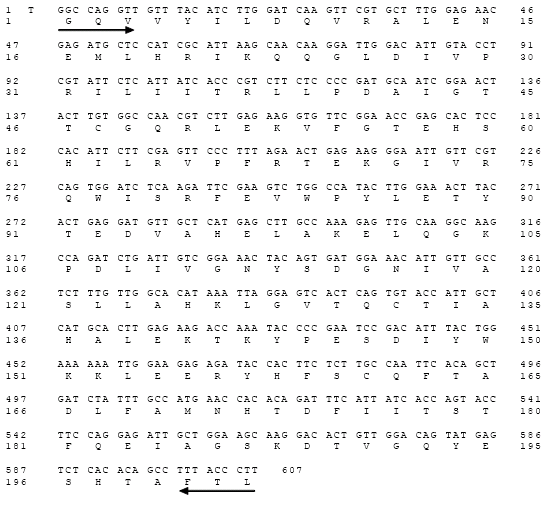 | |
| Fig. 3: | Nucleotide and deduced amino acid sequences of the cDNA clone corresponding to GmSS. The predicted amino acid sequence is given in single letter code for each amino acid. The arrows indicate the position of degenerate primers (sense→, anti-sense ←²) used for RT-PCR. Numbering refers to total nucleotide (upper) and amino acid (lower) residues on each line |
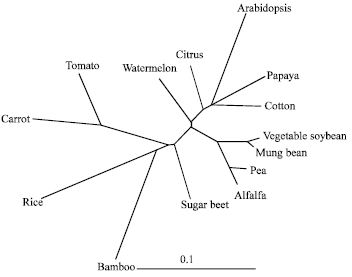 | |
| Fig. 4: | Radial phylogenetic tree of the alignment of GmSS deduced amino acid sequence with other SS amino acid sequences in the database. Amino acid sequences were aligned using UPGMA and phylogenetic tree was conducted using software BioEdit (Hall, 1999) with TreeView ver. 1.6.6 and EMBL-EBI/ ClustalW softwares |
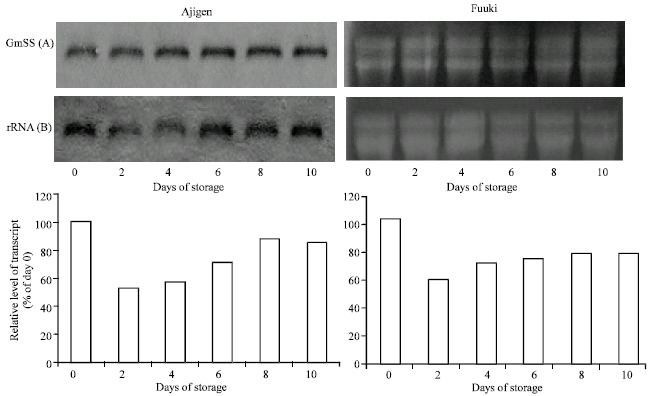 | |
| Fig. 5: | Northern blot analysis of GmSS transcript. The upper panels (A) are gel blots of total RNA (each lane containing 10 μg) isolated from two vegetable soybean seeds cultivars and separated by electrophoresis on 1% agarose gel containing 1x MOPS and 2% formaldehyde while the bottom panels (B) are representatives from ethidium bromide stained gels showing rRNA. Relative level of transcripts (% of day 0) of each band was measured from color precipitation of NBT and BCIP appeared on the membrane using Image J software |
The amino acid sequence of vegetable soybean (GmSS; AB213027) and SS from mung bean (D10266) are strongly clustered with pea (AF079851) and alfalfa (AF049487); all are dicotyledonous plants and belonging to Fabaceae family.
Expression of SS gene: Gene expression of the partial clone GmSS encoding SS transcript from vegetable soybean seeds was examined by northern blot analysis of total RNA isolated from ‘Ajigen’ and ‘Fuuki’ cultivars. The DIG-labeled 607 bp cDNA was used as a probe for the analysis of transcript levels of SS. The transcripts of GmSS were detected in both cultivars throughout the 10 days storage period (Fig. 5). However, the expression were only consistent with enzyme activity up to 4 days of storage.
DISCUSSION
To investigate the effect of ambient temperature storage on the process of senescence, two vegetable soybean cultivars (‘Ajigen’ and ‘Fuuki’) were stored at 20°C for 10 days. There are biochemical changes occurred during storage. Soluble sugars (specially sucrose) decline substantially during the storage in both cultivars (Fig. 2). Sucrose content change rapidly after 2 days of storage and gradually decreased at the end of the storage period but there was no significant difference in fructose and glucose content in both cultivars. Sucrose was the major soluble carbohydrate in vegetable soybean while fructose and glucose were found in trace amount. Similar result was found in many vegetables such as asparagus spears (Irving and Hurst, 1993) and broccoli (Pramanik et al., 2004) during storage at 20°C. Wyse and Dexter (1971) and Wyse (1973) reported that metabolism of sucrose to provide substrates for respiration and the healing of wounds incurred during harvest is the primary cause of postharvest sucrose loss. Further sucrose loss occurs due to the enzymatic conversion of sucrose to its monosaccharides, glucose and fructose (Wyse and Dexter, 1971). The loss of sugar during storage is probably due to its transformation to cell wall material, mainly lignin and other structural substances. Sturm (1999) suggested that sucrose may become converted into polymers such as starch, triacyl glycerides or polypeptides for long-term storage. On the other hand, in both cultivars, the SS activity also increased with some fluctuations throughout the experimental period (Fig. 1). Avigad (1982) and Hawker (1985) proposed that SS is also responsible for sucrose degradation. This increased activity might lead to the degradation of sucrose that accompanies the deterioration of harvested vegetable soybean.
To understand the molecular basis of induction of SS during posharvest senescence, the partial cDNA clone, GmSS (Glycine max sucrose synthase) consisted of 607 nucleotides was isolated from vegetable soybean seeds (Fig. 3). The GmSS gene is highly homologous to the SS genes of other plants in the database (Table 1). It showed highest identity at nucleotide and amino acid levels with mung bean during seedling growth (Arai et al., 1992) at 94 and 98%, respectively. The GmSS gene also showed high identity at nucleotide level at least 80% with alfalfa, pea, papaya, tomato, rice, cotton, citrus, watermelon, sugar beet, Arabidopsis and bamboo. At deduced amino acid level, GmSS gene has at least 90% identity with pea, alfalfa, cotton, watermelon, papaya, citrus and sugar beet (Table 1). A radial phylogenetic tree was generated from the alignment of the deduced amino acid sequences of GmSS and other SS gene in the database (Fig. 4). The amino acid sequence of vegetable soybean (GmSS; AB213027) and SS from mung bean (D10266) are strongly clustered in a subgroup consisting of pea (AF079851) and alfalfa (AF049487); all of them are dicotyledonous plants and belonging to Fabaceae family. Although the level of transcripts was not consistent with enzyme activity, the expression was found in both cultivars throughout the experimental period (Fig. 5). The expression was only consistent with enzyme activity up to 4 days of storage. Enzyme activity decreased after 2 days of storage and increased with some fluctuations thereafter in both cultivars throughout the storage period. On the other hand, the expression decreased after 2 days of storage and started to increase after 4 days of storage until the end of storage period. The transcription decreased after 2 days of storage is similar to that reported in the broccoli stored at 20°C (Pramanik et al., 2005). However, the decrease in enzyme activity and transcription after 2 days of storage still unknown at this time. Although the transcription was increasing, the levels were lower than the initial value. The inconsistency between the SS activity and gene expression may be due to post-transcriptional regulatory mechanism which is likely to contribute to SS expression as observed in mung bean seedling (Arai et al., 1992) and/or encoded with another distinct isoforms of SS genes. Winter and Huber (2000) reported that due to the important role of SS in the control of sucrose utilization in sink tissues, the expression of SS genes is highly regulated on the transcriptional and translational levels. Moreover, SS is post-translationally modified by reversible protein phosphorylation (Komina et al., 2002; Hardin et al., 2003) and the soluble form of SS can bind to the actin cytoskeleton in plants (Winter et al., 1998). There are many researches reported that SS gene have been isolated in multiform, for example, two genes encoding SS in carrot (SS1, SS2) (Šebková et al., 1995); sugarbeet (SBSS1, SBSS2) (Haagenson et al., 2006) while three genes encoding SS in citrus fruit (CitSUS1, CitSUSA, CitSUS2) (Komatsu et al., 2002); maize (Sh1, Sus1, Sus3) (Carlson et al., 2002); and pea (Sus1, Sus2, Sus3) (Barratt et al., 2001). These multiple distinct isoforms of SS genes have distinct patterns of expression in different organs of plants. Another result for this inconsistency between SS activity and gene expression could be due to sugar level is regulated by other harvest related genes such as asparagines synthetase (AS) and β-galactosidase (β-gal) (Davies et al., 1996).
The present results demonstrate that, SS might lead to the degradation of sucrose that accompanies the deterioration of vegetable soybean seeds in both cultivars during storage at 20°C. The results provide a preliminary data for further comprehensive molecular studies in the regulation of its function in vegetable soybean during storage.
ACKNOWLEDGMENT
The authors would like to thank the Government of Japan through its Ministry of Education, Culture, Science and Technology for the financial support.
REFERENCES
- Abramoff, M.D., P.J. Magelhaes and S.J. Ram, 2004. Image processing with image. Biophotonics Int., 11: 36-42.
Direct Link - Arai, M., H. Mori and H. Imaseki, 1992. Expression of the gene for sucrose synthase during growth of mung bean seedlings. Plant Cell Physiol., 33: 503-506.
Direct Link - Barratt, D.H.P., L. Barber, N.J. Kruger, A.M. Smith, T.L. Wang and C. Martin, 2001. Multiple, distinct isoforms of sucrose synthase in pea. Plant Physiol., 127: 655-664.
Direct Link - Buczynski, S.R., M. Thom, P.S. Chourey and A. Maretzki, 1993. Tissue distribution and characterization of sucrose synthase isozymes in sugarcane. J. Plant Physiol., 142: 641-646.
Direct Link - Carlson, S.J., P.S. Chourey, T. Helentjaris and R. Datta, 2002. Gene expression studies on developing kernels of maize sucrose synthase (SuSy) mutants show evidence for a third SuSy gene. Plant Mol. Biol., 49: 15-29.
Direct Link - Chopra, S., J. Delfavero, R. Dolferus and M. Jacobs, 1992. Sucrose synthase of Arabidopsis: Genomic cloning and sequence characterization. Plant Mol. Biol., 18: 131-134.
Direct Link - Davies, K.M., J.F. Seelye, D.E. Irving, W.M. Borst, P.L. Hurst and G.A. King, 1996. Sugar regulation of harvest-related genes in asparagus. Plant Physiol., 111: 877-883.
Direct Link - Downs, C.G. and S.D. Somerfield, 1997. Asparagine synthase gene expression increases sucrose declines in broccoli after harvest. N. Z. J. Crop Hortic. Sci., 25: 191-195.
Direct Link - Geigenberger, P. and M. Stitt, 1993. Sucrose synthase catalyses a readily reversible reaction in vivo in developing potato tubers and other plant tissues. Planta, 189: 329-339.
Direct Link - Haagenson, D.M., K.L. Klotz and J.M. McGrath, 2006. Sugarbeet sucrose synthase genes differ in organ-specific and developmental expression. J. Plant Physiol., 163: 102-106.
Direct Link - Hall, T.A., 1999. BioEdit: A user-friendly biological sequence alignment editor and analysis program for windows 95/98/NT. Nucleic Acid Symp. Ser., 41: 95-98.
Direct Link - Hardin, S.C., G.Q. Tang, A. Scholz, D. Holtgraewe, H. Winter and S.C. Huber, 2003. Phosphorylation of sucrose synthase at serine 170: Occurrence and possible role as a signal for proteolysis. Plant J., 35: 588-603.
Direct Link - Heim, U., H. Weber, H. Baumlein and U. Wobus, 1993. A sucrose-synthase gene of Vicia faba L.: Expression pattern in developing seeds in relation to starch synthesis and metabolic regulation. Planta, 191: 394-401.
Direct Link - Hesse, H. and L. Willmitzer, 1996. Expression analysis of a sucrose synthase gene from sugar beet (Beta vulgaris L.). Plant Mol. Biol., 30: 863-872.
Direct Link - Huang, X.F., B. Nguyen-Quoc, P.S. Chourey and S. Yelle, 1994. Complete nucleotide sequence of the maize (Zea mays L.) sucrose synthase 2 cDNA. Plant Physiol., 104: 293-294.
Direct Link - Hubbard, N.L., S.C. Huber and D.M. Pharr, 1989. Sucrose phosphate synthase and acid invertase as determinants of sucrose concentration in developing muskmelon (Cucumis melo L.) fruits. Plant Physiol., 91: 1527-1534.
PubMed - Irving, D.E. and P.L. Hurst, 1993. Respiration, soluble carbohydrates and enzymes of carbohydrate metabolism in tips of harvested asparagus spears. Plant Sci., 94: 89-97.
Direct Link - Komatsu, A., T. Moriguchi, K. Koyama, M. Mitsuo and T. Akihama, 2002. Analysis of sucrose synthase genes in citrus suggests different roles and phylogenetic relationships. J. Exp. Bot., 53: 61-71.
Direct Link - Komina, O., Y. Zhou, G. Sarath and R. Chollet, 2002. In vivo and in vitro phosphorylation of membrane and soluble forms of soybean nodule sucrose synthase. Plant Physiol., 129: 1664-1673.
Direct Link - Lingle, S.E. and J.M. Dyer, 2001. Cloning and expression of sucrose synthase-1 cDNA from sugarcane. J. Plant Physiol., 158: 129-131.
Direct Link - Lowry, O.H., N.J. Rosebrough, A.L. Farr and R.J. Randall, 1951. Protein measurement with the folin phenol reagent. J. Biol. Chem., 193: 265-275.
CrossRefPubMedDirect Link - Marana, C., F. Garcia-Olmedo and P. Carbonero, 1990. Differential expression of two types of sucrose synthase-encoding genes in wheat in response to anaerobiosis, cold shock and light. Gene, 88: 167-172.
CrossRefDirect Link - Martin, T., W.B. Frommer, M. Salanoubat and L. Willmitzer, 1993. Expression of an Arabidopsis sucrose synthase gene indicates a role in metabolization of sucrose both during phloem loading and sink organs. Plant J., 4: 367-377.
Direct Link - Martinez-de-Ilarduya, O., J. Vicente-Carbajosa, P. Sanchez-de-la-Hoz and P. Carbonero, 1993. Sucrose synthase genes in barley. cDNA cloning of the Ss2 type and tissue-speific expression of Ss1 and Ss2. FEBS Lett., 320: 177-181.
Direct Link - Nguyen-Quoc, B., M. Krivitzky, S.C. Huber and A. Lecharny, 1990. Sucrose synthase in developing maize leaves. Plant Physiol., 94: 516-523.
Direct Link - Pramanik, B.K., T. Matsui, H. Suzuki and Y. Kosugi, 2004. Changes in acid invertase activity and sugar distribution during postharvest senescence in broccoli. Pak. J. Biol. Sci., 7: 679-684.
CrossRefDirect Link - Pramanik, B.K., T. Matsui, H. Suzuki and Y. Kosugi, 2005. A sucrose synthase gene from broccoli: cDNA cloning, sequencing and its expression during storage. Biotechnology, 4: 288-295.
CrossRefDirect Link - Salanoubat, M. and G. Belliard, 1987. Molecular cloning and sequencing of sucrose synthase cDNA from potato (Solanum tuberosum L.): preliminary characterization of sucrose synthase mRNA distribution. Gene, 60: 47-56.
CrossRefDirect Link - Sebkova, V., C. Unger, M. Hardegger and A. Sturm, 1995. Biochemical, physiological and molecular characterization of sucrose synthase from Daucus carota. Plant Physiol., 108: 75-83.
Direct Link - Sturm, A., 1999. Invertases primary structures, functions and roles in plant development and sucrose partitioning. Plant Physiol., 121: 1-8.
Direct Link - Wan, C.Y. and T.A. Wilkins, 1994. A modified hot borate method significantly enhances the yield of high quality RNA from cotton (Gossypium hirsutum L.). Anal. Biochem., 223: 7-12.
Direct Link - Wang, A.Y., W.P. Yu, R.H. Juang, J.W. Huang, H.Y. Sung and J.C. Su, 1992. Presence of three rice sucrose synthase genes as revealed by cloning and sequencing of cDNA. Plant Mol. Biol., 18: 1191-1194.
Direct Link - Wang, M.B., D. Boulter and J.A. Gatehouse, 1992. The complete sequence of the rice sucrose synthase-1 (RSs1) gene. Plant Mol. Biol., 19: 881-885.
Direct Link - Wang, F., A. Sanz, M.L. Brenner and A. Smith, 1993. Sucrose synthase, starch accumulation and tomato fruit sink strength. Plant Physiol., 101: 321-327.
Direct Link - Werr, W., W.B. Frommer, C. Mass and P. Starlinger, 1985. Structure of the sucrose synthase gene on chromosome 9 of Zea mays L. EMBO J., 4: 1373-1380.
PubMedDirect Link - Winter, H., J.L. Huber and S.C. Huber, 1998. Identification of sucrose synthase as an actin-binding protein. FEBS Lett., 430: 205-208.
Direct Link - Winter, H. and S.C. Huber, 2000. Regulation of sucrose metabolism in higher plants: Localization and regulation of activity of key enzymes. Crit. Rev. Biochem. Mol. Biol., 35: 253-289.
Direct Link - Zrenner, R., M. Salanoubat, L. Willmitzer and U. Sonnewald, 1995. Evidence of the crucial role of sucrose synthase for sink strength using transgenic potato plants. Plant J., 7: 97-107.
Direct Link