

Vivian U. Oleforuh- Okoleh
Department of Animal Science, Rivers State University of Science and Technology, Nkpolu-Oroworukwo, P.M.B. 5080, Port Harcourt, Rivers State, Nigeria
Jude T. Ogunnupebi
Department of Animal Science, Ebonyi State University, P.M.B. 053, Abakaliki, Ebonyi State, Nigeria
Justice C. Iroka
Department of Animal Science, Ebonyi State University, P.M.B. 053, Abakaliki, Ebonyi State, Nigeria
Asian Journal of Poultry Science
Year: 2015 | Volume: 9 | Issue: 4 | Page No.: 242-249





ABSTRACT
The aim of this study was to assess the growth performance, hematological and serological assay of broiler chickens given banana (Musa paradisiaca) leaf supplementation. Ninety days-old Marshal straight-run broiler chicks were randomly allocated in a completely randomized design into three treatments, with three replicates per treatment. The treatment groups were denoted as G1, G2 and G3. All chicks were fed ad libitum with same basal diet. Birds on G1 were fed basal diet only (control) whereas, others were fed basal diet supplemented with banana leaf powder and banana leaf infusion at the level of 50 g kg–1 feed (G2) and 50 mL L–1 of drinking water (G3) respectively. Supplementation of banana leaf in the diets of broiler chickens significantly (p<0.05) influenced the final live weight, daily feed intake, daily body weight gain and feed conversion ratio. The banana leaf treated groups had a better performance in all the traits than the control. Mean values of all hematological parameters evaluated (packed cell volume, hemoglobin and red blood cell), except white blood cell, did not differ significantly (p>0.05) between the control and the treated group. Birds in G2 had the highest WBC titre. Reduced glucose level was observed in the treated group. Birds in G2 and G3 had significant (p<0.05) decreases of 54.82 and 46.41%, respectively in serum total cholesterol when compared to the control. Supplementation with banana leaf also significantly (p<0.05) reduced the concentration of low density lipoprotein in the chickens. Though there was an increase in the alanine transaminase, the concentration 16.70 -21.70 IU L–1, was within the normal range for broiler chickens. It was concluded that banana leaf could be safely be used as a phytoadditive in broiler chickens, preferably in the feed.
PDF Abstract XML References Citation
Article History
Received: July 19, 2015;
Accepted: August 27, 2015;
Published: September 15, 2015
How to cite this article
Vivian U. Oleforuh- Okoleh, Jude T. Ogunnupebi and Justice C. Iroka, 2015. Assessment of Growth Performance and Certain Blood Constituents of Broiler Chicks Given Banana Leaf as a Phytoadditive. Asian Journal of Poultry Science, 9: 242-249.
DOI: 10.3923/ajpsaj.2015.242.249
URL: https://scialert.net/abstract/?doi=ajpsaj.2015.242.249
DOI: 10.3923/ajpsaj.2015.242.249
URL: https://scialert.net/abstract/?doi=ajpsaj.2015.242.249
INTRODUCTION
The poultry industry in Nigeria has undergone a significant transformation from a backyard, peasant and subsistence husbandry to a modern large scale and commercial production. One of the major challenges the poultry farmers face is improving performance of the birds to ensure better net returns while minimizing cost of production particularly that spent on feed. A lot of research and production strategies have been employed, including the use of antibiotics to achieve this aim (Kehinde et al., 2010; Fakhim et al., 2013). The use of antibiotics in poultry industry as feed additives and treatment of infection for many years have caused microbiological and clinical evidence of resistant bacteria that might be zoonotic resulting in infections that are more difficult to treat. Due to the growing concern of this health implication, the use of antibiotics has been banned in many countries. Consequently, there is an increasing interest in finding alternatives to antibiotics in poultry production.
Herbs, spices and plant extracts can be valuable alternatives for the health and nutrition of the chicken (Manan et al., 2012). Puvaca et al. (2013) noted that phytoadditives in animal nutrition have attracted attention for their potential role as alternatives to antibiotic growth promoters. Some leaf meal/extracts which have been used as growth promoters in broiler chickens include Moringa olerifera (Kakengi et al., 2007; Portugaliza and Fernandez Jr., 2012), lemon grass leaf (Mmereole, 2010), pawpaw leaf (Heuze and Tran, 2015) and bitter leaf (Oleforuh-Okoleh et al., 2015). Another plant leaf which could be of importance is the banana leaf (Musa parasidica).
Banana plant (Musa spp.) is a tropical plant of Asian origin. There are more than 32 species and 100 sub-species of bananas in existence, each with minor morphological differences from the others. Musa sapientum and Musa parasidica are the most common species in Nigeria. They are found mostly in the southern part where they serve as staple foods. Banana leaf contains large amounts of polyphenols, including epigallocatechin gallate. They also contain polyphenol oxidase, an enzyme that produces l-3, 4-dihydroxyphenylalanine (Chu et al., 1993). The leaf has been reported to constitute 85% water and 10-17% protein on dry matter basis (Feedipedia, 2011). Marin et al. (2003) reported 94.3% DM, 14.6% CP, 27.9% CF and 7.7% EE on dry matter basis.
The use of banana as a medicinal plant has been reported-as an anti hyperglycemia agent (Ray, 2013), a natural eraser (Rifki, 2011), treatment of kidney ailments (Kailash and Varalakshmi, 1992) and as laxatives and antihypertensive (Akinyosoye, 1991). Bera et al. (2013) noted that several oligosaccharides comprising fructose, xylose, galactose, glucose and mannose occur naturally in banana, making it an excellent prebiotic for the selective growth of beneficial bacteria in the intestine. Banana fruit has been reported to prevent anaemia by stimulating the production of hemoglobin in the blood.
The use of banana leaf has been reported to have a significant effect on the growth, nutrient digestibility and performance of ruminants and pseudo-ruminant such as rabbits (Kimambo and Muya, 1991; Gidenne, 1985; Ekwe et al., 2011). Fomunyam (1984) indicated that banana leaves used as supplement to sheep basal diet of rice straw increased the total feed intake and digestibility as well as rumen ammonia. There is a dearth of information on the use of banana leaf as a feed additive in broiler chicken.
The objective of this study was therefore, to investigate the efficacy of banana leaf as a growth and health promoter for broiler chickens.
MATERIALS AND METHODS
Location of study: This study was conducted at the Poultry Unit of the Teaching and Research Farm of the Department of Animal Science, Ebonyi State University, Abakaliki, Ebonyi State, Nigeria. The experiment lasted for a period of fifty four days.
Preparation of test ingredient: Fresh mature banana leaves used for the study were collected from banana trees maintained in Ebonyi State University Farm, Abakaliki. The leaves were separated from the stalk, washed with clean tap water and shade-dried with occasional turning until they became brittle. They were then pulverized to powder using a hammer mill and stored in air-tight container. The banana leaf powder was given to the birds in either of two forms, as a dry supplement mixed in their feed or as an infusion in their water. To prepare the infusion, 50 g of the pulverized banana leaf was soaked in 1 L of hot boiled water for 12 h. The infusion was obtained by pressing using filtration technique according to the methods described by Oleforuh-Okoleh et al. (2014). The infusion was prepared daily.
Experimental animals, treatment and management: Ninety days old Marshal broiler chicks (mixed sex) obtained from Obasanjo Farm, Ota, Ogun State, Nigeria were used for this investigation. After two weeks of acclimatization, the birds having an average initial weight of 177.22±9.01g were randomly allocated in a completely randomized design into three treatments, with three replicates per treatment. The treatment groups were denoted as G1, G2 and G3. All chicks were fed ad libitum with same basal diet at the starter (28 days old) and finisher (29-54 days) phase (Table 1). Birds on G1 group were fed basal diet only (control) and others were fed basal diet supplemented with banana leaf powder and banana leaf infusion at the level of 50 g kg–1 feed (G2) and 50 mL L–1 of drinking water (G3), respectively. Proximate composition of the banana leaf is presented in Table 1. All chicks were raised in a well ventilated and sanitized deep litter broiler poultry house using wood shavings as litter material. Similar routine management practices were maintained for all the treatment groups. The birds were vaccinated on schedule against Newcastle, gumboro and fowl pox diseases. All management practice was in accordance with the recommendations of the National Veterinary Research Institute (NVRI) Vom, Plateau State, Nigeria.
Determination of daily feed intake was done by obtaining the difference between the quantity of feed offered and the left over the following morning. All the chicks were weighed at the beginning and at the end of the study, the weights were taken weekly. The body weight gain was calculated by subtracting the initial body weight from the final body weight. The body weight change (daily body weight gain) was obtained by dividing the body weight gain by the number of days the experiment lasted. Data so generated was used to calculate the feed conversion ratio - the quantity of feed consumed compared with the unit gain-as a measure of the efficiency of the feed given. This was expressed as ratio of daily feed intake to daily body weight gain.
Blood constituents analysis: At the end of the feeding trial, blood samples (5 mL bird–1) were randomly collected from one bird per replicate (three birds per treatment) from the wing vein with sterile needle into well labelled sterilized bottles containing EDTA as anticoagulant. These were used for the hematological analysis to estimate the Packed Cell Volume (PVC), hemoglobin count (Hb), Red Blood Cell (RBC) and White Blood Cell (WBC). Another set of blood samples (5 mL bird–1) were collected from the same birds without anti-coagulant to determine the following serum biochemistry-cholesterol, Low Density Lipoprotein (LDL), High Density Lipoprotein (HDL), plasma glucose (FBS), Total serum Protein (TP), albumin, globulin, urea, creatinine, uric acid, alanine aminotransferase (ALT) or aspartate aminotransferase (AST).
| Table 1: | Proximate composition of experimental diets* |
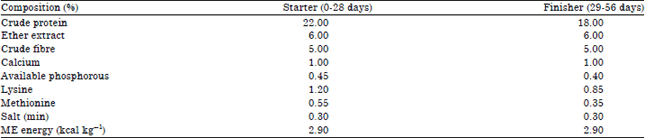 | |
| *Data was obtained from the feed manufacturer | |
Blood chemicals were analyzed using standard kits with chemistry analyzer (Bayer RA1000, Germany).
RESULTS AND DISCUSSION
The growth performance traits of birds given the experimental treatments are presented in Table 2. Supplementation of banana leaf in the diets of broiler chickens significantly (p<0.05) influenced the final live weight, daily feed intake, daily body weight gain and feed conversion ratio. The banana leaf treated groups had a better performance than the control. Though the mean final live weight, daily body weight gain and feed conversion ratio for birds on G2 and G3 were similar (p>0.05), birds on G2 had numerically heavier final body weight and daily weight gain (5.03%) than those on G3. Birds on banana leaf powder (G2) consumed insignificantly (p>0.05) lesser quantity of feed about 5.00 and 6.80% difference than G1 and G3, respectively. This translated to a better feed conversion ratio of 2.61.
Although, there seem to be dearth of information on the use of banana leaf as a feed additive in broiler chicks, the improved performance of birds in the treated group could possibly be due to nutritional benefits of banana leaf. Herbs contain active substances that improve digestion metabolism and possess antibacterial and immunostimulant activities (Ghazalah and Ali, 2008). Reports on benefits of banana include that it contains high levels of fructooligosaccharide (FOS) that along with insulin promotes calcium absorption. The FOS further nourishes healthy bacteria in the colon that manufacture vitamins and digestive enzymes that boost the body's overall ability to absorb nutrients. Bananas protect the healthy constitution of the stomach in two ways. Firstly, they trigger the production of mucus in the stomach, which provides a protective barrier against stomach acids. Secondly, bananas possess protease inhibitors, a substance that breaks down bacteria in the stomach that cause ulcers. Alisi et al. (2008) reported that aqueous extract of unripe fruit peels and leaves of Musa paradisica var. sapientum showed antimicrobial activity against Staphylococcus and Pseudomonas species. This antibiotic property could have enhanced food digestion and assimilation consequently improving the feed conversion ratio of treated birds as observed in the present study. Bera et al. (2013) in their study to investigate the possible toxic effects of the petroleum ether, ethyl acetate and methanol extract of M. paradisiaca leaf in adult Swiss albino mice did not observe any change in the final body weight and food intake of mice administered with the various extracts. They concluded that the extracts may be safe in Swiss albino mice. The result of the present findings indicated better growth performance implying that banana leaves can be used as a growth promoter in broiler chicks.
The result of the hematological and serum biochemical indices of broiler chicks on aqueous extract of banana leaves is presented in Table 3. Hematological parameters are good indicators of the physiological status of the animal (Esonu et al., 2006). In the hematological studies, the extract did not appear to affect the treated birds as evidenced by comparable values by both control and treated groups at the end of the experimental period. The PCV, Hb and RBC concentrations improved numerically in the treated group while the WBC did not show any particular trend.
| Table 2: | Growth performance of broiler chicks given banana meal |
 | |
| abMeans on the same row followed by different superscripts are significantly different (p<0.05), G1: Control, G2: Banana leaf prder, G3: Banana leaf extract, SEM: Standard error of the mean | |
| Table 3: | Hematological and serum biochemical response of broiler chickens administered test ingredients |
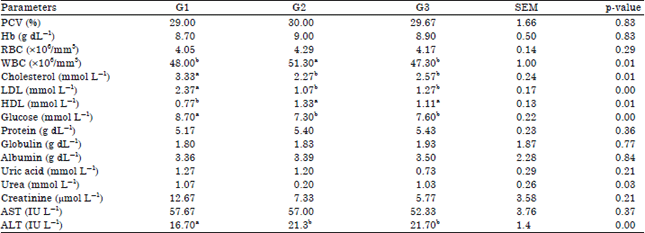 | |
| abMeans on the same row followed by different superscripts are significantly different (p<0.05), PCV: Packed cell volume, HB: Hemoglobin count, RBC: Red blood cell, WBC: White blood cell, LDL: Low density lipoprotein, HDL: High density lipoprotein, AST: Aspartate aminotransferase, ALT: Alanine amino transferase, G1: Control, G2: Banana leaf prder, G3: Banana leaf extract | |
However, all the values of the hematological constituents studied fall within the normal ranges for broilers as reported by Mitruka and Rawnsley (1981). The present findings contradicts the findings of Eseyin et al. (2010), who reported that aqueous and ethanolic extracts of the leaf of Musa paradisiaca significantly reduced the circulating red cell counts, hemoglobin and packed cell volume but increased lymphocyte concentration as compared to the control in rats.
They adduced this to a possibility that the extract reduced iron intake from the GIT or inhibited hematopoiesis. They, further, noted that reduction in RBC count could also be a consequence of cytotoxicity or an inhibitory effect of some of the components of the extracts on bone marrow homopoiesis. The improvement in the hematological constituents observed in the present study is an indication that the inclusion of banana leaves (powder and extract) did not have any pathological effect on the birds, thus, did not cause any hematological disorder.
Dietary treatment significantly (p<0.05) reduced the concentration of serum cholesterol and LDL cholesterol of chickens. Banana leaf meal and banana leaf extract caused significant (p<0.05) decreases of 54.82 and 46.41%, respectively in serum total cholesterol when compared to the control. The decrease in the plasma total cholesterol might be attributed to the presence of hypolipidemic agents in banana leaves. Banana leaf has been reported to possess antimicrobial and antioxidant activity in rats and mice (Karadi et al., 2011). Barbara (2013) reported that banana leaves contain large amounts of polyphenols (natural antioxidants found in many plant based foods) such as epigallocatechin gallate, or EGCG, also found in green tea. Walker (2015) noted that the mode of action for EGCG may increase delivery of stored fat to cells for oxidation or increase fat burning capabilities. The increase in HDL levels and reduction in LDL levels observed in all the treated animals is an indicator that banana leaf can reduce the cardiovascular risk factors associated with increased levels of cholesterol which contribute to death of diabetic subjects (Barnett and O'Gara, 2003). Supplementation with banana leaf had remarkable decreasing effects on the plasma glucose level in the treated birds compared with control. This indicates the presence of hypoglycemic components in the leaf. Kappel et al. (2013) demonstrated the beneficial effects of banana leaves (Musa paradisica) on regulation of glucose homeostasis and concluded that banana leaf have the ability to improve carbohydrate metabolism. This ability was attributed to the presence of an active phytochemical compound, rutin (quercetin-3-O-rutinoside), a flavonol glycoside found in the leaf.
Urea is the first acute renal marker upon renal injury and creatinine is the most trustable renal marker and increases only when the majority of renal function is lost (Borges et al., 2005). Creatinine (mg dL–1) is similar to urea in terms origin and diagnostics purposes. Creatinine levels in the present study varied numerically among the birds that received banana leaf (powder and extract) and the control-which had the highest value (p>0.05). There was non-significant difference (p>0.05) between the treated birds and the control birds, in mean albumin and globulin. The values obtained were within the normal range as indicated by wikivet. This resulted to a non-significant (p<0.05) increase in total serum protein in the birds. Albumin and globulin are the major proteins found in the blood. Albumin concentration in the blood can fluctuate depending on the nutrition of the animal and the presence of infection/disease. There is often a drop in cases of malnutrition and infection. Globulin proteins consist of antibodies, enzymes and other types of proteins. They are essential in fighting infections and enhancing the blood clotting process and serve as hormone carrier, transporting the hormones to different parts of the body. The numerical increase in the plasma protein level without associated elevation in the creatinine suggests that inclusion of the banana leaf could not have impaired renal function nor exposed the birds to potential kidney damage, specifically by renal filtration mechanism (Wasan et al., 2001).
The liver and kidney play a major role in metabolic processes, while the liver detoxifies substances that are harmful to the body, the kidney helps in maintenance of homeostasis by reabsorbing vital substances and excretion of waste products (Greaves, 2007). Usually, a blood test that measures certain enzyme levels is done to assess how well the body’s systems are functioning and probable damage to tissues. Alanine transaminase (ALT) and aspartate aminotransferase (AST) are the two main liver function blood serum tests. The AST and ALT are found primarily in the liver but also in the heart, kidney, pancreas, muscles and in red blood cells. It is normally elevated in cases of tissue damage, especially heart and liver. The magnitude of AST and ALT elevations vary depending on the cause of the hepatocellular injury. A very high ALT level suggests viral or severe drug-induced hepatitis, or other hepatic disease with extensive death of liver cells. The AST levels fluctuate depending on the extent of cell death. Serum biochemical parameters related to hepatic function in the present study indicated a significant (p<0.05) increase in the ALT of the treated groups. This suggests that the banana leaf perhaps produced hepatic injury by competitively interfering with cellular metabolism which could have resulted in liver toxicity causing a leakage of the enzyme into the blood circulation (Borges et al., 2005). However, the mean value obtained in the present study is within the normal range reported by Fraser (1986). There were no alterations in the AST concentration in the treated group compared to the control. Thus, the decrease in AST and increase in ALT levels observed in the treated groups imply that the extract might not have caused some toxic effects on the heart tissue (Crook, 2006).
Generally, the results of this study indicate that the use of banana leaf in the diets of broiler chickens improved the traits studied without any adverse effect on them. Of particular interest is the variation in the traits attributed to the method of applying the treatment (supplementation method-powder or infusion). In conclusion, therefore, banana leaf could be safely be used as a phytoadditive for broiler chickens, preferably in the feed.
REFERENCES
- Alisi, C.S., C.E. Nwanyanwu, C.O. Akujobi and C.O. Ibegbulem, 2008. Inhibition of dehydrogenase activity in pathogenic bacteria isolates by aqueous extracts of Musa paradisiaca (Var Sapientum). Afr. J. Biotechnol., 7: 1821-1825.
Direct Link - Bera, S., S. Bhattacharya, J.N. Pandey and M. Biswas, 2013. Acute and sub-chronic toxicity study of Musa paradisiaca leaf extracts in mice. J. Adv. Pharm. Educ. Res., 3: 90-93.
Direct Link - Borges, L.P., V.C. Borges, A.V. Moro, C.W. Nogueira, J.B.T. Rocha and G. Zeni, 2005. Protective effect of diphenyl diselenide on acute liver damage induced by 2-nitropropane in rats. Toxicology, 210: 1-8.
CrossRefPubMedDirect Link - Chu, H.L., D.B. Yeh and J.F. Shaw, 1993. Production of L-DOPA by banana leaf polyphenol oxidase. Bot. Bull.-Academia Sinica, 34: 57-60.
Direct Link - Ekwe, O.O., I.I. Osakwe and B.O. Nweze, 2011. The effect of replacing maize with cassava sievate using banana leaves as basal forage in the diet of weaned rabbit. Ozean J. Applied Sci., 4: 51-58.
Direct Link - Esonu, B.O., M.N. Opara, I.C. Okoli, H.O. Obikaonu, C. Udedibie and O.O.M. Iheshiulor, 2006. Physiological responses of laying birds to neem (Azadirachta indica) leaf meal-based diets: Body weight organ characteristics and haematology. Online J. Health Allied Sci., Vol. 5, No. 2.
Direct Link - Fakhim, R., Y. Ebrahimnezhad, H.R. Seyedabadi and T. Vahdatpour, 2013. Effect of different concentrations of aqueous extract of ginger (Zingiber officinale) on performance and carcass characteristics of male broiler chickens in wheat-soybean meal based diets. J. BioSci. Biotechnol., 2: 95-99.
Direct Link - Ghazalah, A.A. and A.M. Ali, 2008. Rosemary leaves as a dietary supplement for growth in broiler chickens. Int. J. Poult. Sci., 7: 234-239.
CrossRefDirect Link - Kailash, P. and P. Varalakshmi, 1992. Effect of banana stem juice on biochemical changes in liver of normal and hyperoxaluric rats. Indian J. Exp. Biol., 30: 440-442.
PubMed - Kakengi, A.M.V., J.T. Kaijage, S.V. Sarwatt, S.K. Mutayoba, M.N. Shem and T. Fujihara, 2007. Effect of Moringa oleifera leaf meal as a substitute for sunflower seed meal on performance of laying hens in Tanzania. Livest. Res. Rural Dev., Vol. 19.
Direct Link - Kappel, V.D., L.H. Cazarolli, D.F. Pereira, B.G. Postal and F.A. Madoglio et al., 2013. Beneficial effects of banana leaves (Musa x Paradisiaca) on glucose homeostasis: Multiple sites of action. Revista Brasileira Farmacognosia, 23: 706-715.
CrossRefDirect Link - Karadi, R.V., A. Shah, P. Parekh and P. Azmi, 2011. Antimicrobial activities of Musa paradisiaca and Cocos nucifera. Int. J. Res. Pharmaceut. Biomed. Sci., 2: 264-267.
Direct Link - Kehinde, A.S., A.J. Omole, A.O. Bobadoye and C.O. Obun, 2010. Growth performance and nutrients digestibility of cockerel chicks fed diets containing graded levels of ginger (Zingiber officinale). Proceedings of the 30th Conference of Nigerian Society for Animal Production, March 14-17, 2010, University of Ibadan, Nigeria, pp: 356-356.
- Manan, A., N. Chand, S. Khan, M.S. Qureshi, Altaf-Ur-Rehman and B. Jan, 2012. Effect of periodic supplementation of herbal infusion on the liver function and lipid profile of broiler chickens. Sarhad J. Agric., 28: 75-82.
Direct Link - Marin, A., D. Carias, C.A. Maria and P. Hevia, 2003. [Nutritive value of leaves of Musa paradisiaca and Clitoria ternatea as dilutents in diets for broilers]. Interciencia, 28: 51-56, (In Spanish).
Direct Link - Mmereole, F.U.C., 2010. Effects of lemmon grass (Cymbopogon citratus) leaf meal feed supplement on growth performance of broiler chicks. Int. J. Poult. Sci., 9: 1107-1111.
CrossRefDirect Link - Oleforuh-Okoleh, V.U., G.C. Chukwu and A.I. Adeolu, 2014. Effect of ground ginger and garlic on the growth performance, carcass quality and economics of production of broiler chickens. Global J. Bio-Sci. Biotechnol., 3: 225-229.
Direct Link - Oleforuh-Okoleh, V.U., S.O. Olorunleke and I.J. Nte, 2015. Comparative response of bitter leaf (Vernonia amygdalina) infusion administration on performance, haematology and serum biochemistry of broiler chicks. Asian J. Anim. Sci., 9: 217-224.
CrossRefDirect Link - Portugaliza, H.P. and T.J. Fernandez Jr., 2012. Growth performance of Cobb broilers given varying concentrations of Malunggay (Moringa oleifera Lam.) aqueous leaf extract. Online J. Anim. Feed Res., 2: 465-469.
Direct Link - Puvaca, N., V. Stanacev, D. Glamocic, J. Levic, L. Peric, V. Stanacev and D. Milic, 2013. Beneficial effects of phytoadditives in broiler nutrition. World's Poult. Sci., 69: 27-34.
CrossRefDirect Link - Wasan, K.M., S. Najafi, J. Wong, M. Kwong and P.H. Pritchard, 2001. Assessing plasma lipid levels, body weight and hepatic and renal toxicity following chronic oral administration of a water soluble phytostanol compound, FM-VP4, to gerbils. J. Pharm. Pharmaceut. Sci., 4: 228-234.
PubMedDirect Link - Kimambo, A.E. and H.M.H. Muya, 1991. Rumen degradation of dry matter and organic matter of different parts of the banana plant. Livestock Res. Rural Dev., Vol. 3, No. 3.
Direct Link