

P. Kraivaphan
Department of Pharmacology, Faculty of Dentistry, Mahidol University, Bangkok 10400, Thailand
C. Amornchat
Department of Oral Microbiology, Faculty of Dentistry, Mahidol University, Bangkok 10400, Thailand
Y. Maneepitsamai
Department of Chemistry, Faculty of Science, Chandrakasem Rajabhat University, Bangkok 10400, Thailand
Research Journal of Medicinal Plants
Year: 2013 | Volume: 7 | Issue: 2 | Page No.: 100-106


ABSTRACT
Mentha cordifolia (kitchen mint), Mentha arvensis (Japanese mint) and Ocimum basilicum (common basil) are commonly used as ingredients in cooking recipes in Thailand. The studies on anti-Porphyromonas gingivalis both planktonic and biofilm states of their essential oils, are very limited. This study was carried out to evaluate the Minimum Bactericidal Concentrations (MBCs) of essential oils of these 3 mints against a periodontal pathogen, Porphyromonas gingivalis (Pg) strain W50, grown in planktonic and biofilm states. Agar disc diffusion method was used for antibacterial screening of 3 essential oils. The MBCs of the essential oils against Pg, planktonic and biofilm cells were determined using micro-broth dilution method in 96-well microtiter plates. Two fold dilutions of essential oils were performed in Schaedler Anaerobic Broth and incubated with planktonic and biofilm-grown Pg cells. The remaining viable bacterial cells were checked by spot test. All 3 essential oils showed strong bactericidal effects on Pg. The MBCs of Mentha cordifolia, Mentha arvensis and Ocimum basilicum against Pg planktonic cells were 0.821, 6.537 and 3.625 mg mL-1, respectively, while the MBCs against Pg biofilm cells were 6.568, 26.150 and 14.498 mg mL-1, respectively. Mentha cordifolia oil possessed the highest bactericidal activity. The Pg biofilms showed 4-8 times decreased sensitivity to the oils as compared with the Pg planktonic cells. In conclusion, all 3 mint-extracted essential oils showed anti-Pg activity of low MBCs. This suggested that they could be formulated as active ingredients in oral health care products.
PDF Abstract XML References Citation
Article History
Received: January 25, 2013;
Accepted: March 06, 2013;
Published: July 02, 2013
How to cite this article
P. Kraivaphan, C. Amornchat and Y. Maneepitsamai, 2013. Bactericidal Effects of Three Mint Essential Oils on Porphyromonas gingivalis in Planktonic and Biofilm Cells. Research Journal of Medicinal Plants, 7: 100-106.
URL: https://scialert.net/abstract/?doi=rjmp.2013.100.106
URL: https://scialert.net/abstract/?doi=rjmp.2013.100.106
INTRODUCTION
Three mint plants of the family Lamiaceae or Labitae were selected in this study. Mentha cordifolia (kitchen mint), Mentha arvensis (Japanese mint) and Ocimum basilicum (common basil, sweet basil) are commonly cultivated throughout Thailand. Their aromatic leaves are widely used as cooking herbs, flavoring foods and beverages (Bauer et al., 2001; Mimica-Dukic et al., 2003). For medicinal purposes, they can be used for reducing symptoms related to digestion and as an expectorant. Essential oils extracted from these aromatic leaves are widely used for several purposes. The antibacterial activity of the essential oils was reported against pathogenic bacterial strains and oral pathogens (Takarada et al., 2004; Hafedh et al., 2010; Rattanachaikunsopon and Phumkhachorn, 2010; Upadhyay et al., 2010; Palombo, 2011). Schelz et al. (2010) also discussed and reviewed recent studies on antibacterial properties of essential oils. The most common test methods for antimicrobial activity are the agar diffusion and the broth dilution. However, the results of Minimum Inhibitory Concentration (MIC) and Minimum Bactericidal Concentration (MBC) vary due to the test methods, the variety of plants and growing state of test bacteria. In addition, these methods usually test microorganisms in the planktonic form. The microorganisms growing in the biofilm state are much more resistant to antimicrobial agents than the planktonic state. Regarding oral biofilms, Socransky and Haffajee (2002) provided a description of the difficulty in oral biofilm control. Biofilm formation in the oral cavity as a dental plaque can play an important role in the resistance to antimicrobial activity of drugs which is a major problem in the management of oral infection. At present, limited studies on antibiofilim activity of essential oils have been conducted, particularly against oral anaerobic pathogen. In this study, Porphyromonas gingivalis (Pg) was selected to investigate susceptibility to the essential oils. This study aimed to determine the antibacterial activity of essential oils extracted from three mint family species against Pg strain W50 grown in planktonic and biofilm states.
MATERIALS AND METHODS
Essential oils extraction: Fresh leaves of kitchen mint, Japanese mint and common basil were brought form Talad Thai, Pathum Thani Province, Thailand. One thousand gram of fresh leaves were minced and added into 2,000 mL distilled water for each plant. The essential oils were extracted using hydrodistillation. All essential oils were weighted and kept in dark vials at 4°C before use.
Porphyromonas gingivalis strain W50 suspension: The Pg strain W50 was kindly provided by the Department of Oral Microbiology, Faculty of Dentistry, Mahidol University, Thailand. Pg was grown as isolated black pigmented colonies on Anaerobic Basal Agar (Oxoid Ltd; Hampshire, England) supplemented with 5% blood, hemin 5 mg L-1 and menadione 1 mg L-1 in anaerobic jar using AnaeroPackR Anaero (Mitsubishi Gas Chemical Co., Inc., Japan) to generate anaerobic conditions. Colonies of Pg were subcultured in Schaedler Anaerobic Broth (Oxoid Ltd; Hampshire, England) supplemented with menadione 1 mg L-1 and grown in anaerobic condition for 48 h. The turbidity of Pg culture in Schaedler Anaerobic Broth was adjusted to Mc Farland No. 1 (~3x10⁸ cfu mL-1) and then diluted to 1:4 as working bacterial suspension.
Essential oils dilution: Each pure essential oil was dissolved in 95% ethanol 1:1 before making two fold dilutions in Schaedler Anaerobic Broth. Serial two fold dilutions of the three oil samples were conducted in 96-well microtiter plates to determine MBC of the three essential oils.
Screening for antibacterial activity of essential oils: Agar disc diffusion method was used for antibacterial screening of the three essential oil extracts. Fifteen microlitter of each essential oil dilution was pipetted on separated sterile blank disc, 6 mm in diameter and left air-dry. Bacterial suspension turbidity equaled to Mc Farland No. 0.5 was spread evenly on Anaerobic Basal Agar supplemented with 5% blood, hemin 5 mg L-1 and menadione 1 mg L-1. Dry essential oil containing discs were then placed in triplicate for each dilution. After incubation in anaerobic condition for 48 h, inhibition zones were measured.
Minimum bactericidal concentration assay
MBC of Pg planktonics: One hundred microlitter of working Pg suspension was inoculated into each well of a 96-well microtiter plate, which containing 100 μL of two fold diluted essential oil. Pg suspension without oil and Pg in 0.2% chlorhexidine was done in the same manner as a negative and a positive control. Each experiment was done in triplicate wells. All microtiter plates were incubated under anaerobic condition at 37°C for 48 h. The viability of Pg from each well was determined by spot test. A 10 μL suspension from each well was spot in triplicate on Anaerobic Basal Agar plates supplemented with 5% blood, hemin 5 mg L-1 and menadione 1 mg L-1. The experiments were repeated three times. The highest oil dilution showed no visible growth on agar plates, calculated as MBC value in mg mL-1.
MBC of Pg biofilms: Two hundred microlitter of the working Pg suspension was inoculated in each well of a 96-well microtiter plate, incubated in anaerobic condition at 37°C for 48 h. Visible Pg biofilms, formed at the bottom of wells, were washed twice with 200 μL of reduced transport fluid to remove all planktonic Pg. Two hundred microlitter of each diluted oil was pipetted into each Pg biofilm well. Pg biofilm in Schaedler Anaerobic Broth and 0.2% chlorhexidine were performed as a negative and a positive control. All experiments were done in triplicate three times. After 48 h anaerobic incubation at 37°C, the wells were scraped and the viability of Pg biofilm was determined by spot test, as previously described. The MBC of essential oils for Pg biofilms was calculated as mg mL-1.
Statistical analysis: Data were analyzed using descriptive statistics. Mean and standard deviation were calculated from three separate experiments.
RESULTS AND DISCUSSION
Clear yellowish essential oils were obtained after hydrodistillation extraction. Volumes and weights of essential oils extracted from 1,000 g of fresh leaves are shown in Table 1.
Common basil showed the highest yield of 0.3062%. Japanese mint and kitchen mint gave percent yields of 0.1196 and 0.0336, respectively. Antimicrobial activities of the three essential oils were screened using the semiquantitative Bauer-Kirby disc diffusion method (Bauer et al., 1966). The inhibition zones of essential oils against Pg are shown in Table 2.
| Table 1: | List of plants and yield of essential oils extract from 1,000 g of fresh leaves |
 | |
| Table 2: | Antibacterial activity of essential oils against Porphyromonas gingivalis strain W50 using disc diffusion method |
 | |
| Inhibition zones are shown as Mean±SD in mm from three replicate experiments. aUndiluted oil, bNo inhibition zone | |
| Table 3: | Bactericidal activity of kitchen mint, Japanese mint and common basil essential oils against Porphyromonas gingivalis strain W50 grown in planktonic and biofilm forms |
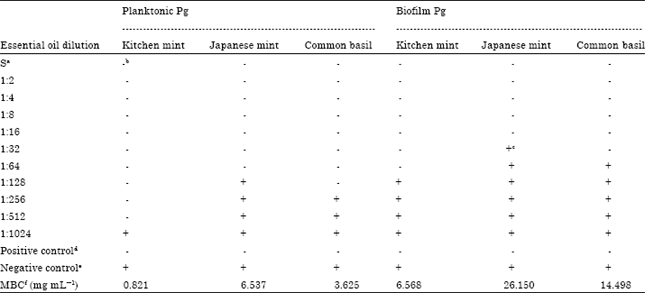 | |
| aStarting concentration of essential oils, Kitchen mint: 420.35 mg mL-1, Japanese mint: 418.40 mg mL-1, Common basil: 463.95 mg mL-1, bNo visible bacterial growth on spot test, cVisible bacterial growth on spot test, dPg cultured in the presence of 0.2% chlorhexidine, ePg cultured in the absence of essential oil, fMinimum bactericidal concentration | |
All tested essential oils showed antibacterial potency using the disc diffusion technique. The highest potency was found from kitchen mint at the concentration of 13.136, while Japanese mint and common basil showed minimal concentrations of 104.600 and 28.997 mg L-1, respectively.
Antibacterial potency of oils was further quantified using the microbroth dilution technique. Planktonic and biofilm forms of Pg grown in 96-well microtiter plates were tested for their susceptibility to the essential oils. The turbidity and precipitation during incubation, due to the solubility of the essential oils in Schaedler broth, limited the finding of the MIC of Pg cells. Thus, only MBC were determined. The optimized condition for Pg biofilms was modified from Davey (2006). Pg biofilms formed at the bottom of wells and could be visualized by naked eye after safranin staining. All three essential oils demonstrated good bactericidal activity against both planktonic and biofilm bacteria (Table 3).
The MBCs of kitchen mint, Japanese mint and common basil against Pg planktonic state were 0.821, 6.537 and 3.625 mg mL-1, respectively. Several studies were conducted on the MICs and MBCs of essential oils. Most of studies used aerobic bacteria as Staphylococcus aureus, Pseudomonas aeroginosa and Staphylococcus epidermidis as test organisms (Hammer et al., 1999; Lambert et al., 2001; Hendry et al., 2009; Chaieb et al., 2011; Adukwu et al., 2012). All test essential oils showed MICs at low concentration and have been suggested for further development of antibacterial products. Few data on anti-biofilm of essential oils against oral anaerobes have been reported. Fine et al. (2007) studied the effect of mouthrinse containing essential oil on plaque bacteria and the reduction of some anaerobes and total anaerobes in supragingival and subgingival plaque from human subjects were reported. As a result from this study, the biofilm state of Pg demonstrated more resistance to the essential oils with the MBCs of kitchen mint, Japanese mint and common basil of 6.568, 26.150 and 14.498 mg mL-1, respectively. The biofilm Pg showed 4-8 times more resistance than planktonic Pg (Fig. 1).
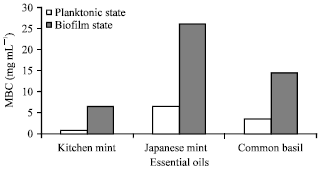 | |
| Fig. 1: | Decreased susceptibility of biofilm cells compared with planktonic cells of Porphyromonas gingivalis strain W50 |
The decreased susceptibility of those biofilm-grown cells to antimicrobial agents has been intensively reviewed (Wilson, 1996; Socransky and Haffajee, 2002). The attachment and coaggregation of bacteria in biofilms could alter the susceptibility to antimicrobial agents and prove difficult to eradicate. The increased antibiotic resistance of microorganisms in biofilms is now a medical problem. Recent study focused on susceptibility of bacterial biofilms instead of bacterial planktonic cells. Hendry et al. (2009) determined the MICs and MBCs of some clinical pathogens, Staphylococcus aureus, Escherichia coli and Candida albicans. The biofilm grown cells showed 2-256 times more resistance than planktonic cells for all bacterial strain tests but revealed the same antibacterial concentration for Candida albicans. Since Pg is one of the key microorganisms involved in the periodontitis, the susceptibility in the biofilm state should be reevaluated. The in vitro studies of the effectiveness of antimicrobial agents now focus on its effect against biofilm cells (Bercy and Lasserre, 2007; Gursoy et al., 2009; Hosainzadegan and Delfan, 2009; Teles and Teles, 2009; Picerno et al., 2011). The essential oils of medicinal plants and crude drugs used in traditional medicine usually reevaluate their anti-biofilm properties in the aim to develop safe antiseptic products. Oral pathogens are now the key organisms to determine anti-biofilm properties and its lower sensitivity to antimicrobial agent as compare with planktonic cells has been reported. In this study, the Pg biofilms were less sensitive to essential oils than planktonic bacteria; 4-8 times higher concentration of oils was needed to eradicate those Pg biofilms. The results of this study showed that kitchen mint oil possessed the strongest bactericidal activity at the concentration of 0.821 and 6.568 mg mL-1 for planktonic and biofilm cells, respectively. This is a preliminary study for developing the use of the essential oils in oral health care products, such as antiseptic mouthwashes, toothpastes, lozenges, chewing gum etc., with effective anti-biofilm properties.
CONCLUSION
This study evaluated the bactericidal efficiency of essential oils extracted from fresh mint leaves, i.e., kitchen mint, Japanese mint and common basil. All three mint essential oils showed bactericidal effects against both planktonic and biofilm cells of Pg, the periodontopathic pathogen. Kitchen mint possessed the strongest activity with a MBC of 0.821 mg mL-1 for Pg planktonic cells and 6.568 mg mL-1 for Pg biofilm cells. These results could be beneficial for development of oral care products containing essential oils.
ACKNOWLEDGMENTS
We Thank Assoc. Prof. Dr. Ratchapin Srisatjaluk, Dept of Oral Microbiology, Faculty of Dentistry, Mahidol University, for her technical advice in growing Pg-biofilm and writing manuscript assistance.
REFERENCES
- Adukwu, E.C., S.C.H. Allen and C.A. Phillips, 2012. The anti-biofilm activity of lemongrass (Cymbopogon flexuosus) and grapefruit (Citrus paradisi) essential oils against five strains of Staphylococcus aureus. J. Applied Microbiol., 113: 1217-1227.
CrossRefDirect Link - Bauer, A.W., W.M.M. Kirby, J.C. Sherris and M. Turck, 1966. Antibiotic susceptibility testing by a standardized single disk method. Am. J. Clin. Pathol., 45: 493-496.
CrossRefPubMedDirect Link - Bercy, P. and J. Lasserre, 2007. Susceptibility to various oral antiseptics of Porphyromonas gingivalis W83 within a biofilm. Adv. Ther., 26: 1181-1191.
CrossRef - Chaieb, K., B. Kouidhi, H. Jrah, K. Mahdouani and A. Bakhrouf, 2011. Antibacterial activity of thymoquinone, an active principle of Nigella sativa and its potency to prevent bacteria biofilm formation. Comp. Altern. Med., Vol. 11.
CrossRefDirect Link - Davey, M.E., 2006. Techniques for the growth of Porphyromonas gingivalis biofilms. Periodontology, 42: 27-35.
CrossRef - Fine, D.H., K. Markowitz, D. Furgang, D. Goldsmith, C.H. Charles, T.A. Lisante and M.C. Lynch, 2007. Effect of an essential oil-containing antimicrobial mouthrinse on specific plaque bacteria In vivo. J. Clin. Periodontol, 34: 652-657.
PubMed - Gursoy, U.K., M. Gursoy, O.V. Gursoy, L. Cakmakci, E. Kononen and V.J. Uitto, 2009. Anti-biofilm properties of Satureja hortensis L. essential oil against periodontal pathogens. Anaerobe, 15: 164-167.
CrossRefDirect Link - Hafedh, H., B.A. Fethi, S. Mejdi, N. Emira and B. Amina, 2010. Effect of Mentha longifolia L. ssp. longifolia essential oil on the morphology of four pathogenic bacteria visualized by atomic force microscopy. Afr. J. Microbiol. Res., 4: 1122-1127.
Direct Link - Hammer, K.A., C.F. Carson and T.V. Riley, 1999. Antimicrobial activity of essential oils and other plant extracts. J. Appl. Microbiol., 86: 985-990.
CrossRefPubMedDirect Link - Hendry, E.R., T. Worthington, B.R. Conway and P.A. Lambert, 2009. Antimicrobial efficacy of eucalyptus oil and 1,8-cineole alone and in combination with chlorhexidine digluconate against microorganisms grown in planktonic and biofilm cultures. J. Antimicrob. Chemother., 64: 1219-1225.
CrossRefPubMedDirect Link - Hosainzadegan, H. and B. Delfan, 2009. Evaluation of antibiofilm activity of Dentol. Acta Medica Iranica, 47: 35-40.
Direct Link - Lambert, R.J.W., P.N. Skandamis, P.J. Coote and G.J.E. Nychas, 2001. A study of the minimum inhibitory concentration and mode of action of oregano essential oil, thymol and carvacrol. J. Appl. Microbiol., 91: 453-462.
CrossRefPubMedDirect Link - Mimica-Dukic, N., B. Bozin, M. Sokovic, B. Mihajlovic and M. Matavulj, 2003. Antimicrobial and antioxidant activities of three Mentha species essential oils. Planta Med., 69: 413-419.
PubMedDirect Link - Palombo, E.A., 2011. Traditional medicinal plant extracts and natural products with activity against oral bacteria: Potential application in the prevention and treatment of oral diseases. Evidence-Based Complementary Altern. Med., Vol. 2011.
CrossRefDirect Link - Picerno, P., T. Mencherini, F. Sansone, P.D. Gaudio, I. Granata, A. Porta and R.P. Aquino, 2011. Screening of a polar extract of Paeonia rockii: Composition and antioxidant and antifungal activities. J. Ethnopharmacol., 138: 705-712.
CrossRef - Rattanachaikunsopon, P. and P. Phumkhachorn, 2010. Antimicrobial activity of basil (Ocimum basilicum) oil against Salmonella enteritidis in vitro and in food. Biosci. Biotechnol. Biochem., 74: 1200-1204.
CrossRefDirect Link - Schelz, Z., J. Hohmann and J. Molnar, 2010. Recent Advances in Research of Antimicrobial Effect of Essential Oils and Plant Derived Compounds on Bacteria. In: Ethnomedicine: A Source of Complementary Therapeutics, Chattopadhyay, D. (Ed.). Research Signpost, Kerala, India, ISBN-13: 9788130803906, pp: 179-201.
- Socransky, S.S. and A.D. Haffajee, 2002. Dental biofilms: Difficult therapeutic targets. Periodontology, 28: 12-55.
CrossRef - Takarada, K., R. Kimizuka, N. Takahashi, K. Honma, K. Okuda and T. Kato, 2004. A comparison of the antibacterial efficacies of essential oils against oral pathogens. Oral. Microbiol. Immunol., 19: 61-64.
Direct Link - Teles, P.R. and F.R.F. Teles, 2009. Antimicrobial agents used in the control of periodontal biofilms: Effective adjuncts to mechanical plaque control? Braz. Oral Res., 23: 39-48.
CrossRef - Upadhyay, R.K., P. Dwivedi and S. Ahmad, 2010. Screening of antibacterial activity of six plants essential oils against pathogenic bacterial strains. Asian. J. Med. Sci., 2: 152-158.
Direct Link - Wilson, M., 1996. Susceptibility of oral bacterial biofilms to antimicrobial agents. J. Med. Microbiol., 44: 79-87.
CrossRefDirect Link