

Kevin Z. Mganga
Department of Land Resource Management and Agricultural Technology,University of Nairobi, P.O. Box 29053-00625, Nairobi, Kenya
Nashon K.R. Musimba
Department of Land Resource Management and Agricultural Technology,University of Nairobi, P.O. Box 29053-00625, Nairobi, Kenya
Moses M. Nyangito
Department of Land Resource Management and Agricultural Technology,University of Nairobi, P.O. Box 29053-00625, Nairobi, Kenya
Dickson M. Nyariki
Department of Land Resource Management and Agricultural Technology,University of Nairobi, P.O. Box 29053-00625, Nairobi, Kenya
Agnes W. Mwangombe
Department of Plant Science and Crop Protection,University of Nairobi, Nairobi, Kenya
Wellington N. Ekaya
RUFORUM, Uganda
William M. Muiru
Department of Plant Science and Crop Protection,University of Nairobi, Nairobi, Kenya
Daniele Clavel
CIRAD, France
Judith Francis
CTA, Netherlands
Ralph von Kaufmann
FARA, Netherlands
Jan Verhagen
Wagengen University, Netherlands
Journal of Environmental Science and Technology
Year: 2010 | Volume: 3 | Issue: 4 | Page No.: 195-207


ABSTRACT
This study investigated the role of moisture in the successful rehabilitation of denuded patches in semi-arid lands of Kenya and the primary productivity of three perennial rangelands grasses namely Cenchrus ciliaris (African foxtail), Enteropogon macrostachyus (Bush rye) and Eragrostis superba (Maasai love grass) at three phenological stages (early growth, elongation and reproduction) as pure stands and two-grass mixtures. The grasses were sown on either rainfed (Sites 1 and 2) or simulated rainfall conditions (site 3). Site preparation in all the 3 sites involved mechanical bush clearing, use of fire and creation of micro-catchments using an ox-drawn plough. Soils in site 3 were sandy clay loams and those in sites 1 and 2 were sandy clays. There was total failure in establishment sites 1 and 2 under natural rainfall. Site 3 had good germination and subsequent establishment. These results were attributed to the moisture conditions in the three sites. There was a significant difference (p<0.05) in primary production of the three grasses at the different phenological stages. Cenchrus ciliaris was the most productive among the three grasses at the reproduction stage. Eragrostis superba and Enteropogon macrostachyus were ranked second and third respectively. Enteropogon macrostachyus was more prolific at the early growth stages. Results from this study strongly suggest that moisture is the most important ecological factor necessary for successful rehabilitation of denuded patches in semi-arid environments of Kenya and that differences in primary production among the three grass species can be attributed to their growth, morphological and physiological characteristics and competitive advantage.
PDF Abstract XML References Citation
Article History
Received: February 15, 2010;
Accepted: May 08, 2010;
Published: May 29, 2010
How to cite this article
Kevin Z. Mganga, Nashon K.R. Musimba, Moses M. Nyangito, Dickson M. Nyariki, Agnes W. Mwangombe, Wellington N. Ekaya, William M. Muiru, Daniele Clavel, Judith Francis, Ralph von Kaufmann and Jan Verhagen, 2010. The Role of Moisture in the Successful Rehabilitation of Denuded Patches of a Semi-Arid Environment in Kenya. Journal of Environmental Science and Technology, 3: 195-207.
DOI: 10.3923/jest.2010.195.207
URL: https://scialert.net/abstract/?doi=jest.2010.195.207
DOI: 10.3923/jest.2010.195.207
URL: https://scialert.net/abstract/?doi=jest.2010.195.207
INTRODUCTION
The Arid and Semi-Arid Lands (ASALs) of Kenya which cover approximately 80% of its landmass have undergone increasingly land use pressure within the last 15 years, largely due to various factors that have caused a decline in forage resources which have threatened the sustainability of land based production systems (Kitalyi et al., 2002). This has resulted to land degradation which occurs in forms of impoverishment and depletion of vegetation cover and loss of biophysical productivity through exposure of the soil surface to wind and water erosion leading to deterioration of physical, chemical and biological soil properties.
Although land degradation occurs under a wide variety of conditions and environments, some environments are more at risk of degradation. Semi-arid lands of eastern Africa are particularly vulnerable because the soils have poor soil structure as a result of low levels of organic matter. The decline of productivity, the loss of biodiversity and the increasing rate of soil erosion are degradation’s evidence in these environments (Beukes and Cowling, 2003; van den Berg and Kellner, 2005; Visser et al., 2007).
Semi-arid lands in east Africa are often characterized by limited and scarcity of permanent water sources. The rainfall in these semi-arid environments of Kenya ranges from 900 mm in ACZ IV (transitional zone) to 450 mm in ACZ V (Biamah, 2005). The rainfall patterns in Kenya are governed by the seasonal shifts and intensity of the low pressure Inter-Tropical Convergence Zone (ITCZ). Rainfall occurrence is primarily bimodal with two distinct rainy seasons, the short and long rains. In semi-arid Kenya, the short rains (October to December) are more reliable, evenly distributed and adequate for crop production (Biamah, 2005). However, very high soil moisture deficits experienced in these zones usually result in significant decreases in primary production. This often leads to unsuccessful rehabilitation due to high rates of seed and seedling mortality in denuded patches in the rangelands.
Successful rehabilitation has however been made in low rainfall areas of the world, for example, Thar Desert in India where the rainfall ranges between 100-500 mm annually, 90% of which is received between July and September (Sinha et al., 1997). This is only achievable with proper water and soil management. Reseeding semi-arid lands require some form of soil disturbances. This helps in replenishing deficient plant species or introducing new ones by allowing root penetration to the ground through provision of conditions suitable for germination, emergence and subsequent establishment of the species.
Water harvesting techniques such as pitting, contour furrows and trenches are important for the creation of both micro-catchment and macro-catchments. These techniques conserve water and improve soil fertility by improving the infiltration capacity and amount of water in the soil (Visser et al., 2007). Such techniques are therefore used in reducing runoff, thus ensuring that the grass seeds get enough water for a prolonged period of time thus improving their chances of germination and establishment.
Perennial grasses in semi-arid lands of Kenya namely Cenchrus ciliaris, Eragrostis superba and Enteropogon macrostachyus, have evolved adaptive mechanisms for survival and are thus preferable to all other plants, except in eco-climatic zone VI where the rainfall is mostly too low to support perennials and where annual grasses may have been used (Opiyo, 2007).
Cenchrus ciliaris (L) is a persistent tufted perennial which occurs in a wide variety of types, some of which have become reputed cultivars (strains or varieties in cultivation). It has a deep strong and extensive fibrous root system that exceeds 2 m which makes it aggressive (Mnene, 2006). The species often occurs in the wild on sandy soils, but is also well adapted to deep, freely draining sandy loams, loams, clay loams and red earth soils (Mganga, 2009).
Eragrostis superba Peyr, just like Cenchrus ciliaris is a tufted perennial with sturdy and erected culms with a high shoot/root ration. It has a deep root system which goes as far as 2.2 m with 73% of the roots limited to the upper 0.4 m from the soil surface which enables the grass to make full use of light showers of rain (Opiyo, 2007). Eragrostis superba is a moderate tiller and its regrowth ability is poor when compared to Cenchrus ciliaris (L) and Chloris roxburghiana (Schult). It can be grown in gravely, sandy, loamy or clay soils but prefers sandy soils (Mganga, 2009).
Enteropogon macrostachyus (Hochst.ex A.Rich) Monro ex Benth is a tufted perennial (Mnene, 2006) with erected culms of 30-100 cm high. It occurs naturally in grasslands and rocky outcrops in semi-arid environments and the seeds germinate readily and grow vigorously (Opiyo, 2007).
The aims of this research were to study the role of moisture in the successful rehabilitation of denuded patches of semi-arid lands of eastern Africa using grass reseeding technology and document the primary productivity of three indigenous perennial grass species namely Cenchrus ciliaris, Eragrostis superba and Enteropogon macrostachyus across three different phenological stages.
MATERIALS AND METHODS
Study Area
This study was conducted in Kibwezi district located about 200km southeast of the capital city Nairobi, along the Nairobi-Mombasa highway in the period 2008/2009. It lies between the latitudes 2° 6' S and 3°S and longitude 37° 36' E and 38° 30'E, respectively (CBS, 2000). The district has a total area of 3400 km2. The largest ethnic group in the study area is the agro-pastoral Kamba community (Nyangito et al., 2008). Their mainstream economic activity is raising livestock and cultivating cereals and pulses. The crops grown include different varieties of drought tolerant maize, millet, beans, sorghum and pigeon peas. Livestock kept consists of local breeds mainly the Small East African Shorthorn Zebu cattle, Red Maasai sheep and the Small East African goat (Nyangito et al., 2009). The production system is largely geared to subsistence production (Nyangito et al., 2008).
Soils in Kibwezi district are of volcanic origin. They are shallow to very shallow, extremely stony to rocky and are highly permeable. The soils are mainly Ferralsols, Cambisols and Luvisols (Touber, 1983). Most of these soils have strong surface sealing properties that cause much run-off during heavy rains. Just like other soils in arid and semi-arid environments, the soils in Kibwezi district contain low organic matter with carbon content between 0.1-0.5%. Such soils are generally very vulnerable to degradation through physical erosion and to chemical and biological degradation (El Beltagy, 2002).
The climate is typical semi-arid and the district is representative of many other zones with similar ecological conditions throughout Kenya, characterized by low and unreliable supply of enough moisture for plant growth. The average annual rainfall, evaporation and temperatures are 600, 2000 mm and 23°C, respectively (Michieka and van der Pouw, 1977; Braunn, 1977). Due to its proximate position along the equator, the area experiences a bimodal pattern of rainfall with long rains from March to May and short rains from November to December. The short rains are more reliable in time than long rains and are therefore more important. According to Braunn (1977), there is a concentration of rainfall at the beginning of the long or short rains. Rainfall intensities are usually very high.
The natural vegetation is woodland and savannah (Nyangito et al., 2009). The distribution of the vegetation in the study area is controlled by a number of complex interrelated factors such as climate, geological formation, soil type and the presence or absence of ground water. Kibwezi district is a typical semi-arid district dominated by Commiphora, Acacia and allied genera, mainly of shrubby habitat. The Baobab trees, Adansonia digitata, are also common. Shrubs include Apis mellifera, Apis senegal (L) wild and Grewia sp. (Nyangito et al., 2009). Perennial grasses such as Cenchrus ciliaris, Enteropogon macrostachyus and Chloris roxburghiana dominate. Eragrostis superba is also commonly found in the district.
Seed Viability Tests by Germination
Germination test as described by Tarawali et al. (1995) was used in the study. Random samples of 100 seeds of the three grass species bought from a farmer who practices grass reseeding in his farm were put on wet Whitman filter paper in a petri dish. The seeds used for the experiment were harvested in 2007. The petri dishes were then placed at room conditions (30°C) in the study area before the field experiment was carried out to establish the viability and germination potential of the seeds to be used. Another random sample of the same seeds was kept in an incubator at 20°C. The grass seeds that germinated everyday were counted and removed from the petri dishes. The seeds were monitored for 14 days. At the end of the 14 days, all germinated seeds were expressed as a percentage of total number of seeds. Seeds which did not germinate within this period were dimmed dormant.
Rainfall Data Collection
Monthly rainfall data was collected throughout the study period. Monthly rainfall totals were used to determine annual rainfall totals received during the study period.
Site Preparation and Experimental Layout
Site preparation involved bush clearing and creation of micro-catchments in all the three selected sites. Mechanical methods and use of fire technologies were used to clear the bush. The sprinkler irrigation system was set up in the irrigation plot (site 3). Sites 1 and 2 were under natural rainfall. Ox-driven ploughs were used to disturb the soil and create micro-catchments of approximately 15 cm depth in all the three sites. Micro-catchments were created to promote better germination of seeds and establishment of seedlings (van der Merwe and Kellner, 1999; Snyman, 2003; Visser et al., 2007).
The experimental design was divided into 3 main plots measuring 15x10 m laid horizontally next to each other. Each main plot was separated from the other with a 5 m fire-break. The main plots were further sub-divided into 6 sub-plots measuring 5x5 m. Grass seeds were hand-sown along the created micro-catchment in each of the sub-plot. The experiment layout in all the three sites was set-up as shown below (Fig. 1).
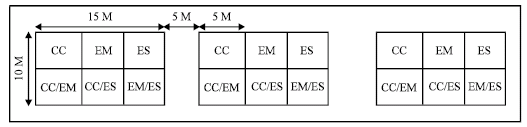 | |
| Fig. 1: | Experimental layout in all the sites; Notes: CC-Cenchrus ciliaris, EM-Enteropogon macrostachyus, ES-Eragrosris superba |
Determination of the Application Rate of the Sprinkler Irrigation System
Six cylindrical containers of the same diameter were spaced at even intervals and in a line running away from the sprinkler. The last container was placed near the edge of the area of coverage. The plots were then irrigated for an hour. The water volumes in all the containers were then added up and divided by the number of cans used to find the amount of water applied per hour. This was the application rate (Mganga, 2009). The duration of the application was adjusted from time to time according to the prevailing environmental conditions and the use of plant indicators to ensure that the soil was maintained at near field capacity and prevent grass seedlings from wilting. The sprinkler irrigation system application rate was 0.638 cm3 sec-1.
Soil Data
Soil samples were taken from the top soil of 0-20 cm to determine soil moisture and soil texture. Soil moisture content was determined by the gravimetric method (Rowel, 1994). Soil moisture content was collected prior to irrigation. Soil texture was determined following the hydrometer method as described by Gee and Bauder (1986). The fine fraction of soil passing through a 2 mm sieve was taken for texture analysis using the Buoyoucos hydrometer. The textural class was determined using the standard USDA Triangle (USDA, 1975).
Undisturbed soil core samples taken to depths of 0-5 cm were used to determine soil bulk density and saturated hydraulic conductivity (Ksat). Bulk density was determined by the core method (Blake and Hartge, 1986). Constant head permeameter as described by Klute and Dirksen (1986) was used to determine saturated hydraulic conductivity (Ksat).
Both the disturbed and undisturbed soil samples were taken at the beginning of the experiment.
Vegetation Data
The direct estimates of above ground standing biomass yields involved the use of a quadrat. A 0.5x0.5 m quadrat was used, i.e., 0.25 m2 sized quadrats. Destructive sampling techniques of clipping were used. A stubble height of 2.5 cm was left while harvesting the plant material in the quadrat in each sub-plot. Six quadrats were placed at each sub-plot.
The harvested biomass was oven dried at 80°C for 96 h to estimate the biomass production on dry matter basis. Biomass was collected at different grass heights of 15 cm (early growth phase), 30 cm (elongation phase) and 60 cm (reproduction phase). The percentage basal cover was estimated using the step-point method of vegetation sampling (Evans and Love, 1957).
Vegetation data was collected only in the plot under sprinkler irrigation (simulated rainfall) since there was very poor establishment in plots under natural rainfall.
RESULTS
The results showed that there was a difference in seed germination among the tested grass species. Under room conditions in the study area, where temperatures were at an average of 30°C, the seeds of Enteropogon macrostachyus had the highest germination of 53% (Fig. 2). The seed germination for Cenchrus ciliaris and Eragrostis superba was 12 and10%, respectively (Fig. 2).
Under controlled laboratory conditions, at 20°C, results also showed differences in seed germination. Seeds of Enteropogon macrostachyus had the highest germination of 85% (Fig. 3). The seed germination for Cenchrus ciliaris and Eragrostis superba was 40 and 21%, respectively (Fig. 3).Rainfall total in the study area for the year 2008 was 324 mm.
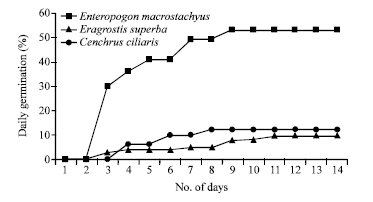 | |
| Fig. 2: | Daily percentage seed germination of Enteropogon macrostachyus, Eragrostis superba and Cenchrus ciliaris, at 30°C in the study area |
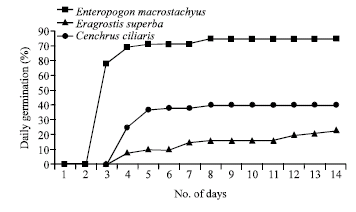 | |
| Fig. 3: | Daily percentage seed germination of Enteropogon macrostachyus, Eragrostis superba and Cenchrus ciliaris under controlled conditions, 20°C |
| Table 1: | Monthly rainfall totals for Kibwezi district, Kenya (2008) |
 | |
| Rainfall totals (mm) in the study area, 2008 | |
The long rains (March to May) received the highest total amount of rainfall of 240 mm as compared to the short rains (November to December) which received a total of 84 mm of rainfall. The month of March received the highest amount of rainfall during the study period with a monthly total of 193 mm. The months between May and October were the driest with no rainfall recorded. There was no rainfall received in the month of January (Table 1).
The wettest month of the year was March, which received a total of 193 mm. However, most of the rain came as short lived flushes, which lasted for a maximum of 10 days at the beginning of the month, followed by long spells of dry periods for the remaining days of the month. The area received a total of 39 rainy days in the whole year.
Results of the soil physical properties show that there was no significant difference (p<0.05) in the soil bulk densities in the three sites. Sites 1 and 2 had similar soil texture (sandy clay) while site 3 had sandy clay loam texture. Site 2 recorded the highest soil moisture content of 7.37%. Sites 1 and 3 were ranked second and third with 6.87 and 2.47% soil moisture content, respectively. Saturated hydraulic conductivities were significantly different (p<0.05) in the 3 sites. Site 3 with the sandy clay loam texture had the highest hydraulic conductivity followed by site 1 and which were ranked second and third, respectively.
| Table 2: | Some soil physical properties in the three study sites |
 | |
| Column means with different superscripts are significantly different at p<0.05 | |
| Table 3: | Representative values of saturated hydraulic conductivity of different soil textures |
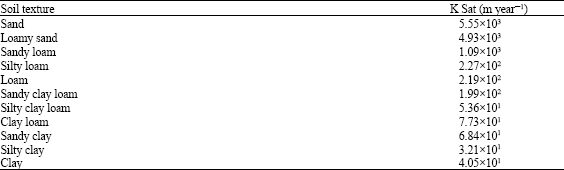 | |
| Clapp and Hornberger (1978) | |
| Table 4: | Biomass yields (kg ha-1) DM in site 3 under simulated rainfall |
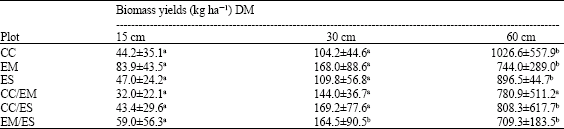 | |
| CC: Cenchrus ciliaris, EM: Enteropogon macrostachyus, ES: Eragrostis superba; Row means with different superscripts are significantly different at p<0.05; 15 cm (Early growth phase), 30 cm (Elongation phase), 60 cm (Reproduction phase) | |
The physical soil properties of the three sites are summarized in Table 2. The results of this present study concur with those of Clapp and Hornberger (1978) which showed sandy clay loam soils to have a higher saturated hydraulic conductivity than sandy clay soils (Table 3).
The biomass yields (kg ha-1) DM results showed that there was a significant difference (p<0.05) in biomass yields at different grass heights in all the grasses. Cenchrus ciliaris had the highest biomass yields at the reproduction phase (60 cm). Plots under Eragrostis superba and Enteropogon macrostachyus were ranked second and third respectively for plots under pure stands. Cenchrus ciliaris-Eragrostis superba mixture was ranked first among the grass mixtures. Cenchrus ciliaris-Enteropogon macrostachyus and Eragrostis superba-Enteropogon macrostachyus mixtures were ranked second and third respectively at the same phenological stage (reproduction phase). Plots under Enteropogon macrostachyus had the highest biomass yields in the early growth and elongation phases (Table 4).
Results from this study showed that there was a significant difference (p<0.05) in percentage basal cover. On average the two grass mixture plots had a higher basal cover percentage of 42%, compared to plots under pure stands which had an average basal cover of 35%. Plots under Enteropogon macrostachyus had the highest percentage basal cover in plots under pure stands with 54%. Plots under Cenchrus ciliaris and Eragrostis superba were ranked second and third with 30 and 23% respectively. Plots under Enteropogon macrostachyus-Eragrostis superba (58%) were ranked first in plots under mixtures.
| Table 5: | Percent basal cover in site 3 under simulated rainfall |
 | |
| CC: Cenchrus ciliaris, EM: Enteropogon macrostachyus, ES: Eragrostis superba; Column means with different superscripts are significantly different at p<0.05 | |
Plots under Enteropogon macrostachyus-Cenchrus ciliaris (34%) and Cenchrus ciliaris-Eragrostis superba (33%) were ranked second and third respectively (Table 5).
DISCUSSION
The differences observed among the grass species in terms of percent seed germination may be explained by the intrinsic properties of the seeds such as dormancy and integumental hardness and climatic factors especially ambient temperatures. Poor initial germination percentages may be attributed to the high hygroscopic nature of most seeds of range grasses. Dry seeds, particularly those of rangeland grasses are known to be highly hygroscopic (Ernest and Tolsma, 1988) and exposure of dry seeds to moisture has been reported to worsen the dormancy and often leads to fungal infection (Chin and Hanson, 1999; Tweddle et al., 2003). Fungal growth was evident although no data was collected on grass seeds infection. However, individual grass seed species ability to withstand moisture stress varies between species.
Higher percent seed germination of Enteropogon macrostachyus may be explained by its dormancy mechanism which involves only the integument while the other two species may have both the embryo and/or the integument related dormancy (Bryant, 1985). The hairy bristle coat of the Cenchrus ciliaris fascicles is likely to have also aided its germination by maintaining a high humidity within the fascicle and thereby help reduce water loss from the caryopsis thus enhancing a higher germination (Cook and Dolby, 1981; Silcock and Smith, 1982; Sharif-Zadeh and Murdoch, 2001), as compared to that of Eragrostis superba.
Faster seed germination is highly desirable under field conditions since it gives the seedlings a head start in the normal plant competition (Kadmon and Schimida, 1990; Keya, 1997). The faster a seed moves from the seed and seedling stages, the higher the chances for its survival and subsequent establishment if there is no selective predation (Ernest and Tolsma, 1988; Chin and Hanson, 1999). It is therefore expected that Enteropogon macrostachyus to have the best seedling survival and establishment compared to Cenchrus ciliaris and Eragrostis superba. However, the observed delay in imbibition is also advantageous in that in areas where rainfall patterns are such that the initial storms are followed by a long dry spell, there would, hence be fewer seedlings to be affected by the drought. In contrast however, species with delayed germination would be at a disadvantage since the rains would end while the seedlings are still too young. Grass seeds have the best germination results when planted into a well prepared seed-bed since germination is usually spread over several rainfall events (Andrew and Mott, 1983; Fregeau and Burrow, 1989).
Rainfall shows variability within the Eastern African region in both space and time (Herlocker, 1999). Pratt and Gwynne (1977) reckon that rainfall in Eastern Africa is highly erratic and unreliable in terms of amount, time and space. The annual rainfall totals received during the study period, were much less compared to the average annual rainfall totals of 600 mm, for the study area as described by Michieka and van der Pouw (1977) and Braunn (1977). The short rains (November to December), which are more reliable, evenly distributed and adequate for crop production (Biamah, 2005), contributed less to the annual rainfall during the study period as compared to the long rains (March to May), which are generally associated with most crop failures due to poor distribution, unreliability and inadequacy for crop production (Biamah et al., 1993).
These results farther attest to the fact that rainfall in eastern Africa is highly erratic and unreliable in terms of amount, time and space (Pratt and Gwynne, 1977; Herlocker, 1999). The annual rainfall received during the study period was also less than the long term mean annual rainfall, which farther confirms the findings of Herlocker (1999), that reliable rainfall in the drier rangelands is usually less in amount than the long-term mean or median rainfall value.
The difference in the saturated hydraulic conductivities in the three sites can be explained by the difference in soil types and soil texture. Higher saturated hydraulic conductivity in site 3 can be attributed to its soil texture, sandy clay loam. Saturated hydraulic conductivity is influenced by grain size, which is reflected in the texture of the soil. Soils in site 1 and 2 had a higher percentage of sand, which has larger soil grains, thus higher hydraulic conductivity. Sites 1 and 2 had a lower hydraulic conductivity due to a higher percentage of clay, which has smaller grains. Sites 1 and 2 had a sandy clay texture.
Results showed that there was a significant difference (p<0.05) in the soil moisture content in the three sites. The differences in soil moisture contents in the sites could be attributed to soil types and its hydrological properties. Higher soil moisture content in sites 1 and 2 as compared to site 3 can be attributed to lower hydraulic conductivity and the sandy clay soil texture, since the undisturbed samples were taken in the upper soil horizons. These characteristics restrict rapid penetration of the water into the lower horizons thus higher moisture content in the upper soil horizons.
Reduced infiltration capacities may lead to low soil water recharge and low soil water availability, precipitating soil water limitations on plant growth and thus negatively affects plant ecosystem regulatory services (Yates et al., 2000; Nyangito et al., 2009).
The general low levels of soil moisture contents in the three sites could be attributed to the low amounts and distribution of rainfall received during the study period. This explains the poor rates of establishment in the two sites under natural rainfall. The result in this study therefore farther justifies the fact that moisture plays a key role in herbage production especially in arid and semi-arid environments.
Results showed that there was no significance difference (p>0.05) in soil bulk densities in the three sites. However, higher soil bulk densities of plots under pure stands of Enteropogon macrostachyus can be attributed to its faster rate of growth and development compared to the other grass species in the first season of planting. These results concur with the expected results from the initial seed viability tests where Enteropogon macrostachyus was expected to have the best seedling survival and establishment compared to Cenchrus ciliaris and Eragrostis superba.
Higher percentage basal cover of plots under Enteropogon macrostachyus can be explained by the faster germination of the grass species giving it a head start in the normal plant competition. Lower basal covers of plots under Cenchrus ciliaris and Eragrostis superba can be explained by their delayed imbibition of the grass species. These results are reflected in the seed viability tests results discussed earlier.
Higher percent basal cover in the plots with the Enteropogon macrostachyus-Eragrostis superba mixture can also be attributed to the faster germination of Enteropogon macrostachyus in the mixture. Cenchrus ciliaris is a particularly aggressive grass, by virtue of its extensive root system competing with associated species for water and nutrients. This explains the lower percentage basal cover in plots under Cenchrus ciliaris-Enteropogon macrostachyus and Cenchrus ciliaris-Eragrostis superba. Cenchrus ciliaris in the mixture suppresses the growth and establishment of the other grass species.
Results also showed that there was a significant difference (p<0.05) in biomass production across the different grass phenological stages. The difference in biomass yields in plots under pure grass stands across the different grass phenological stages can be attributed to the growth characteristics and morphological properties of the grasses. Higher biomass yields of Enteropogon macrostachyus at early growth phase (15 cm) and elongation phase (30 cm) can be attributed to its faster seed germination giving its seedlings a head start in the normal plant competition (Kadmon and Schimida, 1990; Keya, 1997). Enteropogon macrostachyus moves faster through the initial growth stages compared to Eragrostis superba and Cenchrus ciliaris.
Higher grass yields of Eragrostis superba and Cenchrus ciliaris at reproduction phase (60 cm) compared to that of Enteropogon macrostachyus can be attributed to the more culmmy nature of both Cenchrus ciliaris and Eragrostis superba compared to Enteropogon macrostachyus. Cenchrus ciliaris had a higher biomass yield than Eragrostis superba because it is leafier.
Biomass production of the two grass mixtures followed the same trend, whereby mixtures with Enteropogon macrostachyus gave higher yields in the early growth phase (15 cm) compared to mixtures without and mixtures with Cenchrus ciliaris rave higher yields in the reproduction phase (60 cm) compared to mixtures without the grass species.
These results concur with those of Musimba et al. (2004) who also reported very higher biomass yields for Cenchrus ciliaris as compared to Eragrostis superba while working with the same grasses in the same study area under natural rainfall in 1997. Cenchrus ciliaris yielded 4850 kg ha-1, while Eragrostis superba yielded 2750 kg ha-1. These extra-ordinarily good biomass yields can be attributed to the El Nino rains of 1997 in the study area.
This further confirms what Taylor et al. (1969) and Reichenberger and Pyke (1990) earlier observed that rangeland grasses are known to yield various quantities of fodder depending on the prevailing environmental conditions. The results are also comparable to the results of Chelishe and Kitalyi (2002), who reported that this grasses species have different above ground biomass yields.
CONCLUSIONS
Rehabilitation of denuded patches in semi-arid lands through reseeding is moisture dependant. This study shows that even though other fundamental requirements namely; some form of seedbed preparation, soil disturbance, fencing, some degree of seed protection and the use of appropriate grass seed were necessary for successful rehabilitation, sufficient amount of moisture throughout the grass phenological stages was the most important ecological factor.
When a seed stock is healthy, only two environmental factors will stop it from germinating and establishing in the arid and semi-arid environments namely soil type and moisture. However, sufficient moisture is the most important. Good germination and establishment of the same grass species under simulated rainfall conditions farther suggests that with sufficient amount of moisture, restoration of denuded patches in semi-arid lands is possible.
Seed viability test results are a good indicator of the actual performance of the grasses in restoring degraded areas and thus reflect on the expected results under field conditions. Differences in biomass production at different grass phenological stages can be attributed to the differences in growth and morphological characteristics of the grasses across their phenological stages.
ACKNOWLEDGMENTS
We would like to sincerely thank the Agricultural Innovation for Dryland Africa (AIDA) for funding this research work. We are also grateful to the Kamba agropastoral community of Kibwezi district for their support and cooperation throughout this study. Finally we highly appreciate the support offered by the University of Nairobi for allowing us use its laboratories and field facilities.
REFERENCES
- Beukes, P.C. and R.M. Cowling, 2003. Evaluation of restoration techniques for the succulent Karoo, South Africa. Restorat. Ecol., 11: 308-316.
CrossRef - Biamah, E.K., F.N. Gichuki and P.G. Kaumbutho, 1993. Tillage methods and soil and water conservation in eastern Africa. Soil Tillage Res., 27: 105-123.
CrossRef - Clapp, R.B. and G.M. Hornberger, 1978. Empirical equations for some soil hydraulic properties. Water Resour. Res., 14: 601-604.
CrossRef - Cook, S.J. and G.R. Dolby, 1981. Establishment of buffel grass, green panic and siratro from seed broadcast into a spear grass pasture in southern Queensland. Aust. J. Agric. Res., 32: 749-759.
CrossRefDirect Link - El-Beltagy, A., 2002. Icarda experience in the rehabilitation of degraded drylands of Central and Western Asia and Northern Africa. Proceedings of the International Workshop on Combating Desertification, Rehabilitation of Degraded Drylands and Biosphere Reserves, May 2-3, Aleppo, Syria, pp: 1-101.
Direct Link - Evans, R.A. and R.M. Love, 1957. The step-point method of sampling: A practical tool in range research. J. Range Mgt., 10: 208-212.
Direct Link - Kadmon, R. and A. Schimida, 1990. Patterns of spatial variation in the reproductive success of a desert annual. Oecologia, 83: 139-144.
CrossRefDirect Link - Keya, G.A., 1997. Effects of herbivory on the production ecology of perennial grass Leptothrium senegalense (Kunth.) in the arid lands of Northern Kenya. Agric. Ecosyst. Environ., 66: 101-111.
CrossRef - Klute, A. and C. Dirksen, 1986. Hydraulic Conductivity and Diffusivity. In: Methods of Soil Analysis Part 1. Physical and Mineralogical Methods, Klute, A. (Ed.). ASA and SSSA, Madison, WI., ISBN: 0-89118-088-5, pp: 687-734.
Direct Link - Nyangito, M.M., N.K.R. Musimba and D.M. Nyariki, 2009. Hydrological properties of grazed perennial swards in semi-arid southeastern Kenya. Afr. J. Environ. Sci. Tech., 3: 26-33.
Direct Link - Nyangito, M.M., N.K.R. Musimba and D.M. Nyariki, 2008. Range use and dynamics in the agropastoral system of southeastern Kenya. Afr. J. Environ. Sci. Tech., 2: 220-230.
Direct Link - Reichenburger, G. and D.A. Pyke, 1990. Impacts of early root competition on fitness components of four semiarid species. Oecologia, 85: 159-166.
CrossRefDirect Link - Sharif-Zadeh, F. and A.J. Murdoch, 2001. The effects of temperature and moisture on after-ripening Cenchrus ciliaris seeds. J. Arid Environ., 49: 823-831.
CrossRef - Silcock, R.G. and F.T. Smith, 1982. Seed coating and localized application of phosphate for improving seedling growth of grasses on acidic, sandy red earths. Aust. J. Agric. Res., 33: 7785-7802.
CrossRefDirect Link - Snyman, H.A., 2003. Revegetation of bare patches in a semi-arid rangeland of South Africa: An evaluation of various techniques. J. Arid Environ., 55: 417-432.
CrossRef - Tarawali, S.A., G. Tarawali, A. Larbi and J. Hanson, 1995. Methods of Evaluation of Forage Legumes, Grasses and Fodder Trees for use as Livestock Feed. ILRI, Nairobi, pp: 51.
Direct Link - Taylor, T.H., E.M. Smith and W.C. Templeton, 1969. Use of minimum tillage and herbicide for establishing legumes in Kentucky blue grass (Poa pratensis L.) swards. Agron. J., 61: 761-766.
Direct Link - Tweddle, J.C., J.B. Dickie, C.C. Baskin and J.M. Baskin, 2003. Ecological aspects of seed desiccation sensitivity. J. Ecol., 91: 294-304.
CrossRefDirect Link - Van den Berg, L. and K. Kellner, 2005. Restoring degraded patches in a semi-arid rangeland of South Africa. J. Arid Environ., 61: 497-511.
CrossRef - Van der Merwe, J.P.A. and K. Kellner, 1999. Soil disturbance and increase in species diversity during rehabilitation of degraded arid rangelands. J. Arid Environ., 41: 323-333.
CrossRef - Yates, C.J., D.A. Norton and R.J. Hobbs, 2000. Grazing effects on plant cover, soil and microclimate in fragmented woodlands in south-western Australia: Implications for restoration. Aust. Ecol., 25: 36-47.
CrossRefDirect Link