

Sule Kalkan
Department of Medical Pharmacology, Division of Clinical Toxicology, Dokuz Eylul University School of Medicine, Izmir, Turkey
LiveDNA: 90.19907
Nil Hocaoglu
Department of Medical Pharmacology, Division of Clinical Toxicology, Dokuz Eylul University School of Medicine, Izmir, Turkey
Mujgan Buyukdeligoz
Department of Medical Pharmacology, Dokuz Eylul University School of Medicine, Izmir, Turkey
Hakan Gurdal
Department of Pharmacology and Clinical Pharmacology, Ankara University School of Medicine, Ankara, Turkey
International Journal of Pharmacology
Year: 2018 | Volume: 14 | Issue: 1 | Page No.: 116-120


ABSTRACT
Background and Objective: Tricyclic antidepressants such as amitriptyline (AMT) may result in life-threatening cardiovascular toxicities. Previous studies showed that AMT-induced cardiovascular toxic effects were prevented/reversed by selective adenosine receptor (AR) antagonists. This study aimed to examine whether AMT mediates its cardiovascular effect through binding to ARs and for this purpose measured the binding affinity of AMT to A1-or A2a-ARs. Materials and Methods: Membranes expressing the A1- or A2a-ARs were labeled with their specific radioactive ligands ([3H]-cyclopentyl-1,3-dipropylxanthine and [3H]CGS21680, respectively). The displacement of the radioligand binding was determined in the presence of different concentrations of AMT or the selective adenosine receptor antagonists for A1-AR and A2a-AR, 8-Cyclopentyl-1,3-dipropylxanthine (DPCPX) and [8-(3-Chlorostyryl) caffeine (CSC), respectively. The student’s t-test was used to compare the differences of two groups. Results: The bound A2a-AR radioligand was completely displaced by AMT and the Ki value was calculated [half-maximal inhibitory concentration (IC50): 51.42±15.87 μM and Ki: 4.8±0.11 μM, p<0.05]. High concentrations of AMT (10–4 and 10–3 M) inhibited radioligand binding to the A1-AR, which was nearly 25% (p<0.05). Conclusion: AMT showed significant binding to the A2a-AR, which might play an important role in its pharmacological and toxicological effects. Finally, the toxicity of high AMT concentrations may be mediated through the A1-AR.
PDF Abstract XML References Citation
Article History
Received: July 07, 2017;
Accepted: September 28, 2017;
Published: December 15, 2017
Copyright: © 2018. This is an open access article distributed under the terms of the Creative Commons Attribution License , which permits unrestricted use, distribution and reproduction in any medium, provided the original author and source are credited.
How to cite this article
Sule Kalkan, Nil Hocaoglu, Mujgan Buyukdeligoz and Hakan Gurdal, 2018. Binding of Amitriptyline to Adenosine A1 or A2a Receptors Using Radioligand Binding Assay. International Journal of Pharmacology, 14: 116-120.
DOI: 10.3923/ijp.2018.116.120
URL: https://scialert.net/abstract/?doi=ijp.2018.116.120
DOI: 10.3923/ijp.2018.116.120
URL: https://scialert.net/abstract/?doi=ijp.2018.116.120
INTRODUCTION
Among antidepressant agents, tricyclic antidepressants (TCAs) such as opipramol and amitriptyline (AMT) are the ones that most frequently cause drug poisoning1,2. The cardiovascular signs of TCA poisoning are predominantly hypotension, dysrhythmias and cardiac conduction abnormalities3-6. The effects of adenosine are mainly mediated by its actions on the A1 and A2 receptors in the cardiovascular system. The activation of A1-adenosine receptors (A1-ARs) inhibits the heart and causes negative chronotropic, inotropic and dromotropic effects. The activation of A2a-adenosine receptors (A2a-ARs) reduces the mean arterial pressure by causing the relaxation of arterial smooth muscle cells7,8.
In the previous in vivo toxicity model, AMT-induced hypotension and QRS prolongation were prevented/reversed by selective adenosine receptor (AR) antagonists9. In an isolated rat aorta preparation, it was demonstrated that A2a-ARs might be responsible for AMT-induced vasorelaxation10. In addition, in a rat isolated heart model, the AMT-induced QRS prolongation was shortened by a selective A1-AR antagonist11. In isolated rat atria, AMT-induced electrophysiological changes such as a reduction of the maximum rise in the slope of the action potential duration were prevented by a selective A1-AR antagonist12. Previous studies as mentioned above have stated that the A1-AR or A2a-ARs may be responsible for AMT-induced cardiovascular toxicity but the interaction between AMT and ARs has not been demonstrated.
Therefore, the goal of the present study was to examine the affinities and binding properties of AMT to ARs to determine the involvement of these receptors in AMT-induced poisoning.
MATERIALS AND METHODS
This study was supported by the Scientific and Technological Research Council of Turkey [TUBITAK, Grant Number: 107S251]. The project was approved by the Animal Care and Use Committee of Dokuz Eylul University School of Medicine.
Drugs: Amitriptyline (AMT), selective A1-ARs antagonist 8-Cyclopentyl-1,3-dipropylxanthine (DPCPX) and selective A2a-ARs antagonist 8-(3-Chlorostyryl)caffeine (CSC) were obtained from Sigma-Aldrich Chemical (St. Louis, MO, USA). The rat cell membranes and the specific radioligands were obtained from Perkin Elmer (Boston, MA USA)13.
Membranes: For the binding experiments, rat cell membranes expressing 2.4 pmol mg–1 protein of A1-ARs (ES-010-M400UA) and 5.0 pmol mg–1 protein of A2a-ARs (RBHA2AM) were used.
Binding studies: The binding affinity of AMT, for A1-AR and A2a-AR was determined by using a radioligand binding competition assay13.
A1-ARs binding: The A1-AR-expressing cell membranes (40 μg membrane protein/tube) were incubated and labeled with specific radioactive ligand, 2.5 nM of [3H]-cyclopentyl-1,3-dipropylxanthine ([3H]-DPCPX, ART 0520) in the binding buffer (25 mM HEPES, 5 mM MgCl2, 1 mM CaCl2 and 100 mM NaCl) for 60 min at 27°C. In separate tubes including A1-AR-expressing cell membranes (40 μg membrane protein), the displacement of the 2.5 nM of [3H]-DPCPX binding were determined in the presence of different concentrations ranging between 10–12-10–2 M AMT or in the presence of different concentrations ranging between 10–13-10–4 M of the selective A1-AR antagonist 8-cyclopentyl-1,3-dipropylxanthine (DPCPX) in the binding buffer (25 mM HEPES, 5 mM MgCl2, 1 mM CaCl2 and 100 mM NaCl) for 60 min at 27°C.
A2a-ARs binding: The A2a-AR-expressing membranes (40 μg membrane protein/tube) were incubated and labeled with specific radioactive ligands, 26.3 nM of [3H]CGS21680 (ART 1671) in the binding buffer (50 mM Tris-HCl [pH 7.4], 10 mM MgCl2, 1 mM ethylenediaminetetraacetic acid [EDTA]) for 90 min at 25°C. In separate tubes including A2a-AR-expressing cell membranes (40 μg membrane protein), the displacement of [3H]CGS21680 binding was determined in the presence of different concentrations ranging between 10–12-10–2 M AMT or in the presence of different concentrations ranging between 10–12-10–5 M of the selective A2a-AR antagonist 8-(3-chlorostyryl) caffeine (CSC), in the binding buffer (50 mM Tris-HCl [pH 7.4], 10 mM MgCl2, 1 mM ethylenediaminetetraacetic acid [EDTA]) for 90 min at 25°C.
Radioactivity measurement: The reactions were terminated by rapid filtration of the tubes using a cell harvester and Whatman GF/C filters. The filters were washed 4 times with 4 mL of ice-cold binding buffer. The filter-bound radioactivity was measured using a beta-counter (1450 Microbeta WALLAC Trilux, Perkin Elmer, Turku, Finland) after incubation with the scintillation solution and all assays were conducted in duplicate.
Statistical analysis: All data were expressed as the Mean±SEM of three independent experiments; in each experiment duplicate determinations were performed. The binding experiments were analyzed using ‘LIGAND’ programme to obtain the equilibrium dissociation constant (Kd)14. Statistical analyses were performed using SPSS software (IBM SPSS Statistics 20.0, Chicago, IL). Statistical differences between two groups were tested by the use of a Student’s t-test. A p-value <0.05 was considered statistically significant.
RESULTS
To determine the potential binding of AMT to the A1-AR, cell membranes expressing this receptor were labeled with a specific ligand, [3H]-DPCPX. The binding characteristics of AMT to A1-AR were determined through the analysis of the displacement of [3H]-DPCPX binding by different concentrations of AMT (10–12-10–2 M). The displacement of [3H]-DPCPX binding by different concentrations of unlabeled-DPCPX (10–13-10–4 M, a specific ligand for the A1-AR) was also measured as a control binding experiment to compare with AMT binding. The DPCPX completely displaced the binding of [3H]-DPCPX but only high concentrations (10–4 and 10–3 M) of AMT inhibited the radio ligand binding of [3H]-DPCPX (A1-AR binding);approximately 25% inhibition of the total specific binding was obtained (p<0.05, Fig. 1).
To determine whether AMT binds to the A2a-AR, cell membranes expressing this receptor were labeled with an A2a-AR-specific ligand, [3H]CGS21680.
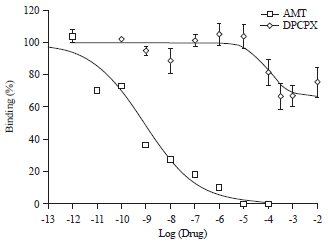 | |
| Fig. 1: | Affinity of amitriptyline to adenosine A1 receptors (AMT, Amitriptyline, DPCPX: 8-Cyclopentyl-1-1, 3-dipropylxanthine, selective A1 receptor antagonist) |
| All data were expressed as the Mean±SEM | |
The binding properties AMT to the A2a-AR were determined through the analysis of the displacement of [3H]CGS21680 binding with different concentrations (10–12-10–2 M) of AMT. We also measured the displacement of [3H]CGS21680 binding with different concentrations of CSC (10–12-10–5 M, an A2a-AR-spesific ligand), as a control binding experiment to compare with the AMT binding. The binding of [3H]CGS21680 to the A2a-AR was completely displaced by the specific ligand CSC and AMT (half-maximal inhibitory concentration [IC50]: 51.42±15.87 μM) and the calculated Ki value for AMT was 4.8±0.11 μM as shown in Fig. 2 (p<0.05).
DISCUSSION
This is the first study to evaluate the affinity and binding properties of amitriptyline (AMT), a tricyclic antidepressant, to adenosine receptors by using a radioligand binding assay. The present study showed that while AMT (10–4 and 10–3 M), at high concentrations, binds approximately 25% of A1-AR, it totally inhibits the binding of [3H]CGS21680 suggesting a significant binding property to A2a-AR with a Ki value of 4.8±0.11 μM.
ARs play important role in several physiopathological processes ranging from vascular function to metabolic control and from neuromodulation to immune regulation. Four AR subtypes have been cloned: A1, A2a, A2bve A3. These receptors are widely expressed in heart, brain, lung, blood vessels, platelets and many other organs and cells. AR agonists and antagonists have potential therapeutic utility15,16. Drugs such as dipyridamole and methotrexate act by of enhancing activation of ARs6,17.
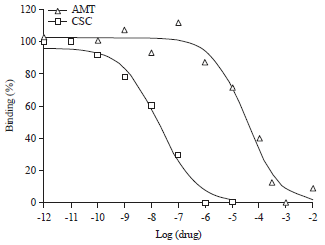 | |
| Fig. 2: | Affinity of amitriptyline to adenosine A2a receptors (AMT: Amitriptyline, CSC: 8-(3-Chlorostyryl) caffeine, selective A2a receptor antagonist) |
| All data were expressed as the Mean±SEM | |
Moreover methylxanthines such as theophylline has bronchodilator and anti-inflammatory actions as an antagonist at AR18.
ARs are important pharmacological targets for the treatment of cardiovascular diseases. The heart predominantly expresses the A1-AR in cardiomyocytes, atrial and ventricular cells and sinoatrial node cells, whereas the A2a-AR localized in the vascular smooth muscle and endothelial cells19,20. The activation of the A1-AR inhibits heart function and produces negative chronotropic, inotropic and dromotropic effects; the activation of A2a-AR reduces the mean arterial pressure through the relaxation of vascular smooth muscle cells7,8.
In previous studies, it was found that ARs might play a role in AMT-induced cardiovascular toxicity but the binding of AMT to ARs was not demonstrated9-12. A previous in vivo rat poisoning model showed that amitriptyline infusion produced 40-45% reduction of mean arterial pressure and prolonged QRS. It was shown that the hypotension and QRS prolongation induced by AMT was reversed and prevented by a selective A1-AR antagonist (DPCPX)9. In a previous study demonstrated that amitriptyline (10–4 M) prolonged the QRS duration more than 150% in isolated rat heart model. This QRS prolongation induced by AMT was decreased by DPCPX treatment, which suggested that A1-AR stimulation may have a role in AMT-induced QRS prolongation11. Furthermore, it was shown that DPCPX diminished the AMT (50 μM)-induced prolongation of action potential (AP) duration (APD50 and APD80). In addition, DPCPX prevented the effects of AMT (1 and 50 μM) on the maximum rate of the rise in slope of the AP and the AMT (50 μM)-induced reduction of the maximum decay slope of AP in isolated rat atrium12. This present study indicated that AMT binds to A1-AR only at high concentrations and suggested that A1-AR may be responsible for the cardiovascular toxicity induced by AMT overdose.
The interaction between amitriptyline and A1-AR was shown not only in cardiovascular system but also in central nervous system. Liu et al. showed that antinociceptive response induced with systemic application of amitriptyline was blocked by intrathecal or intraplantar administration of selective A1-AR antagonist (DPCPX) in wild type mice. They demonstrated that this blockade was also seen in A1-AR expressing +/+ mice but not in A1-AR lacking -/- mice. They suggested that adenosine A1-ARs contribute to amitriptyline-induced antinociception in both spinal and peripheral compartments21.
Several studies also indicated that A2a-AR might play a role in AMT-induced cardiovascular toxicity9-10. Kalkan et al.9 showed that the hypotension and QRS prolongation induced by AMT poisoning in rats were reversed by the selective A2a-AR antagonist (CSC). Furthermore, pretreatment with CSC also prevented the development of AMT-induced QRS prolongation and hypotension9. Kalkan et al.10 showed that amitriptyline-inhibited 49.9% contractile response to noradrenaline (NA) at 1.8×10⁻⁵ M in the isolated rat aorta. Additionally, selective A1-AR antagonist (DPCPX) increased amitriptyline-induced inhibition on contractile response to NA dose dependently and selective A2a-AR antagonist (CSC) decreased the contractile response to NA only at 10–5 M. They suggested that A2a-AR stimulation played a role in the vasodilation induced by AMT in the isolated rat aorta10. This study demonstrated the significant binding of AMT to the A2a-AR and suggested that it may mediate the hypotensive effect associated with the therapeutic and toxic doses of AMT.
CONCLUSION
The results of this study showed that while AMT considerably binds to A2a-AR, only high concentrations of it partially bind to A1-AR. ARs, located on myocardial cells and arterial smooth muscle cells, may have a significant role in AMT mediated pharmacological and toxicological effects. A natural progression of these study results might be the development of new treatment strategies with A1-AR and A2a-AR antagonists for AMT poisoning. Future studies may also clarify the underlying molecular mechanisms of the intracellular signals triggered by AMT binding to the A1-AR and A2a-AR.
REFERENCES
- Mowry, J.B., D.A. Spyker, D.E. Brooks, N. McMillan and J.L. Schauben, 2015. 2014 Annual report of the American association of poison control centers' national poison data system (NPDS): 32nd annual report. Clin. Toxicol., 53: 962-1147.
CrossRefDirect Link - Unverir, P., R. Atilla, O. Karcioglu, H. Topacoglu, Y. Demiral and Y. Tuncok, 2006. A retrospective analysis of antidepressant poisonings in the emergency department: 11-year experience. Hum. Exp. Toxicol., 25: 605-612.
CrossRefPubMedDirect Link - Castillo-Hernandez, M.C., E. Lara-Padilla, A. Kormanovski-Kovzova, J.G. Perez-Tunon, E.M. Lopez-Calderon and G.G. Balcazar, 2015. Normalization of QRS segment, blood pressure and heartbeat in an experimental model of amitriptyline intoxication in rats following hyperbaric oxygenation therapy. Int. J. Pharmacol., 11: 508-512.
CrossRefDirect Link - Lynge, J. and Y. Hellsten, 2000. Distribution of adenosine A1, A2A and A2B receptors in human skeletal muscle. Acta Physiol. Scand., 169: 283-290.
CrossRefPubMedDirect Link - Belardinelli, L., J.C. Shryock, S. Snowdy, Y. Zhang and A. Monopoli et al., 1998. The A2A adenosine receptor mediates coronary vasodilation. J. Pharmacol. Exp. Ther., 284: 1066-1073.
Direct Link - Kalkan, S., O. Aygoren, A. Akgun, S. Gidener, H. Guven and Y. Tuncok, 2004. Do adenosine receptors play a role in amitriptyline‐induced cardiovascular toxicity in rats? J. Toxicol.: Clin. Toxicol., 42: 945-954.
CrossRefDirect Link - Kalkan, S., N. Hocaoglu, A. Akgun, S. Gidener and Y. Tuncok, 2007. Effects of adenosine receptor antagonists on amitriptyline-induced vasodilation in rat isolated aorta. Clin. Toxicol., 45: 600-604.
CrossRefDirect Link - Akgun, A., S. Kalkan, N. Hocaoglu, S. Gidener and Y. Tuncok, 2008. Effects of adenosine receptor antagonists onamitriptyline-induced QRS prolongation in isolated rat hearts. Clin. Toxicol., 46: 677-685.
CrossRefDirect Link - Kalkan, S., K. Oransay, I.B. Bal, M. Ertunc, Y. Sara and A.B. Iskıt, 2013. The role of adenosine receptors on amitriptyline-induced electrophysiological changes on rat atrium. Hum. Exp. Toxicol., 32: 62-69.
CrossRefPubMedDirect Link - McPherson, G.A., 1983. A practical computer-based approach to the analysis of radioligand binding experiments. Comput. Programs Biomed., 17: 107-113.
PubMedDirect Link - Chen, J.F., H.K. Eltzschig and B.B. Fredholm, 2013. Adenosine receptors as drug targets-what are the challenges? Nat. Rev. Drug Discov., 12: 265-286.
CrossRefDirect Link - Sheth, S., R. Brito, D. Mukherjea, L.P. Rybak and V. Ramkumar, 2014. Adenosine receptors: Expression, function and regulation. Int. J. Mol. Sci., 28: 2024-2052.
CrossRefDirect Link - Cronstein, B.N. and M. Sitkovsky, 2017. Adenosine and adenosine receptors in the pathogenesis and treatment of rheumatic diseases. Nat. Rev. Rheumatol., 13: 41-51.
CrossRefPubMedDirect Link - Spina, D. and C.P. Page, 2017. Xanthines and phosphodiesterase inhibitors. Handb. Exp. Pharmacol., 237: 63-91.
CrossRefPubMedDirect Link - Lerman, B.B. and L. Belardinelli, 1991. Cardiac electrophysiology of adenosine. Basic and clinical concepts. Circulation, 83: 1499-1509.
CrossRefDirect Link - Shen, W.K. and Y. Kurachi, 1995. Mechanisms of adenosine-mediated actions on cellular and clinical cardiac electrophysiology. Mayo Clin. Proc., 70: 274-291.
CrossRefDirect Link - Liu, J., A.R. Reid and J. Sawynok, 2013. Spinal serotonin 5-HT7 and adenosine A1 receptors, as well as peripheral adenosine A1 receptors, are involved in antinociception by systemically administered amitriptyline. Eur. J. Pharmacol., 698: 213-219.
CrossRefDirect Link