

Guangsheng Xi
College of Environment and mapping, China University of Mining and Technology, 221116 Xuzhou City, Jiangsu Province, China
LiveDNA: 86.20719
Jianing Wang
College of Chinese Medicine Materials, Jilin Agricultural University, 130118 Changchun City, Jilin Province, China
Ping Li
College of Chinese Medicine Materials, Jilin Agricultural University, 130118 Changchun City, Jilin Province, China
Yugang Gao
College of Chinese Medicine Materials, Jilin Agricultural University, 130118 Changchun City, Jilin Province, China
Shengxue Zhou
College of Chinese Medicine, Jilin Agricultural Science and Technology College, 132101 Jilin City, Jilin Province, China
Yunjia Wang
College of Environment and mapping, China University of Mining and Technology, 221116 Xuzhou City, Jiangsu Province, China
LiveDNA: 86.16525
International Journal of Pharmacology
Year: 2018 | Volume: 14 | Issue: 1 | Page No.: 108-115


ABSTRACT
Background and Objective: The low capacity of body in the absorption of ginsenosides presents an important question as how to effectively improve absorption, which remains a subject of broad and current interest among researchers. This study aimed to investigate the effects of compound amino acids and ginsenosides on the visceral organ index and blood lipid profile and to assess the absorption rate of ginsenosides and amino acids. Materials and Methods: Male iCR mice were randomly assigned to 7 groups (12 mice/group): Group i (saline control), Group ii (ginseng), Group iii (composite ginsenosides), Group iV (compound amino acids), Group V (amino acids and ginsenosides, high dose), Group Vi (amino acids and ginsenosides, middle dose) and Group Vii (amino acids and ginsenosides, low dose) who were treated with the corresponding drugs by gavage for 4 weeks. Weight, visceral index, blood lipid profiles and absorption rates of the mice were then analysed and compared using one-way ANOVA. Results: The middle dose of compound amino acids and ginsenosides increased the body weight of the mice without influencing the liver, lung, kidney, testis, spleen or thymus indexes (p>0.05). Compound amino acids and ginsenosides reduced blood lipid levels, including CHO, TG, HDL-C and LDL-C. HPLC and amino acid analyses revealed that compound amino acids could significantly improve p<0.05 the absorption rate of ginsenosides in mice (p<0.05), especially in the middle-dose group. Conclusion: Supplemental compound amino acids may be helpful for ginsenoside uptake by visceral organs. in addition, the beneficial effects of ginsenosides include body weight increase and blood lipid reduction.
PDF Abstract XML References Citation
Article History
Received: June 01, 2017;
Accepted: October 24, 2017;
Published: December 15, 2017
Copyright: © 2018. This is an open access article distributed under the terms of the Creative Commons Attribution License , which permits unrestricted use, distribution and reproduction in any medium, provided the original author and source are credited.
How to cite this article
Guangsheng Xi, Jianing Wang, Ping Li, Yugang Gao, Shengxue Zhou and Yunjia Wang, 2018. Effects of Compound Amino Acids and Ginsenosides on Physiological Measures. International Journal of Pharmacology, 14: 108-115.
DOI: 10.3923/ijp.2018.108.115
URL: https://scialert.net/abstract/?doi=ijp.2018.108.115
DOI: 10.3923/ijp.2018.108.115
URL: https://scialert.net/abstract/?doi=ijp.2018.108.115
INTRODUCTION
Panax ginseng C. A. Mey, belonging to the Araliaceae family, is a perennial herb native to China, East Asia and Southeast Asia and has been employed as a herbal remedy for thousands of years1. Ginseng exhibits multiple pharmacological effects, including anti-fatigue, anti-cancer, cardio-protective, immunomodulatory and anti-oxidant properties2-4. A number of ginsenosides, such as triterpene saponins, exist in ginseng and an abundance of saponins are present in the roots5. These ginsenosides play a key role in the pharmacological activity of ginseng6,7. The pharmacokinetic properties of ginsenosides have been reported in multiple studies8-13, however, how to effectively improve the absorption rate of ginsenosides in vivo still presents a challenging problem.
Amino acids, as a class of small molecules, possess properties that promote the absorption of some compounds into the human body, particularly those that have poor absorption when taken alone14. Several previous studies have shown that amino acids can serve as ligands for the uptake of metal ions and can be employed for the formation of specific chemical groups15-17. To date, no study has succeeded in evaluating the effects of amino acids on the absorption of ginsenosides.
In the present study, ICR mice were used to assess the effects of ginsenosides and compound amino acids in vivo. High-performance liquid chromatography (HPLC) and an automatic amino acid analyser were used to analyse the absorption of ginsenosides and amino acids in these mice.
MATERIALS AND METHODS
The study was carried out from 18 June, 2016-27 December, 2016.
Reagents and chemicals: Ginsenosides, including Rg1, Re, Rg2, Rb1, Rc, Rb2 and Rd with purity >98% were purchased from Jilin University (Jilin, China). Amino acids including histidine, isoleucine, lysine, methionine, tyrosine, phenylalanine, threonine, valine, alanine, arginine, aspartic acid, glycine, glutamic acid, proline and serine were purchased from Sigma-Aldrich (Germany). Biochemical analysis kits for liver glycogen, muscle glycogen, blood lactic acid (LD) and blood urea nitrogen (BUN) were purchased from Nanjing Jiancheng Bioengineering Institute (Nanjing, China). Blood lipid profile kits for carbohydrate (CHO), triglyceride18, high-density lipoprotein cholesterol (HDL-C) and low-density lipoprotein cholesterol (LDL-C) were purchased from Beijing Chemical Industry Group Co., Ltd. (Beijing, China). Purified water was purchased from Hangzhou Wahaha Company (Zhejiang, China). All the other chemical reagents were of analytical grade and were purchased from Nanjing Built Biological Technology Co., Ltd. (Nanjing, China).
Preparation of plant material: sFive-year-old ginseng plants dried under sunlight were obtained from Jilin Ginseng And Antler Co., Ltd (Jilin, China) and confirmed by Professor Yu-gang Gao (one of the co-authors). Voucher specimens were deposited in laboratory located at Jilin Agricultural University, China. Ginseng was ground to fine powder for use.
Animals and drug administration: ICR male mice (body weight: 19-22 g) were provided by Jilin University. They were given free access to pellet food and water and were housed at a constant temperature (24±1°C), wind velocity (14-16 cm sec–1) and relative humidity (50±5%) on a 12-h light/dark cycle (lights were kept on from 6:00 am to 6:00 pm). The study protocol was approved by the Institutional Animal Care and Use Committee of Jilin Agricultural University (Jilin, China). The study was conducted following international guidelines for animal experimentation.
All mice were randomly divided into 7 groups (12 mice/group): Group I (saline control), Group II (ginseng), Group III (composite ginsenosides), Group IV (compound amino acids), Group V (amino acids and ginsenosides, high dose), Group VI (amino acids and ginsenosides, middle dose) and Group VII (amino acids and ginsenosides, low dose). All drugs were dissolved in 1% sodium carboxymethyl cellulose (CMC-Na) solution and were administered by gavage at a volume of 0.4 mL once per day (Table 1) for 4 weeks.
Measurement of body weight and organ index: All mice were weighed before the first drug administration and 20 min after the last administration. Mice were then euthanised and the visceral organs, including liver, lungs, kidneys, testes, spleen and thymus were collected and weighed.
Measurement of blood lipid profiles: Blood samples were collected from all mice in non-EDTA-coated tubes at the time of euthanasia. After centrifugation at 4000 rpm (Thermo, Renfrew, UK) for 15 min, sera were obtained and used for the determination of TG, TC, HDL-C and LDL-C using kits in accordance with the manufacturer’s instructions.
| Table 1: | Detailed biochemical composition of treatments in different groups |
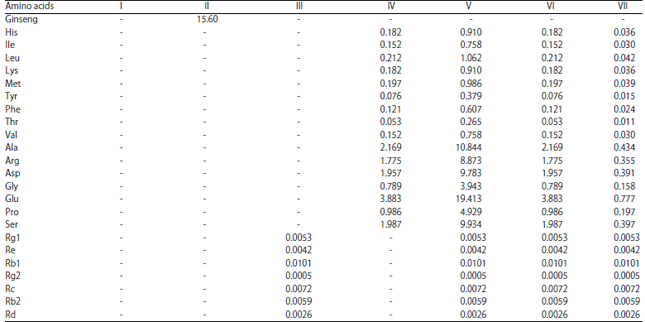 | |
Group I: Saline control, Group II: Ginseng, Group III: Composite ginsenosides, Group IV: Compound amino acids, Group V: High dose of amino acids and ginsenosides, Group VI: Middle dose of amino acids and ginsenosides, Group VII: Low dose of amino acids and ginsenosides | |
Analysis of absorption rate: The faeces from each group were collected every week, dried to constant weight at a temperature of 40°C and analysed with HPLC (Waters 2695, Manchester, UK). An automatic amino acid analyser (Biochrom, England) was used to determine the content of ginsenosides and amino acids.
Determination of the ginsenoside content: Five grams of the above-mentioned dried faeces were ground into powder, decreased with ethyl ether for 4 h and refluxed with methanol for 8 h. After evaporation under reduced pressure, the extract was dissolved in 10 mL of methanol and filtered through a 0.45-μm filter with methanol for 8 h. As a control, 10 mg of ginsenoside standards (Rb1, Rg2, Re, Rg1, Rb2, Rc, Rd) were dissolved in 5 mL of methanol filtered through a 0.45 μm filter and injected into the HPLC system. The instrumental analysis was performed with a Shimadzu LC-2010A system (Japan) composed of a liquid chromatography pump, automatic injector and chromatography workstation (CLASS-vP). The chromatographic separation was accomplished on a C18 column (150×4.6 mm, 5 μm). The injected volume was 20 μL, the column temperature was maintained at 35°C and the flow rate was 1.0 mL min–1. The instrumental analysis was performed and separation was achieved using the following gradient program: 0-0.5 min (12% B), 22 min (22% B), 2 min (26% B), 4 min (32% B), 20 min (33.5% B), 5 min (38% B) and 10 min (38% B). The absorbance was measured at a wavelength of 203 nm for ginsenoside detection.
Determination of amino acid content: Fifty milligrams of dried faeces were hydrolysed with 1 mL of 6 M HCl at 110°C for 22 h. The sample was then filtered, de-acidified and dissolved in 1 mL of water. For the analysis of amino acids, the dissolved samples were filtered with a 0.22 μm syringe filter and injected into an amino acid analyser (L-8800, Hitachi, Tokyo, Japan) with an ODS1 column (4.6×60 mm), at a column oven temperature of 37°C, an injection volume of 20 μL, a flow rate of 1.0 mL min–1 and a reaction coil temperature of 135°C. Isolated amino acids from samples that passed through the column were converted to a coloured compound by reaction with ninhydrin at high temperatures. The intensity of colour was measured at 570 nm (for proline measurement) and 440 nm (for other amino acids) using a spectrophotometer (Shanghai Spectrum, Yuan Instrument Co., Ltd., Shanghai, China). The content of free amino acids in the samples was quantitated based on the intensity of the colour.
Statistical analysis: Statistical analysis was carried out using SPSS version18 (SPSS, Chicago, IL, USA). Data were reported as means±standard deviation (SD). Comparisons between groups were made using one-way ANOVA followed by a least significant difference (LSD)-t test. p-value<0.05 was considered statistically significant.
RESULTS
Effects of amino acids and ginsenosides on mouse weights and organ indices: After the 4-week feeding, no significant differences were found in the mice fed with low dose of amino acids (Group VII) compared with those in the control group (Group I), while increased body weight was found in the mice of the other groups. The largest weight increase was found in those of Group VI, who were fed with a middle dose of amino acids and ginsenosides (Table 2). Compared with the mice of Group III (ginsenosides alone) or Group IV (amino acids alone), the middle dose of ginsenosides and compound amino acids (Group VI) induced body weight increases in the ICR mice. Changes in the visceral organ index were assessed and the results showed that no significant differences were found in liver, lung, kidney, testis and spleen indices in groups with the different treatments. However, a significantly decreased thymus index p<0.05 was found in the mice of Group II (ginseng) and Group III (composite ginsenosides) and no differences were found when comparing the mice of the other 4 groups (Groups IV-VII) with those of the control group (Table 3). Since the thymus index could serve as an indicator of immune function and nutrition status, a decreased thymus index suggests that amino acid supplements may improve physiological effects on thymus. Taken together, these results indicated that ginseng, ginsenoside treatments or the combined use of compound amino acids and composite ginsenosides could increase body weight without affecting the visceral organ indices compared to Group III (ginsenosides alone) or Group IV (amino acids alone).
Effects of amino acids and ginsenosides on blood lipid profiles: A lower CHO content was found in Group II-VII compared to Group I, as shown in the data of Table 4. Moreover, increased TG was found in Groups II and VII, whereas decreased TG was found in Groups III-VI. Increased HDL-C was found in Group II and Group V, whereas decreased HDL-C was found in Groups III, IV, VI and VII. Increased LDL-C was found in Group IV and VII, whereas decreased LDL-C was was found in Groups II, III, V and VI.
| Table 2: | Weight changes in mice with different treatments |
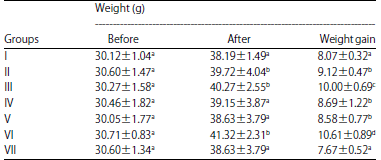 | |
Group I: Saline control, Group II: Ginseng, Group III: Composite ginsenosides, Group IV: Compound amino acids, Group V: High dose of amino acids and ginsenosides, Group VI: Middle dose of amino acids and ginsenosides, Group VII: Low dose of amino acids and ginsenosides. Data are expressed as mean±standard deviation, different upper letters represent when performing the comparison and no significant difference was found between groups with the same upper letter (p<0.05) | |
| Table 3: | Effects of different treatments on main visceral organs |
 | |
Group I: Saline control, Group II: Ginseng, Group III: Composite ginsenosides, Group IV: Compound amino acids, Group V: High dose of amino acids and ginsenosides, Group VI: Middle dose of amino acids and ginsenosides, Group VII: Low dose of amino acids and ginsenosides. Data are expressed as mean±standard deviation, different upper letters represent when performing the comparison and no significant difference was found between groups with the same upper letter (p<0.05) | |
| Table 4: | Lipid profiles in mice with different treatments |
 | |
CHO: Carbohydrate, TG: Triglyceride, HDL-C: High-density lipoprotein cholesterol, LDL-C: Low-density lipoprotein cholesterol. Group I: Saline control, Group II: Ginseng, Group III: Composite ginsenosides, Group IV: Compound amino acids, Group V: High dose of amino acids and ginsenosides, Group VI: Middle dose of amino acids and ginsenosides, Group VII: Low dose of amino acids and ginsenosides. Data are expressed as mean±standard deviation, different upper letters represent p<0.05 when performing the comparison and there was no significant difference between groups with the same upper letter (p>0.05) | |
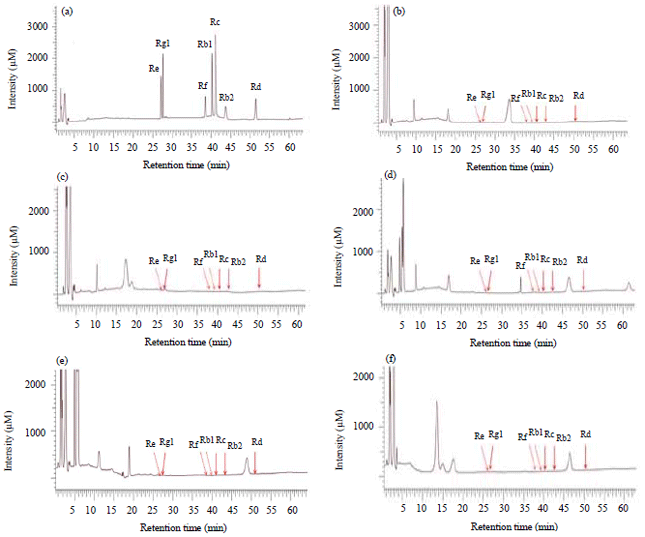 | |
| Fig. 1(a-f): | High-performance liquid chromatography (HPLC) analysis of different ginsenoside monomers, (a) Seven different peaks were found on the HPLC and the sequence from left to right was Rg1, Re, Rb1, Rg2, Rc, Rb2 and Rd, (b) HPLC analysis of faeces from Group II (ginseng), (c) HPLC analysis of faeces from Group III (composite ginsenosides), (d) HPLC analysis of faeces from Group V (amino acids and ginsenosides, high dose), (e) HPLC analysis of Group VI (amino acids and ginsenosides, middle dose) and (f) HPLC analysis of Group VI (amino acids and ginsenosides, low dose) |
Moreover, the combined use of compound amino acids and composite ginsenosides at middle or high doses exerted better effects on blood lipid reduction compared to Group III (ginsenosides alone) or Group IV (amino acids alone). These results showed that composite ginsenosides and compound amino acid treatment exerted better blood lipid reduction effects when interacting with each other.
Assessment of the absorption rate
Determination of the ginsenoside content: The HPLC results from the 7 ginsenosides standards, Group II, III, V, VI and VII are shown in Fig. 1. According to the results, no significant ginsenoside peaks could be detected by HPLC in Groups II, III, V, VI and VII. Moreover, the combined use of compound amino acids and composite ginsenosides did not exert any adverse effects on ginsenoside absorption compared with Group III (ginsenosides alone). These results demonstrated that ginseng alone or composite ginsenosides could be absorbed in vivo in the presence of compound amino acids.
Determination of the amino acid content: The orally administrated amino acids were divided into acidic amino acids (Asp and Glu), alkaline amino acids (Lys, Arg and His) and neutral amino acids (Thr, Ser, Gly, Ala, Val, Met, Ile, Leu, Tyr, Phe and Pro) (Fig. 2). According to the amino acid quantification results (Table 5), no significant differences were found in the total number of amino acids in all groups. However, significantly decreased acidic amino acid levels were found in Group II (p<0.05), whereas significantly increased acidic amino acid levels were found in Group V (p<0.05).
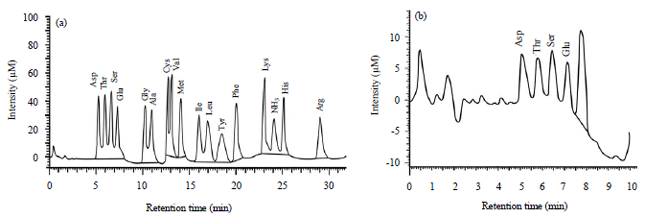 | |
| Fig. 2(a-b): | HPLC chromatogram map of different, (a) Amino acid standards and (b) Samples. The chromatogram map of the amino acid standards shows 18 peaks and the peaks from left to right are Asp, Thr, Ser, Glu, Gly, Ala, Cys, Val, Met, Ile, Leu, Tyr, Phe, Lys, NH3, His, Arg and Pro |
| Table 5: | Content of different amino acid groups in feces |
 | |
Group I: Saline control, Group II: Ginseng, Group III: Composite ginsenosides, Group IV: Compound amino acids, Group V: High dose of amino acids and ginsenosides, Group VI: Middle dose of amino acids and ginsenosides, Group VII: Low dose of amino acids and ginsenosides. Data are expressed as mean±standard deviation, different upper letters represent p<0.05 when performing the comparison and there was no significant difference between groups with the same upper letter (p>0.05) | |
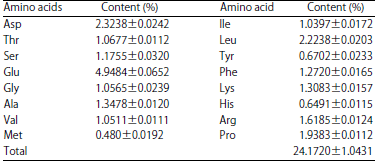
| Table 6: | Content of single amino acids in feces |
 | |
| Data are expressed as mean±standard deviation | |
Significantly decreased alkaline amino acid levels were found in Group II (p<0.05) and significantly increased alkaline amino acid levels were found in Group IV (p<0.05). Significantly decreased neutral amino acid levels were found in Group II (p<0.05), whereas significantly increased neutral amino acid levels were found in Group IV (p<0.05). Moreover, the combined use of compound amino acids and composite ginsenosides in the middle-dose group (Group VI) exerted better effects on amino acid absorption compared to that in Group IV (amino acids alone). The detailed amino acid composition is shown in Table 6. The highest amino acid absorption rate was found in Group VI, including total amino acids, acidic amino acids, alkaline amino acids and neutral amino acids (Table 7).
DISCUSSION
In the present study, male ICR mice were used to evaluate the effects of ginsenosides and compound amino acids in vivo and this study results demonstrated that compound amino acids and ginsenosides could increase mouse bodyweight without influencing the liver, lung, kidney, testis or spleen indexes. Moreover, compound amino acids and ginsenosides could reduce blood lipid levels, including CHO, TG, HDL-C and LDL-C. HPLC and amino acids analyses revealed that compound amino acids and ginsenosides could be absorbed by mice. It was previously reported that administration of ginseng saponins induced a decrease in LDL-cholesterol and TG in the plasma and liver in rats19. Panaxoside Rb1 has been shown to suppress TG accumulation in 3T3-L1 adipocytes and enhance beta-cell insulin secretion and viability20. It can also inhibit appetite via central and peripheral pathways21. Panaxoside Rb1 has also been used as a reagent for the treatment of diabetes22.
| Table 7: | Absorption of different amino acid groups |
 | |
Group I: Saline control, Group II: Ginseng, Group III: Composite ginsenosides, Group IV: Compound amino acids, Group V: High dose of amino acids and ginsenosides, Group VI: Middle dose of amino acids and ginsenosides, Group VII: Low dose of amino acids and ginsenosides. Data are expressed as mean±standard deviation, different upper letters represent p<0.05 when performing the comparison and there was no significant difference between groups with the same upper letter (p>0.05) | |
Here it was established that ginseng could exert effects on the blood lipid profile, which is consistent with previous studies. Furthermore, Xie et al.23 reported anti-hyperglycemic effects of total ginsenosides in Chinese ginseng, extracted from leaves and the stem, in diabetic C57BL/6J ob/ob mice. Here, effects of ginsenosides on the blood CHO were observed with the middle or high doses, which may increase the anti-hyperglycaemic effects of ginsenosides, but not with the low dose of compound amino acids.
According to previous studies, orally administered ginsenosides exhibit poor bioavailability. The reasons for such poor bioavailability include low membrane permeability, active biliary excretion and pre-systemic metabolism in the gastrointestinal tract24. As a class of small molecules, amino acids have been suggested to be ligands for the uptake of metal ions and the formation of specific chemical groups15-17, thereby facilitating the absorption of other compounds into the human body, especially those with poor bioavailability when taken alone. In the present study, our results displayed that ginsenosides could be fully absorbed in vivo in the presence of compound amino acids. Moreover, it was found that the highest amino acid absorption rate was in Group VI, to which the middle dose of amino acids was administered. These results revealed that there might be an absorption limit on the total amino acid dosage. The data for daily amino acid consumption in mice is similar to the amount used in Group VI 25.
CONCLUSION
It can be concluded that compound amino acids and ginsenosides have no significant influence on organ indices, which indicates their safety in usage as medication. Moreover, compound amino acids and ginsenosides may exert benefits on blood lipid profiles. There also appears to be the mutual promotion of absorption between ginsenosides and amino acids. These findings will provide a scientific basis and a reference for the further development of compound ginsenosides and amino acid drugs for treatment use.
SIGNIFICANCE STATEMENTS
This study discovered the effect of compound amino acids that can be beneficial for the uptake of ginsenosides. This study will help the researcher to uncover the critical areas of ginsenosides uptake in vivo that many researchers were not able to explore. Thus, a new theory on these amino acid combination and possibly other combinations, may be obtained.
ACKNOWLEDGMENTS
This study was supported by the Chinese Medicine Key advantages of the Provincial subjects of Jilin Agricultural Science and Technology College in Jilin Province, the National Natural Science Foundation of China subsidization project: study on insect resistance of ginsenosides and its effect on the evolution of environmental suitability of ginseng (No. 31470420), the Seed fund project of Jilin Agricultural Science and Technology College (No. [2014]205), the high-end science innovation platform of ginseng of universities of Jilin province and the national key research and development plan: New product development using the technology of panax ginseng c.a.mey (No. 2016YFC0500303(2016-2020)).
REFERENCES
- Wang, J., S. Li, Y. Fan, Y. Chen, D. Liu, H.R. Cheng, X.G. Gao and Y.F. Zhou, 2010. Anti-fatigue activity of the water-soluble polysaccharides isolated from Panax ginseng C. A. Meyer. J. Ethnopharmacol., 130: 421-423.
CrossRefPubMedDirect Link - Tewari, R.K., E.J. Hahn and K.Y. Paek, 2008. Modulation of copper toxicity-induced oxidative damage by nitric oxide supply in the adventitious roots of Panax ginseng. Plant Cell Rep., 27: 171-181.
CrossRefDirect Link - Zhang, G., A. Liu, Y. Zhou, X. San, T. Jin and Y. Jin, 2008. Panax ginseng ginsenoside-Rg2 protects memory impairment via anti-apoptosis in a rat model with vascular dementia. J. Ethnopharmacol., 115: 441-448.
CrossRefDirect Link - Mallol, A., R.M. Cusido, J. Palazon, M. Bonfill, C. Morales and M.T. Pinol, 2001. Ginsenoside production in different phenotypes of Panax ginseng transformed roots. Phytochemistry, 57: 365-371.
CrossRefDirect Link - Lu, J.M., Q. Yao and C. Chen, 2009. Ginseng compounds: An update on their molecular mechanisms and medical applications. Curr. Vascular Pharmacol., 7: 293-302.
CrossRefDirect Link - Shin, B.K., S.W. Kwon and J.H. Park, 2015. Chemical diversity of ginseng Saponins from Panax ginseng. J. Ginseng Res., 39: 287-298.
CrossRefDirect Link - Jiang, R., J. Dong, X. Li, F. Du and W. Jia et al., 2015. Molecular mechanisms governing different pharmacokinetics of ginsenosides and potential for ginsenoside‐perpetrated herb-drug interactions on OATP1B3. Br. J. Pharmacol., 172: 1059-1073.
CrossRefDirect Link - He, C., J. Li, N. Xu, R. Wang, Z. Li, L. Yang and Z. Wang, 2015. Pharmacokinetics, bioavailability and metabolism of Notoginsenoside Fc in rats by liquid chromatography/electrospray ionization tandem mass spectrometry. J. Pharm. Biomed. Anal., 109: 150-157.
CrossRefDirect Link - Fan, H., S. Xiao-Ling, S. Yaliu, L. Ming-Ming, F. Xue, M. Xian-Sheng and F. Li, 2016. Comparative pharmacokinetics of ginsenoside Rg3 and ginsenoside Rh2 after oral administration of ginsenoside Rg3 in normal and walker 256 tumor-bearing rats. Pharm. Mag., 12: 21-24.
CrossRefDirect Link - Peng, C., Y. Yang, C. Lv, H. Jin and J. Tao et al., 2015. Pharmacokinetic study of five ginsenosides using a sensitive and rapid liquid chromatography-tandem mass spectrometry method following single and multiple oral administration of Shexiang Baoxin pills to rats. Biomed. Chromatography, 29: 425-436.
CrossRefDirect Link - Cao, S., X. Yin, J. Fu, C. Yang and D. Xue et al., 2015. Pharmacokinetics and brain distribution studies of ginsenoside Rd in rats via intranasal administration by LC-MS/MS. Anal. Meth., 7: 8809-8816.
CrossRefDirect Link - Sun, H., F. Liu, L. Sun, J. Liu and M. Wang et al., 2016. Proteomic analysis of amino acid metabolism differences between wild and cultivated Panax ginseng. J. Ginseng Res., 40: 113-120.
CrossRefDirect Link - Gao, S., T. Yin, B. Xu, Y. Ma and M. Hu, 2014. Amino acid facilitates absorption of copper in the Caco-2 cell culture model. Life Sci., 109: 50-56.
CrossRefDirect Link - Hidalgo, F.J., E. Alcon and R. Zamora, 2013. Cysteine- and serine-thermal degradation products promote the formation of Strecker aldehydes in amino acid reaction mixtures. Food Res. Int., 54: 1394-1399.
CrossRefDirect Link - Ostrowski, K.A., D. Lichte, M. Stuck and A.J. Vorholt, 2016. A comprehensive investigation and optimisation on the proteinogenic amino acid catalysed homo aldol condensation. Tetrahedron, 72: 592-598.
CrossRefDirect Link - Joossens, M., G. Huys, M. Cnockaert, V. de Preter and K. Verbeke et al., 2011. Dysbiosis of the faecal microbiota in patients with Crohn's disease and their unaffected relatives. Gut, 60: 631-637.
PubMedDirect Link - Kim, J.H., D.H. Hahm, D.C. Yang, J.H. Kim, H.J. Lee and I. Shim, 2005. Effect of crude saponin of Korean red ginseng on high-fat diet-induced obesity in the rat. J. Pharmacol. Sci., 97: 124-131.
CrossRefDirect Link - Mu, Q., X. Fang, X. Li, D. Zhao and F. Mo et al., 2015. Ginsenoside Rb1 promotes browning through regulation of PPARγ in 3T3-L1 adipocytes. Biochem. Biophys. Res. Commun., 466: 530-535.
CrossRefDirect Link - Wu, Y., Y. Yu, A. Szabo, M. Han and X.F. Huang, 2014. Central inflammation and leptin resistance are attenuated by ginsenoside Rb1 treatment in obese mice fed a high-fat diet. PloS One, Vol. 9.
CrossRef - Lin, N., D.L. Cai, D. Jin, Y. Chen and J.J. Shi, 2014. Ginseng panaxoside Rb1 reduces body weight in diet-induced obese mice. Cell Biochem. Biophys., 68: 189-194.
CrossRefDirect Link - Xie, J.T., C.Z. Wang, A.B. Wang, J. Wu, D. Basila and C.S. Yuan, 2005. Antihyperglycemic effects of total ginsenosides from leaves and stem of Panax ginseng. Acta Pharmacol. Sin., 26: 1104-1110.
CrossRefDirect Link - Liu, J., J. Shiono, K. Shimizu, H. Yu, C. Zhang, F. Jin and R. Kondo, 2009. 20(R)-ginsenoside Rh2, not 20(S), is a selective osteoclastgenesis inhibitor without any cytotoxicity. Bioorg. Med. Chem. Lett., 19: 3320-3323.
CrossRefDirect Link