

Sumaia M.M. Bakoush
School of Biosciences and Biotechnology, Faculty of Science and Technology, Universiti Kebangsaan Malaysia, Bangi, 43600, Selangor, Malaysia
Wan A. Yaacob
School of Chemical Sciences and Food Technology, Faculty of Science and Technology, Universiti Kebangsaan Malaysia, Bangi, 43600, Selangor, Malaysia
Jumaat H. Adam
School of Environmental Sciences and Natural Resources, Faculty of Science and Technology, Universiti Kebangsaan Malaysia, Bangi, 43600, Selangor, Malaysia
Nazlina Ibrahim
School of Biosciences and Biotechnology, Faculty of Science and Technology, Universiti Kebangsaan Malaysia, Bangi, 43600, Selangor, Malaysia
Research Journal of Medicinal Plants
Year: 2015 | Volume: 9 | Issue: 7 | Page No.: 347-353





ABSTRACT
Rafflesia cantleyi (Rafflesiaceae) is a parasitic flowering plant scarcely found in the Peninsular Malaysia. The bud of this plant is sought after by folk medicinal practitioner for various uses by men and women. Scientific evidences on this plant are however limited. In this study we explored the antioxidant activity, total phenolic content and the total flavonoid content of the aqueous extracts from R. cantleyi bud parts including disk, perigone tube and bract. The antioxidant activity was determined by employing three different systems including scavenging activity of 2, 2-diphenyl-1-picrylhydrazyl radicals (DPPH), hydrogen peroxide (H2O2 ) scavenging activity and Ferric Reducing Antioxidant Power (FRAP). The antioxidant activity of bract extract was higher than those of perigone tube and disk. Total phenolic and total flavonoids contents were significantly higher (p<0.05) in the bract compared to perigone tube and disk. Strong correlation between total phenolic and antioxidant properties was indicated. The result of this study showed that bract of R. cantleyi bud possesses significant free radical scavenging property with this antioxidant activity contributed by the phenolic compounds. The results supported the traditional medicinal use of the bract as energy drink which is due to its natural sources of antioxidants.
PDF Abstract XML References Citation
Article History
Received: July 10, 2015;
Accepted: August 29, 2015;
Published: September 15, 2015
How to cite this article
Sumaia M.M. Bakoush, Wan A. Yaacob, Jumaat H. Adam and Nazlina Ibrahim, 2015. Antioxidant Activities, Total Phenolic and Flavonoid Contents of the Aqueous Extracts from Rafflesia cantleyi Bud Parts. Research Journal of Medicinal Plants, 9: 347-353.
URL: https://scialert.net/abstract/?doi=rjmp.2015.347.353
URL: https://scialert.net/abstract/?doi=rjmp.2015.347.353
INTRODUCTION
Rafflesia cantleyi belongs to parasitic flowering plants of the family Rafflesiaceae. Although, scarcely found in the Peninsular Malaysia, this locally known plant known as Bunga Pakma is believed to have medicinal properties. The buds are used by women to stop internal bleeding, shrink the womb after childbirth and used in the treatment of fever. It is also used by men as energy drink or aphrodisiac (Burkill, 1966). Scientific studies on the basic biology and chemical constituents of this plant genus are lacking. Phytochemical property of Rafflesia species was first reported in R. hasseltii with two alkaloid compounds (nicotine and caffeine) together with three phenolic compounds (Sofiyanti et al., 2008).
Flower of R. kerrii Meijer has been reported to contain tannin and phenylpropanoid with four tannin compounds along with phenylpropanoid glucoside Kanchanapoom et al. (2007). Recent study reported that the flower of R. kerrii Meijer have promising natural source of strong antioxidant compounds (Puttipan and Okonogi, 2014).
For R. cantleyi, the report on phytochemical and biological aspects is scanty. The antibacterial activity of methanolic extract of R. cantleyi has been reported by Azizan et al. (2011). Recent study of the methanolic extract of R. cantleyi showed high radical scavenging activity using DPPH as reported by Zulkffle et al. (2014). Antioxidants possess the ability to protect the body, cells and tissues from damage caused by free radical and reactive oxygen species which are produced during normal oxygen metabolism or are induced by exogenous damage (Bouayed and Bohn, 2010). With the limited report available on R. cantleyi chemical constituents, we are interested in investigating the flavonoid and phenolic acids contents that might serve as bioactive compounds. Another aspect of R. cantleyi bud that has long been known is the use as an energy drink. We will determine the antioxidant properties of R. cantleyi to relate to the energy boosting activity.
MATERIALS AND METHODS
Sample collection: Various R. cantleyi bud parts including disk, perigone tube and bract were collected from the state of Perak, Malaysia during months of July-August 2012. The plant materials were botanically identified by Prof. Dr. Jumaat Adam, School of Environmental Sciences and Natural Resources, Faculty of Science and Technology, Universiti Kebangsaan Malaysia (UKM). A voucher specimen (AZIE02, AZIE03), was deposited at room G104, Biology Building, Faculty of Science and Technology, UKM.
Preparation of extracts: In this study, we are concern on the extract used by traditional herbal practitioners. Therefore, extracts were prepared according to how practitioners prepare them essentially by boiling in water. The buds were washed with tap water to remove dusts and separated the disk, perigone tube and bract. The parts were then rinsed with distilled water and cut into small pieces (~2 cm) and air dried at room temperature (~25°C) for 5-7 days. The dried bud parts were ground to fine texture using a grinder (Panasonic Model, Malaysia) and stored at -20°C until used. The dried bud parts powder (20 g) were extracted separately by boiling in distilled water (0.5 L) for 30 min. The resulting concentrate was filtered through a tea strainer. Boiling of the powder in distilled water was repeated 1×0.5 L and pooled. Extracts were centrifuged in 50 mL batches at 1550×g for 10 min using centrifuge Eppendorf-5810 R model (rotor A-4-81), Germany. The resulting supernatant was filtered through filter paper (Whatman No.1) placed on a funnel. Filtrates were dried in a freeze dryer and stored at 4°C in amber glass vials until use.
Estimation of total phenolic contents: The Total Phenolic (TP) content of the aqueous extracts of the R. cantleyi bud parts were estimated by Folin-Ciocalteu reagent according to Almey et al. (2010) using gallic acid as standard. Gallic acid stock solution was prepared by dissolving 250 mg of gallic acid in 1 mL of methanol and then diluted to 500 mL with distilled water. Various dilutions of standard gallic acid were prepared from this stock solution. Bud parts extracts solutions in water were prepared at a concentration of (1 mg mL–1). Then 100 μL of each of the extracts solution were transferred into test tube and 0.75 mL of 10% Folin-Ciocalteu reagents was added and thoroughly mixed. The mixtures were incubated at room temperature for 5 min. Then 0.75 mL of 6% (w/v) sodium carbonate was added to the mixture gently and the mixtures were left to stand at room temperature for 2 h. The absorbance was measured at 760 nm using Shimadzu UV-Visible Spectrophotometer (UVmini-1240). Total phenolic content of the samples were determined and the amounts of phenolic compound in the plant extracts were expressed in milligram per gram of extract, Gallic Acid Equivalent (GAE). All the experiments above were carried out in three replicates.
Estimation of total flavonoids: Aluminum chloride colorimetric method was used for the flavonoids determination with modification of Chang et al. (2002). From each 1 mL of R. cantleyi (1 mg mL–1) bud part extracts, 3 mL of methanol, 0.2 mL of 10% aluminum chloride, 0.2 mL of 1M potassium acetate and 5.6 mL of distilled water were added and incubated at room temperature for 30 min. The absorbance of the reaction mixture was measured at 420 nm. The flavonoid content was determined in terms of Quercetin Equivalent (QE) from the extrapolation of calibration curve of quercetin concentration (0-0.8 mg mL–1) in methanol and expressed in terms of milligram of quercetin equivalent per milliliter.
Free-radical scavenging activity assay: The assay was performed according to Brand-Williams et al. (1995) with modification in the stock concentration. Stock extracts were prepared by dissolving 2 mg of each parts of the R. cantleyi bud extracts separately in methanol and water (1:1) as a standard solution. Briefly, 1 mL of the standard solution and the bud part extracts (with various concentrations) were added to 2 mL of 0.1497 mM L–1 1,1-diphenyl-2-picryl-hydrazyl (DPPH)-methanolic solution. The mixtures were shaken vigorously and left to stand in the dark for 30 min at room temperature. Then, absorbance was recorded at 517 nm. Radical scavenging capacity was expressed as percentage effect (E%) and calculated using the following equation:
 |
| Abscontrol | = | Absorbance of DPPH+methanol |
| Abssample | = | Absorbance of DPPH radical+sample (i.e., extract or standard) |
Ferric Reducing Antioxidant Power assay (FRAP assay): Ferric reducing antioxidant power assay was carried out according to Benzie and Strain (1996). Stock solution (300 mmol L–1) of acetate buffer (3.1 g of C2H3NaO2.3HO) and 16 mL acetic acid (pH 3.6), 10 mmol L–1 2, 4, 6-tripyridyles-triazine (TPTZ) solution in 40 mmol L–1 HCl and 20 mmol L–1 FeCl3.6H2O solution. The fresh working solution of FRAP was prepared by mixing 25 mL acetate buffer, 2.5 mL of TPTZ solution and 2.5 mL FeCl3.6H2O solution and warmed at 37°C before use. An aliquot (0.3 mL) of each parts of the R. cantleyi bud at different concentrations (0.4, 0.6, 0.8 mg mL–1) were allowed to react with 9 mL of FRAP solution and 300 μL of distilled water for 30 min in the dark condition. The absorbance of the reaction mixture was then recorded at 593 nm. The standard curve was linear between 0 and 300 μmol L–1 gallic acid. All measurements were carried out in triplicates.
Hydrogen peroxide (H2O2) scavenging activity: Scavenging activity of H2O2 by R. cantleyi bud parts extracts were determined by the method of Ruch et al. (1989). Rafflesia cantleyi bud part extracts (4 mL) prepared in distilled water at various concentrations were mixed with 0.6 mL of 4 mM H2O2 solution prepared in phosphate buffer (0.1 M pH 7.4) and incubated for 10 min. The absorbance of the resulting solution was taken at 230 nm against blank solution containing the plant extract without H2O2. The percentage inhibition was calculated as:
 |
where, Abscontrol is the absorbance of the control reaction and Abssample is the absorbance in the presence of the sample extracts. The antioxidant activity of the extracts was expressed as IC50.
Statistical analysis: Results were expressed as Mean±SD of the three replicates. Statistical analysis was performed by ANOVA followed by Tukey’s post hoc test with p<0.05 was determined using SPSS statistic 17.0 Software windows.
RESULTS AND DISCUSSION
Total Phenolics (TP) and Total Flavonoids (TF) contents: Total phenolics and flavonoids contents in the aqueous extract of R. cantleyi disk, perigone tube and bract bud parts are shown in Table 1. Relatively high level of total phenolic content is noted which varies from 161.00-106.80 mg GAE g–1 of extract. Bract extract has significantly highest total phenolics content (p<0.05) followed by perigone tube and then the disk. For total flavonoids, the concentration ranged from 1.90-10.2 mg QE g–1 in which the bract also contains the highest flavonoids concentration.
The high total of phenolic content in R. cantleyi from this study is in parallel to the observations from two other species of Rafflesia namely R. hasseltii (Sofiyanti et al., 2008) and R. kerrii flower (Puttipan and Okonogi, 2014). Three phenolic compounds namely catechin, proanthocyanidin and phenolic acid were found in R. hasseltii (Sofiyanti et al., 2008). Methanol extraction of R. kerrii flower allows up to 312 mg GAE g–1 of phenolic content to be extracted, almost twice as much found in the water extract. Phenolic compounds in R. cantleyi are important as secondary metabolites that may play roles in diverse biological activities including as antioxidant and later as major red pigments displayed by the blooming flower (Wink, 1997; Whiting et al., 2001).
Flavonoids from methanol extract of R. kerrii flower was 6 mg QE g–1 (Puttipan and Okonogi, 2014), which was lower than the concentration of total flavonoids in the bract aqueous extract from this study. As stated in the review of Bravo (1998), flavonoids are highly effective as scavengers for most oxidizing molecules, which include singlet oxygen and various free radicals. The antioxidant property of flavonoids was the first mechanism of action studies with regard to their protective effect against cardiovascular disease (Van Acker et al., 1996).
Phenolic acids and flavonoids are mainly the typical phenolics with antioxidant activity (Bravo, 1998). The results suggested that phenolic acids and flavonoids may be the major contributors for the antioxidant activities of the aqueous extracts of R. cantleyi bud parts. A positive linear correlation between antioxidant capacities and total phenolic content implied that phenolic compounds could be the main components contributing to the observed activities.
| Table 1: | Levels of total phenolic and flavonoid contents in aqueous extract of Rafflesia cantleyi bud |
 | |
Values are expressed as Mean±standard deviation (n = 3), means with different letters (a-c) in the same column were significantly different (p<0.05 ANOVA) | |
Antioxidant activity by DPPH assay: Result for the DPPH assay for R. cantleyi bud aqueous extracts is shown in Fig. 1a. The concentration required to attain 50% radical scavenging effect (IC50) was determined from the results of a series of concentration tested. At 0.1 mg mL–1 of all the extracts, the percentage of DPPH radical scavenging activity (%) of the bract was 93%, perigone tube (91.7%) and disk (89.39%) compared to the standard ascorbic acid (95.06%). At the lowest concentration tested (0.01 mg mL–1), the results were bract (30.5%), perigone tube (25.25%), disk (24.94%) and ascorbic acid (37.9%). Bract extract showed an activity that was as strong as that of ascorbic acid compared to other extracts. The ranking order for antioxidant activity index were bract>perigone tube>disk extracts. Also, there is a positive correlation between TP and DPPH for the aqueous extracts with R2 = 0.8388.
Antioxidant activity by FRAP: Result for R. cantleyi bud aqueous extracts is shown in Fig. 1b. The reducing power of the different parts extracts of R. cantleyi bud was found in bract (1.868±0.04) significantly higher as compared to other extracts. A strong correlation (R2 = 0.9764) was found between total amount of phenols and reducing power three parts of R. cantleyi bud.
Ferric reducing antioxidant power assay is widely used in the evaluation of the antioxidant component in dietary polyphenols (Luximon-Ramma et al., 2002). Antioxidant activity increased proportionally to the polyphenol content. A highly positive relationship between total phenols and antioxidant activity appears to be seen in many plants (Oktay et al., 2003). The presence of reductants such as antioxidant substances in the samples causes a reduction of the Fe3+ to Fe2+ form. Therefore, the ability of a compound to transfer electron is a significant indicator of its potential as an antioxidant (Sudha et al., 2011). In this study, it is noted that the different part extracts of R. cantleyi bud have chemical constituents that were active in both assays involving DPPH radical as well as in FRAP assay.
Antioxidant activity by H2O2 scavenging activity: The scavenging effect of the different extracts of parts of the R. cantleyi bud on H2O2 was concentration-dependent (50-300 μg mL–1).
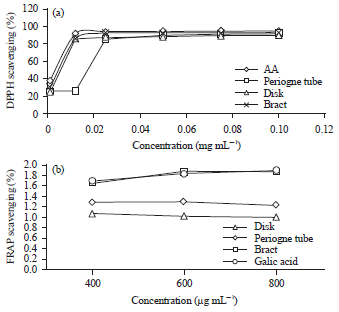 | |
| Fig. 1(a-b): | Antioxidant activity of (a) DPPH and (b) FRAP Rafflesia cantleyi bud parts at different concentrations |
The results indicated that the bract displayed strong H2O2 scavenging activity (6.55±0.17 μg mL–1) compared to the standard, ascorbic acid exhibited 4±0.00 μg mL–1. The scavenging of disk and perigone tube were 3.55±0.25 and 4.05±0.001 μg mL–1, respectively. The IC50 values of the extracts in scavenging H2O2 were not significantly different (p>0.05) from the IC50 values obtained for ascorbic acid. Positive correlation (R2 = 0.6625) was found between the TP and H2O2.
H2O2 is a highly important reactive oxygen species because of its ability to penetrate biological membranes. However, it may be toxic if converted to hydroxyl radical in the cell by reacting with Fe2+ and possibly Cu2+ ions (Gulcin et al., 2005). This assay shows the ability of the R. cantleyi bud parts extracts to inhibit H2O2 in the reaction mixture. From the results, it appeared that activities of the three parts of R. cantleyi bud extracts were nearly the same with the reference compounds. In this study, the presence of phenolic compounds in R. cantleyi bud extract enables the donation of electron to H2O2 and thus neutralizing it to water as suggested by Mathew and Abraham (2006).
This study demonstrates that R. cantleyi bud parts have moderate to significant antioxidant activity and free radical scavenging activity. On the basis of the results obtained, phenolic compounds appear to be responsible for the antioxidant activity of the R. cantleyi. The bud parts contain natural antioxidants which may support the traditional medicinal belief in using the bract as energy drink.
CONCLUSION
Various bud parts of R. cantleyi have TP, TF and antioxidant activities with the bract contains the highest amount compared to the other bud part. A positive relationship between antioxidant activities and total phenolic contents was observed. Further work is required to identify the bioactive compounds in R. cantleyi bud.
ACKNOWLEDGMENTS
The project was conducted from grants available from Universiti Kebangsaan Malaysia (grants numbers UKM DPP-2014-021, UKM-DPP-2014-084, UKM-PIP-2013-004) and Malaysian Ministry of Education (FRGS/1/2014/ST03/UKM/01/1). Doctoral scholarship from Ministry of Higher Education, Libya to the first author is duly acknowledged.
REFERENCES
- Almey, A.A.A., C.A.J. Khan, I.S. Zahir, K.M. Suleiman, M.R. Aisyah and K.K. Rahim, 2010. Total phenolic content and primary antioxidant activity of methanolic and ethanolic extracts of aromatic plants leaves. Int. Food Res. J., 17: 1077-1084.
Direct Link - Benzie, I.F.F. and J.J. Strain, 1996. The ferric reducing ability of plasma (FRAP) as a measure of "antioxidant power": The FRAP assay. Anal. Biochem., 239: 70-76.
CrossRefPubMedDirect Link - Bouayed, J. and T. Bohn, 2010. Exogenous antioxidants-double-edged swords in cellular redox state: Health beneficial effects at physiologic doses versus deleterious effects at high doses. Oxidative Med. Cell. Longevity, 3: 228-237.
CrossRefPubMedDirect Link - Brand-Williams, W., M.E. Cuvelier and C. Berset, 1995. Use of a free radical method to evaluate antioxidant activity. LWT-Food Sci. Technol., 28: 25-30.
CrossRefDirect Link - Bravo, L., 1998. Polyphenols: Chemistry, dietary sources, metabolism and nutritional significance. Nutr. Rev., 56: 317-333.
CrossRefPubMedDirect Link - Chang, C.C., M.H. Yang, H.M. Wen and J.C. Chern, 2002. Estimation of total flavonoid content in propolis by two complementary colometric methods. J. Food Drug Anal., Vol. 10.
CrossRefDirect Link - Gulcin, I., D. Berashvili and A. Gepdiremen, 2005. Antiradical and antioxidant activity of total anthocyanins from Perilla pankinensis decne. J. Ethnopharmacol., 101: 287-293.
CrossRefDirect Link - Kanchanapoom, T., M.S. Kamel, C. Picheansoonthon, P. Luecha, R. Kasai and K. Yamasaki, 2007. Hydrolyzable tannins and phenylpropanoid from Rafflesia kerrii Meijer (Rafflesiaceae). J. Nat. Med., 61: 478-479.
CrossRefDirect Link - Mathew, S. and T.E. Abraham, 2006. In vitro antioxidant activity and scavenging effects of Cinnamomum verum leaf extract assayed by different methodologies. Food. Chem. Toxicol., 44: 198-206.
CrossRefDirect Link - Zulkffle, M.A., N.S. Osman, Z. Yusoff, M.L. Kamal and J. Tajam, 2014. Identification of alkaloid compound and antioxidant activity of Rafflesia cantleyi and its Host, Tetrastigma tuberculatum. Open Conf. Proc. J., 5: 18-20.
Direct Link - Oktay, M., İ. Gülçin and Ö.İ. Küfrevioğlu, 2003. Determination of in vitro antioxidant activity of fennel (Foeniculum vulgare) seed extracts. LWT Food Sci. Technol., 36: 263-271.
CrossRefDirect Link - Puttipan, R. and S. Okonogi, 2014. Antioxidant activity of Rafflesia kerrii flower extract. Drugs Discov. Ther., 8: 18-24.
CrossRefDirect Link - Ruch, R.J., S.J. Cheng and J.E. Klaunig, 1989. Prevention of cytotoxicity and inhibition of intercellular communication by antioxidant catechins isolated from Chinese green tea. Carcinogenesis, 10: 1003-1008.
CrossRefDirect Link - Sofiyanti, N., N.N. Wahibah, D. Purwanto, E. Syahputra and K. Mat-Salleh, 2008. Alkaloid and phenolic compounds of Rafflesia hasseltii suringar and its host Tetrastigma leucostaphylum (Dennst.) alston ex mabb. in Bukit Tigapuluh National Park, Riau: A preliminary study. Biodiversitas, 9: 17-20.
Direct Link - Sudha, G., M.S. Priya, R.I. Shree and S. Vadivukkarasi, 2011. In vitro free radical scavenging activity of raw pepino fruit (Solanum muricatum). Int. J. Curr. Pharm. Res., 3: 137-140.
Direct Link - Van Acker, S.A.B.E., D.J. van den Berg, M.N.J.L. Tromp, D.H. Grifioen, W.P. van Bennekom, W.J.F. van der Vijgh and A. Bast, 1996. Structural aspects of antioxidant activity of flavonoids. Free Radic. Biol. Med., 20: 331-342.
CrossRefPubMedDirect Link - Whiting, D.A., 2001. Natural phenolic compounds 1900-2000: A bird's eye view of a century's chemistry. Nat. Prod. Rep., 18: 583-606.
CrossRefDirect Link - Wink, M., 1997. Compartmentation of secondary metabolites and xenobiotics in plant vacuoles. Adv. Bot. Res., 25: 141-169.
CrossRefDirect Link