

W. Sabra
Division of Microbiology, Department of Botany, Faculty of Science, Alexandria University, Alexandria, Egypt
D.M. Abou-Zeid
Division of Microbiology, Department of Botany, Faculty of Science, Alexandria University, Alexandria, Egypt
Research Journal of Microbiology
Year: 2008 | Volume: 3 | Issue: 5 | Page No.: 308-318





ABSTRACT
The prokaryotic endogenous storage material Poly-β-Hydroxybutyrate (PHB) can be induced to accumulate in bacteria under conditions of unbalanced growth that also stimulate sporulation in endospore forming bacteria. The present study shows that ammonium concentration higher than 0.4 g L-1 inhibits growth and may be responsible for the stationary phase onset of Bacillus megaterium. Hence, in order to expand the growth rate controlled exponential phase (by delaying stationary phase), ammonium limited fed batch cultures were performed at different feeding rates. Under such conditions, a 2.1 fold increase in the specific PHB productivity was recorded (0.19 gPHB/gbiomass*h) compared to batch cultivations (0.09 g/g*h). Although the lowest ammonium feeding rate was accompanied with the lowest growth rate, it resulted in the highest PHB yield. Present study demonstrates that the PHB content of the cells growing under optimized fed batch conditions reached 65% of the cell dry weight, a value that has not been recorded before for bacilli using a synthetic medium.
PDF Abstract XML References Citation
How to cite this article
W. Sabra and D.M. Abou-Zeid, 2008. Improving Feeding Strategies for Maximizing Polyhdroxybutyrate Yield by Bacillus megaterium. Research Journal of Microbiology, 3: 308-318.
URL: https://scialert.net/abstract/?doi=jm.2008.308.318
URL: https://scialert.net/abstract/?doi=jm.2008.308.318
INTRODUCTION
Polyhydroxyalkanoates (PHAs) are a class of bacterial storage compounds in diverse groups prokaryotes occurring as insoluble inclusions in the cytoplasm and have received considerable attention in recent years because of their potential use as biocompatible materials. PHAs have properties ranging from thermoplastics to elastomers and could potentially replace the nonenvironmentally friendly petroleum-based plastics since they are completely biodegradable under aerobic (Augusta et al., 1993; Mergaert et al., 1993; Jendrossek et al., 1996) and anaerobic conditions (Abou-Zeid et al., 2001, 2004). Within this family, a large amount of research has been conducted on the homopolymer poly-(3-hydroxybutyrate) (PHB) and the copolymer poly-(3-hydroxybutyrate-co-3-hydroxyvalerate) (PHB-co-V) (Vandamme and Coenye, 2004; Chen and Wu, 2005; Valappil et al., 2007) exhibiting interesting material properties for many applications (Anderson and Dawes, 1990). Chemically, PHA is a polyester of repeating subunits (100-30000) with the structure,-[O-CH(R) (CH2)x CO]-and poly-(3-hydroxybutyrate) (PHB) is the most common form where x = 1 and R = CH3 (McCool et al., 1996).
Currently, PHB is produced on an industrial scale using Gram negative bacteria such as Cupriavidus necator, Alcaligenes latus and recombinant Escherichia coli (Vandamme and Coenye, 2004). However, PHB isolated from Gram-negative organisms contains the outer membrane Lipopolysaccharide (LPS) endotoxins, which are pyrogens known to co-purify with the polymer (Chen and Wu, 2005). The presence of LPS induces a strong immunogenic reaction and is therefore undesirable for the biomedical application of the PHAs. Gram-positive bacteria lack LPS and are hence potentially better sources of PHAs, especially for biomedical applications (Valappil et al., 2007).
Nevertheless, Gram-positive bacteria have not been reported to accumulate large amounts of polyhydroxyalkanoate and hence have not been considered as potent candidates for industrial production.
Among the gram positive bacteria, especially Bacillus species are frequently used as bacterial workhorses in industrial microbial cultivations for the production of a variety of enzymes as well as fine biochemicals and antibiotics (Wang et al. 2006). In fact, Bacillus sp. produce about 60% of the commercially available enzymes (Harwood, 1992; Schallmey et al., 2004; Westers et al., 2004). However, only limited work has been carried out on the large-scale production of PHB by this genus (Wu et al., 2001) since growth conditions leading to PHB production induce sporulation (Wu et al., 2001; Valappil et al., 2007).
Therefore, the objective of this study was to optimize the PHB yield from Bacillus megaterium (DSMZ 90) strain in controlled bioreactor. In fact, the fermentative approach to maximize PHB production by Bacillus megaterium has not been studied before, although fermentation strategies for the overproduction of PHB by various Gram negative bacteria are well established (Vandamme and Coenye, 2004). Variation in fermentation conditions has been explored to increase the yield of PHB. To minimize the C/N ratio, a synthetic sucrose-based medium fed with ammonium solution to control the pH was used. Optionally, controlled feeding strategies in fed batch cultures with ammonium sulphate as feed substrate were investigated.
MATERIALS AND METHODS
Microorganism and Medium Used
The strain used in this study was Bacillus megaterium DSMZ 90. The medium used throughout this study was as follow (in g L-1): K2HPO4:1, (NH4)2SO4: 0.05, KH2PO4: 2, MgSO4·7H2O: 0.2 and sucrose: 60 with 0.1 mL of trace elements solution (100 mL water containing: 0.60 g FeSO4, 0.1 g CaCl2·2H2O, 0.03 g H3BO3, 0.002 g CoCl2·6H2O, 0.010 g ZnSO4·7H2O, 0.003 g MnCl2·4H2O, 0.003 g Na2MoO4·2H2O, 0.0024 g NiCl2·6H2O, 0.001 g CuSO4·5H2O, pH 7.0).
Fermentation Runs
Fermentations were carried out in a 2 L stirred tank bioreactor (B-Braun Biotechnolgia, Germany) with a working volume of 0.7-1.2 L. Overnight seed culture was prepared and the inoculum was always set to contribute to 5% (v/v) of the experimental volume. The bioreactor was equipped with temperature, pH and agitation speed measure and control unit, which was connected to an online writer. Dissolved Oxygen Tension (DOT) was measured by an autoclavable DOT electrode (Ingold Germany). DOT was controlled in the range 2-10% of air saturation by mixing nitrogen, air or pure O2 in the inlet gas. The impeller speed was kept at 500 rpm and the temperature at 30°C. Samples were withdrawn aseptically either at hourly intervals or after a fixed incubation period.
Off-Line Analysis
Samples were aseptically withdrawn from the bioreactor to determine the optical density (A600 nm) and exopolysaccharide as described previously (Sabra et al., 2000). Biomass as cell dry weight was calculated from measured OD value according to a linear relationship between OD and cell dry weight (data not shown).
Enzymatic Determination of Sugars
Sucrose as well as fructose and glucose were determined using an enzymatic test-kit (Boehringer Mannheim, Germany). The determination of sucrose, glucose and fructose was based on the formation of NADH2 measured by the increase in absorbance at 340 nm.
Poly-β-Hydroxybutyrate (PHB) Determination
Determination of the amount of PHB was performed chemically according to Ishizaki and Tanaka (1991). The samples were centrifuged for 45 min at 6000 rpm. Then the pellets were incubated at 60°C for 1 h with sodium hypochlorite to break the cell walls of bacteria. Supernatant was obtained by centrifugation at 6000 rpm was transferred to a Soxhlet system. Cell lipids and other molecules (except PHB) were extracted by adding 5 mL 96% (1:1 v/v) ethanol and acetone. PHB was extracted by chloroform. Chloroform extract was dried at 40°C and 10 mL of concentrated sulfuric acid was added. They were heated at 100°C in a water bath for 20 min. After cooling, the amount of PHB was determined spectrophotometrically at wavelength of 235 nm against H2SO4 blank. A standard curve was established with PHB ranging from 2-20 μg mL-1 PHB.
RESULTS
The influence of different nitrogen sources on the growth and PHA production by B. megaterium was first investigated in uncontrolled batch cultures. As can be depicted from Fig. 1, the addition of complex nitrogenous sources did, generally, enhance the biomass yield by B. megaterium. On the other hand, PHB yield (in g/gbiomass) was maximized through the use of ammonium sulphate as the sole nitrogen source. The results also indicated that substrates supporting maximum PHB production did not necessarily record a maximised PHB yield (g/g biomass) as in the case of ammonium sulphate and yeast extract. However, for the reason of simplifying the growth medium, ammonium was used as a nitrogen source for all further experiments.
Microaerobic Conditions Enhance PHB Production by B. megaterium.
In a second step, it was aimed to optimise the production of PHB in a controlled bioreactor. Since higher C/N ratios were reported to maximise PHB production in bacteria, the following experiments were performed in a nitrogen poor medium amended with 0.05 g L-1 ammonium sulphate.
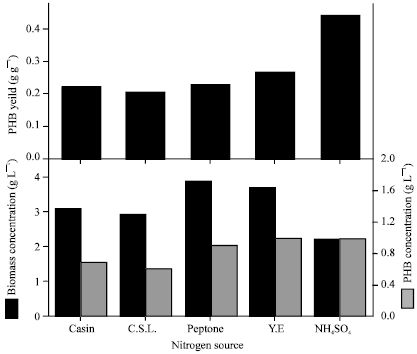 | |
| Fig. 1: | Effect of different nitrogenous sources on biomass PHB production as well as PHB content of cells of B. megaterium. (C.S.L: Corn Steep Liquor, Y.E: Yeast extract) |
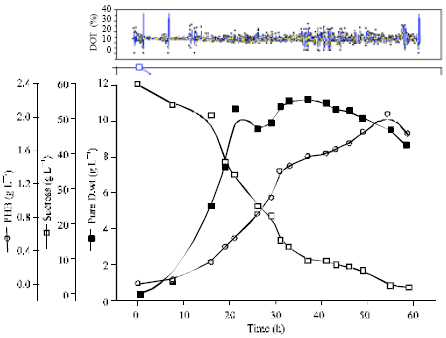 | |
| Fig. 2: | Cultivation course of B. megaterium in a batch culture controlling DOT at 10% and pH via addition of 20% ammonium solution |
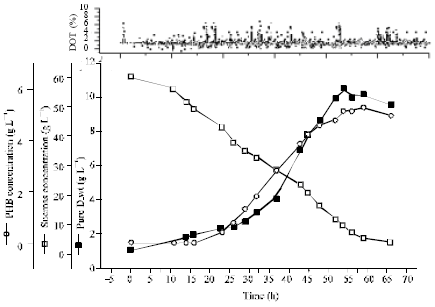 | |
| Fig. 3: | Cultivation course of B. megaterium in a batch culture controlling DOT at 1-3% and pH via addition of 20% ammonium solution |
Consequently, a basic 20% ammonium solution was fed automatically so as to maintain the pH of the culture liquid at 7. Moreover, experiments were performed either at controlled dissolved oxygen tension (1 and 10% DOT ±2 (Fig. 2-3)) or without DOT control (Fig. 4).
 | |
| Fig. 4: | Cultivation course of B. megaterium in a batch culture at uncontrolled DOT and pH controlled by the addition of 20% ammonium solution |
Obviously, DOT significantly influenced PHB yield and lower DOT levels favored PHB production on the expense of growth. At DOT of 10%, a final PHB concentration of 2.1 g L-1 was obtained with a final biomass concentration of 11.7 g L-1 compared to 5.3 g L-1 of PHB and 10.2 g biomass at DOT of 1-3% (air saturation) (Fig. 2-3). On the other hand, the experiment with no DOT control showed reduced PHB production and very low PHB yield as well as PHB concentration (Fig. 4) was obtained compared to DOT controlled experiments.
Additionally, extracellular alcohol-precipitated polymer was produced under conditions of uncontrolled DOT and at DOT of 10% that represents another undesired route for the utilized carbon source (1.2 and 0.97 g L-1 at uncontrolled DOT and DOT of 10%, respectively). Indeed, the PHB yield was substantially enhanced almost 3 folds by lowering the DOT (0.18 and 0.52 g g-1 at 10 and 1% air saturation, respectively). Furthermore, growth rate of Bacillus megaterium was affected by the cultivation’s DOT and increased almost 2.5 folds at DOT of 10% (0.14 and 0.38 h-1 at DOT value of 1-3 and 10% air saturation). In experiment without DOT control, the growth rate was similar to that of DOT of 10% air saturation (0.35 h-1).
It should be stressed here that, in these fermentation runs, the culture entered the stationary phase despite the presence of sufficient amounts of the carbon source. Oxygen limitation was also excluded, since cultures were DOT controlled (Fig. 2-3). Therefore, a possible inhibitory effect of an increased level of ammonia used for pH control was postulated. Consequently, to gain insight into the physiological responses of the bacterium toward elevated ammonium level, the aim of the following experiment was to study the effect of different ammonium concentrations on the growth rate as well as the PHB production. B. megaterium cells were inoculated into test tubes with media with different concentrations of ammonium sulphate and the initial growth rate (μ) was then calculated within a period of 12 h (Fig. 5).
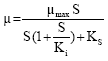
As indicated by Fig. 5, elevated ammonium concentrations obviously had an inhibitory effect on the growth rate. The Haldane equation (Park et al., 2002) seems to be an adequate expression for the cell growth data.
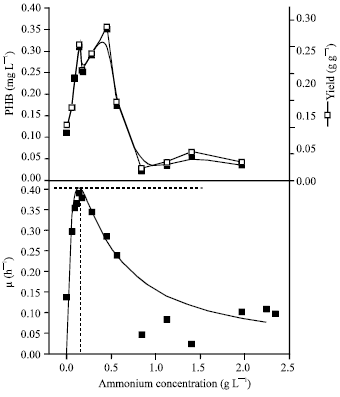 | |
| Fig. 5: | Haldane-kinetic simulation of data obtained by B. megaterium grown on different ammonium concentrations |
Where μ is the specific growth rate (h-1), S is the ammonium concentration, Ki and Ks are the Haldane specific constants (g L-1). The kinetic constants obtained were μm = 0.4 h-1, KS = 0.08 g L-1 and Ki = 0.21 g L-1.
 |
It was shown that, maximum specific growth rate together with the maximum PHB yield and concentration lie in the region of 0.2-0.4 g L-1 of ammonium concentration. This actually may partly explain the cessation of growth and the entry in the stationary phase observed in Fig. 2-4. Therefore, a controlled ammonium limited fed batch cultures with different ammonium sulphate feeding rates were further investigated.
PHB Yield and Different Ammonium Feeding Rates in Fed Batch Cultures
Optimization of fermentations has long been used to enhance the yield and productivities of many bioprocesses. In the following experiments, B. megaterium was cultured in a nitrogen limited media (0.05 g L-1 ammonium sulphate) with DOT controlled at 1-3% (air saturation). The nitrogen source was fed to the bioreactor with the following rates 0.04, 0.01 and 0.005 g L-1 h-1. As can be depicted from Fig. 6, increasing the feeding rate of the nitrogen source did enhance the growth of B. megaterium in DOT controlled bioreactor form 5.9 and 7.7 to 10.2 with increasing feeding rates of 0.005, 0.01 and 0.04 g L-1 h-1, respectively.
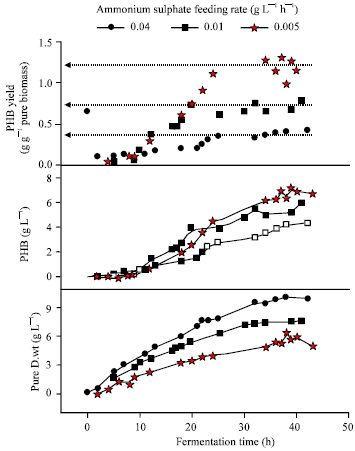 | |
| Fig. 6: | Pure biomass concentration, PHB concentration and PHB yield (in g g-1 pure biomass) as affected by different ammonium sulphate feeding rates in DOT controlled fed batch cultures at 1-3% air saturation |
However, the highest biomass obtained was accompanied with the lowest PHB concentration. Indeed, the PHB yield (in g/g pure biomass) increased almost three times and recorded a maximum of 1.3 (almost 65% of the cell biomass) at a feeding rate of 0.005 g L-1 h-1 compared to 0.76, 0.43 at feeding rate of 0.01 and 0.04 g L-1 h-1, respectively (Fig. 6).
DISCUSSION
The open market of the PHA-based biomedical applications directs many investigators toward the possibility of producing PHA commercially using Gram positive bacteria rather than the currently well studied Gram negative ones. With this respect, the current investigation deals with optimising the cultivation strategies for maximized PHB production and PHB yield from B. megaterium DSMZ 90.
Generally, in shacked flask cultures, the cell mass increased steadily, leading to a maximum cell density within 48 h (data not shown). Although the highest PHB concentration and PHB yield in g g-1 by B. megaterium was obtained in medium with ammonium sulphate as the source of nitrogen, this condition did not support a high growth yield. This was actually not surprising since cell growth competes with PHB synthesis under non-limiting nutritional conditions. It is well recognized that PHB production is carried out under unbalanced microbial growth as nitrogen limitation, oxygen limitation and others (Kim, 2000; Galindo et al., 2007; Panda and Mallick, 2007).
However, in such uncontrolled batch culture, the effect of increased cell growth on the effective DOT on one hand and the variation in pH on the other hand render such heterogeneous environments unsuitable for investigating the physiology of such a process. Moreover, it is generally recognized that the control of oxygen supply is of critical importance for PHB production by bacteria. Therefore, the PHB production kinetic was further studied in DOT controlled bioreactors with controlled pH by the addition of ammonium solution. The addition of substrate automatically to adjust the pH was previously reported by Tsuge et al. (1999) for the production of PHB by Alcaligenes eutrophus. In such cultures, lower DOT applied for the growth of B. megaterium supported lower biomass but higher PHB concentration and PHB yield (Fig. 3). Indeed, a low concentration of O2 in the medium leads to an excess of reduced coenzymes (NADH and NADPH) and a higher carbon flux can be directed towards PHB synthesis for reoxidation of these coenzymes (Chen et al., 1991). Interestingly, the PHB content at 1-3% air saturation by B. megaterium DSMZ 90 (0.52 g g-1) was higher than that recorded by other authors working with bacilli that ranged from 0.38 (Valappil et al., 2007) to 0.46 g g-1 (Gouda et al., 2001). Moreover, another undesirable route for substrate utilisation the exopolysaccharide material-was recorded at higher DOT values as well as the experiment with uncontrolled DOT (Fig. 2-4). Indeed, Bacillus spp. are known to produce the extracellular polysaccharide levan (Shida et al., 2002; Shih et al., 2005; Shih and Yu, 2005). In fact, this interplay between cellular metabolism, growth rate and polymers formation was previously reported in many PHB synthesizing bacteria (Huisman et al., 1989; Timm and Steinbüchel, 1992; Tavernier et al., 1997; Sabra et al., 2000, 2001; Segura et al., 2003; Sabra et al., 2004; Galindo et al., 2007; Wang and Yu, 2007; Wang et al., 2007).
Although the PHB yield in cultures with DOT control at 1.5% recorded its maxima, the PHB concentration was only 5.3 g L-1 due to the onset of the stationary phase despite the presence of excess amount of C-source. Consequently, the increased ammonium concentration with time as a result of the pH control did have an effect on the growth and may therefore explain the cessation of growth despite the presence of enough medium components. Indeed, Honda et al. (1998) reported that Rhodococcus rhodochrous growth was inhibited when the concentrations of acetic acid and ammonium ion were above 3 g L-1 and pH-stat fed batch strategies were performed to control the concentrations of the two components below 3 g L-1. Figure 5 indicated that ammonium concentration should be kept within the range of 0.2-0.4 g L-1 for maximum PHB production by B. megaterium and hence different ammonium-limited fed batch cultures with different feeding rates and DOT controlled at 1-3% were further studied.
The nitrogen source was fed to the bioreactor with rates ranging from 0.04, 0.01 and 0.005 g L-1 h-1. In the three different nitrogen limited fed batch cultivations, the extent of nitrogen limitation was concomitant with the PHB yield enhancement. This once more high-lighted the importance of increasing the C/N ratio for PHB production by B. megaterium. It should be stressed here that the PHB content of B. megaterium cells growing at the lowest ammonia feeding rate tested (65%) was the highest PHB yield ever recorded for bacilli in synthetic growth media (Gouda et al., 2001; Valappil et al., 2007). Moreover, as indicated in Fig. 6, the highest PHB yield was accompanied with the lowest specific growth rate at a feeding rate of 0.005 g L-1 h-1. This is actually in agreement with the data presented in Fig. 2-4. Indeed, Kim (2000) did show that decreasing cell growth rate of a recombinant E. coli could enhance PHB biosynthesis.
The rational for the constrain on residual biomass was to keep it lower than a certain level while PHB concentration was free to go as high as possible. Although ammonium inhibition did not occur in ammonium limited fed batch cultures, sporulation and the onset of the stationary phase in these cultures were delayed. The different feeding method/strategies did however affect the growth rate of the bacterium. A comparison between PHB concentrations in Fig. 6 with PHB concentration in Fig. 3 indicates that PHB productivity of ammonium limited fed-batch culture is higher than PHB productivity of a batch culture at the same DOT level. The final amount of PHB produced in batch culture at 54 h was 5.2 g L-1 representing a productivity of 0.09 g/g*h compared to 7.2 g at 38 h in fed-batch culture which represents a 2.1 fold increase in productivity reaching 0.19 g/g*h. Indeed the effect of such feeding strategies on the molecular weight of the produced polymer needs further investigation.
On the basis of data obtained in the present work, B. megaterium DSMZ 90 is capable of PHB accumulation up to 65% of the cell dry weight when grown in a synthetic medium based on sucrose and ammonium feed. Hence, this strain is a potent candidate for industrial production of PHB, especially for biomedical applications. The optimization of the conditions for PHB synthesis resulted in a good volumetric yield without significant intracellular degradation. The present study clearly demonstrated that if bacilli are used for industrial PHB production, the interplay between cellular metabolism, growth rate and polymers formation in connection with the onset of sporulation has to be carefully studied.
REFERENCES
- Abou-Zeid, D.M., R.J. Müller and W.D. Deckwer, 2001. Degradation of natural and synthetic polyesters under anaerobic conditions. J. Biotechnol., 86: 113-126.
Direct Link - Abou-Zeid, D.M., R.J. Müller and W.D. Deckwer, 2004. Biodegradation of aliphatic homopolyesters and aliphatic-aromatic copolyesters by anaerobic microorganisms. Biomacromolecules, 5: 1687-1697.
Direct Link - Anderson, A.J. and E.A. Dawes, 1990. Occurrence, metabolism, metabolic role and industrial uses of bacterial polyhydroxyalkanoates. Microbiol. Rev., 54: 450-472.
Direct Link - Chen, G.Q. and Q. Wu, 2005. The application of polyhydrxyalkanoates as tissue engineering materials. Biomaterials, 26: 6565-6578.
Direct Link - Galindo, E., C. Pena, C. Nunez, D. Segura and G. Espin, 2007. Molecular and bioengineering strategies to improve alginate and polydydroxyalkanoate production by Azotobacter vinelandii. Microb. Cell Fact., 6: 7-7.
Direct Link - Gouda, M.K., A.E. Swellam and S.H. Omar, 2001. Production of PHB by a Bacillus megaterium strain using sugarcane molasses and corn steep liquor as sole carbon and nitrogen sources. Microbiol. Res., 156: 201-207.
Direct Link - Harwood, C.R., 1992. Bacillus subtilis and its relatives: Molecular biological and industrial workhorses. Trends Biotechnol., 10: 247-256.
CrossRefDirect Link - Honda, H., H. Sugiyama, I. Saito and T. Kobayashi, 1998. High cell density culture of Rhodococcus rhodochrous by pH-stat feeding and dibenzothiophene degradation. J. Ferment. Bioeng., 85: 334-338.
CrossRefDirect Link - Huisman, G.W., O. de Leeuw, G. Eggink and B. Witholt, 1989. Synthesis of poly-3-hydroxyalkanoates is a common feature of fluorescent pseudomonads. Applied Environ. Microbiol., 55: 1949-1954.
Direct Link - Jendrossek, D., A. Schirmer and H.G. Schlegel, 1996. Biodegradation of polyhydroxyalkanoic acids. Applied Microbiol. Biotechnol., 46: 451-463.
CrossRefDirect Link - Kim, B.S., 2000. Production of poly(3-hydroxybutyrate) from inexpensive substrates. Enzyme Microb. Technol., 27: 774-777.
Direct Link - McCool, G.J., T. Fernandez, N. Li and M.C. Cannon, 1996. Polyhydroxyalkanoate inclusion-body growth and proliferation in Bacillus megaterium. FEMS Microbiol. Lett., 138: 41-48.
CrossRefDirect Link - Mergaert, J., A. Webb, C. Anderson, A. Wouters and J. Swings, 1993. Microbial degradation of poly (3-hydroxybutyrate) and poly (3-hydroxybutyrate-co-3-hydroxyvalerate) in soils. Applied Environ. Microbiol., 59: 3233-3238.
Direct Link - Panda, B. and N. Mallick, 2007. Enhanced poly-beta-hydroxybutyrate accumulation in a unicellular cyanobacterium, Synechocystis sp. PCC 6803. Lett. Applied Microbiol., 44: 194-198.
Direct Link - Park, C., T.H. Kim, S. Kim, J. Lee and S.W. Kim, 2002. Biokinetic parameter estimation for degradation of 2,4,6-trinitrotoluene (TNT) with Pseudomonas putida KP-T201. J. Biosci. Bioeng., 94: 57-61.
Direct Link - Sabra, W., A.P. Zeng, H. Lünsdorf and W.D. Deckwer, 2000. Function and variation of alginate production in Azotobacter vinelandii. Applied Environm. Microbiol., 66: 4037-4044.
Direct Link - Sabra, W., A.P. Zeng and W.D. Deckwer, 2001. Bacterial alginate: Physiology, product quality and process aspects. Applied Microbiol. Biotechnol., 56: 315-325.
Direct Link - Sabra, W., A. Ross and R. Jonas, 2004. Alginate versus PHB Production by the Diazotrophic Growing Culture of Azotobacter chroococcum. In: Biotecnological Advances and Applications in Bioconversion of Renewable Raw Materials, Jonas, R., A. Pandey and G. Tharun (Eds.). Doering Druck, Germany, ISBN: 3-925 268-25-0, pp: 309-311.
- Schallmey, M., A. Singh and O.P. Ward, 2004. Developments in the use of Bacillus species for industrial production. Can. J. Microbiol., 50: 1-17.
CrossRefPubMedDirect Link - Segura, D., J. Guzman and G. Espin, 2003. Azotobacter vinelandii mutants that overproduce poly-beta-hydroxybutyrate or alginate. Applied Microbiol. Biotechnol., 63: 159-163.
Direct Link - Shida, T., K. Mukaijo, S. Ishikawa, H. Yamamoto and J. Sekiguchi, 2002. Production of long-chain levan by a sacC insertional mutant from Bacillus subtilis 327UH. Biosci. Biotechnol. Biochem., 66: 1555-1558.
Direct Link - Shih, I.L. and Y.T. Yu, 2005. Simultaneous and selective production of levan and poly(gamma-glutamic acid) by Bacillus subtilis. Biotechnol. Lett., 27: 103-106.
Direct Link - Shih, I.L., Y.T. Yu, C.J. Shieh and C.Y. Hsieh, 2005. Selective production and characterization of levan by Bacillus subtilis. J. Agric. Food Chem., 53: 8211-8215.
Direct Link - Valappil, S.P., A.R. Boccaccini, C. Bucke and I. Roy, 2007. Polyhydroxyalkanoates in Gram positive bacteria: Insights from the genera Bacillus and Streptomyces. Antonie Van Leeuwenhoek, 9: 1-17.
Direct Link - Vandamme, P. and T. Coenye, 2004. Taxonomy of the genus Cupriavidus: A tale of lost and found. Int. J. Syst. Evol. Microbiol., 54: 2285-2289.
CrossRefDirect Link - Wang, C., M. Saldanha, X. Sheng, K.J. Shelswell, K.T. Walsh, B.W. Sobral and T.C. Charles, 2007. Roles of poly-3-hydroxybutyrate (PHB) and glycogen in symbiosis of Sinorhizobium meliloti with Medicago sp. Microbiology, 153: 388-398.
Direct Link - Wang, J. and H.Q. Yu, 2007. Biosynthesis of polyhydroxybutyrate (PHB) and extracellular polymeric substances (EPS) by Ralstonia eutropha ATCC 17699 in batch cultures. Applied Microbiol. Biotechnol., 75: 871-878.
Direct Link - Wang, W., R. Hollmann and W.D. Deckwer, 2006. Comparative proteomic analysis of high cell density cultivations with two recombinant Bacillus megaterium strains for the production of a heterologous dextransucrase. Proteome Sci., 4: 19-19.
Direct Link - Westers, L., H. Westers and W.J. Quax, 2004. Bacillus subtilis as cell factory for pharmaceutical proteins: A biotechnological approach to optimize the host organism. Biochem. Biophys. Acta, 1654: 299-310.
Direct Link - Wu, Q., H. Huang, G.H. Hu, J. Chen, K.P. Ho and G.Q. Chen, 2001. Production of poly-3-hydroxybutyrate by Bacillus sp. JMa5 cultivated in molasses media. Antonie Van Leeuwenhoek, 80: 111-118.
Direct Link