

Edema Mojisola Olayinka
Department of Microbiology, University of Agriculture, P.M.B. 2240, Abeokuta, Ogun state, Nigeria
Fawole Omobayonle
Department of Microbiology, University of Agriculture, P.M.B. 2240, Abeokuta, Ogun state, Nigeria
Research Journal of Microbiology
Year: 2006 | Volume: 1 | Issue: 6 | Page No.: 503-511





ABSTRACT
Iru is a traditional fermented African Locust bean condiment that serves as flavoring in soups or as a low-cost protein supplement. Ten traditional processing sites were studied in order to identify Critical Control Points (CCPs) during processing and to apply simple control measures in an optimized process with a view to improving the safety of the condiment. It was observed that processing of locust beans to iru is carried out under largely unhygienic conditions and CCPs identified were controlled by cooking with a pressure pot, de-hulling with hands or mortar and using well-defined cultures of known organisms as starters for the fermentation. It was observed that these simple control measures significantly (p = 0.05) reduced load of contaminating microorganisms and improved the nutritional composition of the condiment. A mixed culture of Bacillus sp. and possibly lactic acid bacteria is proposed.
PDF Abstract XML References
How to cite this article
Edema Mojisola Olayinka and Fawole Omobayonle, 2006. Evaluation and Optimization of Critical Control Points in the Production of Iru. Research Journal of Microbiology, 1: 503-511.
URL: https://scialert.net/abstract/?doi=jm.2006.503.511
URL: https://scialert.net/abstract/?doi=jm.2006.503.511
INTRODUCTION
Fermented foodstuffs and condiments are very popular in Nigeria. Prominent among the soup condiments is iru, a fermented vegetable protein from locust bean seeds (Parkia biglobosa). In many cases, fermentation is responsible for the development of taste or aroma, improved digestibility, improvement of nutritional composition, stabilization of the original raw materials and detoxification of anti-nutrient factors in these products. In the case of locust beans, the seeds are not consumed in their un-fermented state. Because of its popularity and role in improving protein intake of many low income earners, a lot of research has been done on iru (Odunfa, 1981; Antai and Ibrahim, 1986; Odunfa and Komolafe, 1989; Aderibigbe and Odunfa, 1990; Allagheny et al., 1996; Olasupo et al., 1996; Beaumont, 2002). The organisms reported to be isolated and/or characterized from iru include Bacillus subtilis (Odunfa, 1981; Odunfa and Oyewole, 1986). B. pumilus (Ogbadu and Okagbue, 1988), B. licheniformis (Ogbadu et al., 1990), Staphylococcus saprophyticus (Odunfa, 1981), S. xylosus and S. hominis (Odunfa and Komolafe, 1989).
These reports include investigations into the conditions of processing iru and its nutritional properties. Despite the findings, the production of this popular condiment remains at the house-hold level using traditional small-scale technology with inevitable problems that constitute health risk to consumers. Biotechnology in the food processing sector targets the selection and improvement of micro-organisms with the objectives of improving process control, yield and efficiency as well as the quality, safety and consistency of bio-processed products. Its production is strongly linked to culture and tradition, especially in rural households and village communities. The traditional fermentation process used in its production remains uncontrolled and dependent on micro-organisms from the environment or the fermentation substrate for initiation of the fermentation process which is carried out under unhygienic conditions. Hence, iru processing results in products of low yields, variable qualities and short shelf-lives. Therefore, a realistic approach that incorporates considerations for technical and safety concerns is required for overall improvement of iru and is based on the HACCP concept which remains the best approach to assuring food safety. The aim of the present study was therefore to evaluate the critical control points during household level fermentation of locust bean seeds into iru and to apply feasible control measures at those points with a view to providing realistic solutions to issues of safety required for overall improvement of iru.
MATERIALS AND METHODS
Study Sites/sample Collection
Ten local processors were selected for this study in Ibadan and Abeokuta, South-western Nigeria. All the stages in the processing and fermentation of African locust beans into iru were closely followed by on-line monitoring at the processing sites. Samples were collected at the different stages of processing for microbiological analyses. All samples were aseptically collected in triplicate and taken to the laboratory in sterile containers under ice.
Identification of Critical Control Points
The critical control points during the local production of Iru were identified as shown in Fig. 1 and the risks associated with these points were confirmed with the results of microbiological analyses.
Microbiological Analyses
Isolation and Enumeration of Microflora
Replicate portions of ten-fold dilutions of samples in sterile peptone water were made for all samples collected. The preparations were homogenized and 0.1 mL each of appropriate dilutions was plated using the pour plate method (Harrigan and McCance, 1976).
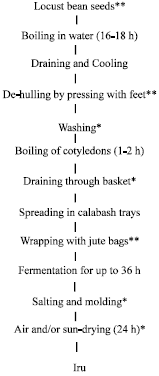 | |
| Fig. 1: | Flow diagram for the traditional processing of locust beans into iru showing the critical control points *Critical control points ** Critical contrrol point and food safety risk |
Enumeration of the total viable counts were carried out using Plate Count Agar (Oxoid CM325, Hampshire, UK) and de Mann Rogosa and Sharpe (MRS) agar (Oxoid CM 361) for lactic acid bacteria while Sabouraud Dextrose Agar (SDA, Oxoid CN 41) was used for fungal counts and isolation. SDA plates were incubated at 25°C for 72 h while PCA and MRS plates for bacteria were incubated at 30°C for 48-72 h. One set each of MRS and PCA plates were incubated under anaerobic conditions stimulated using a CO2 gas generating kit (Oxoid, Hampshire, UK.).
Characterization of Isolates
At intervals, all colonies from a sector of incubated plates were picked, purified by repeated sub-culturing before being examined microscopically for Gram reaction (Claus, 1992), cell morphology (using 24 h old cultures), motility, pigmentation and sporulation (Harrigan and McCance, 1976). Biochemical analysis included catalase and oxidase activities, nitrate reduction, patterns of sugar utilization as well as urea and starch hydrolysis (Christensen, 1946; Harrigan and McCance, 1976). Fungal isolates were stained with cotton-blue lacto-phenol and microscopically observed for cell shape, size and sporulation. Physiological characteristics used for classifying yeasts included ability to ferment certain sugars semi-anaerobically and ability to grow aerobically with various compounds each as sole source of either carbon or nitrogen (assimilation tests) (Kreger-van Rij, 1984; Barnett et al., 1990).
Identification of Isolates
Bacteria and yeast isolates were identified on the basis of the results obtained from biochemical characterization complemented with the API identification kits (API System, France). The results were analyzed using Bergey’s manual of systematic bacteriology (Sneath et al., 1986) and the yeast identification program of Barnett et al. (1990). Moulds were identified by their colonial features as well as micro-morphology of their sporulating structures and conidia according to Onions et al. (1981).
Optimization of Processing Conditions
In order to reduce the microbiological food safety risks associated with the critical control points identified, a laboratory preparation of iru was carried out using starter cultures selected from the isolates and applying realistic control measures as shown in Fig. 2.
Inoculum Preparation
The selection of the organisms used as starter cultures was based on the frequency of isolation during fermentation, occurrence in final product and previous knowledge of their role in such fermentations (Matilda and Sanni, 2002; Holzapfel, 2002).
The organisms selected as test cultures were therefore Bacillus subtilis, Bacillus licheniformis, Bacillus pumilus, Lactobacillus amylovorous and Leuconostoc mesenteroides. The selected Bacillus strains were grown in Nutrient broth for 24 h while Lactobacillus amylovorous and Leuconostoc mesenteroides were grown in MRS broth for 48 h.
After incubation, 0.1 mL each of broth culture was plated on appropriate agar plates using the pour plate technique to determine cell concentrations. Broth cultures containing approximately the same concentration of viable cells in the range of 105 were centrifuged (Labofuge 200, Kendro Laboratory Products, Germany) at 4000xg for 10 min, washed in sterile distilled water and re-centrifuged. The washed cells were then used as inoculum, singly and as mixed combinations in the fermentation of locust beans for iru.
Fermentation
An amount of 2 kg of locust bean seeds were cleaned and cooked in a pressure pot for 1 h. On cooling, the cotyledons were removed from the seed coat [i.e., dehulled] using clean bare hands (or a clean mortar and pestle), washed with tap water and cooked again in the pressure pot for 30 min.
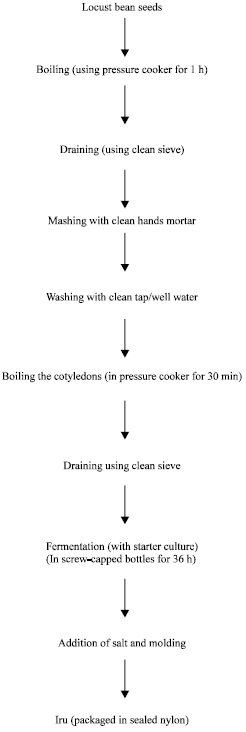 | |
| Fig. 2: | Flow diagram for optimized processing of locust beans to iru |
Approximately 1.1 kg of the cooked cotyledons remained. Twenty-five gram of cotyledons were weighed into sterilized jam bottles and inoculated with 5 mL of inoculum. Incubation followed at room temperature for 36 h. Two sets of control were used for comparison. The un-inoculated sample prepared according to the optimized process served as Control 1 while Control 2 was the locally prepared iru using traditional process.
Inoculum Growth Assessment
The growth of each inoculum was monitored during the fermentations by plating out dilutions of fermenting beans using the pour plate method. Total viable counts were made on MRS medium for the lactic acid bacteria and on Nutrient Agar for Bacillus species.
Physico-chemical Analyses of Fermented Locust Beans
pH and proximate compositions of the fermented locust bean seeds were determined at the end of 36 h of fermentation according to AOAC (1990).
Statistical Analyses
The data obtained were subjected to statistical analysis (means, correlation and ANOVA) using SPSS10.0 for Windows.
RESULTS
On-line Monitoring
Producers of iru do their processing at home. Water used for iru preparation is fetched from nearby wells or public taps and stored in large plastic containers. The production environments were observed to be generally poor and dirty. Household animals like poultry and dogs were observed roaming about the compounds near the production sites. The processing of locust beans to iru was carried out under largely unhygienic conditions in all the 10 processing sites monitored. Two sites 1 and 4 had significantly higher aerobic plate counts than the other sites.
Total Viable Counts
Total aerobic and anaerobic plate counts of microorganisms from iru and at some critical control points of processing in iru production which could represent food safety risk are presented in Table 1 and 2, respectively. The values obtained showed that counts of viable microorganisms generally increased during the processing. However, the counts of both aerobic and anaerobic organisms reduced during processing using the optimized process as shown in Fig. 2. Aerobic counts in the iru fermented traditionally were in the order of 107 while anaerobic counts were in the range of 104 as against 105 and 103 respectively for the iru fermented using the optimized process.
Enumeration and Characterization of Microorganisms
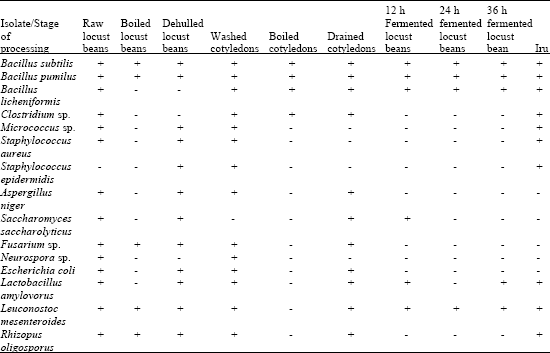
A total of 10 bacterial isolates were identified from the different stages of production. They were Bacillus subtilis, B. licheniformis, B. pumilus, Clostridium sp., Staphylococcus epidermidis, Lactobacillus amylovorus, Leuconostoc mesenteroides, Micrococcus sp., Escherichia coli and Staphylococcus aureus. Four molds species Aspergillus niger, Rhizopus oligosporus, Fusarium sp and Neurospora sp and one yeast Saccharomyces saccharolyticus were also isolated during different stages of processing as presented in Table 3. It was observed that almost all the isolated organisms were present in the raw beans except Staphylococcus epidermidis. Most of them however disappeared during fermentation leaving the bacilli (Bacillus subtilis, B. licheniformis and B. pumilus) and the two species of lactic acid bacteria (Lactobacillus amylovorus and Leuconostoc mesenteroides) isolated.
Optimization of Processing of Locust Beans into Iru
The process optimization involved simple, practicable yet effective steps towards reducing microbial food safety risks associated with the critical points identified. A pressure pot was used for boiling and there was no growth of microorganisms on plates incubated with samples taken immediately after the two boiling stages. The processing water and exposure to the environment however appear to introduce organisms into the samples hence their appearance in the washed and ready to ferment samples.
| Table 1: | Total viable aerobic counts (cfu g-1) of microorganisms in samples collected at different stages during local production of iru |
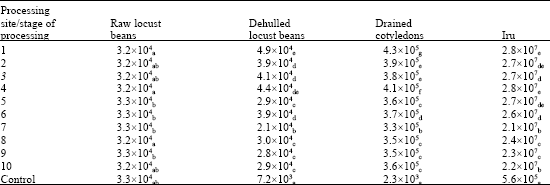 | |
| Values along columns with different subscripts are significantly different by duncan’s multiple range test at 5% confidence level. Laboratory prepared sample using the process in Fig. 2 served as control | |
| Table 2: | Total viable anaerobic counts (cfu g-1) of microorganisms in samples collected at differnet stages during local production of iru |
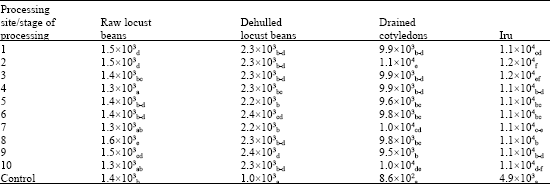 | |
| Values along columns with different subscripts are significantly different by duncan’s multiple range test at 5% confidence level. Laboratory prepared sample using the process in Fig. 2 served as control | |
| Table 3: | Distribution of isolated microorganisms in samples collected at different stages during traditional fermentation of locust beans to iru |
 | |
| Table 4: | ph values and proximate compositions of iru produced using test cultures |
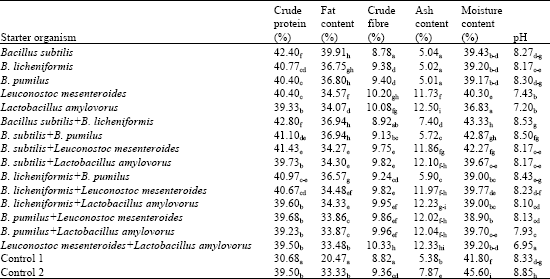 | |
| Values along columns with different subscripts are significantly different by duncan’s multiple range test at 5% confidence level Control 1: Laboratory prepared sample under optimized conditions without starter. Control 2: Locally prepared sample using traditional process | |
The counts of both aerobic and anaerobic organisms were however significantly lower in the laboratory prepared samples but enough to carry out the fermentation. The laboratory prepared sample however recorded the lowest protein, fibre and fat contents (Table 4) and was not very much like the samples fermented traditionally nor those fermented with starter cultures. Ash contents of starter fermented samples varied widely from 5.01 in iru produced using B. pumilus as starter to 7.87 in the sample produced by the traditional process and at the other extreme 11.73 to 12.33 in iru produced using lactic acid bacteria as starter cultures. Fat and protein contents ranged from 20.47 to 36.94 and 30.68 to 42.80%, respectively.
DISCUSSION
Iru is a protein-rich fermented African soup condiment which is considered the most important food condiment in the entire West/Central African Savannah region. Its production is however basically by traditional, household level fermentation technology laden with food-borne hazards at virtually all points during processing as observed in the present study. Critical control points and possible food safety risks in the processing of African locust beans into iru were identified in this study. The raw material, that is, the locust bean seeds usually comes with a substantial microbial load comprising spores of aerobic spore-forming bacteria and mould spores most of which are drastically reduced during the prolonged boiling to soften the testa as obtainable in related fermentations (Feng et al., 2005). Cooling is normally done in the open air and this may introduce dirt particles and filth as well as air microflora. This is a possible explanation for their re-appearance in the cotyledons after boiling even with a pressure cooker. De-hulling by pressing with feet though convenient for the processors, represents a major CCP and health risk as microbial counts were observed to increase significantly at this point with the introduction of potential pathogens like Escherichia coli. Water used for washing the dehulled seeds may remove some of the contaminating micro-organisms introduced during de-hulling, but it may also add new ones as observed from the results of microbiological analysis at this point. The baskets, trays and bays used all contribute to contamination of the product hence the observed increases in viable counts at these stages. Moulding usually done with bare hands and drying may contribute to re-contamination of the iru. A major constraint in iru production is the rather long processing time which was drastically reduced by using a pressure pot for boiling. Besides this, the samples were also found to be free of microorganisms immediately after boiling in the pressure pot. Ikenebomeh et al. (1986) observed a reduction in the counts of microorganisms in processed beans but not a total elimination. The use as starter cultures of isolates found in the fermenting locust beans and the iru samples also improved the nutritional quality of the product as observed in the proximate composition of the samples. Bacillus subtilis, Bacillus licheniformis and Bacillus pumilus increased the protein and fat contents of samples significantly compared with the other starter cultures and the controls. Protein content values were however lower than values obtained by Ikenebomeh et al. (1986) while fat contents observed in this study were higher than theirs. According to Odunfa and Adewuyi (1985), Bacillus subtilis was responsible for the fermentation in Iru production. Beaumont, (2002) also reported the importance of flavouring compounds by Bacillus subtilis. Ogbadu and Okagbue (1988) stated that Bacillus licheniformis gave the most satisfactory product when different isolates were tested but didn’t state in what regard or to what extent. Cultures of lactic acid bacteria Lactobacillus amylovorus and Leuconostoc mesenteroides affected the fibre and ash contents significantly. The reason for this was not known. Fermentation was carried out in screw-capped bottles in the optimized process as against leaves in the traditional process. This did not appear to have any negative effect on the product rather it is a step towards improving the quality and safety of this important food condiment. Ogbadu and Okagbue (1988) reported that the growth of predominating organism B. subtilis predominated is favored by low oxygen tension. In a separate study, plastic containers were used and there was no observed difference. The authors tried this out because the processors had expressed concern about using glassware which could break. This can be overcome by suggesting the use of plastic containers for fermentation as the effect is the same although transparent glass containers were used in this study for ease of observation of the fermenting beans. According to Motarjemi (2002), the hazardous stages of food processing can be best identified by following the principles of Hazard Analysis of Critical Control Points (HACCP). The content and application of HACCP can improve traditional practices by introducing an approach for applying our knowledge of microbiology for the control of microbiological quality of these food processes. It also designs quality into new products. Substantial research has been done to understand the scientific basis of traditional production of iru, but little or no effort has been made to present this African food condiment in hygienic and decent forms. The dissemination of the findings of the present study offers great potential for extension programmes in order to improve the safety of this food product. Biotechnology in the food processing sector targets the selection and improvement of micro-organisms with the objectives of improving process control, yield and efficiency as well as the quality, safety and consistency of bio-processed products. The role of the lactic acid bacteria which were isolated in samples during this study and previously reported by some workers need to be studied and well-defined. They may indeed contribute to the nutrient composition of iru and their incorporation into a starter culture for the product may be desirable because of their probiotics potential Mishra and Prasad (2005).
REFERENCES
- Antai, S.P. and H.P. Ibrahim, 1986. Micro-organisms associated with African locust bean (Parkia filicoidea Welw) fermentation for dawadawa production. J. Applied Bacteriol., 61: 145-148.
CrossRefDirect Link - AOAC, 1990. Official Methods of Analysis. 15th Edn., Association of Official Analytical Chemists, Washington, DC., USA., pp: 200-210.
Direct Link - Beaumont, M., 2002. Flavouring composition prepared by fermentation with Bacillus sp. Int. J. Food Microbiol., 75: 189-196.
PubMedDirect Link - Christensen, W.B., 1946. Urea decomposition as a means of differentiating Proteus and paracolon organisms from each other and from Salmonella and Shigella types. J. Bacteriol., 52: 461-466.
Direct Link - Claus, D., 1992. A standardized Gram staining procedure. World J. Microbiol. Biotechnol., 8: 451-452.
CrossRefDirect Link - Holzapfel, W.H., 2002. Appropriate starter culture technologies for small-scale fermentation in developing countries. Int. J. Food Microbiol., 75: 197-212.
CrossRefDirect Link - Ikenebomeh, M.J., R. Kok and J.M. Ingram, 1986. Processing and fermentation of the african locust bean (Parkia filicoidea Welw.) to produce dawadawa. J. Sci. Food Agric., 37: 273-282.
CrossRefDirect Link - Mishra, V. and D.N. Prasad, 2005. Application of in vitro methods for selection of Lactobacillus casei strains as potential probiotics. Int. J. Food Microbiol., 103: 109-115.
CrossRefDirect Link - Motarjemi, Y., 2002. Impact of small scale fermentation technology on food safety in developing countries. Int. J. Food Microbiol., 75: 213-219.
CrossRefPubMedDirect Link