

P. V. Joshua
Department of Biotechnology, SVKP and Dr. KS Raju Arts and Science College, Penugonda, India
D. R. Salomi Suneetha
College of Horticulture, A.P. Horticultural University, Venkataramannagudem, India
A. Arundhati
Department of Botany,Andhra University, Visakhapatnam, India
G. Seshagiri Rao
Department of Biochemistry, Andhra University, Visakhapatnam, India
International Journal of Botany
Year: 2010 | Volume: 6 | Issue: 3 | Page No.: 280-286





ABSTRACT
Present study tends to investigate the existence of the bacterial oncogenes- rol genes of Agrobacterium rhizogenes Riker., in Nicotiana rustica, N. plumbaginifolia and their hybrid. These Nicotiana species and hybrid were normal morphologically under field conditions without any neoplastic growth. So, the habituation studies were carried out to identify the presence of rol genes by culturing the leaf discs on hormone supplemented Murashige and Skoog medium and then shifting to MS basal medium. Habituation showed phytohormone independent growth response even after shifting to MS basal medium indicating the presence of rol genes. Then, Polymerase Chain Reaction analysis showed amplification of rol A, B and C genes in N. rustica, rol A and C in N. plumbaginifolia and the hybrid. The amplified genes were sequenced and deposited in GenBank. The homology between the novel genes was compared with the rol genes of A. rhizogenes as well as the other plants species containing rol gene homologues using Pairwise sequence alignment search tool. Results were discussed in terms of the occurrence of bacterial genes in plants, the extent of their expression and the probable reasons for silencing of the foreign genes.
PDF Abstract XML References Citation
Article History
Received: April 03, 2010;
Accepted: May 30, 2010;
Published: September 02, 2010
How to cite this article
P. V. Joshua, D. R. Salomi Suneetha, A. Arundhati and G. Seshagiri Rao, 2010. Studies on Agrobacterium rol Gene Homologues in Nicotiana rustica L., N. plumbaginifolia viv. and their Hybrid. International Journal of Botany, 6: 280-286.
DOI: 10.3923/ijb.2010.280.286
URL: https://scialert.net/abstract/?doi=ijb.2010.280.286
DOI: 10.3923/ijb.2010.280.286
URL: https://scialert.net/abstract/?doi=ijb.2010.280.286
INTRODUCTION
Nicotiana is one of the common genera containing the bacterial oncogenes of Agrobacterium rhizogenes (Joshua et al., 2009). Their occurrence indicates the ancient horizontal transfer of T-DNA of the Ri plasmid from A. rhizogenes to the plant genome (Christey and Braun, 2005). The integration of T-DNA into the Nicotiana genome is through insertion at double stranded breaks by nonhomologous end joining (Chilton and Que, 2003). Expression of the cellular rol gene homologues present in plants alter endogenous auxin/cytokinin balance causing severe developmental abnormalities, neoplastic growths, morphological and physiological abnormalities like dwarfed phenotype, reduced apical dominance, smaller, wrinkled leaves, increased rooting, altered flowering and reduced fertility (Casanova et al., 2005). Normally, the plants holding rol genes show habituation or phytohormone independent growth on MS (Murashige and Skoog, 1962) basal medium. Differences were observed in the extent of expression of Ri plasmid genes of A. rhizogenes which was dependent on the position of incorporation of these genes into the plant kingdom (Mirza, 2005).
Cellular rol gene expression results in tumorigenesis, several morphological abnormalities and phytohormone independent growth under culture conditions in N. glaucaxN. langsdorffii hybrid (Suneetha et al., 2006, 2009). Expression of rol genes is employed in floriculture in improving the ornamental and horticultural traits (Casanova et al., 2005) like rose (Souq et al., 1996), lily (Mercuri et al., 2003) and carnation plants. They are useful as potential activators of secondary metabolism (Bulgakov, 2008) in transgenic plants. rol genes expression resulted in 15 fold increase of anthraquinones in the transformed calli of Rubia cordifolia (Shkryl et al., 2008), production of 25 tropane alkaloids in transgenic Datura innoxia (Jousse et al., 2010) and in molecular breeding towards compact growth as studied in Kalanchoe blossfeldiana (Christensen et al., 2008).
The aim of this study is to understand the response of habituation in N. rustica, N. plumbaginifolia, N. rustica x N. plumbaginifolia hybrid under culture conditions; to identify the presence of rol genes in parents and the hybrid by doing PCR analysis; sequencing the genes; submission the sequences to Genbank of NCBI for accession numbers and pairwise sequence alignment for comparing the cellular rol gene sequences of the parents and the hybrid with the rol genes of A. rhizogenes and the other cellular homologues.
MATERIALS AND METHODS
Plant material, callus induction and habituation: The parents N. rustica, N. plumbaginifolia and N. rustica x N. plumbaginifolia hybrid (Dr. T.V.R. Lakshmi Andhra University, 2006-2008) were grown in botany farm of Andhra University, Visakhapatnam. Leaves collected from 3 months old plants of N. rustica, N. plumbaginifolia and the hybrid were surface sterilized with ethanol and 0.1% mercuric chloride. Leaf discs were cultured on MS basal medium at 25°C and 16 h light/8 h dark photoperiod. Subculturing was done for every 21 days and the results were recorded.
To elicit the response of habituation, the leaf discs of N. rustica, N. plumbaginifolia and the hybrid were initially cultured either on MS+BAP (5 mg L-1) or MS+IAA (3 mg L-1) medium. The cultures were grown at 25°C and 16 h light/8 h dark photoperiod. Twenty one days old cultures from both the hormonal media were shifted to MS basal medium and the results of 45 days old cultures were recorded.
DNA isolation, amplification and sequencing: Genomic DNA was extracted from fresh tender leaves of N. rustica, N. plumbaginifolia and the hybrid using Dellaporta method of plant DNA extraction (Dellaporta et al., 1983). The extraction procedure includes the reaction with extraction buffer (1 M Tris HCl (pH 8.0), 0.5 M EDTA (pH 8.0), 5 M NaCl, 10 μM β-mercaptoethanol, 1% Polyvinyl pyrrolidone), 20% SDS at 65°C, precipitation of protein with 5 M potassium acetate, precipitation of DNA with iso-propanol and suspension of crude DNA in resuspension buffer 1 (100 mM EDTA and 250 mM Tris HCl). The DNA was purified using RNase, phenol:chloroform:isoamylalcohol (25:24:1), precipitated with 3 M sodium acetate, chilled ethanol and resuspended in resuspension buffer 2 (50 mM EDTA and 100 mM Tris HCl). The concentration and purity of DNA were estimated using UV-VIS spectrophotometer (Systronics, Model-117).
DNA amplification reaction was carried out in Appendorf’s master cycler using the genomic DNA of N. rustica, N. plumbaginifolia and the hybrid as templates and 18mer sequences of rol A, B and C genes of A. rhizogenes as primers (Biotech Desk Pvt. Ltd.), Taq DNA polymerase and its buffer with MgCl2 and dNTP mix (Bangalore Genei Pvt. Ltd.).
The primer sequences are as follows
| • | rolA primers - Forward5'-GGAATTAGCCGGACTAAA-3';: |
| • | Reverse: 5'-AGGTCTGAATTTTCACGT-3'; |
| • | rolB primers - Forward: 5'-CAAATTGCTATTCCTTCC-3' |
| • | Reverse: 5'-TTACTGCAGCAGGCTTCA-3' |
| • | rolC primers - Forward: 5'-GTCGAGGATGTGACAAGC-3' |
| • | Reverse: 5'-GCCGATTGCAAACTTGCA-3' |
Thermal profile was as follows: Initial denaturation at 94°C for 4 min, Denaturation at 94°C for 1 min, Annealing at 59°C for 1 min and Extension at 72°C for 1.5 min - this reaction was repeated for 30 cycles; Final extension at 72°C for 10 min. Amplified fragments of DNA were separated on gel electrophoresis using 1.2% agarose gel and the size of the fragments were measured with reference to 100 bp ladder.
Specific PCR amplified fragments of the size of rol A, B and C genes were gel eluted from low melting agarose gel (1%) using elution buffer (1 M Tris-Cl, 0.5 M EDTA; pH 8.0), precipitated using 10 M ammonium acetate, dissolved in 0.1 M Tris-Cl (pH 8.0) and were sequenced utilizing the services of MWG Biotech Pvt. Ltd., Bangalore, India. The sequences were extracted in Fasta format using Chromas software downloaded from http://www.technelysium.com.au/chromas.html
Genbank submission and pairwise sequence alignment: The sequences of cellular rol genes present in N. rustica, N. plumbaginifolia and the hybrid were submitted to GenBank of NCBI (National Centre for Biotechnology Information) using BankIt tool (http://www.ncbi.nlm.nih.gov/websub/tool) for further evaluation of authenticity, novelty of the sequences and for accession numbers.
The statistical significance of matches between the rol genes of A. rhizogenes and cellular rol genes of N. rustica, N. plumbaginifolia and the hybrid were studied using the BLAST (Basic Local Alignment Search Tool) tool available under NCBI (http://www.ncbi.nlm.nih.gov/BLAST).
RESULTS
The parents N. rustica, N. plumbaginifolia and their hybrid were normal morphologically and physiologically under field conditions. The hybrid developed resembled N. rustica in the shape of the leaf, flower, pod and the seed.
Response of N. rustica and PCR analysis: Increase in the leaf disc size and callus initiation was observed on MS basal medium. Shooty callus growth observed on MS supplemented with BAP (5 mg L-1) within 21 days showed shooty growth with few roots after shifting to MS basal medium. Similarly, white callus with roots was observed when the leaf discs were cultured on MS supplemented with IAA (3 mg L-1) within 21 days which continued even after shifting to MS basal medium (Table 1).
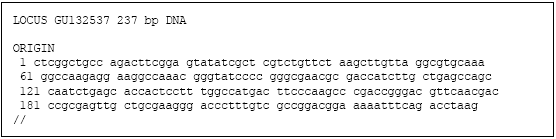
N. rustica showed amplification with rolA (240 bp band), rolB (780 bp band) and rolC (490 bp band) sets of primers. The following were the Genbank accepted sequences with their accession numbers of N. rustica:
Cellular rolA gene present in Nicotiana rustica
 |
Cellular rolB gene present in Nicotiana rustica
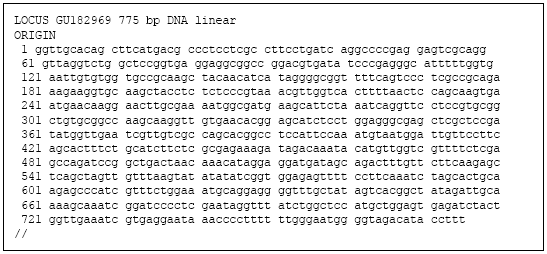 |
Cellular rolC gene present in Nicotiana rustica
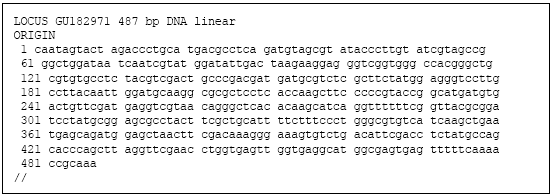 |
| Table 1: | Response of the leaf discs of N. rustica on MS basal medium and their habituation after hormonal shifts |
 | |
Response of N. plumbaginifolia and PCR analysis: A very slow growth of callus initiation was observed from the leaf disc on MS basal medium. Callus initiation from the veinal region was observed on MS with BAP (5 mg L-1) within 21 days which showed a fast growth of multiple shooty morphogenesis upon shifting to MS basal medium. Similarly, white rooty callus growth was observed when the leaf discs were cultured on MS with IAA (3 mg L-1) within 21 days which proliferated after shifting to MS basal medium (Table 2).
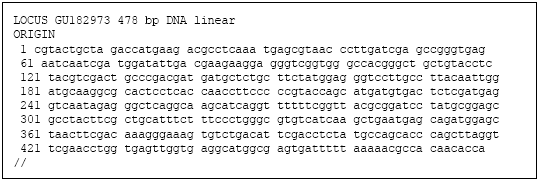
N. plumbaginifolia showed amplified fragments only for rolA (250 bp band) and rolC (480 bp band)sets of primers. The following were the Genbank accepted sequences with their accession numbers of N. plumbaginifolia:
Cellular rolA gene present in Nicotiana plumbaginifolia
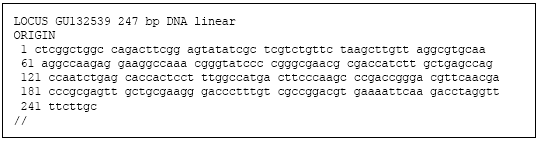 |
Cellular rolC gene present in Nicotiana plumbaginifolia
 |
Response of N. rustica x N. plumbaginifolia and PCR analysis: Callus initiation was observed on MS basal medium, green shooty callus was grown on MS with BAP (5 mg L-1) within 21 days and a very fast growth of multiple shoots with few roots was observed when shifted to MS basal medium. Similarly, white rooty callus growth was observed on MS with IAA (3 mg L-1) which continued on shifting to MS basal medium (Table 3).
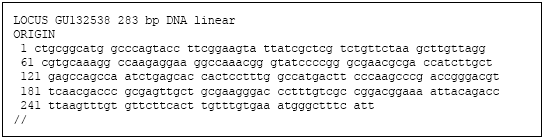
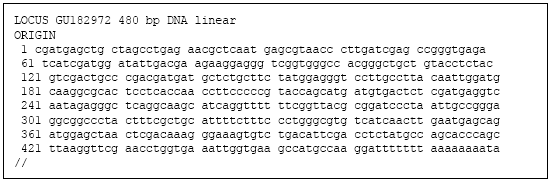
N. rusticaxN. plumbaginifolia showed amplified fragments for rolA (290 bp band) and for rolC (480 bp band) sets of primers. The following were the Genbank accepted sequences with their accession numbers of the hybrid:
| Table 2: | Response of the leaf discs of N. plumbaginifolia on MS basal medium and their habituation after hormonal shifts |
 | |
| Table 3: | Response of the leaf discs of N. rustica x N. plumbaginifolia on MS basal medium and their habituation after hormonal shifts |
 | |
Cellular rolA gene present in Nicotiana rustica x Nicotiana plumbaginifolia
 |
Cellular rolC gene present in Nicotiana rustica x Nicotiana plumbaginifolia
 |
| Table 4: | Genbank accession numbers for the cellular rol gene sequences |
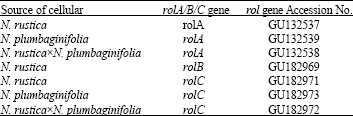 | |
List of novel cellular rol gene sequences with their accession numbers were given in Table 4.
Pairwise sequence analysis of cellular rol genes with A. rhizogenes rol genes: The cellular rolA genes of N. rustica and N. plumbaginifolia showed 97% and N. rustica x N. plumbaginifolia hybrid showed 98% identity with r olA gene of Ri plasmid Agropine strain A4 of A. rhizogenes. The other cellular homologue present was rolA gene of A. thaliana showing 97% identity with the cellular rolA genes of present study. The cellular rolB gene of N. rustica showed 99% identity with the rolB gene of Ri plasmid Agropine strain A4 of A. rhizogenes. Cellular rolB was also identified in N. glauca showing 83% identity with rolB genes of N. rustica. Very few variations of addition and deletion mutations were observed in pairwise sequence alignment with reference to rolA and B genes of A. rhizogenes. The cellual rolC genes of N. rustica, N. plumbaginifolia and the hybrid showed 84, 99 and 84% identity, respectively with the rolC gene of A. rhizogenes Agropine type strain A4. The cellular rolC homologues were also identified in N. debneyi, N. glauca and N. cordifolia which showed 80-84% identity with the rolC genes of N. rustica, N. plumbaginifolia and the hybrid. More number of variations of addition, deletion and substitutions were observed in cellular rolC than rolA and B genes studied earlier.
DISCUSSION
Plants have unique behavior of coexisting with microorganisms especially with Agrobacterium rhizogenes. Several members of the plant kingdom like Kalanchoe, Petunia, Daucus and 15 out of 42 species of Nicotiana so far studied were found to contain the TL-DNA genes (Intrieri and Buiatti, 2001). In the present study cellular rol genes were identified for the first time in N. rustica, N. plumbaginifolia and their hybrid N. rustica x N. plumbaginifolia.
Three types of expression levels were identified in plants carrying cellular rol genes (i) Silencing of cellular rol genes in field conditions and their expression under culture conditions showing phytohormone independent hormonal autonomy. As studied here the cellular rol genes expression was observed only under culture conditions showing enhanced culture response with organogenesis on hormonal shifts. The shooted calli (MS+BAP) developed few roots (MS alone) in N. rustica and in the hybrid cultures but the rooted calli (MS+IAA) continued their growth on MS basal medium. On the other hand, in N. plumbaginifolia the shooty (MS+BAP) and rooty (MS+IAA) growth continued even after shifting to MS basal medium. The rol gene products of rolA (Sun et al., 1991), rolB (Estruch et al., 1991a) and rolC (Estruch et al., 1991b) alter the endogenous auxin/cytokinin balance, hence might be responsible for phytohormone independent growth under culture conditions. (ii) The cellular rol genes may remain permanently silent for generations both under field and culture conditions as studied in N. glauca (Suneetha et al., 2009). (iii) On the other hand, the expression of cellular rol genes result in tumorigenesis, morphological abnormalities in field and phytohormone independent growth under culture conditions as observed in N. glauca x N. langdorffii hybrid (Udagawa et al., 2004; Suneetha et al., 2006).
The sequence of these genes viz., rolA, B and C in N. rustica; A and C genes in N. plumbaginifolia and the hybrid were highly homologous (>95% in rolA and B; ~80% homology for rolC) to the rolA, B and C genes present in Ri plasmid of A. rhizogenes strain A4. This represents the bacterial origin of the cellular rol genes present in plants and the donor strain could be strain A4 of A. rhizogenes. The entry of rol genes from A. rhizogenes to Nicotiana genome is through horizontal gene transfer (Aoki, 2004) from the bacterial plasmid to the plant genome. The other genes cellular rol genes include rolA of Arabidopsis thaliana, rolB of N. glauca and rolC of N. glauca, N. cordifolia and N. debneyi. Several alterations including additions, deletions and substitutions occurred in the cellular rolA, B and C gene homologues. The mutations were not the same in all the plant members. The types of mutations include addition and deletion of any one of the four nucleotides A, T, G or C; and substitutions of A to T, T to A, G to A, A to G, A to C, C to A, C to G, G to C, T to C, C to T, T to G, G to T types. rolA and rolB gene homologues showed very few mutations which are either additions or deletions. More number of mutations with several substitutions were observed with rolC gene. Addition and deletion of nucleotides may be due to the slippage in template or replicating strand when replication occurs in repetitive sequences (Griffiths et al., 1999).
Expression of prokaryotic rol genes present in the genome of different members of Nicotiana result in neoplastic growths under field or culture conditions. Silencing and expression of rol genes might be because of changes in the levels of DNA methylation (Suneetha et al., 2009), histone acetylation (Pokholok et al., 2005) or the addition, deletion and substitution mutations observed. The rol gene expression could be further utilized either to enhance the ornamental value of the plant or for the production of secondary metabolites.
REFERENCES
- Aoki, S., 2004. Resurrection of an ancestral gene: Functional and evolutionary analyses of the Ngrol genes transferred from Agrobacterium to Nicotiana. J. Plant Res., 117: 329-337.
Direct Link - Bulgakov, V.P., 2008. Functions of rol genes in plant secondary metabolism. Biotechnol. Adv., 26: 318-324.
CrossRefDirect Link - Casanova, E., M.I. Trillas, L. Moysset and A. Vainstein, 2005. Influence of rol genes in floriculture. Biotechnol. Adv., 23: 3-39.
PubMed - Chilton, M.D. and Q. Que, 2003. Targeted integration of T-DNA into the tobacco genome at double stranded breaks: New insights on the mechanism of T-DNA integration. Plant Physiol., 133: 956-965.
PubMed - Christensen, B., S. Sriskandarajah, M. Serek and R. Muller, 2008. Transformation of Kalanchoe blossfeldiana with rol-genes is useful in molecular breeding towards compact growth. Plant Cell Rep., 27: 1485-1495.
PubMed - Christey, M.C. and R.H. Braun, 2005. Production of Hairy Root Cultures and Transgenic Plants by Agrobacterium rhizogenes-Mediated Transformation. In: Transgenic Plants: Methods and Protocols. Methods in Molecular Biology, Peña, L. (Ed.), Humana Press, United States, ISBN: 978-1-59259-827-4, pp: 47-60.
CrossRefDirect Link - Dellaporta, S.L., J. Wood and J.B. Hicks, 1983. A plant DNA minipreparation: Version II. Plant Mol. Biol. Rep., 1: 19-21.
CrossRefDirect Link - Estruch, J.J., J. Schell and A. Spena, 1991. The protein encoded by the rolB plant oncogene hydrolyses indole glucosides. EMBO J., 10: 3125-3128.
Direct Link - Estruch, J.J., D. Chriqui, K. Grossmann, J. Schell and A. Spena, 1991. The plant oncogene rolC is responsible for the release of cytokinins from glucoside conjugates. EMBO J., 10: 2889-2895.
PubMed - Intrieri, M.C. and M. Buiatti, 2001. The horizontal transfer of Agrobacterium rhizogenes genes and the evolution of the genus Nicotiana. Mol. Phylogenet. Evolu., 20: 100-110.
PubMed - Joshua, P.V., D.R.S. Suneetha, A. Arundhati and G.S. Rao, 2009. Studies on presence and response of agrobacterium rol genes in three varieties of tobacco. Asian J. Plant Sci., 8: 54-58.
CrossRefDirect Link - Jousse, C., T.D. Vu, T.M. Tran, M.H. Al-Balkhi and R. Molinie et al., 2010. Tropane alkaloid profiling of hydroponic Datura innoxia Mill. Plants inoculated with Agrobacterium rhizogenes. Phytochem. Anal., 21: 118-127.
CrossRefDirect Link - Mirza, B., 2005. Influence of the nature of the T-DNA insertion region on transgene expression in Arabidopsis thaliana. Genetika, 41: 1601-1607.
PubMed - Murashige, T. and F. Skoog, 1962. A revised medium for rapid growth and bio assays with tobacco tissue cultures. Physiol. Plant., 15: 473-497.
CrossRefDirect Link - Pokholok, D.K., C.T. Harbison, S. Levine, M. Cole and N.M. Hannett et al., 2005. Genome-wide map of nucleosome acetylation and methylation in yeast. Cell, 22: 517-527.
PubMed - Shkryl, Y.N., G.N. Veremeichik, V.P. Bulgakov, G.K. Tchernoded and N.P. Mischenko et al., 2008. Individual and combined effects of the rolA B and C genes on anthraquinone production in Rubia cordifolia transformed calli. Biotechnol. Bioeng., 100: 118-125.
PubMed - Udagawa, M., S. Aoki and K. Syono, 2004. Expression analysis of the NgORF13 promoter during the development of tobacco genetic tumors. Plant Cell Physiol., 45: 1023-1031.
PubMed