

S. Z. Heneidy
Botany Department, Faculty of Science, Alexandria University, Alexandria, Egypt
L. M. Bidak
Botany Department, Faculty of Science, Alexandria University, Alexandria, Egypt
Pakistan Journal of Biological Sciences
Year: 2004 | Volume: 7 | Issue: 6 | Page No.: 1010-1023





ABSTRACT
Two hundreds and thirty species belonging to forty eight families were recorded in the study area. The families of high representation are Compositae (17%), Leguminosae (11.4%), Gramineae and Chenopodiaceae (10.5 and 7.9% respectively). Sixty two percent of the studied species are common and about 24.9% are occasional, while 13% are rare. Sixty percent of the studied species are perennials (includes 1.8 and 12.7%, phanerophytes and geophytes, respectively) and 2.2% are biennials while, 40.2% are annuals. All rare and most of the occasional species and even some of the common ones are going to disappear as a result of over uses. Most of the studied species have multipurposes uses in our daily lives. For example, 89% of the studied species have medicinal value, 80% are used as forage (40% highly palatable species), 10.5% are edible for both human and birds, 16.6 are aromatic sources (42% have unpleasant smell) while, 31% are used as fuel wood and energy source. Eighty nine percent of the studied species have multi-ecological uses such as sand accumulation, windbreak, reducing the erosion, increase the fertility of soil, shading, as refuge for some plant species, salinity tolerant and save as microclimate effect. This type of study has the potential to provide guidance for developing appropriate management techniques for arid lands and for transferring, exchanging and propagating of multipurpose species to combat decertification in Egypt and arid land countries.
PDF Abstract XML References Citation
How to cite this article
S. Z. Heneidy and L. M. Bidak, 2004. Potential Uses of Plant Species of the Coastal Mediterranean Region, Egypt. Pakistan Journal of Biological Sciences, 7: 1010-1023.
DOI: 10.3923/pjbs.2004.1010.1023
URL: https://scialert.net/abstract/?doi=pjbs.2004.1010.1023
DOI: 10.3923/pjbs.2004.1010.1023
URL: https://scialert.net/abstract/?doi=pjbs.2004.1010.1023
INTRODUCTION
Many substances that we use in our daily lives are plant products. Numerous medicines were first isolated from species of seed plants, and in extracts of these plants. Many of the drugs and flavorings that are now synthesized in laboratories were originally discovered from plants. Many industrial products such as rubber, paint bases, non-petroleum oils, gums and sizing starches are also derived from seed plants. Most important of all, are the edible plant products that are the food base of human culture.
With improved communications accompanying economic development, higher birth rates and longer life expectancy, ever-increasing areas being opened up for commercial exploitation. The more valuable timber trees are removed and more land is brought under cultivation. The increased pressure on the land has often led to a reduction or even omission of the period under bush fallow. In the arid and semi-arid areas this can lead to accelerated decertification. In the higher rainfall areas, loss of land due to gullying becomes a problem on sloping lands, while in the level areas the removal of the trees can result in a rising water table and waterlogging[1].
The utilization of browse and fodder plants by man is very much dependent upon availability, especially in relation to the presence or absence of more suitable alternative, including imported materials. The main uses are for food, human and veterinary medicine, agriculture fuel, timber and domestic economy and, depending upon the area and economic standing, not necessarily in that order of priority. Each aspect will be discussed in turn.
Food and agriculture: The use of wild sources for food is, however extremely important in time of food scarcity and for the nomadic tribesmen or travelers. In general however, the food from wild sources is dependant upon the natural distribution of the plants concerned. Two main uses are well known in agriculture particularly for trees and shrubs: 1- to provide shade for plantation crops and 2- for the protection of crops generally by means of a live or dead fences Wickens[2].
Trees and shrubs play many roles in agroforestry. Besides providing such useful products as fuel wood, fruits, edible seeds or beans, and fodder. They also minimize nutrient drain due to leaching and soil erosion, restore nutrients lost from the ecosystem, and perform other key environmental services. Plants that act as “living fences”; trees and shrubs can keep grazing animals out of crop areas. They serve as windbreaks or as shade trees in pastures and fields, thus helping to improve the microclimate so that animals and plants have better chances of survival. Trees with long tap roots for anchorage and wide- spreading lateral roots bind the soil and prevent erosion. Nitrogen-fixing trees also produce nitrates that can be recycled from decomposed leaves into the cropping system a long with “pumped” nutrients. Ideal for many combined crops in the agroforestry systems are such leguminous trees as Acaci spp.
Human and veterinary medicine: The use of plants for treating various diseases in man and livestock are very important for nomadism and bedouin inhabitants. Some treatments may be of value, many are worthless. However, it is a subject that should only be discussed by those with appropriate medical and veterinary qualifications. Undoubtedly, the plant kingdom still holds many species of plants containing substances of medicinal value which have yet to be discovered. The wealth of uninvestigated material available is illustrated by the fact that in 1985, it was reported that natural product research elicited some 3500 new chemical structures of which more that 2600 were extracted from higher plants[3]. Current estimates of the number of species of flowering plants range between 200,000 and 250,000 in some 300 families and 10,500 genera. Despite a rapidly expanding literature on phytochemistry, only a small percentage of the total species has been examined chemically, and there is a large field for future research[3].
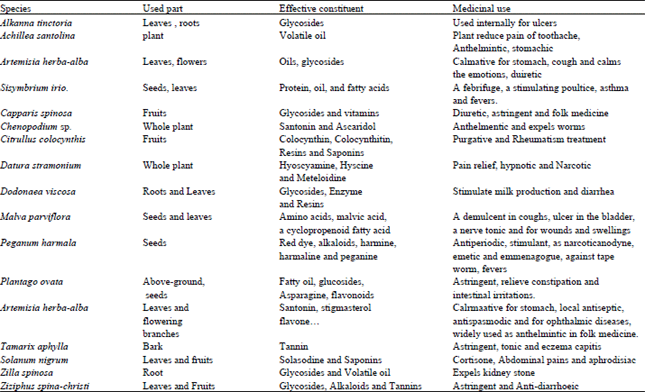
Table 1 shows some medicinal examples from the studied species that are considered a sources for medicine and pharmacological purposes[4-13].
Fuel and timber: The majority of browse species are probably used as fuel in Arid and semi-arid region. In general breakdown of the bush fallow has created such a demand for fuel that the requirements from natural sources can only be met by cropping the trees to destruction within an ever-increasing radius from the center of habitation. Inevitably browse will suffer and stock will be forced to travel further. Alternative sources of fuel or firewood reserves are usually available for the established urban areas, but there is need for stronger awareness of the requirements of smaller settlements.
In general there are three major categories; pole timber for building frames, timber for local domestic uses (such as doors, furniture, boxes etc.), and commercial timber for mining, railway sleepers, bridge and wharf construction[2].
Domestic economy: The multitude of uses to which browse species are subjected in the domestic affairs are very wide. This ranges from cordage, tanning, dyeing, soap making to toothbrushes, fish poisons, oils, and gums.
| Table 1: | Example of medicinal plant, used parts, effective constituent and their uses of the Mediterranean coast of Egypt |
 | |
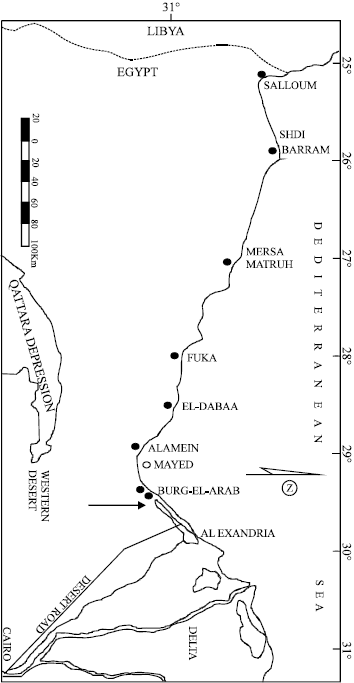 | |
| Fig. 1: | Map of the western Mediterranean region of Egypt. The present study is the region between arrows |
Halophytes, either native or exotic, are liable to many different economic uses in land reclamation and rehabilitation: (grazing plantations as fodder reserves), sand binding and sand dune stabilization, fuel plantations, amenity plantations, street and roadside trees, site protection around cities, villages, airports, in headwaters and watersheds, ground cover, hedging, gardening, low maintenance turfs and golf courses, windbreaks, beekeeping, and even timber production[14-16]. The unrestricted use of roots for cordages, medicine, can however lead to the death of the tree.
These issues are very important for future researches and to conserve the ecosystem. Generally this study would help to transfer and exchange between this region to other one in arid lands of germplasm of different life forms (trees, shrubs, forage, tubers, pulses, fruits and medicinal, salt and drought–tolerant plants), that could be introduced or reintroduce to combat decertification and/or to provide a source of income.
This study aims at: 1) reconnaissance of the species in the study area; 2) recording and listing their present and life forms; 3) collecting detailed information about the importance and role of the useful species in the region by field observation and questionnairing of inhabitants, and 4) address general questions about how knowledge of species role can contribute to local economy for sustainable development and conservation of natural resources.
MATERIALS AND METHODS
The study area: The western Mediterranean coastal region extends for about 500 km. From Alexandria to Sallum. The area is bounded on the north by the Mediterranean sea (Fig. 1). The region may be distinguished into two main physiographic provinces: an eastern province between Alexandria and Ras El Hikma, and the western province between Ras El Hikma and Sallum[17]. The landscape is distinguished into a northern coastal plain and a southern tabeland. The coastal plain in the eastern province is wide and characterized by the presence of a number of alternating ridges and depressions. The ridge are formed of limestone with a hard crystallized crust, and vary in altitude and lithological features according to age. Nine ridges are recognized; the most prominent of which are the coastal, Abu-Sir and Gebel Mariut ridges. These ridges are dissected by numerous shallow erosional valleys, some of which end in the Mediterranean sea and others in depressions. The Western Mediterranean coastal belt is by far the richest part of Egypt in its floristic composition owing to its relatively high rainfall. The number of species in this belt makes up about 50% of the total of the Egyptian flora which is estimated to be about 2080 and more recently as about 2127 species[18,19]. Most of these species are therophytes that flourish during the rainy season, giving the coastal belt a temporary showy grassland desert. During the longer dry period, only the characteristic woody shrubs and perennial herbs are evident; these constitute the scrub vegetation of the area, scattered sparsely in parts and grouped in denser more distinct patches in others.
Species collection and identification: Several locations in different habitats were taken to collect and identify the plant species. There were several visits to record most physiographic variations of the region and to represent all or most of species that occur in different sites through this long peroid.
| Table 2: | Wild plant species recorded in the coastal Mediterranean region, R.r =Rocky ridge, R.pl. = Rocky plateau, In. Fl. Pl. = Inland flat plateau, Cu. ar. = Cultivated area, Wa. = Wadi, DS.= Deep sandy, Sh.s. = Shalow soil |
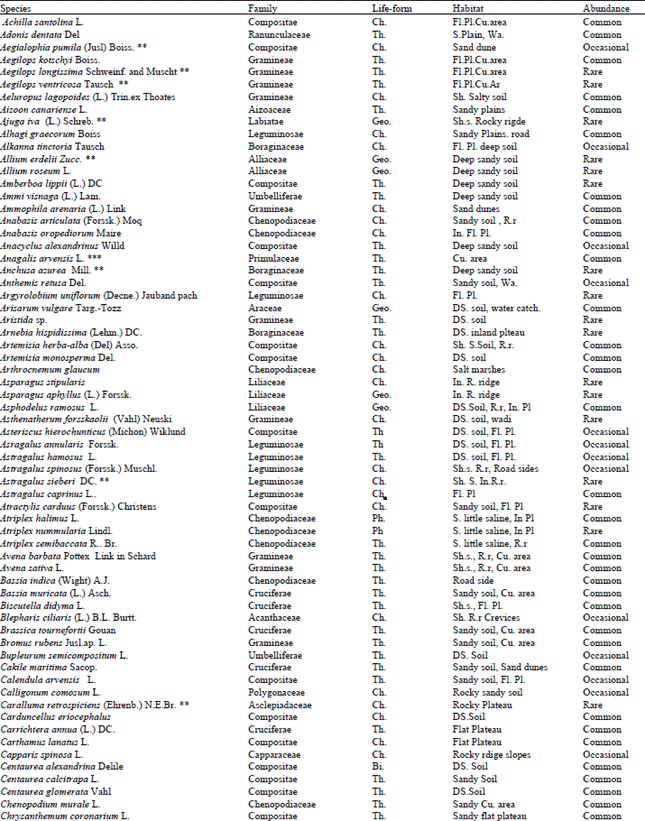 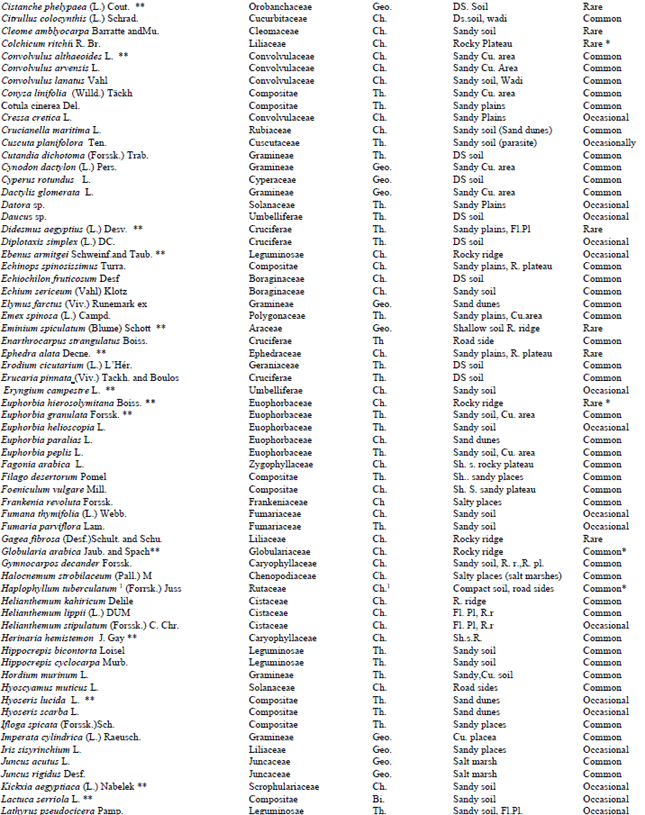 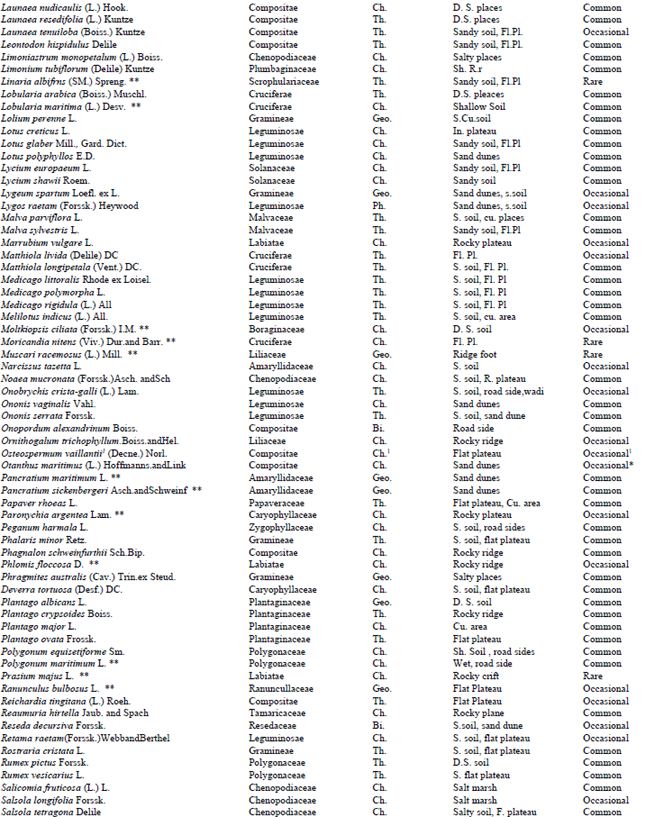 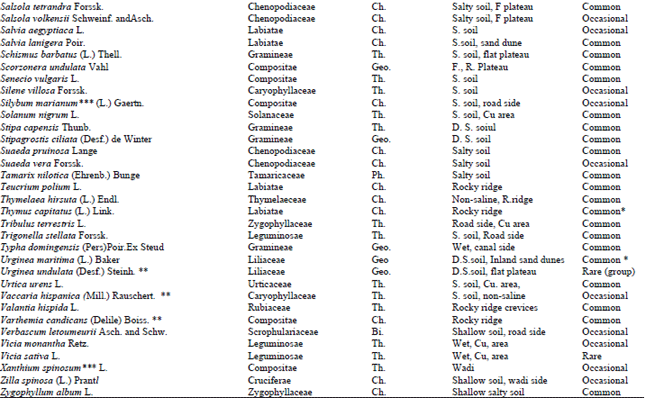 | |
* Under stress of over uses, ** Endangered species and *** introduced species from Delta. Ch. = Chamaephytes, Geo. = Geophytes, Ph. = Phanerophytes, Th. = Therophytes, Bi. = Biannial, 1= Flowering during summer | |
Most of the visits were carried out during the growing seasons to be sure that the survey covering most of the plant species in the study area. Samples from the recorded species were collected and prepared as herbarium sheets for vouchers identification. Floristic identifications are according to Täckholm[18] and the Latin names of species were updated following Boulos[19]. Most of the voucher specimens have been deposited in the Botany Department Herbarium, Faculty of Science, Alexandria University, Egypt.
Several ways were used to get information about the economic or beneficial values of plant species during the field trip visits to the study area extended over 5 years, including: 1- direct observations in the field; 2- preparing questionnaire forms to the inhabitants (especially the eldest). Questionnaire was prepared in order to obtain information about fuel wood, traditional uses of some plant species for treatments; 3- benefit from the previous experience in the field of study; 4- marketing keeper for herbs.
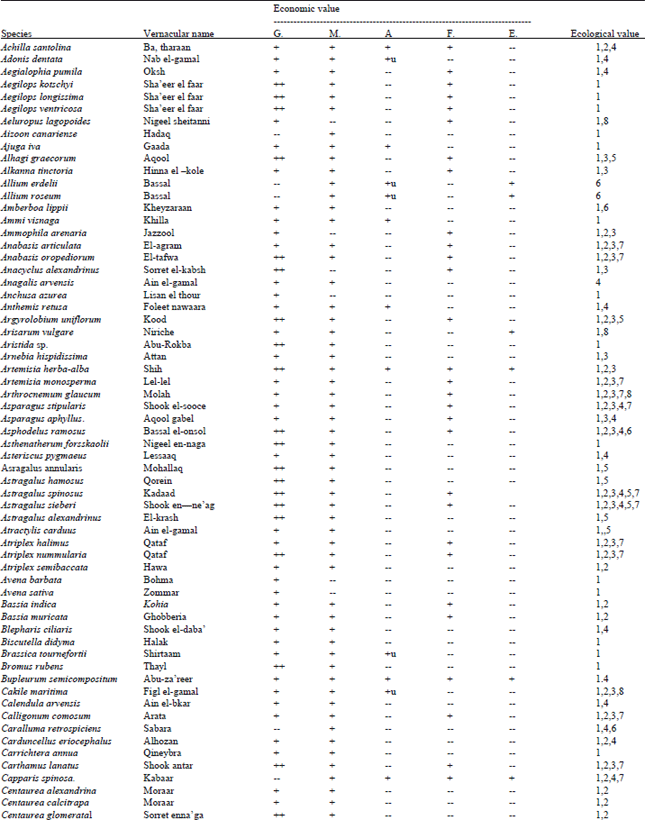
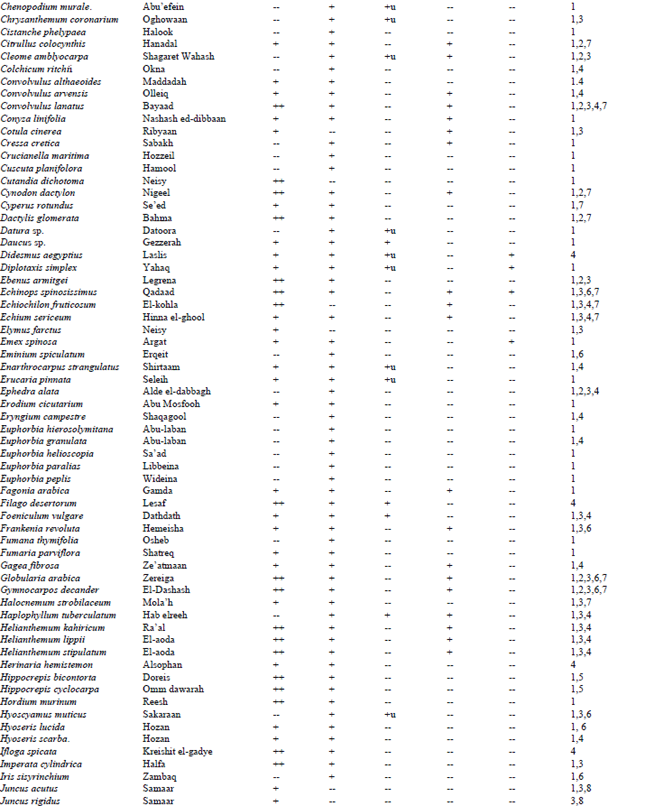
Life biome of the collected species: Table 2 includes 230 species belonging to 48 families, and 159 genera. These species are related to 5 life forms: 45% of the species belonging to chamaephytes and phanerophytes (woody species). The most dominant habitats are flat plateau, sandy plains and rocky ridges followed by salty places and wadis. Some of the plant species occur in road sides and close to cultivated areas. Sixty two percent of these species are common and about 37.9% are rare (includes 24.9% occasional). Sixty percent (includes biennial) of the studied species are perennials where about fourty percent are annuals. The economic and ecological values of the studied species are represented in Table 3. This number of species represents a high percentage of the flora of norther coastal Meditterranean region. Family Compositae has the highest contribution in the studied species (17%) followed by Leguminosae (11.4%). The contribution of Gramineae and Chenopodiaceae are 10.5 and 7.9%, respectively. According to Täckholm[18] the flora of the western Meditterranean desert of Egypt includes almost 50% of the species recorded in Egypt. Boulos[19] reported that 2094 native and neutralized species in Egypt while Täckholm[18] recorded that a very close figure to the 2080 species are belonging to 121 families and comprising 742 genera.
The composition of life-forms reflects the response of vegetation to variation in certain environmental factors.
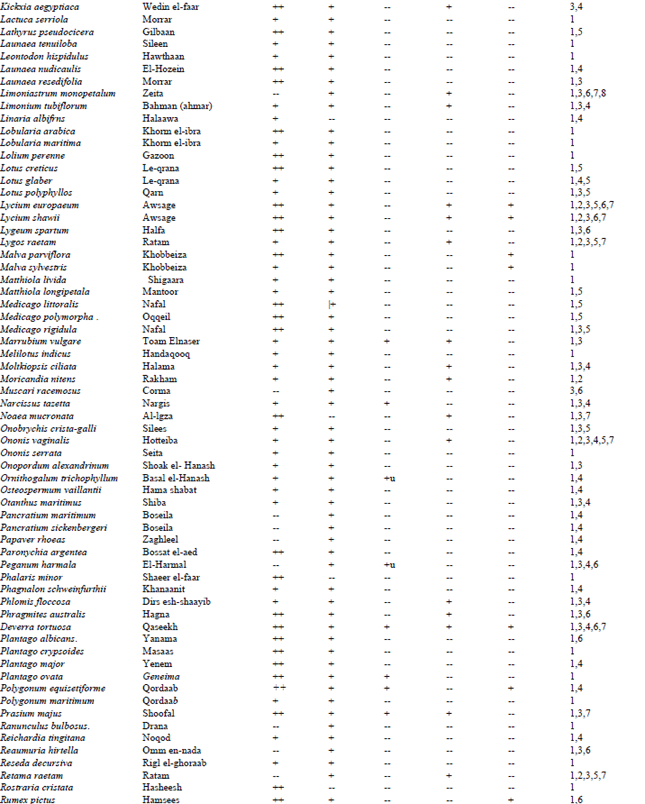
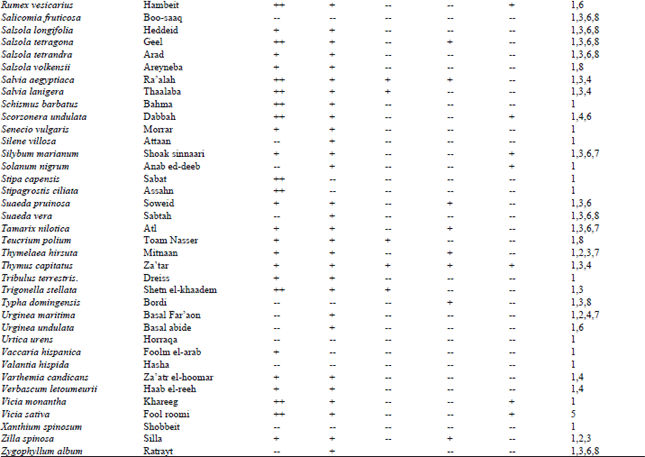
| Table 3: | List of most common species, economic and ecological values in the study area. 1= Sand accumulation, 2= Shading, 3= Windbreak, 4= Esthetic concerns, 5= Soil fertility, 6= Water storage, 7 = Refuge, 8 = Salinity tolerant, G= Grazing, ++ = Highly palatable, M= Medicinal, A = Aromatic source, +u = Unpleasant smell, E= Edible and F= Fuel |
    | |
The life-form spectra is thought to be either hereditary adjustment to environment[20], or represent the residual effects of some historical, climatic or biotic condition on the population of the plant[21]. In this study, chamaephytes are the most frequent life-form in the study area (43%), followed by therophytes (40.2%), geophytes (13%), biennials (2.2%) and phanerophytes (1.8%). The dominance of both chamaephytes and therophytes over the other life-forms in the study area would seem to be a response to the hot dry climate, topographic variations and biotic influence. This agrees with the results obtained by El-Demerdash et al.[22] in the southern region of Saudi Arabia.
Economic and ecological values: In countries having large areas of deserts, like Egypt, the limited number of species, whose habitats are generally at risk, is a better reason for enumeration, description, and conservation. This is because desert plants are hardy and have developed over millennia adaptational mechanisms, including the production of a host of secondary metabolites, to protect themselves from physical and biotic aggressions. These metabolites are the stuff of the medicinal uses of these plants. Conservation of desert plants for medicinal uses is therefore a must and requires a through knowledge of their morphology, taxonomy, ecology, physiology and biochemistry[19].
There is a shortage of information about the multipurpose uses of natural species. Many substances that we use in our daily lives are plant products. Although there are a lot of uses of plant species still unknown. Numerous medicines, many industrial products are derived from plant products. Most of all are the edible plant products that form the food base of human culture.
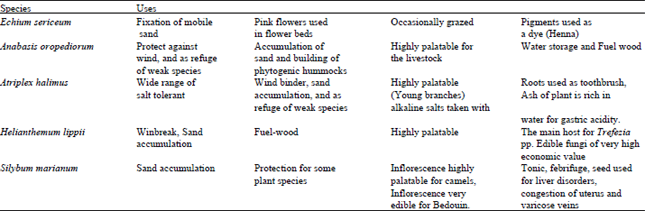
This work is a preliminary study and it deals with the economic values of natural resources especially plant species. Economic values are classified as medicinal, aromatic (e.g. used in perfumery), forage, edible or as fuel. On the other hand, the ecological value of the plants in desert ecosystem includes (sand accumulation, shading, esthetic concerns, soil fertility, windbreak. It also serves as refuge for some plant species particularly the rare species (e.g. Didesmus aegyptius, Rumex vesicarius and Valantia hispida). This may be conceive the biodiversity of the species and for water storage. Information about the multi-uses of plant species in this study mainly depends on the actual observation and the main sources are herders, house hold managers, farmers and marketing men. Most of the plant species have a medicinal and or grazing value[23-25]. Eighty nine percent of the species in the present study have a medicinal value as extracted or direct herb (e.g. folk medicine for skin diseases, gastro-intestinal troubles, sedative for cough, fever, diuretic, dysentery, and purgative effects) and 80% of them as forage (40% of them highly palatable plant species) for the livestock (Table 2). About 10.5% of the species are edible by human and birds, 16.6% are aromatic sources while, more than 31% are used as fuel wood. More than 89% of the studied species have multi-ecological uses, beside other uses such as nitrogen fixation, refuge for weak plants species, salinity tolerant, purification of the air and microclimate effects. Table 4 illustrated multi-uses of some studied species.
On the other side, it is possible to summarized the results of economic and ecological values as percentages in the following Table:
 G. = Grazing value, M. = Medicinal value, A. = Aromatic resources, E.= Edible, F. = Fuel wood, S.= Sand accumulation, Sh.= Shading W.= Windbreak, Es.= Esthetic concerns, So.= Soil fertility, Wa.= Water storage, R.= Refuge, Sa.= Salinity |
Destructive exploitation is something justified on the basis of a philosophical belief that man has a God-given right[31] to have dominion over the land and animals there in. When tribal or familial rights to overuse fodder trees and shrubs for various purposes are not questioned, problems are created for future generations by narrowing the margin of safety for maintaining this renewable natural resource. When multiple use can be justified and managed, it should be encouraged because the additional uses help to better justify or support the principal use. Greatest returns to the communities that depend on plants for a livelihood can be realized if multiple use management is practiced on a sustained yield basis.
The main contributions of ligneous species to the lives of people and animals in the Coastal Mediterranean region are: a) to supply animals with the protein, minerals and vitamins necessary in a well-balanced diet for the flocks and herds, which must survive in dry season; b) to produce firewood and charcoal, c) to supply wood for building and fencing; d) to produce wood and fibre for making tools and utensils; e) to produce fibres for clothing, wickerwork, rope and other uses; f) to produce various foodstuffs for human consumption (fruit, spices, fat, etc); g) to produce medicines, dyes, tannin and other materials; h) to provide shade and act as a micro-climate for plants, animals and soils and to prevent wind and water erosion; I) to provide a means of increasing or maintaining soil fertility and productivity and the long-term balance of highly sensitive ecosystems.
Forage trees and shrubs play an essential and multiple role in the balance of the arid and semi-arid grazing systems exploited by man and his animals. This role becomes more important especially in the dry seasons[26,27]. However, shrubs and sub-shrubs are seriously threatened, especially in coastal habitats, owing to the combination of a number of natural and anthropogenic factors: such as a) periodic droughts; b) the fast growth of human and animal populations, leading to over exploitation; c) the development of development of bush-clearing and the fast growing expansion of cultivated areas; d) the tendency of previously nomadic or transhumant populations to become sedentary leading to a constantly increasing pressure by man and his animals etc.
| Table 4: | Some plant species and their uses |
 | |
The various activities have different impacts. Generally speaking, crop expansion, overgrazing, and firewood collection are the most harmful, and are responsible for 80 % or more of the havoc[28]. In the study area, 37 species rated as endangered species due to human impact or decertification (7 species urgently needed to prevent overuses by human) comparing with 10 species were recorded in the Omayed observatory area[29]. On the other hand, due to unmanagement of the land used 3 species were recorded as exotic (introduced) from cultivated region (Delta).
There are direct and indirect causes for ecosystem degradation and species impoverishment in the study area. The direct causes are related mainly to the ways in which man has used and misused the natural resources since its early history. More recent, land use activities are even more devastating[30]. Evaluation of the effects of the environmental factors threatening the wild life should be also taken in consideration.
REFERENCES
- Henneidy, S.Z., 2002. Browsing and nutritive value of the most common range species in Matruh area, the coastal Mediterranean region, Egypt. Oecologia Mediterranea, 28: 39-49.
Direct Link - Ayyad, M.A., 1973. Vegetation and environment of the Western Mediterranean coastal land of Egypt: I. The habitat of sand dunes. J. Ecol., 61: 509-523.
CrossRefDirect Link