

Zaidon Ashaari
Department of Forest Production, Faculty of Forestry, Universiti Putra Malaysia, 43400, Serdang, Selangor, Malaysia
Nazri Mamat
Department of Forest Production, Faculty of Forestry, Universiti Putra Malaysia, 43400, Serdang, Selangor, Malaysia
Pakistan Journal of Biological Sciences
Year: 2000 | Volume: 3 | Issue: 9 | Page No.: 1453-1458





ABSTRACT
Deterioration of Malaysian bamboos against biodeterioration agents and their service life have not been widely explored. This paper reveals the effect of traditional treatment on the resistance of selected bamboos towards white rot fungus and their durability in service. Bamboo culms of Dendrocalamus asper (Buluh betong), Bambusa vulgaris var. Striata (Buluh kuning) and Gigantochloa wrayi (Buluh beti) were soaked in running water for 2 and 3 weeks. The untreated cub) served as control for comparison. Each treatment group comprises 45 samples per species. The starch content of the bamboo was chemically analysed using UV-spectrophotometer. Higher starch content was found in untreated than the water-treated ones. The starch content reduced as the soaking period increases. The starch content for D. asper was 2.78% w/w, for G. wrayi was 2.28% and for B. vulgaris was 1.85%. After 3 weeks of soaking in water, the starch reduced to 0.7%, 0.93% and 0.73%, respectively. The weight loss of bamboo culms caused by white rot fungus (Pycnoporous sanguineusl and their service life were evaluated in accordance with ASTM Standards. The average weight loss for the untreated bamboo ranged from 13.2-15.9% and these values decreased as the soaking period increases Deterioration of bamboo caused by decay and termite can be seen as early as three months of exposure in the ground. Decay on water-treated bamboo was much slower than on untreated. But for termite attacks, there is no definite trend. Among the three species, G. wrayi sustained the longest service life when in contact with ground.
PDF Abstract XML References Citation
How to cite this article
Zaidon Ashaari and Nazri Mamat, 2000. Traditional Treatment of Malaysian Bamboos: Resistance Towards White Rot Fungus and Durability in Servicea. Pakistan Journal of Biological Sciences, 3: 1453-1458.
DOI: 10.3923/pjbs.2000.1453.1458
URL: https://scialert.net/abstract/?doi=pjbs.2000.1453.1458
DOI: 10.3923/pjbs.2000.1453.1458
URL: https://scialert.net/abstract/?doi=pjbs.2000.1453.1458
INTRODUCTION
Bamboos are particularly important for the people in the tropical Asia where they are found in greatest abundance and variety. Its remarkable growth rate and versatile properties have made it one of the most sought after materials.
Bamboo, like most lignocellulosic materials has very low resistance to biological degrading agents. The culms are liable to attack by insects, termites and at above fiber saturation point, they can be deteriorated by stain and rotting fungi. The natural durability of bamboo depends on species, age, carbohydrate content, moisture content, specific gravity, climatic conditions and type of use (Liese, 1985; Kumar et al., 1994). Bamboos have minor amounts of resins, waxes and tannins. None of these have enough toxicity to impart any natural durability. On the other hand, the presence of large amounts of starch makes it more attractive to biodeterioration agents (Mathew and Nair, 1990; Gnanaharan et al., 1993). Bamboos should be treated before they are put into service. They can be treated either by chemical or non-chemical agents to prolong their service life Othman et al., 1995). Chemical treatments which include brushing, spraying, butt-treatment, sap displacement method, vacuum, hot and cold bath and by fully-or empty-cell processes have been explored (Kumar et al., 1990; Sulthoni, 1985; Zaidon et al., 2000). These approaches are effective, but expensive. In many cases the chemicals used are hazardous to health particularly when proper precautionary measures on handling, storage and disposal are not taken.
Traditional treatments such as soaking in water, smoking and curing to preserve bamboo has been widely practised by the small-scale bamboo industries in Malaysia. The most popular treatment is soaking the bamboo in running water for a period of time. This treatment is reported to be associated with starch depletion (Kumar et al., 1994) and thus reduces the degree of insects and fungi attacks. Though this treatment has long been used, the impact on the resistance towards decay fungi has not been comprehensively studied. In addition, systematic data on natural durability of Malaysian bamboo species when there is ground contact are very limited.
This paper reveals the effect of water treatment on the resistance of selected Malaysian bamboos towards white rot fungus and their durability in service.
MATERIALS AND METHODS
Dendrocalamus asper (Buluh betong), Bambusa vulgaris var. Striata (Buluh gading) and Gigantochloa wrayi (Buluh Beti) which are amongst the most exploited bamboo species in Malaysia were used in this study. Three matured culms for each species were extracted from Hulu Langat Forest Reserve, Selangor. Each culm was cut into three equal portions, i.e., basal, middle and top portions and were transported to the Faculty of Forestry, Universiti Putra Malaysia.
The culms were further cut into 60 cm long samples. For each species, a total of 45 samples were produced. The samples were divided into three groups in which each group should contained equal number of culms from different height portions. Group 1 and 2 were soaked under running water for 2 and 3 weeks, respectively. The other group was not soaked and was used as control.
Analysis of Starch in Bamboo: The starch content in the bamboo was determined by colorimeteric measurement of the colour formed in the reaction of starch and iodine (Humphreys and Kelly, 1961). Two small samples of bamboo were cut from each sample of different treatment groups. The first sample was used for the determination of moisture content (MC) and specific gravity (SG) and the other sample for the analysis of starch content in the bamboo. They were separately cut into match-stick size prior to grinding into sawdust using Wiley mill. Fine sawdust which was passed through No. 200 mesh sieve was collected for the analysis of starch content. The starch present was leached from the sawdust according to the standard procedure (Humphreys and Kelly, 1961). The optical density of the colour absorption was measured against a reagent blank (prepared in a similar way with the omission of the sawdust) in 1 cm cells at 650 μm on a UV spectrophotometer. The concentration of starch in the original sawdust was calculated from a standard calibration curve using the equation derived by Humphreys and Kelly (1961).
A standard laboratory procedure (ASTM D 2359-69) was followed for the determination of MC and SG (Anonymous, 1972). The pieces were weighed separately before (W1) and after drying (W2) in an oven at 103±2°C for 24 h. The oven-dried pieces were coated with molten paraffin wax prior to the determination of volume (Vad) using weight displacement method. These data was used for the determination of MC ((I*-W2)/W2)×100) and SG (W2/Vod).
Preparation of sample for durability tests: Two types of test were employed to evaluate the durability of the bamboo. The tests were standard accelerated laboratory test and field test (Graveyard test). The first test was carried out to determine the durability of the bamboo against white rot fungus (Pycnoporous sanguineus Wulfex Fries) whilst the latter was conducted to determine the service life of the bamboo.
The laboratory test was carried out using the method specified in the American Standard of Testing Material (ASTM D201771) (Anonymous, 1972). The efficacy of the treatment was evaluated based on the percent weight loss caused by the degradation of the bamboo by the fungus. Five test blocks, 14 mm×14 mm were randomly selected and cut from each treated and untreated culms and conditioned in a conditioning room until they reached constant weights. The weights were measured and the blocks were placed in culture bottles containing white rot mycelium. The bottles together with their contents were then left in an incubating room maintained at 25 ±2°C and 65-75% relative humidity. At the end of the test period (after the 12th week), the test blocks were removed from the bottles and the mycelium adhered on the surface of the blocks were brushed off. They were again left in the conditioning room until their weights were constant. The percentage weight loss (((W.-Wb)/×100) from the conditioned weight before (W8) and after exposure (Wb) was calculated. The results obtained were classified into four classes of degradation resistance: 0-10% weight loss is classified into Class A (highly resistant); 11-24% weight loss, Class B (resistant); 25-44% weight loss, Class C (moderately resistant) and above 45% weight loss, Class D (slightly/non resistant) (Anonymous, 1972).
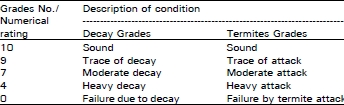
For the graveyard test, stake of 19 mm wide×thickness of the culm wall x 460 mm long were used. For each species, a total of fifteen stakes were prepared for each treatment group. The stakes were labeled, weighed and were air-dried until constant weight in the laboratory (MC between 15-16%): All stakes were brought to a testing ground at Air Hitam, Forest Reserve, Puchong, Selangor and were installed in a ground at a depth of 230 to 250 mm to a legible groundline mark. The spacing between each stakes was not less than 300 mm and 600 mm between rows. The first inspection of the stakes was done 3 months after installation. The results discussed in this paper is only up to 6 months after installation. The grading system of the graveyard test are as follows:
 |
| Source: (Anonymous, 1974) |
Results and Discussion
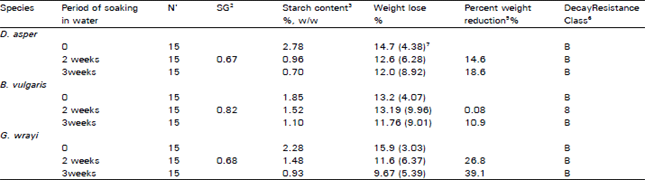
Starch Content in Bamboo Cuims: The mean starch content values in the untreated and water-treated bamboo culms are shown in Table 1. For the untreated bamboo culm, D. asper had the highest starch content (2.78%, w/w) followed by G. wrayi (2.28%) and B. vulgaris (1.85%). All species show a reduction in starch content after soaking under running water for a period of time. After two weeks of soaking, the starch content values for D. asper was reduced by 66.5 to 0.96% w/w, whilst for G. wrayi was reduced by 35.1 % to 1.48 % w/w. A low reduction of starch content was recorded for B. vulgaris culm after two weeks of soaking. The value was reduced by 17.8% to 1.52% w/w. After 3 weeks of soaking, the starch content in D. asper G. wrayi and B. vulgaris were reduced to 0.7%, 0.93% and 1.10% w/w, respectively.
The lower starch content found in G. wrayi was very much associated with the higher specific gravity (0.82) of the culm. Many researchers agree that the specific gravity of a bamboo culrn is inversely related to the parenchyma cells, the cells which manufacture and store food including starch (Liese, 1987; Mohmod, 1996; Jamaludin et al., 1992).
The overall values found here, however, are relatively Iciwer than the average values in the mature culms of some bamboo found in previous studies (Jamaludin, 1999; Zaidon et al., 2000). The mean values were in the range of 2.7-7% w/w. There are two possible explanations for this discrepancy. Firstly, it might be due to the time of felling the bamboo. Tomalang et al. (1980) pointed out that climatic season influences the amounts of water soluble material (starch) in the bamboo culms. The water soluble contents are higher in the dry season than in the rainy season. Secondly, it might be due to the age of the bamboo (luring felling. Since the bamboo plants harvested for this study have grown wild, the exact age of the material was not known. According to Kumar et al. (1994), water soluble material varies with age. Jamaludin (1999) found that water soluble contents in the culm of Gigantochloa scorthecinii Increase as the age of the bamboo culm increases until maturity. Normally, bamboo matures at 3-4 years (Kumar et al., 1994).
The reduction of starch after soaking for 2 weeks are relatively lower compared to the values found in the previous study (Zaidon et al., 2000). The authors found that the reduction of starch ranged between 58-66%, However, in the previous work, bamboo strips were used instead of whole bamboo.- It was believed that the strips would provide more surface area for the water to penetrate and dissolve the starch, whilst the epidermis in the bamboo culm would restrict the flow of water.
Resistance of treated bamboo towards white rot fungus: The analytical data for the weight loss caused by the white rot fungus (Pycnoporous sanguineus) in the treated and untreated bamboo are given in Table 2. After 12 weeks of exposure to the white rot, the untreated G. wrayi blocks showed the greatest deterioration with a weight loss of 15.9%. This is followed by D. asper (14.7%) and the least deterioration was found in B. vulgaris (13.2%). These values fell within the range of 11-24% (Class B) which is classified as resistance to fungi (Anonymous, 1974). The least deterioration found in G. wrayi was probably attributed to the lowest starch content (1.85% w/w) in the bamboo when compared to the other two species.
| Table 1: | The average starch content (%, w/w) in the bamboo culm of each species and the weight loss caused by the deterioration of white rot fungus (Pycnoporous sanguineus) |
 | |
1No. of samples, 2Specific gravity (based on dry volume), 3Analysed using UV spectrophotometer, 4Determined using Equation 1, 5Weight reduced from control, 6Decay resistance class (Anonymous 1974) and 7Standard deviation | |
| Table 2: | Decay grades of bamboo stakes after 3 and 6 month of exposure in the soil |
 | |
| 10, 9, 7, 4, 0 are grade number, ()-number of stakes, [] = percent grade of stakes | |
| Table 3: | Termite grades of bamboo stakes after 3 and 6 month of exposure in the soil |
 | |
| 10, 9, 7, 4, 0 are grade number, ( )= number of stakes, [ ] = percent grade of stakes | |
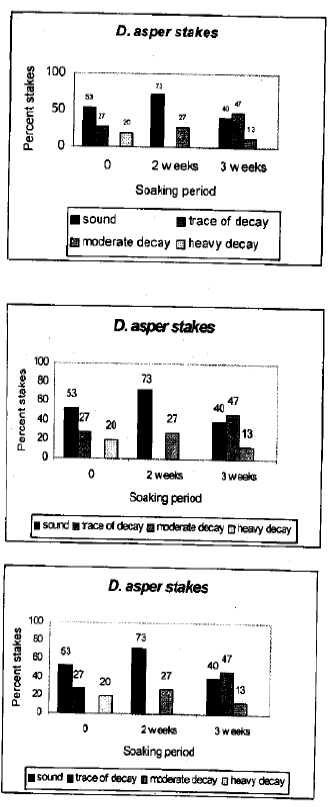 | |
| Fig. 1: | The percentage of bamboo stakes with different decay grades after six months exposure in the soil |
However, for the other two species, no definite trend was observed on the deterioration in relation to the starch content. Mohmod et al. (1996) stated that starch content is not the only factor that contributes to the fungal attack. Others such as age and chemical constituents in the bamboo would also influence the fungal attack.
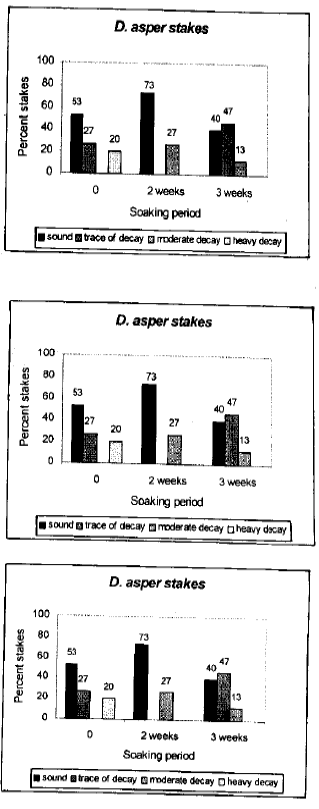 | |
| Fig. 2: | The percentage of bamboo stakes with termite grades after six months exposure in the soil |
Reducing the starch content in the bamboo managed to reduce the deterioration caused by the white rot f ungus. As can be seen from Table 2, the weight loss for all bamboo culms decreases as the starch content decreased due to the water treatments. The highest reduction of weight loss was found for G. wrayi, i.e., by 26.8% and 39,1%, respectively after 2 and 3 weeks of soaking under running water. The lowest reduction was for B. vulgaris. The weight loss values were reduced by 0.08% after 2 weeks and 0.9% after 3 weeks of soaking. For D. asper blocks, the weight loss values were reduced by about '14.6-18.6% after 2-3 weeks of soaking. The treatment systems, however, did not increase the resistance class of the bamboo calms (Class B) except for G. wrayi which was treated for 3 weeks (Class A).
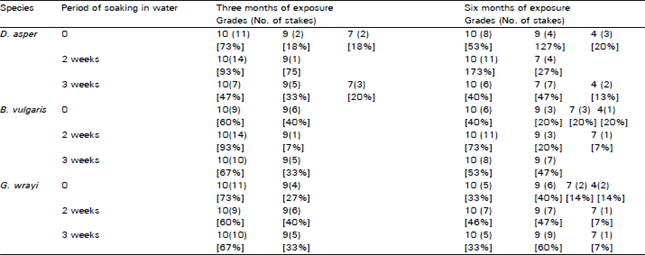
Durability of bamboo in service: Stakes were examined for decay and termite attacks after 3 and 6 months of exposure. Table 3, summarizes the decay grades of the bamboo whilst Fig. 1 illustrates the percentage of stakes with different decay grades after 6 months of exposure in the soil.
At the end of the third month, about 73% of untreated G. wrayi and D. asper and 60% of B. vulgaris were still in sound state (Grade 10). A trace of decay (Grade 9)was seen in 18% of D. asper, 27% of G. wrayi and 40% of B. vulgaris. A moderate decay (Grade 7) was only recorded in untreated D. asper (18%). Among the 2 weeks water-soaked stakes, about 60-93% of all species were still in sound state. The rest (7-40%) were slightly decayed. A remarkable lower percentage of sound grade w as observed in all species (47-67%) which had been water soaked for 3 weeks. About 33% stakes of each B. vulgaris and G. wrayi and D. asper stakes show a trace of decay, However, for D. asper another 20% of the stakes was moderately decayed. After the sixth month, the sound untreated stakes for all species decreased to about 33-53% (Fig. 1). The worst condition observed on the untreated stakes was heavy decay (Grade 4). It is about 14-20% for all species. Stakes which had been treated with water, generally retain a higher percentage of Grades 10 and 9 compared to the untreated stakes. For two and three weeks water-treated stakes, all species maintained about 73-93% and 87100%. respectively Grade 9 (trace of decay) and more. The rest (7-27%) were Grade 7 (moderate decay).
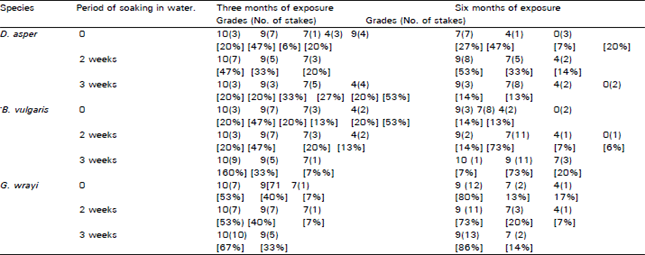
Table 3 and Fig. 2 illustrate the termite grades of bamboo after 3 and 6 months of exposure in the soil. After three months of exposure, the termite grades recorded on the stakes vary from sound (Grade 10) to heavy attack (Grade 4). About 20-67% of all species regardless of treatment processes maintained their original state (Grade 10). The worst condition was heavy attack (Grade 4) possessed by D. asper (20-17%) and B. vulgaris (13%) stakes.
In the long term exposure, a majority of the stakes, regardless of the treatment processes, had Grade 9 and less (Fig. 2) except for only 7% of the 3 weeks water-treated B. vulgaris which maintained its sound state (Grade 10), In fact, itiout 13-20% of D. asper and 6-13% B. vulgaris stak, s regardless of treatment processes, failed due to termite attacks (Grade 0). G. wrayi stakes were the most resistant to termite attack compared to the other two species. The lowest grade possessed by this species was Grade 4.
From the above observation it can be revealed that the treatment of bamboo with water has a significant effect on enhancing durability against decay fungi. However, there is no definite trend of damage caused by termite with treatments. This phenomenon has been anticipated due to the fact that termites depend merely on cellulose rather than starch for source of food (Sajap et al., 2000).
Conclusion:
The original starch content of the three bamboo species studied ranged from 1.85 to 2.78%. D. asper had the highest starch content followed by G. wrayi and B. vulgaris. Soaking of bamboo culm in running water significantly reduced the starch content. The reduction of starch in bamboo is positively related with the period of soaking. Three weeks of soaking managed to reduce 41-75% of starch content in the bamboos.
As regards of durability against decay fungus, the untreated bamboos fall in the Class B (resistance against decay). The durability of bamboo increased as the starch content decreases. Deterioration of bamboo caused by decay and termite can be seen as early as three months of exposure in the ground. Decay on water-treated bamboo was much slower than on untreated. But for termite attacks, there is no definite trend on treated and untreated bamboo, Among the three species, G. wrayi sustained the longest service life when in contact with ground. Based on the findings, the three selected bamboos should not be used in ground contact without chemical treatments.
REFERENCES
- Sajap, A.S., S. Amit and J. Welker, 2000. Evaluation of hexaflumuron for controlling the subterranean termite Coptotermes curvignathus (Isoptera: Rhinotermitidae) in Malaysia. J. Econ. Entomol., 93: 429-433.
CrossRefDirect Link - Humphreys, F.R. and J. Kelly, 1961. A method for the determination of starch in wood. Anal. Chim. Acta, 24: 66-70.
CrossRefDirect Link - Jamaludin, K., H.A.A. Jalil, A.J. Ashar and A.L. Mohmod, 1992. Variation in specific gravity of 1-, 2-and 3-year-old Gigantochloa scortechinii (buluh semantan). Proceedings of the 1st National Bamboo Seminar on Towards the Management, Conservation, Marketing and Utilization of Bamboos, November 2-4, 1992, Forest Research Institute Malaysia, Kuala Lumpur, pp: 182-185.
- Zaidon, A., S.M. Hamami and Y. Norzaliza, 2000. Improvement of bamboo resistance against stain fungus by water soaking. Proceedings of the International Bamboo Seminar, August 2-4, 2000, Chiangmai, Thailand, pp: 154-163.
Direct Link