

M.G. Gitahi
Department of Food Science, Nutrition and Technology, University of Nairobi, P.O. Box 29053-00625, Kangemi, Nairobi, Kenya
J. Wangoh
Department of Food Science, Nutrition and Technology, University of Nairobi, P.O. Box 29053-00625, Kangemi, Nairobi, Kenya
P.M.K. Njage
Department of Food Science, Nutrition and Technology, University of Nairobi, P.O. Box 29053-00625, Kangemi, Nairobi, Kenya
Research Journal of Microbiology
Year: 2012 | Volume: 7 | Issue: 6 | Page No.: 297-308





ABSTRACT
Street foods play a significant role in feeding urban populations with cheap, accessible and nutritious foods. Most street foods vendors are not trained on food hygiene and safety. Consumption of street food can lead to food poisoning and food borne illnesses. Although studies on safety of street foods have been carried out in most developing countries, not much has been done in Nairobi Kenya. Fifty six samples classified using seven modified FAO food groups from 29 vending stalls were evaluated to investigate microbial safety of street foods. Standard microbiological methods were used for isolation, enumeration and identification of bacteria. Salmonella was not detected in all food samples. E. coli was qualitatively isolated in 3 food samples from 2 locations. Expressed in log10 colony forming units/gram, total coliforms were detected in vegetables of all locations at unsafe levels of 4.48 and 4.3 for Staphylococcus aureus. Total Enterococci were 2.50 and total counts at 4.71. Meats from one location had Staphylococcus aureus 4.10 log10 CFU g-1 above acceptable limits of 4.00. Mixed dishes, cereals, legumes, starchy roots and beverages were safe for consumption. Using microsatellite primer confirmed each isolated group Enterobacter aerogenes, Enterococci species and Staphylococcus aureus were related. Staphylococcal enterotoxins d and g were in Staphylococcus aureus not isolated. Vegetable foods preparations require improvement as most were served uncooked as salads. The presence of microorganisms in street foods suggests hygiene practices should be improved.
PDF Abstract XML References Citation
Article History
Received: June 20, 2012;
Accepted: September 05, 2012;
Published: October 05, 2012
How to cite this article
M.G. Gitahi, J. Wangoh and P.M.K. Njage, 2012. Microbial Safety of Street Foods in Industrial Area, Nairobi. Research Journal of Microbiology, 7: 297-308.
URL: https://scialert.net/abstract/?doi=jm.2012.297.308
URL: https://scialert.net/abstract/?doi=jm.2012.297.308
INTRODUCTION
FAO (2009) defines street food as food sold at various points to ease consumer access at a low cost affordable by the poor. Latham (1997) further notes that millions of people depend on a wide variety, accessible and cheap street food on daily basis. Food safety is the assurance that food will not cause harm to the consumer when prepared and consumed according to its intended use (WHO, 2001). Food safety is a progressively more essential global public health concern (WHO, 2007). WHO (2010) stated that millions of people fall sick or die as a consequence of eating unsafe food. Food borne and waterborne diarrhea diseases are principal causes of illness and globally kill an estimated 2.1 million people per year, mostly children in developing countries (WHO, 2001). WHO (2007) noted that everyone is at risk of food borne illness. Ready to eat foods and food preparation surfaces may be reservoirs for microbial contamination (Mankee et al., 2005; Ghosh et al., 2007; Christison et al., 2008). Various microorganisms of public health concern including faecal coliforms, Escherichia coli, Staphylococcus aureus, Salmonella species and Bacillus cereus have been tested in street foods of some African countries. Escherichia coli and Staphylococcus aureus were recovered in proportions of the food, water, hands and surface swabs tested in Harare, Zimbabwe (FAO/WHO, 2005). Street foods can in addition be sources of enteropathogens (Mensah et al., 2002). Cooked food should contain no more than 106 CFU g-1 TVC, E. coli should not exceed 10 CFU g-1 upon analysis (KBS, 2003), 104 CFU g-1 of Enterobacteriaceae and greater than 104 CFU g-1 of Staphylococcus aureus (Gilbert et al., 2000; NSW Food Authority, 2009). However there are limited studies on specific hazards posed by microorganisms of public health concern in street. Pathogenicity and virulence of an organism are regulated by virulence coding genes present in the genomic regions known as pathogenicity islands (Hacker and Kaper, 2000). Contamination of food with enterotoxigenic Staphylococcus aureus causes Staphylococcal enterotoxins (SEs) intoxication when growth and toxin production conditions are met which is associated with symptoms like vomiting and diarrhoea. Major serological enterotoxins that have been characterized are: Staphylococcal enterotoxin a Staphylococcal enterotoxin b Staphylococcal enterotoxin c Staphylococcal enterotoxin d and Staphylococcal enterotoxin e (Robbins et al., 1974) and recently Staphylococcal enterotoxin g, Staphylococcal enterotoxin h, Staphylococcal enterotoxin i, Staphylococcal enterotoxin j, Staphylococcal enterotoxin k, Staphylococcal enterotoxin l, Staphylococcal enterotoxin m, Staphylococcal enterotoxin n, Staphylococcal enterotoxin o, Staphylococcal enterotoxin p, Staphylococcal enterotoxin q and Staphylococcal enterotoxin u (Letertre et al., 2003) studies on strain distribution are important in order to reveal influence of hygiene and diversity or commonality of contamination sources.
This study was carried out to evaluate the microbial safety of street food prepared and vended on site in the streets of Industrial area, Nairobi. No information is also available on the virulence or pathogenicity of microorganisms isolated from street food matrices. There was need to study the strain distribution and pathogenicity of presumptive food pathogens.
MATERIALS AND METHODS
Study design and study area: This was a cross sectional study carried out between March and August year 2011. The study was carried out in Industrial area, Nairobi city Kenya (Coordinates: 1°17'S 36°49'E). Nairobi is the largest city in East Africa with 3.1 million people and an annual population growth rate of 4% (KNBS, 2010). The eating places with food prepared on site in the major roads with street food in the Industrial area were selected to form the study area as follows. These included Enterprise road, Lunga lunga road, Likoni road, Nanyuki road and Ricky road.
Sampling procedure and sample size: The sampling was purposive based on availability of street vended food prepared on site in the major roads of Industrial area of Nairobi city. Seven modified FAO food groups (FAO, 2011) in Table 1 including; cereals, mixed dishes, starchy roots, beverages, vegetables, meats and legumes were sampled. Sample size was calculated as per Pfeiffer (2002) using a prevalence of 5% in microbial contamination as reported by Muganga (2001) on street food. Therefore, 56 samples were sampled and analyzed in this study. Food samples were collected in sterile polythene bags. All samples were transported to the University of Nairobi department of Food Science, nutrition and technology microbiology laboratory within three hours of collection on ice in cooler boxes.
Microbial analysis: Samples were blended by use of a stomacher (400 laboratory blender type BA 7021 England, Senard Medical London SEI IPP UK). Serial dilutions were prepared, vortexed (Genie, Bender and Hobein AG Zurich, Switzerland) and then, inoculated on selective media.
| Table 1: | Modified FAO grouping for food used in this study |
 | |
| aPepper, cabbages, capsicum, carrots, tomatoes and red onion grated, bRuminants intestines casing and stuffed with blood and minced meat (FAO, 2011) | |
Enumeration was then done (Gerber and co. AG Zurich, Suisse) after incubation for plates with 30-300 colonies. Isolation was then done based on colony morphology followed by purification by streaking three times. Gram reactions (3% KOH), catalase reaction (3% H2O2; VWR International), and coagulase test for Staphylococcus aureus were then performed. Plate Count Agar (Oxoid Ltd., England) was used for enumeration of total plate count by pour plate method. Violent Red Bile Agar (VRBA) (Himedia Laboratories pvt, India) was used for enumeration of total coliforms (spread plate). Pinkish-red colonies were enumerated to indicate total coliforms. Verification of rod shaped by microscopy, catalase test (3% H2O2, VWR International), gram reactions (3% KOH, Sigma-Aldrich) tests were done to characterize Enterobacteriaceae. Specific coliform organisms were differentiated with IMViC tests (Harrigan and McCance, 1976). Tellurite agar was used for enumeration of Enterococci species (pour plate method for 42°C for 24 h). Colonies were enumerated to indicate total Enterococci after incubation for 24 h at 42°C. Baird Parker Agar (Himedia Laboratories pvt, India) was used for enumeration of Staphylococcus aureus. Typical colonies 2-3 mm in diameter, jet black to gray black surrounded with an opaque halo and clear zone were enumerated to indicate presumptive Staphylococcus aureus after incubation for 24 h at 37°C. Eosin Methyl Blue Agar Levine (Oxoid Ltd, England) was used for qualitative test of presence of Escherichia coli. Metallic green colonies indicated presence of Escherichia coli. For Salmonella species, pre-enrichment was done using sterile lactose broth. This was incubated at 37°C for 24 h. Ten milliliter of pre enrichment was aseptically pipetted and transferred into a jar with 100 mL sterile Tetrathionate broth (Himedia Laboratories pvt, India) and selenite cystine broth (Oxoid Ltd, England) for each and incubated at 37°C for 24 h. The resultant broth was streaked onto three Salmonella differential media. Brilliant green phenol lactose agar (Himedia Laboratories pvt, India), Bismuth sulphate agar (Oxoid Ltd, England) and Desoxycholate citrate agar (Oxoid Ltd, England). The typical colonies for all microbial groups were purified by streaking three times on selective media and stored 0.25 M sucrose solution at -44°C.
DNA extraction: The preserved isolates were thawed and cultured on the respective selective media. Sixty four isolates of Enterobacteriaceae, 33 of Staphylococcus aureus and 23 of Enterococci species were isolated and analysed. Each colony was picked and suspended in 100 μL of sterile distilled water in 1.5 mL Eppendorf tubes, heated to 95°C for 30 min and cooled immediately on ice. The solution was then be centrifuged at 15000 rpm for 5 min at 4°C in (Eppendorf centrifuge 5413 Germany). The resultant supernatant was drawn and preserved at -20°C as the template DNA.
Rep-PCR: A Rep-PCR for Enterobacteriaceae, Staphylococcus aureus and Enterococci species was done by the modified method described by Walczak et al. (2007) with primer (GAC)5. The primer pre-mix which consisted 2 mM Mg2+ as MgCl2, 0.025 μL of Taq polymerase, 0.2 mM dNTPs in a buffer solution, distilled nuclease free water and the DNA template were added into Eppendorf tube. This made a total reaction volume of 25 μL made in the following composition; 1 μL DNA template, 12.5 μL pre-mix, 3.25 μL GTG5 and 8.25 μL distilled water.
E. coli: E. coli reference strains included; STM1 (stx2), STM2 (stx1), 4115/2 (eae) and 3750/2 (stx1 and eae) pre determined to be harmful to human health as characterized by Kohler et al. (2008).
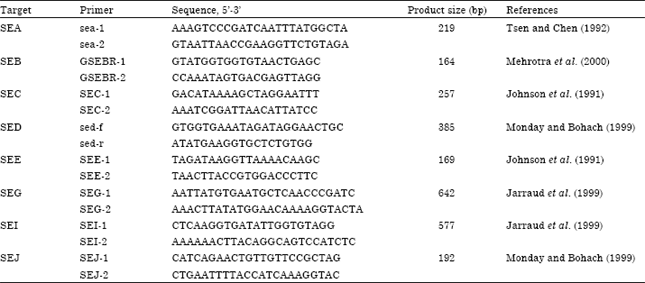
PCR for Staphylococcal enterotoxins: Staphylococcus aureus strains isolated were typed for sea, seb, sec, sed, see, seg, sei and sej. Reference strains previously isolated and characterized by Stephan et al. (2001) were used as for enterotoxin gene typing. These included S. aureus 463 (seb, seg and sei), 117 (sea, seg, sej and sei), 129 (sea, seg, sei and sej), 266 (seb, seg and sei), 216 (sec, seg and sei), 235 (sec, seg and sei), 243 (sed, seg, sei and sej) and 238 (sed, seg, sei and sej). The primers and protocols used are presented in PCR protocol for (GAC)5 Table 2, PCR protocol for Staphylococcal enterotoxins in Table 3 and Sequence of oligonucleotide primers used for Staphylococcal enterotoxins and predicted lengths of PCR amplification products in Table 4.
Electrophoresis and visualization: PCR loading wells were made on 1.5% Agarose gel into which 7 μL EtBr (Carlsbad CA USA) per 100 mL agarose had been added, solidified and the gel submerged into X1 TBE buffer. A total volume of 24 μL comprising of 20 μL DNA template and 4 μL PCR loading buffer (Promega Madison USA) were loaded per well prior to electrophoresis. The separated bands were visualized with UV trans-illuminator (Vilber Laurmat-France). The visualized bands sequences were compared with those of the controls above and 1 kbp molecular marker.
| Table 2: | PCR protocol for (GAC)5 |
 | |
| All PCR reactions were done with minicycler MJ Research Inc. USA | |
| Table 3: | PCR protocol for Staphylococcal enterotoxins |
 | |
| All PCR reactions were done with minicycler MJ Research Inc. USA | |
| Table 4: | Sequence of oligonucleotide primers used for Staphylococcal enterotoxins and predicted lengths of PCR amplification products |
 | |
Data analysis: Quantitative data on the microbial counts collected from the experiment was subjected to analysis of variance (ANOVA) using the Genstat 13th edition, VSN International. Difference among the results was compared using the Fisher’s protected LSD test at 5% probability where there were significant differences amongst the means. The bands after PCR amplification and electrophoresis were compared with predetermined reference strains.
RESULTS
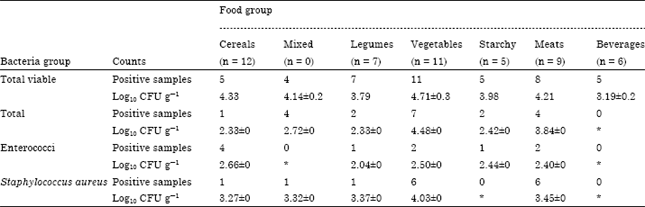
Microbial counts: Total coliforms counts were 4.48±0 and 3.84±0 log10 CFU g-1 in vegetable and meats foods, respectively while the lowest counts were in cereals based and legumes based foods at 2.33±0.2 log10 CFU g-1 each. Enterococcus species were highest in cereals based foods (2.66±0 log10 CFU g-1) and lowest in legume foods (2.04±0 log10 CFU g-1). The counts of Staphylococcus aureus were highest in vegetables (4.03±0 log10 CFU g-1) (Table 5). The total viable microorganisms in the vegetable based foods were the highest at 4.71±0.3 log10 CFU g-1 among the seven food categories while beverages had the least counts at 3.19±0.2 log10 CFU g-1 (Table 6).
There was a significant difference in the microorganisms evaluated in vegetables from all the five locations (p<0.05). Ricky road had the highest mean Staphylococcus aureus (4.69±0.05 log10 CFU g-1) (Table 6). Ricky, Nanyuki and Likoni roads had similar counts of Staphylococcus aureus while enterprise road had the least mean counts (3.13±0.15 log10 CFU g-1). Counts of Staphylococcus aureus in Enterprise road were significantly similar to that in lunga lunga road. Total coliforms counts were not significantly different between Likoni and Lunga lunga road (p<0.05). Ricky roads had the highest coliforms count at 4.71 log10 CFU g-1 but had significantly similar levels of counts as Nanyuki road.
There was significant difference (p<0.01) among the microorganisms evaluated in meats from the four locations (Table 7). Enterprise road had the highest mean Staphylococcus aureus (log10 3.67±0.05 CFU g-1) while Lunga lunga road had the least mean counts (3.07±0.08 log10 CFU g-1) in meat. Counts of Staphylococcus aureus and total coliforms in meat were significantly different among all the locations (p<0.05). Nanyuki road had the highest coliforms contamination at 4.10±0.02 log10 CFU g-1. TVC levels in meat were significantly similar in Likoni, Nanyuki and Lunga lunga roads and for Enterprise road, Nanyuki road and Ricky road.
| Table 5: | Prevalence and viable counts of street foods in Industrial area, Nairobi |
 | |
| *Not enumerated/not tested | |
| Table 6: | Microbial counts of street food vegetables in five locations sampled in Industrial area of Nairobi city |
 | |
| Values (log10 CFU mL-1) with same superscript in each row are not significantly different at p>0.05 | |
| Table 7: | Microbial counts in street food meats in four locations sampled in Industrial area of Nairobi city |
 | |
| Values (log10 CFU mL-1) with same superscript are similar | |
Escherichia coli was detected in two food groups from two locations which were mixed dish collected from Lunga lunga road and two vegetable samples from Lunga lunga and Nanyuki roads. Specific microorganisms isolated include; sixty isolates of Enterobacter aerogenes, 22 of Enterococci species and 33 of Staphylococcus aureus. Salmonella species were not detected in any of the food groups in all locations sampled in this study.
Strain distribution of microorganisms: The 60 isolates of Enterobacter aerogenes were analysed by a rep PCR. The isolates included 17 from vegetables, 7 from cereals, 18 from mixed dishes, 4 from starchy roots, 12 from meats and 2 from legumes. All samples had a similar single band amplified at the same electrophoretic length (Fig. 1a). A total of 22 Enterococci species included 13 from vegetables, 3 from cereals, 3 from meats, 2 from starchy roots and 1 from legumes. All samples had same level of single bands amplified (Fig. 1b). A total of 33 isolates of Staphylococcus aureus were obtained from street foods including 17 from vegetables, 2 from cereals, 10 from meats, 2 from starchy roots, 1 from legumes and 1 from mixed dishes.
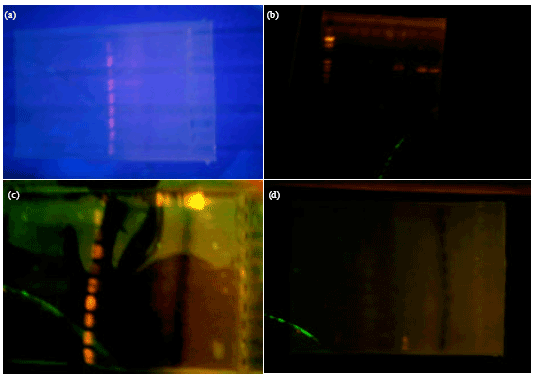 | |
| Fig. 1(a-d): | Rep-PCR gel pictures of (a) Enterobacter aerogenes, (b) Enterococci species (c) Staphylococcus aureus and (d) Reference Staphylococcus aureus strains |
All samples had a similar single band amplified at the same electrophoretic length (Fig. 1c). Figure 1d shows an amplified band of a reference strain of Staphylococcus aureus predetermined to process the gene coding for staphylococcal enterotoxin d.
Presence of Staphylococcal enterotoxin genes: The seven categories of foods collected from streets of industrial area of Nairobi were evaluated for the possession of staphylococcal enterotoxins. All the isolates were negative for the sed and seg. Rep PCR for other SEs did not produce amplicons. Successful amplification occurred for sed and seg.
DISCUSSION
The highest total viable counts were noted in vegetable foods at 4.71±0.3 log10 CFU g-1 among the seven food categories. This may be attributed to the fact that most vegetables were served raw in salads or only partly cooked. Beverages had the least mean bacterial counts of 3.19±0.2 log10 CFU g-1. This could be explained by the fact that all the beverages are subjected to heat treatment during their preparation and are served hot. Cereals, mixed dishes, legumes, starchy roots and meats had varying levels of counts TVC while the highest counts was in Ricky road vegetables at 5.03±0.03 log10 CFU g-1. Any cooked food should contain no more than 6.00 log10 CFU g-1 viable counts per gram upon analysis (KBS, 2003; Gilbert et al., 2000). Presence of S. aureus, an enterotoxin producer cause serious gastroenteritis (Balaban and Rasooly, 2000). All vegetables had levels of coliforms and Staphylococcus aureus at the unacceptable levels above 4.00 log10 CFU g-1. Meat (fish) from Ricky road had levels of Staphylococcus aureus at 4.10 log10 CFU g-1 slightly above the acceptability threshold of 4.00 log10 CFU g-1 (KBS, 2003; Gilbert et al., 2000). In terms of contamination with Enterococcus species, foods were safe at levels below 4.00 log10 CFU g-1 with the highest contamination being noted in Nanyuki road at 3.44±0.06 log10 CFU g-1 with other foods ranging 2.04-2.66 log10 CFU g-1. Enterococci species were not isolated in mixed dishes and beverages. The levels enumerated may indicate a possible contamination during handling after cooking. The counts in vegetables at 4.03 log10 CFU g-1 and meats at 3.45 log10 CFU g-1 suggest a contamination probably before serving.
Ricky road was noted to consistently have the highest count levels in vegetables with Staphylococcus aureus at 4.69 log10 CFU g-1, total coliforms at 4.71 log10 CFU g-1 and total viable counts at 5.03 log10 CFU g-1 in vegetables which could be attributed to practices of food handling and the initial contamination of the raw material sourced in that area. Staphylococcus aureus suggests a contamination which emanates from food handling which might have occurred in the street foods during handling, processing or vending. Staphylococcus aureus being part of the micro flora present on/in several parts of the human body is a good indicator of contamination due to poor personnel hygiene practices (Nester et al., 2001). Fish from Nanyuki road were not acceptable for consumption as they had 4.10 log10 CFU g-1 of Staphylococcus aureus while those from Enterprise, Lunga lunga and Ricky roads are safe for consumption (KBS, 2003; Gilbert et al., 2000).
Mensah et al. (2002), in Ghana found that foods particularly heavily contaminated with Staphylococcus aureus since they are handled excessively after cooking.
Total coliform counts at 4.48 log10 CFU g-1 were high in vegetables which may be attributed to the fact that most vegetables were served raw as uncooked salads. Similar results were reported in a study carried out by Amponsah-Doku et al. (2010) in raw lettuce with range (4.35-9.20 log10 CFU g-1) vended in the streets of Ghana. Enterobacteriaceae are useful indicators of hygiene and post processing contamination of heat-processed foods. Their presence in high numbers (>104 g-1) in ready to eat foods indicates that either contamination or under processing. The level of bacterial loading on lettuce and other raw vegetables may originate from the farm irrigation water (Mensah et al., 2001; Obiri-Danso et al., 2005). The contamination could also be attributed to sub standard cutting and preparation practices, particularly poor hygienic conditions, of the premises that may result from, rubbish, sewage and other noxious substances present in the vicinity (WHO, 2007). Bhaskar et al. (2004) and Mosupye and von Holy (2000) had observed that bacteria from dirty dish washing waters and other sources can adhere to utensil surfaces and constitute a risk for contamination during food vending.
The coliforms counts were at unacceptable levels in ready to eat foods as enumerated in vegetables all >4.00 log10 CFU g-1. Only one food (rice) was detected to be contaminated with coliforms (<2.00 log10 CFU g-1). Contamination of mixed dishes and legumes with coliforms albeit at low levels could have emanated from post cooking handling. The counts of coliforms at unacceptable levels may be attributed to inadequate handling: Where food like fried fish as in this case is displayed and sold in the open air and handled by vendors with bare hands. This agrees with Tambekar et al. (2009) who found severe contamination of displayed food through handling. Presence of coliforms in street foods might also be due to water used for cooking and serving which was contaminated with faecal coliforms as found by Khalil et al. (1994).
The mixed dish collected from Lunga lunga road (1/56) and vegetables in both Lunga lunga and Nanyuki roads (2/56) tested positive for Escherichia coli. This consisted of 5.3% of all the samples and is slightly higher compared to a study that reported in 3% of Korean street foods (Cho et al., 2010). This is in contrast with a study conducted in the street food of cape coast Ghana by Annan-Prah et al. (2011) where all sampled food tested positive for Escherichia coli. Escherichia coli have been previously detected in 48% of foods sampled from Korogocho slums of Nairobi (Muganga, 2001). Salmonella species were not detected in any of the food consumption food group across all roads sampled in this study. The consumption of street food cannot be stopped on hygienic grounds (Tambekar et al., 2009). These practices could be improved to ensure more safety. Contamination is mainly due to poor quality of water used for dilution and prevailing unhygienic condition related to improper washing of fruits, vegetables and utensils, inadequate storage in unhygienic places and personal hygiene by vendors (Das et al., 2010).
This study demonstrates that the foods were safe for human consumption which can be attributed to the fact that the foods were mostly served hot and only held for 1-3 h before serving. Presence of coliforms and Staphylococcus aureus indicates a possibility of secondary contamination. The study by Muganga (2001) indicated that majority of highly contaminated foods were prepared on site where holding time was 1.5-12 h. Bacillus cereus, Staphylococcus aureus, or Enterobacteriaceae have been reported not to survive in breakfast, snack foods and porridge prepared and sold within 2-3 h at 50-90°C, a temperature range over which most vegetative bacteria (Mensah et al., 2002). Such long time heat treated foods have acceptable levels of microbial contamination. Annan-Prah et al. (2011) in Ghana also found kebabs, fried fish and beans with gari to had acceptable levels of microbial contamination provided that they are not excessively and poorly handled after cooking (Yeboah-Manu et al., 2010). Von Holy and Makhoane (2006) also found that the quality of street foods in South Africa is not as bad as previously conceived.
According to the reviewed literature, this is the first study evaluating the strain distribution of microorganisms isolated from street food. From the PCR analysis, the isolates from each of Staphylococcus aureus, Enterococci species and Enterobacter aerogenes from street food were similar strains as shown by rep PCR with primer GTG5. The similar bands after from PCR analysis indicate that all isolates were similar strains and could have originated from a similar source; processing water, raw material and cooked food cross contamination or contamination from the body of food handlers’ into the food.
This is also the first study to evaluate the pathogenicity of Staphylococcus aureus strains in street food in Kenya. However, none of the isolates from the street food was seen to possess genes coding for production of staphylococcal enterotoxins sed and seg. The absence of the genes coding for production of the above staphylococcal enterotoxins implies the S. aureus isolated from street foods are not a likely threat to human health. The presence of the microorganisms is an indicator of poor hygiene and not necessarily a threat to human health. More studies are required to evaluate the safety of water used in the preparation of street foods of Nairobi and the evaluation of presence of other enterotoxins in the street food.
CONCLUSION
Most of the foods sampled and analyzed in this study including cereals, legumes, starchy roots, mixed dishes, legumes and meats from Enterprise, Ricky, Lunga lunga and Likoni roads met microbiological standards of ready to eat foods. The presence of unacceptable levels of coliforms and Staphylococcus aureus in the vegetables and S. aureus in meat (fish) from Nanyuki road suggest hygiene practices need be improved to assure food safety upon consumption. The vendors prepared and served the food which is mostly preferred hot and this factor combined with preparation on site could result in the safe street food as revealed by this study. Staphylococcus aureus isolated from street food do not possess enterotoxigenic genes that code for production of sed and seg. Street foods in Nairobi are therefore not likely to pose a public health risk through S. aureus enterotoxigenic food borne illness. The isolated microbial strains were found to be similar at molecular level, suggesting a similar source of contamination. This indicates the need to improve hygiene practices in the preparation and handling of street foods in order to avoid contamination resulting from this similar source.
REFERENCES
- Annan-Prah A., D.H.A.K. Amewowor, J. Osei-Kofi, S.E. Amoono, S.Y. Akorli, E. Saka and H.A. Ndadi, 2011. Street foods: Handling, hygiene and client expectations in a World Heritage Site Town, Cape Coast, Ghana. Afr. J. Microbiol. Res., 5: 1629-1634.
Direct Link - Das, A., G.S. Nagananda, S. Bhattacharya and S. Bhardwaj, 2010. Microbiological quality of street-vended Indian chaats sold in Bangalore. J. Biol. Sci., 10: 255-260.
CrossRefDirect Link - Balaban, N. and A. Rasooly, 2000. Staphylococcal enterotoxins. Int. J. Food Microbiol., 61: 1-10.
CrossRefPubMedDirect Link - Bhaskar, J., M. Usman, S. Smitha and G.K. Bhat, 2004. Bacteriological profile of street foods in Mangalore. Indian J. Med. Microbiol., 22: 197-197.
PubMedDirect Link - Christison, C.A., D. Lindsay and A. von Holy, 2008. Microbiological survey of ready-to-eat foods and associated preparation surfaces in retail delicatessens, Johannesburg, South Africa. Food Control, 19: 727-733.
CrossRef - Ghosh, M., S. Wahi, M. Kumar and A. Ganguli, 2007. Prevalence of enterotoxigenic Staphylococcus aureus and Shigella spp. in some raw street vended Indian foods. Int. J. Environ. Health Res., 17: 151-156.
CrossRefPubMedDirect Link - Gilbert, R.J., J. de Louvois, T. Donovan, C. Little and K. Nye et al., 2000. Guidelines for the microbiological quality of some ready-to-eat foods sampled at the point of sale. PHLS Advisory Committee for Food and Dairy Products. Commun. Dis. Punlic Health, 3: 163-167.
PubMed - Hacker, J. and J.B. Kaper, 2000. Pathogenicity islands and the evolution of microbes. Annu. Rev. Microbiol., 54: 641-679.
CrossRefPubMedDirect Link - Harrigan, W.F. and M.E. McCance, 1976. Laboratory Methods in Food and Dairy Microbiology. 1st Edn., Academic Press, London, ISBN: 9780123260406, Pages: 452.
Direct Link - Jarraud, S., G. Cozon, F. Vandenesch, M. Bes, J. Etienne and G. Lina, 1999. Involvement of enterotoxin G and I in Staphylococcal toxic shock syndrome and Staphylococcal scarlet fever. J. Clin. Microbial., 37: 2446-2449.
PubMed - Johnson, W.M., S.D. Tyler, E.P. Ewan, F.E. Ashton, D.R. Pollard and K.R. Rozee, 1991. Detection of genes for enterotoxins, exfoliative toxins, Toxic shock syndrome toxin 1 in S. aureus. J. Clin. Microbial., 29: 426-430.
Direct Link - Cho, J.I., C.Y. Cheung, S.M. Lee, S.I. Ko and K.H. Kim et al., 2010. Assessment of microbial contamination levels of street-vended foods in Korea. J. Food Safety, 31: 41-47.
CrossRef - Khalil, K., G.B. Lindblom, K. Mazhar and B. Kaijser, 1994. Flies and water as reservoirs for bacterial enteropathogens in urban and rural areas in and around Lahore, Pakistan. Epidemiol. Infect., 113: 435-444.
PubMedDirect Link - Mankee, A., S. Ali, A.L. Chin, R. Indaisingh and R. Khan et al., 2005. Microbial quality of doubles sold in Trinidad. Food Microbiol., 22: 601-607.
CrossRef - Mehrotra, M., G. Wang and W.M. Johnson, 2000. Multiplex PCR for detection of genes for Staphylococcus aureus enterotoxins, exfoliative toxins, toxic shock syndrome toxin 1 and methicillin resistance. J. Clin. Microbiol., 38: 1032-1035.
Direct Link - Mensah, E., P. Amoah, R.C. Abaidoo and P. Drechsel, 2001. Environmental Concerns of (peri-) Urban Vegetable Production-Case Studies from Kumasi and Accra. In: Waste Composting for Urban and Peri-urban Agriculture-Closing the Rural-Urban Nutrient Cycle in sub-Saharan Africa, Drechsel, P. and D. Kunze (Eds.). CABI, Wallingford, UK, ISBN: 9780851995489, pp: 55-68.
- Mensah, P., D. Yeboah-Manu, K. Owusu-Darko and A. Ablordey, 2002. Streets foods in Accra, Ghana: How safe are they? Bull. World Health Orgn., 80: 546-554.
Direct Link - Monday, S.R. and G.A. Bohach, 1999. Use of multiplex PCR to detect classical and newly described pyrogenic toxin genes in staphylococcal isolates. J. Clin. Microbiol., 37: 3411-3414.
Direct Link - Mosupye, F.M. and A. von Holy, 2000. Microbiological hazard identification and exposure of street food vending in Johannesburg, South Africa. Int. J. Food Microbiol., 61: 137-145.
Direct Link - Obiri-Danso, K., C.A. Weobong and K. Jones, 2005. Aspects of health related microbiology of the Subin, an urtban river in Kumasi, Ghana. J. Water Health, 3: 69-76.
PubMedDirect Link - Stephan, R., C. Annemuller, A.A. Hassan and C.H. Lammler, 2001. Characterisation of enterotoxigenic Staphylococcus aureus strains isolated from bovine mastitis in north-east Switzerland. Vet. Microbiol., 38: 373-382.
CrossRefDirect Link - Tsen, H.Y. and T.R. Chen, 1992. Use of the PCR for specific detection of types A, D and E enterotoxigenic Staphylococcus aureus in foods. Applied Microbial. Biotechnol., 37: 685-690.
PubMed - Von Holy, A. and F.M. Makhoane, 2006. Improving street food vending in South Africa: Achievements and lessons learned. Int. J. Food Microbiol., 111: 89-92.
CrossRef - Yeboah-Manu, D., G. Kpeli, M. Akyeh and L. Bimi, 2010. Bacteriological quality of ready-to-eat foods sold on and around University of Ghana Campus. Res. J. Microbiol., 5: 130-136.
CrossRefDirect Link