

T.I.I. Ibiwoye
Aquatic Pathobiology Programme, National Institute for Freshwater Fisheries Research, P.M.B. 6006, New Bussa, Niger State, Nigeria
R.A. Ogunsusi
Department of Animal Production and Health, Federal University of Technology, P.M.B. 704, Akure, Ondo State, Nigeria
A.M. Balogun
Department of Fisheries and Wildlife, Federal University of Technology, P.M.B. 704, Akure, Ondo State, Nigeria
J.J. Agbontale
Aquatic Pathobiology Programme, National Institute for Freshwater Fisheries Research, P.M.B. 6006, New Bussa, Niger State, Nigeria
Journal of Fisheries and Aquatic Science
Year: 2008 | Volume: 3 | Issue: 3 | Page No.: 195-205





ABSTRACT
The contributions of environmental and haematological factors to the distributions and estimations of Eustrongylides africanus larvae densities in Clarias gariepinus and C. anguillaris from Bida floodplain of Nigeria were investigated. The environmental factors making the most important contributions to the distributions of E. africanus larvae infection in Clarias species are rainfall, soil pH, water conductivity, sunshine and silt-clay; in descending order of magnitude; having the manifestation for the months of January, March and June by the year being closely related. The haematological factors making the most important contributions to the distributions of E. africanus larvae infections in the two species are Mean Corpuscular Haemoglobin Concentration (MCHC), Mean Corpuscular Haemoglobin (MCH), Mean Corpuscular Volume (MCV) and neutrophils count, in descending order of magnitude; having the manifestations for the months of January, March, September and December of the year being closely related. Six and five environmental (sand, silt-clay, soil pH, water turbidity, dissolved oxygen and total phosphate content) and haematological (neutrophils, lymphocytes and eosinophils counts; MCH and MCV) factors, respectively, having positive or negative correlation coefficient (r) between 0.50 and 0.85 contributed to the estimations of E. africanus larvae densities in the wild population of Clarias species in Bida floodplain. The relevance of these results in quick estimations of the distribution and density of parasites in fish is discussed.
PDF Abstract XML References Citation
How to cite this article
T.I.I. Ibiwoye, R.A. Ogunsusi, A.M. Balogun and J.J. Agbontale, 2008. The Contributions of Environmental and Haematological Factors to the Distributions and Estimations of Eustrongylides africanus Larvae Densities in Clarias gariepinus and Clarias anguillaris from Bida Floodplain of Nigeria. Journal of Fisheries and Aquatic Science, 3: 195-205.
DOI: 10.3923/jfas.2008.195.205
URL: https://scialert.net/abstract/?doi=jfas.2008.195.205
DOI: 10.3923/jfas.2008.195.205
URL: https://scialert.net/abstract/?doi=jfas.2008.195.205
INTRODUCTION
Disease aetiology is a triad complex which includes the host (fish), the parasite (agent) and the micro-and macro-habitats (environment). Blood is a good indicator to determine the health of an organism (Joshi et al., 2002). It also acts as a pathological reflector of the whole body; hence haematological parameters are important in diagnosing the functional status of animal exposed to toxicants (Joshi et al., 2002), dietary insufficiency and physiological response to environmental stress (Svobodova et al., 1994).
Several investigations indicated that the distribution of ecto-and endo-parasites in the fish host populations are related to their environment and their geographical locations (Bates and Kennedy, 1991). Currently there is little information on the interaction brought by changes in haematological parameters of the host and the invertebrate parasitic fauna. In Nigeria, the helminths parasites of fishes extensively studied were primarily from morphologic and morphomeric descriptions (Saliu, 1998; Aken’Ova, 1999; Auta et al., 1999; Emere, 2000; Onusuriuka, 2001; Oniye et al., 2004; Ibiwoye et al., 2004; Araoye, 2005); and not in relation to the contributions of environmental and haematological factors. Thus changes brought about by the environmental and haematological factors, fish and invertebrate host populations and helminth parasite incidences might not be understood.
Scanty information available in the literature on the haematology of the Nigerian freshwater fishes include those on Chrysichthys nigrodigitatus; Clarias isheriensis; pond-raised Clarias gariepinus (C.g), Heterobranchus longifilis (H.l), F1 hybrid (C.g X H.l) and C. nigrodigitatus (Eroundu et al., 1993); Oreochromis niloticus (Omoregie, 1998) and Cyprinus carpio, Clarias gariepinus, Heterotis niloticus, Hemochromis fasciatus and Tilapia species (Adedeji et al., 2000), but none of these was related to helminths parasites infestations; except the report of Egwunyenga et al. (1999) on Hemichromis fasciatus, Chromidotilapia guntheri, Tilapia mariae and T. zilli did.
Clarias highly prized and are found all year round in markets of Bida and its environs are infested by E. africanus, which are large long red worms, 18-70 mm long, 0.3-0.8 mm thick, with a long oesophagus without swelling merging with indistinct ventriculum (Ibiwoye et al., 2005). Having cuticle with coarse transverse striations, but not spinose; mouth surrounded by 12-18 excrescences in two rows; males with a bell-shaped muscular bursa without rays and with one very long spicule; and females posterior body tip with terminal anus and vulva closely adjoins anus. This parasite encysted at different depths in the viscera and muscles; exerting some pathological effects due tissue reactions and degeneration, manifested as undulations on the skin as grub-like presentations (Yanong, 2002) and aesthetically causing debates and/or rejections of the infected fishes at marketing (Ibiwoye et al., 1996). The aim of this study therefore is to investigate the contributions of some environmental and haematological factors to the distributions and estimations of E. africanus larvae in Clarias species from Bida floodplain of Nigeria.
MATERIALS AND METHODS
The study covered an area between longitude 5°45’ to 6°15’E and latitude 8° 30’ top 9° 10’N within the southern Guinea savannah zone of Nigeria (Areola et al., 1992). Regular field data were collected from four fishing localities (Doko, Dokogi, Fokpo and Dutsu) in Bida floodplain on the soil, water and fish components between May 2004 and April 2005.
The rapid partial analysis of soil involved splitting of the samples into a sand fraction (particles greater than 62 μ) and a silt-clay fraction (particles less than 62 μ) according to Wentworth scale as modified by Krumben (Buchannan and Kain, 1971) was achieved with the 62 μ sieves employing a wet sieving method. Soil hydrogen concentration pH in water (1:1 soil to water) was measured by inserting the pH meter (model 264A, Jenway, England) electrodes into partly settled suspension stirred during measurement.
Water quality parameters such as temperature, conductivity, turbidity, total dissolved solids, dissolved oxygen, nitrate and total phosphate contents and pH of the floodplain water were monitored using standard methods (APHA, 1998; Boyd, 1990).
The records of the climatic factors (minimum and maximum temperature, relative humidity, rainfall, evaporation and sunshine) kept between January 1959 and December 1999 at the Meteorological Unit of the National Cereals Research Institute (NCRI) Badeggi-Bida were assembled and analysed as secondary data.
Fish sampled were considered as normal or abnormal on the basis of their external appearance and on the presence or absence of obvious signs of helminth parasites infestation. Routine and visual examinations were carried out on 480 and 240 specimens of Clarias gariepinus and C. anguillaris of different sexes, lengths and weights; randomly selected from 5-10% of fishermen’s catches in four fishing localities in relation to the environmental and haematological factors. Fish specimens for the parasitological studies were sacrificed by a sudden gentle cervical dislocation or decapitation; dissected under a light binocular dissecting microscope between 10 and 30X magnification; and thoroughly examined individually to recover larvae of E. africanus from infected Clarias fish specimens, counted with manual tally counter and used to determine occurrence of E. africanus larvae in relation to sex and season of the year as described by Bush et al. (1997).
Clarias fish specimens for the haematological investigation were handled gently and anaesthetized in 1/15000 MS222 (Sandoz) and placed on their backs in a V-section trough. 1.5 mm of blood were collected from the caudal peduncle and cardiac puncture for juvenile and fish as described by Stoskopf (1993) and Joshi et al. (2002), respectively. The samples were dispensed into tubes containing lithium heparin anticoagulant. Haemoglobin was estimated by cyanomethaemoglobin method. Red Blood Cells (RBC) and White Blood Cells (WBC) were counted by Neubauer’s improved haemacytometer using Hyem’s and Turks solution as a diluting fluid respectively. Packed Cell Volume (PCV), Mean Corpuscular Haemoglobin Concentration (MCHC), Mean Corpuscular Haemoglobin (MCH) and Mean Cell Volume (MCV) were calculated, respectively using standard formula described by Dacie and Lewis (1991) and Joshi et al. (2002).
Multiple linear regression/correlation analyses were carried out upon the co-ordinates of the first three Principal Components (PCS) to examine: any associations among prevalence, mean intensity and abundance of E. africanus larvae in Clarias species of Bida floodplain and the effects of the sixteen environmental and twelve haematological factors, respectively on their percentage (%) of traces (distributions) subjected to ordination of the months of the year. And also, to determine the combined effects of the sixteen environmental and twelve haematological factors, respectively on the percentage (%) contribution of each of the environmental and haematological factors to the R2 for each of the PCS subjected to the coefficient of multiple determinations (R2). Simple linear regression/correlation analyses were carried out to examine any associations among prevalence, mean intensity and abundance of E. africanus larvae in Clarias species of Bida floodplain and the sixteen environmental [maximum temperature (x1), minimum temperature (x2) and relative humidity (x3); rainfall (x4); sunshine (x5), evaporation (x6); sand (x7); silt-clay (x8); soil pH (x9); water temperature (x10); conductivity (x11); turbidity (x12); total dissolved solids (x13); water pH (x14); dissolved oxygen (x15) and total phosphate content (x16)] and twelve haematological [Red Blood Cell (RBC) count (x1), RBC size (x2) and RBC nuclei size (x3); total White Blood Cell (WBC) count (x4); differential WBC count or distribution of RBC types: neutrophils (x5), lymphocytes (x6) and eosinophils (x7); haemoglobin estimate (x8); haematocrit or packed cell volume measurement (x9) and haematological indices: MCV (x10), MCH (x11) and MCHC (x12)] factors, respectively.
RESULTS AND DISCUSSION
Axis I account for the 91.3% of the principal component for both factors, followed by axis II that accounts 8.6 and 6.1% and axis III is 0.1 and 0.4%, respectively for environmental and haematological factors. Since the accumulated total % of traces for two principal components (I and II) accounted for the 99.9 and 99.6%, respectively for environmental and haematological factors out of 100%, therefore the % trace of axis III were over sighted. And axis II and I were involved in all the subsequent analysis carried out (Table 1).
| Table 1: | Results of principal component analysis ordination of months based on sixteen environmental and twelve haematological factors for E. africanus larvae infection in Clarias species of Bida floodplain |
 | |
| Table 2: | Percentage contribution of sixteen environmental factors to coefficient of multiple determinations (R2) for two principal components |
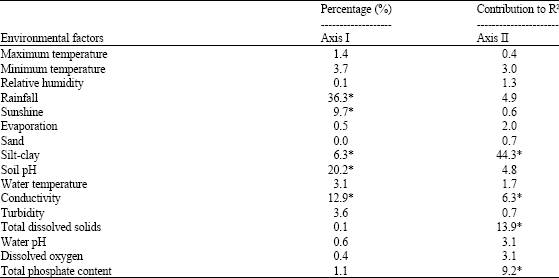 | |
| *: Environmental factors making the most important contributions to R2 Axis I = 85.4%; Axis II = 73.7% | |
The environmental factors making the most important contribution to R2 in axis I responsible for 91.3% of traces are relative humidity (35.9), soil pH (11.8%), conductivity (12.9%) and rainfall (9.7%) in order of magnitude. On the axis I relative humidity and the rainfall are negatively correlated to the incidence. Thus the occurrence increases as relative humidity and rainfall decreases and vice versa. The soil pH and conductivity are positively correlated to the occurrences of E. africanus larvae in Clarias species. Thus, the occurrences increase as soil pH and conductivity increase. The environmental factors making the most important contribution to R2 in axis II responsible for 8.6% of traces are silt-clay (44%), total dissolved solids (13.6%), total phosphate content (8.9%) and conductivity (6.0%) in order of magnitude. On the axis II, the total phosphate content is negatively correlated to the occurrence of E. africanus larvae in Clarias species. Thus, the occurrence increases as total phosphate content decreases and vice versa. The silt-clay total dissolved solids and conductivity is positively correlated to the occurrences of E. africanus larvae in Clarias species. Thus, the occurrences increase as soil-clay, total dissolved solids and conductivity increase and vice versa (Table 2).
The haematological factors making the most contributions to R2 in axis I responsible for 93.5% of traces were MCHC (39.4%), MCH (22.9%), MCV (21.4%) and neutrophils count (3.4%) in order of magnitude (Table 3). On axis I the MCHC and MCV were positively correlated to the prevalence. Thus, the prevalence increases as the MCHC and MCV increases and vice versa. The MCH and neutrophils counts were negatively correlated to the prevalence of E. africanus larvae in Clarias species. Thus the prevalence increases as MCH and neutrophils count decreases and vice versa. The haematological factors making the most important contributions to R2 in axis II responsible for 6.1% of traces were neutrophils count (26.2%), MCHC (25.9%), eosinophils count (11.5%) and MCV (8.7%) in order of magnitude.
| Table 3: | Percentage contribution of the twelve haematological factors to the coefficient of multiple determinations (R2) for two principal components |
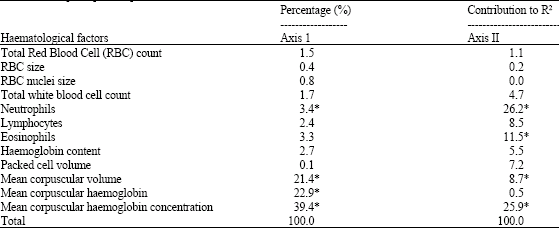 | |
| *: Haematological factors making the most important contribution to R2 Axis I = 87.1%; Axis II = 72.5% | |
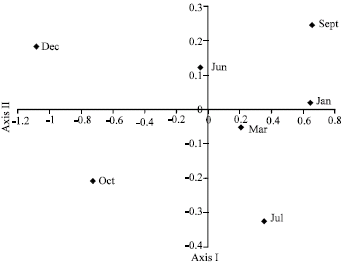 | |
| Fig. 1: | Projection of months on axes I and II of the principal component analysis ordination based on sixteen environmental factors for the occurrence of E. africanus larvae in Clarias species of Bida floodplain |
On the axis II, the MCHC, MCV and eosinophils count were positively correlated to the prevalence. Thus, the prevalence increases as MCHC, MCV and eosinophils count increases and vice versa. The neutrophils count was negatively correlated to the prevalence of E. africanus larvae in Clarias species. Thus, the prevalence increases as neutrophils count decreases and vice versa.
The occurrences of E. africanus larvae in Clarias species have closely related densities in the months of January, March and June. The months of July, September, October and December were on the contrary (Fig. 1). The incidences of E. africanus larvae in Clarias have closely related manifestations in the months of January, March, September and December. The months of April, July and October were on the contrary (Fig. 2).
The correlation coefficient (r) for sixteen environmental and twelve haematological factors with the occurrences of E. africanus larvae in Clarias species from Bida floodplain is shown in Table 4 and 5, respectively.
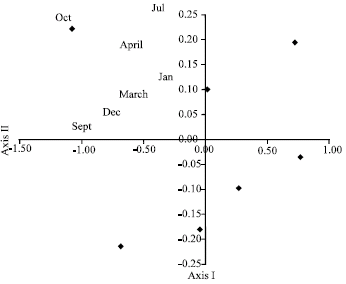 | |
| Fig. 2: | Projection of months on axes I and II of the principal compone nt analysis ordination based on twelve haematological factors for the occurrence of Eustronglides africanus larvae infection in Clarias of Bida floodplain, Nigeria |
The peak of the rain is the most likely best time for obtaining uninfected for broodstock from the wild of Bida floodplains when in contact with other infected fish could be minimal in the rivers (Kaduna and Niger) emptying large volumes of water during the rainy season period of the year. Increase in minimum temperature, relative humidity, rainfall, sunshine, soil sand percentage, soil pH, dissolved oxygen and total phosphate content would enhance decrease in the prevalence and distribution of E. africanus larvae in the fish of Bida floodplains and could some of the ways by which the occurrence of this parasite could be curtailed and/or controlled using the environmental factors. Dissolved oxygen has reciprocal relationship (or negative correlation) with the prevalence and distribution of E. africanus larvae in the fish of Bida floodplains. Thus, the dissolved oxygen increases as the occurrence of this parasite decreases and vice versa. Larval nematode belonging to the genus Eustrongylides (Khalil and Thurston, 1973) have been recorded from freshwater fishes of the genus Bagrus, Clarias Dinotopterus, Engraulicypris, Haplorchromis, Lamproliogus, Micropterus, Mormyrus, Protopterus and tilapias from east (Tanzania and Uganda) and central (Zaire) African lakes: Lake Albert, Lake Edward, Lake George, Lake Kivu, Lake Tanganyika and Lake Victoria (Khalil and Polling, 1997). Also, found in several other freshwater fishes of the genus Cyprinodon, Gambusia, Heterandria, Lepomis, Lepisosteus, Lucania, Poecilia, Pomoxis and Xphophorusi (Coyner et al., 2002); Lutra (Hoberg et al., 1997); Perca (Rosinki et al., 1997); Ompok (Khanum et al., 1996); Rhambia (Moravec et al., 1997) and Allophophorus (Rojas et al., 1997) from Bangladesh, Mexico, United States of America and Venezuela. Eustrongylides have been reported to utilize aquatic annelids (oligochaetes) as the first intermediate host and fish as second intermediate host (Ibiwoye et al., 2004) and its larvae have been reported from 17 orders of fish worldwide (Spalding et al., 1993). In Florida, Spalding et al. (1993) suggested that disturbed soil, exogenous nutrients and high densities of oligochaetes were contributing factors to the prevalence and distribution of Eustrongylides in fish. However, to date, little detailed information is available on the environmental and haematological conditions associated with these foci of infection in the United States of America and/or in neither Nigeria nor West Africa. Thus, this could be the first report and record of the contributions of the environmental and haematological factors to the distributions and estimations of Eustrongylides in the fish (Clarias) of Bida floodplain in Nigeria (and West Africa).
| Table 4: | Correlation coefficient (r) for sixteen environmental factors with occurrence of E. africanus larvae infection in Clarias species from Bida floodplain |
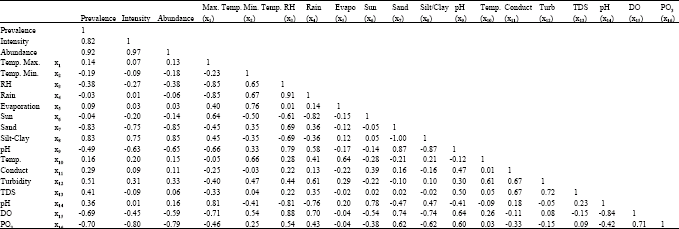 | |
| x1: Maximum temperature; x2: Minimum temperature; x3: Relative humidity; x4:Rainfall; x5:Evaporation; x6:Sunshine; x7: Sand; x8: Silt clay; x9: Soil pH; x10: Water temperature; x11: Conductivity; x12: Turbidity; x13: Total dissolved solids; x14: Water pH; x15: Dissolved oxygen; x16: Total phosphate content | |
| Table 5: | Correlation coefficient (r) for twelve measured haematological factors with the occurrences of E. africanus larvae infection in Clarias from Bida floodplain, Nigeria |
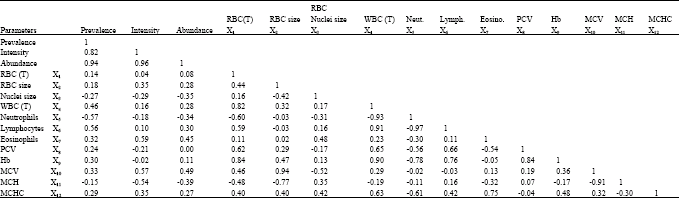 | |
| X1 = Total red blood cell count; X2 = Red blood cell size; X3 = Red blood cell nuclei size; X4 = Total white blood cell count; X5 = Neutrophils count; X6 = Lymphocytes count; X7 = Eosinophils count; X8 = Haemoglobin estimate; X9 = Packed cell volume; X10 = Mean corpuscular volume; X11 = Mean corpuscular haemoglobin; X12 = Mean corpuscular haemoglobin concentration | |
In conclusion, many fish farmers as well as hatchery operators often need to know the health status so as to make management decisions like weight gain, feed intake and utilisation and also to administer the right dosage of medication. Reasonable skill in estimating parasitic infection distribution and density is necessary for fishery workers as it will frequently be necessary to estimate parasite distribution and density when facilities to measure environmental and haematological factors are not readily available or their use are not practicable. This study has shown that environmental and haematological factors, which are media of proper fish productivity, could be used to estimate the distribution and density of parasitic infections in freshwater fishes. This study provides base line information on the contributions of environmental and haematological factors to the distributions and estimations of E. africanus larvae in Clarias species from Bida floodplain of Nigeria. Thus, a simple device could be derived for quick estimations of the distributions and densities of parasites in fishes for research and development.
ACKNOWLEDGMENTS
The authors are grateful to the Federal Government of Nigeria through the Federal Ministry of Agriculture and Rural development and National Institute for Freshwater Fisheries Research (NIFFR) New Bussa for providing the fund for this study.
REFERENCES
- Adedeji, O.B., V.O. Taiwo and S.A. Agbede, 2000. Comparative haematology of five Nigerian freshwater fish species. Nig. Vet. J., 21: 75-84.
Direct Link - Araoye, P.A., 2005. Synodontis schall (Pisces: Mochokidae) and its Nematode in Asa Lake, Ilorin, Nigeria. J. Aquat. Sci., 20: 81-84.
Direct Link - Bates, R.M. and C.R. Kennedy, 1991. Site availability and density-dependent constraints on the acanthocephalan Pomphorhynchus laevis in rainbow trout Onchorynchus mykiss (Walbaum). Parasitology, 102: 405-410.
PubMed - Bush, A.O., K.D. Lafferty, J.M. Lotz and A.W. Shostak, 1997. Parasitology meets ecology on its own terms: Margolis et al. revisited. J. Parasitol., 83: 575-583.
CrossRefPubMedDirect Link - Coyner, D.F., M.G. Spalding and D.J. Forrester, 2002. Epizootiology of Eustrongylides ignotus in Florida: Distribution, density and natural infections in intermediate hosts. J. Wildlife Dis., 38: 483-499.
Direct Link - Emere, M.C., 2000. Parasitic infection of the Nile Perch Lates niloticus (L.) in river Kaduna. J. Aquat. Sci., 15: 51-54.
CrossRefDirect Link - Erondu, E.S., C. Nnubia and F.O. Nwadukwe, 1993. Haematological studies on four catfish species raised in freshwater ponds in Nigeria. J. Applied Ichthyol., 9: 250-256.
CrossRefDirect Link - Hoberg, E.P., C.J. Henny, O.R. Hedstrom and R.A. Grove, 1997. Intestinal helminths of river Otters (Lutra canadensis) from the Pacific Northwest. J. Parasitol., 83: 105-110.
Direct Link - Ibiwoye, T.I.I., A.M. Balogun, R.A. Ogunsusi and J.J. Agbontale, 2004. Determination of the infection densities of nematode Eustrongylides in mudfish Clarias gariepinus and Clarias anguillaris from Bida floodplain of Nigeria. J. Applied Sci. Environ. Manage., 8: 39-44.
Direct Link - Moravec, F., A. Prouza and R. Reyero, 1997. Some nematodes of freshwater fishes in Venezuela. Folia Parasitologica, 44: 33-47.
PubMed - Oniye, S.J., D.A. Adebote and O.I. Ayanda, 2004. Helminth parasites of Clarias gariepinus (Teugels) in Zaria, Nigeria. J. Aquat. Sci., 19: 71-76.
CrossRefDirect Link - Onusuriuka, B.C., 2001. Incidence of helminth parasites on electric fish, Malapterurus electricus, in River Kaduna, Nigeria. J. Aqua. Sci., 16: 144-146.
Direct Link