

A. W. Ajlouni
Department of Applied Physics, Tafila Technical University, Tafila, Jordan
Y. S. Almasa`efah
Department of Applied Physics, Tafila Technical University, Tafila, Jordan
M. Abdelsalam
Department of Applied Physics, Tafila Technical University, Tafila, Jordan
Journal of Environmental Science and Technology
Year: 2010 | Volume: 3 | Issue: 4 | Page No.: 182-194





ABSTRACT
After a peer review of data about nuclear fission products, we can see easily that, no clear chemical species, chemical compounds, or chemical processes were available after actual releases of nuclear Fission Products (FP) during planned releases, accidents, or in nuclear detonations. The models based on these ordinary reactions and species could not interpret the behaviors of the fission products or expect their effects in the environment or on the living creatures. To interpret the chemical behaviors of the fission products and their effects on the environment and in the living creatures, a new approach is introduced in this study. It is assumed here that the ionization states of the new born atoms and the long term high temperatures were not dealt with in an appropriate way and they are the reasons of the failure of the former models. Deep Atomic Binding (DAB) approach based on the following: (1) The new born atoms which are highly ionized, 10-12 electrons associated with each nucleus, having a large probability to create bonds between them to form molecules. These bonds are at the L, or M shells and we call it DAB. (2) The molecules stay in the reactor at high temperatures for long periods, so they undergo many stages of composition and decomposition to form giant molecules. By applying DAB approach, field data from Chernobyl and TMI accidents and nuclear detonations could be interpreted with a wide coincidence resulted.
PDF Abstract XML References Citation
How to cite this article
A. W. Ajlouni, Y. S. Almasa`efah and M. Abdelsalam, 2010. Nuclear Fission Products: From Source to Environment. Journal of Environmental Science and Technology, 3: 182-194.
DOI: 10.3923/jest.2010.182.194
URL: https://scialert.net/abstract/?doi=jest.2010.182.194
DOI: 10.3923/jest.2010.182.194
URL: https://scialert.net/abstract/?doi=jest.2010.182.194
INTRODUCTION
The artificial creation of radionuclides may result from physical processes involving nuclear fission, nuclear fusion and neutron activation. The most important source of artificially created radionuclides is neutron-induced nuclear fission. The chemical and physical forms of the active species determine deposition, migration and uptake are radioactivity by living organisms.
A variety of systems and processes may introduce radioactivity into the environment. Human activities involving nuclear weapons and the nuclear fuel cycle (including mining, milling, fuel enrichment and fabrication, reactor operation, spent fuel storage and reprocessing and waste storage), leading to significant creation and release of radioactivity. Human technology also releases pre-existing natural radionuclides, which would otherwise remain trapped in the earth’s crust (Ajlouni et al., 2008). The physical and chemical form of radionuclides may vary depending on the release and transport conditions in addition to the element properties. A general distinction can be made between gases, aerosols and particulate material (Warner and Harrison, 1993).
FISSION PRODUCTS (FP) BEHAVIORS, A SURVEY
Recent experimental results and related theoretical models of the release of radionuclides and generation of aerosols and particulates within fuel cladding, in- and ex-vessel will be mentioned. The discussion of fission product released has been divided as follows (Sich, 1995; Lewis, 1977):
Volatile Fission Products (VFP)
During normal conditions most of the FP resides within the fuel lattice as small gas bubbles, as small inclusion, or in some cases as solid solutions. As the temperature of the fuel increases, the gas bubbles tend to grow in size and, with other impurities, migrate out of the lattice (Kelber, 1986). Such products may reside in the gap between the cladding and the fuel, if the cladding has been damaged, FP escape into the local atmosphere of the fuel rod, then FP macroscopically transported by the steam flow through the reactor core and primary system. The solid solution may also change form with temperature and similar migration occurs (Suh and Hammerslely, 1991). The release rates of Kr, Xe, I and Cs are generally similar in magnitude at high temperature. This similarity is reflected in US Nuclear Regulatory Commission (1985) Code NUREG - 0772 correlations for these elements which are coincident above 1500K, while Hobbines et al. (1986) noticed that experimental data on VFP released rates were largely scattered about three orders of magnitude and not appear to be unique functions of temperature only and conflicting (Suh and Hammerslely, 1991). This also supported by Kelber (1986), who believed that the actual release and transport of FP within the reactor is a complex process involving the temperature history of the fuel, as well as the chemical and physical form of the FP and the fuel.
These VFP in the fuel-cladding gap and grain boundaries are predominantly long half life nuclides, while the shorter half lives are predominately intragranular (Osetek et al., 1986; Rest et al., 1986).
In trace irradiated fuel, VFP probably diffuse as individual atoms and in higher burnup fuels they most likely are swept out in bubbles containing a mix of species (Rest et al., 1986). Diffusion depends on the birth rate, the behavior of its precursor and decay chain despite that all the isobar decay chains of the fission products are more or less strongly interlinked (Gardani and Ronchi, 1991).
Some think of VFP in different way, Andriesse (1986) assumed that only few VFP will be released by the fuel and that most of them will be held back, even in the event of extreme accident. Experiments carried out by Oak Ridge National Laboratory (ORNL) (Osborne et al., 1986) included tracer level tests using specific FP species. The fuel specimens were heated in an induction furnace in flowing stream for periods of ~20 min at a temperature up to 2300K. Released material was collected and analyzed both on line and after the test. The fractional release of Kr, I and Cs varied with temperature up to maximum ~55%. The release rates varied between 30 and 100% of published values. Release of Te was found to be strongly dependent on the extent of cladding oxidation, indicating the existence of a Zr-Te alloy or compound. FP were found together without ordinary chemical compounds of these FP. Studies of the fuel and cladding microstructure showed a correlation between the amount of fuel porosity and fractional of volatile fission products.
The results of the theoretical FASTGRASS-VFP model have demonstrated that the intragranular FP behavior during tests can be interpreted in terms of a grain-growth/grain boundary sweeping mechanism that enhances the flow of fission products from within the grains to the grain boundaries. The calculations indicate that the isotopic release rate behavior is strongly dependent on whether the isotope is relatively long or short half lived (Rest et al., 1986; Suh and Hammerslely, 1991).
Turnbull and White (1994) stressed on the fact that fission gas atoms are generated uniformly throughout the fuel and they diffuse to grain boundaries by single atom diffusion. In accord with observations, it is assumed that small fission gas bubbles are nucleated in the wake of energetic fission fragments and that they grow by the accumulation of single gas atom.
According to Morris and Richard (1992) and Dawson (1994), a fraction of FP generated within the fuel during reactor operation, escapes to the interspace of the fuel pin either as a result of recoil, or by diffusion, if the fuel temperature is sufficiently high (in the mid of fuel pin). The only elements assumed to be released are the nuclides of Kr, Xe, I and Cs. While Ang (1994) predicted the following fractions of activity, via design bases leakage, released from the containment to the environment: 100% Kr and Xe, 3.2% I and 2.0% other species (Cs,Te,…etc.).
The single release rate method which is particularly justifiable for the fast melt sequences, in which phase change from solid to liquid, not diffusion is the principal release mechanism (UKAEA, 1982). This approach is consistent with view of Hosemann (1982), who stated that, It is simply wrong to assume that in the course of a core melt down, first the more highly volatile and latter the less volatile FP will be released in the containment.
Low Volatile FP (LVFP)
In contrast to VFP, no mechanistic model exist for the release of low volatility species, since very little data have been produced on the released LVFP since the early work. Experimentally the release rate observe for Ru was nearly the same as those for Xe, Kr and I at 2023 K, it was concluded that, in trace irradiated fuel, FP migrate as atoms via volume and grain boundary diffusion to the surface of the fuel from which they are vaporized (Prussin et al., 1984). While Capone et al. (1996) found that cesium and barium, the low volatile, exhibit higher atomic mobilities than xenon. The release rates at low temperatures, 1500K-1600K, the release rates were markedly higher than those of rare gases. The amount of cesium released at lower temperatures is approximately five times greater (Capone et al., 1996).
The LVFP is characterized by subtitutional transport with relatively high activation energy and diffusion entropy, these products are bound by either oxygen or uranium (Andriesse, 1986).
Chemical Forms
An area that remains relatively poorly explored but is potentially important, is chemical interactions between fission products vapors and aerosols (Malinauskas and Bell, 1987). This interaction could be expected to be significant because of the high temperatures and could affect the source term by changing the deposition revaporization behavior of certain nuclides (Hobbines et al., 1986; Sich, 1995). So, much work remains to be done on the determination of the chemical species released from the fuel and the modeling of the migration of the species within the fuel (Sich, 1995; Malinauskas and Kress, 1991). It has been shown that a particle number density of 5x10¹³ per m3 is possible, which implies a particle surface area of 600 m2 per m3 and so, one might expect chemical interaction between vapors and aerosols to be very important (Butland and Kuhlman, 1986).
Little experimental information is available on the chemical forms of radionuclides released from the fuel. Such information would be helpfull in understanding released rate from the fuel that affect radionuclides transport (Kelber, 1986). Results from Argon National Laboratory (ANL) experiments have identified only the atomic species of I, Cs and Te at temperatures up to 1773 K (Johnson et al., 1984). Radionuclides expected to be in atomic form within the fuel are noble gases I, Cs, Te, Sb and Ru. Sr and Ba appear as soluble oxides. Unexpectedly high vapor pressures cannot be exerted by rare-earth oxides and have been attributed to the formation of monoxides e.g., LaO (Wichner and Spence, 1985).
Specific uncertainties are associated with the timing of radioactive release and the chemical species formed. The phrase regarding very large uncertainties proved to be the basis for much of the following work on FP release (Morris and Richard, 1992; Taleyarkhan, 1992). Experiments have been undertaken to assess chemical aspects of fission product transport in the primary circuit of a Light Water Reactor (LWR) under severe accident conditions. These studies with stimulants have highlighted specific chemical effects that will influence the release of important fission products to the environment: CsI reacts with boric acid to generate cesium borates and volatile hydrogen iodide. Cesium hydroxide reacts with stainless steel with the formation of isolated cesium cations in the chromial lattice of the oxidized steel. The release of Te, Sr and Ba are dependent upon the degree of zircaloy oxidation and possible reactions with steam. These results illustrate only a few of the chemical reactions which may occur during a severe reactor accident (Bowsher et al., 1986). According to Donahue et al. (1986), it is acknowledged that the VFP (halogens, alkali metals and tellurium) are likely to form moderately volatile salts (e.g., CsI) and hydroxides (e.g., CsOH), while being released from over-heated fuel in LWR beyond design basis sever accident.
During ORNL studies of FP release under LWR severe accident conditions (Morris and Richard, 1992), analysis of I and Cs distributions, showed that almost all of the released iodine behave as CsI a relatively nonvolatile. In general, no more than 1% of the released iodine has been in volatile forms such as I2, HI and organic iodides. In steam atmosphere, about 10% of the cesium has behaved like CsI and remaining 90% as highly reactive CsOH. Concentrations of radio cesium found on the ZrO2 ceramic have suggested a reaction to form Cs2ZrO3. The above mentioned formations (CsI, CsOH) were suggested also by others (Jordan and Leonard, 1986; Butland and Kuhlman, 1986; Ellison et al., 1993; Malinauskas and Kress, 1991; Akers and Schuetz, 1994). The CsOH may interact with Te to give Cs2TeO3. Small amount of (CsOH)2, (CsI)2, HI and I may be present, all of which will be vapors at the core gas exit (Butland and Kuhlman, 1986).
Aerosol Generation
It is generally recognized that aerosols generated in-vessel, due to vaporized materials condensation in a relatively cold containment atmosphere, interact with FP vapors and play a significant role in the subsequent transport and possibly deposition of these FP (Lee and Wu, 1992). Aerosols can be generated from control materials structural materials, fuel rod materials and fission products (Malinauskas and Kress, 1991; Kelber, 1986; Butland and Kuhlman, 1986; Parker et al., 1986). Parker et al. (1986) assumed that the aerosols generation occurred in the early stages of the core melt down, before the vessel failure, while Butland and Kuhlman (1986) attributed it to the rapid condensation of Fe and In at the core exit and this is done by most computer codes which models the homogenous aerosol nucleation of these materials. Also because of less clear situation with Ba, Sr and Ru releases, Butland and Khulman(1986) assumed that these radionuclides are released as aerosols. Cd is clearly released as vapor, it is therefore not likely to be correct to assume it is released from the core as an aerosol, unless it reacts soon after release to form a condensable species.
In-vessel aerosols generation is one of the least understood areas in the source term science. Wichner and Spence (1985) assumed that the equilibrium vapor over a molten core is condensed into aerosol material, which results of an aerosols quantity about 1% of the weight of the core.
Preliminary results indicated that aerosols were generated continuously over the time of FP release (Hobbines et al., 1986). Others believe that the VFP vapors along with vaporized core structure will condense onto internal surface or aerosolize (Donahue et al., 1986) or generation of aerosols occurs during interaction of core debris with concrete (Powers, 1986; Malinauskas and Kress, 1991). Whereas, Dawson (1994) assumed that in an oxygen rich atmosphere, for UO2 to oxidize to such an extent that, the U3O8 phase is reached, an expansion of the oxidation product takes place which leads to surface cracking and particular spallation. This process gives rise to a major source of activity for any fault. The formation of U3O8, which can not be formed in normal reactor operating conditions, is accompanied by a partial or total release, in molecular form, of the fission inventory of some nuclides in the oxidized portion of the fuel. The main elements of interest are the volatile nuclides: I, Cs and the noble gases together the Ru which becomes volatile, most probably as RuO4 (Dawson, 1994).
FIELD OBSERVATIONS
Specific FP release data which are available as a consequence of various planned and accidental releases of these FP will be discussed. The examples are from Chernobyl, TMI and Windscale accidents in addition to planned releases from reactor operations and fuel reprocessing plant.
Radionuclides Inventory
Radionuclides released into atmosphere are subjected to a variety of physical processes that determine their fate. These processes are complicated and poorly understood (Warner and Harrison, 1993) and affected by physical and chemical forms of the radionuclides.
After the extensive and surprising Chernobyl releases of radioactive materials (Kress et al., 1987; IAEA, 2006) a wide variety of models were produced, reflecting a plethora of different techniques and field data. The diversity of results indicate the considerable uncertainly, in estimating scale transport, expected by Miller (1983), which may have been some what obscured in the Chernobyl situation by the prolonged nature of release. The accuracy of these models decreases markedly with increasing travel time and is normally considered very unreliable beyond about 72 h, although the material took 8 days to cross Europe (Warner and Harrison, 1993), but we may consider the field results as a qualitative data.
The review made by Khan (1990) on the international data on Chernobyl accident indicated that the release estimation of noble gases, halogens, tellurium and alkali metals have a very high degree of uncertainty. The review revealed that, although much data have been gathered, there is a limited scope of validation of the results by different investigators. Indeed, one of the great puzzles of the Chernobyl source term is how to explain the simultaneous release of relatively large fraction of Ru, Ba, Ce (Kress et al., 1987; Borovoi and Sich, 1995; IAEA, 2006). The nonvolatile Ce and Ba were found by Demin and Khodakvsky (1987) to greatly enrich the analyzed hot particles. Ru assumed that it was exposed to highly oxidizing atmosphere to compose RuO3 and RuO4 which are highly volatile (Borovoi and Sich, 1995), which then condensed to aerosols or hot particles of nearly pure ruthenium (Warner and Harrison, 1993) i.e., no Ru oxides have been found.
The released percentage of different radionuclides inventories of Chernobyl reactor core according to Khan (1990) review, were as follow : all the noble gases, 40-68% of halogens, 10-43% of alkali metal, 7-15% of tellurium, 0.4-6.0% of alkaline earths, 0.5-6.5% of noble metals, 0.02 to 3.0 % of rare earth, 0.02-4.0% of refractory elements.
Different volatility elements were found in different countries rather than former USSR. Airborn samples analyzed spectrometrically in Turkey showed the presence of 131I, 132Te, 134Cs,137Cs,140La,140Ba,103Ru,106Ru,141Ce and 144Ce (Soyberk, 1990) Samples collected in Germany and Scandinavia showed particles containing 131I,103Ru,137Cs and 132Te,90Sr was apparently carried by some what larger particles (Warner and Harrison, 1993). While 131I, 129mTe, 134Cs,137Cs,140Ba,103Ru,106Ru, 141Ce, 99Mo, 136Cs, 95Nb, 95Zr and 144Ce radionuclides were detected on filters in Stockholm (Reisch, 1987).
The radiochemical analysis of the Lava-like -Fuel Containing Materials (LFCM) revealed that only 5% of the LFCM inventory of 106Ru remains, where as surprisingly, 35% of LFCM inventory of 137Cs remains, which significantly higher than the retained at TMI accident in the molten ceramic lower plenum debris (3%) or in the upper plenum debris (19%) (Borovoi and Sich, 1995) taking the peak temperatures in TMI~3100 K, while in Chernobyl peak temperatures were 2100 K, for 10 S and ~1700 K, for 10 days, (Ishikawa et al., 1987) where a red glowing of LCFM obscured by smoke and debris was never identified what could be burning at that location, although it was assumed that part of the core graphite was responsible for the glow, other less plausible hypothesis referred the glow to the burning of large quantity of tar (not graphite) which was available there (Ishikawa et al., 1987; Sich, 1994; Borovoi and Sich, 1995).
In TMI reactor accident in 1979, the molten material reaches temperature greater than 2900K(Akers and Schuets, 1994; Kalman and Weller, 1986) and probably reached the lower head as liquid or slurry at temperature below 2900°K.
A debris bed composed of ceramic, resolidified metallic and rocklike particles, that have the appearance of solid solution or a high temperature reaction product of two or more components (Kalman and Weller, 1986). The radionuclides retentions found in different core samples were as follows: 137Cs:(1.3-18)%, 90Sr:(47-96)%, 144Ce:(85-97)% (Akers and Schuets, 1994). But Beckjord and Rubin (1994) suggested that almost total volatilization of Cs, I, Kr and Xe has occurred, while Kalman and Weller (1986) believed that 13% of 137Cs, 27-40% 106Ru, 70-100% of the 144Ce, 125Sb and 154Eu was retained.
Chemical Species
The amount of~35% of the initial inventory of 137Cs remaining within the Chernobyl core matrix was unexpected because of the high elemental volatility and the experience of TMI (Sich, 1995; IAEA, 2006). Unfortunately it is not known in what chemical form Cs was found. If it is formed as the nonvolatile CsI, which is highly soluble in water, this may explain the relatively long fraction of cesium retained. This however unlikely because there was no enough iodine to form CsI, even more likely given that larger portion of I was released to the environment (Sich, 1995). So more attention should be focused on understanding high temperature chemistry effects on Cs and I volatility since direct identification of chemical forms of I is lacking (Hobbines et al., 1986; Malinauskas and Kress, 1991; Sich, 1995).
The chemical forms of aerosols deposited after Chernobyl accident in UK does not appear to have been well determined, although it is thought that they range from soluble forms such as hydroxides and carbonates to refractory particles (Warner and Harrison, 1993). Data from UK leads to values of deposition velocity (which is found experimentally to depend on particle size) was 3x10⁻³ m sec-1 for 131I and was 4x10⁻⁴ m sec-1 for 137Cs which would suggest particles of less than 1μm diameter (Fry et al., 1986; Sorensen, 1987).
In Chernobyl accident, two basic categories of hot particles have been identified: Those comprising mixed fission products (originating from the fuel) and those associated with a few elements only (such as Ru, Ce and Sr). An important features of the observed contamination pattern was the patchy nature of the deposition of radioactive materials, which was often concentrated in a few small areas within countries (ApSimon et al., 1988; Warner and Harrison, 1993). The largest particles, with several μm size, were deposited close to the release point, but hot particles of this size were found in Scandinavia. According to Chamberlaine (1981) and Warner and Harrison (1993), the most of radioactive iodine released from Windscale reactor accident in 1957 was in gaseous from or absorbed on very small particles. In this accident, the estimated releases from the 125 m stake, with 24 h duration, were: 137Cs:2.2x10¹³Bq, 131I:7.4x10¹⁴Bq, 210Po:8.8x10¹²Bq, 239Pu:1.6x10⁹ Bq, 106Ru:3x10¹²Bq, 90Sr:7x10¹⁰ Bq, 132Te: 4.4x10¹⁴ Bq and 133Xe:3x10¹² Bq (Crick and Linsly, 1982).
During fuel processing gases released during dissolution are Kr, Xe, I2, T2, THO, RuO4, CO2, minor amount of F P aerosols. Some FP formed during reactor irradiation are not soluble in dissolution reagents,they consist of an alloy of: Mo, Ru, Rh, Pd, Zr, Nb, Sb (Choppin et al., 2002; Marshall, 1985).
At high HNO3 concentrations, Pu and U are extracted but very little of the fission products which expected to form complex compound (e.g., Ru may be expected to form nitrosylnitrato ruthenium complexes. More than 99.5% of FP forms the high level liquid wastes (Kahook et al., 1995).
A study of river Danube of the concentrations of Cs-137, 134Cs and 106Ru in bottom sediment following Chernobyl accident showed exponential decreases with time that were the same for all of the three nuclides despite the expected difference in chemical behavior. This highlighted the dynamic nature of the sediment deposits and suggested the relative importance of physical processes was the same for all of them (Conkic et al., 1990; IAEA, 2006; Ajlouni et al., 2008).
Radioactive gaseous effluents from nuclear fuel reprocessing plants contain principally 90Sr, 95Zr/95Nb, 106Ru, 134Cs, 137Cs, 144Ce and 99Tc released as aerosoles. 3% of the total dose received is due to 134Cs and 137Cs released as gaseous discharged from windscale (now Sellafield) processing plant (Luykx and Fraser, 1982a).
Radioactive gaseous effluents from nuclear reactors include iodine, noble gases and particulates composed of FP like Sr, Cs, Tc,…etc.. The normalized discharge of radioactive aerosols averaged over 5 years, 1964-1978, was 8.5x10⁻⁵ Ci/ Mwyr, while it was 2.5x10⁻⁵Ci/Mwyr for 131I released (Luykx and Fraser, 1982b; Winkelmann and Fields, 1987; Wahlig et al., 1989; UNSCEAR, 2000).
As a result of nuclear detonation limitation, many questions remain unanswered. Very little is known about the physical and chemical properties of the fallout (Eisenbud and Gesell, 1997). In nuclear detonations, the chemical and physical characteristics of the released FP (particles) have been observed to be highly variable in several respects depending on the temperature-time history of the particle, the radioactivity can be coated on the surface or distributed throughout (Eisenbud and Gesell, 1997).
DEEP ATOMIC BINDING HYPOTHESIS
It is assumed here that the ionization states of the newborn atoms and the long term high temperature were not treated in an appropriate way and they were the reasons of former models failure. So a new approach to interpret FP behavior which is the DEEP ATOMIC BINDING (DAB) HYPOTHESIS is introduced based on the following (Ajlouni, 2006): A new hypothesis of ionization states of the fission newborn atoms called Highly Ionized Atoms (HIA) Hypothesis (Ajlouni and Mahasneh, 2007). According to this hypothesis, the fissioned atom destroys completely, during fission process, due to the large energy released during the process and the differences in electron binding energy between the initial and final states released during the process which occurs via three stage. The newborn atoms are highly ionized, 10-12 electrons associated with each nucleus as a result of electrons inertia (Ajlouni and Mahasneh, 2007).The newborn atoms have a large probability to create bonds between them to form molecules. These bonds are at the L, or M shells and it is called Deep Atomic Binding (Ajlouni, 2006).
RESULTS
HIA Reaction Paths
After HIA are formed, they seek to stabilize by completing their shortage of electrons from the media where they are. This media, the fuel pin, contains neutral fuel molecules, the high ionized atom themselves, electrons and neutrons. The assumption that HIA goes through the media, collides with fuel atoms and molecules and ionizes them as á particles (Klimov, 1981), to have sufficient electrons for stability, will result in a long distance and time before HIA become stable because of the high compaction of the fuel molecules, which makes it not easy to affect them and the very high ionization states of HIA. This assumption is not coincident with the measured short ranges of HIA in fuel material (~1x10⁻⁵m). So, one neglects this process as high probability. Interaction with neutrons is meaningless in this case, while interaction with electrons is low but it may be of higher probability than that for interaction with fuel material molecules. The last and the highest probable interaction is the interaction between the HIA themselves. This interaction will result in a new type of molecules.
Formed Molecule Shape
Fission products spread over a range from Z = 30 to Z = 65 with high yield near Z = 35 and Z = 50, which means that each fission product atom must at least have the K, L, M and N or O shells which are filled in ordinary conditions, but as have been assumed earlier, each of these atoms are highly ionized with less than or about 12 electrons associated with the nucleus after fission has occurred. So, if a molecule is formed from these HIA and in order to form a complete atom, with Z electrons, they share their later shell electrons, which are mostly the L or M shell electrons and this is why it is call the DEEP ATOMIC BINDING (DAB). Assuming that the ith atom is in the center of the molecule with its own electrons, when the jth atom comes beside it, they contact via a partial sphere surface as two collided balls, where the area of contact represents the ratio of electrons from the jth atom that will round the ith nucleus. More HIA interact with the ith atom until it has its Z electrons. The same interaction between jth atom and other atoms occurs until it gains its Z electrons and so on for n HIA forming the molecule. Figure 1 represents the molecule.
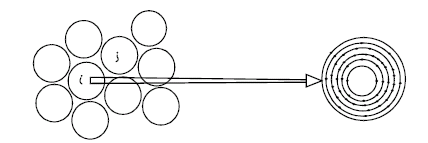 | |
| Fig. 1: | The DAB molecule |
Since, there are more than 80 different HIA formed as direct fission fragments with different yields, these atoms associate to form a molecule. Molecule formation depends on the yields, fuel enrichment, neutron flux and the amount of burn-up in a very complicated probabilistic process, so it is too far to expect that this molecule contains Cs, I, Rb atoms with some known ratio. Also, the large differences between the half-lives of different fission products make the expectation more difficult. But one can guess and suggest some specifications of the molecule.
Molecule Specification
Since, these molecules are formed of different atoms with different excitation energies, a clear picture of this molecule and its specification will not be available, unless the nature of the fission process and its mechanisms are known precisely. But since this is not available yet, the following specifications are expected:
This molecule is highly attached internally. The energy needed to separate an atom from this molecule ( tens of keV) in comparison with the low energy (few eV’s) needed to separate Na and Cl in NaCl molecule as example. Diameter of this molecule is of nm order assuming the ionization states of HIAs and the atomic number of each atom.
The observations that have been collected from reactor melted cores in TMI and Chernobyl, we find the following: no clear chemical compounds, retained materials (Cs, Ru, etc.) do not depend neither on their MP and BP, nor on the reactor temperature. The same thing applies to released materials and FP have distributed within the molten fuel in a way not coincident with the diffusion in a hyperstoichiometric media.
The DAB hypothesis shall have a special importance in nuclear safety and related fields. It deserves this importance because of the following:
| • | According to DAB, the reactor accident radiological impact in the environment is reduced. The particles in the atmosphere will precipitate, in soil will stay in the upper layers and in water will be sedimented, so we can go to our objectives, even during a major accident like Chernobyl, concerning radiation safety directly. Lastly, the radionuclides will stay on soil surface and on sea bedrock as particles and will never be available in ionic forms which reduce their mobility and then their potential risk on living species. This also reduces the expected potential risk associated with nuclear energy industry and, for faraway, radiophobia. Radiation protection measures during and after accident (e.g., evacuation of affected people, providing relief, etc.) may be directed in a better way and the expenses of these measures will be reduced |
| • | According to DAB, we differentiate between reactor accident releases and nuclear explosion releases of FP |
The FP released from the reactor will be of larger size and weight giant molecules. So, their staying in atmosphere or water bodies will be very short, which is a logical result that could be used in field detection of FP to differentiate between the two kinds of releases.
Another result could be obtained from the difference in the size and weight of molecules is that the nuclear explosion releases will spread over a large distance and long retention and fallout time, in the case of atmospheric detonation, in addition to the overall ionization state of the molecule.
| • | In case of nuclear release, sheltering is the first priority which is necessary for many days only, depending on the kind and volume of releases. While stable iodine may be of very low, or completely no, priority. |
| • | Derived air concentrations, annual limits of intake and biological half-lives for radioactive materials should be revised. |
| • | According to DAB hypothesis, we can differentiate between the chemical behavior of FP, irradiation products and natural radioactive materials. The latest are the easiest to deal with, while the second is a little difficult to deal with, whereas it is too difficult to deal chemically with FP. Ignoring these differences in chemical behavior of different radionuclides is one of the most important reasons of former models failure during FP modeling in the laboratory. |
CONCLUSION
A comparison has been made between the DAB hypothesis and other FP models. It is clear now that there is greater coincidence between the field observations and DAB’s criterion in interpreting these observations, which gives DAB hypothesis a special importance in the field of nuclear safety and radiation protection, as well as reducing the expected potential risk associated with nuclear energy industry and radiophobia.
The DAB criterion has succeeded in explaining almost all cases of FP behavior in and ex-vessel and in the environment. This lays a stress on DAB hypothesis as a good tool to interpret FP behavior and that the assumptions used in DAB construction are more near to the scientific facts than other assumptions like hyperstoichiometric media or atom diffusion.
REFERENCES
- Ajlouni, A.W. and A.A. Mahasneh, 2007. Atom behavior during nucleus fission process (Highly Ionized Atoms (HIA) Hypothesis). J. Applied Sci., 7: 1664-1668.
CrossRefDirect Link - Ajlouni, A.W., O. Abu-Haija, M. Abdelsalam and. H. Rabai'Ah, 2008. Nuclear fission products behavior in the environment. J. Applied Sci. Environ. Sanitat., 3: 109-116.
Direct Link - Akers, D.W. and B.K. Schuetz, 1994. Physical and radio-chemical examinations of debris from TMI-2 lower head. Nucl. Safety, 35: 288-300.
Direct Link - ApSimon, H.M., P. Gudiksen, L. Khitrov, H. Rodhe and T. Yoshikawa, 1988. Modeling the dispersal and deposition of radionuclides: Lessons from chernobyl. Environment, 30: 17-20.
Direct Link - Capone, F., J.P. Hiernaut, M. Martellenghi and C. Ronchi, 1996. Mass spectrometric measurments of fission product effusion from irradiated LWR fuel. Nucl. Sci. Eng., 124: 436-454.
Direct Link - Conkic, L., Z. Skrbic and J. Slivka, 1990. Elimination of long lived fission products from river sediments. Water Res., 24: 333-335.
Direct Link - Ellison, P., M. Hyder and P. Monson, 1993. Aluminum-uranium fuel-melt behavior during severe nuclear reactor accidents. Nucl. Safety, 34: 196-212.
Direct Link - Fry, F.A., R.H. Clarke and M.C. O`Riodan, 1986. Early estimates of UK radiation doses from the chernobyl reactor. Nature, 321: 193-195.
CrossRefDirect Link - Ishikawa, M., S. Shiozawa, T. Wakabayashi, N. Ohnishi and H. Mochizoki, 1987. An examination of the accident scenario in the chernobyl nuclear power station. Nucl. Safety, 28: 448-454.
Direct Link - Johnson, I., D.V. Steidl and C.E. Johnson, 1984. Mass spectrometric study of the release of volatile fission products from irradiated LWR fuel. Proceedings of the Tropical Meeting on Fission Product Behavior and Source Term Research, July 15, Snowbird, Utah, USA., pp: 1-8.
Direct Link - Kahook, S., R. Garrett and L. Canas, 1995. Spent nuclear fuel characterization for a bounding reference assembly for the receiving basin for off-site fuel. Nucl. Safety, 36: 321-331.
Direct Link - Kalman, G. and R. Weller, 1986. Progress in the recovery operations at Three Mile Island unit-2: An update. Nucl. Safety, 27: 69-84.
Direct Link - Kelber, C., 1986. The radiological source term of nuclear power reactors. Nucl. Safety, 27: 36-57.
Direct Link - Kress, T.S., M.W. Jankowski, J.K. Joosten and D.A. Powers, 1987. The chernobyl accident sequences. Nucl. Safety, 28: 1-9.
Direct Link - Lee, M. and J. Wu, 1992. Ex-vessel releases of radionuclides during molten core/concrete interactions in severe LWR accidents. Nucl. Sci. Eng., 111: 82-101.
Direct Link - Luykx, F. and G. Fraser, 1982. Radioactive effluents from nuclear fuel reprocessing plants in the European Community, 1974-1975. Nucl. Safety, 23: 710-720.
Direct Link - Luykx, F. and G. Fraser, 1982. Radioactive effluents from nuclear power stations in the European Community, 1974-1975. Nucl. Safety, 23: 578-586.
Direct Link - Malinauskas, A.P. and J.T. Bell, 1987. The chemistry of fission-product iodine under nuclear reactor accident conditions. Nucl. Safety, 28: 505-514.
Direct Link - Malinauskas, A.P. and T.S. Kress, 1991. Effects of chemical phenomena on LWR severe accident fission product behavior. Nucl. Safety, 32: 56-64.
Direct Link - Miller, C.W., 1983. Models and parameters for environmental radiological assessment. Nucl. Safety, 24: 227-238.
Direct Link - Morris, F.O. and A.L. Richard, 1992. ORNL studies of fission product release under LWR severe accident conditions. Nucl. Safety, 33: 344-365.
Direct Link - Warner, S.F. and R.M. Harrison, 1993. Radioecology After Chernobyl: Biogeochemical, Pathways of Artificial Radionuclides. SCOPE Series 50, John Wiley and Sons, Chichester, UK., ISBN-10: 0471931683.
Direct Link - Taleyarkhan, R.P., 1992. Analysis and modeling of fission products release from various uranium-aluminum plate-type reactor fuel. Nucl. Safety, 33: 6-22.
Direct Link - Wahlig, B., D. Walker, M. Ghavi and J. Palms, 1989. Problems associated with routine in-plant radioactive effluent monitoring systems at US-LWR. Nucl. Safety, 305: 233-233.
Direct Link - Winkelmann, I. and D. Fields, 1987. Quality control measurements of airborne radionuclides from nuclear power plants in the Federal Republic of Germany. Nucl. Safety, 28: 63-70.
Direct Link - Borovoi, A.A. and A.R. Sich, 1995. The Chornobyl accident revisited, Part II: The state of the nuclear fuel located within the Chornobyl sarcophagus. Nucl. Safety, 36: 1-32.
Direct Link