

Ragaa Abd Elfatah Hamouda
Department of Microbial Biotechnology, Genetic Engineering and Biotechnology Research Institute, University of Sadat City, Sadat, Egypt
LiveDNA: 20.16832
Ghada Wagih Abou-El-Souod
Department of Botany, Faculty of Science, Menoufia University, Shibin Al Kawm, Al Minufiyah, Egypt
LiveDNA: 20.17396
International Journal of Pharmacology
Year: 2018 | Volume: 14 | Issue: 1 | Page No.: 99-107





ABSTRACT
Background and Objective: The most nutritional factors that effect on the metabolism and cell growth is phosphorus. The concentration of phosphorus in the media can influence on the chemical contents and the biomass of microalgae. This study aimed to determine the effect of phosphorus concentrations on the carbohydrate, protein, lipids content and active components such as tannins, flavonoids, phenolic content, antioxidant, antibacterial activities and cholesterol reduction effect of Scenedesmus obliquus (S. obliquus). Materials and Methods: Scenedesmus obliquus was cultured in BG11 medium. The flasks were incubated at 28±2°C under continuous fluorescent light intensity of 180 μEm–2 sec–1 for 17 days at pH 7.5. Five different concentrations of phosphorous were added to the medium as K2HPO4 (0.001, 0.002, 0.005, 0.007 and 0.1g L–1) and effect of the five phosphorus concentrations on the carbohydrate, protein and lipids content of S. obliquus . The responses of the treatments were compared by analysis of variance (ANOVA) SPSS software version 16, one way ANOVA LSD<0.5. Results: The results demonstrated that the best concentration of phosphorous was 0.007 g L–1 when the carbohydrate content was 18.13%, the highest protein content was 34.68% when the green microalgae were grown under phosphorous concentration was 0.007 g L–1. The best percentage of lipid content was 16% when the phosphorous concentration was 0.014 g L–1. The results demonstrated that the best concentration of phosphorous was 0.014 g L–1 media for production of the tennins concentration at 0.7 mg g–1 dry wt. and the flavonoid content at 200 μg g–1 algal dry wt., the best phosphorous concentrations had antioxidant activities of 35%. When the influence of phosphorus concentrations on the antibacterial activities of Scenedesmus obliquus was compared with Vancomycin, the highest inhibition was found with Staphylococcus sp. at 26 mm sand Vancomycin at 28 mm. Conclusion: Thus, various concentrations of phosphorus can affect in the chemicals composition of Scenedesmus obliquus and its activities.
PDF Abstract XML References Citation
Article History
Received: July 28, 2017;
Accepted: August 26, 2017;
Published: December 15, 2017
Copyright: © 2018. This is an open access article distributed under the terms of the Creative Commons Attribution License , which permits unrestricted use, distribution and reproduction in any medium, provided the original author and source are credited.
How to cite this article
Ragaa Abd Elfatah Hamouda and Ghada Wagih Abou-El-Souod, 2018. Influence of Various Concentrations of Phosphorus on the Antibacterial, Antioxidant and Bioactive Components of Green Microalgae Scenedesmus obliquus. International Journal of Pharmacology, 14: 99-107.
DOI: 10.3923/ijp.2018.99.107
URL: https://scialert.net/abstract/?doi=ijp.2018.99.107
DOI: 10.3923/ijp.2018.99.107
URL: https://scialert.net/abstract/?doi=ijp.2018.99.107
INTRODUCTION
Phosphorus plays an important role in most cellular processes, essentially those related to energy transfer, macromolecule biosynthesis, photosynthesis and respiration1. Phosphorus limitation can cause strong reduction in the membrane phospholipids concentration and impair these contents by synthesis of non-phosphorus glycolipids and sulfolipids2.
Phosphorus is also a key factor in lipid accumulation in microalgae; however, only a few studies have investigated this subject. Those studies did not draw a common conclusion about the strains of microalgae used because; the process is very species-dependent. For example, phosphorus restriction led to enhance lipid productivity in Phaeodactylum tricornutum, Chaetoceros sp. and Pavlova lutheri, whereas lower lipids level where found in green algae, such as Nannochloris atomus and Tetraselmis sp.3.
Freshwater algae have high effort to remove heavy metals from wastewater and to produce energy. The concentrations of phosphorus and nitrogen have been found to impact on the growth, nutrient absorption and lipid accumulation of a freshwater microalga Scenedesmus sp.4. Many factors affect these properties, nutrient concentration5-7, CO2 aeration8 and light conditions9. Nitrogen and phosphorus concentration that present in wastewater is considered to be an essential factor, has a direct effects on algal growth kinetics, which is closely related to nutrient uptake and lipid accumulation. Since uptake is the main mechanism of nutrient elimination by microalgae, the microalgal population growth rate directly affects the nutrient elimination rate. Meantime, nitrogen and phosphorus can only be altogether utilized and discarded efficiently if the nitrogen/phosphorus (N/P) ratio in wastewater is in the suitable concentration.
Several planning have been applied to mend microalgae growth and lipid accumulation, including optimization of the medium’s composition (e.g., type of carbon source, nitrogen, phosphorus, vitamins and salts)10 and physical parameters (e.g., pH, temperature and light intensity)11. Microalgae can gather considerable amount of carbohydrates, proteins and/or lipids12,13. Changes in microalgae biochemical content are likely to occur as a result of diversity in pH14, temperature15, light and salinity16 and metal content17. Alternate methods of cultivation (i.e., autotrophic and heterotrophic)18 and harvesting19 can also overlap with cellular biochemical constitution. Regarding the influence of nutrients, studies have elucidated that N and/or P limitation in growth media causes metabolism modification that induces lipid accumulation20,21. The major objective of the present study was to determine the effect of phosphorus concentrations on the carbohydrate, protein and lipid content of S. obliquus and its effects on the ability of alga to reduction cholesterol, antibacterial and antioxidant activities.
MATERIALS AND METHODS
The studying were carried out in the Microbial Biotechnology Department, Genetic Engineering and Biotechnology Research Institute (GEBRI), University of Sadat City, Egypt (2016) and all chemicals are used from Sigma Aldrich.
Algae collection and preparation: The experimental organism used in this study, microalga S. obliquus, was obtained from the Microbial Biotechnology Department, Genetic Engineering and Biotechnology Research Institute (GEBRI), University of Sadat City, Egypt.
Alga cultivation with different phosphorus concentrations: S. obliquus was cultured in BG11 medium22. The flasks were incubated at 28±2°C under continuous fluorescent light intensity of 180 μEm–2 sec–1 for 17days at pH 7.5. Five different concentrations of phosphorous were added to the medium as K2HPO4 (0.001, 0.002, 0.005, 0.007 and 0.1g L–1). The growth of S. obliquus was determined using optical density measured at 660 nm; the cell count for S. obliquus was calculated using a Neubauer hemocytometer chamber.
Effect of the five phosphorus concentrations on the carbohydrate, protein and lipids content of S. obliquus: The experiments aimed to identify the effects of the five different phosphorus concentrations. All the experiments were conducted in triplicate and then the carbohydrate, protein and lipid content of S. obliquus was determined.
Determination of the protein content of S. obliquus: The nitrogen content was determined23. The protein content is equal to the nitrogen content multiplied by 6.25.
Determination of the lipid content and growth in S. obliquus: To determine the lipid content, 2 g of algal dry wt. were soaked in 20 mL chloroform-methanol (1:1 v/v) for 48 h and then filtrated. The residues were soaked again in (the previous solvent) chloroform-methanol (1:1 v/v) for 48 h and filtrated. The filtrates were then concentrated in a vacuum until dry. The weight of the crude lipids obtained from the sample was measured using an electronic scale24.
Determination of the carbohydrate content in S. obliquus: Total carbohydrate content was determined using the phenol-sulfuric acid method with glucose as the standard25.
Determination of the total phenolic content: The total phenolic content (TPC) was determined using the Folin-Ciocalteu method26. The color intensities were measured at 765 nm using spectrophotometer (UV-200-RS LW) and compared to gallic acid calibration curve.
Determination of antioxidant capacity (DPPH assay): The percentage of antioxidant activity of alga treated with different concentrations of phosphorus in BG 11 medium was determine by DPPH (2,2-Diphenyl-1-picryl-hydrazyl-hydrate) free radical assay27.
Determination of flavonoid contents: The flavonoid contents of S. obliquus were determined according to the aluminum chloride colorimetric method described by Barku et al.28.
Determination of tannins (Vanillin-HCL assay): Samples (0.2 g) of algal dry weight were extracted with 10 mL of methanol for 24 h at 30°C. One milliliter of the resulting extract was reacted with 5 mL of vanillin reagent (50:50 mixtures of 1% vanillin/ 8% HCl in methanol) for 20 min at 30°C and absorbance was read at 500 nm. For blanks, 4% HCl in methanol instead of vanillin reagent was added to the extract and absorbance was also read at 500 nm. Blank values were subtracted from experimental values to give adjusted data. Tannic acid standard curve from 0.0-1.0 mg mL–1 was used in calculating tannin levels29.
Determination of cholesterol reduction effect: The enzymatic colorimetric kit was used for determination the cholesterol reduction of methanol extracts obtained from algal dry weight that treated with different concentrations of phosphorus in BG 11 medium30.
Antibacterial activity of algal methanol extracts that grown under different phosphorus concentrations in BG11 medium: The antibacterial activity of methanol extracts of alga that grown under various concentration of phosphorus in comparison with Vancomycin was assessed against both Staphylococcus aureus and Escherichia coli using agar well diffusion method according to Perez et al.31. Methanol extract of S. obliquus was dry weight dissolved in dimethyl sulfoxide (DMSO) and also used as negative control. Vancomycin was used as positive control. Exactly 200 μL from 1 mg mL–1 was used from algal methanol extract for each well. The inhibition zones diameter was measured in mm after 24 h of incubation.
FT-IR spectroscopy analysis: Fourier Transform Infra-Red (FT-IR) for methanol extracts of S. obliquus was determined according to the method of Abd El Ghany et al.32.
Statistical analysis: The responses of the treatments were compared by one way analysis of variance (ANOVA)33. Significant differences between the means of parameters were determined using Duncan’s multiple range tests (p<0.05). All analysis was carried out with SPSS software version 1633.
RESULTS AND DISCUSSION
Phosphorus is a fundamental nutrient for algal growth, since it share in intra-cell energy transfer, nucleic acid synthesis and special reactions related to cell division34. Phosphorus is a dynamic nutrient for converting sunlight into chemical energy and fundamental to cellular growth and reproduction35. Effects of phosphorus (P) or joint nitrogen (N) and P fecundity on lake biology are well studied and generally, promotion algal biomass and productivity and change in species structure36. Fried et al.37 concluded that both nitrogen and phosphates have enhance algal biomass. Variables affect on algal growth autonomous of each other and there is no interaction between them. These reveal that both nitrogen and phosphates are effective lowering nutrients that can be decreased to control algal generation. Phosphorus is an element required for microalgae growth, especially for generating and transforming metabolic energy38. Phosphorus is an essential nutrient that constitutes cells, nucleotides and nucleic acids39.
Alga cultivation with different phosphorus concentrations: It is evident from Fig. 1 that growth of S. obliquus at low with no phosphorus present in the medium and the best growth were obtained when the medium supplemented with 0.007 g L–1 phosphorus medium. The phosphorus concentration 0.0035 was the more positive effect on growth than 0.014 and 0.01 g L–1 phosphorus of media.
Figure 2 illustrate that the phosphorus content in algal medium had effective in growth that was measured by cell count. The highest growth rate was obtained with 0.007 g L–1 phosphorus followed by 0.0035, 0.01 and 0.014, respectively. Meanwhile, when alga cultivated in media without phosphorus the algal growth rate is very low. The yield of algae can be increased when the nutrients nitrogen and phosphorus are efficiently utilized from the growth medium. Nitrogen and phosphorus utilization by algae depends on various agents such as the media composition, initial nutrient concentration of the media, light intensity, mixing and nitrogen/phosphorus ratio and light/dark cycle5.
The present results in Table 1 are in agreement with Liang et al.20, who showed that the results suggest that the change of phosphorus concentration had various effects on the carbohydrate and the protein composition, in which the protein composition was not significantly altered, whereas the carbohydrate content appeared to be attached to the phosphorus concentration.
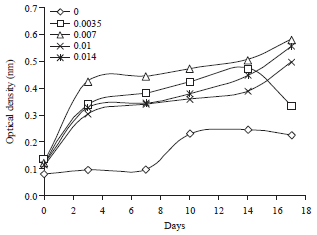 | |
| Fig. 1: | Effect of phosphorus concentrations of S. obliquus growth measured by OD |
| Bars represent the standard error of the mean of three replicates. The mean variation is significant at the 0.05 level | |
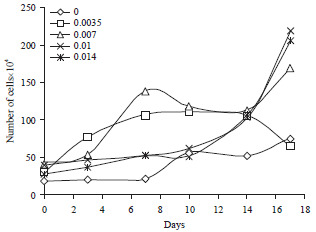 | |
| Fig. 2: | Effect of phosphorus concentrations of S. obliquus growth measured by number of cells |
Bars represent the standard error of the mean of three replicates. The mean variation is significant at the 0.05 level | |
The present results are in agreement with Liang et al.20, who showed that lipid accumulation can be improved by manipulating the levels of phosphorus in culture media reported the effect of phosphorus concentration at different stages of culture in the lipid accumulation by Chlorella sp.
Under phosphorus stress, the green alga Ankistrodesmus falcatus also display higher carbohydrate and protein contents as well as total lipid contents, with larger and intensive cells40.
Microalgae are the main natural source for a vast arrangement of worthy compounds as lipids, proteins, carbohydrates, pigments among others. Despite many applications, only a few species of microalgae are cultured commercially because of poorly developed of cultivation process41. Scenedesmus sp. increment in lipid content by 35% was observed when phosphorus starvation was used42. In a base of these reports, it can be observed that during microalgal cell exposition to phosphorus deprivation, the biosynthetic pathways are altered, thus the synthesis of lipids is increased as a response to this stress. Hu et al.43 mentioned that under stress conditions, the formation of lipids is a response to consuming 24-NADPH derived from the excess of electron transport chain (formation of reactive oxygen species), which is twice that demanded the synthesis of a carbohydrate or protein molecule of the same mass.
In Fig. 3, the results showed that with increasing the phosphorus concentrations, the tannic contents were increased, due to phosphate concentration enhanced some phytochemical components for tannic content.
In Fig. 4, 5, 6, the results also indicated that the influence of phosphorus concentration 0.07 g L–1, gave the highest of antioxidant, flavonoids and phenolic contents of S. obliquus because the highest growth rate of S. obliquus was obtained with 0.007 g L–1 phosphorus.
In Fig. 7, showed influence of phosphorus concentrations on cholesterol, reduction activities of S. obliquus.
Nyaka44 reported that when 30 men with high cholesterol and mild hypertension took Spirulina sp. complement daily for 8 weeks and didn’t modification their customary diet, the cholesterol level were decreased by 4.5% within just 4 weeks.
| Table 1: | Effect of phosphorus concentrations on carbohydrate, protein and lipids contents of S. obliquus |
 | |
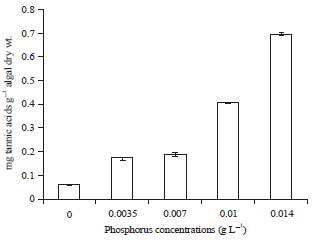 | |
| Fig. 3: | Influence of phosphorus concentrations on tannic acid contents of S. obliquus |
Bars represent the standard error of the mean of three replicates. The mean variation is significant at the 0.05 level | |
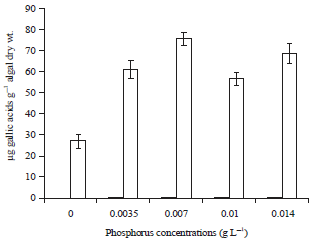 | |
| Fig. 4: | Influence of phosphorus concentrations on phenolic contents of S. obliquus |
| Bars represent the standard error of the mean of three replicates. The mean variation is significant at the 0.05 level | |
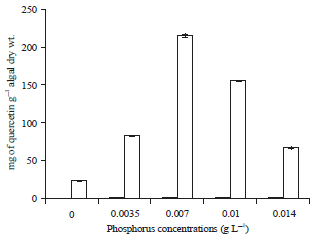 | |
| Fig. 5: | Influence of phosphorus concentrations on flavonoids contents of S. obliquus |
Bars represent the standard error of the mean of three replicates. The mean variation is significant at the 0.05 level | |
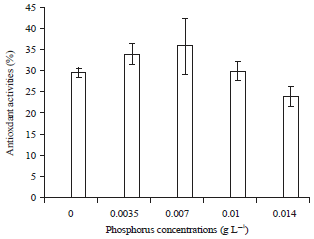 | |
| Fig. 6: | Influence of phosphorus concentrations on antioxidant activities of S. obliquus |
Bars represent the standard error of the mean of three replicates. The mean variation is significant at the 0.05 level | |
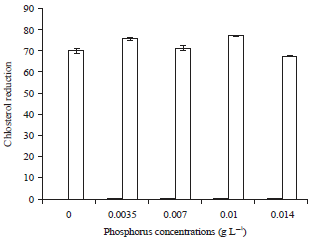 | |
| Fig. 7: | Influence of phosphorus concentrations on cholesterol, reduction activities of S. obliquus |
Bars represent the standard error of the mean of three replicates. The mean variation is significant at the 0.05 level | |
Spirulina sp. also contains gamma-linoleic acid which is stellar for the health of the heart and for reducing triglycerides. So, these indicate that the crude fibers of the algae declare the active component which reduces the cholesterol level. The present result showed that no consistent relationship of the influence of phosphorus concentrations on cholesterol, this is due to phosphorus concentrations have no effect on cholesterol, reduction activities of S. obliquus.
In Fig. 8 showed the influence of phosphorus concentrations on antibacterial activities from S. obliquus compared with Vancomycin, the highest inhibition with Staphylococcus sp. at 26 mm while Vancomycin at 28 mm.
The present results showed with increasing of phosphorus concentration, the antibacterial increased and that according to Oswald and Gotaas45, who showed that bio-treatment of wastewater with algae to eliminate nutrients like nitrogen and phosphorus and to supply oxygen for aerobic bacteria was offer over 50 years ago.
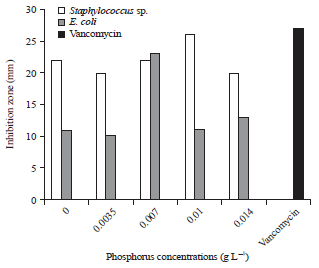 | |
| Fig. 8: | Influence of phosphorus concentrations on antibacterial activities of S. obliquus |
Bars represent the standard error of the mean of three replicates. The mean variation is significant at the 0.05 level | |
The nitrogen in sewage out flowing emerges primarily from metabolic changes of extra derived compounds, whereas 50% or more of phosphorus emerges from synthetic detergents. The main nutrients in which they exist in wastewater are NH4+ (ammonia), NO2– (nitrite), NO3– (nitrate) and PO43– (orthophosphate). Simultaneously these two elements are known as nutrients and their elimination is known as nutrient baring and enhanced antibacterial activities46.
Fourier transform infrared (FTIR) spectroscopy was used in this work to identify and determine spectral lineaments of S. obliquus (Table 2). For FTIR analyses, a view from the transmission region between 3443 and 541 cm–1 on the microscope was chosen. All FTIR spectra showed a widely analogous sequence of some special bands and were assigned a range of vibrationally active chemical groups, including remaining water (-OH), lipid (-CH2), cellulose (-C=O), protein (amide). The results show that FTIR technique has the possibility to become usable for the determination of single cell biomass content, the purpose of the present consideration was to use FTIR analysis to check molecular diversity in freshwater alga S. obliquus. Each peak was expressed a functional group. Protein spectra were described by two strong features at 1636 cm–1 (S. obliquus). The protein amide bands represent by 1636 cm–1, the wavenumber range of lipid-carbohydrates between 2809-3012 cm–1 47.
| Table 2: | IR spectra of S. obliquus grown with different concentrations of phosphorus |
 | |
CONCLUSION
Phosphorus is one of the most important limiting nutrients for algae growth, under conditions of nitrogen or phosphorus deficiency, the lipid content of Scenedesmus obliquus was rise but lipid productivity and accumulation rate were not at its elevated due to the relatively depressed algal biomass. Further research should be managed to test the contradiction of lipid content and lipid productivity, it appears that carbohydrates and lipid contents can be significantly amended by straightforward operational process predominant phosphorus availability. Phosphate concentration enhanced some phytochemical compounds for example phenols, antioxidants, flavonoids and protein. Increasing of phosphorus concentration possessed increasing of antibacterial activity against Staphylococcus aureus, Escherichia coli to 0.01 and 0.007, respectively. The gradual lipid content can be particularly pertinent, for biodiesel industries as well as several other companies attentive in the commercial value of algae-derived oil by-products.
SIGNIFICANCE STATEMENTS
This study discovers that, different phosphorus concentrations on BG11medium has effect on the growth, primary and secondary metabolites of microgreen alga Scenedesmus obliquus and also influence on the ability of cholesterol reduction effect, antioxidant and antibacterial activity against pathogenic bacteria. This study will help the researcher to find out the significant areas of the phosphate concentration enhanced some phytochemical compounds that many researchers were not able to examine. Thus a new theory on the importance of phosphorus concentrations may be arrived to promote of bioactive contents of algae.
REFERENCES
- Raghothama, K.G., 2000. Phosphate transport and signaling. Curr. Opin. Plant Biol., 6: 182-187.
CrossRefPubMedDirect Link - Benning, C., Z.H. Huang and D.A. Gage, 1995. Accumulation of a novel glycolipid and a betaine lipid in cells of Rhodobacter sphaeroides grown under phosphate limitation. Arch. Biochem. Biophys., 317: 103-111.
CrossRefDirect Link - Reitan, K.I., J. R. Rainuzzo and Y. Olsen, 1994. Effect of nutrient limitation on fatty acid and lipid content of marine microalgae. J. Phycol., 30: 972-979.
CrossRefDirect Link - Li, X., H.Y. Hu, G. Ke and Y.X. Sun, 2010. Effects of different nitrogen and phosphorus concentrations on the growth, nutrient uptake and lipid accumulation of a freshwater microalga Scenedesmus sp. Bioresour. Technol., 101: 5494-5500.
CrossRefDirect Link - Aslan, S. and I.K. Kapdan, 2006. Batch kinetics of nitrogen and phosphorus removal from synthetic wastewater by algae. Ecol. Eng., 28: 64-70.
CrossRefDirect Link - Khozin-Goldberg, I. and Z. Cohen, 2006. The effect of phosphate starvation on the lipid and fatty acid composition of the fresh water eustigmatophyte Monodus subterraneus. Phytochemistry, 67: 696-701.
CrossRefDirect Link - Rodolfi, L., G.C. Zittelli, N. Bassi, G. Padovani, N. Biondi, G. Bonini and M.R. Tredici, 2009. Microalgae for oil: Strain selection, induction of lipid synthesis and outdoor mass cultivation in a low-cost photobioreactor. Biotechnol. Bioeng., 102: 100-112.
CrossRefPubMedDirect Link - Chiu, S.Y., C.Y. Kao, M.T. Tsai, S.C. Ong, C.H. Chen and. C.S. Lin, 2009. Lipid accumulation and CO2 utilization of Nannochloropsis oculata in response to CO2 aeration. Bioresour. Technol., 100: 833-838.
CrossRefPubMedDirect Link - Solovchenko, A.E., I. Khozin-Goldberg, S. Didi-Cohen, Z. Cohen and M.N. Merzlyak, 2008. Effects of light intensity and nitrogen starvation on growth, total fatty acids and arachidonic acid in the green microalga Parietochloris incisa. J. Applied Phycol., 20: 245-251.
CrossRefDirect Link - Mata, M.T., A.A. Martins and N.S. Caetano, 2010. Microalgae for biodiesel production and other applications: A review. Renewable Sustainable Energy Rev., 14: 217-232.
CrossRefDirect Link - Rawat, I., R.R. Kumar, T. Mutanda and F. Bux, 2013. Biodiesel from microalgae: A critical evaluation from laboratory to large scale production. Applied Energy, 103: 444-467.
CrossRefDirect Link - Ho, S.H., C.Y. Chen and J.S. Chang, 2012. Effect of light intensity and nitrogen starvation on CO2 fixation and lipid/carbohydrate production of an indigenous microalga Scenedesmus obliquus CNW-N. Bioresour. Technol., 113: 244-252.
CrossRefDirect Link - Ho, S.H., S.W. Huang, C.Y. Chen, T. Hasunuma, A. Kondo and J.S. Chang, 2013. Characterization and optimization of carbohydrate production from an indigenous microalga Chlorella vulgaris FSP-E. Bioresour. Technol., 135: 157-165.
CrossRefDirect Link - Khalil, Z.I., M.M.S. Asker, S. El-Sayed and I.A. Kobbia, 2010. Effect of pH on growth and biochemical responses of Dunaliella bardawil and Chlorella ellipsoidea. World J. Microbiol. Biotechnol., 26: 1225-1231.
CrossRefDirect Link - Roleda, M.Y., S.P. Slocombe, R.J.G. Leakey, J.G. Day, E.M. Bell and M.S. Stanley, 2013. Effects of temperature and nutrient regimes on biomass and lipid production by six oleaginous microalgae in batch culture employing a two-phase cultivation strategy. Bioresour. Technol., 129: 439-449.
CrossRefDirect Link - Ruangsomboon, S., M. Ganmanee and S. Choochote, 2013. Effects of different nitrogen, phosphorus and iron concentrations and salinity on lipid production in newly isolated strain of the tropical green microalga, Scenedesmus dimorphus KMITL. J. Applied Phycol., 25: 867-874.
CrossRefDirect Link - Sun, X., Y. Cao, H. Xu, Y. Liu, J. Sun, D. Qiao and Y. Cao, 2014. Effect of nitrogen-starvation, light intensity and iron on triacylglyceride/carbohydrate production and fatty acid profile of Neochloris oleoabundans HK-129 by a two-stage process. Bioresour. Technol., 155: 204-212.
CrossRefDirect Link - Lowrey, J., M.S. Brooks and P.J. McGinn, 2015. Heterotrophic and mixotrophic cultivation of microalgae for biodiesel production in agricultural wastewaters and associated challenges-a critical review. J. Applied Phycol., 27: 1485-1498.
CrossRefDirect Link - Lee, S.J., S.B. Kim, J.E. Kim, G.S. Kwon, Y.B.D. Boon and H.M. Oh, 1998. Effects of harvesting method and growth stage on the flocculation of the green alga Botryococcus braunii. Lett. Applied Microbiol., 27: 14-18.
CrossRefDirect Link - Liang, K., Q. Zhang, M. Gu and W. Cong, 2013. Effect of phosphorus on lipid accumulation in freshwater microalga Chlorella sp. J. Applied Phycol., 25: 311-318.
CrossRefDirect Link - Li, Y., F. Han, H. Xu, J. Mu, D. Chen, B. Feng and H. Zeng, 2014. Potential lipid accumulation and growth characteristic of the green alga Chlorella with combination cultivation mode of nitrogen (N) and phosphorus (P). Bioresour. Technol., 174: 24-32.
CrossRefDirect Link - Rippka, R., J. Deruelles, J.B. Waterbury, M. Herdman and R.Y. Stanier, 1979. Generic assignments, strain histories and properties of pure cultures of cyanobacteria. Microbiology, 111: 1-61.
CrossRefDirect Link - AOAC and K. Helrich, 1990. Official Methods of Analysis of the Association of Official Analytical Chemists. 15th Edn., The Association, Arlington, Virginia, ISBN: 9780935584424.
Direct Link - Lee, J.Y., C. Yoo, S.Y. Jun, C.Y. Ahn and H.M. Oh, 2010. Comparison of several methods for effective lipid extraction from microalgae. Bioresour. Technol., 101: S75-S77.
CrossRefDirect Link - DuBois, M., K.A. Gilles, J.K. Hamilton, P.A. Rebers and F. Smith, 1956. Colorimetric method for determination of sugars and related substances. Anal. Chem., 28: 350-356.
CrossRefDirect Link - Singleton, V.L. and J.A. Rossi, 1965. Colorimetry of total phenolics with phosphomolybdic-phosphotungstic acid reagents. Am. J. Enol. Vitic., 16: 144-158.
CrossRefDirect Link - Mensor, L.L., F.S. Menezes, G.G. Leitao, A.S. Reis, T.C. dos Santos, C.S. Coube and S.G. Leitao, 2001. Screening of Brazilian plant extracts for antioxidant activity by the use of DPPH free radical method. Phytother. Res., 15: 127-130.
CrossRefPubMedDirect Link - Barku, V.Y.A., Y. Opoku-Boahen, E. Owusu-Ansah and E.F. Mensah, 2013. Antioxidant activity and the estimation of total phenolic and flavonoid contents of the root extract of Amaranthus spinosus. Asian J. Plant Sci. Res., 3: 69-74.
Direct Link - Earp, C.F., J.O. Akingbala, S.H. Ring and L.W. Rooney, 1981. Evaluation of several methods to determine tannins in sorghums with varying kernel characteristics. Cereal Chem., 58: 234-238.
Direct Link - Kamal, S., R.A. Hamouda, H. Mahrous, M.L. Salem, H.A. Hamza and E. Abd Elhafez, 2015. In vitro treatment with intact cells or cell lysates of Lactobacillus and Spirulina induced lowering effects on induced hypercholesteremia. Int. J. Pharmacol., 11: 638-643.
CrossRefDirect Link - Pérez-Rodríguez, C., W.M. Pauli and P. Bazevque, 1990. An antibiotic assay by the agar well diffusion method. Acta Biol. Med. Exp., 15: 113-115.
Direct Link - Abd El Ghany, K., R.A. Hamouda, H. Mahrous, E. Abd Elhafez, F.A.H. Ahmed and H.A. Hamza, 2016. Description of isolated LAB producing β-glucan from Egyptian sources and evaluation of its therapeutic effect. Int. J. Pharmacol., 12: 801-811.
CrossRefDirect Link - Beardall, J., T. Berman, P. Heraud, M.O. Kadiri and B.R. Light et al., 2001. A comparison of methods for detection of phosphate limitation in microalgae. Aquat. Sci., 63: 107-121.
CrossRefDirect Link - Li, M., X. Shi, C. Guo and S. Lin, 2016. Phosphorus deficiency inhibits cell division but not growth in the dinoflagellate Amphidinium carterae. Front. Microbiol., Vol. 7.
CrossRefDirect Link - Smith, S.V., 1984. Phosphorus versus nitrogen limitation in the marine environment. Limnol. Oceanogr., 29: 1149-1160.
Direct Link - Fried, S., B. Mackie and E. Nothwehr, 2003. Nitrate and phosphate levels positively affect the growth of algae species found in Perry Pond. Tillers, 4: 21-24.
Direct Link - Sun, Y. and C. Wang, 2009. The optimal growth conditions for the biomass production of Isochrysis galbana and the effects that phosphorus, Zn2+, CO2 and light intensity have on the biochemical composition of Isochrysis galbana and the activity of extracellular CA. Biotechnol. Bioprocess Eng., 14: 225-231.
CrossRefDirect Link - Correll, D.L., 1999. Phosphorus: A rate limiting nutrient in surface waters. Poult. Sci., 78: 674-682.
CrossRefDirect Link - Kilham, S., D. Kreeger, C. Goulden and S. Lynn, 1997. Effects of nutrient limitation on biochemical constituents of Ankistrodesmus falcatus. Freshwater Biol., 38: 591-596.
CrossRefDirect Link - Benavente-Valdes, J.R., C. Aguilar, J.C. Contreras-Esquivel, A. Mendez-Zavala and J. Montanez, 2016. Strategies to enhance the production of photosynthetic pigments and lipids in chlorophycae species. Biotechnol. Rep., 10: 117-125.
CrossRefDirect Link - Wu, Y.H., Y. Yu and H.Y. Hu, 2015. Microalgal growth with intracellular phosphorus for achieving high biomass growth rate and high lipid/triacylglycerol content simultaneously. Bioresour. Technol., 192: 374-381.
CrossRefDirect Link - Hu, Q., M. Sommerfeld, E. Jarvis, M. Ghirardi, M. Posewitz, M. Seibert and A. Darzins, 2008. Microalgal triacylglycerols as feedstocks for biofuel production: Perspectives and advances. Plant J., 54: 621-639.
CrossRefPubMedDirect Link - Oswald, W.J. and H.B. Gotaas, 1957. Photosynthesis in sewage treatment. Trans. Am. Soc. Civil Eng., 122: 73-105.
Direct Link - Duygu, D.Y., A.U. Udoh, T.B. Ozer, A. Akbulut, I.A. Erkaya, K. Yildiz and D. Guler, 2012. Fourier transform infrared (FTIR) spectroscopy for identification of Chlorella vulgaris Beijerinck 1890 and Scenedesmus obliquus (Turpin) Kutzing 1833. Afr. J. Biotechnol., 11: 3817-3824.
Direct Link