

Sevgul Donmez
Department of Nursing, Institute of Health Sciences, Gaziantep University, Gaziantep, Turkey
LiveDNA: 90.16576
Kivanc Gungor
Department of Opthalmology, Faculty of Medicine, Gaziantep University, Gaziantep, Turkey
Pinar Gov
Department of Nursing, Institute of Health Sciences, Gaziantep University, Gaziantep, Turkey
International Journal of Pharmacology
Year: 2018 | Volume: 14 | Issue: 1 | Page No.: 136-143





ABSTRACT
Background and Objective: Self-medication practice is a cause of growing concern among nursing students. Access to drugs and handling them in their future practices make nursing students susceptible to self-medication. This study was carried out to determine knowledge, attitude and practice towards self medication with antibiotic among nursing students. Materials and Methods: It was completed with 570 students as a descriptive study. Data were collected between February and March, 2016. The questionnaire was included socio-demographic characteristics, antibiotics knowledge, attitudes and practice associated with antibiotics usage. Descriptive and chi-square tests were used for data analysis. Results: It was identified that 31.1% of the students started using antibiotics by their own. The following reasons for starting to use antibiotics: Common cold and flu, sore throat, toothache/swelling, fever, cough, abdominal pain, weakness, urinary burning and skin infection. The decision to start using antibiotics was influenced by being satisfied from previous antibiotics use, test fees, drug store and surrounding advice. Despite the sample group’s younger mean age, the rate of starting to use antibiotics on their own was high. It was identified that 66.5% have previously heard of antibiotic resistance; only 29.8% could correctly define antibiotic resistance. Conclusion: It was determined that approximately one third of them had started using antibiotics on their own and the majority of them did not understand antibiotic resistance correctly.
PDF Abstract XML References Citation
Article History
Received: June 30, 2017;
Accepted: September 22, 2017;
Published: December 15, 2017
Copyright: © 2018. This is an open access article distributed under the terms of the Creative Commons Attribution License , which permits unrestricted use, distribution and reproduction in any medium, provided the original author and source are credited.
How to cite this article
Sevgul Donmez, Kivanc Gungor and Pinar Gov, 2018. Knowledge, Attitude and Practice of Self-Medication with Antibiotics Among Nursing Students. International Journal of Pharmacology, 14: 136-143.
DOI: 10.3923/ijp.2018.136.143
URL: https://scialert.net/abstract/?doi=ijp.2018.136.143
DOI: 10.3923/ijp.2018.136.143
URL: https://scialert.net/abstract/?doi=ijp.2018.136.143
INTRODUCTION
Self-medication is defined as the use of over-the-counter drugs to treat oneself without getting professional advice1. It has been reported that the self-medication rate is increasing worldwide2,3. Self-medication is a global phenomenon. The World Health Organization reports that self-medication with antibiotics is becoming wide spread, with one of its greatest risks being antibiotic resistance. However, it has been reported that this risk has been gradually increasing as the use of over-the-counter drugs in developing countries is becoming more frequent due to accessibility, cultural customs and a perceived saving of time and money compared to consulting a doctor2,4-7. Antibiotics are considered as one of the greatest inventions of the 20th century as they have contributed to higher mortality and morbidity in many infectious diseases. However, these results have been short-lived. Antibiotic resistance has recently become an increasing problem worldwide due to antibiotic abuse or overuse8-10. Furthermore, inappropriate antibiotic usage may increase the incidence of side effects, including allergic reactions and may lead to negative results, such as an unrecoverable financial burden4,11-12. The Centers for Disease Control and Prevention have described antibiotic-resistant microorganisms as "Nightmare bacteria" that "Pose a catastrophic threat" to people in every country13. Therefore, international efforts have begun to develop guidelines for prescribing and using antibiotics and have been focused on encouraging positive behavioural changes regarding antibiotic usage14. Turkey is among the developed countries where antibiotic usage has the highest rate. Therefore, in 2015, the Turkish Ministry of Health decided to undertake a national approach to educate the public about antibiotic resistance and excessive and inappropriate antibiotics use15. In the literature, it has been reported that the excessive and inappropriate use of antibiotics through self-medication is influenced by many factors in both patients and health workers, such as lack of information, beliefs, expectations, attitudes and past experiences16-19. It is also thought that there is not enough attention focused on the use of antibiotics. Moreover, health personel and the community have insufficient information about the adverse consequences resulting from the improper use of antibiotics, which could have important benefits if used properly20. When the biological and physiological characteristics of adolescents and young grown-up students are considered. It is thought that they generally refrain from going to the doctor for medical problems because they think that they have sufficient information related to drugs and their usage. Thus, these individuals tend to use medications on their own21. Many studies have shown that the practice of self-medication is prevalent among nursing students4,20. Nursing students will become members of health teams in following years, the first important step is to scrutinize their behaviours and change their attitudes and knowledge base. Once the causes and severity of the problems are identified, awareness programs can be developed to control antibiotic abuse. Such initiatives to identify the severity can help to plan necessary preventive measures with greater intention to help future generation and can increase the awareness on use and knowledge towards antibiotic resistance and self medication. This study was carried out to determine knowledge, attitude and practice towards self medication with antibiotic among nursing students.
MATERIALS AND METHODS
This study was completed as a cross-sectional survey using a non-random sample of nursing students, who were studying at Gaziantep University Faculty of Health Sciences between February and March, 2016. The study population included all classes of nursing students from Gaziantep University Faculty of Health Sciences. Students who were in the class during the data collection and who agreed to participate in the study were included in the sample. The sample was composed of 570 students.
An "Identification form" that contained a 26-item questionnaire form was developed by investigators in accordance with the literature for the data collection20,22. This questionnaire form contained closed- and open-ended questions about various sociodemographic variables, including using antibiotics on their own, the reasons for starting antibiotics and the factors that affected the reasons for starting antibiotics. The questionnaires were filled by the students in the classroom in approximately 20-25 min between February and March 2016.
The dependent variables included the perceived start of antibiotics use on their own. The independent variables were sociodemographic variables and included antibiotics knowledge, attitudes and practice associated with antibiotics usage.
This study was performed in strict accordance with the recommendations in the Helsinki Declaration. Prior to beginning the research, written permission was obtained from the Nursing Department Chair Board and Deanery of Gaziantep University Faculty of Health Sciences (No: 50581566/900/7084) before the data was gathered. The Nursing Department Chair Board and Deanery of Gaziantep University Faculty of Health Sciences have examined and understand human subject protections, have monitored the behaviours of the University investigators through the ongoing review of research utilizing human research participants and have protected the privacy of the participants. The participants were also protected from the risks of breach of confidentiality and invasion of privacy. Before conducting the research, the researchers explained to the subjects their rights as study participants and the purpose of the study. To protect the confidentiality of the subjects during the study, the researchers asked the students if they wanted to be a part of the study and told the participants that they had the right to terminate and withdraw from the study at any time. This study is subject to ethical standards that promote and ensure respect for all human subjects and protect their health and rights. This study was performed by the careful assessment of predictable risks and burdens to the individuals and groups involved in the research in comparison with the foreseeable benefits to them and to other individuals or groups affected by the conditions under investigation. Each participant was clearly informed that their participation in the study would remain confidential, voluntary and anonymous. Verbal and written consent was obtained by all the students and by the parents or guardians of the students who were under the age of 18 before beginning the data collection (only one student was under the age of 18). All means of identification were removed and the system of numbering ensured that no individual could be identified.
Statistical analysis: Results were statistically analyzed by the chi-square test to assess associations between two dependent variables and the independent variables. Measurements were summarized as numbers and percentages for the categorical measurements and as the means with standard deviations for the quantitative measurements. Data were entered the data into Social Sciences (SPSS, version 22.0 for Windows, SPSS Inc., Gaziantep, Turkey) and descriptive analysis conducted. The authors compared responses regarding the factors affecting the decision to use antibiotics. p-value of 0.05 was considered to be statistically significant20.
RESULTS
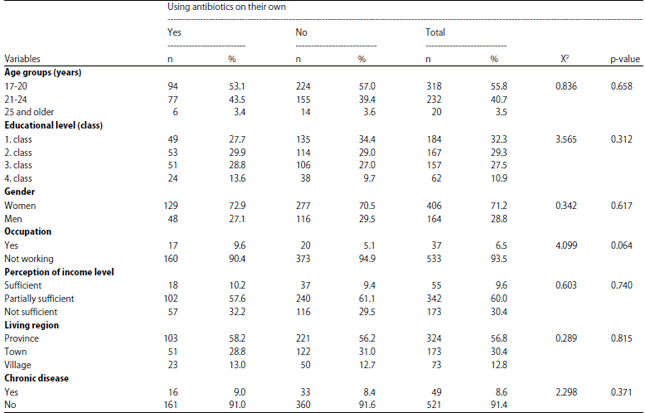
Of the 590 questionnaires that were distributed, 20 were returned as uncompleted and 570 were completed (The response rate was 96.6%). The socio-demographic characteristics of the study population are shown in Table 1.A statistically significant difference was not observed between starting to use antibiotics on their own and age groups, educational level, gender, occupation, income level, living region or chronic disease (p>0.05) (Table 1).
It was identified that 31.1% of the students started using antibiotics on their own. In total, 66.8% of the participants used antibiotics in the past year and 32.6% within the last month. The reasons for starting to use antibiotics are shown in Table 2. The factors that affects starting use of antibiotics on their own without getting doctor’s advice were scrutinized. It found that 66.1% of nursing students self-medicated with the same antibiotic that would have been prescribed by a doctor for similar conditions. It found that 22.6% did not have time to visit the doctor. It was identified that 16.9% using the drugs were advised by close friends and relatives. Also, it found that 13.6% did not want not to pay for the examination and test fees and 10.7% consulted with a pharmacist regarding the drug. A statistically significant difference was observed between using antibiotics in the past year, using antibiotics in the past month and the demand for requesting an antibiotics prescription from a doctor (p<0.05) (Table 2).
It was identified that 48.6% of nursing students maintained antibiotics at home in the case it might be necessary in the future. Among respondents, 83.2% have read the drugs’ prospectus before using the antibiotics and 79.1% have used antibiotics at the prescribed dose and over the advised time frame. Further, 18.6% of the respondents reported that they have advised the use to antibiotics therapy to their surrounding community. Of the participants, 66.5% have previously heard of antibiotic resistance; only 29.8% could correctly define antibiotic resistance. Of all the participants who took part in the study, 57.7% have accepted that the decision to start antibiotics should be made with a doctor. There were no significant differences between starting to use antibiotics on their own and reading the its prospectus, using it according to the prescription, thinking that antibiotics might be hazardous, receiving information about unnecessary antibiotics, hearing about antibiotic resistance and defining antibiotic resistance correctly (p>0.05). A statistically significant difference was observed between maintaining antibiotics at home, advising antibiotic therapies, thinking that using antibiotics on their own could be unnecessary and making the decision to start using antibiotics (p<0.05) (Table 3).
| Table 1: | Distribution of participants’ sociodemographic variables based on self-medication of antibiotics for their own use (n = 570) |
 | |
DISCUSSION
This study demonstrates the status of nursing students beginning to use antibiotics on their own (self-medicating). Today, antibiotic resistance is a rapidly spreading global problem and its prevalence is thought to increase due to antibiotic self-medication1,22,23. Self-medication is an increasing concern among nursing students due to easy access to antibiotics4. This study determined that more than half of the students had used antibiotics at least once in the past year and that approximately one third of them had started using antibiotics on their own. Similar to this study, Mehta and Sharma24 and Ali et al.4 observed that approximately half of undergraduates started using antibiotics on their own. Moreover, another study found that the self-medication rate was considerably higher, especially among nursing students25. This situation demonstrates that undergraduates can access antibiotics easily without doctor supervision. In this study, it showed that the antibiotic self-medication usage rate increases as participant age decreases. Similar to this study, the self-medication rate was found to be higher in youths in the literature25-27. This situation can be linked to lower risk perception in youths. In this study, the rate of starting self-medicated antibiotics was observed to be lower in senior students compared to others. Similar to this study, Celik et al.20 and Williams and Crawford27 found lower starting rates related to over-the-counter antibiotics in upper grades. Furthermore, another study reports a higher prescribed antibiotic usage rate in university/high school graduates and emphasized that the over-the-counter antibiotic usage rate decreased as education level increases28. In this study, found that self-medication was higher in women. In another study, the rate of self-medication with antibiotics was observed to be higher in male students4,29. In contrast, some studies did not observe any differences between antibiotic self-medication by men and women30,31. In this study, the most common reasons reported by a large number of participants for self-medication with antibiotics were common cold and flu, sore throat, toothache, fever and cough. Other studies determined that common reasons for self-medication with antibiotics included headache, fever, cough, cold and flu and sore throat4,21,32,33. This study found that the decision to start using antibiotics was influenced by being satisfied from previous antibiotics use, test fees and drug store and surrounding advice.
| Table 2: | Distribution of participants’ knowledge about using antibiotics based on self-medication with antibiotics for their own use (N = 570) |
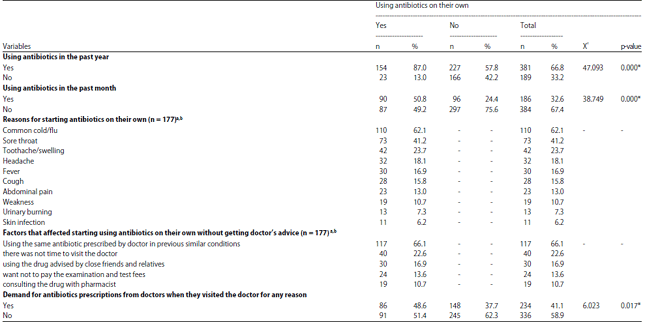 | |
*p<0.05, aStatistical evaluation was not been made because more than one option is selected, bResponses of participants who had been using antibiotics on their own | |
| Table 3: | Distribution of participants’ knowledge and attitudes about using antibiotics based on self-medication with antibiotics for their own use (n = 570) |
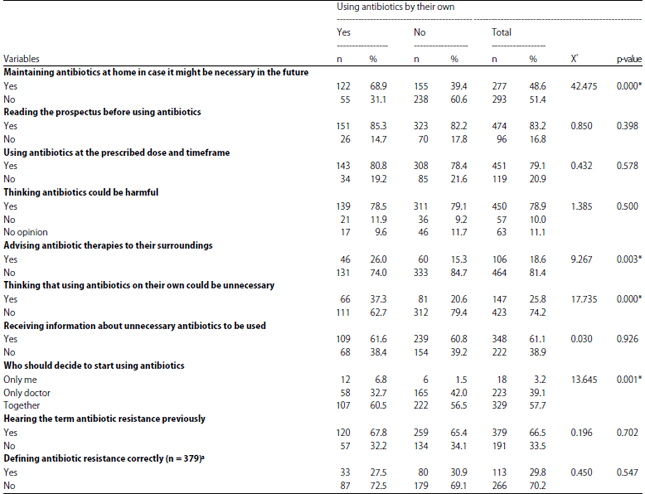 | |
*p<0.05, aResponses of participants who had heard antibiotic resistance | |
Similar to this study, it was demonstrated in the literature that the decision to start self-medication with antibiotics is affected by a number of factors, such as family, relatives, pharmacists and being satisfied with previously used antibiotics23,26-27,34-35. Additionally, the most common cause for self-medication was stated to be a lack of time and economic reasons27,36. This study found that majority of participants did not correctly understand antibiotic resistance and think that antibiotics use could be harmful. Similar to this study, another study conducted on students found that using antibiotics could be harmful to the liver and kidneys27. A present study had shown a lack of general information on proper antibiotic use among university students37. While another study determined that many of its participants were unaware of the possible health dangers associated with antibiotics misuse38. Additionally, similar to this study, a previous study found that many students used antibiotics at the prescribed dose and over the correct timeframes39. This study showed that many of students maintained antibiotics at home in case it might be necessary in the future. Similar results were found in two additional studies25,40. This study showed that the irrational use of antibiotics was prevalent among nursing students and that this situation is likely to increase the risk of antibiotic resistance in the future.
CONCLUSION
The findings of the present study clearly highlight the need for better implementation of self medication with antibiotic among nursing students. It determined that more than half of the students had used antibiotics at least once in the past year. It was identified that approximately one third of them had started using antibiotics on their own and the majority of them were unaware of antibiotic resistance. The decision to start using antibiotics was influenced by being satisfied by previous antibiotics use, test fees, drug store and surrounding advice. Despite the sample group’s younger mean age, the rate of starting to use antibiotics on their own was high. Further studies should be conducted to evaluate health practitioners’ attitudes and behaviours towards antibiotic use. There is a need to improve nursing students’ knowledge about antibiotics and to promote healthier attitudes and practices. Achieving these goals will require a multi-sectorial effort. There are several limitations to this study. First, this study was a cross-sectional study with a non-random convenience sample. Therefore, it includes all the limitations of a cross-sectional study. Second, The sample included only one university in Gaziantep and 570 nursing students, which may limit the generalizability of our findings to other populations.
SIGNIFICANCE STATEMENTS
This study discovers the knowledge, attitude and practice towards self medication with antibiotic among nursing students. This study also will help the researcher to uncover the critical area of inappropriate use of antibiotics and its associated factors. Antibiotic use are strongly associated with health professional awareness and knowledge of antibiotics. Health professional play a significant role in reducing the inappropriate and excessive use of antibiotic and it is necessary to understand their antibiotic use knowledge, attitudes and behaviors and if any educational needs exist.
REFERENCES
- Osemene, K.P. and A. Lamikanra, 2012. A study of the prevalence of self-medication practice among university students in Southwestern Nigeria. Trop. J. Pharm. Res., 11: 683-689.
Direct Link - Verma, R.K., L. Mohan and M. Pandey, 2010. Evaluation of self medication among professional students in North India: Proper statutory drug control must be implemented. Asian J. Pharm. Clin. Res., 3: 60-64.
Direct Link - Ye, D., J. Chang, C. Yang, K. Yan and W. Ji et al., 2017. How does the general public view antibiotic use in China? Result from a cross-sectional survey. Int. J. Clin. Pharm., (In Press).
CrossRefDirect Link - Ali, A.S., J. Ahmed, A.S. Ali, G.B. Sonekhi, N. Fayyaz, Z. Zainulabdin and R Jindani, 2016. Practices of self-medication with antibiotics among nursing students of Institute of Nursing, Dow University of Health Sciences, Karachi, Pakistan. J. Pak. Med. Assoc., 66: 235-237.
PubMedDirect Link - Holloway, K.A., L. Rosella and D. Henry, 2016. The impact of WHO essential medicines policies on inappropriate use of antibiotics. PLoS ONE, Vol. 11.
CrossRefDirect Link - Sarahroodi, S., A. Arzi, A.F. Sawalha and A. Ashtarinezhad, 2010. Antibiotics self-medication among Southern Iranian university students. Int. J. Pharmacol., 6: 48-52.
CrossRefDirect Link - Agarwal, S., V.N. Yewale and D. Dharmapalan, 2015. Antibiotics use and misuse in children: A knowledge, attitude and practice survey of parents in India. J. Clin. Diagn. Res., 9: SC21-SC24.
CrossRefDirect Link - Al-Yamani, A., F. Khamis, I. Al-Zakwani, H. Al-Noomani, J. Al-Noomani and S. Al-Abri, 2016. Patterns of Antimicrobial prescribing in a Tertiary Care Hospital in Oman. Oman Med. J., 31: 35-39.
Direct Link - McCormack, J. and M. Allan, 2012. A prescription for improving antibiotic prescribing in primary care. Br. Med. J., Vol. 344.
CrossRefDirect Link - Ayalew, M.B., 2017. Self-medication practice in Ethiopia: A systematic review. Patient Prefer. Adherence, 11: 401-413.
CrossRefDirect Link - Fredericks, I., S. Hollingworth, A. Pudmenzky, L. Rossato, S. Syed and T. Kairuz, 2015. Consumer knowledge and perceptions about antibiotics and upper respiratory tract infections in a community pharmacy. Int. J. Clin. Pharm., 37: 1213-1221.
CrossRefDirect Link - Yeo, J.M., 2016. Antimicrobial stewardship: Improving antibiotic prescribing practice in a respiratory ward. BMJ Qual. Improv. Rep., Vol. 5.
CrossRefDirect Link - Demore, B., L. Mangin, G. Tebano, C. Pulcini and N. Thilly, 2017. Public knowledge and behaviours concerning antibiotic use and resistance in France: A cross-sectional survey. Infection, (In Press).
CrossRefDirect Link - Drozd, M., K. Drozd, R. Filip and A. Bya, 2015. Knowledge, attitude and perception regarding antibiotics among polish patients. Acta Poloniae Pharm.-Drug Res., 72: 807-817.
PubMedDirect Link - Ghazi, I.M., D.P. Nicolau, M.D. Nailor, J. Aslanzadeh, J.W. Ross and J.L. Kuti, 2016. Antibiotic utilization and opportunities for stewardship among hospitalized patients with influenza respiratory tract infection. Infect. Control Hosp. Epidemiol., 37: 583-589.
CrossRefDirect Link - Res, R., K. Hoti and T.L. Charrois, 2017. Pharmacists' perceptions regarding optimization of antibiotic prescribing in the community. J. Pharm. Pract., 30: 146-153.
CrossRefDirect Link - Celik, S., M. Alacadag, Y. Erduran, F. Erduran and N. Berberkayar, 2010. [The investigation of antibiotic use situations health school student's]. Uluslararasi Insan Bilimleri Dergisi, 7: 1125-1135, (In Turkish).
Direct Link - Mumtaz, Y., S.M.A. Jahangeer, T. Mujtaba, S. Zafar and S. Adnan, 2011. Self medication among university students of Karachi. J. Liaquat Univ. Med. Health Sci., 10: 102-105.
Direct Link - Gul, S., D.B. Ozturk, M.S. Yilmaz and E. Uz-Gul, 2014. [Evaluation of public knowledge and attitudes regarding self medication with antibiotics in Ankara]. Turk Hijyen Deneysel Biyoloji Dergisi, 71: 107-112, (In Turkish).
Direct Link - Kumar, N., T. Kanchan, B. Unnikrishnan, T. Rekha and P. Mithra et al., 2013. Perceptions and practices of self-medication among medical students in coastal South India. PLoS One, Vol. 8.
CrossRefDirect Link - Mehta, R.K. and S. Sharma, 2015. Knowledge, attitude and practice of self-medication among medical students. IOSR J. Nursing Health Sci., 4: 89-96.
Direct Link - Pereira, C.M., V.F. Alves, P.F. Gasparetto, D.S. Carneiro, D.G.R. de Carvalho and F.E.F. Valoz, 2012. Self-medication in health students from two Brazilian universities. Revista Sul-Brasileira de Odontologia, 9: 361-367.
Direct Link - Gutema, G.B., D.A. Gadisa, Z.A. Kidanemariam, D.F. Berhe and A.H. Berhe et al., 2011. Self-medication practices among health sciences students: The case of Mekelle University. J. Applied Pharm. Sci., 1: 183-189.
Direct Link - Williams, A. and K. Crawford, 2016. Self-medication practices among undergraduate nursing and midwifery students in Australia: A cross-sectional study. Contemp. Nurse, 52: 410-420.
CrossRefDirect Link - Ozkan, S., O.D. Ozbay, F.N. Aksakal, M.N. Ilhan and S. Aycan, 2005. [Attitudes during illness and drug usage habits of patients attending to a university hospital]. TSK Koruyucu Hekimlik Bulteni, 4: 223-237, (In Turkish).
Direct Link - Pavyde, E., V. Veikutis, A. Maciuliene, V. Maciulis, K. Petrikonis and E. Stankevicius, 2015. Public knowledge, beliefs and behavior on antibiotic use and self-medication in Lithuania. Int. J. Environ. Res. Public Health, 12: 7002-7016.
CrossRefDirect Link - Kim, S.S., S. Moon and E.J. Kim, 2011. Public knowledge and attitudes regarding antibiotic use in South Korea. J. Korean Acad. Nursing, 41: 742-749.
CrossRefDirect Link - Napolitano, F., M.T. Izzo, G. Di Giuseppe and I.F. Angelillo, 2013. Public knowledge, attitudes and experience regarding the use of antibiotics in Italy. PLoS ONE, Vol. 8.
CrossRefDirect Link - Oshikoya, K.A., I.O. Senbanjo and O.F. Njokanma, 2009. Self-medication for infants with colic in Lagos, Nigeria. BMC Pediatr., Vol. 9.
CrossRefDirect Link - Kayalvizhi, S. and R. Senapathi, 2010. Evaluation of the perception, attitude and practice of self medication among business students in 3 select cities, South India. Int. J. Enterprise Innov. Manage. Stud., 1: 40-44.
Direct Link - Bennadi, D., 2014. Self-medication: A current challenge. J. Basic Clin. Pharm., 5: 19-23.
Direct Link - Uskun, E., S.B. Uskun, M. Ozturk and A.N. Kisioglu, 2004. [Use of medicines before admission to the health center]. Continuous Med. Educ. J., 13: 451-454, (In Turkish).
Direct Link - Olayemi, O.J., B.O. Olayinka and A.I. Musa, 2010. Evaluation of antibiotic self-medication pattern amongst undergraduate students of Ahmadu Bello University (Main Campus) Zaria. Res. J. Applied Sci. Eng. Technol., 2: 35-38.
Direct Link - Azevedo, M.M., C. Pinheiro, J. Yaphe and F. Baltazar, 2009. Portuguese students' knowledge of antibiotics: A cross-sectional study of secondary school and university students in Braga. BMC Public Health, Vol. 9.
CrossRefDirect Link - Eng, J.V., R. Marcus, J.L. Hadler, B. Imhoff and D.J. Vugia et al., 2003. Consumer attitudes and use of antibiotics. Emerg. Infect. Dis., 9: 1128-1135.
CrossRefDirect Link - Aronson, B.S., 2006. Antibiotic-taking experiences of undergraduate college students. J. Am. Assoc. Nurse Pract., 18: 591-598.
CrossRefDirect Link - Barlam, T.F., R. Soria-Saucedo, H.J. Cabral and L.E. Kazis, 2016. Unnecessary antibiotics for acute respiratory tract infections: Association with care setting and patient demographics. Open Forum Infect. Dis., Vol. 3, No. 1.
CrossRefDirect Link