

Maria C. Castillo-Hernandez
National Polytechnic Institute, Higher School of Medicine, Section of Graduate Studies and Research, Latin American Society for Hyperbaric and Subaquatic Medicine, Mexico
Eleazar Lara-Padilla
National Polytechnic Institute, Higher School of Medicine, Section of Graduate Studies and Research, Latin American Society for Hyperbaric and Subaquatic Medicine, Mexico
Alexandre Kormanovski
National Polytechnic Institute, Higher School of Medicine, Section of Graduate Studies and Research, Latin American Society for Hyperbaric and Subaquatic Medicine, Mexico
Jorge G. Perez-Tunon
National Polytechnic Institute, Higher School of Medicine, Section of Graduate Studies and Research, Latin American Society for Hyperbaric and Subaquatic Medicine, Mexico
Emilio M. Lopez-Calderon
National Polytechnic Institute, Higher School of Medicine, Section of Graduate Studies and Research, Latin American Society for Hyperbaric and Subaquatic Medicine, Mexico
Gustavo Guevara-Balcazar
National Polytechnic Institute, Higher School of Medicine, Section of Graduate Studies and Research, Latin American Society for Hyperbaric and Subaquatic Medicine, Mexico
International Journal of Pharmacology
Year: 2015 | Volume: 11 | Issue: 5 | Page No.: 508-512





ABSTRACT
Tricyclic antidepressants are responsible for the majority of cases of intoxication due to psychoactive medications. Such intoxication results in an alteration of cardiovascular function. Sodium bicarbonate (HCO3) is the current treatment of choice, although, we propose Hyperbaric Oxygenation (HBO) therapy as an alternative treatment, since it is known to be an effective adjuvant therapy in the treatment of cardiovascular disease. However, the use and utility of this therapy has not been fully clarified. To evaluate hyperbaric oxygenation therapy as a collaborating agent in the treatment of amitriptyline intoxication, allowing recovery in a lesser period of time of the cardiovascular parameters under study, as compared to the sodium bicarbonate treatment. Male Wistar rats were intoxicated with amitriptyline and hyperbaric oxygen therapy or sodium bicarbonate were administered as a treatment. Blood pressure measures were taken and an electrocardiogram was performed to determine the heartbeat and the length of the QRS interval. After amitriptyline intoxication and first treatment with either HCO3 or HBO, heartbeat returned to normal and the length of the QRS segment was shortened. The latter parameter returned to normal after the second treatment with either SB or HBO. Whereas, HBO therapy normalized blood pressure after the first treatment, this result was found only after the second treatment with SB. The HBO therapy proved better than SB treatment for improving blood pressure.
PDF Abstract XML References Citation
Article History
Received: February 11, 2015;
Accepted: May 26, 2015;
Published: June 19, 2015
How to cite this article
Maria C. Castillo-Hernandez, Eleazar Lara-Padilla, Alexandre Kormanovski, Jorge G. Perez-Tunon, Emilio M. Lopez-Calderon and Gustavo Guevara-Balcazar, 2015. Normalization of QRS Segment, Blood Pressure and Heartbeat in an Experimental Model of Amitriptyline Intoxication in Rats Following Hyperbaric Oxygenation Therapy. International Journal of Pharmacology, 11: 508-512.
DOI: 10.3923/ijp.2015.508.512
URL: https://scialert.net/abstract/?doi=ijp.2015.508.512
DOI: 10.3923/ijp.2015.508.512
URL: https://scialert.net/abstract/?doi=ijp.2015.508.512
INTRODUCTION
Tricyclic Antidepressants (TCAs) are a group of drugs used mainly for treating depression, neurological pain, migraine, enuresis and attention deficit hyperactivity disorder. Amitriptyline, the most widely used TCA, is associated with cardiac and neurological toxicity. Reports on its toxic effects on the heart include abnormalities in the rhythm and electrical activity, an extended QRS, ventricular arrhythmia (such as ventricular tachycardia), ventricular fibrillation, Torsades des points and myocardial infarction (the latter is less common but far more serious than the other conditions) (Kiyan et al., 2006; Chamsi-Pasha and Barnes, 1988).
Electrocardiograms play a fundamental role in diagnosis, treatment and prognosis of morbi-mortality associated with intoxication by TCAs (Caravati and Bossart, 1991; Liebelt et al., 1995). Findings from this test that have been successfully employed as indicators of the severity of intoxication by TCAs are sinus tachycardia, a QRS greater than 100 ms, a right axis deviation (130-270 degrees) and/or an increase in the voltage of the R wave in the aVR derivation. If the patient has been monitored from the beginning of intoxication, the diagnostic and predictive value of an Electrocardiogram (ECG) is increased, because a direct correlation has already been established between the length of the QRS interval and the presence of a seizure or a disruption of cardiac rhythm (Groleau et al., 1990; Newton et al., 1994).
The cornerstone of treatment for intoxication by TCAs is sodium bicarbonate (HCO3), which has proved to decrease considerably the morbi-mortality associated with these drugs, particularly with a disruption of normal myocardial electrical activity or low blood pressure. Although, the action mechanism of sodium bicarbonate in treating intoxication by TCAs has not been elucidated, it is known that in an alkaline medium have a greater binding to plasmatic proteins, thus favoring their elimination. In addition, an increase in extracellular sodium could be involved in the correction of arrhythmias induced by the blockage of fast sodium channels associated with these drugs (Bou-Abboud and Natte, 1998).
Hyperbaric oxygenation therapy could be a new adjuvant treatment proposed for intoxication by TCAs, based on the considerable benefits it has given when treating diverse pathologies, such as intoxication by other drugs and ischemic disorders (Bennett et al., 2011; Youngster et al., 2010). For this therapy, the patient is placed in a chamber and completely immersed in a 100% oxygen environment that has an atmospheric pressure greater than 1 atm.
This therapy has been employed since the 17th century for the treatment of different conditions. It is currently used to treat decompression sickness, ischemic disorders, diabetic foot, burns, necrotizing infections, severe anemia and carbon monoxide or cyanide intoxication (Bennett et al., 2011; Youngster et al., 2010). However, to our knowledge there are as yet no reports on the employment of HBO to treat patients with cardiotoxicity induced by amitriptyline. Hence, the aim of the present study is to explore this use of HBO in a rodent model.
MATERIALS AND METHODS
Animals: Male Wistar rats weighing 250 and 350 g were employed in this study. Animals were obtained from the bioterium of the Escuela Superior de Medicina (ESM) and placed in cages at room temperature with rodent feed. The handling and maintenance of animals were in accordance with the standards established by Helsinki in 1975 (amended in 1989) and the Mexican Federal Regulations for Animal Experimentation and Care (NOM-062-ZOO-1999, Ministry of Agriculture, Mexico City, Mexico). The protocol for animal care was approved by the institutional Ethics Committee (ESM of the IPN). All rats were anaesthetized by administering intraperitoneal pentobarbital (Sanfer) at 50 mg kg-1. An experimental hyperbaric chamber was used (MISSA).
Experimental groups: Five groups of animals were formed (n = 6 in each sub-group): Group 1 was the control group without treatment, group 2 received amitriptyline, group 3 received HCO3 2 h after the amitriptyline treatment, group 4 was given hyperbaric oxygen therapy after the amitriptyline treatment and group 5 was treated with HCO3 and HBO simultaneously. All amitriptyline treatments were administered by intraperitoneal via at 50 mg kg-1 (Kalkan et al., 2010; Thorstrand et al., 1976).
In group 1 animals (no treatment), blood pressure measures were taken and ECG with 6 derivations was performed. The length of the QRS interval and the heartbeat were determined from the latter test.
Group 2 animals were divided into two sub-groups, 2A and 2B. Blood pressure measures were taken and ECG was performed for the rats of group 2A immediately after the amitriptyline treatment and 3 h later and the same measurements were made for the animals of group 2B only once, 9 h after intoxication.
In group 3 animals, a venodissection was performed one hour after intoxication on the jugular vein to introduce a central catheter, by which HCO3 was administered at 2 m Eq kg-1 (IV) diluted in a 5% glucose solution at a ratio of 1:5. This group was divided into two sub-groups (n = 6), 3A and 3B. Blood pressure measures were taken and ECG was performed for group 3A rats 2 h after the HCO3 treatment. Group 3B rats were subject to a second HCO3 treatment (at the same dose) 8 h after intoxication and 2 h later blood pressure measures were taken and ECG was performed.
Group 4 animals underwent hyperbaric oxygen therapy (HBO, at 2 atm for 1 h, with 15 min pressurization and 15 min depressurization), 1 h after intoxication. This group was divided into 2 sub-groups (n = 6), 4A and 4B. In both sub-groups, blood pressure measures were taken and ECG was performed immediately after HBO therapy and 2 h later. Group 4B rats were subject to a second HBO session, 8 h after intoxication, immediately after which blood pressure measures were taken and ECG was performed.
Animals in group 5 were treated with both HCO3 and HBO simultaneously and were divided in 2 sub-groups, 5A and 5B (n = 6). Animals in group 5A were subject to an ECG and blood pressure measurements 2 h after treatments and animals in group 5B were subject to blood pressure measurements and ECG, 8 h after intoxication.
Drugs: Amitriptyline chlorohydrate (Research Biochemical International) was dissolved in 0.5cc of injectable water for intraperitoneal administration. An injectable solution of HCO3 was prepared at 1 m Eq mL-1 (8.4 g r/100 mL; Pharmakin lab) which was diluted at a ratio of 1:5 with a 5% glucose solution for intravenous administration through the central venous catheter. Pentobarbital sodium (Sanfer, at 50 mg mL-1) was administered by intraperitoneal via.
Data analysis and statistics: Data represent Means±SE. Each experimental condition had an "n" value of 6 rats. Comparisons between groups and among treatments were performed using an ANOVA and Bonferroni post-test for individual differences. Differences were considered statistically significant where, p<0.05.
RESULTS
Blood pressure increased from 120-170.6 mm Hg in rats intoxicated with amitriptyline (Fig. 1a), this happens within the first 3 h after intoxication. The first HBO treatment almost normalized the blood pressure (130 mm Hg), whereas HCO3 required two treatments. Interestingly, we observe that upon administration of both treatments simultaneously in intoxicated rats, the results achieved are similar to those observed in the group that received HBO treatment only (Fig. 1a and b).
On the other hand, we can observe that amitriptyline intoxication induces bradycardia, from 269.1-383.8 L min-1 in the control group.
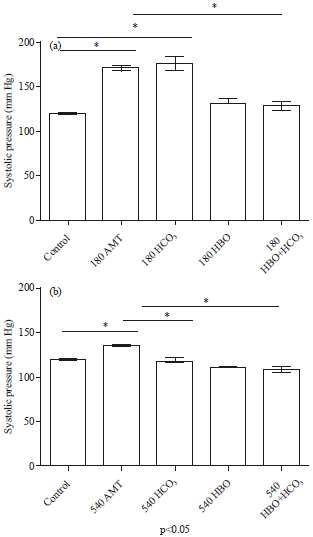 | |
| Fig. 1(a-b): | Systolic pressure measure in control and intoxicated rats with amitriptyline (a) 180 and (b) 540 with HCO3, HBO, HCO3/HBO treatment |
Both the HCO3 and HBO therapies (Fig. 2a and b) reduced the effect of amitriptyline after the first treatment and normalized the heartbeat after the second treatment.
Interestingly, amitriptyline treatment made QRS to last longer (from 32.6-41.6 ms) (Fig. 3a and b) and the effect remained along the 9 h experiment. Both HCO3 and HBO reduced QRS length after the first (37.5 ms SB and 31.6 ms HBO) and second treatments (34.1 ms HCO3 and 31.6 ms HBO). On the other hand, we can observe the results achieved when administering both treatments at the same time. The results observed are similar to those achieved in group 3, which received HBO only where, blood pressure is normalized after the first HBO session and both heartbeat and the length of the QRS segment start to normalize since, the first session reach normal values until 8 h after the initial HBO treatment.
Figure 4a control and b intoxicated, shows ECG of an animal in the control group and one of the intoxicated animals group where, changes in heartbeat and length of the QRS segment of the intoxicated group can bee observed.
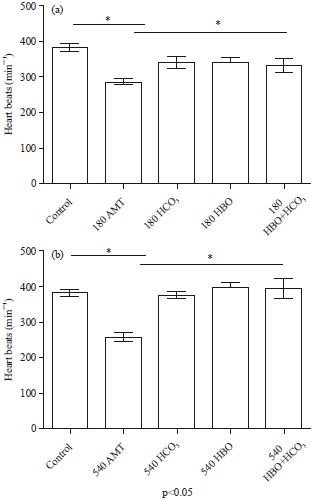 | |
| Fig. 2(a-b): | Heart rate in control and intoxicated rats with amitriptyline, (a) 180 and (b) 540 min with HCO3, HBO, HCO3/HBO treatment |
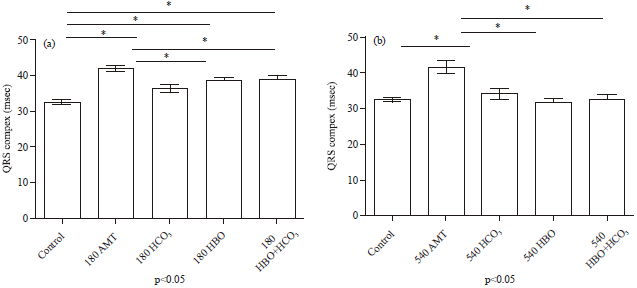 | |
| Fig. 3(a-b): | QRS length in control and intoxicated rats with amitriptyline, (a) 180 and (b) 540 min with HCO3, HBO, HCO3/HBO treatment |
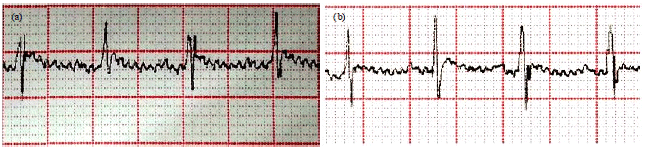 | |
| Fig. 4(a-b): | Electrocardiogram representing a rat in the (a) Control rat and (b) Intoxicated rat |
DISCUSSION
A lethal dose of 25-75 mg kg-1 has been reported (Kalkan et al., 2010; Thorstrand et al., 1976; Gill and Bell, 2004). In this study, we used 50 mg kg-1 of body weight, administered by intraperitoneal via, with a result of myocardial toxicity.
Amitriptyline intoxication may induce abnormalities in conduction, as well as severe ventricular arrhythmias and modification of blood pressure. Some authors have mentioned that the most important effect of intoxication with TCAs is the inhibition of fast sodium channels which in turn delays phase 0 of depolarization in the His and Purkinje bundles of neural fibers and the ventricular myocardium. This effect appears on the electrocardiogram as an extension of the QRS intervals (Singh et al., 2002; Glauser, 2000; Sasyniuk et al., 1986). On the other hand, bradycardia, hypotension and hypertension have been reported, depending on the dose. The current results are consistent with these reports, as we found bradycardia, an increase in blood pressure and lengthening of the QRS segment.
The HCO3 treatment is used to counteract intoxication with TCAs by alkalinizing the medium. In this way, it antagonizes the interaction between amitriptyline and the inactivated channels, thus allowing recovery of the electrical
activity of the heart (Tilney, 2011), favoring a shortening of the QRS segment and normalizing blood pressure and heartbeat.
HBO therapy has been used for carbon monoxide (Tilney, 2011; Weaver et al., 2002) and other types of intoxication (Youngster et al., 2010; Taslipinar et al., 2013). However, the mechanism of the beneficial effect has not been established. We propose that the mechanism of action is that by increasing the concentration of oxygen in the organism, this treatment improves antioxidant defenses and thus increases the production of ATP and nitric oxide while, at the same time decreases intracellular calcium levels. Therefore, the ionic transmembrane gradient of K+, Na and Clˉ is modified, which avoids cytotoxicity and favors recovery of normal parameters in the heart (Castillo et al., 1996; Choi and Rothman, 1990; Moro et al., 2005).
In this study, after the first HBO treatment there was a shortening of the QRS segment and a normalization of heartbeat, effects that are also found after the first treatment with HCO3. After the second treatment with either of these two therapies, the length of the QRS segment returned to normal. However, the normalization of blood pressure observed after the first treatment with HBO was found until after the second treatment with HCO3. Interestingly, we observe that when administering both treatments to a group of intoxicated rats, the results achieved were similar to those observed in the group of intoxicated animals treated with HBO only which suggests that these two treatments do not potentiate or inhibit each other.
CONCLUSION
Amitriptyline intoxication in our experimental model in rats resulted in the extension of the QRS segment, bradycardia and a blood pressure increase starting on the first hours after intoxication. With HBO, we obtained a normalization of blood pressure in the 1st 3 h after exposure to this therapy. Similar results were obtained with HBO/HCO3 administered simultaneously; however, with administration of HCO3, blood pressure was normalized only after 8 h. The QRS segment and heartbeat were normalized in a similar period of time with the three treatments.
ACKNOWLEDGMENT
This work was supported by the SIP project (Escuela Superior de Medicina, IPN) and COFAA.
REFERENCES
- Kiyan, S., E. Aksay, S. Yanturali, R. Atilla and M. Ersel, 2006. Acute myocardial infarction associated with amitriptyline overdose. Basic Clin. Pharmacol. Toxicol., 98: 462-466.
CrossRefDirect Link - Chamsi-Pasha, H. and P.C. Barnes, 1988. Myocardial infarction: A complication of amitriptyline overdose. Postgraduate Med. J., 64: 968-970.
CrossRefDirect Link - Caravati, E.M. and P.J. Bossart, 1991. Demographic and electrocardiographic factors associated with severe tricyclic antidepressant toxicity. J. Toxicol. Clin. Toxicol., 29: 31-43.
CrossRefDirect Link - Liebelt, E.L., P.D. Francis and A.D. Woolf, 1995. ECG lead aVR versus QRS interval in predicting seizures and arrhythmias in acute tricyclic antidepressant toxicity. Ann. Emerg. Med., 26: 195-201.
CrossRefDirect Link - Groleau, G., R. Jotte and R. Barish, 1990. The electrocardiographic manifestations of cyclic antidepressant therapy and overdose: A review. J. Emerg. Med., 8: 597-605.
CrossRefDirect Link - Newton, E.H., S.D. Shih and R.S. Hoffman, 1994. Cyclic antidepressant overdose: A review of current management strategies. Am. J. Emerg. Med., 12: 376-379.
CrossRefDirect Link - Bou-Abboud, E. and S. Natte, 1998. Molecular mechanisms of the reversal of imipramine-induced sodium channel blockade by alkalinization in human cardiac myocytes. Cardiovasc. Res., 38: 395-404.
CrossRefDirect Link - Bennett, M.H., J.P. Lehm and N. Jepson, 2011. Hyperbaric oxygen therapy for acute coronary syndrome. Cochrane Lib.
CrossRefDirect Link - Youngster, I., I. Abu-Kishk, E. Kozer, R. Braunstein, A. Bar-Haim and M. Berkovitch, 2010. Hyperbaric oxygen treatment reduces mortality in acute iron intoxication in rats. Basic Clin. Pharmacol. Toxicol., 107: 737-741.
Direct Link - Kalkan, S., N. Hocaoglu, A. Arici, K. Oransay, G. Ergor and Y. Tuncok, 2010. Effects of adenosine receptor antagonists on survival in amitriptyline-poisoned mice. Drug Chem. Toxicol., 33: 233-237.
CrossRefDirect Link - Thorstrand, C., J. Bergstrom and J. Castenfors, 1976. Cardiac effects of amitriptyline in rats. Scand. J. Clin. Lab. Invest., 36: 7-15.
Direct Link - Gill, A.L. and C.N. Bell, 2004. Hyperbaric oxygen: Its uses, mechanisms of action and outcomes. Q. J. Med., 97: 385-395.
CrossRefDirect Link - Singh, N., H.K. Singh and I.A. Khan, 2002. Serial electrocardiographic changes as a predictor of cardiovascular toxicity in acute tricyclic antidepressant overdose. Am. J. Ther., 9: 75-79.
Direct Link - Glauser, J., 2000. Tricyclic antidepressant poisoning. Cleve. Clin. J. Med., 67: 704-719.
CrossRefDirect Link - Sasyniuk, B.I., V. Jhamandas and M. Valois, 1986. Experimental amitriptyline intoxication: Treatment of cardiac toxicity with sodium bicarbonate. Ann. Emerg. Med., 15: 1052-1059.
CrossRefDirect Link - Tilney, P., 2011. Carbon monoxide poisoning in a 55-year-old man after a suicide attempt. Air Med. J., 30: 112-115.
CrossRefDirect Link - Weaver, L.K., R.O. Hopkins, K.J. Chan, S. Churchill and C.G. Elliott et al., 2002. Hyperbaric oxygen for acute carbon monoxide poisoning. New Engl. J. Med., 347: 1057-1067.
CrossRefDirect Link - Castillo, J., A. Davalos, J. Naveiro and M. Noya, 1996. Neuroexcitatory amino acids and their relation to infarct size and neurological deficit in ischemic stroke. Stroke, 27: 1060-1065.
Direct Link - Choi, D.W. and S.M. Rothman, 1990. The role of glutamate neurotoxicity in hypoxic-ischemic neuronal death. Annu. Rev. Neurosci., 13: 171-182.
PubMed - Moro, M.A., A. Almeida, J.P. Bolanos and I. Lizasoain, 2005. Mitochondrial respiratory chain and free radical generation in stroke. Free Rad. Biol. Med., 39: 1291-1304.
CrossRefDirect Link