

Mohammad Waheed El-Anwar
Department of Head and Neck Surgery, Faculty of Medicine, Zagazig University, Egypt
Khalid Mostafa
Department of Anesthesia ICU and Otolaryngology,
Akmal Abd- Elsamad
Department of Anesthesia ICU and Otolaryngology,
International Journal of Pharmacology
Year: 2015 | Volume: 11 | Issue: 5 | Page No.: 490-495





ABSTRACT
Tonsillectomy (±adenoidectomy) is performed for recurrent tonsillitis or obstruction of the upper airway. Post tonsillectomy pain cumulates within first postoperative days and decreases gradually following the fourth day in pediatric patients with many adverse effects on the patients with 1% readmission was reported due to dysphagia and dehydration. The present study has been planned to assess the analgesic effect of tonsillar bed infiltration of levobupivacaine compared to levobupivacaine and magnesium after tonsillectomy in pediatric patients. Eighty American Society of Anesthesiologists (ASA) I children aged 7-13 years scheduled for elective tonsillectomy (±adenoidectomy) were included in current study. The patients’ Visual Analogue Scale (VAS) for pain were registered at 15th min after arrival to Postanesthesia Care Unit (PACU) and 1st, 2nd, 3rd, 6th, 12th and 24th h postoperatively. The time at the first analgesia request and additional analgesic requirements were also reported and patients were followed up for one week. Postoperative bleeding, infection, Post-Operative Nausea and Vomiting (PONV), abdominal pain, constipation, arrhythmia and allergic reactions were documented. Levobupivacaine plus magnesium gave significantly less VAS of pain in comparison to levobupivacaine alone at 12 and 24 h postoperatively. While this lower VAS of pain was found statistically non-significant at earlier periods of assessment. In addition, the time to first analgesic request was lengthened and total number of analgesic requests in the first 24 h were decreased in combined group when compared to levobupivacaine alone. In addition, laryngospasm significantly decreased in levobupivacaine plus magnesium group with no reported increase in complications. Adding magnesium to Levobupivacaine local infiltration in tonsillar bed is safe and significantly augments the analgesic effect of levobupivacaine after tonsillectomy in pediatric patients.
PDF Abstract XML References Citation
Article History
Received: January 30, 2015;
Accepted: April 24, 2015;
Published: June 19, 2015
How to cite this article
Mohammad Waheed El-Anwar, Khalid Mostafa and Akmal Abd- Elsamad, 2015. Levobupivacaine Alone Versus Levobupivacaine Plus Magnesium Infiltration for Post-Tonsillectomy Analgesia. International Journal of Pharmacology, 11: 490-495.
DOI: 10.3923/ijp.2015.490.495
URL: https://scialert.net/abstract/?doi=ijp.2015.490.495
DOI: 10.3923/ijp.2015.490.495
URL: https://scialert.net/abstract/?doi=ijp.2015.490.495
INTRODUCTION
Worldwide, tonsillectomy is one of the most common surgical performed procedure in children (Zainon et al., 2014). Postoperative throat pain is very important and significant problem because it can lead to decreased oral intake and dehydration with subsequent serious complications of dehydration (Yilmaz et al., 2009).
Different studies had investigated many methods to reduce post tonsillectomy pain such as; preoperative, intraoperative or postoperative medications, preincisional or post-tonsillectomy injections or topical applications. Different tonsillectomy techniques were also investigated as regard to postoperative pain (Kaygusuz and Susaman, 2003).
Peritonsillar local anesthetic infiltrations, especially bupivacaine with long acting activity, are also widely used for this purpose (Akoglu et al., 2006). Levobupivacaine is a new, long-acting bupivacaine, amide-type local anesthetic and is thought to be less cardio and neurotoxic. However, few studies showed that local infiltration of levobupivacaine reduces the intensity of postoperative pain (Karaaslan et al., 2008; Tas et al., 2010).
The idea behind the use of local anesthetic agents in the peri-operative period is not only related to its ability to block peripheral nociceptor transmission after tissue damage but also in preventing sensitization of the central nervous system (Grainger and Saravanappa, 2008).
Studies increased about the local or systemic use of N-methyl-D-aspartate (NMDA) receptor antagonists, ketamine and magnesium (Mg), after understanding the role of this receptor on postoperative pain pathophysiology. It was proved that Mg has analgesic effect when used intra-articularly, increases the efficacy of prilocaine in axillary block and of fentanyl in spinal anesthesia. The Mg was also reported to decrease the incidence of laryngospasm in pediatric patients when used intravenously after tonsillectomy operations (Karaaslan et al., 2008).
The current study aimed to assess the analgesic effect of tonsillar bed infiltration of levobupivacaine alone compared to levobupivacaine and Mg combination after tonsillectomy in pediatric patients.
MATERIALS AND METHODS
Eighty ASA I children aged 7-13 years scheduled for elective tonsillectomy (±adenoidectomy) in otorhinolaryngology department, Zagazig University Hospitals were included in current study during the period from March 2013 to December 2014. Informed written consent was obtained from parents of included children after explanation of the research purpose.
Patients having known hypersensitivity to magnesium or levobupivacaine, renal failure, atrioventricular block or myasthenia gravis were excluded from this study. Patients on regular use of analgesic or who received analgesic 24 h before surgery, Patients who need suturing for hemostasis during surgery or got primary post tonsillectomy bleeding and patient who need endoscopic adenoidectomy were also excluded.
In present study, the Declaration of Helsinki-ethical principles for medical research involving human subjects was followed.
Anesthetic technique: The same anesthetic protocol was used in all patients including premedication with oral midazolam (0.5 mg kg-1) 30 min preoperatively. In the operating room, heart rate, blood pressure, oxygen saturation and temperature were monitored. Induction of anesthesia was achieved by 1.5% incremental doses of sevoflurane up to 7%. The 1/3 isotonic solution of 3-5 mL kg-1 h-1 was given intravenously during surgery. Lidocaine 1 mg kg-1 and fentanyl 0.5 mg kg-1 were administered. After, neuromuscular block was achieved by 0.1 mg kg-1 of vecuronium, the endotracheal tube was inserted then anesthesia was maintained with sevoflurane 2% and nitrous oxide 60% in oxygen. After tonsillectomy, the studied drug was infiltrated into the peritonsillar area nearly at the lower pole, the upper pole and midway in between (3 mL for each tonsil) with 22-G spinal needle. The surgeon and anesthesiologist were blind to the type of the infiltrated drug.
The studied drug was prepared into the injector by making the volume up to 6 mL by the anesthesiologist who was not included in postoperative evaluation. The drug was prepared as levobupivacaine 0.25% for the first group (Group I, n = 40) and levobupivacaine 0.25% plus magnesium sulphate 2 mg kg-1 for the second group (Group II, n = 40). Residual neuromuscular block was reversed with atropine 0.02 mg kg-1 and neostigmine 0.05 mg kg-1 at the end of surgery after the discontinuation of anesthetic gases, then the patient was extubated followed by oxygen administration until recovery from anesthesia and patient was observed for laryngospasm till discharge from the postanesthesia care unit.
Visual Analogue Scale (VAS) of the patients were registered by otorhinolaryngology residents and attending anesthesiologist was unaware for the procedure and blind to the study groups, at 15 min after arrival to Postanesthesia Care Unit (PACU) and at 1st, 2nd, 3rd, 6th, 12th and 24th h postoperatively. The time of first analgesia request and further additional analgesic required was recorded. Postoperative bleeding, infection, post-operative nausea and vomiting (PONV), abdominal pain, constipation, arrhythmia and allergic reactions were also documented. Then patients were followed for one week registering any complication.
Surgical work: Total bed dissection was performed by cold instruments in all cases with no use of diathermy, radiofrequency or LASER during dissection. Lower pole was ligated (by 2-0 silk) in all cases and hemostasis was achieved by bipolar cautery. Adenoidectomy (if needed) was done using sharp adenoid curettes in the conventional way and the surgeon was allowed to palpate the adenoid bed and repeat the curettage to assure complete removal to obviate need for endoscopic removal (Elnashar et al., 2014).
Statistical analysis: Statistical analyses was performed using SPSS 14.0 statistical software for Windows (SPSS Inc, Chicago, IL). The significance level was set at p≤0.05. Quantitative data were expressed as mean and Standard Deviation (SD). The t-test was used to compare quantitative data while chi-square test was used for statistical analysis of qualitative data.
RESULTS
In the present study, group A (levobupivacaine alone) and group B (Levobupivacaine plus magnesium) were matched with regard to sex, age, operation type and anesthesia time (Table 1).
As regard to complications, there was no significant difference between both groups with respect to PONV, abdominal pain, constipation or arrhythmia while there was significant increase of laryngospasm in group I (Levobupivacaine only) when compared to group II (levobupivacaine plus magnesium) (12.5% versus 0.0%, respectively). In addition, there was no case who reported allergic reaction (Table 2).
| Table 1: | Demographics, operation type and anesthesia time in studied groups |
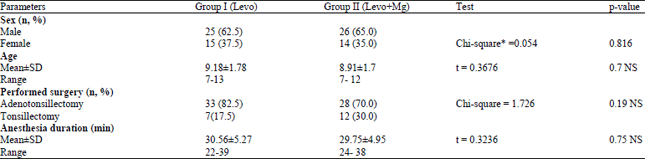 | |
| *As mentioned in statistical section of methods, Chi-square test was used for statistical analysis of qualitative data, Levo: Levobupivacaine, Mg: Magnesium, NS: Not significant | |
| Table 2: | Postoperative complications in studied groups till 24 h postoperatively |
 | |
| *Significant, PONV: Post-operative nausea and vomiting, Levo: Levobupivacaine, Mg: Magnesium | |
| Table 3: | Analgesic effects of studied drugs in the first 24 h postoperatively |
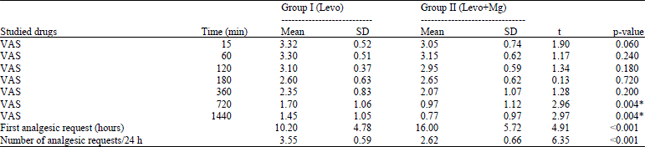 | |
| *Significant, VAS: Visual analogue scale, Levo: Levobupivacaine, Mg: Magnesium | |
One week follow up was eventless and no one encountered postoperative bleeding; primary or secondary infection with apparently optimally healed tonsillar bed at one week postoperatively with no patient complaint.
Regarding analgesic efficacy of studied drugs, it was found that, there was statistically insignificant difference between both groups as regard to VAS at 15 min, 1, 2, 3, 6, 12 and 24 h postoperatively. After that, there was statistically significant decrease of VAS at 12 and 24 h in group II in comparison to group I. In addition, there was statistically significant increase in the time for the first analgesic request in group II in comparison to group I and there was significant decrease of the total number of analgesic requests in group II in comparison to group I (Table 3).
DISCUSSION
In spite of surgical and anesthetic technique advancements, intolerable pain and difficulty in swallowing remain common complaints encountered in pediatrics after tonsillectomy (Bameshki et al., 2013; Safavi et al., 2012). Pain relief helps patients to swallow so, prevents patient dehydration secondary to low feeding (Cho et al., 2014). Finding an ideal pain management method for post-tonsillectomy pain especially in children is a real challenge in otolaryngology.
Poorly controlled pain can result in increased catabolism, increased heart rate, blood pressure, respiratory rate, immunosuppression (Page, 2003) and coagulation disturbances (Joshi and Ogunnaike, 2005). In addition, pain and Post-Operative Nausea and Vomiting (PONV) prolong recovery, discharge time and contribute to unexpected readmission and increases cost (Amin, 2014). Thus, postoperative pain is a major problem that continues to be undertreated in pediatric patients (Gristwood, 2002). Post tonsillectomy pain cumulates within first 3 days and decreases gradually following the 4th day in pediatrics (Warnock and Lander, 1998). About 1% of patients operated were reported to be readmitted to the hospital because of dysphagia and dehydration with subsequent complications of dehydration (Colclasure and Graham, 1993).
The measurement of pain depends on patients’ personality, social and cultural factors, the level of anxiety and the ability of the patient to describe the type and degree of pain (Schoem et al., 1993). Thus in current study, only children above 6 years were allowed for understanding and interpretation of their painful sensations on VAS.
It was reported that, post-tonsillectomy pain is thought to be mediated by noxious stimulation of C-fiber afferents located in the peritonsillary space (Jebeles et al., 1991) and it is induced by inflammation, nerve irritation and spasm of exposed pharyngeal muscles. The pain does not completely relieve until the muscle becomes covered with mucosa after surgery (Freeman and Markwell, 1992).
Some showed that local anesthetic infiltration reduces the intensity of posttonsillectomy pain (Hashish and Diab, 2011) while others find no significant effect of local anesthetic infiltration (Orntoft et al., 1994). Furthermore, the infiltration technique itself carries the risk of accidental intravascular injection which can lead to convulsions and cardiac arrhythmias thus, levobupivacaine was preferred to infiltrate (Yilmaz et al., 2009). In spite of its cost, levobupivacaine is preferable and the analgesic effect of adding magnesium levobupivacaine compared to levobupivacaine alone after tonsillectomy has been investigated.
The results of the present study reflected a decrease of VAS in combined group (levobupivacaine plus magnesium) in comparison to levobupivacaine alone especially at 12 and 24 h postoperatively. In addition, the time to first analgesic request was lengthened and total number of analgesic requests in the first 24 h were decreased in combined group when compared to levobupivacaine alone. Park et al. (2004), Karaaslan et al. (2008) and Hashish and Diab (2011) provided comparable results to this study however, their limited assessment was for first 24 h only and did not follow patients later as did in this study and they did not fix operative technique and tools used that is a an important factor in pain determination postoperatively. In current study, the same procedure in all patients was used (Total bed dissection±curettage adenoidectomy) to avoid biased results.
Levobupivacaine is the S-enantiomer of bupivacaine (McLeod and Burke, 2001) and is believed to have some benefits like less motor blockade and more prolonged postoperative analgesia (Breschan et al., 2005) compared with bupivacaine (Gristwood, 2002). Levobupivacaine may be useful in pediatric practice.
Magnesium is reported to have antinociceptive effects (Begon et al., 2002) which are primarily based on the regulation of calcium influx into the cell and antagonism of the NMDA receptor (Sirvinskas and Laurinaitis, 2002).
The dose of magnesium used in the present study is low than that used with other axillary block performed by Gunduz et al. (2006). They used 150 mg added to prilocaine. The same dose as in the sole work done by Karaaslan et al. (2008) and comparable to their results, increase incidence of PONV was found but the difference is statistically insignificant.
Many studies claimed that peritonsillary infiltration of bupivacaine decreased post-tonsillectomy pain (Somdas et al., 2004; Akoglu et al., 2006) but, Nikandish et al. (2008) concluded that peritonsillar injection of pethidine and bupivacaine did not affect the dynamic pain state in the first 24 h after snare dissection tonsillectomy. Besides, Akoglu et al. (2006) found that ropivacaine and bupivacaine infiltration had equal efficacy in post-tonsillectomy pain relief.
Karaaslan et al. (2008) reported that levobupivacaine also decreased the postoperative analgesic requirement and it decreased more significantly when Mg was added to levobupivacaine. Results from the study were consistent with this study which could highlight the impact of Mg sulfate on pain relief after surgery; Mg sulfate provided significant decrease in additional analgesic consumption.
Again, all these previous studies assess the results in first 24 h only and not after so in this study, the evaluation was extended to 7 days postoperatively and results ensure absence of local diverse effect for levobupivacaine alone or with magnesium on healing, bleeding or infection.
Being a calcium antagonist, magnesium has a muscle relaxant effect which suggests a higher risk of bleeding (Vahabi et al., 2012). In this study, with magnesium local tonsillar infiltration after aspiration to obviate the possibility of intravenous administration, no postoperative bleeding was reported. This result is consistent with results of Vahabi et al. (2012) who used local application not infiltration; however a large series trial is still needed to ensure absence of increased bleeding risk with its magnesium local infiltration.
O’Flaherty and Lin (2003) did not report decrease in pain or analgesic consumption in children undergoing tonsillectomy in 24 h post-operation when pretreated with a small dose of ketamine and/or magnesium. This was not consistent with the results of present study. The findings of study are is agreement with the explanation suggested by Vahabi et al. (2012) who stated onset of effect of magnesium is immediately after intravenous injection and the duration of effectiveness is 30 min. This time is spent during the operation; hence, during the 24 h after the operation, the effectiveness of the drug is not expected to be found. Moreover, local infiltration could cause gradual and slower effect as appeared from results of current study.
In the present study, laryngospasm was found to be significantly higher with levobupivacaine alone reflecting potential benefit of adding magnesium to local anesthetics in upper airway surgery. This may be explained by smooth muscle relaxation achieved by local applications of magnesium. Hartley and Vaughan (1993) reported that, laryngospasm is particularly frequent in children after upper airway surgery; for example, after adenotonsillectomy, where the incidence is approximately 20%. In addition, these results are supported by a report in which use of intravenous Mg (15 mg kg-1) in pediatric tonsillectomy cases significantly diminished the laryngospasm incidence (Gulhas et al., 2003) and that Intravenous magnesium (10-25 mg kg-1) was used for treatment of acute bronchospasm in pediatric (Rowe et al., 2000).
As regard to cost, bupivacaine is currently the most widely used long-acting local anaesthetic however; it has been associated with potentially fatal cardiotoxicity, particularly when given intravascularly by accident. Levobupivacaine has recently been introduced as a new long-acting local anaesthetic with a potentially reduced toxicity compared with bupivacaine. So, if the price of levobupivacaine were closer to bupivacaine then the argument to switch to levobupivacaine would undoubtedly be much stronger (Gristwood et al., 2002).
CONCLUSION
Adding magnesium levobupivacaine local infiltration in tonsillar bed is safe and significantly augments the analgesic effect of levobupivacaine after tonsillectomy in pediatric patients.
REFERENCES
- Akoglu, E., C.A. Akkurt, K. Inanoglu, S. Okuyucu and S. Dagli, 2006. Ropivacaine compared to bupivacaine for post-tonsillectomy pain relief in children: A randomized controlled study. Int. J. Pediatr. Otorhinolaryngol., 70: 1169-1173.
CrossRefDirect Link - Amin, S.M., 2014. Evaluation of gabapentin and dexamethasone alone or in combination for pain control after adenotonsillectomy in children. Saudi J. Anaesth., 8: 317-322.
CrossRefDirect Link - Bameshki, A.R., M. Razban, E. Khadivi, M. Razavi and M. Bakhshaee, 2013. The effect of local injection of epinephrine and bupivacaine on post-tonsillectomy pain and bleeding. Iran. J. Otorhinolaryngol., 25: 209-214.
Direct Link - Begon, S., G. Pickering, A. Eschalier and C. Dubray, 2002. Magnesium increases morphine analgesic effect in different experimental models of pain. Anesthesiology, 96: 627-632.
Direct Link - Breschan, C., R. Jost, R. Krumpholz, F. Schaumberger, H. Stettner, P. Marhofer and R. Likar, 2005. A prospective study comparing the analgesic efficacy of levobupivacaine, ropivacaine and bupivacaine in pediatric patients undergoing caudal blockade. Pediatr. Anesth., 15: 301-306.
CrossRefDirect Link - Cho, H.K., K.W. Kim, Y.M. Jeong, H.S. Lee, Y.J. Lee and S.H. Hwang, 2014. Efficacy of ketamine in improving pain after tonsillectomy in children: Meta-analysis. PLoS One, Vol. 9.
CrossRefDirect Link - Elnashar, I., W.E. El-Anwar, W.M. Basha and M. AlShawadfy, 2014. Objective assessment of endoscopy assisted adenoidectomy. Int. J. Pediat. Otorhinolaryngol., 78: 1239-1242.
CrossRefDirect Link - Freeman, S.B. and J.K. Markwell, 1992. Sucralfate in alleviating post-tonsillectomy pain. Laryngoscope, 102: 1242-1246.
CrossRefDirect Link - Grainger, J. and N. Saravanappa, 2008. Local anaesthetic for post-tonsillectomy pain: A systematic review and meta-analysis. Clin. Otolaryngol., 33: 411-419.
CrossRefDirect Link - Gristwood, R.W., 2002. Cardiac and CNS toxicity of levobupivacaine. Drug Saf., 25: 153-163.
CrossRefDirect Link - Gulhas, N., M. Durmus, S. Demirbilek, T. Togal, E. Ozturk and M.O. Ersoy, 2003. The use of magnesium to prevent laryngospasm after tonsillectomy and adenoidectomy: A preliminary study. Paediatr. Anaesth., 13: 43-47.
CrossRefDirect Link - Gunduz, A., A. Bilir and S. Gulec, 2006. Magnesium added to prilocaine prolongs the duration of axillary plexus block. Reg. Anesth. Pain Med., 31: 233-236.
CrossRefPubMedDirect Link - Hartley, M. and R.S. Vaughan, 1993. Problems associated with tracheal extubation. Br. J. Anaesth., 71: 561-568.
Direct Link - Hashish, M. and A. Diab, 2011. Levobupivacaine plus magnesium used for postoperative analgesia in pediatric tonsillectomy patients compared to levobupivacaine alone. Asian Acad. Manage. J., 9: 261-277.
Direct Link - Jebeles, J.A., J.S. Reilly, J.F. Gutierrez, E.L. Bradley and I. Kissin, 1991. The effect of pre-incisional infiltration of tonsils with bupivacaine on the pain following tonsillectomy under general anesthesia. Pain, 47: 305-308.
CrossRefDirect Link - Joshi, G.P. and B.O. Ogunnaike, 2005. Consequences of inadequate postoperative pain relief and chronic persistent postoperative pain. Anesthesiol. Clin. North Am., 23: 21-36.
Direct Link - Karaaslan, K., F. Yilmaz, N. Gulcu, A. Sarpkaya, C. Colak and H. Kocoglu, 2008. The effects of levobupivacaine versus levobupivacaine plus magnesium infiltration on postoperative analgesia and laryngospasm in pediatric tonsillectomy patients. Int. J. Pediatr. Otorhinolaryngol., 72: 675-681.
CrossRefDirect Link - Kaygusuz, I.I. and N. Susaman, 2003. The effects of dexamethasone, bupivacaine and topical lidocaine spray on pain after tonsillectomy. Int. J. Pediatr. Otorhinolaryngol., 67: 737-742.
CrossRefDirect Link - Nikandish, R., B. Maghsoodi, S. Khademi, S. Motazedian and R. Kaboodkhani, 2008. Peritonsillar infiltration with bupivacaine and pethidine for relief of post-tonsillectomy pain: A randomised double-blind study. Anaesthesia, 63: 20-25.
CrossRefDirect Link - O'Flaherty, J.E. and C.X. Lin, 2003. Does ketamine or magnesium affect posttonsillectomy pain in children. Paediatr. Anaesth., 13: 413-421.
CrossRef - Orntoft, S., A. Longreen, S. Moiniche and J.B. Dhal, 1994. A comparison of pre- and postoperative tonsillar infiltration with bupivacaine on pain after tonsillectomy A pre-emptive effect? Anaesthesia, 49: 151-154.
CrossRefDirect Link - Page, G.G., 2003. The immune-suppressive effects of pain. Adv. Exp. Med. Biol., 521: 117-125.
Direct Link - Park, A.H., A.L. Pappas, E. Fluder, S. Creech, A.R. Lugo and A. Hotaling, 2004. Effect of perioperative administration of ropivacaine with epinephrine on postoperative pediatric adenotonsillectomy recovery. Arch. Otolaryngol. Head Neck Surg, 130: 459-464.
CrossRefDirect Link - Rowe, B.H., J.A. Bretzlaff, C. Bourdon, G.W. Bota and C.A. Camargo Jr., 2000. Intravenous magnesium sulfate treatment for acute asthma in the emergency department: A systematic review of the literature. Ann. Emerg. Med., 36: 181-190.
CrossRefDirect Link - Safavi, M., A. Honarmand, M.R. Habibabady, S. Baraty and O. Aghadavoudi, 2012. Assessing intravenous ketamine and intravenous dexamethasone separately and in combination for early oral intake, vomiting and postoperative pain relief in children following tonsillectomy. Med. Arch., 66: 111-115.
Direct Link - Schoem, S.R., G.L. Watkins, J.J. Kuhn, J.F. Alburger, K.Z. Kim and D.H. Thompson, 1993. Control of early postoperative pain with bupivacaine in adult local tonsillectomy. Arch. Otolaryngol. Head Neck Surg, 119: 292-293.
CrossRefDirect Link - Sirvinskas, E. and R. Laurinaitis, 2002. Use of magnesium sulfate in anesthesiology. Medicina, 38: 695-698.
Direct Link - Somdas, M.A., M. Senturk, I. Ketenci, U. Erkorkmaz and Y. Unlu, 2004. Efficacy of bupivacaine for post-tonsillectomy pain: A study with the intra-individual design. Int. J. Pediatr. Otorhinolaryngol., 68: 1391-1395.
CrossRefDirect Link - Tas, E., V. Hanci, M.B. Ugur, I.O. Turan, V.B. Yigit and F. Cinar, 2010. Does preincisional injection of levobupivacaine with epinephrine have any benefits for children undergoing tonsillectomy? An intraindividual evaluation. Int. J. Pediatr. Otorhinolaryngol., 74: 1171-1175.
CrossRefDirect Link - Vahabi, S., T. Shoja, S. Chaibakhsh, M. Khak and N. Saljoughi, 2012. Effect of postoperative topical administration of magnesium sulfate on pain relief in paediatric adenotonsillectomy: A randomised controlled study. HK J. Paediatr., 17: 109-114.
Direct Link - Warnock, F.F. and J. Lander, 1998. Pain progression, intensity and outcomes following tonsillectomy. Pain, 75: 37-45.
CrossRefDirect Link - Yilmaz, S., Y. Demiraran, N. Akkan, H. Yaman, A. Iskender, E. Guclu and O. Ozturk, 2009. The effects of topical levobupivacaine on morbidity in pediatric tonsillectomy patients. Int. J. Pediatr. Otorhinolaryngol., 73: 1208-1210A.
CrossRefDirect Link - Zainon, I.H., R. Salim and M.K.M. Daud, 2014. Coblation tonsillectomy versus dissection tonsillectomy: A comparison of intraoperative time, intraoperative blood loss and post-operative pain. Med. J. Malaysia, 69: 74-78.
Direct Link