

Saber E. Mansour
Department of Chemistry, Faculty of Science, Omar Al-Mukhtar University, Box 919, Al-Bayda, Libya
Ibrahim H. Hasieb
Department of Chemistry, Faculty of Science, Omar Al-Mukhtar University, Box 919, Al-Bayda, Libya
International Journal of Chemical Technology
Year: 2012 | Volume: 4 | Issue: 2 | Page No.: 31-44





ABSTRACT
Drinking water polluted with trace heavy metals cause serious problems in water supply system in many parts of the world. The heavy metals, nickel (II) and cobalt (II) mixtures are among the important contaminants in drinking water, the removal of which can be achieved by Electrocoagulation (EC). Electrocoagulation (with aluminum as electrode) to remove nickel and cobalt from aqueous medium was studied in the present study. Different concentration of nickel (Ni) and cobalt (Co) solution in tap water was considered for the experiment. During EC process, various amorphous aluminum hydroxides complexes with high sorption capacity were formed. It was observed that the removal of Ni (II) and Co (II) increases with current densities. Inter electrode distance was varied from 0.005 to 0.025 m and was found that least inter-electrode distance is suitable in order to achieve higher mixture removal. Other parameters such as conductivity, pH and salt concentration were kept constant as per tap water quality. Satisfactory mixture removal of around 99% was obtained at the end of 35 min of operation from initial concentration of 25 mg L-1 of Ni (II) and Co (II). Mixture of nickel and cobalt concentration in the solution was determined using Atomic absorption Spectrophotometer. The values of resistances, equivalent conductance and viscosity at under current density 0.04 A m-2 using AC of 50 Hz and 50 volt were calculated. The results from the kinetic studies showed, that the kinetic data fit the second-order kinetic model. The standards for drinking water are met for a very large relative volume of treated water.
PDF Abstract XML References Citation
Article History
Received: October 11, 2011;
Accepted: January 25, 2012;
Published: June 02, 2012
How to cite this article
Saber E. Mansour and Ibrahim H. Hasieb, 2012. Removal of Ni (II) and Co (II) Mixtures from Synthetic Drinking Water by Electrocoagulation Technique Using Alternating Current. International Journal of Chemical Technology, 4: 31-44.
DOI: 10.3923/ijct.2012.31.44
URL: https://scialert.net/abstract/?doi=ijct.2012.31.44
DOI: 10.3923/ijct.2012.31.44
URL: https://scialert.net/abstract/?doi=ijct.2012.31.44
INTRODUCTION
The removal of toxic heavy metals such as cadmium, copper, lead, nickel, mercury and zinc from aqueous environments has been received considerable attention in recent years due to their toxicity and carcinogenicity. These are all naturally occurring substances which are often present in the environment at low levels. Though small amounts of these elements are actually essential for human health, in larger amounts, they can be dangerous (Al-Ghouti et al., 2004; Kim and Keane, 2002; Rengaraj and Moon, 2002). Generally, humans are exposed to these metals by ingestion or inhalation. Exposure to high levels of these metals can severely damage the blood composition, the brain, lungs, kidneys and liver and ultimately may cause death.
The Maximum Contaminant Level Goal (MCLG) for nickel (Ni) and cobalt (Co) have been set by United States Environmental Protection Agency (USEPA) at 0.1 and 0.107 parts per million, respectively, as this level of protection would not cause any potential health problems (USEPA, 2003; WHO, 2006; EC, 1998). In drinking water, higher concentrations Ni may cause health problems like cancer of lungs, nose and bone if found in amounts greater than the health standard set by the USEPA. Dermatitis (Ni itch) is another most frequent problem due to constant exposure to Ni. The other problems include headache, dizziness, nausea and vomiting, chest pain, tightness of chest, dry cough and shortness of breath, rapid respiration, cyanosis and extreme weakness (Meena et al., 2005).
The electrocoagulation/floatation process provides an alternative technique for removing pollutants from water and waste water. This process involves applying an electric current to sacrificial electrodes inside a reactor tank. The electrodes generate the positive and negative ions which combine to form metal hydroxides flocs. These metal hydroxide flocs combine with the destabilized contaminants creating metal oxides and hydroxides which precipitate. Along with ions generation, hydrogen gas bubbles are also generated from the cathode. These gas bubbles stick to the pollutant particles and float them to surface of the water. The EC treatment technology offers an alternative to the use of metal salts or polymers and polyelectrolyte addition for breaking stable emulsions and suspensions and allow for easier removal of pollutants by sedimentation and flotation.
In essence, an electrocoagulation reactor is an electrochemical cell wherein a sacrificial metal anode, usually aluminum but occasionally iron, is used to dose polluted water with a coagulating agent (Ghosh et al., 2008; Holt et al., 2005). There are several methods for removal of cobalt and nickel mixture from drinking water like ion exchange and water softening (Vaaramaa and Lehto, 2003), activated carbon and other filtration materials (Munter et al., 2005), supercritical fluid extraction (Andersen and Bruno, 2003), bioremediation (Berbenni et al., 2000) limestone treatment (Aziz et al., 2004), oxidation by aeration, chlorination and ozonation followed by filtration (Ellis et al., 2000), by ash (Das et al., 2007), by aerated granular filter (Cho, 2005) and by adsorption (Tahir and Rauf, 2004).
On the other hand, electrocoagulation has been found to be a promising technique in treating urban waste water (Pouet and Grasmick, 1995), treatment of restaurant waste water (Chen et al., 2000), treatment of potable water (Vik et al., 1984), potato chips waste water (Kobya et al., 2006), arsenic removal (Kumar et al., 2004), fluorine removal from underground and waste water (Drondina and Drake, 1994) ,treatment of poultry slaughter house waste water (Bayramoglu et al., 2006), treatment of copper, lead and cadmium in natural water and simulated waste waters (Escobar et al., 2006), treatment of laundry waste water (Ge et al., 2004), boron removal (Yilmaz et al., 2007), olive mill waste waters (Un et al., 2006) and alcohol distillery waste water (Yavruz, 2007). In this work, electrocoagulation was tested as an alternative method for treating the mixture metal ion (II) ranging in concentration up to 25 mg L-1. Effects of different parameters such as applied current density, initial concentration of metal ion and inter electrode-distance over the extent of Co (II) and Ni (II) mixture removal were studied under 50 volt at 50 Hz in detail.
MATERIALS AND METHODS
Chemicals: NiCl2 and CoCl2 used in this study for preparing the solution mixture of Ni (II) and Co (II), were of analytical grade (Aldrich) and tap water was used in all preparations. The conductivity and pH of tap water were 13 S.m-1 and 7.5, respectively. The synthetic drinking water concentration was prepared from the stock solution by suitable dilution.
Apparatus: A laboratory model DC power supply apparatus (PHYWE System GmbH and Co. KG., Germany) was used to maintain constant DC current. Voltage and current were measured by a digital voltameter (max2) and digital ammeter (DT9201A). Conductivity was measured by means of Philips digital conductometer (PW 9526). The pH and the temperature were measured using an inoLab 740 pH meter (WTW GmbH, Germany) connected to a combined electrode comprising a temperature sensor (HI1217D). The concentration changes of metal ions were measured by atomic absorption spectrophotometry (Du 800, Beckman Coulter, Inc., USA).
Experimental setup: Electro-coagulation (EC) was carried out in a lab-scale batch reactor, which was composed of an electrolysis cell with two aluminum plates acting as electrodes, a power supply and a magnetic stirrer. The electrolysis cell was made of perspex (W 0.18 xL 0.18mxH 0.18 m) with working volume of about 1 L. Sizes of the electrodes were 0.004 m (thick) x0.15 m (width) x0.15 m (height).
Experimental method: For each experiment, 1 L of the synthetic water, loaded with a freshly prepared metal ion mixture of Ni (II) and Co (II), was transferred into the electrochemical cell .The electrodes were connected to the respective anode and cathode lead of the AC rectifier and energized for a required duration at a fixed current. During the experiment, samples were collected at different time intervals, filtered using a grade HM2 filter paper of size 11 cm and analyzed for various parameters. After the experiment, the power was switched off and the electrodes were disconnected and interchanged for effective electrode utilization.
To remove the oxide from aluminum surface the electrodes were cleaned with sand paper and energized by dipping them in 5 M HCl solution for 2 min. The viscosity was measured by means of suspended Ubbelohde type viscometer thoroughly cleaned, dried and calibrated with triply distilled water and purified ethanol. After attainment of thermal equilibrium, the efflux times of flow of liquids were recorded with a stopwatch corrected to±0.1 sec. In this study, the effects of the reaction time (up to 35 min), the applied current (0.01-0.04 A.m-2), initial Co (II) and Ni (II) concentrations (5-25 mg L-1) and inter electrode distance ( 0.005-0.002 m) were investigated.
RESULTS AND DISCUSSION
An electro-coagulation process has been developed for water treatment. The design of the electro-coagulation unit greatly affects the operation and its efficiency. The main operating parameters of electrochemical treatment process generally addressed are: Geometry of unit, electrode material, pH, conductivity, TDS, voltage, current density and temperature. Electrocoagulation was used for wastewater treatment in previous works by numerous authors. Some of them have reported that the current density can influence the treatment efficiency (Pouet and Grasmick, 1995), while others have reported that it has no significant effect on effluent treatment (Chen et al., 2000).
For drinking water treatment, the electrode material should be nontoxic for human health. In this study, aluminum was selected as the electrode material. Aluminum is usually preferred because of its low cost and easy availability non harmful and having comparatively less oxidation potential. The solution pH is a relevant factor that affects adsorbed amount of the ions, an increase in the adsorption capacities was generally found with rise in the pH. With the motivation of Ni (II) removal in slightly basic (pH>7) range, electrocoagulation is believed to be a favorable technology due to the formation of more OH- ions in the electrolysis of water (Sung and Morgan, 1980). In the electrocoagulation where Al electrode is used, it has been observed that at slightly basic ambience Al (OH)3 precipitation occurs and the sweep-flock mechanism dominates (Gurses et al., 2002). A grey-pale sludge due to the formation of mixture Ni (OH)2 and Co (OH)2 was observed at the bottom of the cell shortly after the completion of the experiment.
This is according to the mechanism of electrocoagulation process. In the process of electrocoagulation, an applied potential generates the coagulant species in situ as the sacrificial metal anode (aluminum or ferric) dissolves, while hydrogen is simultaneously evolved at the cathode. The coagulant species is believed to be responsible in aggregation as well as precipitation of suspended particles and simultaneously adsorption of dissolved contaminants. Tiny bubbles of hydrogen and oxygen, which are formed during electrolysis of water collide with air bubbles and float the pollutant particles. Different electrodes have reported in the literature like carbon (Alverez-Gallegos and Pletcher, 1999), mild steel (Golder et al., 2005), graphite, titanium (Murugananthan et al., 2004) iron (Yilmaz et al., 2007) and aluminum (Linares-Hernandez et al., 2007). But iron and aluminum have been reported to be very effective and successful in pollutant removal at favorable operating conditions. The electrode reactions are summarized as follows:
 | (1) |
 | (2) |
During the final stages, coagulated aggregates interact with bubbles and float to the surface or settle to the bottom of the EC reactor. Al (III) and OH- ions generated by electrode reactions (1) and (2) react to form various monomeric species such as Al(OH)+2, Al(OH)2+, Al2(OH)24+ and Al2(OH)4- and polymeric species such as Al6(OH)153+, Al7(OH)174+, Al8(OH)204+, Al13O4(OH)247+ and Al13(OH)345+ which transform finally into Al(OH)3(s) according to complex precipitation kinetics:
 | (3) |
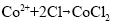
Presence of chloride ion may undergo the following reactions in bulk solution:
 | (4) |
 | (5) |
 | (6) |
 | (7) |
 | (8) |
and at the anode:
 | (9) |
Therefore, the formation of stable precipitate observed at the bottom of the reaction chamber may be interpreted due to the generation of more aluminum hydroxides which is an important factor that could affects the adsorbed amounts of Co (OH)2 and Ni (OH)2 from the solution.
| Table 1: | Variation of percentage of metal ions (II) mixture removal with time at different current densities |
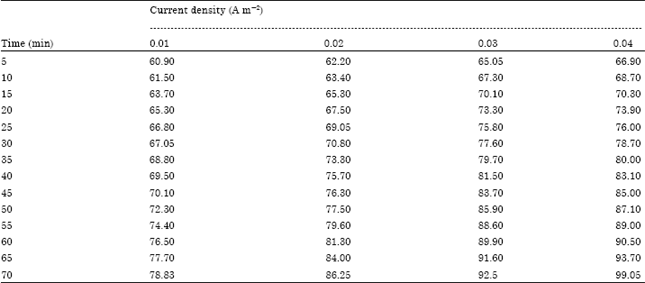 | |
| Inter-electrode distance: 0.005 m, initial Ni (II) and Co (II) concentration: 25 mg L-1, pH: 7.9, conductivity: 12.7 S m-1 at 50 Hz and 50 volt using AC | |
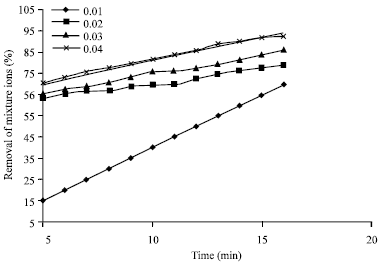 | |
| Fig. 1: | Percentage removal of mixture ions versus time (min) at different current densities |
The effect of current density on the percentage removal of ion mixtures is shown in Table 1 and Fig. 1. It can be seen that Ni (II) and Co (II) mixtures removal as well as specific electrical energy consumption will increase as the time of the EC process is increased. This could be because more current density favors the formation of more number of aluminum complexes, which also gives an attribute to the enhanced removal of ion mixtures as expected. This also causes the higher weight loss of aluminum electrode and therefore, increases the specific electrical energy consumption.
Sludge Settled during the EC experiment was filtered out of the chamber, dried and weighed. From the results it is evident that as the initial Ni (II) and Co (II) and the current density are increased, the levels of sludge production are increased. However, sludge production is decreased as inter electrode distance is increased. In the case of using a current density of 0.04 A m-2 and inter electrode distance of 0.005 m for tap water loaded with initial Ni (II) and Co (II) mixture concentrations of 5, 10 and 25 mg L-1, the weight of sludge was estimated as 30,42 and 96 mg, respectively.
| Table 2: | Variation of pH of Ni (II) and Co (II) with time at different current densities |
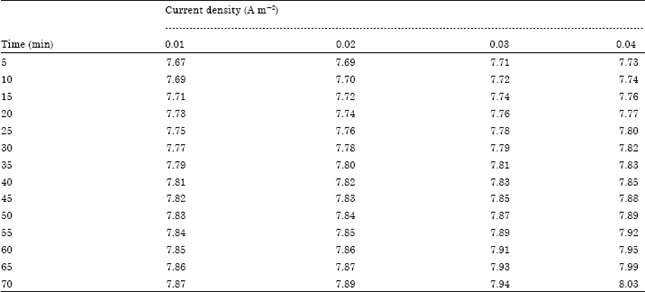 | |
| Inter electrode distance: 0.005 m, initial Ni (II) and Co (II) concentration: 25 mg L-1, pH: 7.9, conductivity: 12.7 S m-1 at 50 Hz and 50 volt using AC | |
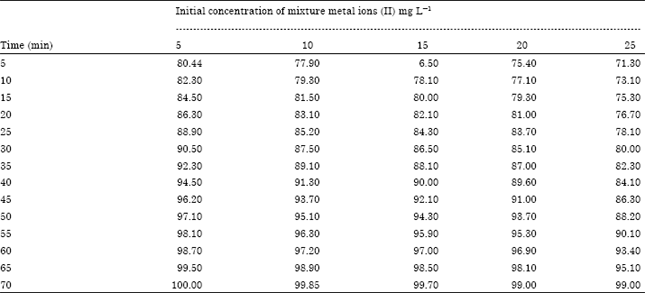
| Table 3: | Variation of extent mixture metal ions (II) removal with time at different current densities |
 | |
| Inter electrode distance: 0.005 m, current density: 0.04 A m-2, pH: 7.9, conductivity: 12.7 S m-1 at 50 Hz and 50 volt using AC | |
As can be seen from Table 2, when the applied current density was 0.04 A m-2 in a potential difference of 50 V at 50 Hz, the maximum value of pH 7.90 was obtained at the end of 35 min. Evidently the values of pH of the solution remained almost constant throughout the process. The results compiled in Table 3 show variations of adsorbed mixture of Co (II) and Ni (II) with different initial concentration of 5, 10, 15, 20 and 25 mg L-1 using a current density of 0.04 A m-2. From the results it is evident that the percentage of adsorbed mixture solution (II) increases with time. This process, with suitable oxidizing environment, is sufficient to remove the ions mixture within 10 min.
| Table 4: | Effects of inter electrode distance on mixture metal ions (II) removal |
 | |
| Current density: 0.04 A m-2, initial concentration of Ni (II): 25 mg L-1, time: 35 min., pH: 7.9, conductivity: 12.7 S m-1 at 50 Hz and 50 volt using AC | |
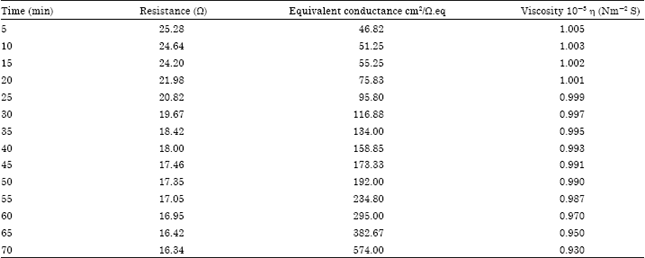
| Table 5: | The value of resistances (Ω), equivalent conductance and viscosity |
 | |
| Current density, 0.04 A m-2 using 50 HZ and 50 volt with AC | |
However, the rate of generation of aluminum hydroxide complex alone are sufficient to remove high Ni (II) and Co (II) concentration (>15 mg L-1) within ca. 35 min. of operation. It is found, for example, that 35 min is required for a complete removal of initial metal ions (II) mixture of 25 mg L-1 from solution. As it is seen, longer residence time is required for EC of higher concentration of metal ions (II) mixture. It is quite clear also, that under the present experimental conditions, and up to 10 mg L-1 of initial Ni (II) and Co (II) concentration, a complete removal of metal ions (II) mixture can be achieved within a time interval of 5 min.
To consider how effective the design of EC reactor can be, one must consider, among other variables, inter-electrode distances. Table 4 illustrates the removal efficiency as a function of the spacing between electrodes. It is clearly seen from Table 4 that under constant current density (0.04 A m-2 ) at 50 Hz and 50 V, initial concentration of metal ions (25 mg L-1), overall treatment time (35 min), pH(7.9) and conductivity (12.7 S m-1), when the inter- electrode distance was increased from 0.005 to 0.025 m, the removal (%) of metal ions mixture was decreased from 99.02 to 86.00%.
The values of resistances, equivalent conductance and viscosity at current density 0.04 A m-2 using AC current of 50 Hz and 50 V are included in Table 5. As shown in Fig. 2 and Table 5, the equivalent conductance increases when the operating time of the EC is increased. In such conditions, the viscosity is decreased to reach the optimum conditions. In addition, the higher current density will generally cause a decrease in the cell resistance. Accordingly, the ohmic loss (IR resistance) will remain constant which, in turn, inhibits the rate of anodic oxidation.
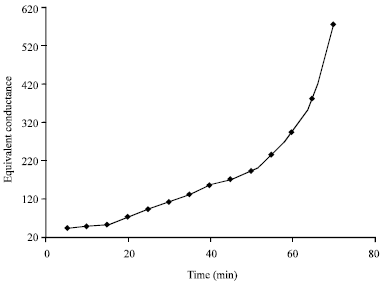 | |
| Fig. 2: | The equivalent conductance of metal ion mixture at current density 0.04 A m-2 using AC current at 50 Hz and 50 volt |
As the rate of anodic oxidation becomes lower, numbers of cations at anode also decreases. Since these cations are responsible for the formation of coagulant. Therefore, at higher inter-electrode distance, rate of aggregation of suspended particles as well as adsorption of contaminants would be low. This inhibitory effect may be the reason behind the lower removal efficiency at higher inter-electrode distance. At minimum inter- electrode distance the resistance for current flow in the solution will become lower and this, in turn, facilitates the electrolytic process for enhanced Ni and Co mixtures removal.
The variation in IR drop is governed by the following Eq.:
 | (10) |
where, I is the current (ampere), d is the distance between the electrodes (m), A is the active anode surface (m2) and K is the specific conductivity (103 ms/m) (Vik et al., 1984). The relationship between specific conductance (K) and equivalent conductance (Λ) is expressed as:
 | (11) |
The above equation infers that at constant anodic surface area and conductivity of solution, voltage drop (IR) increases with the increase of inter electrode distance. The increase in IR drop is not recommended for EC process in order to have acceptable energy consumptions as well as desired effective separation. In order to achieve 100% removal for the initial concentration of 25 mg L-1 of Ni (II) and Co (II) mixture, the optimum inter electrode distance is found to be 0.005 m.
Faraday's law may be used to relate the mass (m) of electrolytically generated aluminium released into the solution to the operating current (I) and the operating time (t):
 | (12) |
where, M is the atomic mass of aluminium, Z is the number of electrons transferred in the anodic dissolution (Z = 3) and F is Faraday's constant (96486 C.mol-1). By using this equation, the amount of coagulant delivered to the solution may be calculated.
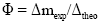
Current efficiency Φ for different operating conditions are calculated as:
 | (13) |
This calculation is based on the comparison of the experimental weight loss of aluminum electrodes ΔMexp during EC process with the theoretical amount of dissolution ΔMtheo according to Faraday's law. The specific electrical energy consumption (Seec) is calculated as a function of aluminum electrodes weight consumption, in kW. h/kg Al, during EC (Sundstorm and Klei, 1979; Stumm and Lee, 1961):
 | (14) |
For EC process the operating cost includes material, mainly electrode and electrical energy costs. The latter costs items are largely independent of the type of electrode material (Escobar et al., 2006; Gurses et al., 2002). The operating cost is calculated according to equation (15).
 | (15) |
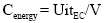
where, Cenergy (kW. h/m3 of Ni (II) solution) and Celectrode (kg Al/m3 of Fe (II) solution) are consumption quantities for the Ni (II) and Co (II) mixture removal, which are obtained experimentally. For Arabian market (2009), the electrical energy price ( a) is 0.009 US $/ kW.h and the electrode price (b) is 0.4 US $/kg Al. The cost due to electrical energy (kWh/m3 Co (II) and Ni (II) solution) is calculated as:
 | (16) |
where, U is cell voltage (V), I is current (A), tEC is the time of electrolysis (s) and V is the volume (m3) of the mixture of Co (II) and Ni (II) solution. The cost of electrode in kg Al/m3 the mixture of Co (II) and Ni (II) solution is calculated by Faraday's law:
 | (17) |
where, I is current (A), t is the time of electrolysis (s), Mw is atomic mass of aluminum (26.98 g mol-1), Z is the number of electron moles transferred (Z = 3), F is Faraday's constant (96487 C/mol) and V is volume (m3) of Fe (II) solution (Drondina and Drake, 1994).
The overall EC process in COD removal kinetics is described by a macro-kinetics model in which the rate constant depends on the pH and current density. This model provides preliminary data for evaluation of the kinetic constants. The kinetic rate law for describing the decrease in COD concentration from the PCW with time is best described with the second order kinetic model.
 | (18) |
where, Ce is the initial concentration of metal ion mixture (mg/L) and Ct is the concentration after each run, t represents retention time and k2 (L/mg min) is the rate constant of second order adsorption.
| Table 6: | Kinetic rate constant and pK values for removal mixture metal ions (II) at conditions of different pH using AC |
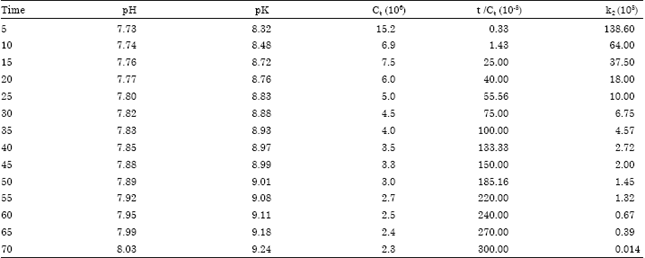 | |
Table 6 shows the rate constants and pK values for removal of metal ions mixture obtained by using AC as a function of different pH values. These findings show that the experimental data could be well fitted by the linearized second order kinetic model for the adsorption process. Based on the conformity between the experimental data and the model values expressed by the correlation values (r2) (r2 values close to 1) indicates that the model can successfully be applied to the kinetics of EC system. The best fit value for the second-order rate constant k2 is calculated as 2.0889 x10⁶ L/mg min.
The pK values of solution was estimated using the following Eq.:
 | (19) |
where, C is the concentration of each run and Co is the initial concentration of solution.
The viscosity of the solution ç, is given by the following Eq.:
 | (20) |
where, K and l are the viscometer constants and t and ρ are the effux time of flow ( in seconds) and density of the experimental liquid, respectively. The uncertainty in viscosity measurements is within±0.003 mpas.
The calculation of color removal efficiency after electrocoagulation treatment was performed using this Eq.:
 | (21) |
where, Co and C are the of Ni (II) and Co (II) mixture concentration before and after EC process in mgL-1, respectively.
The heat of adsorption (ΔH°) and entropy changes ΔS° were calculated using Van't Hoff equation (Boonamnuayvitaya et al., 2004):
 | (22) |
where, R is the universal gas constant (8.314 J/mol.K), T is the absolute temperature (K). Plotting ln Kads against 1/T gives a straight line with slope and intercept equal to -ΔH°/R and ΔS°/R, respectively.
| Table 7: | Thermodynamic parameters of adsorption of mixture Ni (II) and Co (II) in EC using AC |
 | |
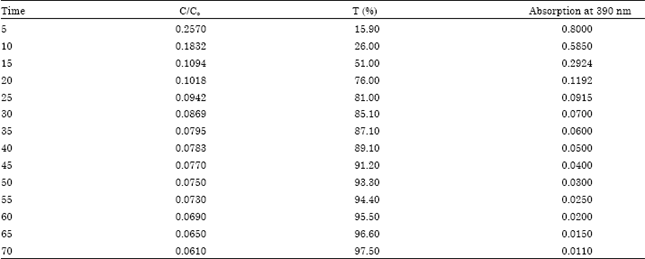
| Table 8: | The values of C/Co of the mixture of Ni (II) and Co (II), transmittance and absorption with time in EC using AC |
 | |
The values of ΔH° and ΔS° calculated from equation (22) were used to obtain the Gibbs free energy of adsorption (ΔG°) using:
 | (23) |
The data given in Table 7 shows that |ΔH°| < |TΔS°| at all temperatures. This indicates that the adsorption process is dominated by entropic rather than enthalpic changes (Mpofu et al., 2004). The negative value of ΔH° indicates an exothermic adsorption process. Whereas, the positive value of ΔS° indicates a more random state and that is mostly encountered in metal chelation due to the liberation of hydration ion. The increase of negative value of ΔG° with rising temperature implies the adsorption process becomes more favorable at higher temperature. It is evident from Table 8, that the values of C/Co and absorption decrease, but the values of transmittance increase with time.
CONCLUSION
Electrocoagulation technique was carried out to remove metal ions mixture from synthetic solution using tap water. Variation of percentage removal of metal ions mixture with different operating parameters such as current density, initial concentration of metal ions mixture and operating time were studied in detail.
The electrocoagulation was carried out for 35 min for initial concentrations as high as 25 mg L-1 and satisfactory removal of 99.2% was obtained. The results showed that the removal efficiency increases with the increase in current density from 0.01 to 0.04 A m-3. At the optimum current density of 0.04 A m-3 the electrolysis time was reduced to ca. 5 min for concentration range of 5-10 mg L-1.
Thus electrocoagulation was found to be very fast and effective method for the water containing metal ions(II) mixture from low to very high concentrations. Operating costs for the treatment of the metal ions (II) mixture using EC were evaluated for 100% removal of different initial metal ions concentrations with optimum operating condition. Operating time and current density exhibit similar effects on the process performances and the operating cost.
Finally, it must be concluded that an EC process comprises also equipments other than the electrolysis unit and a detailed technical and economic analysis of the whole process is necessary. The simplified approach used in this study provides only preliminary data for detailed analysis.
ACKNOWLEDGMENTS
This study was supported by Omar Al-Mukhtar University, Libya.
REFERENCES
- Al-Ghouti, M.A., M.A.M. Khraisheh and M. Tutuji, 2004. Flow injection potentiometric stripping analysis for study of adsorption of heavy metal ions onto modified diatomite. Chem. Eng. J., 104: 83-91.
CrossRef - Kim, J.S. and M.A. Keane, 2002. The removal of iron and cobalt from aqueous solutions by ion exchange with Na-Y zeolite: Batch, semi-batch and continuous operation. J. Chem. Technol. Biotechnol., 77: 633-640.
CrossRef - Rengaraj, S. and S.H. Moon, 2002. Kinetics of adsorption of Co(II) removal from water and wastewater by ion exchange resins. Water Res., 36: 1783-1793.
CrossRefPubMedDirect Link - EC., 1998. Council directive 98/83/EC of 3 November 1998 on the quality of water intended for human consumption. Official J. Eur. Communit., L330: 32-54.
Direct Link - Meena, A.K., G.K. Mishra, P.K. Rai, C. Rajagopal and P.N. Nagar, 2005. Removal of heavy metal ions from aqueous solutions using carbon aerogel as an adsorbent. J. Hazard. Mater., 122: 161-170.
CrossRef - Vik, E.A., D.A. Carlson, A.S. Eikum and E.T. Gjessing, 1984. Electrocoagulation of potable water. Water Res., 18: 1355-1360.
CrossRefDirect Link - Pouet, M.F. and A. Grasmick, 1995. Urban wastewater treatment by electrocoagulation and flotation. Water Sci. Tech., 31: 275-283.
CrossRefDirect Link - Holt, P.K., G.W. Barton and C.A. Mitchell, 2005. The future for electrocoagulation as a localised water treatment technology. Chemosphere, 59: 355-367.
CrossRefDirect Link - Vaaramaa, K. and J. Lehto, 2003. Removal of metals and anions from drinking water by ion exchange. Desalination, 155: 157-170.
CrossRef - Munter, R., H. Ojaste and J. Sutt, 2005. Complexed iron removal from groundwater. J. Environ. Eng., 131: 1014-1020.
CrossRefDirect Link - Andersen, W.C. and T.J. Bruno, 2003. Application of a gas-liquid entraining rotor to supercritical fluid extraction: Removal of iron(III) from water. Anal. Chim. Acta, 485: 1-8.
CrossRef - Berbenni, P., A. Pollice, R. Canziani, L. Stabile and F. Nobili, 2000. Removal of iron and manganese from hydrocarbon contaminated ground waters. Bioresour. Technol., 74: 109-114.
CrossRef - Aziz, H.A., M.S. Yusoff, M.N. Adlan, N.H. Adnan and S. Alias, 2004. Physico-chemical removal of iron from semi-aerobic landfill leachate by limestone filter. Waste Manage., 24: 353-358.
CrossRefDirect Link - Ellis, D., C. Bouchard and G. Lantagne, 2000. Removal of iron and manganese from groundwater by oxidation and microfiltration. Desalination, 130: 255-264.
CrossRefDirect Link - Das, B., P. Hazarika, G. Saikia, H. Kalita and D.C. Goswami et al., 2007. Removal of iron from groundwater by ash: A systematic study of a traditional method. J. Hazard. Mater., 141: 834-841.
CrossRef - Cho, B.Y., 2005. Iron removal using aerated granular filter. Process Biochem., 40: 3314-3320.
CrossRef - Tahir, S.S. and N. Rauf, 2004. Removal of Fe(II) from the wastewater of a galvanized pipe manufacturing industry by adsorption onto bentonite clay. J. Environ. Manage., 73: 285-292.
CrossRefPubMedDirect Link - Chen, X., G. Chen and P.L. Yue, 2000. Separation of pollutants from restaurant wastewater by electrocoagulation. Separat. Purific. Technol., 19: 65-76.
CrossRefDirect Link - Kobya, M., H. Hiz, E. Senturk, C. Aydiner and E. Demirbas, 2006. Treatment of potato chips manufacturing wastewater by electrocoagulation. Desalination, 190: 201-211.
CrossRefDirect Link - Kumar, P.R., S. Chaudhari, K.C. Khilar and S.P. Mahajan, 2004. Removal of arsenic from water by electrocoagulation. Chemosphere, 55: 1245-1252.
Direct Link - Drondina, K.V. and I.V. Drako, 1994. Electrochemical technology for fluorine removal from underground and waste water. J. Hazard. Mater., 37: 91-100.
CrossRef - Bayramoglu, M., M. Kobya, M. Eyvaz and E. Senturk, 2006. Technical and economic analysis of electrocoagulation for the treatment of poultry slaughterhouse wastewater. Sep. Purif. Technol., 51: 404-408.
CrossRef - Escobar, C. and C. Soto-Salazar and M.I. Toral, 2006. Optimization of the electrocoagulation process for the removal of copper, lead and Cadmium in natural water and simulated wastewaters. J. Environ. Mange., 81: 384-391.
CrossRef - Ge, J., J. Qu, P. Lei and H. Liu, 2004. New bipolar electrocoagulation-electroflotation process for the treatment of laundry wastewater. Sep. Purif. Technol., 36: 33-39.
CrossRefDirect Link - Yilmaz, A.E., R. Boncukcuoglu and M.M. Kocakerim, 2007. An empirical model for parameters affecting energy consumption in boron removal from boron-containing wastewaters by electrocoagulation. J. Hazard. Mater., 144: 101-107.
CrossRefPubMedDirect Link - Un, U.T., S. Ugar, A.S. Koparal and U.B. Ogutveren, 2006. Electrocoagulation of olive mill waste waters. Sep. Purif. Technol., 52: 136-141.
CrossRefDirect Link - Yavuz, Y., 2007. EC and Ef processes for the treatment of alcohol distillery wastewater. Sep. Purif. Technol., 53: 135-140.
CrossRefDirect Link - Sung, W. and J.J. Morgan, 1980. Kinetics and product of ferrous iron oxygenation in aqueous systems. Environ. Sci. Technol., 14: 561-568.
CrossRefDirect Link - Gurses, A., M. Yalcin and C. Dogar, 2002. Electrocoagulation of some reactive dyes: A statistical investigation of some electrochemical variables. Waste Manage., 22: 491-499.
CrossRefDirect Link - Alverez-Gallegos, A. and D. Pletcher, 1999. The removal of low level organics via hydrogen peroxide formed in a reticulated vitreous carbon cathode cell. Parts 2: The removal of phenols and related compounds from aqueous effluents. Electrochim. Acta, 44: 2483-2492.
CrossRefDirect Link - Golder, A.K., N. Hridaya, A.N. Samanta and S. Ray, 2005. Electrocoagulation of methylene blue and eosin yellowish using mild steel electrode. J. Hazard. Mater., 127: 134-140.
CrossRefDirect Link - Murugananthan, M., G.B. Raju and S. Prabhakar, 2004. Separation of pollutants from tannery effluents by electro flotation. Sep. Purif. Technol., 40: 69-75.
CrossRefDirect Link - Stumm, W. and G.F. Lee, 1961. Oxygenation of ferrous iron. Ind. Eng. Chem., 53: 143-146.
CrossRefDirect Link - Boonamnuayvitaya, V., C. Chaiya, W. Tanthapanichakoon and S. Jarudilokkul, 2004. Removal of heavy metals by adsorbent prepared from pyrolyzed coffee residues and clay. Sep. Purif. Technol., 35: 11-22.
CrossRefDirect Link - Mpofu, P., J. Addai-Mensah and J. Ralston, 2004. Temperature influence of nonionic polyethylene oxide and anionic polyacrylamide on flocculation and dewatering behavior of kaolinite dispersions. J. Colloid Interface Sci., 271: 145-156.
CrossRefDirect Link - Linares-Hernandez, I., C. Barrera-Diaz, G. Roa-Morales, B. Bilyeu and F. Urena-Nunez, 2007. A combined electrocoagulation-sorption process applied to mixed industrial wastewater. J. Hazard. Mater., 144: 240-248.
CrossRefDirect Link