

N.K.N. Al-Shorgani
School of Bioscience and Biotechnology, Faculty of Science and Technology, University Kebangsaan Malaysia, 43600 UKM Bangi, Selangor, Malaysia
M.S. Kalil
Department of Chemical and Process Engineering, Faculty of Engineering, University Kebangsaan Malaysia, 43600 UKM Bangi, Selangor, Malaysia
E. Ali
Department of Chemical and Process Engineering, Faculty of Engineering, University Kebangsaan Malaysia, 43600 UKM Bangi, Selangor, Malaysia
W.M.W. Yusoff
School of Bioscience and Biotechnology, Faculty of Science and Technology, University Kebangsaan Malaysia, 43600 UKM Bangi, Selangor, Malaysia
A.A. Hamid
School of Bioscience and Biotechnology, Faculty of Science and Technology, University Kebangsaan Malaysia, 43600 UKM Bangi, Selangor, Malaysia
Biotechnology
Year: 2012 | Volume: 11 | Issue: 6 | Page No.: 326-332





ABSTRACT
Butanol is an important industrial chemical and has gained attention as an important fuel because of its advantages of being less corrosive and water tolerant as compared to the ethanol. This study revealed the effects of butyric acid as an additive on growth and Acetone-butanol-ethanol (ABE) production using batch culture of Clostridium saccharoperbutylacetonicum N1-4. Different combinations of glucose and butyric acid were studied to finalize the best productive ratio for ABE and butanol production. The highest ABE and butanol production was obtained when 4 g L-1 of butyric acid was used in the presence of 30 g L-1 of glucose. The inhibitory effects of butyric acid on bacterial growth were also investigated using C. saccharoperbutylacetonicum N1-4 and mild inhibitory effects were found at high butyric acid concentration. On the other hand, no linear correlation between butyric acid and butanol production was observed. Production of 17.76 g L-1 butanol with a productivity of 0.15 g L-1 h-1 from 4 g L-1 of butyric acid proved the ability of C. saccharoperbutylacetonicum N1-4 to be tolerant to the certain concentration of butyric acid for the enhanced butanol production. Butyric acid was not only contributing as an additive or stimulating agent to the butanol pathway but also was being utilized as a co-substrate. Enhanced butanol production using growing cells of C. saccharoperbutylacetonicum N1-4 in the presence of specific concentration of butyric acid (4 g L-1 butyric acid) as a co-substrate with glucose can be carried out without any remarkable inhibition to bacterial growth.
PDF Abstract XML References Citation
Article History
Received: October 15, 2012;
Accepted: December 26, 2012;
Published: January 28, 2013
How to cite this article
N.K.N. Al-Shorgani, M.S. Kalil, E. Ali, W.M.W. Yusoff and A.A. Hamid, 2012. Enhancement of Biobutanol Production by Butyric Acid Addition Using Clostridium saccharoperbutylacetonicum N1-4 (ATCC 13564). Biotechnology, 11: 326-332.
DOI: 10.3923/biotech.2012.326.332
URL: https://scialert.net/abstract/?doi=biotech.2012.326.332
DOI: 10.3923/biotech.2012.326.332
URL: https://scialert.net/abstract/?doi=biotech.2012.326.332
INTRODUCTION
Acetone-butanol-ethanol (ABE) fermentation by Clostridia was widely employed on industrial basis during the first half of the last century. Later, this process could not compete economically with petrochemical synthesis, due to the cost of substrate, the development of the petrochemical industry and the low yield of butanol due to its hetero-fermentative nature (Jones and Woods, 1986). The bioconversion of agricultural biomass and chemical feedstock into biofuels has attracted interest because of the limited supply of petroleum and fossil fuels, continuously increasing oil prices and environmental problems due to exhaust gases. One of the most important factors in butanol fermentation is the cost of substrate and different raw materials or renewable agricultural crops can be utilized in butanol fermentation by solvent-producing Clostridia, including sago starch (Madihah, 2001), corn (Qureshi and Blaschek, 2001), molasses and whey permeate (Ennis and Maddox, 1985). Although, current strategies for biomass have focused on the production of ethanol but the production of butanol instead of ethanol offers several advantages for biofuel-gasoline blending. Butanol has many attractive properties as a fuel, compared with other biofuels, such as ethanol and methanol. Butanol has a lower vapor pressure but higher energy content than ethanol, which makes the former safer for blending with gasoline and offers better fuel economy than ethanol-gasoline blends. Additionally, tolerance of butanol to water contamination in gasoline blends, hence, butanol-gasoline blends are less susceptible to separation, which facilitates their use in existing gasoline supplies and distribution channels (Durre, 2007; Kalil et al., 2003). Specifically, butanol is far less corrosive than ethanol and can be shipped through existing pipelines (Lee et al., 2008). Also, butanol is sufficiently similar to gasoline to be used directly, or it can be blended with gasoline at higher concentrations than ethanol in any gasoline engine without any modification. Therefore, when compared with ethanol and acetone, butanol is the most promising biofuel and the effort to optimize ABE fermentation to enhance butanol production over ethanol appears to be the more commercially and technologically attractive option (Hipolito et al., 2008). Solvent-producing Clostridia show biphasic fermentation, acidogenic phase, during which the acids and gases such as acetate, butyrate, hydrogen and carbon dioxide are produced as main products. This acidogenic phase usually occurs during the exponential-growth phase of cell division. The second phase is the solventogenic phase which appears during the stationary stage and in this phase, acids are reassimilated and utilized in the production of solvents (acetone, butanol and ethanol or isopropanol instead of acetone in some strains of C. beijerinckii) (Andersch et al., 1983; Lee et al., 2008).
Butanol can be produced using growing (Bahl et al., 1982) or resting cells (Tashiro et al., 2007) of different species of Clostridia in the presence of butyric acid as an enhancer to butanol but inhibiting properties of butyric acid to certain bacteria were also reported.
Reports are available regarding butanol production from Clostridium saccharoperbutylacetonicum N1-4 using butyric acid as a co substrate in a fed batch culture (Tashiro et al., 2004) but our study is presenting a simple batch culture production of ABE which is common to researchers and industries. The objective of this study was to enhance the butanol production using batch culture of C. saccharoperbutylacetonicum N1-4 by adding butyric acid to the medium.
MATERIALS AND METHODS
Microorganism and inoculum preparation: Clostridium saccharoperbutylacetonicum N1-4 was obtained from a stock culture maintained at the Biotechnology Lab in the Chemical and Process Engineering Department at UKM where this study was carried out in year 2011. The stock culture was maintained at 4°C as a suspension of spores in potato glucose medium (PG medium). A volume of 1 mL stock culture was transferred into 10 mL of 15% PG medium [150 g potato, 10 g glucose, 0.5 g (NH4)2SO4 and 3 g CaCO3] with subsequent heat shock for 1 min in boiling water, cooled in ice water and incubated for one to two days at 30°C under anaerobic conditions. The viability and purity of the culture was verified by observation of the colonies’ morphology characteristics and by Gram-stain technique to ensure the culture’s purity. The culture was then transferred to sterilized TYA (Tryptone-yeast extract-acetate medium; medium components per liter of deionized water consist of 20 g glucose, 6 g tryptone, 2 g yeast extract, 3 g ammonium acetate, 0.5 g KH2PO4, 0.3 g MgSO4.7H2O and 10 mg FeSO4.7H2O), was incubated anaerobically for 15-18 h and used to prepare the inoculum.
Preparation of medium: The fresh PG medium contained the following substances per liter of distilled water; 150 g fresh potato, 10 g glucose, 0.5 g (NH4)2SO4 and 3 g CaCO3. After mixing the above substances, the medium was incubated in boiling water for 1 h with interval mixing every 10 min. Next, the medium was filtered through gauze. The medium was sterilized in an autoclave at 121°C for 15 min. TYA medium with 30 g L-1 of glucose was used for the pre-culture. The medium per liter of distilled water consisting of 30 g glucose, 2 g yeast extract, 6 g tryptone, 3 g CH3COONH4, 0.5 g KH2PO4, 0.3 g MgSO4.7H2O and 10 mg FeSO4.7H2O. The same medium was used for all further experiments. The medium was sterilized at 121°C for 15 min.
Batch fermentation: Anaerobic batch fermentations were conducted in 250 mL Scott Duran bottles with a 150 mL working volume of TYA medium with different concentrations of butyric acid varied from zero to 15 g L-1 (Table 1). The initial medium pH was adjusted to 6.2 with 5 M NaOH. The medium was sterilized by autoclaving at 121°C for 15 min and the medium was sparged with oxygen-free nitrogen before use to ensure anaerobic conditions. C. saccharoperbutylacetonicum N1-4 (ATCC 13564) was grown in TYA medium in a 250 mL Scott Duran bottle in anaerobic condition at 30°C for 20 h. This culture was used as an inoculum. The cultures were inoculated by 10% (v/v) of fresh C. saccharoperbutylacetonicum N1-4 and incubated at 30°C without shaking in an incubator under anaerobic conditions.
Analytical procedures: Samples were centrifuged at 10,000 rpm for 5 min. The supernatant was used for determining the concentration of solvent (ABE), glucose and organic acids. Solvent was measured using a gas chromatograph (7890A GC-System, Agilent Technologies, Palo Alto, CA, USA) equipped with a flame ionization detector and a 30 m capillary column (Equity1; 30x0.32 mm x1.0 μm film thickness; Supelco Co, Bellefonate, PA, USA). The oven temperature was programmed to increase from 40 to 130°C at a rate of 8°C min-1. The injector and detector temperatures were set at 250 and 280°C, respectively. Helium, as the carrier gas, was set at a flow rate of 1.5 mL min-1. Butyric acid and acetic acid were analyzed with a high-performance liquid chromatography (HPLC 12000 Series, Agilent technologies, Palo Alto, CA, USA) using a Genessis C18 120A column (25 cmx4.6 mm; Jones Chromatography, Tempe, AZ, USA) at a column temperature of 40°C and 20 mM H2SO4 as a mobile phase at the flow rate of 0.6 mL min-1. Detection was accomplished with a UV detector at a wavelength of 220 nm. The glucose concentration in the fermentation broth was determined with a Biochemistry Analyzer (YSI 2700D, YSI Inc. Life Sciences, Yellow Springs, OH, USA). The cell concentration was determined by Optical Density (OD) at 660 nm. The yield of butanol to the carbon source was calculated using the following equation (Tashiro et al., 2007):
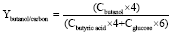 |
where, YButanol/Carbon is the yield of butanol to the carbon source (g g-1), CButanol is the production of butanol (g L-1), CButyrate and CGlucose is the concentration of butyrate (g L-1) and the utilisation of glucose (g L-1), respectively.
RESULTS
Butanol fermentation using TYA medium: Control experiment was carried out using batch culture of C. saccharoperbutylacetonicum N1-4 by inoculating TYA medium containing 30 g L-1 glucose and no butyric acid was added. The maximum ABE concentration obtained was 9.74 g L-1 containing 2.77 g L-1 of acetone, 6.59 g L-1 of butanol and 0.38 g L-1 of ethanol. The 30 g L-1 of glucose was fully utilized during 96 h of this fermentation and resulted in ABE and butanol productivities as 0.1 and 0.07 g L-1 h, respectively (Fig. 1). The ABE and butanol yields were 0.33 and 0.22 g g-1, respectively (Table 1).
Butanol fermentation from TYA medium supplemented with 1 g L-1 butyric acid: In this experiment, 1 g L-1 of butyric acid was added to the TYA medium in order to investigate the effect of low concentration of butyric acid on the production of butanol and ABE using C. saccharoperbutylacetonicum N1-4. It has been shown that no cell inhibition was observed and the production was significantly improved compared to the control culture. On the other hand, no early solventogenic shift was detected. The fermentation time to reach maximum production was similar to the control culture (96 h) and the shift to solventogenic phase also was same which showed similar growth behavior with the control culture. ABE concentration was 14.02 g L-1 and the concentration of the produced butanol was 9.97 g L-1. In this test, 1.5 times increase in ABE and butanol production was observed. The attained yields (g product to g substrates) and the productivities of ABE and butanol were also enhanced, 0.33, 0.22 g g-1, 0.15 and 0.1 g L-1 h-1, respectively (Table 1).
Butanol fermentation from TYA medium supplemented with 2 g L-1 butyric acid: A batch culture fermentation of C. saccharoperbutylacetonicum N1-4 in TYA medium supplemented with 2 g L-1 resulted in 11.77 g L-1 of total ABE in which 3.1 g L-1 of acetone, 8.23 g L-1 of butanol and 0.44 g of ethanol.
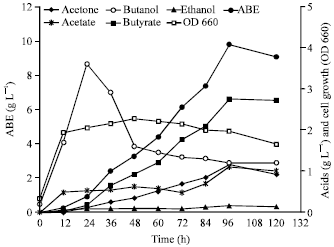 | |
| Fig. 1: | Production of ABE from TYA medium containing 30 g L-1 glucose when using C. saccharoperbutylacetonicum N1-4 |
| Table 1: | The effect of butyric acid addition on ABE production in batch culture of C. saccharoperbutylacetonicum N1-4 |
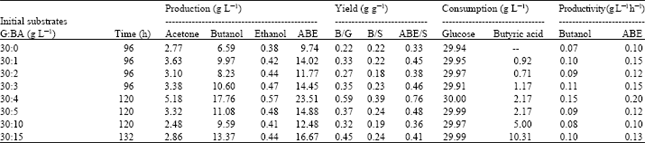 | |
| B/G: Yield of butanol to glucose, B/S: Yield of butanol to substrates (glucose and butyric acid), ABE/S: Yield of ABE to substrates (glucose and butyric acid) | |
The butanol yield to glucose consumed was 0.27 g g-1 while butanol yield to substrates utilized (glucose and butyric acid) was 0.18 g g-1. ABE productivity and yield were 0.12 g L-1 h-1 and 0.38 g ABE/g substrates utilized (Table 1). ABE and butanol concentrations produced from TYA supplemented with 2 g L-1 butyric acid was lower than that obtained from TYA when supplemented with 1 g L-1 butyric acid but more than control without butyric acid addition. However, the bacterial growth was similar and no cell inhibition was observed. In this case only 0.71 g L-1 butyric acid was consumed and approximately 30 g L-1 of glucose was utilized.
Butanol fermentation from TYA medium supplemented with 3 g L-1 butyric acid: The presence of 3 g L-1 of butyric acid in TYA medium enhanced the production of butanol and ABE as 10.6 and 14.45 g L-1, respectively. However, 1.17 g L-1 of butyric acid was consumed in this culture. The yield of butanol based on glucose utilized was 0.35 g g-1 while the productivity was 0.11 g L-1 h. Addition of 3 g L-1 of butyric acid also enhanced the ABE yield and productivity to be 0.46 g ABE/g total substrates consumed and 0.15 g L-1 h-1, respectively (Table 1). The cell growth was reached the maximum Optical Density (OD at 660 nm) after 48 h which is comparable to the control culture. Although, addition 3 g L-1 of butyric acid produced higher concentrations of ABE and butanol, the bacterial growth was higher when the culture supplemented with 2 g L-1 of butyric acid.
Butanol fermentation from TYA medium supplemented with 4 g L-1 butyric acid: TYA with 4 g L-1 of butyric acid strongly supported the production of ABE and butanol. The butanol concentration obtained was about 3-folds compared to the control and the concentration of ABE was 23.51 g L-1 containing 5.18 g L-1 of acetone, 17.76 g L-1 of butanol and 0.57 g L-1 of ethanol. ABE yield was the highest with 0.76 g g-1 and the butanol yield was 0.39 g g-1 based on total substrates (butyric acid and glucose) consumed (Fig. 2). The ABE and butanol productivities were also improved as 0.2 and 0.15 g L-1 h-1, respectively (Table 1).
Butanol fermentation from TYA medium supplemented with 5 g L-1 butyric acid: On the basis of the above results, increasing the added butyric acid concentration to 4 g L-1 significantly increased the production of ABE and butanol, hence, in this test, an attempt to use higher concentration of butyric acid as an additive to the TYA medium was achieved.
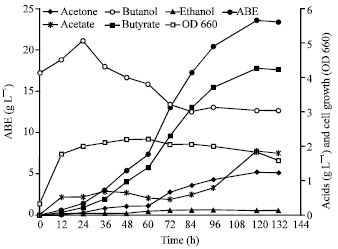 | |
| Fig. 2: | ABE production from TYA containing 30 g L-1 glucose and 4 g L-1 butyric acid using C. saccharoperbutylacetonicum N1-4 |
TYA was supplemented with 5 g L-1 and fermented using 10% fresh culture of C. saccharoperbutylacetonicum N1-4. The culture produced 14.88 g L-1 total ABE after 120 h. The maximum butanol was 11.08 g L-1 and acetone was 3.32 g L-1. The butanol and ABE productivities were 0.09 and 0.12 g L-1 h-1, respectively, which were similar to that obtained from 2 g L-1 of butyric acid while the butanol production was higher than that produced from 2 g L-1 of butyric acid (11.08 vs. 8.23 g L-1). Although, the concentration of butyric acid (5 g L-1) enhanced the production of ABE, especially butanol, the obtained butanol and ABE concentrations were lower than that observed when 4 g L-1 of butyric acid was used to supplement TYA medium. However, no cell growth inhibition was observed in both cases. Based on the substrates consumed, only 0.48 g g-1 as an ABE yield was obtained and 0.24 g g-1 as a butanol yield when 5 g L-1 butyric acid was subjected to TYA medium (Table 1).
Butanol fermentation from TYA medium supplemented with 10 g L-1 butyric acid: When 10 g L-1 butyric acid was added to TYA medium containing 30 g L-1 glucose, 12.48 g L-1 ABE was obtained and the consumed butyric acid was 5 g L-1. The butanol production increased to 9.59 g L-1 compared to unsupplemented culture with butyric acid (Table 1).
Among all supplemented cultures with different concentrations of butyric acid varied from 1 to 5 g L-1, the 10 g L-1 butyric acid showed the lowest butanol and ABE productivities as well as the lowest ABE yield. Additionally, this culture exhibited slower growth and long time during the lag phase compared to the culture without butyric acid and the optimum cell growth was measured after 84 h.
Butanol fermentation from TYA medium supplemented with 15 g L-1 butyric acid: The presence of 15 g L-1 butyric acid in TYA medium caused inhibition of bacterial growth temporarily during the first 12 h, which might be attributed to the acclimatization of bacterial cells to higher concentration of butyric acid. Moreover, the time of fermentation in this case elongated to 136 h to reach the maximum production of ABE and butanol and 10.31 g L-1 of butyric acid was utilized. The ABE concentration resulted from this fermentation was 16.67 g L-1 containing 13.37 g L-1 butanol, 2.86 g L-1 acetone and 0.44 g L-1 ethanol. The ABE and butanol yields were 0.41 and 0.24 g g-1, respectively. Enhancement in productivity was observed when 15 g L-1 of butyric acid was used compared to 10 and 5 g L-1 of butyric acid. In contrast ABE and butanol yields obtained from 5 g L-1 butyric acid were higher than adding 10 or 15 g L-1 of butyric acid to the medium, moreover, the highest butyric acid was utilized when 15 g L-1 butyric acid was added, which was 10.31 g L-1 (Table 1).
DISCUSSION
Tashiro et al. (2004) has described the butanol production using non growing cells of C. saccharoperbutylacetonicum N1-4 in the presence of butyric acid. This study was designed to optimize the values for butanol production using growing cells of saccharoperbutylacetonicum N1-4 in the presence of butyric acid as an additive.
It is well known that butyric acid is involved in the shift from acidogenic phase to solventogenic phase in solvent-producing Clostridia and the acids can be reutilized in the second phase (Solventogenesis) (Jones and Woods, 1986). Using 1 g L-1 of butyric acid as an additive, the butanol production was significantly improved compared to the control culture and there was no growth inhibition was observed due to butyric acid. On the other hand, no early solventogenic shift was detected. The fermentation time to reach maximum production was similar to the control culture (96 h) and the shift to solventogenic phase also was same which showed similar growth behavior to that of the control culture. ABE and butanol concentrations produced from TYA supplemented with 2 g L-1 butyric acid was lower than that obtained from TYA when supplemented with 1 g L-1 butyric acid but enhancing effects of butyric acid were evident when it was compared with control. However, the bacterial growth was similar and no cell inhibition was observed. ABE and butanol production was also increased with the addition of butyric acid as an additive 3-4 g L-1 of butyric acid. The maximum butanol concentration was obtained using 4 g L-1 of butyric acid, concentration of ABE was 23.51 g L-1 containing 5.18 g L-1 of acetone, 17.76 g L-1 of butanol and 0.57 g L-1 of ethanol (Table 1). Butyric acid did not show any enhancing effect on ethanol but the production of acetone was observed as being stimulated along with the increment in butanol production. (Tashiro et al., 2004) have reported that addition of acetic acid in batch culture of C. saccharoperbutylacetonicum N1-4 promoted only acetone production while both acetone and butanol production were enhanced with the addition of butyric acid up to 5 g L-1 (Rosegrant et al., 2006; Tashiro et al., 2007). Most of the earlier studies revealed that butyric acid inhibit the cell growth of different species of solvent-producing Clostridium. While cells of C. saccharoperbutylacetonicum N1-4 didn’t exhibit any inhibition when TYA medium was used as a production medium and supplemented by various concentrations of butyric acid ranging from 1 to 15 g L-1. C. saccharoperbutylacetonicum N1-4 can be considered as a resistant strain to critical concentrations of butyric acid (15 g L-1) when grown in TYA medium. Reports encompassing the fermentation of Clostridium in the presence of butyric acid, in batch culture (Matta-El-Ammouri et al., 1987), fed-batch culture (Fond et al., 1985; Tashiro et al., 2004), continuous culture (Bahl et al., 1982), using limited nutrient medium (Al-Shorgani et al., 2012) and using resting cells (Tashiro et al., 2007). The previous studies revealed that the addition of butyric acid improved the butanol and ABE production but bacterial growth was inhibited. The above mentioned studies were made using Clostridium other than C. saccharoperbutylacetonicum N1-4. However, the results from our studies revealed that the addition of butyric acid didn’t contribute any inhibitory effects on the cell growth but enhanced the production at some specific concentration and it was also being utilized as a substrate. Butanol production was declined on increasing the butyric acid concentration more than 4 g L-1.
Production of high concentrations of butanol and ABE using TYA medium containing glucose (30 g L-1) and butyric acid can be attributed to the triggering of solventogenic pathway and a supportive edge as a substrate being provided by butyric acid. Partial consumption of glucose might be responsible for supporting the growth and stability of the cells as well as producing solvent-involving enzymes instead of acid and solvent production. It can be concluded that small amount of butyric acid (4 g L-1) theoretically can’t produce 23.51 g L-1 ABE but it was inducing the utilization of glucose in solventogenesis efficiently. Mun et al. (1995) have reported that C. saccharoperbutylacetonicum N1-4 requires low concentration of undissociated butyric acid to trigger solventogenesis (Mun et al., 1995). While working with the resting cells (Tashiro et al., 2004) have reported that butyric acid is also utilized by C. saccharoperbutylacetonicum N1-4 as co-substrate in the production of butanol (Tashiro et al., 2004). Matta-El-Ammouri et al. (1987) have reported that addition of butyric acid continuously to the culture of Clostridium acetobutylicum strain 77 activated the production of butanol and acetone as well as accelerate the cellular metabolism in the solventogenic phase. Solvent-producing Clostridia have also been used in free and immobilized form to produce butanol in the presence of butyric acid as an additive to the medium (Gholizadeh, 2009). Our study demonstrated that 4 g L-1 of butyric acid was the best concentration to achieve maximized butanol production. Some experiments were designed to check the effects of high concentration of butyric acid on ABE production and cell growth by using 10 and 15 g L-1 of butyric acid as an additive to TYA. Presence of 15 g L-1 butyric acid in TYA medium caused inhibition of bacterial growth temporarily during the first 12 h, indicating that the bacterial population spent some time to be acclimatized with the high butyric acid concentration (15 g L-1) but ultimately could grow and produce solvents. However the butanol and ABE production was not produced optimally as it was observed while using 4 g L-1 of butyric acid.
CONCLUSIONS
This study was designed to check the effects of butyric acid on cell growth and ABE production by growing cells of C. saccharoperbutylacetonicum N1-4. In this investigation, butanol production was enhanced when TYA medium was supplemented with butyric acid using growing cells of C. saccharoperbutylacetonicum N1-4 as inoculum. The results showed that addition of 4 g L-1 butyric acid to TYA medium could strongly improve the butanol and total ABE. Increasing the butyric acid concentration more than 4 g L-1 didn’t enhance butanol production and the optimum butyric acid concentration was 4 g L-1. The results were useful in predicting the concentration of butyric acid that would maximize butanol yields and butyric acid could be potentially utilized as co-substrate for butanol fermentation without contributing any remarkable inhibitory effects on cell growth.
ACKNOWLEDGMENT
We would like to thank Prof. Dr Yoshino Sadazo, Kyushu University Japan, who provided us with C. saccharoperbutylacetonicum N1-4. This research was supported by the UKM-GUP-KPB -08-32-128 grant.
REFERENCES
- Al-Shorgani, N.K.N., E. Ali, M.S. Kalil and W.M.W. Yusoff, 2012. Bioconversion of butyric acid to butanol by Clostridium saccharoperbutylacetonicum N1-4 (ATCC 13564) in a limited nutrient medium. BioEnergy Res., 5: 287-293.
CrossRef - Andersch, W., H. Bahl and G. Gottschalk, 1983. Level of enzymes involved in acetate, butyrate, acetone and butanol formation by Clostridium acetobutylicum. Applied Microbiol. Biotechnol., 18: 327-332.
CrossRef - Bahl, H., W. Andersch, K. Braun and G. Gottschalk, 1982. Effect of pH and butyrate concentration on the production of acetone and butanol by Clostridium acetobutylicum grown in continuous culture. Applied Microbiol. Biotechnol., 14: 17-20.
CrossRefDirect Link - Fond, O., G. Matta-Ammouri, H. Petitdemange and J.M. Engasser, 1985. The role of acids on the production of acetone and butanol by Clostridium acetobutylicum. Applied Microbiol. Biotechnol., 22: 195-200.
CrossRef - Hipolito, C.N., E. Crabbe, C.M. Badillo, O.C. Zarrabal and M.A.M. Mora et al., 2008. Bioconversion of industrial wastewater from palm oil processing to butanol by Clostridium saccharoperbutylacetonicum N1-4 (ATCC 13564). J. Cleaner Prod., 16: 632-638.
CrossRef - Jones, D.T. and D.R. Woods, 1986. Acetone-butanol fermentation revisited. Microbiol. Mol. Biol. Rev., 50: 484-524.
PubMedDirect Link - Kalil, M.S., P.W. Kit, W.M.W. Yusoff, Y. Sadazo and R.A. Rahman, 2003. Direct fermentation of palm oil mill effluent to acetone-butanol-ethanol by solvent producing clostridia. Pak. J. Biol. Sci., 6: 1273-1275.
CrossRefDirect Link - Lee, S.Y., J.H. Park, S.H. Jang, L.K. Nielsen, J. Kim and K.S. Jung, 2008. Fermentative butanol production by clostridia. Biotechnol. Bioeng., 101: 209-228.
CrossRef - Matta-El-Ammouri, G., R. Janati-Idrissi, A.M. Junelles, H. Petitdemange and R. Gay, 1987. Effects of butyric and acetic acids on acetone-butanol formation by Clostridium acetobutylicum. Biochimie, 69: 109-115.
CrossRef - Mun, L.T., A. Ishizaki, S. Yoshino and K. Furukawa, 1995. Production of acetone, butanol and ethanol from palm oil waste by Clostridium saccharoperbutylacetonicum N1-4. Biotechnol. Lett., 17: 649-654.
CrossRef - Qureshi, N. and H.P. Blaschek, 2001. ABE production from corn: A recent economic evaluation. J. Ind. Microbiol. Biotechnol., 27: 292-297.
PubMed - Tashiro, Y., H. Shinto, M. Hayashi, S. Baba, G. Kobayashi and K. Sonomoto, 2007. Novel high-efficient butanol production from butyrate by non-growing Clostridium saccharoperbutylacetonicum N1-4 (ATCC 13564) with methyl viologen. J. Biosci. Bioeng., 104: 238-240.
CrossRef - Tashiro, Y., K. Takeda, G. Kobayashi, K. Sonomoto, A. Ishizaki and S. Yoshino, 2004. High butanol production by Clostridium saccharoperbutylacetonicum N1-4 in fed-batch culture with pH-stat continuous butyric acid and glucose feeding method. J. Biosci. Bioeng., 98: 263-268.
CrossRef