

Mahvash Zargar
Fertility and Infertility Research Center, Imam Khomeini Hospital, Faculty of Medicine, Ahvaz Jundishapur University of Medical Sciences (AJUMS), Ahvaz, Iran
Roshan Nikbakht
Fertility and Infertility Research Center, Imam Khomeini Hospital, Faculty of Medicine, Ahvaz Jundishapur University of Medical Sciences (AJUMS), Ahvaz, Iran
Elham Pourmatroud
Fertility and Infertility Research Center, Imam Khomeini Hospital, Faculty of Medicine, Ahvaz Jundishapur University of Medical Sciences (AJUMS), Ahvaz, Iran
Kimia Ghasemi
Fertility and Infertility Research Center, Imam Khomeini Hospital, Faculty of Medicine, Ahvaz Jundishapur University of Medical Sciences (AJUMS), Ahvaz, Iran
Masoud Hemadi
Fertility and Infertility Research Center, Imam Khomeini Hospital, Faculty of Medicine, Ahvaz Jundishapur University of Medical Sciences (AJUMS), Ahvaz, Iran
Research Journal of Obstetrics and Gynecology
Year: 2011 | Volume: 4 | Issue: 2 | Page No.: 51-58







ABSTRACT
The use of a suitable regimen of cabergoline in prevention of OHSS with at least side effects is desirable. So this study aimed to evaluate daily versus once every two days administration of cabergoline to prevent and decrease the intensity of OHSS. Patients at risk of OHSS were chosen randomly and put alternately into two groups: Daily-treated (group I), in which the patients received oral cabergoline at the dose of 0.5 mg day-1 for 8 days (total of 8 tablets), Once every two days-treated (group II), in which the patients received a single 0.5 mg oral tablet of cabergoline once every two days for 8 days (total of 4 tablets). The day before human chorionic gonadotrophin (hCG) administration and on day 9, the two groups were assessed and compared for complaints, clinical, laboratory findings and also sonographic criteria of OHSS. The results were shown that effectiveness of daily administration of cabergoline is more than it’s once every two days administration on abdominal circumference increase, HCT, WBC, platelet count, abdominal pain, shortness of breath, ascites and increase in both ovaries size. However, the effectiveness of both treatment methods was same on increase in weight, oliguria and serum creatinine rise. On the other hand, daily administration of cabergoline was not meaningfully more effective than it’s once every two days administration in decreasing the incidence of all varieties of OHSS, but was effective in decreasing its intensity. The incidence of severe and moderate OHSS was less and cases with mild OHSS or no OHSS at all were more in the group using daily cabergoline. It seems that daily administration of cabergoline doesn’t has a greater effect than it’s once every two days administration, on decreasing the incidence of OHSS; but is more effective in decreasing the intensity of clinical features, laboratory and sonographic findings of OHSS.
PDF Abstract XML References Citation
Received: July 29, 2011;
Accepted: September 16, 2011;
Published: December 03, 2011
How to cite this article
Mahvash Zargar, Roshan Nikbakht, Elham Pourmatroud, Kimia Ghasemi and Masoud Hemadi, 2011. Comparison of the Clinical Efficacy of Two Different Cabergoline Regimens on Prevention of Ovarian Hyperstimulation Syndrome (OHSS). Research Journal of Obstetrics and Gynecology, 4: 51-58.
DOI: 10.3923/rjog.2011.51.58
URL: https://scialert.net/abstract/?doi=rjog.2011.51.58
DOI: 10.3923/rjog.2011.51.58
URL: https://scialert.net/abstract/?doi=rjog.2011.51.58
INTRODUCTION
Ovarian hyperstimulation syndrome (OHSS) is an iatrogenic complication of ovulation induction using exogenous gonadotrophin for treating infertility (Delvigne and Rozenberg, 2002). It is probably mediated through an increase in ovarian secretion of vasoactive substances like vascular endothelial growth factor (VEGF), elements of renin-angiotensin system and other cytokines (Eghoghosoa et al., 2011; Aboulghar and Mansour, 2003; Busso et al., 2009). OHSS is divided into early (onset within 9 days of oocyte retrieval) and late OHSS (presenting 10 or more days after retrieval) (Pau et al., 2006). The classification of OHSS based on the severity of the syndrome (from mild up to critical) is dependent some of factors such as ovarian diameters, abdominal pain and flatulence, ascites, weight, nausea and vomiting, laboratory findings, oliguria or unoria, hypoproteinemia, thromboembolic and also acute respiratory distress syndrome (ARDS) (Golan and Weissman, 2009).
OHSS can cause severe and sometimes fatal complications. It also may cause ART cycle disruption and waste of resources spent on it and the need for repetition of the cycle. Furthermore, the costs of hospitalization, treatment and sick leaves for the patient, her family and the society are high (Delvigne and Rozenberg, 2002). Therefore, efforts must be undertaken to prevent this syndrome.
Several ways have been suggested to prevent OHSS by inhibiting ovarian secretion of vasoactive substances, one of which is using cabergoline (Alvarez et al., 2007). Cabergoline is a synthetic ergot derivative having a high affinity for dopamine receptors and therefore is a long-acting dopamine receptor agonist (Curran and Perry, 2004). The mean expression of VEGF receptors in the endothelial cells is noticeably higher in D2 dopamine receptor knockout mice as compared with the intact mice. So it was suggested that dopamine secretion regulates endothelial functions of VEGF (Cristina et al., 2005).
According to the above problem description, apparently cabergoline administration is an effective agent for prevention of OHSS and economically it is very viable (Alvarez et al., 2007). On the other hand, in the event of pregnancy, there is a general tendency toward ever less interference of unnatural factors such as drug prescription during the first 8 weeks of pregnancy (Nourizad et al., 2008; Ziadat, 2010; Czeizel et al., 2006; Raji et al., 2006). Therefore, prevention of OHSS with at least dose of drugs which translates into less cost and possible complications is desirable.
In reviewing previous studies, we found no study that evaluated the clinical efficacy of different methods of cabergoline therapy on incidence and severity of OHSS. Therefore, in this study, cabergoline prescription in daily versus once every two days was evaluated.
MATERIALS AND METHODS
Study design: This study was performed as a prospective interventional clinical trial. This study was performed between June 2010 to April 2011. Patients were selected from all patients undergoing in vitro fertilisation (IVF) or ICSI (Intra Cytoplasmic Sperm Injection) cycles who have a high risk for OHSS.
Inclusion criteria were an informed consent and one or both of the following: (1) follicle count more than 12 (larger than 12 mm) in vaginal sonography. (2) Serum estradiol level >2500 pg mL-1.
Exclusion criteria included patient not returning, drug side effects such as severe nausea and vomiting or other side effects.
The Ethics Committee of Jundishapour Ahvaz University of Medical Sciences approved this study.
Sample collection: Ninety- two infertile patients who referred to Fertility and Infertility Research Center of Imam Khomeini hospital to receive ART treatment that their estradiol (E2) concentrations was more than 2500 pg mL-1 on the day of HCG administration were assess.
Patients are divided into two similar groups regarding other OHSS risk factors (accidentally and alternately). Group 1 (n = 46): beginning with the day of human chorionic gonadotrophin (hCG) administration, a single 0.5 mg oral tablet of cabergoline is given daily for 8 days (total: 8 tablets) and Group 2 (n = 46): beginning with the day of HCG administration, a single 0.5 mg oral tablet of cabergoline is given once every two days for 8 days (total: 4 tablets).
Patient follow-up: On the day of HCG administration a baseline evaluation of OHSS signs and laboratory data (Complete blood count, Creatinine and Estradiol) is performed. On the 5th day, patients are evaluated for clinical findings and complaint of abdominal pain, shortness of breath, weight gain, abdominal circumference and decrease in urine output. On day 9 they are evaluated again for the aforementioned and also undergo vaginal sonography for ovarian diameters (greater than 5 cm), ascites (ascites is defined as the presence of a peritoneal fluid pocket >9 cubic centimeters in vaginal sonography) and blood tests (WBC, platelet count, hematocrit and creatinine). Hematologic variables, severity of clinical findings, size of the ovaries, incidence of ascites and generally OHSS incidence and its intensity is compared between the two groups.
Statistical analysis: To analyze the data, first the desired variables was described using descriptive statistics methods including frequency distribution tables, samples, dispersion indices (average and standard deviation). Then in order to correlate quantitative and qualitative variables, we used t-test, chi square and fisher exact test. The meaningful threshold was chosen to be p<0.05 and data analysis was carried out using SPSS 16 software.
RESULTS
Outcome data were available for 100% of the infertile patients. Ninety two infertile patients were assigned for a paired prospective study; Forty six women received a single 0.5 mg oral tablet of cabergoline daily for 8 days and 46 patients were given a single 0.5 mg oral tablet of cabergoline once every two days for 8 days at the beginning with the day of HCG administration. None of the patients was lost to follow up.
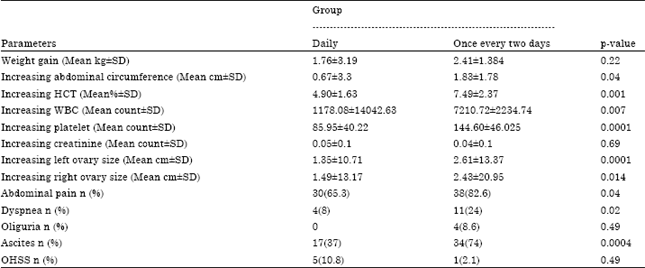
No patients had a previous history of OHSS. A summary of the proportion of patients weight, incidences of clinical signs, laboratory finding are shown in Table 1. There was difference significantly in the abdominal circumference of the patients that were given daily cabergoline in comparison to women were treated by cabergoline as once every two days (p = 0.04). It was bigger in the latter group.
Also incidence of abdominal pain, shortness of breath and ascites between the two groups show significant differences (p = 0.04, p = 0.02 and p = 0.0004, respectively). They were more prevalent in the once every two days than daily group in the 9th day.
In the biochemical parameters, the mean increasing of hematocrit (HCT), platelet and White Blood Cell count (WBC count) during initial medication was higher in the daily cabergoline treatment group than the once every two days cabergoline treatment group (p = 0.001, p = 0.007, p = 0.0001, respectively). Ultrasound examinations was shown that the mean increasing of left and right ovaries size were higher in the once every two days than daily group (p = 0.0001 and p = 0.0014, respectively).
All together, the mean incidence of all types of OHSS between the daily and once every two days group was same (p = 0.21). However, looking at the percentages, it seems that “OHSS non-occurrence” incidence is higher in the daily group than that of once every two days (11 vs. 2.1%, respectively).
| Table 1: | Comparison of weight gain as well as increasing of abdominal circumference, HCT, WBC, platelet, creatinine, left and right ovary size and also incidences of abdominal pain, dyspnea, oliguria, ascites, OHSS between the two different therapeutic plan groups on day 9 |
 | |
| Table 2: | Comparison of OHSS incidence frequency based on OHSS severity on day 9 |
 | |
The mean incidence of mild OHSS is fewer in daily group than once every two days group (69.5% vs. 41.3%, respectively). The mean incidence of moderate OHSS is less in daily group than once every two days group (19.5% vs. 45.6%, respectively). The mean incidence of severe OHSS is lower in the daily group than the once every two days group (0% vs. 10%, respectively) (Table 2).
DISCUSSION
Some studies have been reported that VEGF is involved in the development of the OHSS syndrome (Agrawal et al., 1999; Ohba et al., 2003; Geva and Jaffe, 2000; Ajonuma, 2008). VEGF is a heparin-binding protein that induces proliferation and angiogenesis process directly in endothelial cells (Rafi et al., 2011; Haghjooyjavanmard et al., 2009; Gospodarowicz et al., 1989; Ferrara and Henzel, 1989). In addition, VEGF has been found in follicular fluid and as well as its mRNA transcripts and proteins have been identified in granulosa luteal cells (Lee et al., 1997; Yan et al., 1993). Also, VEGF concentration is increased in the peritoneal fluid of women with OHSS compared with healthy women (Lee et al., 1997). It also plays a key role in the growth and preservation of ovarian follicles and corpus luteum by mediating angiogenesis (Yamamoto et al., 1997). Therefore, a number of complications of OHSS might possibly be diminished if using an agent that antagonizes the VEGF-mediated effects in endothelial cells.
Sarkar et al. (2004) suggested that dopamine secretion may has an important role in regulating the endothelial functions of VEGF because it was reported that the VEGF receptor in the endothelial cells is noticeably increased in dopamine D2 receptor knockout mice when compared to the healthy mice. Basu et al. (2001) identified that the dopamine at physiological levels inhibits directly the vascular permeability and angiogenic activities of VEGF.
Therefore, according to these findings, it seems that there is a relation between the nervous system and angiogenesis and as well as dopamine may play a key role in the antivascular permeability and angiogenic activities.
Also, Busso et al. (2009) reported that the VEGF antagonist is capable to prevent the gonadotropin induced OHSS.
As mentioned in the introduction of this paper, Cabergoline is a synthetic ergot derivative having a high affinity for D2 dopamine receptors and therefore, is a long-acting dopamine receptor agonist (Curran and Perry, 2004). Ata et al. (2009) suggested that cabergoline can be more helpfulness in avoidance of OHSS syndrome if was given after oocyte puncture.
Youssef et al. (2010) carried out a systematic review and meta-analysis of randomized trials comparing the prophylactic effect of the cabergoline in comparison with no treated patients in IVF/ICSI cycles. They noticed that cabergoline, diminish the incidence, but not the severity of OHSS.
Nevertheless, one of the complications that clinicians might be faced, is the problem of managing an established routine treatment of cabergoline which may have a lack of specificity, low efficiency or potentially severe side effects for the OHSS patients (Youssef et al., 2010).
Therefore, the present prospective study was conducted to evaluate and compare daily with once every two days cabergoline administration in prevention of early onset severe form of OHSS in high-risk patients. The findings of this study was showed that the biochemical signs of OHSS (HCT, WBC, platelet) were more decreased when the patients were given daily cabergoline in comparison with they were taking this drug once every two days.
In agreement with the current study, Pellicer et al. (2010) and Alvarez et al. (2007) also reported that daily administration of cabergoline is better prevents from a rise in hematocrit concentration. Moreover, in a study performed by Manno (2005), cabergoline was caused decreased in creatinine and HCT levels and increase in diuresis. In the current research it was not shown decreasing in the creatinine concentrations as well as increasing in diuresis.
In the present study also were observed that clinical signs of OHSS except for weight were more decreased when the patients were given daily cabergoline instead of taking the drug as once every two days. Alvarez et al. (2007) also revealed that daily administration of cabergoline was more effective than placebo in preventing formation of ascites. Manno (2005) reported that cabergoline was more useful in decreasing the weight, abdominal pain as well.
Regardless of some of the parameters listed above (laboratory, clinical signs and ultrasonic), in the present studies, in contrast to the findings of Jiann et al. (2010) that were reported failure of gabergoline to prevent sever ovarian hyperstimulation syndrome, the mean incidence of all types of OHSS was reduced. It’s worth mentioning that the reducing of OHSS incidence was same for both the daily and once every two days cabergoline administration groups, However, the mean reducing severity of OHSS in patients who were given daily cabergoline was more pronounced than those who were taking this drug as once every two days.
Unfortunately, we found no study on the once every two days method of cabergoline administration and its effect on incidence and severity of OHSS and its comparison with daily method of cabergoline administration. However, similar to the results of the present study, Pellicer et al. (2010) were shown that daily administration of cabergoline reduces the incidence of moderate and severe OHSS in comparison to placebo administration. Rollene et al. (2009) also observed that daily administration of cabergoline was more effective than placebo in decreasing OHSS indices. In addition, in the study conducted by Alvarez et al. (2007), daily administration of cabegoline was more effective than placebo administration in decreasing OHSS’ indices. Ata et al. (2009) also suggested that the higher dose of cabergoline might have prevented an increase in the severity of OHSS. Therefore, to optimize the outcome, more experiments should be done on determining the time-and dose-dependent effects of cabergoline on incidence and severity of OHSS.
CONCLUSIONS
Considering the above-mentioned findings, although, the effect of both of administration method was on the increased of weight, oliguria and creatinine rise was same. However, it seems that daily administration of cabergoline is more effective on biochemical finding and clinical signs than once every two days dosage. Also daily administration of cabergoline has not had a meaning difference with once every two days dosage, in reduction of the total number of OHSS cases, but has been effective in reducing its intensity. In daily dosage, cases of OHSS have mostly been of mild type. In ‘once every two days’ method, the most common form of OHSS has been the moderate type and OHSS has generally had more severe.
ACKNOWLEDGMENTS
The authors wish to acknowledge Dr. Farideh Moramezi for his generous help in processing the study. This study was supported by a research grant from the Ahvaz Jundishapur University of Medical Sciences, Ahvaz, Iran.
REFERENCES
- Aboulghar, M.A. and R.T. Mansour, 2003. Ovarian hyperstimulation syndrome: Classifications and critical analysis of preventive measures. Hum. Reprod. Update, 9: 275-289.
CrossRefDirect Link - Rafi, A., D. Ramakrishna, K. Sabitha, S. Mohanty and P. Rao, 2011. Serum copper and Vascular Endothelial Growth Factor (VEGF-A) in dysfunctional uterine bleeding. Am. J. Biochem. Mol. Biol., 1: 284-290.
CrossRefDirect Link - Agrawal, R., S.L. Tan, S. Wild, P. Sladkevicius and L. Engmann et al., 1999. Serum vascular endothelial growth factor concentrations in in vitro fertilization cycles predict the risk of ovarian hyperstimulation syndrome. Fertil. Steril., 71: 287-293.
PubMedDirect Link - Ziadat, A.H., 2010. Disabilities of children in correlation to the usage of hair dye among pregnant women. Int. J. Pharmacol., 6: 487-493.
CrossRefDirect Link - Ajonuma, L.C., 2008. Is Vascular Endothelial Growth Factor (VEGF) the main mediator in ovarian hyperstimulation syndrome (OHSS)?. Med. Hypotheses, 70: 1174-1178.
PubMedDirect Link - Alvarez, C., L. Martin-Bonamati, E. Novella-Maestre, R. Sanz and R. Gomez et al., 2007. Dopamine agonist cabergoline reduces hemocon centration and ascites in hyperstimulated women undergoing assisted reproduction. J. Clin. Endocrinol. Metab., 92: 2931-2937.
PubMedDirect Link - Eghoghosoa, A.R., O.L. Aderemi, S.A. Olufemi and O.I. Peter, 2011. Effect of angiotensin I-converting enzyme inhibitor, captopril, on body weight and food and water consumption in oral contraceptive-treated rats. Am. J. Biochem. Mol. Biol., 1: 95-100.
CrossRefDirect Link - Ata, B., A. Seyhan, S. Orhaner and B. Urman, 2009. High dose cabergoline in management of ovarian hyperstimulation syndrome. Fertil. Steril., 92: 1168-1168.
PubMedDirect Link - Basu, S., J.A. Nagy, S. Pal, E. Vasile and I.A. Eckelhoefer et al., 2001. The neurotransmitter dopamine inhibits angiogenesis induced by vascular permeability factor/vascular endothelial growth factor. Nat. Med., 7: 569-574.
PubMedDirect Link - Busso, C.E., J. Garcia-Velasco, R. Gomez, C. Alvarez, C. Simon and A. Pellicer, 2009. Symposium: Update on prediction and management of OHSS. Prevention of OHSS-dopamine agonists.Prevention of OHSS-dopamine agonists. Rep. Biomed. 19: 52-58.
PubMedDirect Link - Czeizel, E. Andrew, Puho, Erzsebe, Acs, Nandor, Banhidy and Ferenc, 2006. A population based case-control study of oral moroxydine, an antiviral agent treatment during pregnancy. Int. J. Pharmacol., 2: 188-192.
CrossRefDirect Link - Curran, M.P. and C.M. Perry, 2004. Cabergoline: A review of its use in the treatment of Parkinson's disease. Drugs, 64: 2125-2141.
PubMedDirect Link - Delvigne, A. and S. Rosenberg, 2002. Epidemiology and prevention of ovarian hyperstimulation syndrome (OHSS): A review. Hum. Reprod. Update, 8: 559-577.
Direct Link - Ferrara, N. and W.J. Henzel, 1989. Pituitary follicular cells secrete a novel heparin-binding growth factor specific for vascular endothelial cells. Biochem. Biophys. Res. Commun., 161: 851-858.
PubMed - Geva, E. and R.B. Jaffe, 2000. Role of vascular endothelial growth factor in ovarian physiology and pathology. Fertil. Steril., 74: 429-438.
PubMedDirect Link - Golan, A. and A. Weissman, 2009. Symposium: Update on prediction and management of OHSS. A modern classification of OHSS. Reprod. Biomed. Online, 19: 28-32.
PubMed - Lee, A., L.K. Christenson, R.L. Stouffer, K.A. Burry and P.E. Patton, 1997. Vascular endothelial growth factor levels in serum and follicular fluid of patients undergoing in vitro fertilization. Fertil. Steril., 68: 305-311.
PubMed - Manno, M., 2005. Can we eliminate severe ovarian hyperstimulation syndrome?. Comment. I. Hum. Reprod., 20: 2368-2370.
CrossRefDirect Link - Nourizad, S., M. Anvari, H. Hasani and M. Salami, 2008. A critical period for deleterious effect of prenatal alcohol exposure on working memory. Int. J. Pharmacol., 4: 382-387.
CrossRefDirect Link - Ohba, T., T. Ujioka, K. Ishikawa, N. Tanaka and H. Okamura, 2003. Ovarian hyperstimulation syndrome-model rats; the manifestation and clinical implication. Mol. Cell Endocrinol., 202: 47-52.
CrossRefDirect Link - Pau, E., I. Alonso-Muriel, R. Gomez, E. Novella and A. Ruiz et a., 2006. Plasma levels of soluble vascular endothelial growth factor receptor-1 may determine the onset of early and late ovarian hyperstimulation syndrome. Hum. Reprod., 21: 1453-1460.
PubMedDirect Link - Raji, Y., A.O. Morakinyo, O.S. Akinsomisoye, A.K. Oloyo, P.R.C. Esegbue-Peters and O.T. Kunle-Alabi, 2006. Evaluation of the abortifacient properties of chloroform extract of Carica papaya L. seed in female albino rats. Int. J. Pharmacol., 2: 20-23.
CrossRefDirect Link - Rollene, N.L., M.H. Amols, S.B. Hudson and C.C. Coddington, 2009. Treatment of ovarian hyperstimulation syndrome using a dopamine agonist and gonadotropin releasing hormone antagonist: A case series. Fertil. Steril., 92: 1169-1169.
Direct Link - Sarkar, C., D. Chakroborty, R.B. Mitra, S. Banerjee, P.S. Dasgupta and S. Basu, 2004. Dopamine in vivo inhibits VEGF-induced phosphorylation of VEGFR-2, MAPK and focal adhesion kinase in endothelial cells. Am. J. Physiol. Heart Circ Physiol., 287: 1554-1560.
PubMedDirect Link - Haghjooyjavanmard, S., M. Nematbakhsh and M. Soleimani, 2009. The effect of hypercholesterolemia on serum vascular endothelial growth factor and nitrite concentrations in early stage of atherosclerosis in rabbits. Pak. J. Nutr., 8: 86-89.
CrossRefDirect Link - Yamamoto, S, I. Konishi, Y., Tsuruta, K. Nanbu and M. Mandai et al., 1997. Expression of vascular endothelial growth factor (VEGF) during folliculogenesis and corpus luteum formation in the human ovary. Gynecol. Endocrinol., 11: 371-381.
PubMedDirect Link - Yan, Z., H.A. Weich, W. Bernart, M. Breckwoldt and J. Neulen, 1993. Vascular endothelial growth factor (VEGF) messenger ribonucleic acid (mRNA) expression in luteinized human granulosa cells in vitro. J. Clin. Endocrinol. Metab., 77: 1723-1725.
PubMedDirect Link - Youssef, M.A.F.M, M. van Wely, M.A. Hassan, H.G. Al-Inany, M. Mochtar, S. Khattab and F. van der Veen, 2010. Can dopamine agonists reduce the incidence and severity of OHSS in IVF/ICSI treatment cycles? A systematic review and meta-analysis. Hum. Reprod. Update, 16: 459-466.
CrossRefDirect Link