

P.E. Ndimele
Department of Fisheries, Faculty of Science, Lagos State University, Ojo, Lagos State, Nigeria
A.A. Jimoh
Department of Fisheries, Faculty of Science, Lagos State University, Ojo, Lagos State, Nigeria
Research Journal of Environmental Sciences
Year: 2011 | Volume: 5 | Issue: 5 | Page No.: 424-433







ABSTRACT
A passive phytoremediation study was carried out between April, 2007 and March, 2008 at three sampling stations; Ibiye Jetty, Obele and Idoluwo in Ologe Lagoon, Lagos, Nigeria to ascertain the extent of heavy metal pollution and the potential of water hyacinth (Eichhornia crassipes, (Mart.) Solms) as a phytoremediant. The study assessed the levels of some heavy metals (Pb, Fe and Zn) in water and sediment (abiotic monitors) in comparison with their levels in E. crassipes (biomonitor) for phytoremediation. The observed values of the heavy metals in water, sediment and water hyacinth of Ologe Lagoon did not vary significantly (p>0.05) among the sampling stations. However, the concentrations of these metals in sediment were about 3-32 times higher than the values recorded in water. Similarly, bioconcentration factor (BCF) showed that E. crassipes accumulated the heavy metals from water in about 3-28 folds inspite of the low levels of these metals in the water column. This study showed that E. crassipes can accumulate heavy metals even when the concentrations of the metals in the abiotic components (water and sediment) of the aquatic environment is low, suggesting that E. crassipes can be used in phytoremediation of heavy metal polluted aquatic ecosystems.
PDF Abstract XML References Citation
How to cite this article
P.E. Ndimele and A.A. Jimoh, 2011. Water Hyacinth (Eichhornia crassipes (Mart.) Solms.) in Phytoremediation of Heavy Metal Polluted Water of Ologe Lagoon, Lagos, Nigeria. Research Journal of Environmental Sciences, 5: 424-433.
DOI: 10.3923/rjes.2011.424.433
URL: https://scialert.net/abstract/?doi=rjes.2011.424.433
DOI: 10.3923/rjes.2011.424.433
URL: https://scialert.net/abstract/?doi=rjes.2011.424.433
INTRODUCTION
In natural aquatic ecosystems, metals occur in low concentrations, normally at the nanogram to microgram per liter level. In recent times, however, the occurrence of metal contaminants especially the heavy metals in excess of natural loads has become a problem of increasing concern. This situation has arisen as a result of the rapid growth of population, increased urbanization and expansion of industrial activities, exploration and exploitation of natural resources, extension of irrigation and other modern agricultural practices as well as the lack of environmental regulations (FAO, 1992).
Most water bodies in the state of Lagos, in South-West Nigeria, serve as a sink for the disposal of wastes from about 2000 medium and large scale industries located in urban centres (Anetekhai et al., 2007). Ologe Lagoon is one of such aquatic ecosystems. The Lagoon receives industrial effluents throughout the year from neighbouring Agbara Industrial Estate where pharmaceutical, brewery, glass, paint and other industries operate (Kusemiju et al., 2001).
Water, sediments and biota are generally metal reservoirs in aquatic environments (Ndimele et al., 2009). The concentrations of heavy metals in water may vary considerably depending on annual and seasonal fluctuations (Kumolu-Johnson et al., 2010). Bower (1979) noted that the extent of accumulation in biota is dependent on the chemical effects of the metal, its tendency to bind to particular materials and on the lipid content and composition of the biological tissue. At low levels, some heavy metals such as copper, cobalt, zinc, iron and manganese are essential for enzymatic activities and many biological processes. Other metals, such as cadmium, mercury and lead have no known essential role in living organisms and are toxic at even low concentrations. The essential metals also become toxic at high concentrations (Kumolu-Johnson et al., 2010). Therefore, the need arises to constantly monitor these metals and find a way of removing them from the ecosystem before the threshold level is reached.
Phytoremediation, popularly known as green clean is a novel strategy for the removal of toxic pollutants from the environment by using plants (Raskin, 1996). This concept is increasingly being adopted as it is a cost-effective and environment-friendly alternative to traditional methods of treatment (Ndimele, 2010). Apart from the above advantages, biomonitoring of pollutants using plants as accumulator species, accumulate relatively large amounts of pollutants like heavy metals, even from much diluted solutions without obvious noxious effects (Ravera et al., 2003). Aquatic macrophytes like Ipomoea aquatica Forsk, Eichhornia crassipes (Mart.) Solms, Typha angustata Bory and Chaub, Echinochloa colonum (L.) Link, Hydrilla verticillata (L.f.) Royle, Nelumbo nucifera Gaerth and Vallisneria spiralis L. have been used as passive phytoremediants (Nirmal Kumar et al., 2008) with encouraging results.
The aquatic macrophyte called water hyacinth (Eichhornia crassipes) is not new in the ecological history of man (Uka et al., 2007). In fact, it has been popularly described as the most troublesome weed of the world (Gopal and Sharma, 1981) because of its rate of multiplication. Its rapid growth has clogged major waterways and created problems associated with navigation, national security, irrigation and drainage, water supply, hydro electricity and fishing in many countries (Kusemiju and Akingboju, l988; Uka and Chukwuka, 2007).
The water hyacinth found in Nigerian waters is of the South American species. It is believed to have found its way into the Nigerian waters from neighbouring Republic of Benin (Edewor, 1988). Since, it entered Nigerian waters, efforts to eradicate it have not been successful. Hence, the need to put it into productive use. One of such uses is in the clean-up of polluted sites (phytoremediation). Other uses include: the production of paper (Naseema et al., 2004) and the production of biogas (Almoustapha et al., 2009).
This study is the first research on passive phytoremediation of a heavy metal polluted aquatic ecosystem by water hyacinth (Eichhornia crassipes) in West Africa. It is the first in a series of studies that will examine the heavy metal content of native or endemic aquatic macrophytes in Ologe Lagoon as well as the three other lagoons (Lagos Lagoon, Lekki Lagoon and Epe Lagoon) in Lagos state, Nigeria and their potential as phytoremediants. This study is propelled by dearth of information on heavy metal status of water bodies of economic importance in Africa, South of the Sahara and on the usefulness of the noxious water hyacinth. The main objectives of this study are to investigate the metal loads of water, sediment and water hyacinth of Ologe Lagoon and the ability of water hyacinth to accumulate heavy metals and thus be used in phytoremediation.
MATERIALS AND METHODS
Study site: Ologe Lagoon (Fig. 1) is a freshwater lagoon situated to the west of Lagos State, Nigeria. It has a surface area of about 9.4 km2 (Kumolu-Johnson et al., 2010). It is located between latitude 6°27’ N to 6°30’ N and longitude 30° 2’ E to 30° 7’ E. The lagoon is connected to the Atlantic Ocean through the Lagos harbour and Badagry creek.
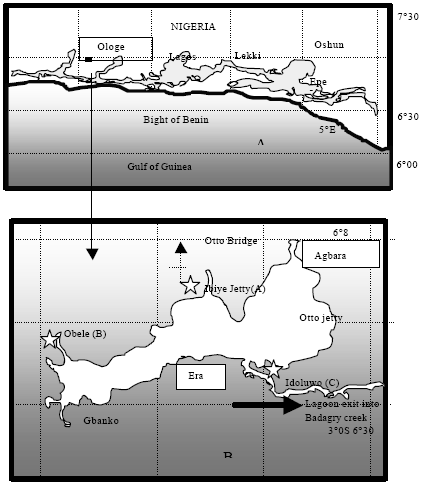 | |
| Fig. 1: | Location of study site (a) Map of Lagos lagoon complex-inset: Ologe Lagoon and (b) map of ologe lagoon. Sampling stations are marked with stars (Scale: 1:150,000) |
Industrial effluent from neigbouring Agbara Industrial Estate discharged into Agbara stream are emptied into the lagoon and earlier studies by Kusemiju et al. (2001) showed higher trace metal concentrations in the stream and its sediments compared to the neighbouring Iba stream which receives no effluent.
Three sampling stations were selected based on their proximity to Agbara Industrial Estate, extent of human activities and the presence of water hyacinth (Eichhornia crassipes). Station A (Ibiye Jetty) is characterized by such human activities like washing, discharge of human waste, buying and selling of fresh fish, cooked food and soft as well as alcoholic drinks. Fishing operation is scanty in this station. Station B is Obele while Station C (Idoluwo) and these two stations are characterized by intense fishing activities. All the sampling stations have water hyacinth growing naturally in them.
Heavy metal analysis
Sample collection, storage and preservation: The sample materials analysed in this study were water, sediment and water hyacinth (Eichhornia crassipes). Sampling was carried out monthly from the stations for one hydrologic year (April, 2007-March, 2008). Water samples were collected in the middle of the lagoon at the sampling stations at 15 cm depth below water surface in 250 mL capacity plastic bottles with screw caps. The bottles were treated with 10% nitric acid and rinsed with distilled water previously before use (Laxen and Harrison, 1981). The water samples were acidified with 5 mL of nitric acid to prevent degradation of the metals by micro-organisms.
Grab samples of sediment were also collected and placed into 10% nitric acid treated polythene bags. Samples were collected with the help of steel pipe (2 inch diameter) pressed with pressure through the water column to obtain a sediment layer of about one foot (Ali and Fishar, 2005). All samples were stored in a deep freezer at -10°C (Ademoroti, 1996). Water hyacinth sample were collected by hand, rinsed with the lagoon water, packed in nylon bags and transported to the laboratory where they were washed using a sequence of tap water, distilled water and deionized water. They were then stored in deep freezer at -10°C. Three replicate samples of water, sediment and E. crassipes were collected at each site and sampling occasion.
Sample treatment: All the samples which were previously stored in deep freezer were allowed to thaw at room temperature, about 27°C. Water samples were not given further treatment, but were mixed vigorously before aspiration into the flames of an Atomic absorption Spectrophotometer (Alpha4-Cathodeon) for heavy metal determination. Values are expressed in ppm.
The sediment samples collected during the sampling period were removed from the refrigerator, cooled and air-dried for about 3 days. Then, they were oven-dried to constant weight at 105±20°C and ground to powder. Fine sediment samples were then obtained by sieving after which 2 g were weighed into 50 mL beakers. Four milliliter of concentrated nitric acid was poured into them and these were covered with watchglasses. The beakers were set aside until the reactions were over. The contents of the beakers were then diluted to 25 mL with water and transferred to 60 mL dispersing bottles for heavy metal analysis (FAO/SIDA, 1986).
Digestion of water hyacinth sample in this study was done according to the standard methods by APHA (1985). Plant samples were decomposed to dry matter by heating at 120°C for 24 h in a hot air oven and the ash was digested with nitric acid and filtered into a volumetric flask. The final volume was made up with deoinized water and was set aside for heavy metal determination.
The determination of the heavy metal (Pb, Fe and Zn) contents of the water, sediment and water hyacinth were performed with an Alpha-4 cathodeon atomic absorption spectrophotometer (AAS). All the samples were analyzed in triplicate and the validity of the analytical procedure was checked using the reference material (DORM 1, Institute of Environmental Chemistry, NRC Canada) and measured values were within ±10% of certified values.
Statistical analyses: Significant differences in heavy metal (Pb, Fe and Zn) concentrations in water, sediment and water hyacinth were tested by Analysis of Variance (ANOVA). The Chi-square test was used to compare heavy metal (Pb, Fe and Zn) levels in water to the standard set by WHO (2008). The regression analysis (Pearson’s Product-Moment Correlation) was used to examine the relationship between heavy metals in water, sediment and water hyacinth. In all cases, the level of significance was set at p<0.05.
The Bioconcentration factor (BCF) provides an index of the ability of the plant to accumulate the heavy metals with respect to the metal concentration in the aquatic ecosystem. The BCF was calculated as follows (Zayed et al., 1998):
 |
RESULTS AND DISCUSSION
Heavy metal content of water, sediment and water hyacinth: The mean concentrations of the three heavy metals (Pb, Fe and Zn) in water, sediment and water hyacinth (Eichhornia crassipes) are presented in Table 1. The mean concentrations of Pb in water, sediment and water hyacinth in the three sampling stations (Ibiye Jetty, Obele and Idoluwo) were very similar and there was no significant difference (p>0.005).
The mean concentrations of Fe in water ranged from 0.24+0.05 ppm in Ibiye Jetty to 0.26±0.05 ppm in Obele (Table 1). This difference was not significant (p>0.005). The highest mean concentration (7.83±0.96 ppm) of Fe in sediment was recorded in Ibiye Jetty while the lowest value (5.88±1.18 ppm) was found in Idoluwo (Table 1). This difference was also not significant (p>0.05). Idoluwo had the highest mean concentration (8.10±4.47 ppm) of Fe in water hyacinth while the lowest concentration (4.90±1.66 ppm) was recorded in Ibiye Jetty (Table 1). Again this difference was not significant (p>0.05).
The range of concentration of Zn in waters of Ologe Lagoon varied from 0.54±0.05 ppm in Obele to 0.56±0.05 ppm in Ibiye Jetty (Table 1). The highest mean concentration (2.10±0.83 ppm) of Zn in sediment of Ologe Lagoon was recorded in Obele while the lowest mean concentration (1.70±0.34 ppm) occurred in Ibiye Jetty. Idoluwo recorded the highest mean concentration (4.63±2.25 ppm) of Zn in water hyacinth while the lowest value (1.73±0.68 ppm) was obtained in water hyacinth found in Ibiye Jetty. These differences in the concentrations of the heavy metals in water, sediment and water hyacinth were not significant (p>0.05) among the sampling stations.
Bioconcentration of heavy metals (Pb, Fe and Zn) by water hyacinth: The mean bioconcentration factor (BCF) of the three investigated heavy metals (Pb, Fe and Zn) in Ibiye Jetty ranged from 3.04±0.98 for Zn to 28.38±7.77 for Fe (Table 2). The highest BCF (20.90±5.61) in Obele occurred in Fe while the lowest (4.74±1.05) was obtained in Zn.
| Table 1: | Concentrations of metals (Pb, Fe and Zn) in water, sediment and water hyacinth of Ologe Lagoon |
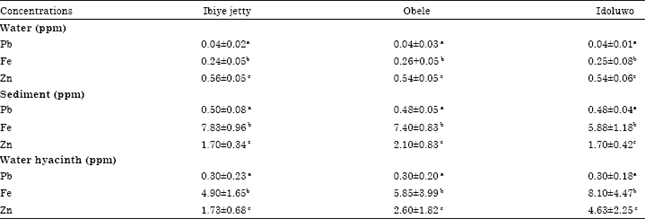 | |
| Values in the same row and with the same superscript letter are not significantly different (p>0.05) | |
| Table 2: | Bioconcentration factors (BCF) of heavy metals in the sampling stations |
 | |
| Value in the same row and with the same superscript are not significantly different (p>0.05) | |
In Idoluwo, Fe still had the highest BCF (28.38±7.77) while Zn (8.10±2.41) has the least. In the three sampling stations, the BCF for Fe was significantly different (p<0.05) from the BCF obtained for Pb and Zn (Table 2).
Correlation of heavy metals in water, sediment and water hyacinth: The correlations between the concentrations of the investigated heavy metals (Pb, Fe and Zn) in water, sediment and water hyacinth (Eichhornia crassipes) was studied and is presented in Table 3. Significant correlations (r = 0.98; N = 12; α = 0.05) and (r = 0.99; N = 12; α = 0.05) were obtained when Zn contents in water were compared with the metal values in sediment from Ibiye Jetty and Idoluwo, respectively. A significant correlation (r = 0.99; N = 12; α = 0.05) was also obtained when Zn concentrations in sediment were compared with the metal values in water hyacinth from Obele.
The correlation between the concentration of Fe in water and water hyacinth from Idoluwo was significant (r = 0.96, N = 12 α = 0.05). However, the correlation (r = 0.93; N = 12; α = 0.05) between Fe contents in water and the metal contents in water hyacinth from Obele was high (r = 0.93; N = 12; α = 0.05) but not significant (p>0.05).
The result of Pearson correlation coefficient (r) analysis on combinations of different metal pairs which are present together in the plant showed significantly high positive correlations, between Fe and Zn in Ibiye Jetty (r = 0.95; N = 12 α = 0.05), Idoluwo (r = 0.96; N = 12 α = 0.05) and Obele (r = 0.97; N = 12 α = 0.05) (Table 4).
The correlation coefficient (r) between Pb and Zn in Ibiye Jetty (r = -0.99; N = 12 α = 0.05) and Obele (r = -0.66; N = 12 α = 0.05) was negative, but while the value was high and significant (p<0.05) in Ibiye Jetty, it was medium (according to the standard enumerated in Norusis (1993) and not significant (p>0.05) in Obele (Table 4). Negative correlation (r = -0.94; N = 12 α = 0.05) was also recorded between Pb and Fe in Ibiye Jetty. Although, correlation was high, it was not significant (p>0.05).
| Table 3: | Correlation coefficients of concentrations of heavy metals in water, sediment and water hyacinth |
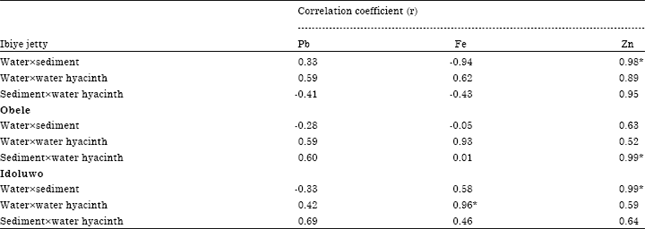 | |
| *Value is significant at α = 0.05 level | |
| Table 4: | Correlation coefficients between concentrations of heavy metal pairs in water hyacinth at different sampling stations |
 | |
| *Value is significant at α = 0.05 level | |
The three investigated heavy metals (Pb, Fe and Zn) were detected in measurable quantities in the waters of Ologe lagoon. The concentrations of these heavy metals recorded in water column in this study are within the range of normal values reported in Nigerian waters (Kusemiju et al., 2001; Anetekhai et al., 2007; Obasohan and Eguavoen, 2008). Adefemi et al. (2008) reported mean Zn and Fe concentrations of 0.03 ppm and 0.08 ppm, respectively in Ureje Dam in South-Western Nigeria. Anetekhai et al. (2007) did not detect Pb in the water of Ologe Lagoon in their study that was conducted in 2001. The detection of Pb in the present study might be due to increased vehicular traffic because of the relocation of a lot of industries to Agbara Industrial Estate, which is very close to Ologe Lagoon and into which the industries empty their effluents (Kusemiju et al., 2001). Pb is released from the exhausts of automobiles because of the addition of an anti-knock (Lead tetraethyl) to petrol (Adefemi et al., 2008).
The concentrations of the three heavy metals measured in the three Sampling stations (Ibiye Jetty, Obele and Idoluwo) were not significant (p>0.05). The range of values of these metals {Pb = 0.04±0.01-0.04±0.03 ppm; Fe = 0.24±0.05-0.26±0.05 ppm; Zn= 0.54±0.05-0.56±0.05 ppm} in water samples from the three sampling sites are lower than the World Health Organisation (WHO) limits (Pb = 0.01 ppm; Fe = 2.0 ppm; Zn = 3.0 ppm) for drinking water (WHO, 2008). The implication of this is that the water of Ologe Lagoon is still safe for human consumption since most of the inhabitants of the communities surrounding the lagoon depend on it for drinking and cooking. However, periodic monitoring programme should be initiated to promptly detect increase metal level that might be harmful to humans.
The concentrations of the heavy metals (Pb, Fe and Zn) in sediment of the three sampling stations in Ologe Lagoon was not significant (p>0.05). However, the values were higher than the values recorded in water of the sampling stations. While, the ranges of concentrations of Pb, Fe and Zn in sediments of Ologe Lagoon were 0.48±0.04-0.50±0.08 ppm, 5.88±1.18-7.83±0.96 ppm and 1.70±0.34-2.10±0.83 ppm, respectively, the ranges of concentrations of Pb, Fe and Zn in water of Ologe Lagoon were 0.04±0.01-0.04±0.03 ppm, 0.24±0.05-0.26±0.05 ppm and 0.54±0.05- 0.56±0.5 ppm, respectively, representing between 3.04-32.63 fold increase. This observation agrees with the study of Patel et al. (1985) on Bombay Harbour in India and Oyewo (1998) on Lagos Lagoon in Nigeria. Oyewo (1998) opined that the cause of this observation is due to the fact that sediments act as sink for heavy metals derived from weathering as well as those from anthropogenic inputs. The biological significance of this observation is that flora and fauna especially benthic organisms which live on and forage in bottom sediments will be exposed to greater risks of damage and or bioaccumulation.
The concentrations of the three heavy metals recorded in the sediments of Ologe Lagoon in this study is within the range reported in previous studies carried out in Nigeria (Obasohan et al., 2006; Adefemi et al., 2008). Obasohan et al. (2006) reported Zn and Pb concentration ranges of 1.93-4.06 ppm and 0.08-1.08 ppm, respectively in Ogba River, Benin City, Nigeria. Adefemi et al. (2008) reported concentrations of 1.02 ppm, 7.64 ppm and 5.23 ppm for Pb, Fe and Zn, respectively in the sediment of Ureje Dam in South-Western Nigeria. The range of concentration of Fe (5.88±1.18- 7.83±0.96 ppm) in the sediments of Ologe Lagoon is higher than Pb (0.48±0.04-0.50±0.08 ppm) and Zn (1.70±0.34-2.10±0.83 ppm). This observation is similar to those reported in previous studies (Asaolu and Olaofe, 2005; Adefemi et al., 2008). The reason for this occurrence might be due to the fact that iron occurs at high levels in Nigeria soils (Kakulu and Osibanjo, 1988; Asaolu and Olaofe, 2005).
| Table 5: | Ranges of heavy metals contents and toxicity status in water hyacinth with normal and critical ranges in plants |
 | |
| *Data obtained from Kabata-Pendias and Pendias (1992) | |
The concentrations of the three heavy metals (Pb = 0.30±0.18-0.30±0.23 ppm; Fe = 4.90±1.65 -8.10±4.47 ppm; Zn = 1.73±0.68-4.63±2.25 ppm) in water hyacinth (Eichhornia crassipes) in the three sampling station of Ologe Lagoon was not significant (p>0.05) but lower than the values (Pb = 9.81 ppm, Zn = 709.07 ppm) reported in Nirmal Kumar et al. (2008) in Pariyej Community Reserve, (PCR), Gujurat, India. However, these metal concentrations in water hyacinth of Ologe Lagoon is within the normal range (Table 5) found in plants (Kabata-Pendias and Pendias, 1992). The lower concentrations of the metals observed in the water hyacinth of Ologe Lagoon compared to the values reported in this macrophyte found in PCR, Gujarat, India is expected. This is because the concentration of heavy metals found in biota (plants and animals) of an ecosystem is a function of the values of these heavy metals in the abiotic components (water and sediment) of the same ecosystem (Oyewo, 1998). The concentrations of these metals in water column (Pb = 0.04±0.03 ppm; Zn = 0.56±0.05 ppm) and sediment (Pb = 0.50±0.08 ppm; Zn = 2.10±0.83 ppm) of Ologe Lagoon are far less than the values in water column (Pb = 6.11 ppm; Zn = 160.70 ppm) and sediment (Pb = 9.47 ppm; Zn = 2114.84 ppm) of Pariyej Community Reserve, Gujarat, India (Nirmal Kumar et al., 2008).
The bioconcentration factor (BCF) among the three heavy metals was significant (p<0.05). The BCF values for Fe were significantly greater than the values for Pb and Zn. The bioconcentration factor (BCF) for Pb (6.58±2.12-9.08±3.51) and Zn (3.04±0.98-8.10±2.41) (Table 4) recorded in this study is similar to the BCF value for Pb (6.33) but lower than the BCF value for Zn (53.88) reported in Nirmal Kumar et al. (2008). The ability of water hyacinth (Eichhornia crassipes) to absorb and concentrate these metals even when their values in water and sediment are very small clearly shows that water hyacinth (Eichhornia crassipes) could be a good phytoremediant.
ACKNOWLEDGMENT
The authors are very grateful to Mr. Patrick Oniawa for help with heavy metal analyses. We also express our sincere gratitude to Dr. Simeon Ayoola, Department of Marine Sciences, University of Lagos and one anonymous reviewer for their valuable comments and suggestions.
REFERENCES
- Adefemi, S.O., S.S. Asaolu and O. Olaofe, 2008. Determination of heavy metals in Tilapia mossambicuis fish, associated water and sediment from Ureje dam in South-Western Nigeria. Res. J. Environ. Sci., 2: 151-155.
CrossRefDirect Link - Fishar, M.R.A. and M.H.H. Ali, 2005. Accumulation of trace metals in some benthic invertebrate and fish species revelant to their concentration in water and sediment of Lake Qarun, Egypt. Egypt J. Aquat. Res., 31: 289-301.
Direct Link - Almoustapha, O., S. Kenfack and J. Millogo-Rasolodimby, 2009. Biogas production using water hyacinths to meet energy needs in a Sahelian country. Field Action Sci. Rep., 2: 27-32.
Direct Link - Asaolu, S.S. and O. Olaofe, 2005. Biomagnification of some heavy and essential metals in sediment fishes and crayfish from Ondo State Coastal Region, Nigeria. Pak. J. Scientific Ind. Res., 48: 96-102.
Direct Link - Bower, P.M., H.J. Simpson, S.C. Williams and Y.H. Li, 1978. Heavy metals in the sediments of foundry cove, cold spring, New York. Environ. Sci. Technol., 12: 683-687.
CrossRefDirect Link - Kumolu-Johnson, C.A., P.E. Ndimele, S.L. Akintola and C.C. Jibuike, 2010. Copper, zinc and iron concentrations in water, sediment and Cynothrissa mento (Regan 1917) from Ologe Lagoon, Lagos, Nigeria: A preliminary survey. Afr. J. Aquat. Sci., 35: 87-94.
CrossRefDirect Link - Ndimele, P.E., 2010. A review on the phytoremediation of petroleum hydrocarbon. Pak. J. Biol. Sci., 13: 715-722.
CrossRefDirect Link - Ndimele, P.E., A. Jenyo-Oni and C.C. Jibuike, 2009. The levels of lead (Pb) in water, sediment and a commercially important fish species (Chrysichthys nigrodigitatus) (Lacepède 1803) from Ologe Lagoon, Lagos, Nigeria. J. Environ. Extension, Vol. 8.
CrossRefDirect Link - Nirmal Kumar, J. I., H. Soni, R.N. Kumar and I. Bhatt, 2008. Macrophytes in phytoremediation of heavy metal contaminated water and sediments in Pariyej Community Reserve, Gujarat, India. Turkish J. Fish. Aquat. Sci., 8: 193-200.
Direct Link - Obasohan, E.E. and O.I. Eguavoen, 2008. Seasonal variations of bioaccumulation of heavy metals in a freshwater fish (Erpetoichthys calabaricus) from Ogba River, Benin city, Nigeria. Afr. J. Gen. Agric., 4: 153-163.
Direct Link - Obasohan, E.E., J.A.O. Oronsaye and E.E. Obano, 2006. Heavy metal concentrations in Malapterurus electricus and Chrysichthys nigrodigitatus from Ogba River in Benin City, Nigeria. Afr. J. Biotechnol., 5: 974-982.
Direct Link - Raskin, I., 1996. Plant genetic engineering may help with environmental clean-up. Proc. Nat. Acad. Sci., 93: 3164-3166.
Direct Link - Ravera, O., R. Cenci, G.M. Beon, M. Dantas and P. Lodigiani, 2003. Trace element concentrations in freshwater mussels and macrophytes as related to those in their environment. J. Limnol., 62: 61-70.
Direct Link - Uka, U.N. and K.S. Chukwuka, 2007. Effect of water hyacinth infestation on the physico-chemical characteristics of AWBA reservoir, Ibadan, South-West, Nigeria. J. Biol. Sci., 7: 282-287.
CrossRefDirect Link - Uka, U.N., K.S. Chukwuka and F. Daddy, 2007. Water hyacinth infestation and management in Nigeria inland waters: A review. J. Plant Sci., 2: 480-488.
CrossRefDirect Link - WHO., 2008. Guidelines for Drinking-Water Quality: Incorporating the First and Second Addenda, Volume 1: Recommendations. 3rd Edn., World Health Organization, Geneva, Switzerland, ISBN: 9789241547611, Pages: 668.
Direct Link