

A.E. Ligha
Department of Anatomy, Niger Delta University, Wilberforce Island, Nigeria
B. Bokolo
Department of Pharmacology, Niger Delta University, Wilberforce Island, Nigeria
B.C. Didia
Department of Anatomy, University of Port-Harcourt, Choba, Port-Harcourt, Nigeria
Pakistan Journal of Biological Sciences
Year: 2012 | Volume: 15 | Issue: 5 | Page No.: 224-230







ABSTRACT
There is a growing concern about the decline in the quality of human sperm in recent years. Following reports by previous studies on the toxic effects of metronidazole on testicular functions, this study is designed to investigate further its direct effects on fertility potentials and that of the introduction of vitamin E and testosterone to metronidazole treated rats. A total of 105 adult male and 50 female Wistar rats weighing 170±10 g (70-90 day old) were used for the experiment. The rats were randomly divided into a control and experimental groups. There were four major groups with 5 subgroups consisting of 5 rats each. Varying doses of metronidazole were used depending on the experiment. Experiment 1; animals were fed with 15 mg kg-1 of metronidazole, experiment 2, fed with 30 mg kg-1 of metronidazole, experiment 3, administered with 200 mg kg-1 of metronidazole and experiment 4, fed with 400 mg kg-1 of metronidazole. Each experimental group has 5 sub-groups. A: control, B: group fed with the experimental dose, C: experimental dose with vitamin E, D: experimental dose with testosterone, E: fed with experimental dose, vitamin E and testosterone and sub-group F, a reversal group which was left for 8 weeks after cessation of treatment. Parameters assessed were sperm count/motility, hormonal assay, Fertility test for control and treated rats were also carried out. Results showed that metronidazole at the therapeutic dose of 15 mg kg-1 did not have significant negative effect on the parameters assessed. At the dose of 200 and 400 mg kg-1, there was reduction in testosterone and follicle stimulating hormone while on the other hand, luteinizing hormone was increased mostly with 400 mg kg-1 of metronidazole treatment. Body weight was also found to be significantly reduced in rats treated with 200 and 400 mg kg-1 of metronidazole. The results of this study indicate that metronidazole administration (200 or 400 mg kg-1), for 8 weeks, caused a harmful effect on fertility potentials in male rats.
PDF Abstract XML References Citation
Received: December 30, 2011;
Accepted: June 12, 2012;
Published: June 29, 2012
How to cite this article
A.E. Ligha, B. Bokolo and B.C. Didia, 2012. Antifertility Potentials of Metronidazole in Male Wistar Rats. Pakistan Journal of Biological Sciences, 15: 224-230.
DOI: 10.3923/pjbs.2012.224.230
URL: https://scialert.net/abstract/?doi=pjbs.2012.224.230
DOI: 10.3923/pjbs.2012.224.230
URL: https://scialert.net/abstract/?doi=pjbs.2012.224.230
INTRODUCTION
It has been reported severally in literatures suggesting a possible decline in human semen quality during the last 50-60 years (Jensen, 2002; Carlson et al., 2003). Approximately 10-15% of couples demonstrate primary infertility and of these a male fact is identified in approximately 50% of the cases (Cocuzza et al., 2008). Many factors both extrinsic and environmental factors including the increased use of antibiotics and anti-effective drugs have been implicated as potential causes of male infertility (Khaki et al., 2008). The antifertility effects of this drug have also been reported by Aranha et al. (2002).
Tenaw and Tsiege (2004) are of the view that since antimicrobial combination therapy such as metronidazole, quinolones and tetracycline are among the most prescribed classes of drugs in medicine, there is high possibility that some of the couples presenting with history of infertility or inability to conceive may be due to these groups of drugs.
Metronidazole is used extensively and routinely in clinical practice and its indications has been expanded to include the management of Helicobacter pylori associated gastric ulcer diseases Crohn’s disease and Clostridium difficile diarrhea (Grover et al., 2001). Metronidazole has been shown to be mutagenic in bacterial assay (Kummerer et al., 2000). This mutagenic effect of metronidazole is on the premises of its ability to reduce a nitro group formed by a reactive intermediate that attacks the nucleic acid of the micro-organism. This inhibits further DNA synthesis and causes degradation of already existing DNA (Eisenstein and Schaechter, 2007). This mutagenic activity may have been responsible for some reproductive toxicity of metronidazole, including the inhibition of spermatogenesis in rats earlier reported (Sohrabi et al., 2007).
Sohrabi et al. (2007) in a dose response study, reported a significant reduction in organ weight and massive degeneration of germ cells as early as at type-A spermatogonia stage at the dose of 200 and 400 mg kg-1 of metronidazole. In the same vane, Raji et al. (2007) studied the role of vitamin E on metronidazole induced antispermatogenic alterations in albino rats using 60 mg kg-1 of the drugs and its natural reversibility after 8 weeks of cessation of treatment.
This study therefore, is designed to investigate the antifertility potentials of metronidazole on the male rats using both experimental and therapeutic doses and to assess the possible counteracting effects of introduction of exogenous vitamin E and testosterone to this anti-spermatogenic effect. Also to investigate the reversibility of the mechanism in metronidazole treated rats after 8 weeks of abstinence.
MATERIALS AND METHODS
Study site: The experimental male Wistar rats were bought and housed in the animal house located in the College of Health Sciences, Niger Delta University, Wilberforce Island.
Metronidazole, vitamin E and Testosterone were purchased from Cynflac Pharmacy, hospital road, Yenagoa.
Animals and treatment: A total of 105 adult male and 50 female Wistar rats weighing 170±10 g (70-90 day old) were obtained from the Animal house of the College of Health Sciences, Niger Delta University, Wilberforce Island. There were maintained in 12 h light and 12 h dark conditions at a temperature of 27-30°C in the animal house. The standard laboratory chew and tap water were available ad libitum. After the acclimatization period of two weeks, the rats were randomly divided into a control and experimental groups. There were four major groups with 5 subgroups consisting of 5 rats each.
Ethical considerations: The research proposal was submitted to the Ethical Research Committee of the College of Health Sciences of the University of port-Harcourt for consideration and approval before commencement of this research work.
Experiment 1: using adult rats fed with 15 mg kg-1 of metronidazole: In experiment 1, adult male rats weighing 75±5 g, about 70-90 days old at the commencement of the experiment were used. There were divided into a control group (Group 1a), a group treated with 15 mg kg-1 of metronidazole (1b), a group fed with 15 mg kg-1 of metronidazole and 400 mg kg-1 day-1 of vitamin E concurrently for 8 weeks (Group 1c), a group treated with 15 mg kg-1 of metronidazole and 0.36 mg kg-1 day-1 of testosterone (Group 1d), another group treated with 15 mg kg-1 of metronidazole, 400 mk kg-1 day-1 of vitamin E and 0.36 mg kg-1 day-1 of testosterone concurrently (Group 1e). A reversal group (Group 1f) was left for 8 weeks after cessation of treatment with metronidazole to see whether the observed effects were reversible. Each group had 5 rats randomly divided into the groups. The metronidazole was delivered as a single dose in 0.1 mL of distilled water by gastric gavage. Female rats were used to mate with the control and treated male rats to test for fertility after the treatment.
Experiment 2: using adult rats fed with 30 mg kg-1 of metronidazole: In experiment 2, adult male and female rats weighing 160±0.5 g, about 70-90 days old at the commencement of the experiment were used. There were divided into a control group (Group 2a), a group treated with 30 mg kg-1 of metronidazole (2b), a group treated with 30 mg kg-1 of metronidazole and 400 mg kg-1 day-1 of vitamin E concurrently for 8 weeks (Group 2c), a group treated with 30 mg kg-1 of metronidazole and 0.36 mg kg-1 day-1 of testosterone (Group 2d), another group treated with 30 mg kg-1 of metronidazole, 400 mk kg-1 day-1 of vitamin E and 0.36 mg kg-1 day-1 of testosterone concurrently (Group 1e). A reversal group (Group 1f) was left for 8 weeks after cessation of treatment with metronidazole to see whether the observed effects were reversible. Each group had 5 rats randomly divided into the groups. The metronidazole was delivered as a single dose in 0.2 mL of distilled water by gastric gavage. Female rats were used to mate with the control and treated male rats to test for fertility after the treatment.
Experiment 3: using adult rats fed with 200 mg kg-1 of metronidazole: In experiment 3, adult male rats weighing 170±0.9 g, about 70-90 day old at the commencement of the experiment were used. The rats five in each group were randomly divided into a control group (Group 3a), a group treated with 200 mg kg-1 of metronidazole (3b), a group fed with 200 mg of metronidazole and 400 mg kg-1 day-1 of vitamin E concurrently for 8 weeks (Group 3c), a group treated with 200 mg kg-1 of metronidazole and 0.36 mg kg-1 day-1 of testosterone (Group 3d), another group treated with 200 mg kg-1 of metronidazole, 400 mk kg-1 day-1 of vitamin E and 0.36 mg kg-1 day-1 of testosterone concurrently (Group 3e). A reversal group (Group 3f) was left for 8 weeks after cessation of treatment with metronidazole to see whether the observed effects were reversible. The metronidazole was delivered as a single dose in 0.625 mL of distilled water by gastric gavage. Female rats were used to mate with the control and treated male rats to test for fertility after the treatment.
Experiment 4: using adult rats fed with 400 mg kg-1 of metronidazole: In experiment 4, adult male rats weighing 200±5 g, about 70-90 week old at the commencement of the experiment were used. There were divided into a control group (Group 4a), a group treated with 400 mg kg-1 of metronidazole (4b), a group treated with 400 mg kg-1 of metronidazole and 400 mg kg-1 day-1 of vitamin E concurrently for 8 weeks (Group 4c), a group treated with 400 mg kg-1 of metronidazole and 0.36 mg kg-1 day-1 of testosterone (Group 4d), another group treated with 400 mg kg-1 of metronidazole, 400 mk kg-1 day-1 of vitamin E and 0.36 mg kg-1 day-1 of testosterone concurrently (Group 4e). A reversal group (Group 4f) was left for 8 weeks after cessation of treatment with metronidazole to see whether the observed effects were reversible. Each group had 7 rats randomly divided into the groups. The metronidazole was delivered as a single dose in 0.625 mL of distilled water by gastric gavage. Female rats were used to mate with the control and treated male rats to test for fertility after the treatment.
Dose of metronidazole: The dose of 15 and 30 mg kg-1 of body weight were therapeutic doses (Rossi, 2006), while that of 400 and 200 mg kg-1 was selected because the LD50 of metronidazole (p.o.) was determined and it was found to be 5000 mg kg-1. The 400 mg kg-1 dose taken in this study is less than 1/8 of the lethal dose and 200 mg kg-1 is less than 1/16 of the lethal dose. Besides, from literature, several other authors had used similar doses of 200 and 400 mg kg-1 (Sohrabi et al., 2007; Raji et al., 2007).
Route of administration: The tablet form of metronidazole and vitamin E were administered through the nasogastric rout while the testosterone injection was given intramuscularly.
Retrieval of tissues: At termination, the rats were anaesthetized with ketamine 1 mg kg-1 [intramuscularly (i.m.)], the chest was opened and blood samples collected by heart puncture. Plasma was separated and stored at 0°C until ready for hormonal assay.
Body weight: Body weight was taken at the beginning and at termination of the experiment using electrical weighing machine and the difference calculated which signifies weight gain.
Fertility test: Only two male rats which were randomly selected from each group were used for this study. Each male rat was isolated and paired with a pro-oestrous female rat in the first hours of oestrous cycle that were determined by vaginal smear examination and was placed in a single cage with each male rat. On the following day, the female rats were checked after mating to detect spermatozoa in their vagina by microscopic examination of the vaginal fluid. Females in which spermatozoa plug were detected the following morning after mating represented day 1 of gestation. The foetuses were removed by ventral laparotomy on the 21st day of gestation. The foetuses were counted.
Sperm analysis: The testes from all rats were carefully exposed and removed. The testes were trimmed free of the epididymides and adjoining tissues. From each separated epididymis, the caudal part were removed and placed in a beaker containing 1 mL of physiological saline solution. Each section was then quickly macerated with a pair of sharp scissors and then left for a few minutes to liberate its spermatozoa into the saline solution. Sperm motility, concentration and progressive motility were determined as earlier described by Carey and Klebanoff (2005).
Hormonal assay: Plasma testosterone, follicle stimulating and luteinizing hormone were carried out using the immunometrics direct human serum testosterone enzyme based immunoassay (EIA) kits. The assay was carried out as previously described by Carey and Klebanoff (2005). The EIA kits were obtained from immunometrics (London, UK) and contained the respective EIA substrate reagent and EIA quality control sample. A quality control was carried out at the beginning and the end of assay to ascertain bias and within batch variation. The EIA kit used had a sensitivity level of approximately 0.3 nmol L-1.
Statistical analysis: Data are expressed as Mean±SD and the test of significance analyzed by student’s t-test. The differences were considered significant at p<0.05.
RESULTS
Body weight of control and rats treated with metronidazole: There was significant gain in body weight of rats treated with 15 and 30 mg kg-1 of metronidazole (p>05) in comparison to the control. Significant weight gain was not recorded in rats treated with 200 and 400 mg kg-1 (p<0.05). There was also a significant gain in the groups in which metronidazole was concurrently administered with vitamin E and or testosterone when compared to the control (p<0.05) as shown in Fig. 1.
Plasma hormonal levels of Follicle stimulating hormone, luteinizing hormone and testosterone: Plasma levels of follicle stimulating hormone was not affected by experimental groups treated with 15 and 30 mg kg-1 of metronidazole.
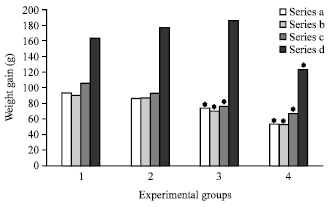 | |
| Fig. 1: | A bar chart showing body weight gain of metronidazole treated rats, Control series a: Fed with experimental group dose of metronidazole (15, 30, 200 and 400 mg kg-1, respectively), Series b: Fed with metronidazole and 400 mg kg-1 of vitamin E, series c: Fed with metronidazole and 0.36 mg kg-1 of testosterone, Series d: Fed with metronidazole, 400 mg kg-1 of vitamin E and 0.36 mg kg-1 of testosterone, Values are Mean±SD, n = 5, *Not significant at p>0.05 |
| Table 1: | Serum follicle stimulating hormone (mIU mL-1) of control and treated experimental rats |
 | |
| A: Control, B: Fed with metronidazole, C: Fed with metronidazole and 400 mg kg-1 of vitamin E, D: Fed with metronidazole and 0.36 mg kg-1 of testosterone, E: fed with metronidazole, 400 mg kg-1 of vitamin E and 0.36 mg kg-1 of testosterone, F: Reversal, Values are expressed as Mean±standard deviation, n = 5, *Significant at p<0.05 | |
However, FSH was reduced significantly in treatment groups which received 200 and 400 mg kg-1 (4.87±0.90 and 5.08±1.76 mIU mL-1) compared to the control of 3.34±0.34 mIU mL-1 (p<0.05) as shown in Table 1.
LH level was significantly increased in experiment 3 and 4 in which rats were administered with 200 and 400 mg kg-1, respectively. Contrary to the increased in these groups, rats treated with 30, 200 and 400 mg kg-1 of metronidazole concurrently with testosterone recorded significant decrease in LH levels (1.61±0.19, 1.75±0.11 and 1.41±0.11 mIU mL-1 as against 1.93±0.14 mIU mL-1 of control) as shown in Table 2.
Serum hormonal level of testosterone was not affected in experimental groups 1 and 2 which were treated with 15 and 30 mg kg-1 of metronidazole in comparison to the control but the concentration was significantly reduced with increasing dose of metronidazole.
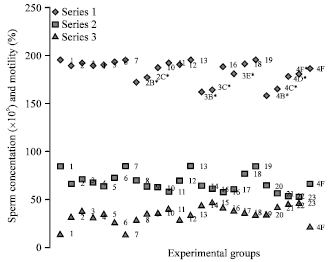 | |
| Fig. 2: | Sperm analysis of control and metronidazole treated rats, Series 1; sperm concentration, Series 2; percentage motility, Series 3; percentage non-motility. A: Control, B: Fed with experimental group dose of metronidazole (15, 30, 200 and 400 mg kg-1, respectively), C: Fed with metronidazole and 400 mg kg-1 of vitamin E, D: Fed with metronidazole and 0.36 mg kg-1 of testosterone, E: Fed with metronidazole, 400 mg kg-1 of vitamin E and 0.36 mg kg-1 of testosterone, F: Reversal, Values are expressed as mean, n = 5, *Significant at p<0.05 |
| Table 2: | Luteinizing hormone (mIU mL-1) of control and treated experimental rats |
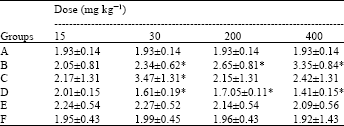 | |
| A: Control, B: Fed with metronidazole, C: Fed with metronidazole and 400 mg kg-1 of vitamin E, D: Fed with metronidazole and 0.36 mg kg-1 of testosterone, E: Fed with metronidazole, 400 mg kg-1 of vitamin E and 0.36 mg kg-1 of testosterone, F: Reversal, Values are expressed as Mean±standard deviation, n = 5, *Significant at p<0.05 | |
Although, there was also reduction in testosterone levels in the vitamin E co-treated groups, the values was not statistically significant (p<0.05) as shown in Table 3.
Semen analysis of control and experimental rats treated with metronidazole: The sperm count and motility of experimental group 1 which was administered with 15 mg kg-1 of metronidazole was not affected in all the sub-groups in comparison to the control as shown in Fig. 2.
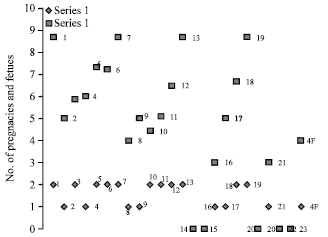 | |
| Fig. 3: | Fertility data of control and metronidazole treated rats, Series 1: No. of pregnancies, Series 2: No. of fetus. A: Control, B: Fed with experimental group dose of metronidazole (15, 30, 200 and 400 mg kg-1, respectively), C: Fed with metronidazole and 400 mg kg-1 of vitamin E, D: Fed with metronidazole and 0.36 mg kg-1 of testosterone, E: Fed with metronidazole, 400 mg kg-1 of vitamin E and 0.36 mg kg-1 of testosterone, F: Reversal, Values are expressed as Mean±standard deviation, No. of mated rats = 2 |
| Table 3: | Serum testosterone (ng mL-1) of control and treated experimental rats |
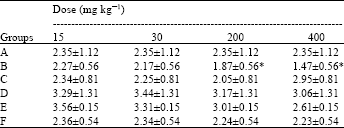 | |
| A: Control, B: Fed with metronidazole, C: Fed with metronidazole and 400 mg kg-1 of vitamin E, D: Fed with metronidazole and 0.36 mg kg-1 of testosterone, E: Fed with metronidazole, 400 mg kg-1 of vitamin E and 0.36 mg kg-1 of testosterone, F: Reversal, Values are expressed as Mean±standard deviation, n = 5, *Significant at p<0.05 | |
In experiment 2, there was slight reduction in sperm count in sub-groups treated with 30 mg kg-1 of metronidazole only, treated with 30 mg kg-1 of metronidazole and vitamin E when compared to the control as illustrated. In both experimental groups 3 and 4, there was significant reduction in both sperm count and motility but the lowest count was recorded in experimental group 4.
Fertility test among control and male rats treated with metronidazole: A dose of 15 mg kg-1 of metronidazole was found not to have adversely affected the fertility potentials of treated male rats since significant number of the female rats (>90%) of proven fertility mated with the treated male rats got pregnant and produced at least an average of six fetuses in all the sub-groups as shown in Fig. 3. Although, there was mild reduction in number of pregnant females and the number of fetuses produced in the experimental group treated with 30 mg kg-1 of metronidazole, it was not significant when compared to the control group. In experiment 3; in which 200 mg kg-1 of metronidazole alone was administered, did not record any pregnancy. However, the sub-groups fed with metronidazole and vitamin E or Testosterone, although the number of pregnancy significantly reduced, recorded 1 each as illustrated. Experiment group 4 was almost like experimental group 3 but the effects were more pronounced in terms of number of pregnancy and that of fetuses. There was a marked improvement in terms of number of pregnancy and that of the fetuses in all the reversal groups as shown in Fig. 3 below.
DISCUSSION
Testosterone and Follicle Stimulating Hormones (FSH) act on the seminal tubules to initiate and maintain spermatogenesis (Johnson et al., 1997). In this study, metronidazole caused a significant decrease in the testosterone levels after 2 months of the administration. The effects are more pronounced in the high dose metronidazole treated groups. The reduced testosterone concentration on metronidazole administration indicates that this drug suppresses Leydig cell steroidogenesis which tallies with work done by Amin (2008). It has been documented earlier that intra-peritoneal administration of metronidazole (400 mg kg-1 day-1), for 30 days, reduced the hormone levels of testosterone, follicle stimulating hormone and Luteinizing Hormone (LH) in rats (Grover et al., 2001). Contrary to this work done by Grover et al. (2001), this study recorded an increase in LH levels in high dose metronidazole. This indicates that reduction in testosterone levels might have triggered a negative feedback mechanism on the hypothalamo-pituitary axis. Moreover, Joshie et al. (1977) found that a single dose of 700 mg kg-1 of 2 thiazolyl-5-nitroimidazole resulted infertility in mice after 3 weeks of administration, with a return of fertility by week 7. Farombi et al. (2007) indicated that slight increase of testosterone was observed after 4 weeks of stoppage of treatment. These increases were still significantly lower than the control values indicating that a more prolonged time might be required for probable full restoration of normal level of these parameters. With the increased duration of time to 8 weeks in the present study, normal levels of these parameters were nearly or fully restored. The reduction in both testosterone and gonadotrophins might be as a result of metronidazole which reaches the blood-testis barrier and gains access to the germinal cells of the seminiferous tubules. This is in accordance to earlier report by Dixon and Lee (1973); the blood testis-barrier was possibly an important aspect when considering reproductive and mutagenic effects of drugs and environmental chemicals. The permeability characteristics of the blood-testis barrier are generally similar to those which limit the membrane penetration in the central nervous system (Okumura et al., 1975).
Metronidazole is distributed to all the tissues including the blood-brain barrier and seminal fluid (El-Nahas and El-Ashmawy, 2004). The results of present and earlier studies might explain the direct hazardous effects of metronidazole on the germ and Leydig cells, that is, a decreased testosterone secretion after penetration of metronidazole into the blood-testis barrier.
The preventive functions of testosterone on the fertility and testicular function cannot be overlooked since it has significantly or almost prevented both morphological and biochemical changes observed in group B animals in this study.
The slightly reduced sperm count in the rats treated with 30 mg kg-1 of metronidazole for 8 weeks might be as a result of feedback control system on the anterior pituitary and hypothalamus due to the increased serum testosterone concentration. Although, serum testosterone concentration on it own does not determine the fate of spermatogenesis, the intratesticular testosterone which is the seminiferous tubular fluid testosterone does. There is a highly significant positive correlation between serum LH, FSH and intratesticular testosterone (Takahashi et al., 1982). These authors stated that circulating levels of LH is related to intratesticular testosterone (r = 0.67 p<0.001). This suggests that raised circulating levels of testosterone can suppress anterior pituitary secretion of LH. Consequently, a suppressed LH concentration can lead to a reduced intratesticular testosterone which might be either due to a suppressed activity or reduced quantity of the Leydig cells. This may eventually lead to suppression of spermatogenesis which tallies with earlier work done by Ligha and Fawehinmi (2012).
There was a marked reduction of sperm count in the high dose group treated with either 200 or 400 mg kg-1. The reduced sperm count in these groups may be as a result of the damage of the spermatogenic cells of the tubular epithelium where sperm cells, spermatogonia differentiate till they become spermatozoa (Farombi et al., 2007). The observed damage of the germinal epithelium and the depletion in the Sertoli cell number recorded in the previous studies (Ligha and Fawehinmi, 2012), might have been accounted for the low sperm count in the high dose treated groups.
Results obtained from the low dose (paediatric doses) metronidazole treated male rats suggest that at the administered dose for the period of treatment does not significantly interfere with development and maturation of male gonad morphologically since the rats could still impregnate female rats which were mated with them. The improvement of fertility in the group treated with metronidazole and vitamin E shows that to a greater extent, vitamin E act as powerful anti-oxidant to protect the oxidative stress of metronidazole on the testes because vitamin E has been described as an excellent lipid soluble chain-breaking antioxidant (Farombi et al., 2007). The use of vitamin E in vitro has been also documented to improve sperm motility and viability (Verma and Kanwar, 1999) which is in consonance with our findings.
CONCLUSION
This study has demonstrated that the effects of metronidazole on fertility potential is dose depended and it is reversible after 8 weeks of cessation of treatment. It has also shown that introduction of vitamin E and or testosterone to an extent protect the deleterious effects of metronidazole on the testis of rats.
REFERENCES
- Amin, A., 2008. Ketoconazole-induced testicular damage in rats reduced by Gentiana extract. Exp. Toxicol. Pathol., 59: 377-384.
PubMed - Khaki, A., M.G. Novin, A.A. Khaki, M. Nouri, E. Sanati and M. Nikmanesh, 2008. Comparative study of the effects of gentamicin, neomycin, streptomycin and ofloxacin antibiotics on sperm parameters and testis apoptosis in rats. Pak. J. Biol. Sci., 11: 1683-1689.
CrossRefPubMedDirect Link - Carey, J.C. and M.A. Klebanoff, 2005. Is a change in the vaginal flora associated with an increased risk of preterm birth? Am. J. Obstetrics Gynecol., 192: 1341-1346.
CrossRefPubMedDirect Link - Carlson, E., A.M. Anderson, J.H. Petersen and N.E. Skakkebaek, 2003. History of febrile illness and variation in semen quality. Hum Reprod., 18: 2089-2092.
CrossRefPubMedDirect Link - Cocuzza, M., M.A. Cocuzza, F.M. Bragais and A. Agarwal, 2008. The role of varicocele repair in the new era of assisted reproductive technology. Clinics, 63: 395-404.
CrossRef - Sohrabi, D., A. Mohsen and A.M. Ali, 2007. Effect of metronidazole on spermatogenesis, plasma gonadotrophins and testosterone in rats. Iran. J. Reprod. Med., 5: 69-72.
Direct Link - Dixon, R.L. and I.P. Lee, 1973. Possible role of the blood-testicular barrier in dominant lethal testing. Environ. Health Perspect., 6: 59-63.
PubMedDirect Link - El-Nahas, A.F. and I.M. El-Ashmawy, 2004. Reproductive and cytogenetic toxicity of metronidazole in male mice. Pharmacol. Toxicol., 94: 226-231.
CrossRefDirect Link - Farombi, E.O., S.O. Abarikwu, I.A. Adedara and M.O. Oyeyemi, 2007. Curcumin and kolaviron ameliorate di-n-butylphthalate-induced testicular damage in rats. Basic Clin. Pharmacol. Toxicol., 100: 43-48.
CrossRefPubMedDirect Link - Grover, J.K., V. Vats, M. Srinavas, S.N. Das, P. Jha, D.K. Gupta and D.K. Mitra, 2001. Effect of metronidazole on spermatogenesis and FSH, LH and testosterone levels of pre-pubertal rats. Indian J. Exp. Biol., 39: 1160-1162.
PubMedDirect Link - Kummerer, K., Al-Ahmed and V. Mersch-Sundermann, 2000. Biodegradability of some antibiotics, elimination of the genotoxicity and affection of wastewater bacteria in a simple test. Chemosphere, 40: 701-710.
Direct Link - Okumura, K., I.P. Lee and R.L. Dixon, 1975. Permeability of selected drugs and chemicals across the Blood-testis barrier of the rat. J. Pharmacol. Exp. Ther., 191: 89-95.
PubMedDirect Link - Aranha, O., L. Zhu, S. Alhasan, D.P. Wood Jr, T.H. Kuo and F.H. Sarkar, 2002. Role of mitochondria in ciprofloxacin induced apoptosis in bladder cancer cell. J. Urol., 167: 1288-1294.
PubMed - Raji, Y., O.T. Kunle-Alabi, S.B. Olaleye, M.A. Gbadegesin and F.O. Awobajo et al., 2007. Impact of α-tocopherol on metronidazole and tetracycline-induced alterations in reproductive activities of male albino rats. J. Biol. Sci., 7: 41-46.
CrossRefDirect Link - Takahashi, J., Y. Higashi, J. LaNasa, S. Winters, H. Oshima and P. Troen, 1982. Studies of the human testis. XVII. Gonadotropin regulation of intratesticular testosterone and estradiol in infertile men. J. Clin. Endocrinol. Metab., 55: 1073-1080.
PubMed - Verma, A. and K.C. Kanwar, 1999. Effect of vitamin E on human sperm motility and lipid peroxidation in vitro. Asian J. Androl., 1: 151-154.
PubMed