

Fatemeh Nejad Habibvash
Department of Biology, Faculty of Science, Urmia University, Urmia, West Azarbaijan Iran
Mohammad Ali Rajamand
Department of Biology, Faculty of Science, Urmia University, Urmia, West Azarbaijan Iran
Reza Heidari
Department of Biology, Faculty of Science, Urmia University, Urmia, West Azarbaijan Iran
Siavash Hosseini Sarghein
Department of Biology, Faculty of Science, Urmia University, Urmia, West Azarbaijan Iran
Mahnaz Heidari Ricani
Agricultural Research Center of West Azarbaijan Herbarium, Iran
Pakistan Journal of Biological Sciences
Year: 2007 | Volume: 10 | Issue: 20 | Page No.: 3516-3524







ABSTRACT
Present survey was performed on nine species of Salvia (Lamiaceae) growing wild in different regions of West Azarbaijan in Iran (S. limbata, S. vertisillata, S. macrochlamys, S. nemorosa, S. ceratophylla, S. candidissima, S. syriaca, S. multicaulis, S. sclarea). In this research, three of the most important biochemical characters such as total protein content, total oil content and fatty acids combination in seeds of these species were considered. Analysis of species average comparison variance conducted with ANOVA and Duncan’s test (p<0.05) revealed that there is a significant difference about protein content, oil content and fatty acid composition among species.
PDF Abstract XML References Citation
How to cite this article
Fatemeh Nejad Habibvash, Mohammad Ali Rajamand, Reza Heidari, Siavash Hosseini Sarghein and Mahnaz Heidari Ricani, 2007. Chemical Analysis of Some Salvia species Native to West Azarbaijan (Iran). Pakistan Journal of Biological Sciences, 10: 3516-3524.
DOI: 10.3923/pjbs.2007.3516.3524
URL: https://scialert.net/abstract/?doi=pjbs.2007.3516.3524
DOI: 10.3923/pjbs.2007.3516.3524
URL: https://scialert.net/abstract/?doi=pjbs.2007.3516.3524
INTRODUCTION
The genus Salvia is one of the largest members of the Lamiaceae family. It comprises more than 900 species, which are widespread all over the world. The Mediterranean, Central Asia, America and South Africa are the main centers of diversity of this genus (Malencic et al., 2003). Salvia species are an important group of useful plants. Some of this are shrubby or subshrubby and perennial (Nakıboğlu, 1993).
Salvia (Lamiaceae) and their essential oil are used in food flavoring, pharmaceuticals and in perfumery. Salvia species have been reportedly used in folk medicine for wound healing and in alleviating stomach, liver and rheumatism pains and for treating the common cold in the form of infusion and Detection (Sezik and Yesilada, 1999). Antioxidant activities of the seed oils of Salvia have been reported (Azcan et al., 2004). Fatty acid components of the seed oils of these plants are palmitic, palmitoleic, stearic, oleic, linolenic, linolenic and arachidic acids. These fatty acids are responsible for the antioxidant activity (Castoro et al., 1986).
Chia seeds contain 21% protein, a level markedly greater than other nutritional grains such as wheat (14%), corn (14%), rice (8.5%) and oat (15.3%). Chia seeds have an oil content of approximately one third of their weight, about 60% of which is α-linolenic acid, making this ingredient a rich source of ω3 fatty acids (Craig and Sons, 2005). Chia seeds are also a rich source of vitamins B, calcium, phosphorus, potassium, zinc and copper (Malencic et al., 2003).
The most popular species of the genus Salvia, sage (Salvia officinalis L.) is a well-known medicinal plant. The sage acts as an antiphlogistic, stomachic, antiseptic, antiasthematic, astringent drug and used as spice (Chiej, 1988). However, the majority of wild-growing Salvia species have not been fully evaluated from their phytochemical point.
The aim of this study was determined the protein content, oil content and fatty acid composition of selected Salvia species, in order to evaluate their nutritive value. There are almost no reports on the protein content, oil content and fatty acid composition of the species found in the world.
MATERIALS AND METHODS
We initiated the biochemical studies at the Laboratory of Biochemistry and Artemia Researches Center of Urmia University in West Azarbaijan in Iran, using living materials which were collected from their natural habitats during mid May and end of June 2006.
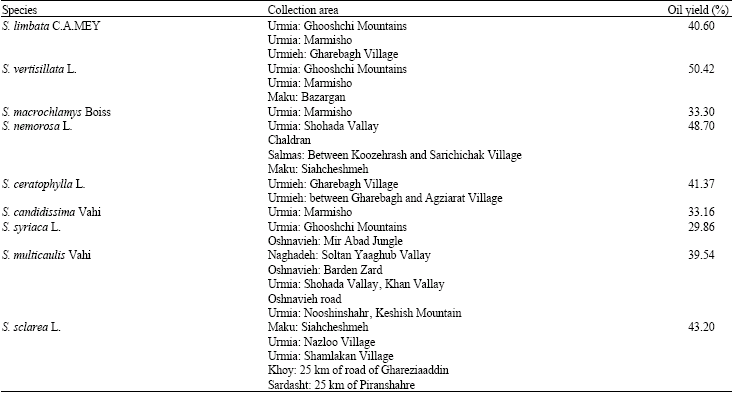
The sampling localities and Salvia species used in this study are given in Table 2.
Nine taxa of Salvia were used in this experiment: S. limbata C.A.MEY, S. vertisillata L., S. macrochlamys Boiss, S. nemorosa L., S. ceratophylla L., S. candidissima Vahi, S. syriaca L., S. multicaulis Vahi, S. sclarea L. For this purpose, dried and crushed seeds were used.
The Lowry et al. (1951) method was used for determination of the total protein content. For measurement of total oil content, ether method was used (Leiboritz et al., 1987).
Fatty acids were determined by Gass Chromatography after the preparation of their methyl esters. The analysis of fatty acid methyl esters were performed by Gass Chromatograph (model: GC-1000) on a EC-1000 column (30x0.33 mm i.d., 0.25 μm film thickness) using hydrogen, equipped with a FID (220°C) (Siavah et al., 2005). Identification of the methyl esters were made by comparison of retention times of standard fatty acid methyl esters (Saglik et al., 2002). For statistical analysis, ANOVA and Duncans' test were used (p<0.05).
RESULTS AND DISCUSSION
The fatty acid composition of the seed oil was determined by gas chromatography and the results are shown in Table 1 and Fig. 1-9.
Previous reports on seed oil fatty acids composition indicated that the 18:3/18:2 ratio could be used as a taxonomic marker in some subfamilies of the Lamiaceae (Azcan et al., 2004). The main fatty acid components of the seed oils of Salvia species were reported as palmitic, stearic, oleic linolenic and linolenic acid (Azcan et al., 2004).
There were 17 fatty acids identified by comparison with the fatty acid methyl ester standards. In the investigated Salvia species, the lowest oil yield was obtained from S. syriaca (29.86%) and S. vertisillata seeds gave the highest oil yield (50.42%) (Table 2).
Palmitic acid was the main constituent in seed oils of the S. limbata (2.83%), S. vertisillata (3.2%), S. macrochlamys (5.51%), S. nemorosa (3.23%), S. ceratophylla (3.15%), S. candidissima (4.9%) and S. multicaulis (5.1%). In the seed oils of S. limbata (2.7%), S. vertisillata (4.28%), S. macrochlamys (3%), S. nemorosa (2.55%), S. ceratophylla (2.77%), S. candidissima (2.68%) and S. syriaca (1.65%), palmitoleic acid was the main component.
Stearic acid was the main constituent in the seed oils of S. limbata (1.39%), S. ceratophylla (1.35%), S. candidissima (1.19%), S. multicaulis (1.88%) and S. sclarea (1.97%). Oleic acid was the main constituent in seed oils of the S. limbata (13.93%), S. vertisillata (8.13%), S. macrochlamys (8.86%), S. nemorosa (11.05%), S. ceratophylla (13.33%), S. candidissima (16.3%), S. multicaulis (13.93%) and S. sclarea (2.47%). In the seed oil of S. macrochlamys, Cis-vaccenic acid (7.37%) was the main component.
Linolenic acid was the main constituent in seed oils of S. limbata (13.78%), S. vertisillata (10.88%), S. macrochlamys (40.17%), S. nemorosa (14.88%), S. ceratophylla (16.76%), S. candidissima, (11.88%) and S. sclarea (21.53%). In the seed oils of Linolenic acid S. limbata (18.23%), S. vertisillata (19.47%), S. nemorosa (25.66%), S. ceratophylla (16.29%) and S. sclarea (10.77%). Arachidic acid was the main component in the seed oils of S. limbata (17.61%), S. vertisillata (25.1%), S. ceratophylla (14.82%) and S. sclarea (4.79%). Gadoleic acid was the main component of S. candidissima (16.9%) and S. sclarea (27.78%). Eicosatrienoic acid was the main component in seed oil of S. sclarea (13.7%).
| Table 1: | Mean amounts of fatty acid compositions of 9 Salvia species (%) |
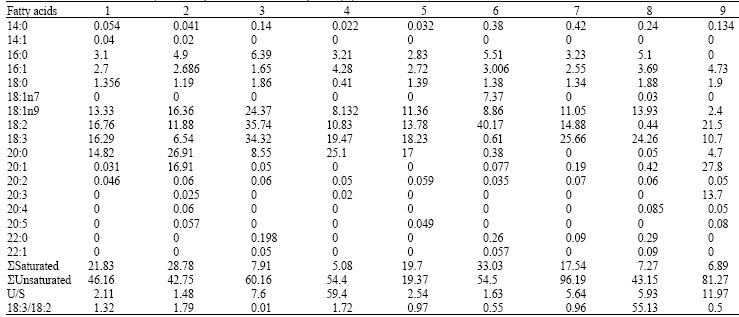 | |
| (Numbers 1, 2, 3, …and 9 represent species of Ceratophylla, Candidissima, Syriaca, Vertisillata, Limbata, Macrochlamys, Nemorosa and Multicaulis, Sclarea, respectively) | |
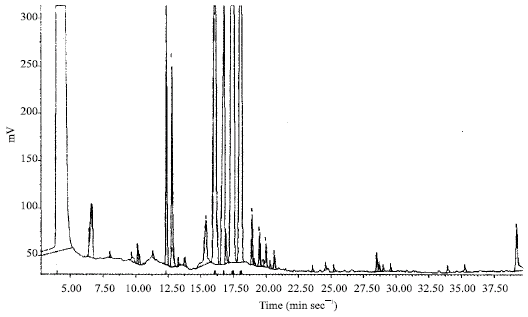 | |
| Fig. 1: | Chromatographical of S. multicaulis |
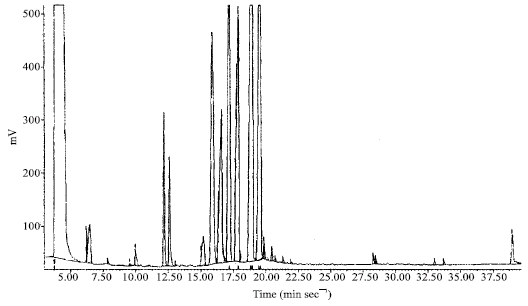 | |
| Fig. 2: | Chromatograph of S. nemorosa |
S. limbata: In the seed oil of S. limbata, 10 fatty acids identified by comparison with the fatty acid methyl ester standards. The majority fatty acids were α-linolenic acid (18.23%), arachidic acid (17.6%) linolenic acid (13.78%) and oleic acid (11.37%), followed by palmitic acid (2.83%), Stearic acid (1.39%) and palmitoleic acid (2.7%). On the other hand, 3 fatty acids were detected in small quantities (0.03-0.05%).
There were 4 saturated fatty acids in the sample, of which, the total percentage of them was 21.83%. In the unsaturated fatty acids, α-linolenic acid (18.23%) was the predominant fatty acid in them and the total percentage was 46.16%. The ratio of unsaturated fatty acids to the saturated (U/S) was 2.11% and the 18:3/18:2 ratio was 1.32%.
S. vertisillata: In the seed oil of S. vertisillata, 10 fatty acids identified. The major fatty acids were arachidic acid (25.1%), α-linolenic acid (19.47%), linolenic acid (10.88%) and oleic acid (8.13%), followed by palmitoleic acid (4.28%) and palmitic acid (3.2%). Also, 4 fatty acids were detected in small quantities (0.02-0.05%) except 18:2 (0.41%). There were 4 saturated fatty acids in the sample of which, the total percentage of them was 28.78%.
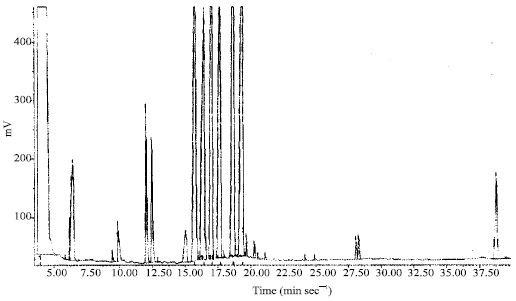 | |
| Fig. 3: | Chromatographical of S. candidissima |
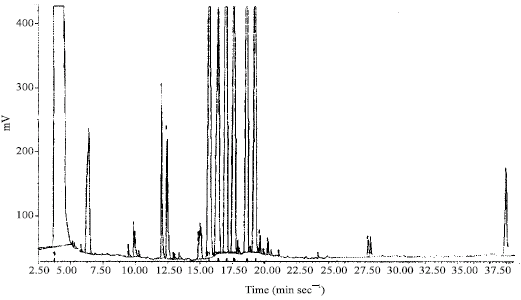 | |
| Fig. 4: | Chromatographical of S. ceratophylla |
In the unsaturated fatty acids, α-linolenic acid (19.47%) was the predominant fatty acid in them and the total percentage was 42.75%. The ratio of unsaturated fatty acids to the saturated (U/S) was 1.48% and the 18:3/18:2 ratio was 1.79%.
S. macrochlamys: In the seed oil of S. macrochlamys, 13 fatty acids identified. The major fatty acids were linolenic acid (40.17%), oleic acid (8.86%), Cis-vaccenic acid (7.37%), palmitic acid (5.51%) and stearic acid (1.38%), Also, 8 fatty acids were detected in small quantities (0.03-0.38%). There were 5 saturated fatty acids in the sample of which, the total percentage of them was 7.91%. In the unsaturated fatty acids, linolenic acid (40.17%) was the predominant fatty acid in them and the total percentage was 60.16%. The ratio of U/S was 7.6% and the 18:3/18:2 ratio was 0.01%.
S. nemorosa: In the seed oil of S. nemorosa, 10 fatty acids identified. The major fatty acids were α-Linolenic acid (25.66%), linolenic acid (14.88%), oleic acid (11.5%), palmitic acid (3.23%) followed by palmitoleic acid (2.55%) and stearic acid (1.34%). Also, 4 fatty acids were detected in small quantities (0.07-0.09%) except 20:1 (0.19%) and 14:0 (0.42%).
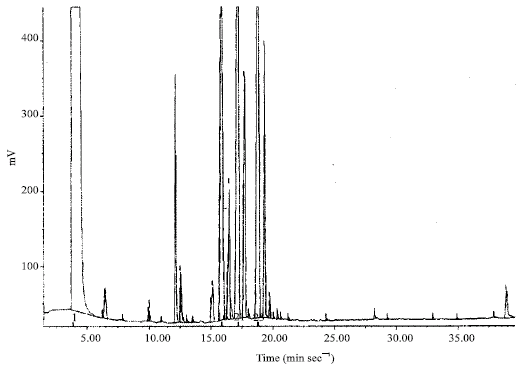 | |
| Fig. 5: | Chromatographical of S. syriaca |
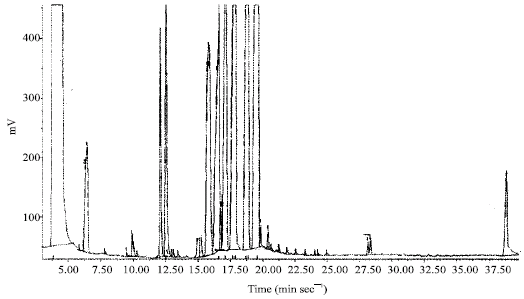 | |
| Fig. 6: | Chromatographical of S. vertisillata |
There were 4 saturated fatty acids in the sample of which, the total percentage of them was 5.08%. In the unsaturated fatty acids, α-linolenic acid (25.66%) was the predominant fatty acid in them and the total percentage was 54.4%. The ratio of U/S was 59.4% and the 18:3/18:2 ratio was 1.72%.
S. ceratophylla: In the seed oil of S. ceratophylla, 11 fatty acids identified. The major fatty acids were linolenic acid (16.76%), α-linolenic acid (16.29%), arachidic acid (14.82%), oleic acid (13.33%) and palmitic acid (3.15%) followed by palmitoleic acid (2.77%) and stearic acid (1.35%). Also, 4 fatty acids were detected in small quantities (0.03-0.05%). There were 4 saturated fatty acids in the sample of which, the total percentage of them was 19.37%. In the unsaturated fatty acids, linolenic acid (16.76%) was the predominant fatty acid in them and the total percentage was 19.37%. The ratio of U/S was 2.54% and the 18:3/18:2 ratio was 0.97%.
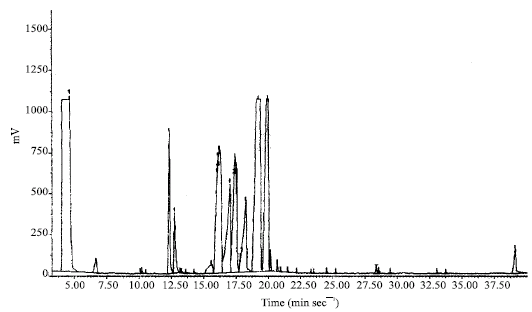 | |
| Fig. 7: | Chromatographical of S. limbata |
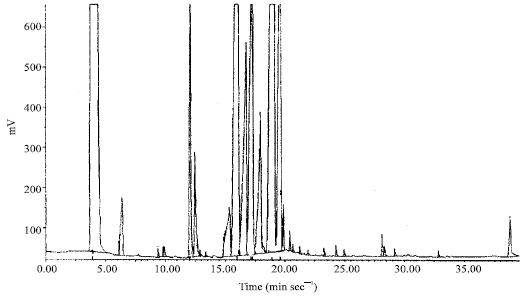 | |
| Fig. 8: | Chromatographical of S. sclarea |
S. candidissima: In the seed oil of S. candidissima, 14 fatty acids identified. The major fatty acids were arachidic acid (26.9%), gadoleic acid (16.9%), oleic acid (16.3%), linolenic acid (11.88%) and α-linolenic acid (6.5%) and palmitic acid (4.95), followed by palmitoleic acid (2.68) and stearic acid (1.195). Also, 6 fatty acids were detected in small quantities (0.02-0.06%). There were 4 saturated fatty acids in the sample of which, the total percentage of them was 33.3%. In the unsaturated fatty acids, gadoleic acid (16.9%) was the predominant fatty acid in them and the total percentage was 54.5%. The ratio of U/S was 1.63% and the 18:3/18:2 ratio was 0.55%.
S. syriaca: In the seed oil of 12 fatty acids identified. The major fatty acids were linolenic acid (35.74%), α-linolenic acid (34.32%), oleic acid (24.37%), arachidic acid (8.55%) and palmitic acid (6.39%), followed by stearic acid (1.86%), palmitoleic acid (2.68) and palmitoleic acid (1.65%). Also, 5 fatty acids were detected in small quantities (0.05-0.06%) except 22:0 (0.19%) and 14:0 (0.14). There were 5 saturated fatty acids in the sample of which, the total percentage of them was 17.54%. In the unsaturated fatty acids, linolenic acid (35.74%) was the predominant fatty acid in them and the total percentage was 96.19%. The ratio of U/S was 5.64% and the 18:3/18:2 ratio was 0.96%.
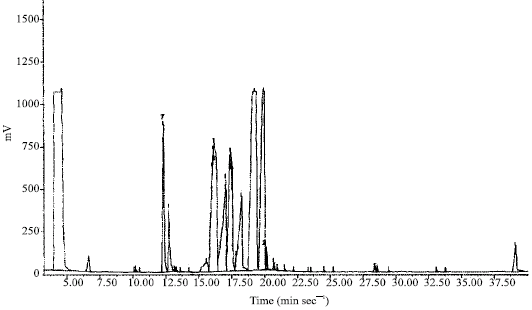 | |
| Fig. 9: | Chromatographical of S. macrochlamys |
| Table 2: | seed oil yields and collection sites of Salvia species |
 | |
S. multicaulis: In the seed oil of S. multicaulis, 12 fatty acids identified. The major fatty acids were α-Linolenic acid (24.26%), oleic acid (13.93%), palmitic acid (5.1%), palmitoleic acid (3.69%) and stearic acid (1.88%). Also, 7 fatty acids were detected in small quantities (0.03-0.09%) except 18:2 (0.44%). There were 3 saturated fatty acids in the sample of which, the total percentage of them was 7.27%. In the unsaturated fatty acids, α-linolenic acid (24.26%) was the predominant fatty acid in them and the total percentage was 43.15%. The ratio of U/S was 5.93% and the 18:3/18:2 ratio was 55.13%.
S. sclarea: In the seed oil of S. sclarea, 12 fatty acids identified. The major fatty acids were gadoleic acid (27.78%), linolenic acid (21.53%), Eicosatrienoic acid (13.7%), arachidic acid (4.79%) and palmitoleic acid (4.74%), followed by oleic acid (2.47%) and stearic acid (1.97%). Also, 4 fatty acids were detected in small quantities (0.05-0.13%).
| Table 3: | Analysis of variance for parameters in Salvia species |
 | |
| Pr: Protein, Numbers 1, 2, 3, …and 17 represent fatty acids, 14:0, 14:1, 16:0, 16:1, 18:0, 18:1n7, 18:1n9, 18:2, 18:3, 20:0, 20:1, 20:2, 20:3, 20:4, 20:5 and 22:1, respectively | |
There were 3 saturated fatty acids in the sample of which, the total percentage of them was 6.89%. In the unsaturated fatty acids, gadoleic acid (27.78%) was the predominant fatty acid in them and the total percentage was 81.27%. The ratio of U/S was 11.79% and the 18:3/18:2 ratio was 0.5%. The oil of S. ceratophylla seeds contained the lowest content of total unsaturated fatty acids (19.37%) while they were the main components in the seed oil of S. sclarea.
As to the saturated fatty acid contents in the oils examined, the lowest yield was obtained in the seeds of S. nemorosa (5.08%) and highest content was encountered in the seeds of S. candidissima (33.03%). The ratio of unsaturated fatty acids to the saturated ranged between 1.63 to 59.4%. Present results showed that protein content was high, ranging from 8.4 to 16.77%. The highest amounts were found in the seeds of S. vertisillata (16.77%) followed by S. syriaca (15.16%), S. candidissima (15.15%), S. nemorosa (15.2%), S. macrochlamys (10.67%), S. limbata (10.23%), S. ceratophylla (9.83%), S. sclarea (8.84%) and S. multicaulis (8.4%).
In all the taxa studied, this is the first study of the seed proteins of Salvia species, therefore, a comparison with the previously published data has not been possible. However present results agree with those of previously published studies on other members of the genus Salvia (Craig, 2005). Analysis of species average comparison variance conducted with ANOVA and Duncan's test (p<0.05) revealed that there is a significant difference about protein content, oil content and fatty acid composition among species (Table 3). In all the taxa studied, the ratio of unsaturated fatty acids is greater than that of saturated fatty acids. This is a typical feature of the seed oils of the family Lamiaceae (Azcan et al., 2004).
This is the first study on fatty acids composition, 14:0, 20:2, 20:4, 20:5 and 22:1 and high amounts of Cis-Vaccenic acid, arachidic acid and gadoleic acid. Cis-Vaccenic acid was determined in some different Umbelliferae seed oils (Reiter et al., 1998) and also pulp lipids of commonly available fruits (Shibahara et al., 1987). In seed lipids it is generally found in lower concentrations (0.5-2%), although it’s higher amounts in some species (Spitzer, 1996). In this study it was found as 7.23% (S. macochlamys) and this value is high comparing the general literature findings (Soukup and Holman, 1987), also, 0.03% (S. multicaulis). In all the taxa studied, this is the first study of the seed oils of Salvia species apart from S. sclarea, S. candidissima. Seed oil of S. sclarea, was reported to be rich in Linolenic (36.6%), as the main fatty acid constituent followed by oleic (19.4%), linolenic acid (18.1%) (Azcan et al., 2004). In this taxa, oil yield as 4%, was reported. Seed oil of S. candidissima, was reported to be rich in oleic acid (21.1%), palmitic acid (21%), Linolenic acid (20.9%) and linolenic acid (19.2%) (Azcan et al., 2004). In this taxa oil yield as 5.6%, was reported. From the aspect of fatty acids percentage and oil yield, our results don’t agree with those of previous studies conducted on other members of the genus Salvia (Azcan et al., 2004). The investigation of the fatty acid composition of the Salvia species showed that the plants except S. macrochlamys were well supplied with Omega 3 fatty acid that this fatty acid is necessary for human body.
REFERENCES
- Azcan, N., A. Ertan, B. Demirci and K.H.C. Bazer, 2004. Fatty acid composition of seed oils of twelve Salvia species growing in Turkey. Chem. Nat. Comp., 40: 218-221.
Direct Link - Leiboritz, H.D., A. Bengrson, P.D. Mougle and K.L. Simponson, 1987. Effect of Artemia Lipid Fraction on Growth and Survival of Larval in Land Liver Sides. In: Artemia Research and its Application, Sorgeloss, P., D.A. Begtson, W. Deeiier and E. Japers (Eds.). Universa, Wetteven, Belgium, pp: 469-479.
- Lowry, O.H., N.J. Rosebrough, A.L. Farr and R.J. Randall, 1951. Protein measurement with the folin phenol reagent. J. Biol. Chem., 193: 265-275.
CrossRefPubMedDirect Link - Malen�i�, R., S. Kevresan and T. Popovic, 2003. Mineral composition of selected Salvia species growing wild in the Vojvodina province. Proc. Nat. Sci. Matica Sprska Novi Sad, 105: 25-33.
Direct Link - Reiter, B., M. Lechner and E. Lorbeer, 1998. The fatty acid profiles-including petroselinic and Cis-vaccenic acid of different Umbelliferae seed oils. Lipid-Fett, 100: 498-502.
Direct Link - Saglik, S., K. Alpinar and S. Imre, 2002. Fatty acid composition of the seed oil of Arum italicum Miller. J. Food Lipids, 9: 95-103.
Direct Link - Shibahara, A., K. Yamamoto, T. Nakayama and G. Kajimoto, 1987. Cis-vaccenic acid in pulp lipids of commonly available fruits. JAOCS, J. Oil Chem. Soc., 64: 397-401.
CrossRefDirect Link - Siavash, B., G. Carapetian and S. Zaere, 2005. Studying on lipid content and fatty acids in some varieties of colza (Brassica napus L.). J. Pajuhesh Sazandegi, 7: 95-101.
Direct Link - Soukup, V.G. and R.T. Holman, 1987. Fatty acids of seeds of North American Pedicillate trillium species. Phytochemistry, 26: 1015-1018.
CrossRef - Spitzer, V., 1996. Fatty acid composition of some seed oils of the sapindaceae. Phytochemistry, 42: 1357-1360.
Direct Link