

Sabahat Saeed
Department of Microbiology, University of Karachi, Karachi-75270, Pakistan
Perween Tariq
Department of Microbiology, University of Karachi, Karachi-75270, Pakistan
Pakistan Journal of Biological Sciences
Year: 2006 | Volume: 9 | Issue: 8 | Page No.: 1547-1551







ABSTRACT
A total of sixty eight strains of 19 different species of bacteria viz., Bacillus megaterium, B. brevis, B. firmus, B. subtilis, B. pumilus, B. pasteurii, Staphylococcus aureus, S. haemolyticus, Micrococcus luteus, M. sedenterius, M. varians, M. nishinomiyaensis, M. roseus, Escherichia coli, Neisseria sicca, N. mocosa, N. lactamicus, N. dentrificens and N. canis were used to evaluate the antibacterial effects of juices of garlic (Allium sativum), lemon (Citrus limonum), unripe papaya (Carica papaya), pomegranate (Punica granatum) and white radish (Raphanus sativus) by well diffusion method. Juice of garlic exhibited the highest activity against all species with average zone of inhibition 32.66 mm. The juices of lemon, unripe papaya and pomegranate also possess good antibacterial effect with 25.81, 21.25 and 17.75 mm, respectively. Besides, all isolates were found resistant to the juice of white radish.
PDF Abstract XML References Citation
How to cite this article
Sabahat Saeed and Perween Tariq, 2006. Effects of Some Seasonal Vegetables and Fruits on the Growth of Bacteria. Pakistan Journal of Biological Sciences, 9: 1547-1551.
DOI: 10.3923/pjbs.2006.1547.1551
URL: https://scialert.net/abstract/?doi=pjbs.2006.1547.1551
DOI: 10.3923/pjbs.2006.1547.1551
URL: https://scialert.net/abstract/?doi=pjbs.2006.1547.1551
INTRODUCTION
Antimicrobial resistance is a natural biological phenomenon exacerbated by the misuse of drugs (Anonymous, 2006). The problem of microbial resistance is growing and the outlook of the use of antimicrobial drugs in future is still uncertain. Therefore, action must be taken to reduce this problem, for example, to control the use of antibiotics, to develop research to better understanding of the genetic mechanism of resistance and to continue studies to develop new drugs either synthetic or natural (Nascimento et al., 2000).
For a long period of time, plants have been a valuable source of natural products for maintaining human health (Tanaka et al., 2006). Different parts of plants, herbs and spices have been used for many years for the prevention of infections. The use of plants with known antimicrobial properties can be of great significance in treatment of infections (Nascimento et al., 2000; Cowan, 1999).
In view of this, the present study gives an access of the antibacterial effects of juices of some seasonal vegetables and fruits viz., garlic (Allium sativum), lemon (Citrus limonum), papaya (Carica papaya), pomegranate (Punica granatum) and white radish (Raphanus sativus) against Gram-positive and Gram-negative bacteria.
MATERIALS AND METHODS
The study was conducted at the Department of Microbiology, University of Karachi, Karachi, Pakistan during the month of December, 2005.
Isolates: A total of sixty eight isolates belonging to 19 different species of bacteria viz., Bacillus megaterium, B. brevis, B. firmus, B. subtilis, B. pumilus, B. pasteurii, Staphylococcus aureus, S. haemolyticus, Micrococcus luteus, M. sedentarius, M. varians, M. nishinomiyaensis, M. roseus, Escherichia coli, Neisseria sicca, N. mucosa, N. lactamica, N. dentrificens and N. canis were used to evaluate the antibacterial effects of juices of garlic (Allium sativum), lemon (Citrus limonum), zunripe papaya (Carica papaya), pomegranate (Punica granatum) and white radish (Raphanus sativus).
Preparation of juice: Garlic, lemon, unripe papaya, pomegranate and white radish were purchased from a local market of Karachi, Pakistan. These were washed separately with tap water followed by sterile distilled water. Juices were prepared separately by juicer machine (Moulinex Juice Extractor, Model No. 864).
Screening of antibacterial activity
Media: Mueller-Hinton agar (MHA) (Merck) and Mueller-Hinton broth (MHB) (Merck) were used as base medium for screening of antibacterial activity and for preparation of inoculum, respectively.
Preparation of McFarland nephelometer standard: McFarland tube number 0.5 was prepared by mixing 9.95 mL 1% Suplhuric acid in MHB and 0.05 mL 1% Barium chloride in distilled water in order to estimate bacterial density (Saeed et al., 2005). The tube was sealed and used for comparison of bacterial suspension with standard whenever required.
Preparation and standardization of inoculum: Four to five colonies from pure growth of each test organism were transferred to 5 mL of MHB. The broth was incubated at 35-37°C for 18-24 h. The turbidity of the culture was compared to 0.5 McFarland Nephelometer standard to get 150x106 CFU mL–1. The standardized inoculum suspension was inoculated within 15-20 min (Saeed et al., 2005).
Well diffusion method: Screening of antibacterial activity was performed by well diffusion technique (Saeed and Tariq, 2005). The MHA plates were seeded with 0.1 mL of the standardized inoculum of each test organism. The inoculum was spread evenly over plate with loop or sterile glass spreader. The seeded plates were allowed to dry in the incubator at 37°C for 20 min. A standard cork borer of 8 mm diameter was used to cut uniform wells on the surface of the MHA and 0.1 mL of each fresh vegetable juice was introduced in the well.
Incubation: The inoculated plates were incubated at 35-37°C for 24 h and zone of inhibition diameter was measured to the nearest millimeter (mm).
RESULTS AND DISCUSSION
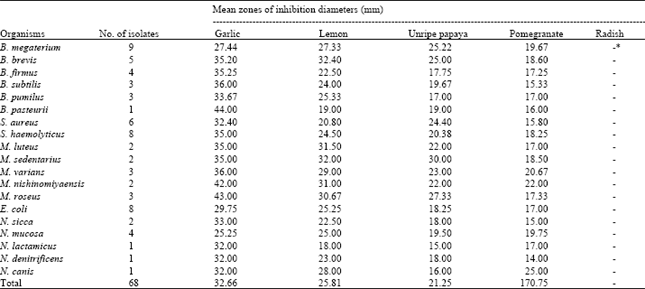
In present study, garlic possessed the highest antibacterial effects against all organisms. Lemon, unripe papaya and pomegranate also possessed good antibacterial effects against all organisms while radish did not exhibited any antibacterial effect (Table 1).
Microbial drug resistance is a difficult problem. A large number of bacterial species have become resistant to antibacterial drugs (Garau, 1994). Thus, there is a need to develop alternate strategies. To evaluate the efficacy of phytochemicals concerning the growth of bacteria, extracts of herbs typically have been used. These are normally obtained by means of steam-distillation, dichloromethane extraction (Laenger et al., 1996), maceration, sonication, soxhlet and supercritical fluid extraction with hexane (Vilegs-Jande et al., 1997). These types of preparations are normally unavailable to person in a domestic setting for purposes of self medication. Instead aqueous solutions (e.g., infusion and decoction) and juices that are prepared in the home are most frequently used. Given theses concederations, the effects of juices of garlic (Allium sativum), lemon (Citrus limonum), unripe papaya (Carica papaya), pomegranate (Punica granatum) and white radish (Raphanus sativus) on the growth of bacteria were studied.
Garlic has been used for its medicinal properties for thousands of years to treat many conditions including hypertension, infections and snakebite. Currently, it is used for reducing cholesterol level and cardiovascular risk (Setiawan et al., 2005; Tattelman, 2005). It also has beneficial effects on the immune system (Harris et al., 2001). Garlic has also long been known to have antifungal, antiprotozoal, antiviral and antibacterial properties (Bakri and Douglas, 2005). Louis Pasture was the first to describe the antibacterial effect of garlic juice and found that it exhibits a broad antibacterial spectrum against both Gram-positive and Gram-negative bacteria (Sivam, 2001). Present results are in fair correlation with the study carried out by Reuter et al. (1996) in which garlic has been reported to inhibit Aerobacter, Aeromonas, Bacillus, Citrella, Citrobacter, Clostridium, Enterobacter, Escherichia, Klebsiella, Lactobacillus, Leuconostoc, Micrococcus, Mycobacterium, Proteus, Providencia, Pseudomonas, Salmonella, Serratia, Staphylococcus, Streptococcus and Vibrio. In another study, crude juice of garlic has been found to be strongly active against Escherichia coli, Pseudomonas pyocyaneus, Salmonella typhi and Bacillus subtilis (Abdou et al., 1972). Garlic extract also inhibits the growth of Streptococcus mutans and Porphyromonas gingivalis (Bakri and Douglas, 2005). Besides, the aqueous extract of garlic has also shown significant antibacterial activity against isolates of multi-drug-resistant Shigella dysentriae, Sh. flexneri, Sh. sonnei and enterotoxigenic E. coli (Chowdhury et al., 1991). Sasaki et al. (1999) found that the antibacterial activity of garlic was resistant to heat treatment at 100°C for 20 min. They also found its activity against E. coli O-157 methicillin-resistant S. aureus (MRSA), Salmonella enteridis and Candida albicans. Garlic extract also possess antibacterial activity against Helicobacter pylori at a fairly moderate concentration (Sivam, 2001; Jonkers et al., 1999). H. pylori is a bacterium implicated in the etiology of stomach cancer and ulcers (Sivam, 2001). Thus, garlic has protective effect against stomach ulcers (Setiawan et al., 2005). Allicin is the biologically active compound responsible for the antimicrobial properties of garlic. In another study, pure allicin was found effective against 31 clinical isolates of Aspergillus in vitro (Shadkchan et al., 2004).
In present study, the antimicrobial effect of lemon was found next to garlic. Lemon is used in cookery and confectionary. It is also used in medicines to correct the taste and augment the power of bitter infusions and tinctures. Lemon is mostly valued for its juice which contains sugars and fruit acids mainly citric acid. The active chemical constituents of lemon are lomonene, citral, citronellal, α-terpineol, linalyl, geranylacetate, α-terpinene, β-bisabolene, trans-α-bergamotene, nerol and neral.
| Table 1: | Antibacterial activity of garlic, lemon, unripe papaya, pomegranate and radish |
 | |
| * No activity | |
Lemon has been found to be antifungal and antibacterial. Its action also include antisclerotic, antiscorbutic, antineuralgic, antirheumatic, antipasmodic, cicatrisant, coagulant, cooling, depurative, detoxifying, disinfectant, emollient, escharotic, stimulant, insecticide, laxative, stomachic, styptic and vermifuge (Grieve, 2005). The results of present study are in accordance with another study carried out by Valnet (2006) who reported that lemon oil kills meningococci, typhoid bacilli, pneumococci, diphtheria bacteria and S. aureus. Literature about the antibacterial activity of its juice is lacking.
Another fruit used in the present study was unripe papaya. Present results are in harmony with the study in which ripe and unripe papaya produced significant antibacterial activity on S. aureus, B. cereus, E. coli, P. aeruginosa and Sh. flexneri. While extract of leaves of papaya did not show antibacterial activity (Emeruva, 1982). In another study, ripe and unripe papaya also inhibit the growth of B. cereus, E. coli, S. faecalis, S. aureus, P. vulgaris and Sh. flexneri. The active ingredients of papaya is flavonoid (Hsu, 2005), which is responsible for antibacterial activity of papaya. Besides, cysteine proteinases, papain, chymopapain, caracian and glycyl endopeptidase are other bioactive compounds of papaya (Moussaoui et al., 2001). It also has remarkable antiparasitic (Hounzangbe-Adote et al., 2005), hepatoprotective (Rajkapoor et al., 2002), antioxidant and wound-healing effect (Mikhalchik et al., 2004). Its fruit is also used in cosmetics for healthy skin complexion. The unripe fruit is also laxative and diuretic (Halimbawa, 2005).
In present study, antibacterial effect of juice of pomegranate was also evaluated. Pomegranate possesses strong antioxidant and anti-inflammatory properties. Pomegranate juice has cancer-chemo-preventive as well as cancer-chemo-therapeutic effects against prostate cancer in humans (Malik et al., 2005). Daily consumption of pomegranate juice improves stress-induced myocardial ischemia in patients who have coronary heart disease (Huang et al., 2005). It also prevents and reduces the symptoms of hypoxic-ischemic brain damage (Loren et al., 2005). New research indicates that pomegranate may offer protection from heart diseases and blood pressure (Aviram et al., 2004). Pomegranate also has antioxidant and antibacterial properties (Negi and Jayaprakasha, 2003). Present findings are contrary to the study in which extract of pomegranate inhibited only P. aeruginosa and B. subtilis while S. aureus, Salmonella cholexaesus, Proteus mirabilis, K. pneumoniae, Shigella spp., Enterobacter aerogenes and E. coli were found totally resistant to it (Nascimento et al., 2000). On the other hand in another study, it has been reported to inhibit the growth of S. aureus (Braga et al., 2005). Its bioactivity is due to the presence of polyphenol (Loren et al., 2005), tannins, flavonoids and ellagic acid (Gil et al., 2000; Sumner et al., 2005). In addition, pomegranate offers antiviral (Li et al., 2004) and antifungal properties and inhibits the growth of Candida associated with denture stomatitis (Vasconcelos et al., 2003).
In present study, the antibacterial activity of white radish was also evaluated. Present findings are in fair correlation with a study carried out by Tirranen et al. (2001), who found that radish has no effect on bacterial growth. In contrary, some workers found that crude juice of radish has been found to be strongly active against E. coli, P. pyocyaneus, S. typhi and B. subtilis (Abdou et al., 1972). It was also found that radish contains raphanin which is antibacterial and antifungal and inhibits the growth of S. aureus, S. pneumoniae and E. coli (Anonymous, 2005). It has been used for medicinal purposes by the Egyptians, Greeks, Romans and Chinese. Leaves and roots of radish have been used in various parts of the world to treat cancer. Consuming radish generally results in improved digestion, but some people are sensitive to its acridity and strong action (Prez and Lule, 2004).
REFERENCES
- Aviram, M., M. Rosenblat, D. Gaitini, S. Nitecki and A. Hoffman et al., 2004. Pomegranate juice consumption for 3 years by patients with carotid artery stenosis reduces common carotid intima-media thickness, blood pressure and LDL oxidation. Clin. Nutr., 23: 423-433.
CrossRefPubMedDirect Link - Bakri, I.M. and C.W.I. Douglas, 2005. Inhibitory effect of garlic extract on oral bacteria. Arch. Oral Biol., 50: 645-651.
CrossRefPubMedDirect Link - Braga, L.C., J.W. Shupp, C. Cummings, M. Jett and J.A. Takahashi et al., 2005. Pomegranate extract inhibits Staphylococcus aureus growth and subsequent enterotoxin production. J. Ethnopharmacol., 96: 335-339.
CrossRefPubMedDirect Link - Chowdhury, A.K., M. Ahsan, S.N. Islam and Z.U. Ahed, 1991. Efficacy of aqueous extract of garlic and allicin in experimental shigellosis in rabbits. Indian J. Med. Res., 93: 33-36.
PubMed - Cowan, M.M., 1999. Plant products as antimicrobial agents. Clin. Microbiol. Rev., 12: 564-582.
CrossRefPubMedDirect Link - Gil, M.I., F.A. Tomas-Barberan, B. Hess-Pierce, D.M. Holcroft and A.A. Kader, 2000. Antioxidant activity of pomegranate juice and its elationship with phenolic composition and processing. J. Agric. Food Chem., 48: 4581-4589.
PubMed - Harris, J.C., S.L. Cottrell, S. Plummer and D. Lloyd, 2001. Antimicrobial properties of Allium sativum (garlic). Applied Microbiol. Biotechnol., 57: 282-286.
CrossRefDirect Link - Hounzangbe-Adote, M.S., V. Paolini, I. Fouraste, K. Moutairou and H. Hoste, 2005. In vitro effects of four tropical plants on three life-cycle stages of the parasitic nematode, Haemonchus contortus. Res. Vet. Sci., 78: 155-160.
CrossRefDirect Link - Hsu, S., 2005. Green tea and the skin. J. Am. Acad. Dermatol., 52: 1049-1059.
CrossRefPubMedDirect Link - Huang, T.H.W., G. Peng, B.P. Kota, G.Q. Li, J. Yamahara, B.D. Roufogalis and Y. Li, 2005. Anti-diabetic action of Punica granatum flower extract: Activation of PPAR-γ and identification of an active component. Toxicol. Applied Pharmacol., 207: 160-169.
CrossRefPubMedDirect Link - Jonkers, D., E. Van den Broek, I. Van Dooren, C. Thijs, E. Dorant, G. Hageman and E. Stobberingh, 1999. Antibacterial effect of garlic and omeprazole on Helicobacter pylori. J. Antimicrob. Chemother., 43: 837-839.
Direct Link - Laenger, R., C. Mechtler and J. Jurenitsch, 1996. Composition of the essential oils of commercial samples of Salvia officinalis L. and S. Fruticosa Miller: A comparison of oils obtained by extraction and steam distillation. Phytochem. Anal., 7: 289-293.
CrossRefDirect Link - Li, Y., L.S. Ooi, H. Wang, P.P. But and V.E. Ooi, 2004. Antiviral activities of medicinal herbs traditionally used in southern mainland China. Phytother. Res., 18: 718-722.
CrossRef - Mikhalchik, E.V., A.V. Ivanova, M.V. Anurov, S.M. Titkova, L.Y. Penkov, Z.F. Kharaeva and L.G. Korkina, 2004. Wound-Healing effect of papaya-based preparation in experimental thermal trauma. Bull. Exp. Biol. Med., 137: 560-562.
Direct Link - Nascimento, G.G.F., J. Locatelli, P.C. Freitas and G.L. Silva, 2000. Antibacterial activity of plant extracts and phytochemicals on antibiotic-resistant bacteria. Braz. J. Microbiol., 31: 247-256.
CrossRefDirect Link - Negi, G.K. and Jayaprakasha, 2003. Antioxidant and antibacterial activitiesof Punica granatum peel extracts. J. Food Sci., 68: 1473-1477.
Direct Link - Prez, G.R.M. and R. Lule, 2004. Raphanus sativus (Radish): Their chemistry and biology. Sci. World J., 4: 811-837.
CrossRef - Rajkapoor, B., B. Jayakar, S. Kavimani and N. Murugesh, 2002. Effect of dried fruits of Crica papaya linn on hepatotoxicity. Biol. Pharm. Bull., 25: 1645-1646.
Direct Link - Saeed, S. and P. Tariq, 2005. Antibacterial activities of Mentha piperita, Pisum sativum and Momordica charantia. Pak. J. Bot., 37: 997-1001.
Direct Link - Sasaki, J., T. Kita, K. Ishita, H. Uchisawa and H. Matsue, 1999. Antibacterial activity of garlic powder against Escherichia coli O-157. J. Nutr. Sci. Vitaminol., 45: 785-790.
CrossRefDirect Link - Setiawan, V.W., G.P. Yu, Q.Y. Lu, M.L. Lu and S.Z. Yu et al., 2005. Allium vegetables and stomach cancer risk in China. Asia. Pac. J. Cancer Prev., 6: 387-395.
Direct Link - Shadkchan, Y., E. Shemesh, D. Mirelman, T. Miron, A. Rabinkov, M. Wilchek and N. Oisherov, 2004. Efficacy of allicin, the reactive molecule of garlic, in inhibiting Aspergillus spp. in vitro and in a murine model of disseminated aspergillosis. J. Antimicrob. Chemother., 53: 832-836.
Direct Link - Sivam, G.P., 2001. Protection against Helicobacter pylori and other bacterial infections by garlic. J. Nutr., 131: 1106S-1108S.
Direct Link - Sumner, M.D., M. Elliott-Eller, G. Weidner, J.J. Daubemier and M.H. Chew et al., 2005. Effects of pomegranate juice consumption on myocardial perfusion in patients with coronary heart disease. Am. J. Cardiol., 96: 810-814.
CrossRefPubMedDirect Link - Tanaka, J.C.A., C.C. DeSilva, A.J.B. DeOliveira, C.V. Nakamura and B.P.D. Filho, 2006. Antibacterial activity of indol alkaloids from Aspidosperma ramiflorum. Braz. J. Med. Biol. Res., 39: 387-391.
Direct Link - Tirranen, L.S., E.V. Borodina, S.A. Ushakova, V.Y. Rygalov and J.L. Gitelson, 2001. Effect of volatile metabolites of dill, radish and garlic on growth of bacteria. Acta Astronaut., 49: 105-108.
CrossRef - Vasconcelos, L.C., M.C. Sampaio, F.C. Sampaio and J.S. Higino, 2003. Use of Punica granatum as an antifungal agent against candidosis associated with denture stomatitis. Mycoses, 46: 192-196.
PubMed