

Kathi Srujana
Department of Ecology and Environmental Sciences, Pondicherry University, R.V. Nagar, Kalapet, Pondicherry-605 014, India
Anisa B. Khan
Department of Ecology and Environmental Sciences, Pondicherry University, R.V. Nagar, Kalapet, Pondicherry-605 014, India
Journal of Environmental Science and Technology
Year: 2012 | Volume: 5 | Issue: 1 | Page No.: 74-83







ABSTRACT
Polycyclic aromatic hydrocarbons are the most important components of contaminants retained in the soil environment after any oil spillage. Certain indigenous organisms are known to degrade these contaminants by using them as sole carbon source. The aim of the study was to screen Polycyclic Aromatic Hydrocarbon (PAH) Degrading Soil Microbes from an Automobile Workshop Sediments. Among the 34 oil-degrading microbial isolates collected from petrochemical contaminated workshop sediments of Puducherry in India five isolates are screened and selected based on their efficiency to mineralize Polycyclic Aromatic Hydrocarbons. The efficiency of biodegradation is assessed using soil dehydrogenase test to measure microbial activity when supplied with individual PAHs, in addition to different concentrations of phenanthrene. Studies with different concentrations of phenanthrene showed linear increase in growth with percentage increase of phenanthrene in case of ISO2 where 0.16±0.04 to 0.72±0.06 was the Optical Density (OD) whereas minimal OD was observed in ISO5 while in ISO1 and ISO3 phenanthrene utilization was variable. The bioaugmentation ability of isolated strains was quantified by monitoring PAH removal by HPLC. A degradation percentage of 86.08 (naphthalene), 81.87 (fluorene), 77.77 (acenaphthene), 78.5 (phenanthrene) and 72.56 (benzanthracene) is observed in ISO2. The capacity of isolated strains to mineralize 5 hydrocarbons is presented in this study wherein ISO2 showed a consistent degradation and higher metabolic versatility in comparison to other strains in all the experiments. All the results indicated that the identification of degradable strains have a promising application in understanding the role of microbes in bioremediation of petrochemical contaminated environments and these strains could be potentially useful for PAH bioremediation in the field.
PDF Abstract XML References Citation
Received: July 21, 2011;
Accepted: September 29, 2011;
Published: November 02, 2011
How to cite this article
Kathi Srujana and Anisa B. Khan, 2012. Isolation and Characterisation of Polycyclic Aromatic Hydrocarbon Degrading Soil Microbes from Automobile Workshop Sediments. Journal of Environmental Science and Technology, 5: 74-83.
DOI: 10.3923/jest.2012.74.83
URL: https://scialert.net/abstract/?doi=jest.2012.74.83
DOI: 10.3923/jest.2012.74.83
URL: https://scialert.net/abstract/?doi=jest.2012.74.83
INTRODUCTION
Oil spills have degraded most agricultural lands, reduced the availability of fish and fish products and caused the pollution of surface and ground water resources which caused destruction of crops and death of farm animals in Nigeria (Eneh, 2011). The leakage of petroleum hydrocarbons from the underground storage tanks contaminate the surrounding ground water and soil and compounds enter into the environment by being soluble in water and binding strongly to soil (Arafa, 2003). When PAHs are unavailable to biological systems toxicity is reduced but biodegradation is inhibited since they are partially unavailable for microbial degradation and bacteria degrade chemicals only when they are dissolved in water (Al-Turki, 2009).
The 16 PAHs prioritised as pollutants by the US Environmental Protection Agency (USEPA) are naphthalene, acenaphthene, acenaphthylene, fluorene, anthracene, phenanthrene, fluoranthene, chrysene, benzo(k)fluoranthene, benzo(a)anthracene, pyrene, benzo(a)pyrene, dibenzo(a, h)anthracene, dibenzo(b, c)fluoranthene (Kanchanamayoon and Tatrahun, 2009). Microbial remediation is a promising strategy employed to remediate PAH-contaminated soils (Hamdi et al., 2007). Microbes involved in bioremediation process may obtain both energy and carbon supplements by metabolising target organic contaminants (Thavasi et al., 2006). During the last few decades many microbes of the genera Pseudomonas, Bacillus, Alcaligenes, Acinetobacter, Beijerinckii, Corynebacterium, Mycobacterium, Nocardioides, Rhodococcus, Streptomyces, Sphingomonas and Paenibacillus capable of degrading PAHs have been reported particularly for Low-Molecular-Weight (LMW) compounds such as naphthalene, anthracene and phenanthrene (Kanaly and Harayama, 2000; Kanaly et al., 2000; Sun et al., 2010). A Few bacteria known to degrade High Molecular Weight (HMW) PAHs are: fluoranthene, pyrene and benzo[a]pyrene are the members of the genera Bacillus, Burkholderia, Cycloclasticus, Flavobacterium, Pseudomonas, Mycobacterium and Stenotrophomonas (Kanaly and Harayama, 2000; Samanta et al., 2002; Janbandhu and Fulekar, 2011).
The search for microorganisms that possess degradation capabilities of petroleum products and related components as a viable alternative to non-biological remediation technique is a continuous process (Igwo-Ezikpo et al., 2009).
The objective of this work was to assess the potential degradability of these microbial isolates with a range of phenanthrene concentrations. Further the growth of isolates on different carbon sources is also assessed to determine the metabolic activity and adaptability of microorganisms to survive in hydrocarbon contaminated sites.
MATERIALS AND METHODS
Soil samples contaminated with various petroleum hydrocarbons were collected from 14 automobiles workshops located on the outskirts of Pondicherry, India from March to November, 2010. Enrichment cultures using Bushnell-Haas (BH) minimal medium with 1.5% NaCl were carried out with representative soil samples. Enrichment was carried out in 250 mL Erlenmeyer flasks containing 100 mL of the BH medium with 10 g of soil (10). The 50 mg mL-1 of phenanthrene (C14H10), fluorene(C13H10), fluoranthene (C16H10), chrysene (C18H12) and benz[o]anthracene (C18H12) were prepared in acetone, while naphthalene (C10H8) was dissolved in methanol at a final concentration of 100 mg mL-1. Phenanthrene, fluoranthene and fluorene were over sprayed onto a solid agar medium after streak plating of bacteria (Hilyard et al., 2008). Naphthalene dissolved in methanol was applied to a petri dish lid; the methanol was allowed to evaporate leaving volatile naphthalene as the sole carbon and energy source for microbes on BH agar plates. Tests of PAH degradability were visualized by a distinct phenanthrene clearing zone surrounding individual colonies (Zhao et al., 2009). These representative colonies were aseptically selected, removed and sub-cultured in liquid BH medium containing phenanthrene. Flasks were incubated at 30°C in an incubator shaker at 200 rev min-1 agitation. The enrichment was maintained by consecutive transfers (10% of cultured medium) to fresh medium at 30 days interval until five such transfers.
Morphological characteristics of selected isolates were examined by microscopy and the shape of cells, Gram-stain, the presence of spores and colony morphology were studied on solid LB plates. Carbon source utilization experiments were conducted using hi-carbohydrate test kit. The efficiency of biodegradation was assessed by soil dehydrogenase experiments used to measure microbial activity when supplied with individual PAHs in addition to different concentrations of phenanthrene. Bacterial stocks were prepared by culturing bacteria in plate count medium (pH 7.2) at 23°C for 48 h. Each microplate is filled with: 5 μL of phenanthrene in hexane, 225 μL of BH broth and 36 μL cell free extract (20). Phenanthrene is taken at the rate of 10 to 80% conc. Microplates were incubated at 28°C for 21 days with five replicates. On 21st day 0.4% p-iodo-nitro tetrazolium violet (INT) is dissolved in dimethyl formamide and incubated overnight at 28°C. Controls were prepared without hydrocarbon and bacterial inoculum. The precipitate formed is assayed using Biorad Microplate reader (Model 680 XR) at 412 nm.
In the present biodegradability study, selected PAHs were added to the microplates in the following concentrations: 1000 μg mL-1 of acenaphthene and naphthalene; 200 μg mL-1 of fluoranthene, fluorene, dibenzothiophene, crude oil, diesel; 100 μg mL-1 of phenanthrene and benz(o)anthracene. The 50 μL of each PAHs compound in acetone was coated on the microplates prior to the preparation of bacterial inoculums. The concentration of p-iodo nitro-tetrazolium formazan (INTF) formed was measured at 405 nm in dual mode with 655 nm reference filter.
Purified strains were tested for biodegradation in broth cultures with a PAH mixture with the following composition-1000 μg L-1 of acenaphthene and naphthalene, 200 μg L-1 of fluorene, 100 μg L-1 of phenanthrene and benzanthracene prepared in acetonitrile. Bacterial culture pre-cultivated in BH medium at 30°C overnight was inoculated into 100 mL of sterile medium amended with PAHs mixture to a final concentration of 0.1 at OD600 (Ueno et al., 2006a, b). Triplicates were incubated in an orbital incubator shaker at 200 rpm for 50 days. The residual concentrations of selected PAHs were estimated using HPLC. Ten microliter of each sample was injected into Shimadzu Prominence HPLC Analytic System, using C18 column and flow rate was set at 1 mL min. The mobile phase was composed of water: acetonitrile (1:1). All the PAH compounds selected were detected by UV absorbance at 254 nm. The concentrations of PAHs were calculated against calibration curve (Coral and Karagoz, 2005). The percentage of PAH removal was given by the formula:
Removal (%) = 100x[(Mi-Ms)/Mi]
where, Ms is the concentration of PAHs in each treatment and Mi is the initial PAH concentration present in soil (Teng et al., 2011).
Statistical analysis: Statistical analysis was carried out using SPSS 13.0 for Windows software package. The group mean levels were analysed by one-way Analysis of Variance (ANOVA). Wherever significant, mean values of residual PAHs were compared by paired t: test used to analyse the differences at p<0.05 level of significance.
RESULTS AND DISCUSSION
Isolation and characterization of PAHs degrading bacteria: Five isolate designates ISO1, ISO2, ISO3, ISO4 and ISO5 were selected by the standard culture enrichment technique from the thirty four visibly distinct bacterial colonies. Members of the co-culture were separated by plating on BH agar plates. The elimination of contaminating hydrocarbons by indigenous microbial isolates is a significant tool to remove the fractions of oil. Hence, indigenous strains were selected and tried to apply them to laboratory microcosms as such strains are always site specific and their application does not impede the risk associated with genetically modified strains (Sarma and Sarma, 2010).
Colonies displaying different morphologies were purified and tested for growth in liquid and solid BH medium with PAHs as the sole source of carbon and energy. When these colonies were grown on phenanthrene-coated agar plates using spray plate technique, clearing zones were visualized indicating phenanthrene degradation. Similarly, numerous aerobic bacteria that utilize PAHs as carbon and energy source in the presence of oxygen have been isolated. As most of the contaminated sediment and soil exist under anoxic or anaerobic conditions, bioremediation of PAHs in situ is always associated with the anoxic/anaerobic biodegradation the efficiency of which gets affected by many factors, like the nutrient limitation and other available carbon sources (Lu et al., 2011). It is critical to understand not only the physiology of the inoculum but also its effect on the microbial community structure and function within the soil environment into which it is being introduced. In principle, persistence and growth of an inoculated strain in any soil will depend on its ability to utilize local resources and may also initiate displacement of a component of the indigenous community (Cunliffe and Kertesz, 2006; Chen et al., 2011).
Table 1 gives an account of characteristics of isolated strains. Morphologically ISO1 and ISO2 were hypha-rod-coccus while the other three were coccoid and ISO1, ISO2 and ISO5 were gram positive and ISO3 and ISO4 gram negative.
Carbon-source utilization: Soil dehydrogenase activity is quantified by the reduction of the electron acceptor INT which gets reduced by the microbial activity to INTF. The quantity of INTF expresses the capacity of microorganisms to produce electrons from the oxidation of organic substrates present in a given soil sample (Perotti et al., 2008).
| Table 1: | Morphology and biochemical characteristics of isolated strains |
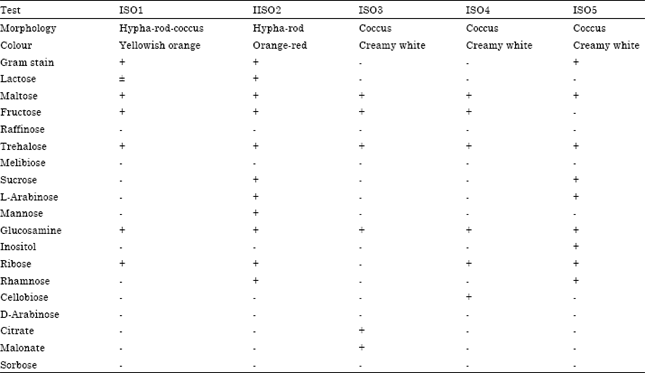 | |
| ++: Strongly positive, +: Positive, -: Negative, ±: Intermediate | |
| Table 2: | Growth of isolated strains utilizing different hydrocarbons as carbon source |
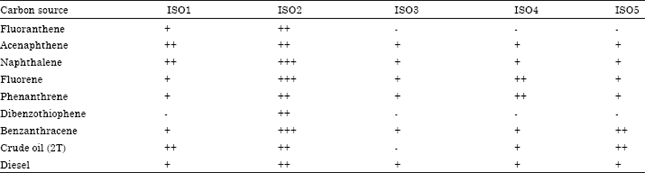 | |
| +++: Strong growth, ++: Medium growth, +: Low growth, -: No growth | |
Table 2 summarises the results of bacterial growth in different PAH substrates in microtitre plates and is evident that ISO1 and ISO2 show more INTF formation which is indicated by the formation of light red color at the end of the reaction. These strains differed in their ability to utilize carbon sources provided, yet ISO2 indicated higher degradability compared to crude oil, diesel, fluoranthene and dibenzothiophene. The decolorisation of benzanthracene, dibenzothiophene and fluoranthene were low indicating less utilization by the isolates except ISO2.
Similar assays provided a reliable measurement of overall indigenous microbiological activity in sediments containing approximately 7% (w/w) oil (Mathew and Obbard, 2001). This method has been effectively used in field studies to monitor microbial activity in conjunction with biodegradation of petroleum hydrocarbons (Mathew et al., 1999).
Characteristics of individual isolates for growth in phenanthrene: A series of degradation tests were carried out at various concentrations of phenanthrene ranging from 0 to 80% as shown in Fig. 1a-e. In ISO1 the OD observed was 0.33±0.05 at 10% phenanthrene and reached a maximum concentration of 0.58±0.12 at 70% concentration. A linear increase in growth with percentage increase of phenanthrene was observed in case of ISO2 where 0.16±0.04 to 0.72±0.06 OD at 415 nm was recorded. A nonlinear increase in OD was observed in ISO3. The increase in OD was much higher when compared to control (0.085±0.035) in ISO4 at 10% phenanthrene concentration (0.54±0.12). In case of ISO5, OD was 0.38±0.12 at 10% phenanthrene concentration which gradually increased to 0.52±0.08 at 40% phenanthrene concentration and then fluctuated. However, minimal OD was observed in ISO5 while in ISO1 and ISO3 phenanthrene utilization varied 20 and 30%, respectively indicating considerable difference as compared to control. All results were statistically significant with ANOVA (p<0.05).
PAHs degradation: The potential of all five isolates to use 5 PAHs as carbon source is shown in Fig. 2a-e. In the bioremediation experiments, initial concentration of 1000 μg L-1 of acenaphthene and naphthalene, 200 μg L-1 of fluorene and 100 μg L-1 of phenanthrene and benzanthracene were taken. Lower molecular weight PAHs degrade rapidly in sediments, while higher molecular weight PAHs, such as benzo(a)anthracene, chrysene or benzo(a)pyrene are quite resistant to microbial attack. The potential biodegradation rates for PAHs are higher in PAH-contaminated sediments than in pristine sediments (Cerniglia, 1992).
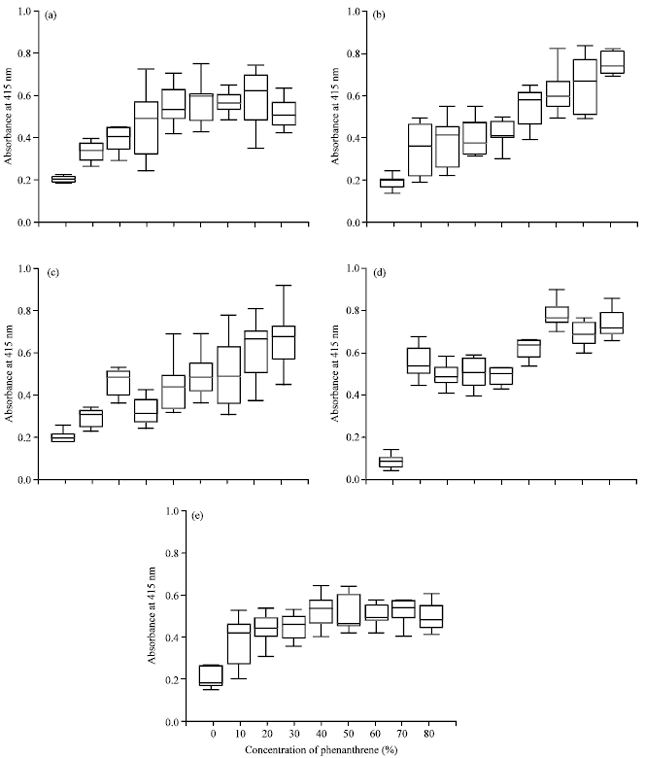 | |
| Fig. 1(a-e): | Effect of phenanthrene concentrations (0%-80%) on growth and degradation of microbial isolates. (a) ISO1, (b) ISO2, (c) ISO3, (d) ISO4 and (e) ISO5 |
As the aqueous solubility of PAHs decreases almost logarithmically with increasing molecular mass, high-molecular weight PAHs ranging in size from five to seven rings are of special environmental concern (Johnsen et al., 2005). In our experimental findings (Fig. 2), residual naphthalene percentages of 17.34, 13.92, 26.15, 8.87 and 13.55 by the 50th day were observed in case of ISO1, ISO2, ISO3, ISO4 and ISO5, respectively.
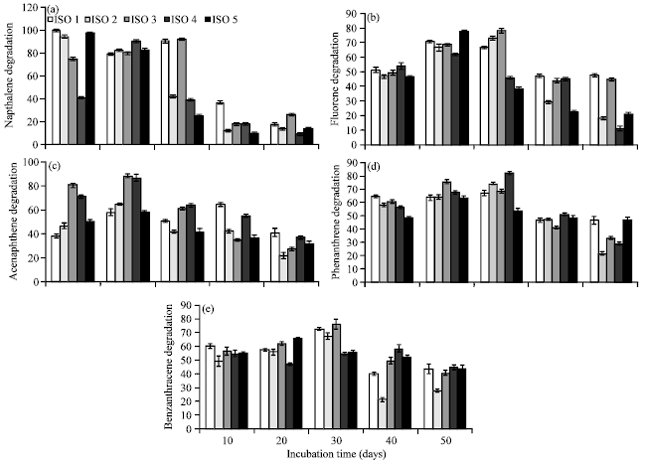 | |
| Fig. 2(a-e): | Percentage degradation of selected PAHs in liquid cultures by enriched microbial strains |
The residual percentage of fluorene at the end of 50 days was minimal in ISO2, ISO4 and ISO5 (18.13, 11.34, 21.25) whereas a degradation of 52.64 and 55.18% was observed in ISO1 and ISO3. The degradation of acenaphthene was comparatively higher in ISO2 (77.77%) and a minimal degradation of 58.9% was observed in ISO1. The degradation of phenanthrene ranged between 78.5% (8.92±11.5) in ISO2 to 53.61% (19.25±16.9) in ISO1. Benzanthracene degradation was 72.56% in ISO2 whereas a minimal degradation of around 55-60% was noticed in all other isolates. The efficiency of the selected isolate on phenanthrene degradation was individually evaluated by Gas chromatogram and HPLC (Janbandhu and Fulekar, 2011; Cho et al., 2006).
It is evident that ISO2 showed a consistent degradation and higher metabolic versatility when compared with the other strains. In the first 30 days of PAHs degradation there was not much variation in degradation of all the compounds and higher degradability was noticed between 30-50 days period. Alamri (2009) reports that increased soil toxicity hinders hydrocarbon degradation initial phase as seen in present experiment. Degradation experiments in laboratory conditions have evidenced that the decrease in PAHs residual percentage were significantly different (p<0.05) than the control.
Singh and Lin (2008) asserted that individual microorganisms can metabolize only a limited range of hydrocarbon substrates, so assemblages of mixed populations with overall broad enzymatic capacities are required to bring the rate and extent of petroleum biodegradation. However, in our study, inoculation with the individual isolates had a limited degradation potential (Fig. 2). This study also has shown variable response of isolates to selected PAHs and effective bioremediation of petroleum contamination requires a mixture of populations (Erdogan and Karaca, 2011; Arafa, 2003). However, complete degradation of PAHs may require a community of organisms that sequentially exchange in addition to transformation of excreted metabolites as the molecules are gradually broken down (Al-Turki, 2009).
The main challenge ahead is the extrapolation of laboratory research results to field and to develop diagnostic technologies to determine which electron acceptor would be appropriate at specific bioremediation site. This enables to enhance the mineralization of PAHs and to formulate the risk assessment of PAH-contaminated bioremediation engineering projects (Lu et al., 2011).
CONCLUSIONS
All the five isolates have demonstrated the ability to mineralize PAHs substrates when taken individually. These strains can be used in the quantitative estimation of PAH degradability experiments at a larger scale. Combined use of these strains in phenanthrene-contaminated soil may increase the efficiency of degradation of such pollutants. The results suggest that ISO1 and ISO2 are relatively better degraders. Optimisation of the parameters such as co-substrate, surfactant, nutrient ratio, salinity used in anoxic/anaerobic in situ bioremediation are essential since it can be applied to remediate the subsurface area contaminated by PAHs. Further research will be directed towards the identification and understanding the role of individual isolates in influencing the effectiveness of in situ degradation processes.
ACKNOWLEDGMENTS
The authors would like to thank the Central Instrumentation Facility, Pondicherry University for providing the HPLC instrument for our research work. One of the authors thanks the University Grants Commission, India for providing the financial support through Rajiv Gandhi National Fellowship (RGNF).
REFERENCES
- Arafa, M.A., 2003. Biodegradation of some aromatic hydrocarbons (BTEXs) by a bacterial consortium isolated from polluted site in Saudi Arabia. Pak. J. Biol. Sci., 6: 1482-1486.
CrossRefDirect Link - Alamri, S.A., 2009. Use of microbiological and chemical methods for assessment of enhanced hydrocarbon bioremediation. J. Biol. Sci., 9: 37-43.
CrossRefDirect Link - Sarma, A. and H. Sarma, 2010. Enhanced biodegradation of oil products by some microbial isolate supplemented with heavy metals. Int. J. Bot., 6: 441-448.
CrossRef - Cerniglia, C.E., 1992. Biodegradation of polycyclic aromatic hydrocarbons. Biodegradation, 3: 351-368.
CrossRefDirect Link - Chen, J., W. Huang, J. Han and S. Cao, 2011. The characterization and application of biological remediation technology for organic contaminants. Int. J. Environ. Res., 5: 515-530.
Direct Link - Cho, H.Y., S.H. Woo and J.M. Park, 2006. Effects of intermediate metabolites on phenanthrene degradation. J. Microbial. Biotechnol., 16: 969-973.
Direct Link - Coral, G. and S. Karagoz, 2005. Isolation and characterization of phenanthrene-degrading bacteria from a petroleum refinery soil. Ann. Microbiol., 55: 255-259.
Direct Link - Cunliffe, M. and M.A. Kertesz, 2006. Effect of Sphingobium yanoikuyae B1 inoculation on bacterial community dynamics and polycyclic aromatic hydrocarbon degradation in aged and freshly PAH-contaminated soils. Environ. Pollut. 144: 228-237.
CrossRef - Erdogan, E.E. and A. Karaca, 2011. Bioremediation of crude oil polluted soils. Asian J. Biotechnol., 3: 206-213.
CrossRefDirect Link - Hamdi, H., S. Benzarh, L. Manusodzianas, I. Aoyama and N. Jedidi, 2007. Bioaugmentation and biostimulation effects on PAH dissipation and soil ecotoxicity under controlled conditions. Soil Biol. Biochem., 39: 1926-1935.
CrossRef - Igwo-Ezikpe, M.N., O.G. Gbenle, M.O. Ilori, J. Okpuzor and A.A. Osuntoki, 2009. Evaluation of Alcaligenes faecalis degradation of chrysene and diesel oil with concomitant production of biosurfactant. Res. J. Environ. Toxicol., 3: 159-169.
CrossRefDirect Link - Janbandhu, A. and M.H. Fulekar, 2011. Biodegradation of Phenanthrene using adapted microbial consortium isolated from petrochemical contaminated environment. J. Hazard. Mater. 187: 333-340.
CrossRefPubMedDirect Link - Kanchanamayoon, W. and N. Tatrahun, 2009. Extraction of eleven polycyclic aromatic hydrocarbons in water samples. J. Environ. Sci. Technol., 2: 95-99.
CrossRefDirect Link - Kanaly, R.A and S. Harayama, 2000. Biodegradation of high-molecular-weight polycyclic aromatic hydrocarbons by bacteria. J. Bacteriol., 182: 2059-2067.
CrossRefDirect Link - Kanaly, R.A., R. Bartha, K. Watanabe and S. Harayama, 2000. Rapid mineralization of benzo[a]pyrene by a microbial consortium growing on diesel fuel. Applied Environ. Microbiol., 66: 4205-4211.
Direct Link - Mathew, M. and J.P. Obbard, 2001. Optimisation of the dehydrogenase assay for measurement of indigenous microbial activity in beach sediments contaminated with petroleum. Biotechnol. Lett., 23: 227-230.
CrossRef - Mathew, M., J.P. Obbard, T.P. Ting, Y.H. Gin and H.M. Tan, 1999. Bioremediation of oil contaminated beach sediments using indigenous microorganisms in Singapore. Acta Biotechnol., 19: 225-233.
CrossRef - Perotti, E.B., A. Pidello, L. Leyendeker, C. Trasar-Cepeda, M.C. Leiros and F. Gil-Sotres, 2008. Behaviour of enzymatic activities and root elongation in Argiudoll soils from the Argentine Humid Pampa treated with biosolids. Rev. Argent. Microbiol., 40: 120-123.
PubMed - Singh, C. and J. Lin, 2008. Isolation and characterization of diesel oil degrading indigenous microrganisms in Kwazulu-Natal, South Africa. Afr. J. Biotechnol., 7: 1927-1932.
Direct Link - Thavasi, R., S. Jayalakshmi, T. Balasubramanian and I.M. Banat, 2006. Biodegradation of crude oil by nitrogen fixing marine bacteria Azotobacter chroococcum. Res. J. Microbiol., 1: 401-408.
CrossRefDirect Link - Ueno, A., Y. Ito, Y. Yamamoto, I. Yumoto and H. Okuyama, 2006. Bacterial community changes in diesel-oil-contaminated soil microcosms biostimulated with Luria-Bertani medium or bioaugmented with a petroleum-degrading bacterium, Pseudomonas aeruginosa strain WatG. J. Basic Microbiol., 46: 310-317.
CrossRefPubMed - Al-Turki, A.I., 2009. Microbial polycyclic aromatic hydrocarbons degradation in soil. Res. J. Environ. Toxicol., 3: 1-8.
CrossRefDirect Link - Eneh, O.C., 2011. A review on petroleum: Source, uses, processing, products and the environment. J. Appl. Sci., 11: 2084-2091.
CrossRefDirect Link - Anders, R.J., K. Bendixen and U. Karlson, 2002. Detection of microbial growth on polycyclic aromatic hydrocarbons in microtiter plates by using the respiration indicator WST-1. Applied Environ. Microbiol., 6: 2683-2689.
CrossRef