

R.B. Khadka
School of Environmental Sciences and Management (SchEMS), Pokhara University, Nepal
U.S. Shrestha
Tribhuvan University, Kathmandu, Nepal
Journal of Environmental Science and Technology
Year: 2011 | Volume: 4 | Issue: 3 | Page No.: 215-233







ABSTRACT
South Asian Sub-Continent is the most populated region, where one-fifth of world’s populations live. People in South Asia are poor, despite of the fact that the region is bestowed with rich natural, cultural and ecological diversity of resources. However, an intensification of industrialization, urbanization with a high rate of population growth has induced many environmental problems in the region. To address the problem of environmental deterioration, South Asian governments have adopted an Environmental Impact Assessment (EIA), as a project planning tool used for environmental protection and to achieve sustainable development. In principle, environmental consideration was integrated in the national policies during 1980s, however, in practice it was only started in mid 1990s, after the UN Earth Summit of 1992. EIA systems in South Asia have all internationally accepted process steps such as project screening, scoping and development of Terms of Reference (TOR) followed by collection of baseline information on bio-physical, social, economical and cultural components of the environment. Impact prediction is made, evaluating the resources against the proposed project activities. A proposal for mitigating environmental effects is usually developed to implement in project construction and operation. Monitoring plan for investigating the effectiveness of mitigation measures is developed as a part of EIA report. Environmental Management Plan (EMP) highlighting prescription of mitigation measures monitoring schedules, responsibility and cost consideration has been included as a part of EIA report. Public involvement is legally required in all EIA system of South Asia. In procedural aspects, an approval of scoping and TOR may lead to an issuance of a site clearance certificate in some country. An approval of EIA report after review may provide a permit for construction of the proposed project. Upon completion of construction of the project and before the initiation of the project operation, the authorizing agency of the Ministry may issue an environmental clearance certificate. However, this is not true for all the countries as the procedural aspects depend on the provisions given in their respective laws and regulations. EIA report preparation and getting it approved by an authorizing agencies has become a ritual process in South Asia, whereas implementation of EIA is virtually missing in most of the nationally funded project and monitoring part of implementation is very weak in South Asian countries.
PDF Abstract XML References Citation
Received: April 30, 2010;
Accepted: June 24, 2010;
Published: September 24, 2010
How to cite this article
R.B. Khadka and U.S. Shrestha, 2011. Process and Procedure of Environmental Impact Assessment Application in Some Countries of South Asia: A Review Study. Journal of Environmental Science and Technology, 4: 215-233.
DOI: 10.3923/jest.2011.215.233
URL: https://scialert.net/abstract/?doi=jest.2011.215.233
DOI: 10.3923/jest.2011.215.233
URL: https://scialert.net/abstract/?doi=jest.2011.215.233
INTRODUCTION
South Asian sub-continent is encircled by Indian Ocean in the South, Himalayan range in the North, Sindha River in the West and the Myanmar in the East. The topography is characterized by Himalayan range spreading from Jammu Kashmir in the West to Chatgaon Hill track of the Bangladesh in the East and the elevation of the area slowly rises from the sea level to the Himalayan range (8848 m) in the North which comprises worlds’ nine highest Himalayan peaks. The area fall under monsoon climate where the average rainfall ranges between 75 to 150 cm and average temperature ranges between 10-40°C. The South Asia covers 18% total area of the earth and is the home of one fifth of the world’s population. It has more than 200 ethnic entities with greatest diversity in culture and traditions. South Asia is the poorest region on the earth with the lowest GDP per capita. More than 40% of the populations live in less than $1.25 per day (Nigam and Garg, 1992).
The South Asian sub-continent is wealthy of natural, cultural resources and ecological diversity. However, the population growth and economic development have threatened the regions’ rich natural and cultural resources through the expansion and intensification of agriculture, industrialization, natural habitat destruction and urban sprawl. An exceedingly high population growth and the fast development in the region have created enormous environmental problems of deteriorating natural resources, biodiversity and human health.
In order to address an escalating environmental problems, the South Asian countries have initiated different types of environmental protection programs, through integrating environmental protection consideration into national policies, enforcing laws, regulations, standards and have established environment related government agencies and NGOs at the people’s level. To strengthen the programs and to obtain international support, South Asian countries have signed UN Conventions related to environmental conservation and protection particularly in (1) Climate Change Convention, (2) Convention on Biodiversity and (3) Convention to Combat desertification. Environmental Impact Assessment (EIA) is one of them, implemented in South Asian countries as an effective means to halt the mounting deterioration of environment and to achieve sustainable development. South Asian countries have had some realization of EIA process in principle prior to 1990s but the Earth Summit of 1992 has brought a momentum, through which the South Asian countries, have made EIA as a part of their national policy and put it into practice through the enforcement of environmental legislation and regulation.
This study examines the process and procedures of EIA application in four countries of South Asia. Although, most of the steps are covered in EIA system, however, there are slight differences in the practices particularly in the approval process. Therefore, the pros and cones of EIA system of these countries have been discussed and some of the short-comings of their systems are highlighted.
MATERIALS AND METHODS
The results presented in this study are mostly review works, which were conducted using following methods:
| • | Literature review: Literatures related to EIA implementation/enforcement/compliances/EIA approval and environmental clearance and the agencies responsible for implementation of Bangladesh, Bhutan, India and Nepal, have been reviewed and analyzed for the presentation in this study. The sources of literatures and other materials were mostly the respective websites, holding meetings with concerned person of the Ministries in, Bangladesh, Bhutan and India and in Nepal for obtaining information on the status of EIA implementation. Published and unpublished draft materials were also collected through the direct and secondary sources and these materials were also reviewed |
| • | Consultation: Ministry of Environment and Forest in India and in Bangladesh, National Commission of Environment of Royal Government of Bhutan and Ministry of Environment of Nepal were visited at different times. Consultations were made with the concerned officials soliciting the status of EIA implementation in the respective countries |
| • | EIA practitioners and experts of all four countries were also consulted and approved EIA reports of Bangladesh, Bhutan and India and of Nepal were reviewed in order to understand the coverage of EIA studies |
| • | Finally, the draft of review of status of EIA of all the countries was submitted to the some consultants and experts of the respective country. Mr. Anwar Islam of Bangladesh, Prof. Haroun Er. Rashid of Independent University Bangladesh, Mr. Tinley Dorji of National Commission of Environment and Mr.Ajay Mathema of SchEMS, Nepal were the reviewers of EIA status of their respective country. Their comments and suggestions were incorporated |
RESULTS AND DISCUSSION
EIA process of Bangladesh: Government of Bangladesh enacted the Environment Conservation Act (ECA) in 1995. The act defines a variety of enforcement objectives governing industry and other projects in the country. Specifically, the Act has established the Department of the Environment (DoE) headed by a Director General (DG). The DG is responsible for environmental conservation activities in the country (Ministry of Environment and Forestry, 1995).
The Environmental Conservation Law is supported by Environmental Conservation Rules which has laid down a set of rules for preparation of an environmental Impact assessment for development projects in Bangladesh. Act states that: No industrial unit or project shall be established or undertaken without obtaining environmental clearance from the Director General, in the manner prescribed by the rules (Ministry of Environment and Forestry, 1997).
The Environmental Conservation Rules provide a basic framework for environmental evaluation of proposed projects in all sectors and establishes procedures. Accordingly, the developer should first obtain a Location Clearance and conduct the appropriate study to obtain the Environmental Clearance of the project. Any project constructed in Bangladesh must obtain an Environmental Clearance before it begins its operation.
Similar to Environmental Screening process of the projects, Rule 7 of ECR has classified the projects into following four categories based on their site conditions and the impacts on the environment; (a) Green, (b) Orange A, (c) Orange B and (d) Red. Various industries and projects falling under each category have been listed in schedule 1 of ECR According to the Rules Environmental Clearance Certificate is issued to all existing and proposed industrial units and projects, falling in the Green Category without undergoing EIA. However, for category Orange A and B and for Red projects, require location clearance certificate and followed by issuing of Environmental Clearance upon the satisfactory submission of the required documents.
For getting site and the environmental clearances, the project proponent of the concerned industrial unit or project should apply to the concerned Divisional Officer of the Department by filling the Form-3 given as per rule 7 and sub-rule 5 of ECR. They should be accompanied with the documents as specified in Fig. 1 with appropriate fees as stipulated in schedule 13 of ECR, 1997 (Table 1).
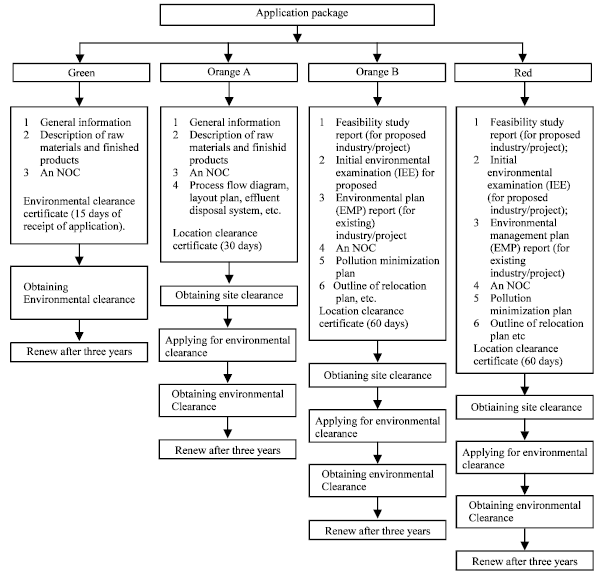 | |
| Fig. 1: | Process of application leading to environmental clearance of projects in Bangladesh (Source: Mumtaz, 2002) |
| Table 1: | Fees for environmental clearance and renewal based on the amount of investment |
 | |
| Schedule 13 of rules 7 (5), 8 (2) and 14 of ECR, 1997 | |
EIA process steps: Environmental Assessment process of the development projects in Bangladesh consists of six steps. They include; Project Screening based on Schedule 1 of ECR; Preparation of Initial Environmental Examination; Issuance of Site Clearance Certificate; Preparation of the Terms of Reference; Submission of Draft Environmental Impact Assessment report and Submission of the final Environmental Impact Assessment report along with Environmental Management and Monitoring Plan.
After screening, the developer is required to prepare an Initial Environmental Evaluation (IEE) based on pre-feasibility level of information and defines the basic principles and objectives of the project. This document is similar to a Scoping Document and it identifies the proposed location of the project and the potential environmental and social impacts. The IEE is used by the DoE to issue a Site Clearance and may find that a full EIA is required. At this stage preliminary cost estimates and alternative locations for the project are also determined (Ministry of Environment and Forest, 1997). While, conducting an IEE, the developer should consult related Ministries and Departments and other concerns to identify the issues and concerns that will need to be addressed in the EIA. The DoE will review IEE report and determine whether or not a full EIA is necessary. Generally, EIA is required prior to issuance of approval to start construction. The decision regarding the need for an EIA is issued as part of the Site Clearance (Mumtaz, 2002). A full Environmental Impact Assessment is generally required for the projects falling in Red category.
After the Site Clearance is issued, the developer starts preparing a Terms of Reference (TOR) for carrying out a complete EIA study. The developer should consult with the relevant departments and ministries prior to submitting the TOR for review and approval. This will facilitate preparation of an acceptable TOR. The TOR briefly describes the proposed project, identify the issues and potential impacts of the project and provide the details of basis for further study.
The developer will conduct the study to develop a draft EIA report within the time frame outlined in TOR. In the process the developer consult with the relevant Departments such as the Departments of Agriculture, Fisheries and Forests.
The draft EIA Report includes baseline conditions on physical, biological an on the social conditions at the project site and identification of the potential impacts on physical, biological and the social situation of the proposed project sites. The draft report should also contain proposed remedies as mitigation measures including resettlement and rehabilitation plans.
The draft EIA Report is submitted to DoE for review comments. Based on review and comments the draft report is revised and submitted it in final form for approval and issuance of authorization for the construction of the development project takes place.
The developer is notified of the approval of the final EIA report and may begin construction of the proposed project. The Environmental Clearance Certificate for the project is not issued until the project construction is over and becomes ready for operation. Prior to issuing the Environmental Clearance Certificate however, DoE will conduct an inspection of the project and will determine if the conditions of the Site Clearance and commitments made in EIA are properly implemented.
The ECR provide a relatively detailed description of mechanisms for compliance monitoring for Site Clearance and the Environmental Clearance. According to the Rules, citizens and governmental officials may lodge petitions against any development. The petition will be reviewed by an appellate body which will impose fine, penalty and at the extreme condition it may also give the order for closing of the development projects. The Environmental Clearance is issued for a 3-year period for development project; the Government maintains a constant vigilance over the operation of the development.
The ECR do not provide any provisions for consultation with the project-affected people or other stakeholders. The only requirement of consultation is with DoE and other departments during the preparation of IEE and draft EIA report. However, if the project requires financial assistance from foreign donors or lenders, an extensive consultation of the project affected people and stakeholders are being conducted as per the requirement of donors and lenders.
After the project becomes operational, the DoE is responsible for monitoring and may examine environmental conditions and the effectiveness of mitigation measures. As appropriate, the Department retains the authority to assure compliance with the agreed mitigation plan and maintaining the Environmental Quality Standards.
EIA process of India: The Government of India enacted the Environmental (Protection) Act in 1986 making legal requirement of EIA to obtain environmental clearance for construction and operation for all development projects. In 1994, under the Environmental (Protection) Act and Rules of 1986, the Ministry of Environment and Forest (MoEF) issued a notification making environmental clearance legally mandatory for expansion and modernization and for construction of new projects and listed in Schedule I of the notification of 1994. The schedule I comprises category 1 projects for which an application of EIA is mandatory includes 30 types of projects, requiring environmental clearance from the central Government. However, EIA notification 1994 decentralized the responsibility of environmental clearance for certain categories of thermal power plants to the State Governments. These are category 2 projects. Some of the projects that come under category 3 may not required to undergo an EIA process, including defense related road construction projects in the border areas, production of bulk drugs based on genetically engineered organisms, construction activities related to the projects under Department of Atomic Energy, laying of pipelines, conveying systems and transmission lines (Ministry of Environment and Forest, 1986).
This delegation of powers to the state government is subject to distance/area restrictions. For example, environmental clearance is required for any project located within 25 km of reserve forests, ecologically sensitive areas (including National Parks, Sanctuaries, Biosphere Reserves and critically polluted areas) and within 50 km of inter-state boundaries. Exemptions are made available for widening and strengthening of roads with marginal land acquisition along existing alignments, provided that the activities do not pass through ecologically sensitive areas (Ministry of Environment and Forest, 1994). Projects may not require an environmental impact assessment if the Impact Assessment Agency (IAA) determines that the assessment is not necessary.
In 1997, the Ministry of Environment and Forests amended the EIA 1994 notification to make compulsory requirement of public hearings for environmental clearance. According to the amendments, the State Pollution Control Board must conduct public hearings before the proposed development is submitted to the MoEF, where environmental clearance must be approved.
EIA process steps: The first step of EIA process is screening. During the screening, the developer will require pre-feasibility level of information to determine whether or not the project requires EIA. Once it is determined that the project may be require to undergo EIA process detailed engineering, environmental and social studies are to be conducted. EIA is required to apply for 30 different types of the projects as listed in Schedule I of EIA notification of 1994 and the environmental clearance is granted by central government. Further, the screening criteria are also based on the scale of investment, types of development and location of projects (Ministry of Environment and Forest, 1994).
Scoping is usually carried out as second step of EIA process. As in other countries, the scoping process involves the determination of issues to be addressed in EIA. Consultation with the IAA and with State governmental agencies is required. In the scoping process, quantifiable impacts are determined. These are evaluated on the basis of magnitude, prevalence, frequency and duration. For non-quantifiable impacts (such as aesthetic or recreational value), significance of the impact is normally determined through various socio-economic criteria (Ministry of Environment and Forests, 2001). There is no legal requirement for a separate scoping document. However, MoEF recommends developing a scoping document based on the general guidelines given in EIA Manual 2001 Terms of Reference (TOR) is not required under the current legal framework but it is usually recommended to develop a TOR which provides the guidance for developing EIA report. After the initial screening and scoping process is over, an application to the State Pollution Control Board (SPCB) for a site clearance is submitted.
The first stage of the approval process involves issuance of a site clearance or a No Objection Certificate (NOC). Site selection should be based on site selection criteria issued by MoEF 1994.Upon the completion of EIA, the proponent submits necessary documents to State Pollution Control Board (SPCB) and State Forest Department (in case of use of forest land). Generally, SPCB evaluates the proposed development. Public hearing is required particularly for large scale projects, likely to displace more than 1000 people and should be held prior to giving NOC involving project affected people and other stakeholders as per Schedule IV of EIA Notification of 1994. NOC is valid up to 15 years.
After approval of the Terms of Reference, the developer starts to collect the necessary baseline information to describe existing conditions at the proposed project site. The information to be collected depends upon the issues that are identified during the scoping process and is highly dependent upon the type of project.
After the establishment of Baseline information of the project area, impact identification and prediction are made on bio-physical, social, economical and cultural components of the environment. Possible alternatives should be identified and environmental attributes should be compared. Alternatives should cover both project location and process technology and compared with no project option also (Ministry of Environment and Forests, 2001).
Mitigation plan should be developed for the selected options and is supplemented with an Environmental Management Plan (EMP) to guide the developer towards environmental improvements. The EMP is an important input to clearance conditions and therefore, details of monitoring should be included in EMP. In case of displacement of the people resettlement and rehabilitation plans to be developed as an integral part of EIA (Sworup, 2002).
EIA Notification 1994 categorized the EIA report into two types in India; comprehensive EIA and rapid EIA based on the time-scale of the data supplied. Rapid EIA is for speedier appraisal process. Both types of EIAs require inclusion/ coverage of all significant environmental impacts and their mitigation measures. Rapid EIA requires the collection of one season (other than monsoon) data. This is acceptable, if it does not compromise on the quality of decision-making. The review of Rapid EIA will show whether a comprehensive EIA is warranted or not (Ministry of Environment and Forest, 1994).
Monitoring programs are designed to determine the impacts, baseline and compliance monitoring to be implemented at different stages of project implementation. The monitoring responsibility is given to regional offices under the Water Act of 1974, the Air Act of 1981 and the Environmental Protection Act 1986.
MoEF has developed an Environment and Assessment Manual. The manual provides information on the EIA process and details of the respective actions that must be undertaken and the documents to be submitted to obtain an Environmental Clearance.
Finally to apply for environmental clearance from MoEF, filling out the application forms provided in Schedule II of EIA notification 1994 is required. The developer should submit the application form to MoEF if it falls within the category I project or to the State government if it falls within the category 2 projects. In addition to this, project developer is required to furnish the following information for environmental appraisal:
(1) EIA/EMP report (20 copies); (2) Risk Analysis report (20 copies; (3) NOC from the State Pollution Control Board; (4) Commitment regarding availability of water and electricity from the competent authority; (5) Summary of Project report/feasibility report (one copy); (6) completed questionnaires (as prescribed by the IAA from time to time) for environmental appraisal of the project; (7) Comprehensive rehabilitation plan, if more than 1000 people are likely to be displaced, otherwise a summary plan would be adequate.
A comprehensive EIA report will normally take at least one year for completion. Comprehensive EIA report may be submitted later, if so asked for by IAA. The requirement of EIA can be dispensed by the IAA, in case of project unlikely to cause significant impacts on the environment. In such cases, project developer will have to furnish full justification for such exemption for submission of EIA (Ministry of Environment and Forest, 1994).
Upon submission, IAA holds the environmental appraisal committee meeting of experts. The environmental appraisal committee comprises 15 members’ multi-disciplinary subjects including members of relevant NGOs and will be chaired by an independent expert. Representative from IAIA will be member-secretary. For the final approval the meeting will be held several times.
The members provide their opinions; however the chairman compiles all opinions. MoEF is the final authority to give the decision on environmental clearance certification. The certification is usually followed by compliance conditions to be abided by the developer while constructing and operating the project (Fig. 2).
EIA of Bhutan: The Environmental Assessment Act (EAA) establishes the procedures for assessment of potential effects of projects on the environment and for the determination measures to reduce adverse effects and to promote environmental benefits. The Act has also established National Environmental Commission (2006) to ensure that environmental concerns are fully taken into account when formulating, renewing and modifying and implementing the project. It has made Environmental Clearance (EC) legally mandatory for projects that have adverse impact on the environment (National Environmental Commission, 2000).
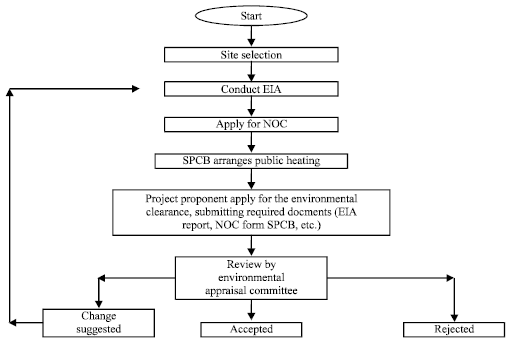 | |
| Fig. 2: | Environmental clearance process in India |
The Regulation for the Environmental Clearance of Projects (RECP) defines responsibilities and procedures for the implementation of the EAA and for the issuance EC of individual project (National Environmental Commission, 2002).
Bhutan has also enacted an umbrella law titled National Environmental Protection Act of Bhutan (NEPA). NEPA, covers all aspects functions, power, authorities and environmental quality concerning forest and biodiversity protection and environmental rights of the people (National Environmental Commission, 2007).
Gross National Happiness Commission (GNHC) is the highest policy making body in Bhutan which emphasizes the integration of environmental consideration into plan, policy and programs. National Environmental Commission (NEC) was established in 1998 as a high level inter-ministerial policy decision-making body. The NEC is chaired by the Prime Minister and relevant Ministries are the members including three members from civil society. The head of NEC is Member-Secretary. The NEC is responsible for making policy decision, providing guidance on the matters related to environmental management and sustainable development in the country. The Commission secretariat serves as the focal point for implementing EIA in the country.
Ministry of Agriculture, Ministry of Trade and Industry, Ministry of Works and Human Settlement, Department of Revenue and Custom and others each have sections on Environment as Competent Authorities (CA). These sections under each ministry have been given an authority for issuing environmental clearance for the project listed in Annex 2 of RECP. Dzongkha (District) has also Environmental Committee called District Environmental Committee (DEC) which is equivalent to CA of other Ministries.
The CA can issue an environmental clearance for the project listed in Annex 2 of RECP, 2002. CA review the non-listed projects submitted by the proponent and forward them to NEC for further consideration. As specified in NEPA CA conduct compliance monitoring, collect environmental information, monitor environmental quality and report to NEC.
Sector specific EIA guidelines are available in Bhutan and activities listed in Annex 2 of RECP required to undergo Environmental Clearance by the respective CA and the projects not listed in the Annex 2 should be handled by NEC. In order to begin construction of a project, development consent is required. Development consent is issued by a Competent Authority (Khadka, 2009).
EIA process steps: The first step in the Environmental Assessment process is to conduct a site survey, followed preparation of pre-feasibility, engineering, environmental and social investigations, including an EIA study as outlined in the statutes.
There are 8 guidelines for applications for environmental clearance issued and provide a complete guidance for preparing environmental assessment and an application package for the clearance of the proposed project. The application package include, application details, objectives and relevance, cost, project description, alternatives, public consultation, details of physical, biological and socio-economic parameters of the project area, anticipated impacts and mitigation measures, monitoring program, no objection certificates and environmental assessment procedures (National Environmental Commission, 2004).
In addition to these, there are five sector-specific Environmental Code Practices (ECOP) developed for the use. The developers should comply with the prescription given in this environmental code of practices.
The developer should consult Annex 2 of RECP, during project planning. The consultation of Annex 2 provides three possibilities. They are:
| • | The listed projects requires environmental clearance from CA/NEC/DEC |
| • | The proposed project do not fall within the list provided in Annex 2 of RECP and to be referred to NEC for environmental clearance |
| • | Projects does not require undergoing environmental clearance and for which the proponent can apply for a permit directly |
After the decision is made, one of the 8 sectors specific Environmental Clearance Guidelines should be consulted. As for example, if the proposed project falls within the hydropower sector, application for Environmental Clearance Guideline for Hydropower Sector should be consulted. The completed information and application materials should be submitted to CA of the concerned Ministry or NEC or DEC. No Objection Certificates (NOC) should be appended. This is a preparatory stage of EA consideration.
The CA or DEC acknowledges the receipt within two weeks after submission of application. If CA/DEC finds that the proposed project do not fall within the listed ones, application materials will be forwarded to NEC for consideration. This stage is referred as EA Process Entry Point. The final decision of CA/DEC will be the following:
| • | Issue an Environmental Clearance Certificate for the proposed project implementation |
| • | Forward the application materials to NEC in case of non-listed project |
| • | Request the project proponents to undertake further studies to furnish more information |
| • | Reject the proposal, if it is not applicable |
For non-listed projects, NEC receives application materials either from CA/DEC or directly from the developers. This is then followed by screening process. The NEC review team examines all the information provided and identifies the level and scale of likely impacts of project implementation. On the basis of Screening, NEC provides one of the following decisions:
| • | Decision to provide environmental Clearance |
| • | Decision to conduct full scale EA |
| • | Reject if the application is not relevant |
For renewing of Environmental Clearance certificate, details of environmental audit report have to be submitted. Environmental Clearance certificate is valid only up to 5 years from the date of issue (RECP).
Assuming an EIA is required for obtaining an Environmental Clearance, the next step of the process in Bhutan is the preparation of a Scoping Document. The Scoping Document includes a brief description of the project and a list of potential impacts on environmental and social resources in the project area.
A comprehensive scoping process must be completed prior to preparation of the Terms of Reference (TOR) for the EIA. Based on the results of the Scoping, the developer prepares a TOR for the EIA. In general, the TOR consists of a description of studies the effects of the project on the environmental and social effects of the project area. The Sectoral Guidelines prepared by NEC will provide guidance for the preparation of TOR. The TOR provide a basis for issuing the conditional site permit and contains description of the strategy for involving the public and the Ministries in the planning process. The TOR includes a description of the consultants and other experts who will conduct the study.
Collection of baseline information should be carried out to document the existing condition of resources particularly on physical, biological, socio-economic and cultural environment of a project area, including changes that are expected with new projects.
This is followed by identification of impacts, using various methods. Impact identified is predicted specially on magnitude, duration and the extent of the impacts. Practical mitigation measures are prescribed to reduce the effects of predicted impacts. The main components of the EIA Report consist of, (a) baseline condition, (b) impact identification and prediction, (c) mitigation measures and (d) EMP and monitoring plan.
Environmental and Social Management and Monitoring Plan are the requirement of EAA. The plan describes the monitoring programs that will be implemented during the construction and operation of the project. Monitoring programs are designed to determine the effectiveness of mitigation and compensation and rehabilitation measures implemented. After the approval of EIA report an environmental permit is issued and provides a legal basis for incorporating the mitigation and compensation plans into the project construction and operation. The Environmental Permit will likely include compliance conditions for construction and operation of the project that must be followed by a developer.
The primary lead agency for issuing the Site Permit for a project is CA of concerned Ministry. However, for the Environmental Clearance the Lead Agency is NEC. Technical staff of NEC first review EIA report submitted. Based on the technical review of the EIA report, recommendations are made regarding approval of the EIA and issuance of the Environmental Clearance. However, prior to the Environmental Clearance the Secretariat of the NEC may conduct a site visit to verify information contained in the EIA and If the environmental and social effects of the project are within acceptable limits and the proposed mitigation and compensation measures are satisfactory a recommendation of issuance of the Environmental Clearance will be forwarded to the relevant CA. The Secretariat may forward special conditions that need to be incorporated into the Environmental Clearance certificate.
Prior to the construction of the project, obtaining an official environmental clearance is prerequisite for all listed project as per Annex 2 RECP 2002. The clearance should be obtained either from Competent Authority (CA) for listed project or from DEC for District and Village level projects or from NEC for non-listed project (National Environmental Commission, 2007). The public hearing process in Bhutan is embedded in the process of environmental assessment through the socio-economic assessment. The NEC generally visit the project areas to get feedback from project-affected people and their concerns are integrated into the decision making process and become an important component of the decision to issue the Environmental Clearance. NEC or CA must make a public announcement of the decision regarding issuance of the environmental clearance (Fig. 3).
EIA of Nepal: The Environmental Protection Act (EPA) has established the Ministry of Environment as the administrator of the Act. The Act provides the basis for the establishment of rules for implementation of Environmental Impact Assessment (EIA) (Ministry of Environment, 1996). The Ministry of Environment established a series of Rules as the Environmental Protection Rules, (EPR) that were initially approved by parliament and later amended in 1999. The Rules define the types of projects that require preparation of Initial Environmental Examination (IEE) and those require full scale Environmental Impact Assessment (EIA) to be prepared. The rules also outline the basic procedures for EIA approval process (Ministry of Environment, 1996).
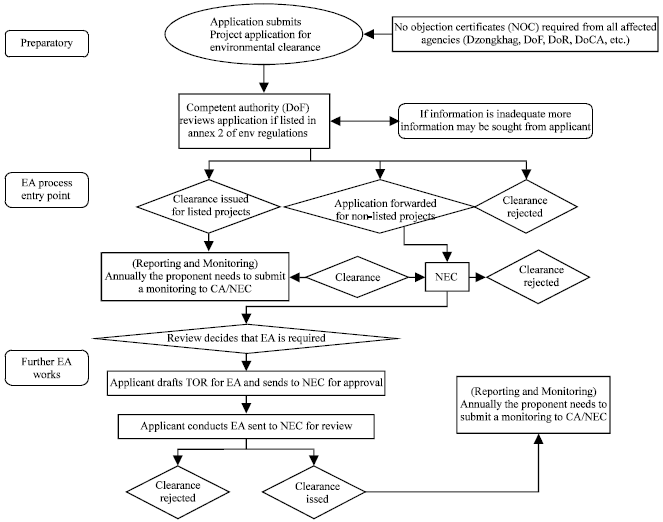 | |
| Fig. 3: | Environmental assessment procedures in Bhutan (Forestry Sector;an example) |
EIA process steps: Screening is an initial stage of the EIA process. Decision is taken as to whether an EIA is required for particular project. Screening is usually carried out by the developer, often in conjunction with the authorizing agency. To make the screening decision, a certain basic information about the project is required, such as scale and process to be involved, as well as some information about the of location of project. EPR provides list of projects that require an application of IEE in Schedule 1 pertaining to Rule 3 and projects that require an application of EIA in Schedule 2 pertaining to Rule 3. Projects not included in the list have been considered from financial threshold point of view such as project costing 10 to 100 million NPRs require an application of IEE and project costing more than 100 million NPRs require undergoing a full scale EIA. These schedules are determined on the basis of past experience with similar forms of development.
Screening is followed by scoping, which identify the issues and consider alternatives. Scoping process in case of Nepal is well defined in Environment Protection Regulation, 1997 and takes place at the early stage of feasibility study and provide a basis for developing a Terms of Reference (ToR) for EIA study. Developer is responsible for preparing scoping and ToR documents; however, the approval is required by the Ministry of Environment. Developer first prepares a Scoping Document that provides a preliminary description of the project and a preliminary evaluation of the potential impacts of the project. Upon the completion of the scoping report, a Term of Reference (TOR) for further studies is developed where the issues identified in scoping are integrated. The TOR describes, alternatives, outline of EIA report and time duration for completion of study, the cost likely to be involved and study team for EIA Report preparation. EPR provides the outline of TOR in Schedule 3 pertaining to Rule 5 and the project proponent should follow format given while developing TOR. Whereas, there is no format for scoping documents but there are sector-specific guidelines for developing Scoping documents and TOR.
Final Scoping Document and the Terms of Reference may be submitted to the concerned Ministry and then to the Ministry of Environment for approval. As per EPR the TOR for IEE is submitted to the concerned Ministry as the final authority for approval, whereas for EIA, Scoping document and TOR have to be forwarded to Ministry of Environment by concerned Ministry for final authorization process. Upon the approval of Scoping and TOR from the Ministry, the project proponent should start collecting baseline information particularly on Bio-Physical, Social, Economical and Cultural components of the environment of the proposed project area.
Major components of the EIA report include baseline description, impact evaluation and mitigation, monitoring and auditing and compensation plans as the integral part of the EIA report. Draft EIA report is submitted to concern Ministry for comments and after incorporating all the issues raised in the comments, the report becomes final. The final report is submitted to the concerned Ministry and forwarded to Ministry of Environment for final consideration. EPR provides a format in Schedule 6 pertaining to Rule 7.
In EIA approval process, Ministry of Environment nominates an EIA Report Review Committee under the chairmanship of the Joint-Secretary of Environment Division to seek expert opinions on case-by-case basis (project specific committee). The Committee is represented by concerned experts and government representations. The Committee conducts meetings, may inspect the site and provide suggestion to the government to make the project environmentally sound and sustainable. In practice, at least one meeting is conducted for scoping and TOR and a few meetings are often held for final EIA report approval. The Committee is mandated to provide suggestions on the scoping report, TOR and the final EIA report submitted by the developer for approval. Based on the suggestions of the Committee, MoE issues an environmental clearance certificate with compliance conditions. Developer is responsible for monitoring and should submit monthly monitoring report to the concerned Ministry and inform the progress to MoE. The concerned Ministry may conduct an audit to examine whether or not the compliance conditions are fulfilled after the project has been operating for two years.
The public participation requirements are fairly minimal, however, it involves solicitation of comments and suggestions from the people during the scoping process and a public hearing is required. The project-affected people are given the opportunity to comment on the EIA, but it is mainly a summary of the EIA circulated in the project area in local language. EIA Report becomes final only after holding a public hearing to be organized in the project site. The grievances from the affected people are to be addressed and incorporated in the final version of EIA report.
Apart from this, the final EIA reports when submitted to MoE, the reports are officially deposited to different public libraries, village development committee office of the project site and opened for public review. The project developer is usually informed to address on the issues raised by the public. The time period for public review is one month as per EPR. Although, the concerned Ministry/Department is the lead agency for EIA process, the Ministry of Environment must review and approve the environmental documents before they become effective. Ministry of Environment reviews the Scoping Document, the Terms of Reference and the EIA Report and approves them. After the approval of EIA Report, developer may start construction of the project (Fig. 4).
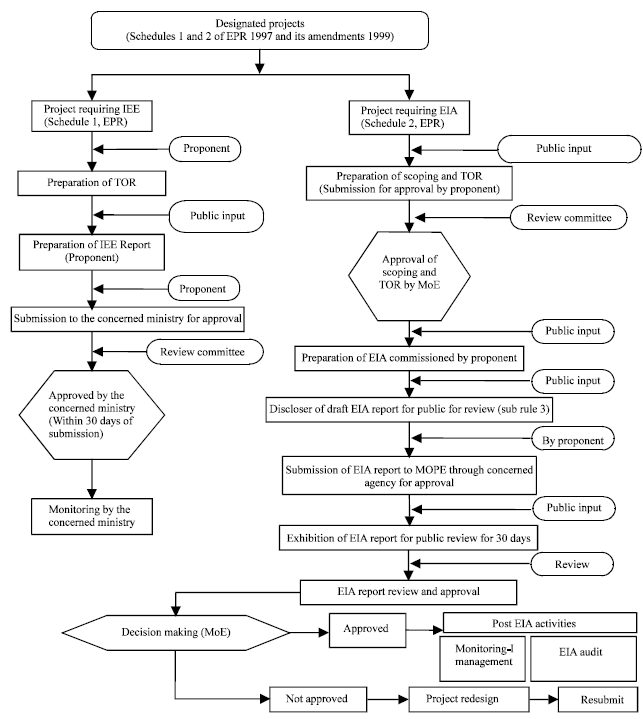 | |
| Fig. 4: | Environmental impact assessment process in Nepal |
Comparative review of EIA system of Bangladesh, Bhutan, India and Nepal: Wood (1995) while comparing EIA system of seven developed countries concluded that comparison of EIA process and procedures has achieved basically three objectives; firstly that the comparison is made in the context of international practice; secondly the comparison and review of EIA practices provided a better understanding and thirdly to make some critical suggestions to improve the system. Wood (1995) has also suggested the following criteria for EIA system evaluation.
(1) Legal provision, (2) Screening process, (3) Scoping to identify the issues, (4) Consideration of alternatives, (5) Compliance monitoring, (6) Public Review, (7) Decision making based of EIA findings and review, (8) Mitigation measures, (9) Public consultation and participation and (10) Cost benefit consideration.
| Table 2: | EIA parameters and their evaluation using criteria as suggested by Wood (1995 ) |
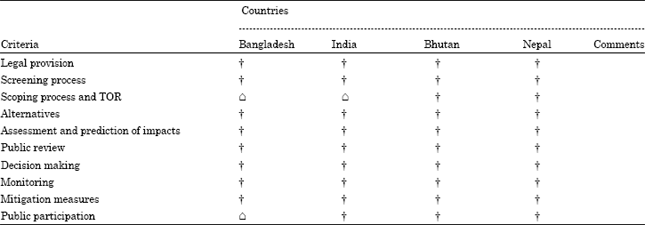 | |
| † indicating the system is legally mandatory while - indicating no provision is given in the law | |
Based on the above evaluation criteria, EIA system of four countries of the South Asia (Bangladesh, Bhutan, India and Nepal) have been selected and reviewed. Considering that EIA system of each country is the product of particular set of laws, administration and political regimes, comparison are presented in the following Table 2.
EIA systems of these countries have all internationally recognized elements but their intensity of applications may vary in practice. In Bangladesh the projects have been categorized and under each category the types of the projects are listed in Annex 1, clause 1 (1) of ECR, 1997. For the Green category, project authorization takes place without EIA application. For Orange types of projects, the developer has to submit a completed form along with IEE report. The project under Red category requires submission of IEE and a TOR for EIA study (Ministry of Environment and Forestry, 1997).
In India EIA Notification 1994 has listed 30 different types of the projects in Schedule 1 EIA Notification,1994 and they are category 1 projects which must undergo an EIA process and get approval from MoEF Central Government. Project under category 2 should get the approval from State Government, while project under category 3 do not required to under go an EIA process (Ministry of Environment and Forest, 1994).
In Bhutan Annex 2 of RECP, 2002 provides a list of projects which are the responsibility of Competent Authority (CA) of the concerned Ministry for environmental clearance; however for non-listed project the proponent has to conduct EIA and National Environmental Commission (NEC) is the focal agency for granting Environmental Clearance.
Environmental Protection Regulation Nepal has clearly categorized the project into two types; Schedule 1 provides the list of projects that must be undergoing IEE and a list of project in Schedule 2 must be undergoing for EIA process. Project not falling under these categories have been considered for financial thresholds.
Scoping is second stage in EIA process. IEE replaces scoping in Bangladesh and becomes the prime document for environmental clearance for Orange and Red categories of the projects. Upon its submission, along with other documents, the proponent may obtain a site clearance from the Department of Environment (Mumtaz, 2002). In Indian legislation Scoping is not required, although MoFE recommends submitting a scoping document. In Nepal Scoping is an essential document for EIA but for IEE scoping is not required. In case if EIA is required in Bhutan, Scoping has to be carried out. In all cases, where scoping is conducted with certain degree of public consultation by using different means of notification (Khadka and Shrestha, 2008).
Terms of Reference (TOR) or a work plan is usually developed based on Scoping outputs. For EIA system of all 4 countries TOR is require to develop.. However, in Indian case, TOR is not required as per the existing law; however, in practice, the project developer is asked to develop a TOR but in collaboration with authoring agency. The TOR provides a complete guideline for EIA study and upon its submission, authorizing agency approves it and it becomes a legal document (Khadka and Shrestha, 2008).
Upon the approval of TOR and Scoping documents by authorizing agency, the proponent starts collecting baseline information of the proposed project area. Information is required to be collected on Physical, Biological, Socio-Economic and Cultural Environment. In most of the cases, one time collection of the baseline information is sufficient, however for Indian case, a comprehensive EIA requires collecting baseline information of the project area for all the seasons of a year, while Rapid EIA requires collecting baseline information only for a part of the year except monsoon season (Ministry of Environment and Forest, 2001).
The aspects of the Impact Identification and prediction on Bio-Physical, Socio-economic and Cultural environmental components of the project area in relation to project activities are common in EIA system of all 4 countries of South Asia. However, in all cases the analysis is entirely subjective and impact prediction tools have rarely been employed. The analysis is based on expert judgment and the impact quantification is rare. Based on impact prediction, mitigation measures are usually prescribed regardless of their applicability in implementation (Khadka and Shrestha, 2008).
Monitoring is an integral part of EIA to understand whether or not the EIA recommendations are implemented and examine their effectiveness to ameliorate the adverse effects. In general, all three components of monitoring such as (1) baseline, (2) compliance and (3) impact monitoring is usually considered for EIA (Khadka and Khanal, 2007). In Bhutan development of social management and monitoring plan is often integrated in EIA report as per EAA. Monitoring responsibility lies within CAs of respective ministry and CA has to submit monitoring report to NEC periodically (National Environmental Commission, NEC). In India Compliance monitoring has been given priority to be conducted during implementation and operation of the project. Impact Assessment Agency (IAA) is the responsible institution for monitoring of the process (Ministry of Environment and Forest, 2001). In Bangladesh monitoring aspects of EIA implementation is not clearly mentioned in ECR however, the DG of DoE has full power to monitor EIA implementation and upon violation of the compliances DG can impose fine as per ECR. EIA monitoring aspects is well defined in Nepal. EIA report contains a chapter on monitoring based on which concerned ministry has to monitor EIA implementation in collaboration with project proponent and should submit report to MoE periodically.
Environmental Management Plan (EMP) is required to be integrated into EIA report for all cases as per their rules. Compensation and Resettlement Plans, if required is the part of EIA process unlike the requirement of World Bank and Asian Development Bank.
Public involvement is the heart of EIA process (Glasson et al., 1994). Provisions for public involvement in the form of consultation and participation are being practiced in all EIA system of South Asia but its intensity of practice varies from country to country. In India the public involvement starts from the stage of site clearance or NOC by State Pollution Control Board (SPCB). Public hearing is conducted involving likely project affected people. Such document is to be submitted to SPCB for getting NOC. According to laws, SPCB issues a public notice in two Newspapers, 30 days prior to scheduled date of public hearing. The notice should explain the objectives, venue and date for public hearing. The concerned stakeholders send views and comments to SPCB. According to the Schedule IV, EIA Notification, Public also can review an executive summary of EIA report which are available at various locations. Bhutan has some kind of decentralization. Competent Authority (CA) of the Ministries has been given a full authority to issue an environmental clearance. No Objection Certificate (NOC) is essential document to obtain a site clearance. In the process the project proponent consults district level offices, local people and affected stakeholders. They are all briefed about the project and receive their suggestions and grievances. Upon the approval of EIA report, NEC publishes the elements of environmental clearance for public review. In Bangladesh system the public involvement is not specified in ECA 1995 and ECR (Ministry of Environment and Forestry, 1997). However, there is a provision for appeal in case if some body is affected. Upon filing of an appeal, an Appellate body becomes active and after thorough examination of case, the Appellate body gives a verdict and DG of the Department of Environment takes the actions. In Nepal there are several places in EIA process where public involvement is required. During Scoping a 15- days notice is published in News paper informing about the project and requesting stakeholders to provide comments and suggestion . In the process, interaction, meetings, survey etc are being organized at the project site to identify the pertinent issues. After the development of Draft EIA report a public hearing is held at the project site and during this period an executive summary of EIA report is disclosed to people. Comments and suggestions are received and incorporated into final version of EIA report.
CONCLUSION
The EIA in developing country is the initiatives of donors and lately it is dictated by UN Conventions signed and ratified by developing countries. Still, in majority of the cases, the political will does not exist, so that the system of EIA in developing countries is not yet effective in environmental protection as it was envisaged.
The EIA systems of the South Asia (Bhutan, Bangladesh, India and Nepal) have internationally recognized EIA elements in their applications. Screening of the projects is the first step of the process, for which projects are categorized and listed in their respective regulations. However, in some cases, the lists of the projects do not cover some of the most environmentally disastrous projects and plans. However, the screening process is simple and effective in all cases. Scoping is another process, in which key environmental issues are identified. Public consultation is required to be held during scoping. In India the scoping requirement is missing in their laws however, it is recommended by authorizing agency to conduct scoping in practice. Terms of Reference (TOR) is developed based on scoping out put. After the approval of scoping and TOR, the project developer starts collecting information on biological socio-economic and cultural components of the environment of the project area and is the major concern EIA. Such a wide scope of the subjects requires the involvement of multi-disciplinary team of experts, Presentation of all the subjects should be made in integrated manner. However, it is reported that the presentation depends on EIA study team; for instances if physical experts dominate the team, the thrust of the report is more inclined to physical aspects.. Poor and non-existent of data retrieval system, interministrial rivalry, unnecessary classification of data as secret and unreliability of available data are the major hurdles to make an EIA report effective(Khadka et al., 2000).
Impact identification and prediction and mitigation measures are integrated in EIA reports. Specific tools and EIA methodologies for presenting these parameters in EIA reports are found to be rarely used. Subjective evaluation of expert opinions is the main characteristics of EIA study of these country (Harvey and Ahammed, 2004). Compliance monitoring is focused in all system of EIA. However, the government agencies responsible for compliance monitoring of the project are not clear and the developer itself has to monitor and submit report to authorizing agencies. Public involvement in the system is a big question. In some country (Nepal) public consultation has been given a due priority throughout EIA study and implementation (Khadka and Tuladhar, 1996) however, in Bangladesh requirement of public involvement is a major inadequacy in EIA legislation (Harvey and Ahammed, 2004) while in India EIA legislation provides clear provision for public involvement but in practice it is integrated minimally (Environmental Conservation Team, 2005). EIA report approval by the respective government institutions is carried out systematically at different stages. Upon the approval of Scoping and TOR or Project information prospectus, site clearance certificate is granted expect in Nepal where license is given even before scoping and TOR. Environmental Appraisal Committee (EAC) is usually formed for reviewing EIA report (Case by case basis) in all country except in Bhutan. Based on Review report, concerned government authority (MoEF in India and Bangladesh, MoE Nepal and NEC in Bhutan) provides Environmental Clearance Certificate (ECC) for project construction. ECC is granted only after the project construction is over and project operation starts in Bangladesh and in India, while in Nepal and Bhutan ECC is provided before the construction starts.
In all country, EIA preparation and approval process is fairly well established. However, the implementation part is very weak and monitoring of the implementation is not effective, although, there is clear provision in legislation and regulation, but the enforcement agencies in these countries tend to be weak. Therefore, there are no any reports on the complete EIA implementation except for the project where donors are involved in funding and implementation. EIA has become a ritual process to comply with the country’s environmental legislation and regulations. But its implementation part has been forgotten completely. Unless, it is not implemented in the project construction and operation, the EIA system of this region is not going to improve, because of the lack of the feedback information on implementation.
REFERENCES
- Harvey, N. and R. Ahammed, 2004. Evaluation of environmental impact assessment procedures and practice in Bangladesh. Impact Assessment Project Appraisal, 22: 63-78.
CrossRef - Khadka, R.B. and H. Shrestha, 2008. Scoping process for environmental assessment of project: A case of outer ring road development project in nepal-based on local peoples perception. Int. J. Environ. Cult. Econ. Soc. Sustainability, 4: 25-36.
Direct Link - Khadka, R.B. and A.B. Khanal, 2007. EMP implementation of melamchi water supply project Nepal. Environ. Monitoring Assess., 146: 225-234.
CrossRef - Mumtaz, S., 2002. Environmental impact assessment in Bangladesh. Environ. Impact Assess. Rev., 22: 163-179.
CrossRef
Francis Omashi Onah Reply
This work by two authors represents an attempt to capture the essence of intervention in the man-environment paradigm, as touching human development indices in the region under consideration.