

V. Madhan Chakkaravarthy
Zoological Survey of India, Andaman and Nicobar Regional Centre, National Coral Reef Research Institute, Port Blair-744 102, A and N Island, India
R. Arunachalam
Environmental Nanotechnology Division, Sri Paramakalyani Centre for Environmental Sciences, Manonmaniam Sundaranar University, Alwarkurichi-627 412, Tamilnadu, India
S. Vincent
Loyola Institute of Frontier Energy, Loyola College, Chennai-600 034, India
K. Paulkumar
Environmental Nanotechnology Division, Sri Paramakalyani Centre for Environmental Sciences, Manonmaniam Sundaranar University, Alwarkurichi-627 412, Tamilnadu, India
G. Annadurai
Environmental Nanotechnology Division, Sri Paramakalyani Centre for Environmental Sciences, Manonmaniam Sundaranar University, Alwarkurichi-627 412, Tamilnadu, India
Journal of Biological Sciences
Year: 2010 | Volume: 10 | Issue: 6 | Page No.: 531-535







ABSTRACT
The present study was aimed at to develop a Phosphate Solubilizing Bacteria’s (PSB) inoculum for improving Phosphate (P) uptake on phosphate sludge. Twelve PSB were isolated from three types of rhizosphere soil from Chennai, India were studied for phosphate solubilization on Pikovskaya’s medium. Isolates were subjected and studied for Solubilization Index (SI) for selecting the high efficient strain. In results, the PB08 strain exhibited high SI 4.80 at sixth day incubation and it was grown in vitro for ten days in Pikovskaya’s broth containing 1% tricalcium phosphate (TCP) and 1% Phosphate Sludge (PS). Variation occurs in phosphate solubilization of two media which contain two P source inoculated by the same strain (PB08). Unlike SI and pH drop, fluctuations in phosphate solubilization were observed during 10 days and gradual increase in phosphate solubilization was noted. Values of solubilized tricalcium phosphate ranged from 9.6 to 136 ppm. The results emphasize that the PB08 may be used for inoculum production and their inoculation effect on plant growth can be studied in vivo.
PDF Abstract XML References Citation
Received: May 06, 2010;
Accepted: June 29, 2010;
Published: September 01, 2010
How to cite this article
V. Madhan Chakkaravarthy, R. Arunachalam, S. Vincent, K. Paulkumar and G. Annadurai, 2010. Biodegradation of Tricalcium Phosphate by Phosphate Solubilizing Bacteria. Journal of Biological Sciences, 10: 531-535.
DOI: 10.3923/jbs.2010.531.535
URL: https://scialert.net/abstract/?doi=jbs.2010.531.535
DOI: 10.3923/jbs.2010.531.535
URL: https://scialert.net/abstract/?doi=jbs.2010.531.535
INTRODUCTION
Phosphorus (P) is the second most important plant nutrient after nitrogen (Donahue et al., 1990). However, many soils throughout the world are P deficient because the free phosphorus concentration even in fertile soils is generally not higher than 10 μM even at 6.5 pH where it is most soluble. To circumvent the P deficiency in soils, P fertilizers are applied. However, after application, a considerable amount of P is rapidly transformed into less available forms by forming a complex with Al or Fe in acid soils or Ca in calcareous soils (Lindsay et al., 1989) before plant roots had a chance to absorb it (Vikram, 2007).
Numerous microorganisms, especially those associated with roots have the ability to increase plant growth and productivity (Chang et al., 1986; Kloepper et al., 1988). Phosphate-solubilizing microbes play fundamental roles in biogeochemical phosphorus cycling in natural and agricultural ecosystems. Phosphate-solubilizing microbes can transform the insoluble phosphorus to soluble forms HPO24¯ and H2PO¯4 by acidification, chelation, exchange reactions and polymeric substances formation (Chang and Yang, 2009; Delvasto et al., 2006). Therefore, the use of phosphate-solubilizing microbes in agricultural practice would not only offset the high cost of manufacturing phosphatic fertilizers but would also mobilize insoluble phosphorus in the fertilizers and soils to which they are applied (Chang and Yang, 2009; Rodriguez and Fraga, 1999). Application of the phosphate-solubilizing microbes Agrobacterium, Bacillus, Enterobacter, Pseudomonas, Aspergillus, Trichoderma and Glomus around the roots of plants, in soils and in fertilizers has been shown to release soluble phosphorus, promote plant growth and protect plants from pathogen infection (Chang and Yang, 2009; Rodriguez and Fraga, 1999; Rudresh et al., 2005; Zayed and Abdel-Motaal, 2005a, b; Biswas and Narayanasamy, 2006; Ouahmane et al., 2007). Therefore, removal of phosphorus is prerequisite for restoration of water quality (Van and Boers, 1994).
Bacteria of the genus Bacillus are ubiquitous and common soil microorganisms that play an important role in silicate biodegradation during the process of rock disintegration (Vikram and Hamzehzarghani, 2008; Girgis et al., 2008; Han et al., 2006; Liu et al., 2006). The results of such activity involve both geochemical and structural changes in rocks and silicate and the most powerful phosphate solubilizers (Rodriguez and Fraga, 1999). The metabolic diversity of Bacillus sp. in particular together with its low reported incidence of pathogenicity, has led to the fact that many representatives of this group are being used in a wide range of applications. Due to its ability to produce a range of enzymes, solubilization pounded nutrients and degrade organic wastes along with the N -fixing ability of some strains, Bacillus sp seemed to be a good candidate for biofertilizers application in agriculture (Girgis et al., 2008). Inoculation with bacteria, which can improve P and K availability in soils by producing organic acids and other chemicals, stimulated growth and mineral uptake of plants (Girgis et al., 2008; Garcia et al., 2004). Hence, the present study has been designed to develop a PSB inoculum for improving P uptake on phosphate sludge.
MATERIALS AND METHODS
Isolation and cultivation of PSB: The plants of groundnut, sorghum and cotton were uprooted from field soils which were obtained from Chennai, India and the soil loosely adhered to roots was removed by mechanical shaking. The investigation was performed during November 2008 to February 2009. Each soil sample (0.2 g) was placed in an Erlenmeyer flask (250 mL) containing 100 mL of sterilized Pikovskaya’s liquid medium. The flasks were incubated for 7 days on an orbital shaker at 200 rpm at room temperature (23±4°C). Pikovskaya’s Broth (PB) consisted of the following: Ca3(PO4)2 2.5 g, glucose 13 g, (NH4) SO4 0.5 g, NaCl 0.2 g, MgSO4.7H2O 0.1 g, KCl 0.2 g, yeast extract 0.5 g, MnSO4 trace, FeSO47H2O trace and dissolved in 1000 mL distilled water. The pH adjusted to 7.2 insoluble tricalcium phosphates was used as a growth limiting factor as a result PSMs could continue growth. After 7 days of incubation in liquid medium, the culture was serially diluted and streaked on Pikovskaya’s solid medium (PA) containing 1.5% agar. Twelve bacterial species were isolated through successive cultivations and microorganism isolated from the rhizospheric soil of groundnut showed the best phosphate solubilization on agar medium.
Solubilization Index (SI): The 0.1 mL of each PSB culture preserved in sterile distilled water was placed on Pikovskoya’s agar plate and incubated for seven days. Solubilization index was measured using the following formula (Premono et al., 1996). The PB08 showed the best SI on agar plate and it was temporarily identified as Bacillus sp. by the analysis of gram reaction, sugar fermentation, starch and casein hydrolysis (data not shown).
 |
pH change: In medium acidification of culture was visualized by spot inoculation on Pikovskaya’s medium containing bromothymol blue and bromocresol purple indicator. A 1 mL of three day old culture of PB08 (containing about 1x10³ cfu) was added to two sterile 250 mL Pikovskayas’s broth containing 1% tricalcium phosphate and 1% Phosphate Sludge (PS) and kept on shaker for ten days. Sterile uninoculated medium served as control. Initial pH and changes in pH were noted each day by digital pH meter.
Determination of phosphate solubilization: A 10 mL sample of each culture was centrifuged for 15 min at 1500 rpm. Phosphate in solution was extracted with Ammonium bicarborate diethylene triamine penta acetic acid (Soltanpour and Workman, 1979). Supernatant was decanted and 5 mL of supernatant was added to 20 mL of AB-DTPA extracting solution. The mixture was shaken on a reciprocating shaker for 15 min at 180 cpm in open flasks and the extract was stored in plastic bottle. One milliliter of chloromolybdic acid was added and diluted with 25-30 mL of distilled water, then 0.25 mL of chlorostannous acid was added and the volume was made up to 50 mL with distilled water. The solution was shaken thoroughly and the blue colour developed was read at 660 nm using spectrophotometer and the concentration of available phosphate was calculated.
RESULTS
Solubilization index based on colony diameter and halozone for each isolate is presented in Fig. 1a and b, results shows that PB08 was most efficient phosphate solubilizer on phosphate agar plates with SI = 4.80 at sixth day incubation. Studies on agar plates revealed that phosphate solubilizing bacteria formed clear zones by solubilizing suspended tricalcium phosphate (data not shown). Measurements of SI ranged from 2-4.8. Generally, halozone increased with increase in colony diameter. Fluctuations in solubilization index were observed during the seven day observation period. In most of the cases it gradually increased, while in few cases (PB01, PB03, PB04 and PB011) increased initially and later decreased. Most of PSB strains lost their ability to form halozones on phosphate agar medium on repeated subculturing. Microbial phosphate solubilization on plant roots has been by agar contact method with a pH indicator (bromocresol purple) has also been developed for the detection of zone of acidification in the rhizosphere and could be a valuable tool for studying phosphate solubilizing microorganisms.
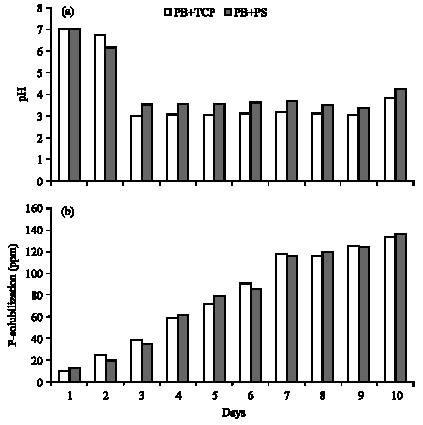 | |
| Fig. 1: | (a) pH of both the medium (PB+TCP and PB+PS) incubated for ten days. (b) Variation in phosphate solubilization of two media incubated for ten days |
In the present study the diffusion of acid into the medium was visualized by the presence of bromocresol purple. It was also reflected in the diameter of zone of calcium phosphate solubilization.
The PB08 showed the best SI and it was identified as the genus Bacillus PB08 lowered the pH in both the medium (PB+TCP and PB+PS) as compared to uninoculated sterile PB control incubated for ten days under conditions as inoculated (Fig. 1a). Fluctuations in pH drop were also noted. pH studies showed a drop of pH from 7.04 (control) to 3.0 (TCP) at the 3rd day and 3.38 (PS) at 9th day (Fig. 1a).
The phosphate solubilization the bacterial isolate PB08 was solubilized phosphate in Pikovskaya’s medium which contains TCP and PS. Variation occurs in phosphate solubilization of two media which contain two P source inoculated by the same strain (PB08) (Fig. 1b). Unlike SI and pH drop, fluctuations in phosphate solubilization were observed during 10 days and gradual increase in phosphate solubilization was noted. Values of solubilized tricalcium phosphate ranged from 9.6 to 133.6 ppm for TCP and 12.6 to 136 ppm for PS. In both the cases increased phosphate solubilization was noted at 10th day (Fig. 1b).
DISCUSSION
Girgis et al. (2008) reports showed that the increasing of total acidity percentage was responsible in decreasing the pH. Lowest total acidity percentage was recorded in a range of 0.41 to 0.44 and it reveals the decrease in the pH values in MA-m or MA-f culture media with increase in their total acidity percentages was not the only direct reason for the release of soluble K. However, no relationships were observed between the final pH and the percentages of total acidity in their culture media and the amount of soluble K. On the other side, the decrease in pH with the increase of total acidity in PVK-tcp or PVK-rp (6.68%) culture media may explain why higher concentration of released P was detected. Furthermore, linkage was observed between the final pH and the total acidity of the culture media and the amount of soluble P. In this concern, Groudeva and Groudev (1987) noted that the bacterial action on silicate and aluminosilicate is connected with the formation of mucilaginous capsules consisting of EPS as well as the production of different metabolites such as organic and amino acids. They did not exclude that the bacterial action may also be resulting of an enzymatic nature. Styriakova et al. (2004) reported that the activity of silicate dissolving bacteria played a stimulation role in the release of Si, Fe3+ and K+ from feldspar and Fe3+ oxyhydroxides. The binding of silicate to the bacterial surfaces can thus be described as an outer sphere complex formation as it occurs through electrostatic interaction. The present investigation shows that PB08 was most efficient phosphate solubilizer on phosphate agar plates with SI = 4.80 at sixth day incubation (Fig. 1). Studies on agar plates revealed that phosphate solubilizing bacteria formed clear zones by solubilizing suspended tricalcium phosphate. De-Souza et al. (2000) results showed that the five of the 88 phosphate solubilizing isolates showed higher phosphatase activity (8.68-24.78 μmol/mL/day) with culture P63 showing the highest activity. In present study twelve PSB were isolated from three types of rhizosphere soil from Chennai, India were studied for phosphate solubilization on Pikovskaya’s medium. Isolates were subjected and studied for Solubilization Index (SI) for selecting the high efficient strain. Variation occurs in phosphate solubilization of two media which contain two P source inoculated by the same strain (PB08) (Fig. 1b). Unlike SI and pH drop, fluctuations in phosphate solubilization were observed during 10 days and gradual increase in phosphate solubilization was noted. Values of solubilized tricalcium phosphate ranged from 9.6 to 136 ppm (Fig. 1b).
Seshadri et al. (2002) reported the solubilizing index of Bacillus sp., was 184.19±6.43 at 7.83-8.21 pH. Present study showed the initial solubilization index of Bacillus sp., was 4.80 at 6th day at 3-7.04 pH in PB+TCP and 3.8-7.04 in PB+PS. At above the pH PB+TCP Bacillus sp., showed the solubilization 9.6-133.6 and PB+PS showed 12.6-136 (ppm). The pH used for the present investigation is lower than the report of Seshadri et al. (2002), it suggest that in acidic condition also suitable for P solubilization. The maximum solubilization was observed in PB+TCP acidic medium that was 133.6 and PB+PS was 136 ppm at 10th day. These results clearly suggest the Bacillus sp., culture medium in alkaline condition most suitable for P solubilization than medium in acidic nature.
Lebo (1990) reported that PSB were not restricted to a few genera as it mainly depends on the regions. In this study the strains were mainly Bacillus, in addition few strains of Vibrio and Klebseilla were also encountered, whereas in oceanic regions Pseudomonas was the dominant group and in the Tokyo Bay it was Flavobacterium and Acinetobacter. These results highly support to the present study by the similar organism Bacillus sp., was used for decomposing tribase calcium phosphate. Pseudomonas and Bacillus sp., were found to have more phosphate solubilizing capacity than the other genera (Vibrio, Alcaligens and Corynebacterium) (Seshadri et al., 2002). Venkateswaran and Natarajan (1983) while studying the Porto Novo waters reported Pseudomonas sp. and Bacillus sp., as dominant inorganic phosphorus compounds solubilizing microbes. These results reveal the Bacillus sp., found to be an effective microbe for phosphate solubilizing activities.
CONCLUSION
It is concluded from the present study that the fluctuations occur in SI and acid production (pH drop) but not in phosphate solubilization. Present study also showed that PB08 is the most efficient strain on the basis of its phosphate solubilizing activity. Further research should be continued with such efficient strain. This may be used for inoculum production and its inoculation effect on the plant growth may be studied in vivo.
REFERENCES
- Appanna, V., 2007. Efficacy of phosphate solubilizing bacteria isolated from vertisols on growth and yield parameters of sorghum. Res. J. Microbiol., 2: 550-559.
CrossRefDirect Link - Biswas, D.R. and G. Narayanasamy, 2006. Rock phosphate enriched compost: An approach to improve low-grade Indian rock phosphate. Bioresour. Technol., 97: 2243-2251.
PubMed - Chang, C.H. and S.S. Yang, 2009. Thermo-tolerant phosphate-solubilizing microbes for multi-functional biofertilizer preparation. Bioresour. Technol., 100: 1648-1658.
PubMed - Chang, Y.C., Y.C. Chang, R. Baker, O. Kleifeld and I. Chet, 1986. Increased growth of plants in the presence of the biological control agents Trichoderma harzianum. Plant Dis., 70: 145-148.
Direct Link - Delvasto, P., A. Valverde, A. Ballester, J.M. Igual and J.A. Munoz et al., 2006. Characterization of brushite as a re-crystallization product formed during bacterial solubilization of hydroxyapatite in batch cultures. Soil Biol. Biochem., 38: 2645-2654.
CrossRef - De-Souza, M.J.B.D., S. Nair and D. Chandramohan, 2000. Phosphate solubilizing bacteria around Indian peninsula. Indian J. Mar. Sci., 29: 48-51.
Direct Link - Girgis, M.G.Z., H.M.A. Khalil and M.S. Sharaf, 2008. In vitro evaluation of rock phosphate and potassium solubilizing potential of some Bacillus Strains. Aust. J. Basic Applied Sci., 2: 68-81.
Direct Link - Han, H.S., Supanjani and K.D. Lee, 2006. Effect of co-inoculation with phosphate and potassium solubilizing bacteria on mineral uptáme and growth of pepper and cucumber. Plant Soil Environ., 52: 130-137.
CrossRefDirect Link - Kloepper, J.W., D.J. Hume, F.M. Scher, C. Singleton and B. Tipping et al., 1988. Plant growth-promoting rhizobacteria on canola (rapeseed). Plant Dis., 72: 42-46.
Direct Link - Lebo, M.E., 1990. Phosphate uptake along a coastal plain estuary. Limnol. Oceanogr., 35: 1279-1289.
Direct Link - Garcia J.A.L., A. Probanza, B. Ramos, J. Barriuso and F.J.G. Manero, 2004. Effects of inoculation with plant growth promoting rhizobacteria (PGPRs) and Sinorhizobium fredii on biological nitrogen fixation, nodulation and growth of Glycine max cv. Osumi. Plant and Soil, 267: 143-153.
Direct Link - Liu, W., X. Xu, X. Wu, Q. Yang, Y. Luo and P. Christie, 2006. Decomposition of silicate minerals by Bacillus mucilaginosus in liquid culture. Environ. Geochem. Health, 28: 133-140.
PubMed - Ouahmane, L., J. Thioulouse, M. Hafidi, Y. Prin and M. Ducousso et al., 2007. Soil functional diversity and P solubilization from rock phosphate after inoculation with native or allochtonous arbuscular mycorrhizal fungi. For. Ecol. Manage., 241: 200-208.
CrossRefDirect Link - Rodriguez, H. and R. Fraga, 1999. Phosphate solubilizing bacteria and their role in plant growth promotion. Biotechnol. Adv., 17: 319-339.
CrossRefDirect Link - Rudresh, D.L., M.K. Shivaprakash and R.D. Prasad, 2005. Tricalcium phosphate solubilizing abilities of Trichoderma spp. in relation to P uptake and growth and yield parameters of chickpea (Cicer arietinum L.). Can. J. Microbiol., 51: 217-222.
CrossRefDirect Link - Seshadri, S., S. Ignacimuthu and C. Lakshminarsimhan, 2002. Variations in hetetrophic and phosphate solubilizing bacteria from Chennai, Southeast Coast of India. Indian J. Mar. Sci., 31: 69-72.
Direct Link - Styriakova, I., I. Styriak and T. Sasvari, 2004. Extraction of elements from sulphide and silicate concentrates by selected bacillus isolates. Metalurgija, 43: 293-297.
Direct Link - Vikram, A. and H. Hamzehzarghani, 2008. Effect of phosphate solubilizing bacteria on nodulation and growth parameters of greengram (Vigna radiata L. Wilczek). Res. J. Microbiol., 3: 62-72.
CrossRefDirect Link - Zayed, G. and H. Abdel-Motaal, 2005. Bio-active composts from rice straw enriched with rock phosphate and their effect on the phosphorous nutrition and microbial community in rhizosphere of cowpea. Bioresour. Technol., 96: 929-935.
PubMed - Zayed, G. and H.Abdel-Motaal, 2005. Bio-production of compost with low pH and high soluble phosphorus from sugar cane bagasse enriched with rock phosphate. World J. Microbiol. Biotechnol., 21: 747-752.
Direct Link - Van, D. and P. Boers, 1994. Influence of internal loading on phosphorus concentration in sallow lakes before and after reduction of the external loading. Hydrobiologia, 275-76: 379-389.
Direct Link