

M. Gupta
Department of Pharmaceutical Technology, Jadavpur University, Kolkata, 700 032, India
U.K. Mazumder
Department of Pharmaceutical Technology, Jadavpur University, Kolkata, 700 032, India
P. Gomath
Department of Pharmaceutical Technology, Jadavpur University, Kolkata, 700 032, India
Journal of Biological Sciences
Year: 2007 | Volume: 7 | Issue: 8 | Page No.: 1361-1367







ABSTRACT
The present study was aimed out to evaluate the antioxidant and free radical scavenging activity of methanolic extract of Plumeria acuminata leaves (Apocynaceae) in various systems. DPPH radical, superoxide anion radical, nitric oxide radical and hydroxyl radical scavenging assays were carried out to evaluate the antioxidant potential of the extract. The antioxidant activity of methanolic extract increased in a dose dependent manner. About 50, 100, 200, 300, 400 and 500 μg of Methanol Extract of Plumeria acuminata (MEPA) showed 46.01, 52.83, 57.43, 61.38, 68.27 and 73.14% inhibition, respectively on peroxidation of linoleic acid emulsion. Like antioxidant activity, the effect of MEPA on reducing power increases in a dose dependent manner. In DPPH radical and nitric oxide radical scavenging assays, MEPA exhibited maximum activity of 60.42 and 56.38% inhibition at the concentration of 125 μg mLG-1. Moreover, the MEPA was found to scavenge the superoxide generated by PMS/NADH-NBT system. MEPA was also found to inhibit the hydroxyl radical generated by Fenton`s reaction, where the IC50 value of MEPA was found to be 74.39 μg mLG-1 and for catechin the IC50 value was found to be 5.27 μg mLG-1, which indicates the prooxidant activity of MEPA. The amounts of total phenolic compounds were also determined in this study. The results obtained in the present study indicate that the MEPA can be a potential source of natural antioxidant.
PDF Abstract XML References Citation
How to cite this article
M. Gupta, U.K. Mazumder and P. Gomath, 2007. Evaluation of Antioxidant and Free Radical Scavenging Activities of Plumeria acuminata Leaves. Journal of Biological Sciences, 7: 1361-1367.
DOI: 10.3923/jbs.2007.1361.1367
URL: https://scialert.net/abstract/?doi=jbs.2007.1361.1367
DOI: 10.3923/jbs.2007.1361.1367
URL: https://scialert.net/abstract/?doi=jbs.2007.1361.1367
INTRODUCTION
The role of free radical reactions in disease pathology is well established, suggesting that these reactions are necessary for normal metabolism but can be detrimental to health as well. Diseases caused by free radical reactions are atherosclerosis, aging, ischemic heart diseases, inflammation, diabetes, immunosuppression, neurodegenerative diseases and others (Harman, 1988; Maxwell, 1995). During metabolism oxygen consumption involves the constant generation of free radicals and reactive oxygen species. There are many enzymatic and non enzymatic antioxidant defense systems in the body that remove these toxic species. Enzymes such as superoxide dismutase, catalase, glutathione peroxidase etc., are involved in this detoxification process (Clark et al., 1985). Many synthetic antioxidant components have shown toxic and/or mutagenic effects, which have shifted the attention on to the naturally occurring antioxidants. Their use has mainly centered on prevention and maintenance of health. Numerous plant constituents have proven to show free radical scavenging activity or antioxidant activity (Aruoma and Cuppett, 1997). Flavonoids and other phenolic compounds (proanthocyanidins, rosmarinic acid, hydroxyl cinnamic derivatives, catechins etc.) of plant origin have been reported as scavengers and inhibitors of lipid peroxidation (Formica and Regelson, 1995). According to newest research lignans also show considerable activity in this area (Hua and Geng-Tao, 1992; Wagner et al., 1996).
Plumeria acuminata belonging to the family Apocynaceae is commonly known as perungalli in Tamil and widely distributed throughout the Southern parts of India. In traditional medicinal system different parts of the plant have been mentioned to be useful in a variety of diseases. The plant material is widely used as a purgative, remedy for diarrhoea and cure for itch. The milky juice is employed for the treatment of inflammation and rheumatism. The bark has been applied as a plaster over inflammation and hard tumors. The leaves are reported to have antiinflammatory, rubefacient in rheumatism and have strong purgative effect. Its branches are used like those of chitraka to produce abortion (Nadkarni, 1976). Recently the anti-inflammatory activity of Plumeria acuminata was reported from our laboratory (Gupta et al., 2006). Realizing these facts, this work was carried out to evaluate the antioxidant and free radical scavenging activity of Plumeria acuminata leaves using various in vitro models.
MATERIALS AND METHODS
Plant material: The leaves of the plant Plumeria acuminata (Family: Apocynaceae) was collected from Erode district of Tamilnadu, India. The plant material was taxonomically identified by Botanical Survey of India, Kolkata. A voucher specimen (No. GMG 02/05) has been preserved in our laboratory for future reference. The leaves were dried under shade and then powdered with a mechanical grinder and stored in airtight container. The dried powder material of the leaves was defatted with petroleum ether and the marc thus obtained was then extracted with methanol in a soxhlet apparatus. The solvent was completely removed under reduced pressure and a semisolid mass was obtained (MEPA, yield 12.4%). The dried MEPA was dissolved in distilled water and used for the present study. All the studies were carried out in Pharmaceutical Chemistry laboratory, Division of Pharmacology and Pharmaceutical Chemistry, Department of Pharmaceutical Technology, Jadavpur University, Kolkata, India.
Chemicals: Ammonium thiocyanate was purchased from E. Merck. Ferrous chloride, ferric chloride, polyoxyethylene sorbitan monolaurate (Tween-20), 1,1-diphenyl-2-picryl-hydrazyl (DPPH), nicotinamide adenine dinucloetide (NADH), EDTA, butylated hydroxy toluene (BHT), butylated hydroxy anisole (BHA), α-tocopherol, ascorbic acid, quercetin, catechin, pyrocatechol, nitrobluetetrazolium, thiobarbituric acid, 2-deoxy-2-ribose, trichloroacetic acid, phenazine methosulphate and potassium ferricyanide were purchased from Sigma Chemical Co. Ltd, USA. All other unlabeled chemicals and reagents were analytical grade.
Antioxidant activity: The antioxidant activity of MEPA was determined according to the thiocyanate method (Mitsuda et al., 1996). About 10 mg of MEPA was dissolved in 10 mL distilled water. Various concentrations (50, 100, 200, 300, 400 and 500 μg mL-1) of MEPA were added to linoleic acid emulsion (2.5 mL, 0.04 M, pH 7.0) and phosphate buffer (2 mL, 0.04 M, pH 7.0). The linoleic acid emulsion was prepared by mixing 0.2804 g of linoleic acid, 0.2804 g of Tween 20 as emulsifier and 50 mL phosphate buffer and then the mixture was homogenized. The final volume was adjusted to 5 mL with potassium phosphate buffer (0.04 M, pH 7.0). Then the mixed samples were incubated at 37°C in a glass flask for 60 h to accelerate the oxidation process (Yen and Chen, 1995; Yildirim et al., 2001). Each 12 h, 1 mL of the incubated sample was removed and 0.1 mL of FeCl2 (0.02 M) and 0.1 mL of ammonium thiocyanate (30%) were added. The amount of peroxide was determined by measuring the absorbance at 500 nm. Alpha tocopherol was used as reference compound. To eliminate the solvent effect, the control sample, which contains the same amount of solvent added into the linoleic acid emulsion in the test sample and reference compound was used. All the data are the average of triplicate analysis. The percentage inhibition of lipid peroxide generation was measured by comparing the absorbance values of control and those of test samples.
DPPH radical scavenging effect: The free radical scavenging activity of MEPA was measured by 1,1-diphenyl-2-picryl-hydrazil (DPPH) using the method of Blois (1958). Used as a reagent, DPPH evidently offers a convenient and accurate method for titrating the oxidizable groups of natural or synthetic antioxidants (Cao et al., 1997). 0.1 mM solution of DPPH in methanol was prepared and 1 mL of this solution was added to 3 mL of MEPA suspension in water at different concentrations (10, 25, 50, 75, 100 and 125 μg). After 30 min, absorbance was measured at 517 nm. Alpha tocopherol was used as a reference material. Lower absorbance of the reaction mixture indicated higher free radical scavenging activity. All the tests were performed in triplicate and the results averaged. The percentage inhibition was calculated by comparing the absorbance values of control and samples.
Nitric oxide radical scavenging effect: Nitric oxide generated from sodium nitroprusside in aqueous solution at physiological pH interacts with oxygen to produce nitrite ions which were measured by Griess reaction (Green et al., 1982; Marcocci et al., 1994a). The reaction mixture (3 mL) containing sodium nitroprusside (10 mM) in Phosphate Buffered Saline (PBS) and the MEPA in different concentrations (10, 25, 50, 75, 100 and 125 μg) were incubated at 25°C for 150 min. Each 30 min, 0.5 mL of the incubated sample was removed and 0.5 mL of Griess reagent (1% sulphanilamide, 0.1% naphthylethylene diamine dihydrochloride in 2% H3PO4) was added. The absorbance of the chromophore formed was measured at 546 nm. All the tests were performed in triplicate and the results averaged. The percentage inhibition of nitric oxide generated was measured by comparing the absorbance values of control and test. Curcumin was used as a reference compound.
Superoxide anion radical scavenging effect: Measurement of superoxide anion scavenging activity of MEPA was done based on the method described by Nishimiki et al. (1972) and slightly modified. About 1 mL of nitroblue tetrazolium (NBT) solution (156 μM NBT in 100 mM phosphate buffer, pH 7.4), 1 mL of NADH solution (468 μM in 100 mM phosphate buffer, pH 7.4) and 0.1 mL of sample solution of MEPA (10, 25, 50, 75, 100 and 125 μg) in distilled water were mixed and the reaction started by adding 100 μL of phenazine methosulphate (PMS) Solution (60 μM PMS in 100 mM phosphate buffer, pH 7.4. The reaction mixture was incubated at 25°C for 5 min and the absorbance at 560 nm was measured against blank samples. Decreased absorbance of the reaction mixture indicated increased superoxide anion scavenging activity. Curcumin was used as reference compound. All the tests were performed in triplicate and the results averaged. The percentage of inhibition was determined by comparing the results of control and test samples.
Hydroxyl radical scavenging effect: Hydroxyl radical scavenging activity was measured by studying the competition between deoxyribose and test compounds for hydroxyl radical generated by Fe3+-Ascorbate-EDTA-H2O2 system (Fenton reaction) according to the method of Kunchandy and Rao (1990). The hydroxyl radicals attack deoxyribose that eventually results in TBARS formation.
The reaction mixture contained in a final volume of 1.0 mL, 100 μL of 2-deoxy-2-ribose (28 mM in KH2PO4-K2HPO4 buffer, pH 7.4), 500 μL solutions of various concentrations of MEPA (10, 25, 50, 75, 100 and 125 μg) in KH2PO4-KOH buffer (20 mM, pH 7.4), 200 μL of 1.04 mM EDTA and 200 μM FeCl3 (1:1 v/v), 100 μL of 1.0 mM H2O2 and 100 μL of 1.0 mM ascorbic acid was incubated at 37°C for 1 h. The free radical damage imposed on the substrate, deoxyribose was measured as TBARS by the method of Ohkawa et al. (1979). One milliliter of thiobarbituric acid (1%) and 1 mL of trichloroacetic acid (2.8%) were added to the test tubes and were incubated at 100°C for 20 min. After cooling absorbance was measured at 532 nm against control containing deoxyribose and buffer. Catechin was used as a positive control. All the tests were performed in triplicate and the results averaged. The percentage inhibition was determined by comparing the results of the test compounds and control.
Reductive ability: The reducing power of MEPA was determined according to the method of Oyaizu (1986). Ten milligram Mg of MEPA extract in 1 mL of distilled water was mixed with phosphate buffer (2.5 mL, 0.2 M, pH 6.6) and potassium ferricyanide [K3Fe (CN)6] (2.5 mL, 1%). The mixture was incubated at 50°C for 20 min. A portion (2.5 mL) of trichloroacetic acid (10%) was added to the mixture, which was then centrifuged at 3000 g for 10 min. The upper layer of the solution (2.5 mL) was mixed with distilled water (2.5 mL) and FeCl3 (0.5 mL, 0.1%) and the absorbance was measured at 700 nm. BHT was used as reference compound. All the tests were performed in triplicate and the results averaged. Increased absorbance of the reaction mixture indicated increasing reducing power.
Amount of total phenolic compounds: Total soluble phenolics in the MEPA were determined with Folin-Ciocalteu reagent according to the method of Slinkard and Singleton (1977). Briefly, 0.1 mL of extract in distilled water (contains 1mg of MEPA) was transferred into 100 mL Erlenmeyer flask then final volume was adjusted to 46 mL by addition of distilled water. Afterwards, 1 ml of Folin- Ciocalteu Reagent (FCR) was added to this mixture and after 3 min. Three milliliter of Na2CO3 (2%) was added. Subsequently, mixture was shaken on a shaken for 2 h at room temperature and then absorbance was measured at 760 nm. All the tests were performed in triplicate and the results averaged. The concentration of total phenolic compounds in MEPA was determined as microgram of pyrocatechol equivalent by using an equation that was obtained from standard pyrocatechol graph. The equation is given below:
 |
Statistical analysis: Statistical analysis was performed according to student t-test. Analysis of variance was performed by ANOVA procedure. The values p<0.05 were regarded as significant and the values p<0.01 highly significant.
RESULTS AND DISCUSSION
Antioxidant activity: The most commonly used method for determining antioxidant activity is to measure the inhibitory degree of autoxidation of linoleic acid (Mitsuda et al., 1996). The different concentration of MEPA 50, 100, 200, 300, 400 and 500 μg mL-1 showed antioxidant activities in a dose dependent manner and had 46.01, 52.83, 57.43, 61.38, 68.27 and 73.14% inhibition, respectively on lipid peroxidation of linoleic acid system. At the same time α-tocopherol at the concentration 500 μg mL-1 showed 81.21% inhibition (Fig. 1).
DPPH radical scavenging effect: It is well known that antioxidants can seize the free radical chain of oxidation and form stable free radicals, which would not initiate or propagate further oxidation. 1,1-diphenyl-2-picrylhydrazyl (DPPH) has been used extensively as a free radical to evaluate reducing substances (Schimada et al., 1992; Duh and Yen, 1997).
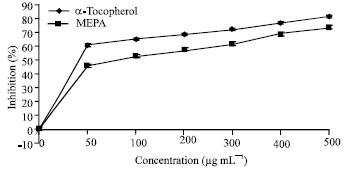 | |
| Fig. 1: | Percentage inhibition of lipid peroxidation by α-tocopherol and different doses of MEPA in the linoleic acid emulsion |
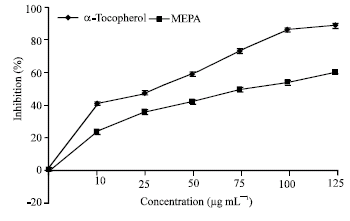 | |
| Fig. 2: | Percentage inhibition of DPPH radicals by α-tocopherol and different doses of MEPA |
In the present study, the scavenging activities of DPPH exerted by MEPA as well as α-tocopherol were shown in Fig. 2. MEPA at the concentration of 125 μg mL-1 exhibited 60.42% inhibition, where standard drug α-tocopherol at the same concentration exhibited 89.17% inhibition.
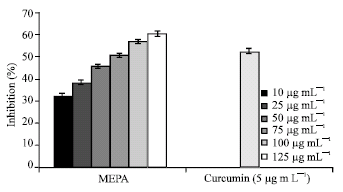
Nitric oxide radical scavenging effect: Nitric Oxide (NO) is an important chemical mediator generated by endothelial cells, macrophages, neurons, etc. and involved in the regulation of various physiological processes (Lata and Ahuja, 2003). Excess concentration of NO is associated with several diseases (Ialenti et al., 1993; Ross, 1990). Oxygen reacts with the excess nitric oxide to generate nitrite and peroxynitrite anions, which act as free radicals (Cotran et al., 1999; Sainani et al., 1997). In the present study, the extract competes with oxygen to react with no and thus inhibits generation of the anions. The percentage inhibition of no generation by MEPA is shown in (Fig. 3). Curcumin was used as a reference compound. The concentration of MEPA at 125 μg mL-1 exhibited 56.38% inhibition whereas curcumin exhibited 74.11% inhibition.
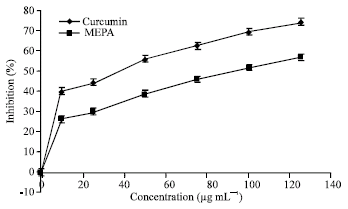 | |
| Fig. 3: | Percentage Inhibition of nitric oxide radicals by curcumin and different doses of MEPA |
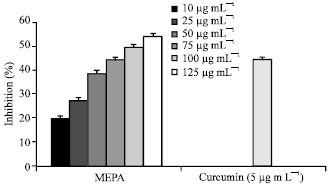 | |
| Fig. 4: | Percentage inhibition of superoxide radicals by curcumin and different doses of MEPA on PMS/ NADH-NBT system |
Superoxide anion radical scavenging effect: Superoxides are produced from molecular oxygen due to oxidative enzymes (Sainani et al., 1997) of body as well as via non-enzymatic reaction such as autoxidation by catecholamines (Hemmani and Parihar, 1998). In the present study, superoxide radical reduces NBT to a blue colored formazan that is measured at 560 nm (Khanam et al., 2004). The decrease of absorbance at 560 nm with antioxidants thus indicates the consumption of superoxide anion in the reaction mixture Fig. 4. MEPA at concentration from 10-125 μg mL-1 inhibited the production of superoxide anion radicals by 19.23-53.22%. MEPA had strong superoxide radical scavenging activity. The IC50 value of MEPA on superoxide radical scavenging activity was found to be 117.43 μg mL-1 and for curcumin 5.95 μg mL-1.
 | |
| Fig. 5: | Percentage Inhibition of hydroxyl radicals by catechin and different doses of MEPA |
Hydroxyl radical scavenging effect: The deoxyribose method is a simple assay to determine the rate constants for reactions of hydroxyl radicals (Halliwell et al., 1987). When the mixture of FeCl3-EDTA, H2O2 and ascorbate were incubated with deoxyribose in phosphate buffer (pH 7.4), the hydroxyl radicals generated attack the deoxyribose and result in a series of reactions that cause the formation of malondialdehyde (MDA). Any hydroxyl radical scavenger added to the reaction would compete with deoxyribose for the availability of hydroxyl radicals, thus reducing the amount of MDA formation. We herein tested the scavenging activity of MEPA along with positive control Catechin. The concentration of MEPA needed for 50% inhibition was found to be 74.39 μg mL-1. Catechin, used as a standard was highly effective in inhibiting the oxidative DNA damage, showing an IC50 = 5.27 μg mL-1.
Reductive ability: The antioxidant activities of natural components may have a reciprocal correlation with their reducing powers (Yen and Duh, 1995; Duh and Yen, 1997). The reducing power of methanol extract of Plumeria acuminata and BHT is shown in Fig. 5. The reducing power increased as the extract concentration increased, indicating some compounds in Plumeria acuminata is both electron donors and could react with free radicals to convert them in to more stable products and to terminate radical chain reactions. For the measurements of the reductive ability, we investigated the Fe3+-Fe2+, transformation in the presence of the MEPA using the method Oyaizu (1986). All the amounts of MEPA showed higher activities than control and these differences were statistically highly significant (p<0.01) (Fig. 6). It has been shown that the antioxidant effect exponentially increased as a function of the development of the reducing power, suggesting that the antioxidant properties be associated with the development of the reducing powers (Tanaka et al., 1998).
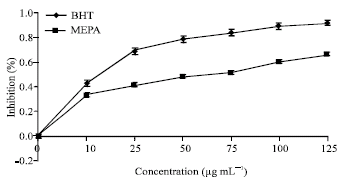 | |
| Fig. 6: | Reductive ability of BHT and different doses of MEPA |
Amount of total phenolic compounds: Phenols are very important plant constituents because of their scavenging ability due to their hydroxyl groups (Hatano et al., 1989). In the MEPA (1 mg) 147.54 μg pyrocatechol equivalent of phenols was detected. The phenolic compounds may contribute directly to antioxidative action (Duh et al., 1999). It is suggested that polyphenolic compounds have inhibitory effects on mutagenesis and carcinogenesis in humans, when ingested up to 1 g daily from a diet rich in fruits and vegetables (Tanaka et al., 1998).
CONCLUSIONS
Herbs have played a significant role in maintaining human health and improving the quality of life for thousands of years. They have served as valuable ingredients for seasonings, beverages, cosmetics, dyes and medicines. Many active phytochemicals, including flavonoids, terpenoids, lignans, sulfides, polyphenolics, carotenoids, coumarins, saponins, plant sterols, curcumins and phthalides have been identified (Craig, 1999). Numerous in vitro studies have shown that some of the phytochemicals are potent antioxidants, metal chelators or free radical scavengers which may account for their health-promoting properties (Cotell et al., 1996).
From the present study, it can be concluded that the methanol extract of leaves of Plumeria acuminata possesses potent antioxidant and free radical scavenging properties. Further investigation are in progress in our laboratory to identify the active principles involved in this antioxidant and free radical scavenging activity.
REFERENCES
- Blois, M.S., 1958. Antioxidant determinations by the use of a stable free radical. Nature, 181: 1199-1200.
CrossRefDirect Link - Cao, G., E. Sofic and R.L. Prior, 1997. Antioxidant and prooxidant behavior of flavonoids: Structure-activity relationships. Free Radical Biol. Med., 22: 749-760.
CrossRefDirect Link - Cotelle, N., J.L. Bernier, J.P. Catteau, J. Pommery, J.C. Wallet and E.M. Gaydou, 1996. Antioxidant properties of hydroxy-flavones. Free Radic. Biol. Med., 20: 35-43.
CrossRefDirect Link - Duh, P.D. and G.C. Yen, 1997. Antioxidative activity of three herbal water extracts. Food Chem., 60: 639-645.
CrossRefDirect Link - Duh, P.D., Y.Y. Tu and G.C. Yen, 1999. Antioxidant activity of water extract of Harng Jyur (Chrysanthemum morifolium Ramat). LWT-Food Sci. Technol., 32: 269-277.
CrossRefDirect Link - Green, L.C., D.A. Wagner, J. Glogowski, P.L. Skipper, J.S. Wishnok and S.R. Tannenbaum, 1982. Analysis of nitrate, nitrite and [15N] nitrate in biological fluids. Anal. Biochem., 126: 131-138.
CrossRefPubMedDirect Link - Gupta, M., U.K. Mazumder, P. Gomathi and V.T. Selvan, 2006. Antiinflammatory evaluation of leaves of Plumeria acuminate, 2006. BMC Complementary Alternative Med., 6: 36-36.
CrossRefDirect Link - Halliwell, B., J.M.C. Gutteridge and O.I. Aruoma, 1987. The deoxyribose method: A simple test-tube assay for determination of rate constants for reactions of hydroxyl radicals. Anal. Biochem., 165: 215-219.
CrossRefDirect Link - Hatano, T., R. Edamatsu, M. Hiramatsu, A. Mori and Y. Fujita et al., 1989. Effects of the interaction of tannins with co-existing substances. VI.: Effects of tannins and related polyphenols on superoxide anion radical and on 1, 1-diphenyl-2-picrylhydrazyl radical. Chem. Pharmaceut. Bull., 37: 2016-2021.
CrossRefDirect Link - Hemnani, T. and M.S. Parihar, 1998. Reactive oxygen species and oxidative DNA damage. Indian J. Physiol. Pharmacol., 42: 440-452.
PubMedDirect Link - Hua, L. and L. Geng-Tao, 1992. Antioxidant activity of dibenzocyclooctene lignans isolated from Schisandraceae. Planta Med., 58: 311-313.
Direct Link - Ialenti, A., S. Moncada and M. Di Rosa, 1993. Modulation of adjuvant arthritis by endogenous nitric oxide. Br. J. Pharmacol., 110: 701-706.
Direct Link - Kunchandy, E. and M.N.A. Rao, 1990. Oxygen radical scavenging activity of curcumin. Int. J. Pharm., 58: 237-240.
CrossRefDirect Link - Lata, H. and G.K. Ahuja, 2003. Role of free radicals in health and disease. Indian J. Physiol. Allied Sci., 57: 124-132.
Direct Link - Marcocci, L., J.J. Maguire, M.T. Droy-Lefaix and L. Packer, 1994. The nitric oxide scavenging property of Ginko biloba extract EGB 761. Biochem. Biophys. Res. Commun., 201: 748-755.
PubMed - Maxwell, S.R.J., 1995. Prospects for the use of antioxidant therapies. Drugs, 49: 345-361.
CrossRefPubMedDirect Link - Mitsuda, H., K. Yasumoto and K. Iwami, 1996. Antioxidative action of indole compounds during the autoxidation of linoleic acid. Nippon Eiyo Shokuryo Gakkaishi, 19: 210-214.
Direct Link - Nishikimi, M., N.A. Rao and K. Yagi, 1972. The occurrence of superoxide anion in the reaction of reduced phenazine methosulfate and molecular oxygen. Biochem. Biophys. Res. Commun., 46: 849-854.
CrossRefPubMedDirect Link - Ohkawa, H., N. Ohishi and K. Yagi, 1979. Assay for lipid peroxides in animal tissues by thiobarbituric acid reaction. Anal. Biochem., 95: 351-358.
CrossRefPubMedDirect Link - Oyaizu, M., 1986. Studies on products of browning reaction: Antioxidative activities of products of browning reaction prepared from glucosamine. Jpn. J. Nutr. Diet., 44: 307-315.
CrossRefDirect Link - Shimada, K., K. Fujikawa, K. Yahara and T. Nakamura, 1992. Antioxidative properties of xanthan on the autoxidation of soybean oil in cyclodextrin emulsion. J. Agric. Food Chem., 40: 945-948.
CrossRefDirect Link - Slinkard, K. and V.L. Singleton, 1977. Total phenol analysis: Automation and comparison with manual methods. Am. J. Enol. Viticult., 28: 49-55.
Direct Link - Tanaka, M., C.W. Kuei, Y. Nagashima and T. Taguchi, 1998. Application of antioxidative maillard reaction products from histidine and glucose to sardine products. Nippon Suisan Gakkaishi, 54: 1409-1414.
Direct Link - Yen, G.C. and P.D. Duh, 1994. Scavenging effect of methanolic extracts of peanut hulls on free-radical and active-oxygen species. J. Agric. Food Chem., 42: 629-632.
CrossRefDirect Link - Yen, G.C. and H.Y. Chen, 1995. Antioxidant activity of various tea extracts in relation to their antimutagenicity. J. Agric. Food Chem., 43: 27-32.
CrossRefDirect Link - Yildirim, A., M. Oktay and V. Bilaloglu, 2001. The antioxidant activity of the leaves of Cydonia vulgaris. Turk. J. Med. Sci., 31: 23-27.
Direct Link - Craig, W.J., 1999. Health-promoting properties of common herbs. Am. J. Clin. Nutr., 70: 491S-499S.
CrossRefPubMedDirect Link