

O. Sadeghipour
Department of Agronomy, Islamic Azad University, Shahre-Rey Branch, Tehran, Iran
R. Monem
Department of Agronomy, Islamic Azad University, Shahre-Rey Branch, Tehran, Iran
A.A. Tajali
Department of Agronomy, Islamic Azad University, Shahre-Rey Branch, Tehran, Iran
Journal of Applied Sciences
Year: 2010 | Volume: 10 | Issue: 10 | Page No.: 843-847







ABSTRACT
In order to investigate the effects of different nitrogen and phosphorus levels on yield and yield components of mungbean variety Partow a field experiment was conducted at the Research Farm of the Islamic Azad University of Shahre-rey, in Tehran, Iran in 2009. The experiment was laid out with factorial arrangement in a Randomized Complete Block Design with three replications. Five levels of nitrogen (0, 30, 60, 90 and 120 kg N ha-1) and six levels of phosphorus (0, 30, 60, 90, 120 and 150 kg P2O5 ha-1) were the treatment variables. Results showed that application of N and P fertilizers significantly increased the seed yield. The maximum seed yield (224.2 g m-2) was obtained when 90 kg N ha-1 and 120 kg P2O5 ha-1 was applied. This increase in seed yield was mainly due to more number of pods plant-1, number of seeds pod-1 and 1000 seeds weight. Thus, application of 90 kg N ha-1 and 120 kg P2O5 ha-1 seems to be optimum levels for harvesting highest yield of mungbean.
PDF Abstract XML References Citation
How to cite this article
O. Sadeghipour, R. Monem and A.A. Tajali, 2010. Production of Mungbean (Vigna radiata L.) as Affected by Nitrogen and Phosphorus Fertilizer Application. Journal of Applied Sciences, 10: 843-847.
DOI: 10.3923/jas.2010.843.847
URL: https://scialert.net/abstract/?doi=jas.2010.843.847
DOI: 10.3923/jas.2010.843.847
URL: https://scialert.net/abstract/?doi=jas.2010.843.847
INTRODUCTION
Mungbean (Vigna radiata L.) is an important pulse crops having high nutritive value. It not only plays an important role in human diet but also in improving the soil fertility by fixing the atmospheric nitrogen (Ather Nadeem et al., 2004). Its seed is more palatable, nutritive, digestible and non-flatulent than other pulses (Anjum et al., 2006). In Iran, mungbean production is often undertaken on small farms using marginal soils low in N and P and with minimal technical inputs. In addition, the nodulation of mungbean is poor under the agro-ecological conditions of Iran. Fertilizer is one of the most important factors that affect crop production. Fertilizer recommendation for soils and crops is a dynamic process in view of the generation of the new knowledge, changes in soil nutrient status, changes in plants and planting patterns and associated management practices (Rafiqul Hoque et al., 2004). The management of fertilizers is one of the important factors that greatly affect the growth, development and yield of mungbean (Asaduzzaman et al., 2008). Nitrogen and phosphorus are both integral components of virtually all the biochemical compounds that make plant life possible. There is no conceivable alternative to these two elements in constructing the biochemical machinery of plants. It is absolutely clear that both N and P are essential elements in their structural, biochemical and physiological roles contributing to crop growth (Sinclair and Vadez, 2002). Nitrogen is an important major nutrient element for plant. For legumes, it is more useful because it is the main component of amino acids as well as proteins. Adequate supply of nitrogen is essential for normal growth and yield (Mozumder et al., 2003). Without N it is not possible to synthesize the necessary proteins, enzymes, DNA and RNA required in virtually all plant cells for their initial development, sustained growth and functioning to support other tissues of the plant. So, deficiencies in reduced N necessarily results in less biochemical machinery to catalyze plant metabolism and to generate new cells. Consequently, nitrogen deficiencies result in decreased crop leaf area, photosynthetic assimilation and seed growth (Sinclair and Vadez, 2002).
Several studies suggested that plant growth in most temperate ecosystems is limited by nitrogen or a combination of N and water. Moreover, under N enriched conditions phosphorus availability has been shown to limit plant growth (Reed et al., 2007). Phosphorus is one of the three macronutrients that plants must obtain from the soil. It is a major component of compounds whose functions relate to growth, root development, flowering and ripening (Sompong et al., 2010). Among the soil nutrient elements, P is the second most essential nutrient after the nitrogen.
Many studies have shown that application of phosphorous fertilizers generally has great impact on crop yields because its deficiency limits the response of plants to other nutrients (Akinrinde and Adigun, 2005). Phosphorus is an essential component of cell structures, mainly as nucleic acids and phospholipids (Sinclair and Vadez, 2002). It is especially critical in establishing the enzymatic machinery in energy storage and transfer, which in many cases involves membrane processes. Not surprisingly, P deficiency results in a loss in cell integrity. The bonding properties of P also make it crucial for metabolic processes that are nucleotide-based, e.g., ADP, NAD and NADP, because of its unique energy-transfer properties. A general consequence of P deficiency is a decrease in the energy charge of cells (Sinclair and Vadez, 2002). Crop growth in tropical soils is often limited by low P availability and the recovery of P applied as fertilizers by crops is usually very low, because most P becomes unavailable due to adsorption, precipitation or conversion to organic forms (Araujo et al., 2005). Ayub et al. (1999) recorded the maximum seed yield (31% higher than control) of mungbean at 40 kg N ha-1 application. The increase in seed yield with nitrogen application was related to higher number of pods plant-1, number of seeds pod-1 and 1000-grains weight. Mozumder et al. (2003) showed that increase of nitrogen up to 40 kg N ha-1 increased seed yield of mungbean. Ather Nadeem et al. (2004) found that the application of fertilizer significantly increased the seed yield and maximum seed yield was obtained when 30-60 kg N-P2O5 ha-1 was applied. Phosphorus is considered the most important nutrient for increasing yield of mungbean. Studies have shown that phosphorus application to mungbean has increased plant height, number of branches, number of pods plant-1, number of grains pod-1, 1000-grains weight, biological yield and grain yield (Ayub et al., 1998). Khan et al. (1999) also reported that phosphorus application significantly increased the yield of mungbean. Khan et al. (2002) found that maximum increased in total biomass and yield of mungbean was obtained with phosphorus application at 100 kg P2O5 ha-1. Ali et al. (1999) applied 0, 35, 60 and 85 kg ha-1 phosphorus to mungbean and obtained highest seed yield with phosphorus application of 85 kg P2O5 ha-1 but was statistically similar to 65 kg P2O5 ha-1. Sharar et al. (1999) concluded that phosphorus application at 100 kg P2O5 ha-1 produced the maximum yield and its components of mungbean cultivars. Tariq et al. (2001) reported that grain yield and its components of mungbean were increased significantly by application of phosphorus at 70 kg P2O5 ha-1. The degree of nodulation, fixing atmospheric nitrogen and so, fertilizers requirement varies with the soil and climatic conditions, cultivar, cultural operations and etc., thus the objective of this study is to determine suitable levels of nitrogen and phosphorus fertilizers for realizing the maximum yield potential of mungbean variety Partow under Shahre-rey region conditions at Iran.
MATERIALS AND METHODS
This study was conducted at the research farm (35°-35' N and 51°-28' E. a.s.l. of 1000 m), the Islamic Azad University of Shahre-rey, in Tehran, Iran, in the 2009. The mean annual precipitation and temperature are 201.7 mm and 20.4°C, respectively. The soil of experimental field was sandy clay loam with pH 7.8 and contains organic matter 1.1%, total nitrogen 0.071%, available phosphorus 7.9 ppm, exchangeable potassium 310 ppm and EC of 2.7 mmohs cm-1. The experiment was laid out with factorial arrangement in a randomized complete block design with three replications which five levels of nitrogen (0, 30, 60, 90 and 120 kg N ha-1) and six levels of phosphorus (0, 30, 60, 90, 120 and 150 kg P2O5 ha-1) were the treatment variables. Sowing procedure was done on June 27, 2009 with a single row hand drill in 50 cm apart rows with plant to plant distance of 10 cm. Size of each plot was 15 m2 (5x3 m).
Nitrogen and phosphorus were applied in the form of urea and triple super phosphate, respectively. Half dose of nitrogen and full dose of phosphorus fertilizer was applied as basal at the time of sowing by side dressing with the help of hand drill, while remaining half nitrogen was top dressed 40 days after sowing.
All other cultural practices were kept normal and uniform for all treatments. At physiological maturity, 10 plants plot-1 were selected randomly, sun dried and were recorded number of pods plant-1, number of seeds pod-1 and 1000 seeds weight. To determine seed yield, plants were harvested by hand from pre demarcated two rows of each plot that were sun dried properly. Collected data were analyzed statistically using MSTAT-C statistical software and the means were compared by Duncan<’s Multiple Range Test at the 5% probability level (Steel and Torrie, 1980).
RESULTS
Number of pods plant-1: Various nitrogen levels produced significant differences (p≤0.01) on the number of pods plant-1. The application of nitrogen at the rate of 120 kg N ha-1 produced significantly higher number of pods plant-1 (21.76) than the other levels. The number of pods plant-1 were also influenced significantly (p≤0.01) by phosphorus application. The maximum number of pods plant-1 (21.34) were obtained from plots receiving 150 kg P2O5 ha-1 (Table 1).
| Table 1: | Effect of nitrogen and phosphorus levels on yield and yield components of mungbean |
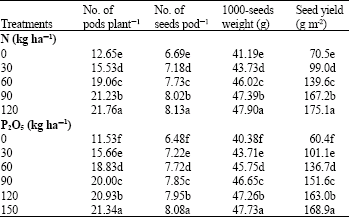 | |
| Means with the same letter(s) in each column and treatment are not significantly different at probability level of 5% using DMRT | |
| Table 2: | Interaction effects of nitrogen and phosphorus levels on yield and yield components of mungbean |
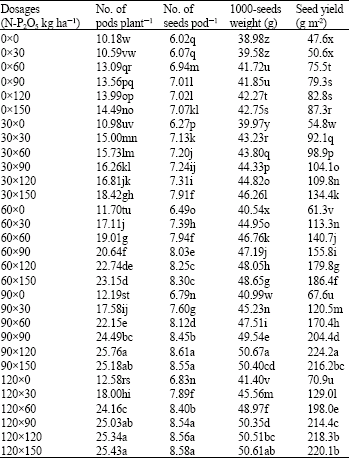 | |
| Means with the same letter(s) in each column are not significantly different at probability level of 5% using DMRT | |
The interaction effects of N and P2O5 levels on number of pods plant-1 were significant (p≤0.01). The highest number of pods plant-1 (25.76) were recorded in plots where N and P2O5 were applied at 90 and 120 kg ha-1, respectively.
However, differences among these treatment combinations and 90-150, 120-90, 120-120 and 120-150 kg N-P2O5 ha-1 were not significant (Table 2).
Number of seeds pod-1: The application of 120 kg N ha-1 produced significantly higher number of seeds pod-1 (8.13) than the other nitrogen levels. Also, the effect of different phosphorus levels on number of seeds pod-1 was significant (p≤0.01). The treatment of 120 kg P2O5 ha-1 gave maximum number of seeds pod-1 (8.08) (Table 1). The interaction effects of N and P2O5 levels on number of seeds pod-1 were significant (p≤0.01). The highest number of seeds pod-1 (8.61) were recorded by 90-120 kg N-P2O5 ha-1, which was statistically, similar with 90-150, 120-90, 120-120 and 120-150, kg N-P2O5 ha-1 (Table 2).
1000-seeds weight (g): Different N levels have a significant effects (p≤0.01) on 1000 seeds weight. The highest 1000 seeds weight (47.90 g) was recorded at 120 kg N ha-1 application. 1000-seeds weight was affected significantly (p≤0.01) by phosphorus application. In different phosphorus levels, the application of 150 kg P2O5 ha-1 produced highest 1000-seeds weight (47.73 g) (Table 1). The interaction effects of N and P2O5 levels on 1000-seeds weight were significant (p≤0.01). The highest 1000-seeds weight (50.61 g) were recorded in plots where, N and P2O5 were applied at 90 and 120 kg ha-1, respectively, which was statistically, similar with 120-150 kg N-P2O5 ha-1 (Table 2).
Seed yield (g m-2): Seed yield was affected significantly (p≤0.01) by various nitrogen levels. The maximum seed yield (175.1 g m-2) was obtained by the application of 120 kg N ha-1. The differences in seed yield among the various phosphorus levels were also significant (p≤0.01). The application of 150 kg P2O5 ha-1 produced highest seed yield (168.9 g m-2) (Table 1). The interaction effects of N and P2O5 levels on seed yield were significant (p≤0.01). The highest seed yield (224.2 g m-2) were recorded by 90-120 kg N-P2O5 ha-1 (Table 2).
DISCUSSION
Nitrogen is essential for plant growth and is a part of every living cell. It directly increases the plant protein content. Nitrogen helps make plants green and plays a major role in boosting crop yields. It plays a critical role in protein formation and is a key component of chlorophyll. Phosphorus is an essential nutrient for plant growth which stimulates blooming and seed formation (Akhtar et al., 1999). It plays a fundamental role in metabolism and energy producing reaction in plants. It is an integral part of nucleic acid, phytin and phospholipids and is essential for cellular respiration in the metabolism of the starch, protein and fats (Iqbal and Chauhan, 2003). Phosphate is made unavailable in arid soils principally as complex calcium compounds (Mehdi et al., 2003). With high rate of P fertilizer additions, soil sorption sites are satisfied and P level increase to sufficiency for crop production. This is of particular importance because of the role of P in plant nutrition; enhancing nitrogen absorption, influencing pod and seed formation in legumes and contributing significantly in plant energy processes (Anetor and Akinrinde, 2006). In present study, application of 90-120 kg N-P2O5 ha-1 produced highest number of pods plant-1. Significant differences of nitrogen application on the number of pods plant-1 have been reported by Ayub et al. (1999). Ali et al. (1999) have also found an increase in number of pods plant-1 with phosphorus application in mungbean. Khan et al. (1999) reported that application of 120 kg P2O5 ha-1 increased the number of pods plant-1 in mungbean. Ayub et al. (1998) reported that the application of P2O5 at the rate of 75 kg ha-1 remaining at par with 50 and 100 kg P2O5 ha-1 gave significantly higher number of pods plant-1 than 0, 25 and 125 kg P2O5 ha-1. Sharar et al. (1999) found that the maximum number of pods plant-1 were produced at the rate of 100 kg P2O5 ha-1. The positive effect of P2O5 application on number of pods plant-1 might be due to various enzymatic activities which controlled flowering and pod formation (Khan et al., 1999). The sink capacity of plants (number of pods plant-1) has genetic limitation (Ayub et al., 1998), that is why the number of pods plant-1 not increased at higher nitrogen and phosphorus levels.
Number of seeds pod-1 is an important factor that directly involved in exploiting yield recovery in leguminous crops (Khan et al., 1999). In this experiment, the maximum number of seeds pod-1 were recorded at the rate of 90-120 kg N-P2O5 ha-1. Ather Nadeem et al. (2004) reported that all the fertilizer levels produced higher number of seeds pod-1 over control as the maximum number of seeds pod-1 were produced by 45-90 kg N-P2O5 ha-1. Khan et al. (1999) reported that maximum seeds pod-1 was produced by application of 120 kg P2O5 ha-1. Ayub et al. (1999) reported that the application of nitrogen at the rate of 40 kg N ha-1 produced significantly higher number of seeds pod-1 than all other treatments and the crop raised with the application of 20 and 60 kg N ha-1 produced statistically similar number of seeds pod-1 but significantly higher than control. Ayub et al. (1998) reported that the application of 75 kg P2O5 ha-1 produced significantly higher number of seeds pod-1. The increase in the number of seeds pod-1 might be due to the positive response of phosphorus on flower setting and ultimately increased the seed number (Ayub et al., 1998).
As known, seed weight (g) is an important yield component of the mungbean. In this study, application of 90-120 kg N-P2O5 ha-1 produced the highest 1000 seeds weight. Ayub et al. (1999) has also reported that the plots fertilized at the rate of 40 kg N ha-1 produced significantly higher 1000-seeds weight than all other nitrogen levels and differences between control and 20 kg N ha-1 were not significant. Sharar et al. (1999) reported that increase in P2O5 application up to 100 kg ha-1 increased 1000-seeds weight of mungbean. Khan et al. (1999) reported that maximum 1000-seeds weight of mungbean was produced by application of 120 kg P2O5 ha-1. It is evident that with increase in the phosphorus level, the 1000-seeds weight was also increased which indicated that phosphorus application improve the seed weight. These results indicate that nitrogen and phosphorus application have influenced the physiological processes such as photosynthesis, that ultimately resulted in the fully filled seeds. Similar results have also been reported by Ather Nadeem et al. (2004).
Results of present study showed that the maximum of seed yield was recorded at the rate of 90-120 kg N-P2O5 ha-1. Significant effects of nitrogen application on seed yield of mungbean have been reported by Ayub et al. (1999) and Ashraf et al. (2003). Ayub et al. (1999) obtained that maximum seed yield of mungbean was produced by application of 40 kg N ha-1. Sharar et al. (1999) and Oad et al. (2003) obtained that the higher seed yield of mungbean was recorded at the rate of 100 kg P2O5 ha-1. The increased in seed yield with N-P2O5 application had been due to higher number of pods plant-1, seeds pod-1 and 1000-seeds weight. The decrease in seed yield beyond 90-120 kg N-P2O5 ha-1, might be due to genetic inability of the cultivar to get more fertilizer or due to some nutritional imbalance. These findings are also in line with those of Ayub et al. (1998) and Sharar et al. (1999) . Shah et al. (2006) and Khan et al. (1999) reported that maximum seed yield was produced by application of 120 kg P2O5 ha-1. Khan et al. (2002) stated that seed yield was increased with phosphorus application. These results are supported by the findings of Ather Nadeem et al. (2004) and Ali et al. (1999), who have also reported an increase in seed yield with increased fertilizer levels.
CONCLUSION
The results of this experiment revealed that application of nitrogen and phosphorus fertilizers, increased number of pods plant-1, seeds pod-1, 1000-seeds weight (g) and seed yield (g m-2) of mungbean. The application of 90-120 kg N-P2O5 ha-1 was found to be the optimum levels for obtaining highest yield of mungbean variety Partow under agro-ecological conditions of Shahre-rey region in Iran.
REFERENCES
- Akhtar, M., S. Ahmad, S. Mohsin and T. Mahmood, 1999. Interactive effect of phosphorus and potassium nutrition on the growth and yield of hybrid maize (Zea mays L.). Pak. J. Biol. Sci., 2: 240-241.
CrossRefDirect Link - Akinrinde, E.A. and I.O. Adigun, 2005. Phosphorus-use efficiency by pepper (Capsicum frutescens) and okra (Abelmoschus esculentum) at different phosphorus fertilizer application levels on two tropical soils. J. Applied Sci., 5: 1785-1791.
CrossRefDirect Link - Ayub, M., A. Tanveer, M.A. Choudhry, M.M.Z. Amin and G. Murtaza, 1999. Growth and yield response of mungbean (Vigna radiata L.) cultivars to varying levels of nitrogen. Pak. J. Biol. Sci., 2: 1378-1380.
CrossRefDirect Link - Anetor, M.O. and E.A. Akinrinde, 2006. Differences in the liming potential of some fertilizer materials in a tropical acid alfisol. J. Applied Sci., 6: 1686-1691.
CrossRefDirect Link - Anjum, M.S., Z.I. Ahmed and C.A. Rauf, 2006. Effect of Rhizobium inoculation and nitrogen fertilizer on yield and yield components of mungbean. Int. J. Agri. Biol., 8: 238-240.
Direct Link - Araujo, A.P., I.F. Antunes and M.G. Teixeira, 2005. Inheritance of root traits and phosphorus uptake in common bean (Phaseolus vulgaris L.) under limited soil phosphorus supply. Euphytica, 145: 33-40.
Direct Link - Ashraf, M., M. Mueen-ud-din and N.H. Warraich, 2003. Production efficiency of mungbean as affected by seed inoculation and NPK application. Int. J. Agric. Biol., 5: 179-180.
Direct Link - Ali, A., M.A. Malik, M.A. Choudhry, M.A. Siddique and M. Rafique, 1999. Growth and yield response of mungbean (Vigna radiata L.) to different seed rates and levels of phosphorus. Pak. J. Biol. Sci., 2: 879-880.
CrossRefDirect Link - Ayub, M., R. Ahmad, A. Tanveer, J. Iqbal and M.S. Sharar, 1998. Response of mungbean (Vigna radiata L.) to different levels of phosphorus. Pak. J. Biol. Sci., 1: 283-284.
CrossRefDirect Link - Iqbal, R.M. and H.Q.I. Chauhan, 2003. Relationship between different growth and yield parameters in maize under varying levels of phosphorus. J. Biological Sci., 3: 921-925.
CrossRefDirect Link - Khan, M.A., M. Aslam, T. Sultan and I.A. Mahmood, 2002. Response of phosphorus application on growth and yield of inoculated and un-inoculated mungbean (Vigna radiata L.). Int. J. Agri. Biol., 4: 523-524.
Direct Link - Khan, M.A., M.S. Baloch, I. Taj and I. Gandapur, 1999. Effect of phosphorus on the growth and yield of mungbean. Pak. J. Biol. Sci., 2: 667-669.
CrossRefDirect Link - Mehdi, S.M., N. Sajjad, M. Sarfraz, B.Y. Khalid, G. Hassan and M. Sadiq, 2003. Response of wheat to different phosphatic fertilizers in varying textured salt affected soils. J. Applied Sci., 3: 474-480.
CrossRefDirect Link - Mozumder, S.N., M. Salim, N. Islam, M.I. Nazrul and M.M. Zaman, 2003. Effect of Bradyrhizobium inoculation at different nitrogen levels on summer mungbean (Vigna radiata L.). Asian J. Plant Sci., 2: 817-822.
CrossRefDirect Link - Nadeem, M.A., R. Ahmad and M.S. Ahmad, 2004. Effect of seed inoculation and different fertilizer levels on the growth and yield of mungbean (Vigna radiata L.). J. Agron., 3: 40-42.
CrossRefDirect Link - Oad, F.C., A.N. Shah, G.H. Jamro and S.H. Ghaloo, 2003. Phosphorus and potassium requirements of mungbean (Vigna radiata). J. Applied Sci., 3: 428-431.
CrossRefDirect Link - Rafiqul Hoque, A.T.M., M.K. Hossain, M. Mohiuddin and M.M. Hoque, 2004. Effect of inorganic fertilizers on the initial growth performance of Anthocephalus chinensis (Lam.) rich. Ex. Walp. seedlings in the nursery. J. Applied Sci., 4: 477-485.
CrossRefDirect Link - Reed, S.C., T.R. Seastedt, C.M. Mann, K.N. Suding, A.R. Townsend and K.L. Cherwin, 2007. Phosphorus fertilization stimulates nitrogen fixation and increases inorganic nitrogen concentrations in a restored prairie. Applied Soil Ecol., 36: 238-242.
CrossRef - Shah, S.K.H., M. Aslam, P. Khan, M.Y. Memon, M. Imtiaz, S.H. Siddiqui and Nizamuddin, 2006. Effect of different methods and rates of phosphorus application in mungbean. Soil Environ., 25: 55-58.
Direct Link - Sharar, M.S., M. Ayub, M.A. Choudhry, M.A. Rana and M.M.Z. Amin, 1999. Growth and yield response of two cultivars of mungbean (Vigna radiata L.) to various levels of phosphorus. Pak. J. Biol. Sci., 2: 1385-1386.
CrossRefDirect Link - Sinclair, T.R. and V. Vadez, 2002. Physiological traits for crop yield improvement in low N and P environments. Plant Soil, 245: 1-15.
CrossRefDirect Link - Sompong, U., C. Kaewprasit, S. Nakasathien and P. Srinives, 2010. Inheritance of seed phytate in mungbean (Vigna radiata L.). Euphytica, 171: 389-396.
CrossRef - Tariq, M., A. Khaliq and M. Umar, 2001. Effect of phosphorus and potassium application on growth and yield of mungbean (Vigna radiata L.). J. Biological Sci., 1: 427-428.
CrossRefDirect Link