

W.D. Wan Chik
Biomolecular Engineering Research Unit (BioMERU), Department of Biotechnology Engineering, Faculty of Engineering, International Islamic University Malaysia, Gombak, 50728 Kuala Lumpur, Malaysia
A. Amid
Biomolecular Engineering Research Unit (BioMERU), Department of Biotechnology Engineering, Faculty of Engineering, International Islamic University Malaysia, Gombak, 50728 Kuala Lumpur, Malaysia
P. Jamal
Biomolecular Engineering Research Unit (BioMERU), Department of Biotechnology Engineering, Faculty of Engineering, International Islamic University Malaysia, Gombak, 50728 Kuala Lumpur, Malaysia
Journal of Applied Sciences
Year: 2010 | Volume: 10 | Issue: 24 | Page No.: 3283-3288







ABSTRACT
This research studied the cytotoxicity effect of tomato leaves methanol extract on cancer cells to address potential therapeutic in MCF-7 breast cancer cell lines and its toxicity towards Vero cells. The extraction was done in a shake flask by 82% methanol, 1:10 (w/v), agitated at 22°C with 110 rpm within 24 h. Later, purification process was started by Thin Layer Chromatography (TLC) subjected to determine the best mobile phase for compound separation and collection by means of column chromatography. Next, the effect of purified sample towards MCF-7 breast cancer cell lines and Vero cells were observed using in vitro cytotoxicity assay to indicate its active fractions and its half maximal inhibitory concentration (IC50). Purified sample gave a rational effect towards MCF-7 breast cancer cells with IC50 value of 5.85 μg mL-1 compared to Taxol with IC50 value of 0.039 μg mL-1. The purified sample can also be judged to be harmless as it has IC50 value of 765.6 μg mL-1 in Vero cells treatment while Taxol gave IC50 value of 0.045 μg mL-1.
PDF Abstract XML References Citation
Received: June 06, 2010;
Accepted: July 06, 2010;
Published: October 19, 2010
How to cite this article
W.D. Wan Chik, A. Amid and P. Jamal, 2010. Purification and Cytotoxicity Assay of Tomato (Lycopersicon esculen tum) Leaves Methanol Extract as Potential Anticancer Agent. Journal of Applied Sciences, 10: 3283-3288.
DOI: 10.3923/jas.2010.3283.3288
URL: https://scialert.net/abstract/?doi=jas.2010.3283.3288
DOI: 10.3923/jas.2010.3283.3288
URL: https://scialert.net/abstract/?doi=jas.2010.3283.3288
INTRODUCTION
Today it is believed that cancer is a leading cause of death where it accounts for 7.4 million deaths which are about 13% of all deaths in 2004 (WHO, 2007). The main types of cancer leading to overall cancer mortality each year are lung (1.3 million deaths/year), stomach (803 000 deaths), colorectal (639 000 deaths), liver (610 000 deaths) and breast (519 000 deaths) (Garcia et al., 2007). More than 70% of all cancer deaths occurred in low- and middle-income countries (Boyle and Levin, 2008). Deaths from cancer worldwide are projected to continue rising, with an estimated 12 million deaths in 2030 (WHO, 2004). Breast cancer, for instance, is the most common cancer disease in woman globally. The American Cancer Society estimates that in year 2008, about 182,460 women in the USA will be diagnosed with it and 40,480 women will die of breast cancer (Kelly, 2008).
There are many kinds of drugs that have been discovered and used as an alternative treatment to stop the progressive growing and spreading of the cancer cells such as Abraxane, Tamoxifen, Doxorubicin and Taxol (Newman and Cragg, 2006). There are some of the present drugs either from plant or synthetic-based may gives negative side effects to human health. Taxol, for instance, almost completely water insoluble, is delivered in a medium formulation of 50% ethanol and 50% polyethoxylated castor oil (Cremophor EL) (Mosley et al., 2007). The medium has been associated with various side effects including hypersensitivity in 41-44% of all patients. It is also reported that Taxol has the ability to kill normal cells with IC50 of 0.043 μg mL-1. Doxorubicin, a potent broad-spectrum inhibitor of human tumors, also exhibits severe adverse side effects (Mosley et al., 2007).
Among other things, the compound has been cited as the cause of irreversible degenerative cardiomyopathy and congestive heart failure. Clearly, these serious side effects limit the overall clinical utility of these compounds.
Nevertheless, extensive scientific studies for the past several decades have led to the identification of various sources of chemotherapeutic drugs. More than 60% of presently used anti-cancer agents are derived from natural sources including plants and marine organisms Taxol (Newman and Cragg, 2006). Thus, the discovery of a new alternative medicine which is more to natural basis is highly welcome. Currently, tomato (Lycopersicon esculentum) is one of the most widely consumed fresh vegetables in the industrialized world. It is reported that tomato juice has been used as home made remedy for oral cancers (Luckwill, 2003). When the tomatoes are cooked, it has been found to help prevent prostate cancer (Luckwill, 2003). Instead of tomato fruit, tomato leaves are useful in treating several diseases such as optic nerve and eye weakness (Dingli and Nowak, 2006). The leaves also would be a remedy for painful joints. The juice of the leaves is mixed with equal quantity of till-oil and heated until all the watery part is evaporated before it preserved in a bottle. This oil is used to massage over painful joints and sprains to give a great relief. However, tribal medicine men often prescribed poultices made from the tomato leaves can heal wounds and sores (World Cancer Research Fund, 2007). They had taken a slice of fresh tomato leaves and wrapped it around the finger. Normally, by changing the tomato leaves 2-3 times a day have made the infection (bad wounds and pus) clear within 2-3 days. Even so, there is no report on the benefit of tomato leaves as potential anti-cancer agent.
Therefore, this research was intended to study a new alternative treatment of cancer and its potential as an anti-cancer agent. Hopefully, the discovery of anti-cancer properties from tomato leaves could lead to the development of a new generation of anti-cancer drugs that possesses both chemotherapeutic and chemopreventative properties which are safer and more effective without debilitating consequences for the patients.
MATERIALS AND METHODS
Preparation of tomato leaves methanol extract: Tomato leaves were collected and washed using tap water before dried it in a drying oven at 40°C for one day (Junichiro et al., 2007). The dried leaves were grinded using grinder machine to increase its surface area. The powdered leaves were extracted with 82% methanol in a shake flask with 1:10 (w/v) ratio. The mixture was agitated by incubator shaker at 22°C, 110 rpm within 24 h. The mixture was filtered with Whatman No. 1 filter paper to collect the filtrate. Finally, the filtrate was concentrated in a water bath at 40°C. The extract was dissolved in 10% of culture-grade dimethyl sulfoxide (DMSO) for further use.
Separation by thin layer chromatography: An aluminum TLC plate which is coated with a thin layer of silica was used in this separation process. A small amount of the extract was spotted near the bottom of the plate. The TLC plate was then placed in a shallow pool of solvents in a developing chamber so that only the very bottom of the plate was in the solvent. Several combinations of two solvents (Table 1) were used as the mobile phase that were slowly rises up the TLC plate by capillary action (Zabkiewicz et al., 1968). The plate was then examined under 254-nm UV light. Later, the best solvent system was determined by calculating the Rf values.
Purification by column chromatography: Slurry of silica gel (60 Å, mesh 200-425, SIGMA, USA) was prepared by mixing 20 g silica powder with 40 mL of solvent (determined from Table 2) and poured into a clamped column. Then, the solvent was drained from the column before loading the sample. Once the sample was added, the solvent was continuously added while collecting small fractions at the bottom of the column. The purified fractions were collected separately into tubes. Each fraction was spotted on a TLC plate to observe the compound present. A small amount of each fraction was applied for in vitro cytotoxicity assay to identify the active fractions.
Cell culture: Frozen MCF-7 breast cancer cells and Vero cells were thawed, inoculated into two T-75 flasks, allowed to grow until 60-80% confluent and inoculated at 2x10⁶ cells in a separate T-75 flask. The cells were cultured in a 95% air, 5% CO2 atmosphere in DMEM (Dulbecco’s modified Eagle’s medium) supplemented with 5% heat-inactivated Fetal Bovine Serum (FBS), 100 μg mL-1 streptomycin, 100 U mL-1 penicillin (Indra et al., 2007).
In vitro cytotoxicity assay: About 1.0x10⁵ cells mL-1 of MCF-7 cells were loaded individually in 96-well plate which was incubated later for 24 h to allow the cells to stabilize. Then, various concentrations of purified extract were added to the cells separately (Daniel and Ven, 1993). Cells also treated with various concentration of Taxol, the common drug of breast cancer disease (Newman et al., 2003), as the positive control. The cells were incubated again for a further 48 h. At the end of this time, the adherent cells were fixed to the plate by means of 50% trichloroacetic acid (TCA). After a number of washes with slow running tap water, the cell layers were treated with the protein stains Sulforhodamine B followed by washing with 1% acetic acid to remove the unbound dye. The protein-bound dye was extracted with 10 mmol L-1 Tris base to determine the absorbance at 510 nm wavelength using TECAN Infinite M200 multimode microplate reader. This method was repeated towards Vero cells.
RESULTS AND DISCUSSION
Purification process was started by Thin Layer Chromatography (TLC) with the purpose of determined the best mobile phase for column chromatography. TLC was a simple, quick and inexpensive procedure that indicates how many components consists in a mixture (Al-Ghamdi and Baljoon, 1994).
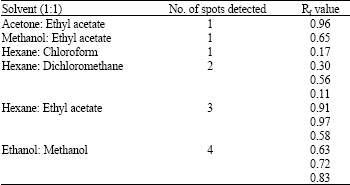
| Table 1: | Rf value for different type of solvent systems |
 | |
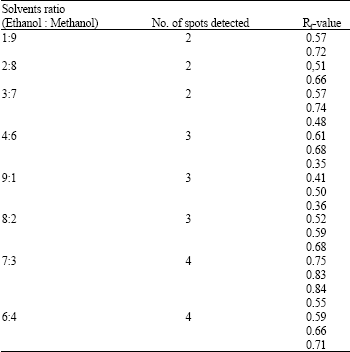
| Table 2: | Rf value with different solvents ratio |
 | |
As shown in Table 1, several combinations of two solvents were used with constant ratio of 1:1. Obviously the plates showed different number of spots under UV 254 nm as the substances appeared as dark spots against the greenish fluorescent background with various Rf values. Solvent systems with ethanol/methanol showed more spots compare to others which simultaneously demonstrate the best separation of the extracts.
Thus, to be more precise, separation by TLC was repeated with various ratio of ethanol/methanol to identify the best solvents ratio. Table 2 showed those results with different Rf values. During the experiments, mobile phase with ethanol/methanol ratio 6:4 has given the best readings of Rf values and number of spots on TLC plate. According to the particular study, an effective solvent is one that gives Rf in the range of 0.3-0.7 (Touchstone, 1992). It is also reported that if a development of too high polarity solvent is used, components in the mixture will move along with the solvent, no separation will be observed and the Rf will be too large, however, if the solvent has too low polarity, the components will not move sufficiently, separation will not occur and the Rf will be too small. Thus, the solvents system had been selected to use further in column chromatography.
Column chromatography was used to purify individual chemical compounds from the crude tomato leaves extract by gravity action. This purification method involves the same principles as TLC, but can be applied to separate larger quantities than TLC (Tolar and Neglia, 2003). Column chromatography allows the separation and collection of the compounds individually. The collected fractions were labeled with number 1 to 14 and yet again, TLC was used to monitor the effectiveness of this separation. Fractions number 7 to 10 gave a single spot on each of the TLC plate which proved the presents of a compound. Among all those four fractions, fraction number 9 has killed 82.4% of MCF-7 cells. This proved that fraction number 9 strongly inhibit the growth of MCF-7 cells. Parallel to previous reports, tomato leaves synthesizes the glycoalkaloid dehydrotomatine and α-tomatine which may give anti-cancer properties (Mendel and Levin, 1995; Mendel et al., 2009). Due to the rationales, possibly fraction number 9 contains those compounds which potentially can inhibit the growth of MCF-7 cells.
Later, the cytotoxicity of the fraction was further defined by determining the half maximal inhibitory concentration (IC50). Data obtained using microplate reader were used to calculate the percentage of viable and unviable cells. The formulae used are as follows:
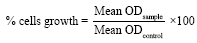 | (1) |
 | (2) |
The in vitro cytotoxicity assay was meant to determine the IC50 of the purified sample and Taxol towards the cells. It will measure the effectiveness of the sample in inhibiting the biological or biochemical function (Cheng and Prusoff, 1973). This quantitative measure indicates how much of a particular sample is needed to inhibit cancer cells growth by half. This will be very useful in pharmacological research. Moreover, this great biological assay, allow judgments to be made whether the compound is active or not. The nature of the data produced by the present assay would make the assessment more comprehensible. This research has used MCF-7 breast cancer cell lines as the experimental cells of cancer. The usage of MCF-7 breast cancer cells lines is widely used nowadays in numerous researches for the anti-cancer properties. MCF-7 cells are the most commonly used model of estrogen positive breast cancer. This cell line has been originally established in 1973 at the Michigan Cancer Foundation from a pleural effusion taken from a woman with metastatic breast cancer (Soule et al., 1973) and since then MCF-7 cells have been widely distributed in laboratories throughout the world resulting in the production of different cellular stocks. While Vero cells are used as positive control of in vitro cytotoxicity assay. The Vero cell is a normal mammalian cells extracted from African green monkey kidney which generally used in pharmaceutical research (Yasumura and Kawakita, 1963).
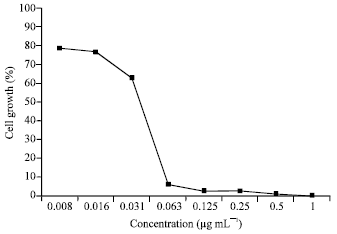
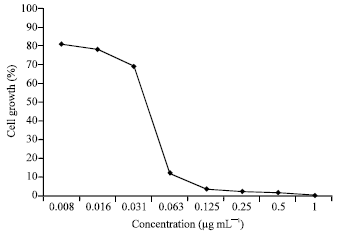
In this cytotoxicity assay, MCF-7 cells were treated with purified fractions of tomato leaves and Taxol at eight concentration intervals, range between 100 to 0.78 μg mL-1 and 1 to 0.008 μg mL-1, respectively. Typical data for this assay were displayed by plotting graph of percentage of viability cells versus concentration (μg mL-1) to observe the cells activity response towards particular drugs. Referring to Fig. 1 and 2, purified sample gave a reasonable and exceptional effect towards MCF-7 breast cancer cells with IC50 values of 5.85 μg mL-1, while Taxol gave IC50 value of 0.039 μg mL-1.
In the US National Cancer Institue (NCI) plant screening program, plant extract is generally considered to have in vitro cytotoxicity activity if the IC50 value is less than 20 μg mL-1 (Boik, 2001). Although, the IC50 of Taxol towards MCF-7 cells was less than 20 μg mL-1, still the value indicates that Taxol drugs have higher cytotoxicity where it can kill the cells by only less concentration. This may give a significant long term side-effects to the cancer patients.
Purified sample can be judged to be safe as it has IC50 value of 765.6 μg mL-1 in Vero cells treatment with eight concentration intervals, range between 4000 g mL-1 to 31.25 μg mL-1 (Fig. 3). According to US NCI, the value of IC50 which is more than 20 μg mL-1 is considered as safe and not active. However, Taxol has the IC50 value of 0.045 μg mL-1 (Fig. 4) when treated to Vero cells which are considered as potentially toxic and not safe (Cheng and Prusoff, 1973).
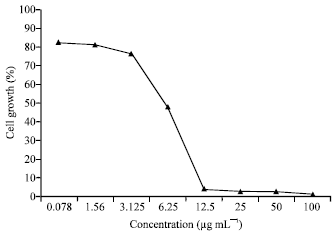 | |
| Fig. 1: | Percentage inhibition curve of MCF-7 cells towards Lycopersicon esculentum |
 | |
| Fig. 2: | Percentage inhibition curve of MCF-7 cells towards Taxol |
 | |
| Fig. 3: | Percentage inhibition curve of vero cells towards Lycopersicon esculentum |
 | |
| Fig. 4: | Percentage inhibition curve of vero cells towards Taxol |
This demonstrates that Taxol affects normal cells which may cause severe side effects (Boik, 2001). Besides, this has been proved by previous clinical trials, in which a group of people taking the drug have documented side effects (Kristi and Arthur, 2009). In these studies, the most common side effects that have been suffered by 90% of patients are neutropenia, leucopenia, anemia, hair loss, muscle pain or joint pain, nausea and vomiting as well as diarrhea. Apparently, Taxol drugs are not actually safe to human body especially in continuous treatment as it is contradict to the goals of cancer treatment which are to eradicate the tumor without damage to the rest of the body and to prolong the patient survival time.
CONCLUSION
As a conclusion, tomato leaves extract significantly contains purified active fractions with anti-cancer properties which can be one of anti-cancer agent. This discovery process work is generating a variety of potential new agents worthy of further pursuit as potential therapeutic agents. It is important for us to realize that traditional medicine can also be used to treat cancer rather than taking conventional drugs which have a long term side effects to human body. Therefore, this research not only upholds the drug discovery for cancer treatment but also contributes to drug development in the future. By selecting tomato leaves as the sources of anti-cancer compound together with the method used in this research, hopefully it will be a remarkable contribution in cancer disease treatment in the forthcoming period.
ACKNOWLEDGMENTS
The authors gratefully acknowledge the support from International Islamic University Malaysia in carrying out this research.
REFERENCES
- Indra, D., N. Ramamurty, R. Kannan and M. Babu, 2007. Cytotoxic effect of achatininH (lectin) from Achatina fulica against a human mammary carcinoma cell line (MCF7) In vitro Cell. Dev. Biol.-Anim., 43: 306-314.
CrossRefDirect Link - Junichiro, E., H. Shinohara, S. Yoshida, T. Tsukiboshi, H. Negishi, K. Suyama and S. Tsushima, 2007. Culturable leaf-associated bacteria on tomato plants and their potential as biological control agents. Microbial. Ecol., 53: 524-536.
PubMedDirect Link - Mendel, F., E.L. Carol, S.U. Lee, H.J. Kim and I.S. Lee et al., 2009. Tomatine-containing green tomato extracts inhibit growth of human breast, colon, liver, and stomach cancer cells. J. Agric. Food Chem., 57: 5727-5733.
Direct Link - Newman, D.J., G.M. Cragg and K.M. Snader, 2003. Natural products as sources of new drugs over the period 1981-2002. J. Nat. Prod., 66: 1022-1037.
CrossRefPubMedDirect Link - Soule, H.D., J. Vazguez, A. Long, S. Albert and M. Brennan, 1973. A human cell line from a pleural effusion derived from a breast carcinoma. J. Natl. Cancer Inst., 51: 1409-1416.
CrossRefPubMedDirect Link - Zabkiewicz, J.A., R. Keates and J.W. Brooks, 1968. Leaf extract purification by silver nitrate/silica gel thin-layer chromatography. Biochem. J., 109: 929-930.
Direct Link