

S. Islam
Laboratory of Biological and Environmental Systems, Faculty of Agriculture, Kochi University, Nankokushi, Monobe B200, Kochi 783-8502, Japan
M.S. Hossain
Department of Chemistry, University of Dhaka, Dhaka-1000, Bangladesh
N. Nahar
Department of Chemistry, University of Dhaka, Dhaka-1000, Bangladesh
M. Mosihuzzaman
Department of Chemistry, University of Dhaka, Dhaka-1000, Bangladesh
M.I.R. Mamun
Department of Chemistry, University of Dhaka, Dhaka-1000, Bangladesh
Journal of Applied Sciences
Year: 2009 | Volume: 9 | Issue: 5 | Page No.: 973-977







ABSTRACT
A reverse phase high performance liquid chromatographic method with an acetonitrile-water mobile phase gradient and UV/Visible detection is described for the determination of three pesticides, frequently used in agriculture, in eggplant samples. The samples were sprayed with three pesticides namely, Diazinon, Malathion, Sumithion at three different doses and were harvested at two different Pre-Harvest Interval (PHI) of days 1 and 5 after the application of the pesticides. Sample preparation involved extraction with ethyl acetate and clean up was accomplished by solid-phase extraction using florisil columns. Calibration curves that were constructed for the analytes with matrix matching followed linear relationships with good correlation coefficients (R2>0.990). The average recoveries of the pesticides which were sensitive to matrix effects ranged from 88-120%. Detection limit of less than 0.02 mg kg-1 showed that the method developed can be used to determine the pesticide residues in concentrations lower than the maximum residue limits. In the analysis of residues, samples treated with Diazinon at all doses, residual amounts above Maximum Residue Limit (MRL) (0.02 mg kg-1) were found. Malathion and Sumithion were found above MRL (0.5 mg kg-1) value in only one sample for each pesticide.
PDF Abstract XML References Citation
How to cite this article
S. Islam, M.S. Hossain, N. Nahar, M. Mosihuzzaman and M.I.R. Mamun, 2009. Application of High Performance Liquid Chromatography to the Analysis of Pesticide Residues in Eggplants. Journal of Applied Sciences, 9: 973-977.
DOI: 10.3923/jas.2009.973.977
URL: https://scialert.net/abstract/?doi=jas.2009.973.977
DOI: 10.3923/jas.2009.973.977
URL: https://scialert.net/abstract/?doi=jas.2009.973.977
INTRODUCTION
The behavior of pesticide in agricultural produce is of great importance, since the disappearance, persistence or partial transformations of such a compound determine its usefulness or its potential effects to our environment (Bergmann et al., 1989; Waxman, 1998), Currently organophosphates (OP), carbamates and pyrethroids are mostly used while organochlorine (OC) insecticides have been banned because of their toxicity, persistence and bioaccumulation in the environment (Molto et al., 1991). Carbamates and pyrethroids are of limited persistence as compared with organophosphates. However, knowledge of withholding period becomes important even for less persistent insecticides, specifically in fruits and vegetables since these crops are harvested shortly after pesticide application. The problem of food contamination with pesticide residues is a cause of concern for almost everyone and everywhere. Many of the developed countries have established regular monitoring programmes (Reed et al., 1987). These programmes determine the contamination levels in food products and identify those possible occasions in which pesticide residues exceed their tolerance levels due to incorrect agricultural practices. Pesticide residues above the tolerance limits (MRL) in the crop at harvest are a cause of great concern globally and nationally. The gravity of the problem of residues is augmented by untimely, uneconomical and unscrupulous spraying of pesticides. These residues make food commodities hazardous for human consumption and export. They also pollute the environment.
There is a lack of published data in Bangladesh for the fate of the insecticide on field-grown eggplant fruits and in the processed products. In addition, local farming practices concerning application of pesticides and subsequent harvest of treated crops have also raised concerns over the possibility of excessive residues on crops sold in local markets. Therefore, the present research was designed to study the residues of pesticides in eggplant fruits. Emphasis on the safety periods for this insecticide in the tested vegetable was considered.
Pesticide residue analysis can be carried out efficiently by various biological and chemical techniques (immunoassay, thin layer chromatography and capillary electrophoresis, etc.) but the most popular methods for this type of analysis are Gas Chromatography (GC) and Liquid Chromatography (LC). A critical review of literature showed that different solvents such as n-hexane, petroleum ether, methylene chloride and acetone or ethyl acetate have been used for extraction of pesticide residue from fruits and vegetables (Kovacicova et al., 1975; Kearney and Philip, 1978). As more polar pesticides, such as organophosphates and phenoxyacetic acid, came into use, more polar solvents, such as chloroform, acetone, acetonitrile and methanol were found to be good (Luke et al., 1981). Kadenezki et al. (1992) and Startin et al. (2000) found that ethyl acetate proved to be a good solvent as compared to other solvents for the extraction of residues of several pesticides from fruits and vegetables because its polarity is high and it is a less volatile and thermally labile compound. In the present study, for the extraction of pesticide residues from fruit and vegetable samples, the Anderson and Palsheden (1998) method was followed with little modification because it is faster, less laborious, friendly to environment and less expensive. And a florisil clean up method was adapted in our analysis being necessary to modify the preconditioning steps. The determination was carried out by reversed phase HPLC with UV detection modifying the parameter to achieve a good separation between the front and the pesticide peak.
Therefore, this study aimed to throw light on how to:
| • | Develop simplified conditions for the RP-HPLC analysis to determine the residue levels of various insecticides on eggplant. |
| • | Study the rates of residue dissipation of three organophosphorus insecticides (Diazinon, Malathion and Sumithion) after application to eggplants in field experiments under agro climatic conditions of Bangladesh. |
MATERIALS AND METHODS
Sample material: For the present study, field experiments were conducted during the spring of 2005 in an experimental field in the farm of the Entomology Division, Bangladesh Agricultural University, Mymenshing. Three pesticides under this study were sprayed on the fields when the eggplants were matured for harvest. Untreated control plots were included for each treatment. The plants were sprayed with Diazinon at the recommended rate of 1.7 L ha-1, double of the recommended dose 3.4 L ha-1 and half of the recommended dose 0.85 L ha-1. Similarly six samples for each of the pesticide Malathion and Sumithion were sprayed at the same recommended dose of 1.12 L ha-1, double of the recommended dose 2.24 L ha-1 and half of the recommended dose 0.56 L ha-1, respectively. All agricultural management practices were made as usually practiced in commercial production of eggplant. Fruit samples were randomly collected (500 g were sampled per replicate). For each treatment, fruit samples were harvested on day 1 and 5 following the pesticide application. The collected representative samples were placed in plastic bags and frozen at -15°C until insecticide residue analysis.
Chemicals and reagents: The organic solvents, acetonitrile, ethyl acetate, hexane, diethyl ether used were HPLC grade and were purchased from E. Merck. Technical grade pesticide standards were obtained from Bangladesh Agricultural Research Institute (BARI) with a purity of 95-99%. The standards were stored in a freezer at -15°C. Ultra high quality water was obtained from Milli-Q water purification system (Millipore, Bedford, MA, USA). Milli-Q Water and acetonitrile were degassed by vacuum suction. All samples and solvents were filtered through Millipore membrane filters (Polysulfone membrane and 0.45 μm pore size) before injection on the column.
Likewise anhydrous sodium sulphate for residue analysis, 12-60 mesh, was maintained at 300°C overnight. Florisil was activated at 300°C overnight to get rid of any moisture adsorbed into it. A source of pure nitrogen was used for evaporation to dryness in the extraction step.
Standard preparation: Stock solutions of Diazinon, Malathion and Sumithion were prepared in acetonitrile and stored at -15°C. For the analysis of each type of pesticides, the matrix-matched working standard solutions were prepared immediately before injection. After the extraction and clean up procedures, aliquots of a solution containing the target pesticides were added to the resulting untreated sample matrix (Erney et al., 1993) to give standards of the required concentration.
Extraction: Each vegetable sample (75 g) was homogenized by the use of a kitchen blender. The blended material was extracted with ethyl acetate (Anderson and Palsheden, 1998) (150 mL), anhydrous sodium sulphate (60 g) in a conical flask using an Ulta-Turrax (IKA-WERK) for 4-5 min. The content was allowed to settle down for about one hour and the ethyl acetate extract was then filtered through a Buchner-funnel fitted with a filter paper covered by 20 g of anhydrous sodium sulphate. After filtration, the extract was evaporated to dryness and redissolved in 5 mL of Hexane and were then evaporated using rotary vacuum evaporator until the volume was about 1.0 mL. The extract was then transferred to graduated test tube and the final volume was adjusted to 1.0 mL by adding hexane.
Isolation of residues/cleanup: All samples were cleaned up by Florisil column before analysis by High performance liquid chromatography. According to Lopez et al. (1989), florisil (20 g) in hexane was allowed to settle in a chromatographic column (45 cm x 20 mm, i.d.) by tapping the column. To the top of the florisil, a layer of 1 to 2 cm deep anhydrous sodium sulphate was added. Then the column was pre-eluted with 60 mL of hexane and the liquid was discarded. Concentrated eggplant extract (1 mL) in hexane was transferred to the column. Then the column was eluted with 200 mL of 15% Diethyl ether in hexane for the analysis of Diazinon. The organic phase thus obtained was evaporated to complete dryness in a rotary evaporator at a temperature of 40-45°C. The dry residue was redissolved in 1 mL of acetonitrile. For the cleanup of the sample extract for Malathion the eluting solvent was 200 mL of 15% Diethyl ether in hexane followed by 200 mL of 50% Diethyl ether in hexane. The elution was performed with 200 mL of 4% acetone in hexane to collect the cleaned sample extract of Sumithion treatment.
HPLC systems: High Performance Liquid Chromatography was performed on columns, SUPELCO Discovery Reversed Phase C18 (of 25 cm x 4.6 mm i.d., particle size 5 μ) using a Shimadzu SCL-10AVP, version 5.22 high performance liquid chromatography equipped with a variable length UV/Visible detector (SPD 10 AVP). The samples were injected manually through a Rheodyne injector. HPLC working conditions were, Binary gradient, Eluent solvent (Acetonitrile: water; 70:30) and flow rate 0.8 mL min-1 and injection volume (loop size) 100 μL and the wavelength of the UV/visible detector was fixed at 254 nm for the residual analysis of Diazinon and 230 nm for the analysis of other two pesticides (i.e., for Malathion and Sumithion).
Identification and quantification: The identification of target pesticides were accomplished on the basis of the retention times of the analytes by searching in the appropriate retention time windows. Quantification was performed by external calibration. Sample analysis were run in triplicate and in most, relative standard deviations of less than 10% were achieved.
Recovery: To examine the efficacy of extraction and clean up, recovery studies were performed. Three samples for each type of pesticide treatments were spiked with known concentration of the pure insecticide standard solution and extraction and clean-up were performed as described earlier. The concentration of each pesticide in the final extracts was calculated.
Statistical analysis: External calibration and recovery tests were performed. The residue results were the means from three replicates of each treatments and all data were analyzed using simple descriptive statistics such as means, standard deviations, using Kaleidagraph version 4 for windows.
RESULTS AND DISCUSSION
Limit of detection: Limit of Detection (LOD) was calculated from the peak intensity at 0.1 mg kg-1 and blank levels in recovery tests. LOD was defined as S/N > 4 so that it is in the linear range of the standard calibration. The LOD of Diazinon, Malathion and Sumithion was 0.02 mg kg-1.
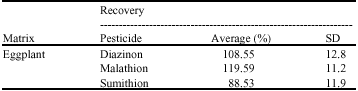
Recovery: Table 1 shows the recoveries which were obtained by triplicate analysis of eggplant sample spiked with each type of pesticide at one fortification level. These values were satisfactory for residue analysis and are of the same order as those obtained by using more complicated methodologies. Residues were corrected according to the average of recovery.
Extraction/clean up: Sample preparation presents the advantages of making extraction and liquid partitioning in organic phase in a similar step. The use of blender allows intensive mixing, creating micro droplets, which increase exchange surface. Thus, laborious conventional liquid-liquid partitioning can be substituted by a rapid technique, since few minutes are enough to obtain the final organic phases.
Large amount of coextractants results in complex chromatograms which are difficult to interpret. Florisil sorbents have been used to eliminate non-polar plant coextractants rapidly and efficiently. After passing the extract through florisil column, most of the plant pigments were removed and the eluent became pale yellow. The final extract contains very few interfering peaks and the main benefit is lower limit of detection.
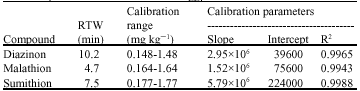
Calibration curve: The concentrations of the calibration levels were selected for each pesticide according to the maximum residue limits. The linearity of the calibration curve was studied and better, quantitation results were obtained where peak area rather than peak height was considered.
| Table 1: | Summary of recovery data for each pesticide |
 | |
| Table 2: | Retention Times Windows (RTWs) and typical calibration parameters of the method in eggplant matrix |
 | |
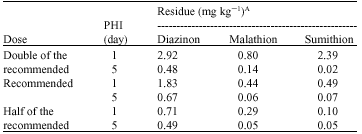
| Table 3: | Residues of Diazinon, Malathion and Sumithion on eggplant at various intervals after treatment |
 | |
| AThe results are expressed on fresh weight basis | |
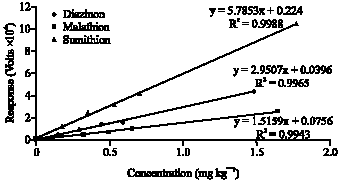 | |
| Fig. 1: | HPLC calibration curves for Diazinon, Malathion and Sumithion prepared in crude eggplant extracts |
The calibration data obtained are shown in Table 2. As shown in Fig. 1, good linearity of response was found for all pesticides at concentrations within the tested interval, with linear determination coefficients higher than 0.990.
Residues: The pesticide residues present in the eggplant samples were identified and quantified with reference to standard pesticides. The residue levels of pesticides found at different intervals on different samples are listed in Table 3.
It was found that Malathion and Sumithion was present below the Maximum Residue Limit (MRL) value (0.5 mg kg-1) (Anonymous, 2001; Inger, 2004) in all the samples except one, which was sprayed with double of the recommended dose and was harvested after 1 day of treatment. Diazinon was detected and the amount was above the MRL value (0.02 mg kg-1) (Anonymous, 1993) in the entire six samples.
The initial residues of Sumithion obtained by HPLC on the sample sprayed with double of recommended dose and harvested on the following day was 2.39 mg kg-1. After 5 days, it was dissipated to 0.02 mg kg-1, thus representing a loss of 99%. The samples did not contain any detectable residues 5 days after application. However, the initial residues of Malathion on samples treated with double of the recommended dose, analyzed by HPLC, dissipated from 0.80 to 0.05 mg kg-1 (93.75%) within 5 days. Subsequent samples had residues below MRL value. This indicates that the detection of Malathion is not easy as it may rapidly vanish from the surface of treated plants because of chemical and enzymatic decomposition and evaporation and has low persistence in the environment. In plant`s tissues, Malathion may intensively hydrolyze by phosphatases and carboxyesterases along the P-X bond and ester to form dimethyl phosphorothiotioic and other acids having a low toxicity.
But, in the case of Diazinon, residues were found above MRL value (0.02 mg kg-1) in all the samples, even at the sample treated with half of the recommended dose. After 5 days of sampling, the dissipation of Diazinon was only 83% of its initial value at double of the recommended dose. The data indicates that the residues of Diazinon in eggplant decrease with the longer time interval of sampling after spraying. That is the deposition seemed to decrease with the increase of Pre-Harvest Interval (PHI) showing lower persistence.
From the results, it was revealed that Malathion and Sumithion were safer than Diazinon. It was found to be more persistent than Malathion and Sumithion. Having the same treatment and similar conditions Diazinon showed more residues even from lower dose of pesticide. Residues of these pesticides showed a gradual declining trend and reached below the MRL between 5-12 days, depending on the chemicals nature of the pesticide. Based on the data generated on the residues of these pesticides at different harvest intervals, safe harvest period for the above mentioned pesticides may be determined. Commercial eggplant samples obtained in local markets of Bangladesh were analyzed by the proposed method. None of the studied pesticides were detected.
Since the organophosphorus and pyrethroids pesticide residues are not degraded into non-toxic products in a short period of time, they persist in the vegetable. Therefore, it is necessary to analyze more vegetable samples to find out whether the pesticide residues are within the Acceptable limit of Daily Intake (ADI) or not.
CONCLUSION
When the pre-harvest intervals between treatments and harvest are not respected by the farmers, the risk of having higher pesticide levels is not negligible. In this case, the higher levels of pesticides can involve considerable economic losses if the maximum residue limits established by FAO/WHO are surpassed. In conclusion, the present study may be useful for establishing MRL and assessing the amount of pesticide residues in vegetables under Bangladesh field conditions and suggests the need of implementation of these safety intervals before harvesting and marketing such crop fruit. Moreover, harvesting these vegetables at suitable intervals has to be strictly considered by the farmers.
REFERENCES
- Erney, D.R., A.M. Gillespis, D.M. Gilvydis and C.F. Poole, 1993. Explanation of the matrix-induced chromatographic response enhancement of organophosphorus pesticides during open tubular column gas chromatography with splitless or hot on-column injection and flame photometric detection. J. Chromatogr., 638: 57-63.
CrossRef - Kadenczki, L., Z. Arpad, I. Gardi, A. Ambrus, L. Gyorfi, G. Reese and W. Ebing, 1992. Column extraction of residues of several pesticides from fruits and vegetables: A simple multiresidue analysis method. J. AOAC Int., 75: 53-61.
Direct Link - Kovacicova, I., I. Kovac and V. Batora, 1975. Column extraction of organophosphorus pesticide residues from plants. Environ. Qual. Saf., 3: 86-88.
PubMedDirect Link - Avila, V.L., J. Milanes, N.S. Dodhiwala and W.F. Beckert, 1989. Cleanup of environmental sample extracts using Florisil solid-phase extraction cartridges. J. Chromatogr. Sci., 27: 209-215.
CrossRefDirect Link - Luke, M.A., J.E. Froberg, G.M. Doose and H.T. Masumoto, 1981. Improved multiresidue gas chromatographic determination of organophosphorus, organonitrogen and organohalogen pesticides in produce, using flame photometric and electrolytic conductivity detectors. J. Assoc. Official Anal. Chem., 64: 1187-1195.
PubMedDirect Link - Molto, J.C., Y. Pico, G. Font and J. Manes, 1991. Determination of triazines and organophosphorus pesticides in water samples using solid-phase extraction. J. Chromatogr., 555: 137-140.
CrossRef - Reed, D.V., P. Lombardo, J.R. Wessel, J.A. Burke and B. McMahon, 1987. The FDA pesticides monitoring program. J. Assoc. Official Anal. Chem., 70: 591-595.
PubMedDirect Link - Startin, J.R., M.D. Sykes, J.C. Taylor, S.J. Hird, K. Jackson, R.J. Fussell and A.R. Hill, 2000. Determination of residues of pirimicarb and its desmethyl and desmethylformamido metabolites in fruits and vegetables by liquid chromatography-electrospray/mass spectrometry. J. AOAC Int., 83: 735-741.
Direct Link