

Mostafa Emadi
Department of Soil Science, College of Agriculture, Shiraz University, Shiraz, Iran
Majid Baghernejad
Department of Soil Science, College of Agriculture, Shiraz University, Shiraz, Iran
Hamidreza Memarian
Department of Soil Science, College of Agriculture, Shiraz University, Shiraz, Iran
Mahboub Saffari
Department of Soil Science, College of Agriculture, Shiraz University, Shiraz, Iran
Hamed Fathi
Department of Soil Science, College of Agriculture, Shiraz University, Shiraz, Iran
Journal of Applied Sciences
Year: 2008 | Volume: 8 | Issue: 2 | Page No.: 288-294







ABSTRACT
This study outlines principal characteristics of soils occurred in the arid and semi-arid regions of Southern Iran. An outstanding characteristic of these soils is a prominent horizon of calcium carbonate accumulation at or near the depths of rainfall penetration. Objectives of this study were to discuss the genesis, morphological and physico-chemical properties of calcic horizons and mineralogy and classification of soils in semi-arid region. Five representative profiles were selected and soil samples were collected to determine the chemical and physical properties. Carbonate accumulation and clay eluviation-illuviation are the dominant processes in these soils. Calcium carbonate in the studied soils varied from continuous coatings with weakly cemented matrix which appears as few to common carbonate nodules (stage II) and to plugged horizon (stage III). Palygorskite, chlorite, illite, smectite and vermiculite minerals were observed in soil samples. Illite and chlorite are largely inherited from parent materials. Inheritance, transformation and neoformation from other minerals are the main pathways for the occurrence of smectite and palygorskite in the studied soils. Presence of kaolinite only in deeper calcic horizons suggested that these horizons developed in a tropical climate that shifted gradually towards semi-arid conditions. The soils of study site were classified as Typic Calcixerepts, Petrocalcic Calcixerepts and Calcic Haploxeralfs, respectively.
PDF Abstract XML References Citation
How to cite this article
Mostafa Emadi, Majid Baghernejad, Hamidreza Memarian, Mahboub Saffari and Hamed Fathi, 2008. Genesis and Clay Mineralogical Investigation of Highly Calcareous Soils in Semi-Arid Regions of Southern Iran
. Journal of Applied Sciences, 8: 288-294.
DOI: 10.3923/jas.2008.288.294
URL: https://scialert.net/abstract/?doi=jas.2008.288.294
DOI: 10.3923/jas.2008.288.294
URL: https://scialert.net/abstract/?doi=jas.2008.288.294
INTRODUCTION
The sustainable use of soil resources requires extensive knowledge about their genesis, morphological and mineralogical properties. Consequently, soil data bases are crucial for improved land use management and soil conservation practices. A database in semi-arid soils and land characteristics in South Iran is needed to allow rational planning of land and water resources utilization.
Calcic horizons are common in arid and semi-arid climates both in calcareous and non calcareous soils (Rabenhorst et al., 1991). The agricultural properties of soils such as limiting root and water movement, soil strength, soil cation exchange capacity, soil buffering nutrient availability and fixation are highly affected with calcic horizons. Calcic horizons may also be used as paleoecological indicators (Khresat and Qudah, 2006).
The calcic horizon is defined by the NRCS as an illuvial horizon in which secondary calcium carbonate or other carbonates have accumulated to a significant extent (Soil Survey Staff, 2003). Calcic horizons must be ≥15 cm thick, neither indurated nor cemented, ≥15% CaCO3 by weight and either ≥5% CaCO3 by weight than the underlying horizon or ≥5% secondary carbonates by volume (Soil Survey Staff, 2003). Regarding the origin of calcite accumulations (whether formed in situ or inherited), several suggestions were raised in the literature (Gile et al., 1966; Blokhuis et al., 1968, 1969; Khormali and Abtahi, 2003; Wilding et al., 1990).
Because pedogenic calcium carbonate is readily soluble, its depth in a soil profile is partially a function of rainfall. Jenny and Leonard (1934) used mean annual precipitation and depth to the top of the carbonate horizon as variables. Khormali and Abtahi (2003) reported that most striking features of soils in arid and semi-arid region is the carbonate enriched layer that tends to developed at the bottom of the illuvial horizon soils derived from parent materials containing carbonate. Gile et al. (1966) introduced the concept that carbonate morphology in soil changes with time and can be described by a sequence of morphologic stages related to soil age (Gile et al., 1981). Gile (1995) reported that Stage I carbonate horizons occurred in Holocene soils, while stage II, III and IV carbonate horizons occurred in Pleistocene soils in New Mexico.
In arid and semi-arid regions, palygorskite, smectite, chlorite, illite, kaolinite and vermiculite are the dominant clay minerals (Baghernejad, 2000; Khormali and Abtahi,2003). Type of clay minerals can be as a climatic indicator. Brite and Armin (2007) stated that in tropical conditions of Africa soils contained 65 to 85% kaolinite as a dominant clay fraction. Fibrous clay minerals (sepiolite and palygorskite) were found to be widespread in late Cenozoic sediments of arid and semi-arid regions of Iran (Khademi and Mermut, 1998). Owliaie and Abtahi (2006) stated that gypsiferous soils contain higher pedogenic palygorskite content as compared to calcareous soils. The petrocalcic horizon studied by Monger and Daugherty (1991) was also dominated by palygorskite. The studies suggested that petrocalcic horizon, may foster palygorskite neoformation, because of the high Mg content and abundant sand and silt grain dissolution found in the site. The alkaline conditions facilitate silica mobility, which can promote the formation of palygorskite mainly at the contact point with silica grains.
Limited precipitation and shallow soil-moisture penetration dissolved some salts such as calcite and gypsum, which precipitate to form genetic horizons. Thus, pedogenic calcium carbonate accumulation in soils in the form of calcic and petrocalcic horizons, is an important morphogenetic marker for soil classification (Wilding et al., 1990). The diversity of parent materials and soil types, in the intermountain plains of the Zagros region of Iran, offers a good environment to study the origin and distribution pattern of calcium carbonate accumulation and clay minerals in a semi-arid climate. Although almost 90% of the arable lands of Iran are located in arid and semi-arid regions, few published reports are available on clay mineralogy. This study is, therefore, attempted to investigate the genesis, morphological, physico-chemical and mineralogical properties of calcic horizons and classify the soils according to the USDA Soil Taxonomy.
MATERIALS AND METHODS
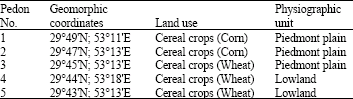
Description of the study area: This study was conducted in September 2006 on the Arsanjan Plain (about 11000 ha), located about 75 km East of Shiraz city in the Southwest part of Fars province in Southern Iran, from 29°43` to 29°47` N latitude and 53°09` to 53°16` E longitude. The study area is located within the piedmont plain and lowland physiographic units. The climate is semi-arid with an average annual precipitation and evaporation of about 392 and 1623 mm, respectively. The average annual temperature is about 14.8°C. Soil temperature and moisture regimes are thermic and xeric, respectively. The soil parent material is highly calcareous in the entire Southern Iran. Based on previous soil surveys, using satellite images of the area, five representative pedons with calcic horizons were selected for this investigation in semi-arid region of Southern Iran. The main characteristics of each representative pedon are shown in Table 1. Soils were described and classified according to the Soil Survey Manual (Soil Survey Staff, 1993) and Keys to Soil Taxonomy (Soil Survey Staff, 2003), respectively.
| Table 1: | Main characteristics of the studied sites |
 | |
Laboratory analysis: The soil samples were air-dried, ground to pass through a 2 mm sieve and analyzed for Cation Exchange Capacity (CEC), Organic Carbon (OC), pH, texture, CaCO3, CaSO4 and Electrical Conductivity (EC). CEC was determined by the sodium-saturation (Chapman, 1965). Organic carbon was measured by the Walkley and Black procedure (1934). The pH value of the saturated paste was measured by a glass electrode (McLean, 1982). Electrical conductivity was determined in the saturated extract (Salinity Laboratory Staff, 1954). Particle size distribution of the soil samples were determined by the Hydrometer method (Day, 1965). Calcium carbonate equivalent was determined by the acid neutralization method (Allison and Moodi, 1965). Gypsum content (CaSO4. 2H2O) was determined by precipitation with acetone (Salinity Laboratory Staff, 1954). Removal of chemical cements and separation of different size fraction for mineralogical analysis were done according to the methods described by Kittrick and Hope (1963) and Jackson (1975). Free iron oxides were removed from clay samples by the citrate-dithionate method (Mehra and Jackson, 1980). Clay samples were saturated with Mg2+ and K+, using 1N MgCl2 and 1N KCl, respectively. Mg-saturated clay was also solvated by ethylene glycol and K-saturated clays heated at 550°C for 2 h. The clay minerals were then identified by X-ray diffraction analysis (Jackson 1975). Estimation of clay mineral properties was semi-quantitatively obtained using the (001) peak intensities of the Mg-saturated and glycerol solvated samples (Johns et al., 1954).
RESULTS AND DISCUSSION
Morphological properties
Pedon 1:
Horizon depth (cm)
| Ap 0-20 | (10YR 4/4); clay loam; angular blocky; friable; violently effervescent; very fine pores; clear and smooth boundary |
| Bk1 20-55 | (7.5YR 4/4); sandy clay; angular blocky; firm; violently effervescent; common fine to medium irregular lime powdery pockets; very fine pores; gradual and smooth boundary |
| Bk2 55-100 | (7.5YR 4/4); clay loam; angular blocky; firm; violently effervescent; few to common carbonate nodules; very fine pores; no roots; abrupt boundary |
| C 100-120 | (7.5YR 4/4); clay loam; massive structure; firm; violently effervescent; very fine pores; no roots |
Pedon 2:
Horizon depth (cm)
| Ap 0-20 | (10YR 6/3); clay loam; angular blocky; firm; strongly effervescent; fine pores; clear and smooth boundary |
| Bk1 20-65 | (10YR 6/3); silty clay loam; angular blocky; firm; violently effervescent; filamentous carbonate; fine pores; clear and smooth boundary |
| Bk2 65-100 | (10YR 4/4); silty clay loam; angular blocky; firm; violently effervescent; few to common carbonate nodules; gradual and smooth boundary |
| C 100-120 | (10YR 4/4); silty clay loam; subangular blocky; firm; violently effervescent; filamentous carbonate between nodules; very fine pores |
Pedon 3:
Horizon depth (cm)
| Ap 0-18 | (10YR 5/1); loam; angular blocky; firm; strongly effervescent; many and very fine pores; clear and smooth boundary |
| Bk 18-40 | (10YR 5/1); sandy clay loam; angular blocky; firm; violently effervescent; common medium irregular lime powdery pockets; few and very fine pores; clear and smooth boundary |
| Bkm 40-45 | (10YR 8/3); very firm and cemented; violently effervescent; 1-10 mm thick laminar cap; 30% indurated limestone surrounded by pedogenic carbonates; no roots; clear and smooth boundary |
| B`k 45-85 | (7.5YR 6/4); sandy clay loam; subangular blocky; firm; violently effervescent; common medium irregular lime powdery pockets; very fine pores; no roots |
Pedon 4:
Horizon depth (cm)
| Ap 0-15 | (10YR 6/4); silty clay loam; angular blocky; friable; strongly effervescent; many and fine pores; clear and smooth boundary |
| Bt 15-50 | (10YR 5/4); silty clay loam; angular blocky; slightly hard; few thin clay films on ped faces; violently effervescent; many and fine pores; gradual smooth boundary |
| Btk 50-75 | (7.5YR 5/4); clay; angular blocky; slightly hard; few thin clay films on ped faces; strongly effervescent; fine irregular lime powdery pockets very fine pores; gradual and smooth boundary |
| Bkg 75-100 | (7.5YR 5/4); clay; angular blocky; slightly hard; violently effervescent; fine irregular lime powdery pockets very fine pores; very fine pores; many, fine and distinct mottles |
Pedon 5:
Horizon depth (cm)
| Ap 0-13 | (10YR 5/1); clay loam; granular; friable; strongly effervescent; many and very fine pores; clear and smooth boundary |
| Bw 13-49 | (10YR 5/1); silty clay; subangular blocky; firm; violently effervescent; many and very fine pores; clear and smooth boundary |
| Bkg 49-90 | (10YR 5/3); silty clay; angular blocky; friable; violently effervescent; fine irregular lime powdery pockets very fine pores; few and very fine pores; many, fine and distinct mottles; gradual and smooth boundary |
| Cg 90-130 | (10YR 6/1); clay; massive; firm; violently effervescent; many, medium and prominent mottles; no roots |
Soil physico-chemical characteristics: In pedon 1, clay content distribution did not show any clear trend with depth (Table 2). In pedons 4 and 5, clay increased with depths and in pedon 3, it increased only until 40 cm while in pedon 2, clay decreased with depth. Silt content increased towards the surface only in pedons 3 and 4. Increasing clay with depth is attributed to illuviation process, while silt accumulation at the surface horizons indicates accretion by wind (Khresat and Qudah, 2006).
As shown in Table 2, because of very high evaporation (1623 mm) in the study area, electrical conductivity in all of the pedons increases gradually toward the surface soils. It indicates that salts tended to concentrate in the top soil layer in the arid and semi-arid regions.
The rather low organic matter content in the surface and subsurface horizons is due to rapid organic matter decomposition rate in arid and semi-arid regions. The pH values (paste) of soils ranged from 7.21-8.3, with greater values in the lower horizons; this is typical for soils with free carbonates in parent materials. Results indicated that CEC content in pedons 2 and 3 is lower than pedons 4 and 5. The CEC of soil depends, in general, on the organic matter content, soil texture and type of clay minerals. Increasing CEC in pedons that located on lowland physiographic unit (pedons 4 and 5) is could be attributed to dominance of more smectite minerals in the soils.
| Table 2: | Selected chemical properties of pedons in the sites studied |
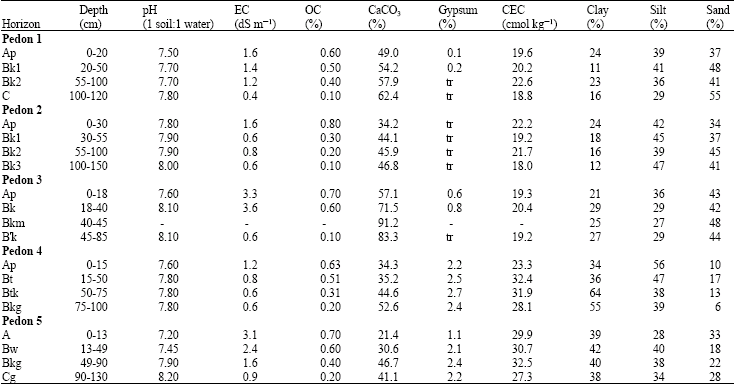 | |
| tr = trace; OC = Organic Carbon; CEC = Cation Exchange Capacity; EC = Electrical Conductivity | |
Calcium carbonate content showed a significant increase with depth in all of pedons. This suggests that during wet periods carbonate was removed from upper parts of the soil profile, especially obvious in surface horizons. Calcium carbonate content and landscape physiography indicated that the lower the physiography conditions, the deeper the calcium carbonate accumulation in soils. Gypsum content of the studied soils was low throughout the soil profiles and maximum content was 2.7%, which did not meet the requirements of gypsic horizon.
Clay mineralogy of soils: Mineralogical analysis showed similar compositions among the soils studied that consists of smectite, vermiculite, chlorite, illite, palygorskite and kaolinite, however, the relative abundance was different. The presence of illite, chlorite (micaeous minerals) abundance can be related to the parent material differences. The higher contents of these minerals in parent materials support this hypothesis (Table 3). Simple transformation of illite to smectite may play a major role in decreasing illite content at soil surface. Climatic conditions in the study area can result in leaching and releasing of K+ from micaeous minerals and mainly illite. Moreover, the calcareous environment, high in Mg and Si mobility, low activity of K+ and Al3+, may create favorable condition for the formation of smectite through transformation of illite at the soil surface (Khormali and Abtahi, 2003). Large amount of Mg present in medium, hence substitute for Al in the lattice and form smectite. Moreover, relative increase of CEC of clay minerals in the soils of lowland (pedons 4 and 5) support transformation of illite to smectite. Relative decrease of chlorite at soil surface has been lower as compared to illite in soils studied. It may suggest that chlorite cannot simply transform to expandable clay minerals. Since, vermiculite can form at pH<6 and large activity of Al, it could be attributed for the absence of this clay mineral in highly calcareous soils of Southern Iran (Khormali and Abtahi, 2003). Therefore, occurrence of vermiculite is not probable and hence chlorite cannot be a possible precursor mineral for smectite formation. Smectite might be expected to form pedogenically high in Si and Mg concentration, low lying topography and poor drainage conditions (Baghernejad, 2000). Thus, it seems that one of another probable pathway for formation of smectite in the studied soils can be attributed to the neoformation of this mineral, especially in lowland physiographic units (pedons 4 and 5). As we discussed above, illite is a main precursor mineral for the formation of smectite in soils, particularly at the surface horizons. Also, it seems that palygorskite is another possible precursor mineral for smectite formation in arid and semi-arid environments.
| Table 3: | Clay mineral distribution of the pedons studied |
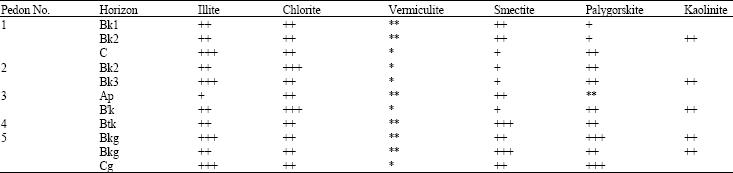 | |
| *: 1-3%; **: 3-6%; +: 5-10%; ++: 10-20%; +++: 20-40% | |
The results indicated that there is a reverse correlation between smectite and palygorskite in the pedons studied (Khormali and Abtahi, 2003). Palygorskite formation observed in arid and semi-arid soils has been stated to have two main origins: (1) inheritance from parent materials (Shadfan and Mashhady, 1985; Badraoui et al., 1992) and (2) pedogenic formation (Elprince et al., 1979; Monger and Daugherty, 1991). Neoformation of palygorskite seems to need large activities of Si and Mg with a pH of about 8 (Singer, 1989) that are present in the soils studied. Khademi and Mermut (1999) also reported the eluviation of palygorskite from topsoil and its entrapment by the pedogenic carbonate in the subsurface horizons. It can also be an approach for larger content of palygorskite in subsoil in comparison to the surface horizon in the studied soils. The results indicated that inheritance, neoformation and transformation from other minerals are the main pathways for the occurrence of smectite and palygorskite in the soils studied. Kaolinite is found in the deeper Bk horizons with only 10-20% (Table 3). It may be inherited from parent materials due to the absence in C horizons. There is not enough weathering taking place for formation of it from smectite minerals. Since presence of kaolinite can be a tropical indicator (Brite and Armin, 2007) it could be indicated that tropical climate was predominated in this region long years ago.
Genesis and classification: The development of limy horizons of some depth below the surface and the eluviation-illuviation of clay minerals are the most important pedogenic processes in study area. The calcic horizons are of pedogenic origin since their distribution is parallel to the land surface (Khresat, 2001) and found as powders, filaments, nodules and concretions cemented in petrocalcic horizons. Petrocalcic horizon formation in pedon 3 is the result of carbonate reorganization and micritization around the voids in the indurated limestone. With the addition of pedogenic carbonate, the voids become plugged and a laminar cap may form at the surface of horizons. It was recognized that a portion of the carbonates filling voids and in laminar caps may be derived locally rather than translocated from overlying horizons (Rabenhorst and Wilding, 1986).
Two stages of development of calcic horizons are observed in the soils studied. These stages are: stage II, with continuous coatings with weakly cemented matrix which appears as few to common carbonate nodules with powdery and filamentous carbonate in places between nodules and stage III, with plugged horizons (Gile, 1961). In pedons 1, 2 and 3, upper boundary of calcic horizon is in the depth range of 18-20 cm, while in pedons 4 and 5, its about in 50 cm. It could be attributed to the concave landscape position of these sites (Khresat, 2001), which increases the amount of effective precipitation and consequently leads to higher leaching of carbonates and clays. Clay migration apparently caused the formation of clay skins observed in the field (pedon 4). Continuous clay cutans and strong structure of Bt horizons (pedon 4) are characteristics of argillic horizons. The presence of thick and continuous clay cutans on the faces of peds in the argillic horizon prove that the clay accumulation resulted from translocation of clay from above horizons (Ballagh and Rung, 1970).
The soils located on lowlands (pedons 4 and 5) are classified as fine, mixed (calcareous), active, thermic Calcic Haploxeralfs and fine, mixed (calcareous), superactive Typic Calcixerepts, respectively. The soils located on piedmont plains are classified as fine silty, mixed (calcareous), superactive, thermic Typic Calcixerepts (pedons 1 and 2) and fine silty, mixed (calcareous), active, thermic Petrocalcic Calcixerepts (pedon 3).
CONCLUSION
The accumulation of carbonate and the eluviation-illuviation of clay minerals are the most important pedogenic processes in semi-arid region of Southern Iran. The calcic horizons in the study area are of pedogenic origin since their distribution is parallel to the land surface. Carbonate accumulations in the calcic and petrocalcic horizons vary from continuous coatings with weakly cemented matrix which appears as few to common carbonate nodules (stage II) to plugged horizons (stage III). As a result of increasing leaching, especially in lowland soils, clay minerals migrated and argillic horizons formed. Illite and chlorite are largely inherited from parent materials. Neoformation of palygorskite and smectite minerals, as a result of calcite and gypsum precipitation, seems to be one of the main pathways for the occurrence of these minerals, especially on lowland physiographic units. Another part of smectite and palygorskite minerals are inherited from parent materials and/or may be transformed from other minerals. Presence of kaolinite only in deeper calcic horizons suggested that these horizons developed in a tropical climate that shifted gradually towards semi-arid condition. The soils studied are classified as Typic Calcixerepts, Petrocalcic Calcixerepts and Calcic Haploxeralfs.
ACKNOWLEDGMENTS
This project was funded by a grant from research council of Shiraz University, Shiraz-Iran. The authors thank Dr. A. Abtahi and Mr. Zareian for their consultations.
REFERENCES
- Badraoui, M., P.L. Bloom and R. Bouabid, 1992. Palygorskite-smectite association in a xerochrept of the high chaouia region of morocco. Soil Sci. Soc. Am. J., 56: 1640-1646.
CrossRef - Ballagh, T.M. and E.C.A. Rung, 1970. Clay-rich horizons over limestone-illuvial or residual. Soil Sci. Soc. Am. Proc., 34: 534-536.
Direct Link - Blokhuis, W.A., T. Pape and S. Slager, 1968. Morphology and distribution of pedogenic carbonate in some Vertisols of the Sudan. Geoderma, 2: 173-200.
CrossRefDirect Link - Brite, J. and S. Armin, 2007. Genesis, properties, classification and assessment of soils in Central Benin, West Africa. Geoderma, 139: 357-370.
Direct Link - Elprince, A.K., A.S. Mashhady and M.M.A. Hussein, 1979. The occurrence of pedogenic palygorskite (attapulgite) in soils of Saudi Arabia. Soil Sci. Soc., 128: 211-218.
Direct Link - Gile, l.H., 1961. A classification of Ca horizons in soils of a desert region, Dona Ana County, New Mexico. Soil Sci. Soc. Am. J., 25: 52-61.
Direct Link - Gile, L.H., F.F. Peterson and R.B. Grossman, 1966. Morphologic and genetic sequences of carbonate accumulation in desert soils. Soil Sci., 101: 347-360.
Direct Link - Gile, L.H., J.W. Hawley and R.B. Grossman, 1981. Soils and geomorphology in the Basin and the Range area of Southern New Mexico-Guidebook to the Desert Project. New Mexico Bureau of Mines and Mineral Resource. 1st Edn., Memoir 39. New Mexico Bureau of Mines and Mineral Resources, Socorro, NM., pp: 222.
- Gile, L.H., 1995. Pedogenic carbonate in soils of the isaacks ranch surface, southern New Mexico. Soil Sci. Soc. Am. J., 59: 501-508.
Direct Link - Johns, W.D., R.E. Graim and W.F. Bradly, 1954. Quantitative estimation of clay minerals by diffraction method. J. Sediment. Petrol., 24: 242-251.
CrossRef - Khademi, H. and A.R. Mermut, 1998. Source of palygorskite in gypsiferous Aridisols and associated sediments from central Iran. Clay Miner., 33: 561-578.
Direct Link - Khademi, H. and A.R. Mermut, 1999. Sub microscopy and stable isotope geochemistry of carbonate and associated palygorskite in Iranian Aridisols. Eur. J. Soil Sci., 50: 207-216.
Direct Link - Khresat, S.A., 2001. Calcic horizon distribution and soil classification in selected soils of North-Western Jordan. J. Arid Environ., 47: 145-152.
Direct Link - Khresat, S.A. and E.A. Qudah, 2006. Formation and properties of aridic soils of Azraq Basin in Northeastern Jordan. J. Arid Environ., 64: 116-136.
CrossRefDirect Link - Khormali, F. and A. Abtahi, 2003. Origin and distribution of clay minerals in calcareous arid and semi-arid soils of Fars Province. Clay Minerals, 38: 511-527.
Direct Link - Kittrick, J.A. and E.W. Hope, 1963. A procedure for the particle size separation of soils for X-ray diffraction analysis. Soil Sci., 96: 319-325.
Direct Link - McLean, E.O., 1982. Soil pH and Lime Requirement. In: Methods of Soil Analysis, Part 2: Chemical and Microbiological Properties, Page, A.L., R.H. Miller and D.R. Keeney (Eds.). 2nd Edn., ASA and SSSA, New York, USA., pp: 199-224.
Direct Link - Monger, H.C. and L.A. Daugherty, 1991. Neoformation of palygorskite in a southern New Mexico aridisols. Soil Sci. Soc. Am. J., 55: 1646-1650.
Direct Link - Owliaie, H.R., R.J. Heck and A. Abtahi, 2006. Pedogenesis and clay mineralogical investigation of soils formed on gypsiferous and calcareous materials, on a transect, Southwestern Iran. Geoderma, 134: 62-81.
CrossRef - Rabenhorst, M.C. and L.P. Wilding, 1986. Pedogenesis on the Edwards Plateau, Texas: III. New model for the formation of petrocalcic horizons. Soil Sci. Soc. Am. J., 50: 693-699.
Direct Link - Rabenhorst, M.C., L.T. West and L.P. Wilding, 1991. Occurrence, characteristics and genesis of carbonate, gypsum and silica accumulations in soils. Soil Sci. Soc. Am. Special Publ., 26: 61-74.
Direct Link - Shadfan, H. and A.S. Mashhady, 1985. Distribution of palygorskite in sediments and soils of Eastern Saudi Arabia. Soil Sci. Soc. Am. J., 49: 243-250.
CrossRef - Walkley, A. and I.A. Black, 1934. An examination of the degtjareff method for determining soil organic matter, and a proposed modification of the chromic acid titration method. Soil Sci., 37: 29-38.
CrossRefDirect Link - Wilding, L.P., L.T. West and L.R. Drees, 1990. Field and Laboratory Identification of Calcic and Petrocalcic Horizons. In: Proceedings of the 4th International Soil Correlation Meeting (ISCOM); Characteristics, Classification and Utilization of Aridisols, Kimble, J.M. and W.D. Nettleton (Eds.). USDA., Washington, DC., pp: 79-92.