

Al-Kadeeb A. Siham
Department of Botany, Girls College of Education in Riyadh, P.O. Box 100683, Riyadh 11645, Saudi Arabia
Journal of Applied Sciences
Year: 2007 | Volume: 7 | Issue: 7 | Page No.: 1019-1024







ABSTRACT
In this study, soil samples for isolation of heavy metal resistance fungi were collected from different distance of Electric Meter manufactory in Second Industrial City, Riyadh, Saudi Arabia. Soil samples were analyzed chemically for heavy metal concentrations, total soluble salts and pH and mechanically for composition of soils. Saturation percent were determined also. Eighteen fungal isolates were grown in 10 mM concentration of either lead or copper ions. Aspergillus was predominant and represented by 6 species. Fusarium was represented by 4 species. Mucor was represented by 3 species. Penicillium was represented by 2 species. While Alternaria, Cephaliophora, Eurotium were represented by one species each. The intraspecific variability in growth response to Pb2+ and Cu2+ on agar and liquid culture was studied among isolated fungi. The growth rate of some fungi isolated on solid media was less sensitive to addition of lead or copper than biomass production in liquid culture.
PDF Abstract XML References Citation
How to cite this article
Al-Kadeeb A. Siham, 2007. Effect of Lead and Copper on the Growth of Heavy Metal Resistance Fungi
Isolated from Second Industrial City in Riyadh, Saudi Arabia. Journal of Applied Sciences, 7: 1019-1024.
DOI: 10.3923/jas.2007.1019.1024
URL: https://scialert.net/abstract/?doi=jas.2007.1019.1024
DOI: 10.3923/jas.2007.1019.1024
URL: https://scialert.net/abstract/?doi=jas.2007.1019.1024
INTRODUCTION
Heavy metals waste has increased rapidly since the industrial revolution. Toxic metals species are mobilized from industrial activities and fossil fuel consumption and eventually are accumulated through the food chain, leading to both ecological and health problems.
The influence of heavy metals on the microbial biomass varied with the kind of heavy metal and with the soil type.
Lead tends to accumulate in soils due to its low solubility and relative freedom from microbial degradation. It remains accessible to the food chain far into the future (Alloway, 1990).
Since copper is a widely used material, there are many actual or potential sources of copper pollution. Copper is essential to human life and health but, like all heavy metals, is potentially toxic as well significant (Nuhoglu et al., 2002).
The addition of copper to soil was reported to significantly decreased the amount of microbial biomass and to have a pronounced toxic effect on the size of the biomass compared to certain metals such as Pb and As (Aoyama and Nagumo, 1997).
Copper-resistance has been demonstrated in a number of microorganisms, including Aspergillus niger, Penicillium chrysogenum and Rhizopus stolonifer; Helicobacter pylori; Pseudomonas pickettii; Candida guilliermondii and Pseudomonas putida Strain S4 (Hashem, 1989; Ge and Taylor, 1996; Gilotra and Srivastava, 1997; Saxena and Srivastava, 1998, 2002).
Hashem (1995) found that radial growth of Aspergillus candidus was decreased by high concentration of cadmium and low copper concentration stimulates this growth.
Abd-El Naby (1997) found that high concentration of manganese, ferrous and copper reduced the growth of Aspergillus niger.
Hashem (1997) demonstrated the effect of cobalt, copper, lead, molybdenum, manganese and zinc on the growth of Alternaria alternata, Aspergillus flavus, Cladosporium herbarum, Curvularia lunata and Ulocladium chlamydosporum isolated from the industrial Al-jubail city, Saudi Arabia, at concentration of 500, 1000 and 2000 μg mL–1. Higher concentrations of Cu and Zn stimulated growth of tested fungi, while higher concentrations of lead, manganese and molybdenum inhibited growth of some fungi.
Richards et al. (2002) determined the sensitivity of 12 Frankia strains to heavy metals by a growth inhibition assay. About the effect of Pb2+ and Cu2+ on strains growth, they reported that most of the strains were less sensitive to Pb2+ (6 to 8 mM). While most strains were sensitive to 0.1 mM Cu2+, four strains were resistant to elevated levels of Cu2+ (2 to 5 mM and concentrations as high as 20 mM).
Sharma et al. (2002) investigated the biosorption potential of a fungal strain isolated from industrial wastewaters contaminated with zinc and other heavy metals. Also the growth of organisms was monitored in the presence of other metals such as Pb, Cu, Ni and Cr separately. The organism was capable of growing in each case at 100 mg L–1 initial concentration.
Tsekova and Todorova (2002) demonstrated the influence of copper (II) ion on the growth of Aspergillus niger.
Sani et al. (2003) studied the toxicity of Pb (II) to sulfate-reducing bacteria (SRB) using Desulfovibrio desulfuricans G20 in a medium specifically designed to assess metal toxicity. The effects of Pb (II) toxicity were observed in terms of longer lag times. Lower specific growth rates and in some cases no measurable growth. With an increase in medium pH from 6 to 8, Pb (II) toxicity decreased. At all pH values, in the presence of Pb (II) concentrations ranging from 3 to 15 μM, specific growth rates decreased and lag times increased. The minimum inhibiting concentration (MIC) of Pb (II) causing a complete inhibition in growth at pH 6 was 10 μM.
The present study aimed to isolated heavy metal resistance fungi from soils collected from different distance of Electric Meter manufactory in Second Industrial City, Riyadh, Saudi Arabia with soil analysis for this place. Also this study aimed to develop the effect of lead and copper ions on mycelial growth of these fungi.
MATERIALS AND METHODS
Characteristics of soil: Method describe by Piper (1955) was used for determination the soil type. Chemical analysis of the soil sample were done by methods used by Chapman and Pratt (1961). Heavy metals (Al, Co, Cu, Pb) in soil were measured by an atomic absorption spectrophotometer after digestion with a mixture of HNO3-HCl (Soon and Abboud, 1993). Soil analysis was done with help of Soil Science Department, College of Food and Agriculture Science, King Saud University.
Collection and isolation of fungi: Soil samples from different distance 0, 30, 60 and 100 m of Electric Meter manufactory in Second Industrial City, Riyadh, Saudi Arabia were collected according to the method described by Johnson et al. (1960) at a depth of 1-10 cm during the month of February (2006) in which the temperature was 30°C and the percentage humidity was 24% (five individual locations were selected within each sampling site). The samples were stored in sterile plastic bags and transported to the laboratory. Five collections of a total weight of 5000 g from the same distance were mixed thoroughly. Approximately, half of the mixed samples were used for soil analysis, the rest were sieved through screens with a 0.5 and 0.1 mm diameter opening to remove stones and other debris and used for isolation of fungal content. Soil plates method was used for isolation fungal flora as described by Warcup (1957).
Each soil sample was culture on 3 replicates plates of peptone-dextrose agar containing rose bengal and antibiotic (Martin, 1950) with 2 mmole of either PbNO3 or CuSO4.5H2O. All plates were incubated at 25±2°C for one week and examined daily. Further inspections of the plates were made two weeks after plating to record slow growing fungi. Fungal growing on these plates were regarded as having at least low level of Pb2+ and Cu2+ tolerance and were retreated on modified Dox agar (Naguib, 1967) plates for isolation of single colonies.
Screeing for high lead and copper tolerance fungi: The isolated fungi from the previous experiment were, therefore, screened for their abilities to tolerate the level of 10 mM concentration of lead and copper ions. All isolates were separately inoculated onto modified Dox agar plates with 10 mM concentration lead or copper ions. There were 3 replicates perisolate. All plates were incubated at 25±2°C for one week. Isolates that did not grow were discarded whereas ones that grew were regarded as being tolerant to a high level concentrations of lead and copper ions and were used for further testing.
Identification of fungal isolate: Slides of hypha, conidiophores and conidia were prepared by mounting with lacto-fuchsine and examined by viewing at 1600 X magnification using a compound microscope. Size and color of fungal colonies on media also were also recorded. All fungal isolates were identified according to Samson et al. (1996) and Ellis (1971, 1976).
Effect of lead and copper ions concentration on fungal growth rate and mycelium dry weight: Inoculum (8 mm disk) from 7 day old culture of isolates were inoculated on the center of modified Dox agar plates (9 cm) diameter containing different concentrations i.e., 0, 2, 6, 12 mM of sulphate salt of copper or nitrate salt of lead. There were three replicates for each experiment. The media without metal served as control. After various periods of incubation at 25±2°C the diameters of mycelia growth, in four directions and the radial growth rates (in cm per day) were determined (Babich and Stotzky, 1977). Mycelia growth was measured on days 3 after incubation for Mucor circinelloides and Mucor racemosus, on days 4 for Cephaliophora irrgularis and on 5 days for Alternaria chlamydospora, Aspergillus niger, Aspergillus orchaceus, Aspergillus oryzae, Aspergillus parasiticus, Aspergillus tamarii, Aspergillus ustus, Eurotium herbarium, Fusarium equiseti, Fusarium poae, Fusarium solani, Fusarium sporotrichioids, Mucor plumbeus and Penicillium glabrum.
Inoculum (8 mm disk) of isolated fungi were added to 100 mL aliquots of liquid modified Dox media containing the same concentration of copper sulphate or Nitrate salt of lead in order to determine the dry weight of isolated fungi. Each salts treatment had three replicates. This assay had positive control (no salts but with fungal inoculum). All flasks were incubated at 25±2°C and the mycelium was harvest at 5 day intervals. The mycelium was transferred to pre weight filter papers thoroughly washed with distilled water and drained by suction. The mycelial pellets were then placed in a hot air dry in oven at 28°C for 24 h. The mycelia were left to dry till constant weight.
RESULTS AND DISCUSSION
Characteristics of soil: Table 1 observed that the pH value of the soil samples tested was neutral alkaline (range 7.58-7.76). The concentration of Ca2+ are the highest compared with another cations ranged between 53-80 meq–1, followed by Mg2+ ranged between 31.2-66.6 meq–1, while Na+ and K+ concentrations are low ranged between 6.0-8.3 and 5.16-10.32 meq–1, respectively. However the concentration Ca2+, Mg2+ and K+ were less than that reported before for Saudi Arabia soils (Hashem, 1993; Hashem and Al-Johany, 1994), while Al-Kadeeb (2006) reported highest concentration for Ca2+, Mg2+ and Na+ ions, but lowest in Mg2+ions concentration when compared with this study. Also Table 1 show that the concentration of Cl- was the highest compared with another anions ranged between 190-350 meq–1, but it was less than that reported before for Saudi Arabia soil (Al-Kadeeb, 2006).
Table 2 show that the concentrations of Al3+ in the tested sample soil was less than reported before for Saudi Arabia soils (Hashem, 1990, 1993), but was close agreement with that reported by Al-Kadeeb (2006).
In the present study also Co concentration of tested sample soil was less than reported before for samples collected from industrial Yanbu city, from Al-Madeinah and from industrial Areas (Hashem, 1993; Hashem and Al-Johany, 1994; Abed and Al-Wakel, 2002). Lead concentration in the tested soil sample was to be similar to those studies reported before by Hashem (1993) and Al-Kadeeb (2006), but was highest than that study reported by Hashem and Al-Johany (1994). The concentration of copper in this study was less than other studies reported before in some Saudi Arabia soils (Hashem, 1990, 1993).
Effect of copper and lead concentration on fungal growth rate and mycelium dry weight: Results (Table 3) indicated that the mycelium dry weight of Aspergillus niger, Aspergillus oryzae, Aspergillus tamarii, Aspergillus ustus, Cephaliophora irregularis, Eurotium herbariorum, Fusarium equiseti, Fusarium poae, Fusarium solani, Fusarium sporotrichioides, Mucor circinelloides, Mucor plumbeus, Mucor racemosu, Penicillium roqueforti decrease consistently with increasing level of lead ions concentration in the growth medium, while mycelium dry weight of Alternaria chlamydospora and Penicillium glabrum was stimulated in 2 mM concentration of lead ions, by about 23 and 9.6%, respectively, while it decrease in concentration 6 and 12 mM of lead ions by about 17 and 29%, respectively for Alternaria chlamydospora and by about 39 and 44%, respectively for Penicillium glabrum, when compared with that of control, also mycelium dry weight of Aspergillus ochraceus and Aspergillus parasiticus was increase in 2 and 6 mM concentration of lead ions by about 43 and 4%, respectively for Aspergillus ochraceus and 6 and 4%, respectively for Aspergillus parasiticus and it decrease in concentration 12 mM by about 4% for Aspergillus ochraceus and 15% for Aspergillus parasiticus, when compared with that of control.
| Table 1: | Chemical analysis of soil samples |
 | |
| * Saturation percent, ** Electric conductivity, *** Sodium saturation ratio | |
| Table 2: | Mechanical analysis as well as heavy metals content of soil sample |
 | |
| Table 3: | Change in mycelia dry weight during growth of the isolated fungi at 2, 6 and 12 mM concentrations of lead and copper ions on modified Dox media over 5 day incubation at 25±2°C |
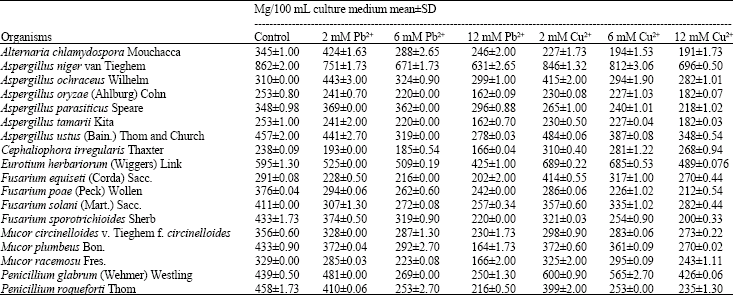 | |
Table 3 also demonstrated that mycelium dry weight of Aspergillus ochraceus was stimulated in 2 mM concentration of copper ions by about 34%, when compared with that of control, while it decrease in 6, 12 mM concentration of copper ions, also mycelium dry weight of Cephaliophora irregularis, Eurotium herbariorum, Fusarium equiseti and Penicillium glabrum was increase in 2 and 6 mM concentration of copper ions by about 30 and 18%, respectively for Cephaliophora irregularis, by about 16 and 15%, respectively for Eurotium herbariorum, by about 42 and 9%, respectively for Fusarium equiseti and by about 37 and 29%, respectively for Penicillium glabrum, when compared with that of control and it decrease in concentration 12 mM. Hashem (1989) reported stimulation of fungal growth in some species by low levels of copper. Also he demonstrated a decrease in mycelium dry weight for the other fungi with increasing of copper ions concentration. Aspergillus ustus dry weight stimulate at concentration 2 mM of copper ions by about 6%, while 6, 12 mM concentration of copper ions inhibit fungal growth by about 15 and 24%, respectively as compared to the control. Richards et al. (2002) reported that most of 12 Frankia strains were less sensitive to Pb2+ (6 to 8 mM). While most strains were sensitive to 0.1 mM Cu2+, four strains were resistant to elevated levels of Cu2+ (2 to 5 mM and concentrations as high as 20 mM), when they determined the sensitivity of 12 Frankia strains to heavy metals by a growth inhibition assay.
Results (Table 4) shows adecrease in colony diameter of Aspergillus oryzae, Aspergillus tamarii, Eurotium herbariorum, Fusarium solani and Penicillium roqueforti was observed with increased of lead or copper ions concentrations. The growth of Aspergillus niger was no affected at lower concentrations (2 mM) of lead or copper ions. Also high concentration (6 and 12) of these metals caused little inhibition in fungal growth by about 2 and 6%, respectively, when compared with that of control. While Abd-El Naby (1997) found that high concentration of copper reduced the growth of Aspergillus niger.
Aspergillus ochraceus, Aspergillus parasiticus Fusarium equiseti and Mucor circinelloides growth was no affected at lower concentrations (2 mM) of lead or copper ions, but high concentrations of these metals caused inhibition in fungal growth when compared with that of control.
Growth of Aspergillus ustus and Fusarium poae inhibited with increasing lead ions concentration, also 6 and 12 mM concentration of copper ions inhibited their growth, while 2 mM concentration of copper ions stimulated their growth by about 11 and 7.6%, respectively, when compared with that of control. A decrease in colony diameter of Cephaliophora irregularis, Fusarium sporotrichioides and Mucor racemosu was observed with increase of copper ions concentration and with 6 and 12 mM lead ions concentration when compared with that of control, while 2 mM lead ions concentration did not affect on fungal growth.
| Table 4: | Growth of isolated fungi at 2, 6 and 12 mM concentrations of lead and copper ions on modified Dox agar plates over 3, 4 or 5 day incubation at 25±2°C |
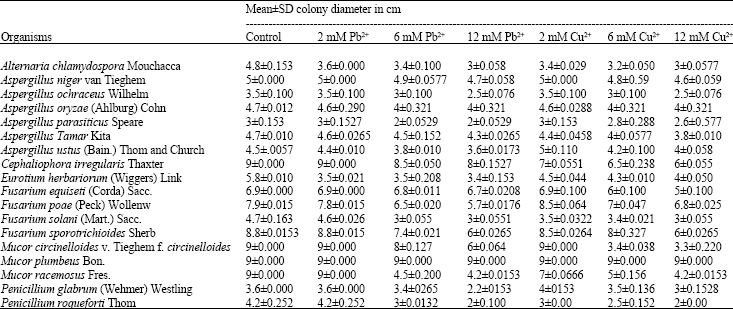 | |
Stimulation of Penicillium glabrum growth was observed by about 11% at 2 mM copper ions concentration, while 2 mM lead ions concentration did not affect on fungal growth. A decreased in fungal colony diameter with 6 and 12 mM concentrations of both lead and copper ions by about 6 and 39%, respectively for lead and 3 and 17% for respectively for copper, when compared with that of control.
Mucor plumbeus growth was highly tolerant of both lead and copper ions concentrations and the tolerance values were all around 100%.
These results demonstrated that, the growth rate of some fungi isolated on solid media like Mucor plumbeus, Aspergillus niger and Aspergillus oryzae was less sensitive to addition of lead or copper than biomass production in liquid culture. Also these results cleared that fungi isolated from Second Industrial City in Riyadh, Saudi Arabia resistance heavy metals and we can used to remove these metals from contaminated region.
REFERENCES
- Aoyama, M. and T. Nagumo, 1997. Comparation of the effect of Cu, Pb and As on plant residue decomposition, microbial biomass and soil respiration. Soil Sci. Plant Nutr., 43: 613-622.
Direct Link - Gilotra, U. and S. Srivastava, 1997. Plasmid-encoded sequestration of copper by Pseudomonas pickettii strain US321. Curr. Microbial., 34: 378-381.
CrossRefDirect Link - Hashem, A.R. and A.M. Al-Johany, 1994. Element concentration of selected soil and water samples from Al-Madinah Area, Saudi Arabia. J. King Saud Univ., 6: 127-136.
Direct Link - Hashem, A.R., 1997. Effect of heavy metal ions on the mycelial growth of some fungi isolated from the soil of Al-Jubail Industrial City, Saudi Arabia. King Saud Univ. Sci., 9: 119-124.
Direct Link - Nuhoglu, Y., E. Malkoc, A. Gurses and N. Canpolat, 2002. The removal of Cu(II) from aqueous solutions by Ulothrix zonata. Bioresour. Technol., 85: 331-333.
CrossRefDirect Link - Martin, J.P., 1950. Use of acid, rosebengal and streptomycin in plate method for estimation of soil fungi. Soil Sci., 69: 215-233.
Direct Link - Richards, J.W., G.D. Krumholz, M.S. Chval and L.S. Tisa, 2002. Heavy metal resistance patterns of Frankia strains. Applied Environ. Microbiol., 68: 923-927.
CrossRefPubMedDirect Link - Sani, R.K., B.M. Peyton and M. Jandhyala, 2003. Toxicity of lead in aqueous medium to Desulfovibrio desulfuricans G20. Environ. Toxicol. Chem., 22: 252-260.
Direct Link - Saxena, D. and S. Srivastava, 2002. Mechanism of copper resistance in a copper mine isolate Pseudomonas putida strain S4. Curr. Microbiol., 45: 410-414.
CrossRefDirect Link - Sharma, S., M.G. Dastidar and T.R. Sreekrishnan, 2002. Zinc uptake by fungal biomass isolated from industrial wastewater. Pract. Periodical Haz. Toxic Radioactive Waste Mgmt., 6: 256-261.
CrossRefDirect Link - Tsekova, K. and D. Todorova, 2002. Copper(II) accumulation and superoxide dismutase activity during growth of Aspergillus niger B-77. Z. Naturforsch C, 57: 319-322.
Direct Link