

I.Y. Dugje
Department of Crop Production, University of Maiduguri, P.M.B. 1069, Maiduguri, Nigeria
A.Y. Kamara
International Institute of Tropical Agriculture, P.M.B. 5320, Ibadan, Nigeria
L.O. Omoigui
International Institute of Tropical Agriculture, P.M.B. 5320, Ibadan, Nigeria







ABSTRACT
The aim of this study was to assess the influence of farmers` crop management practices on Striga infestation and maize grain yield. Sixty farmers` fields were randomly selected in nine communities across three savanna zones. About 35% of the farmers had cultivated their fields for over 10 years, 48% grew the Striga resistant variety 97 TZL Comp-1-W, 68% planted maize in mid-June and 60% practiced legume-maize rotation. About 33% intercropped maize + cowpea, 42% applied 100 kg N ha-1 and 87% conducted 2 to 3 hoe weedings. The Striga resistant maize variety reduced Striga count and host damage score and increased grain yield ha-1 in northern and southern Guinea savannas. However, the varieties grown in Sudan savanna increased Striga count ha-1 (R = 0.56**) and Striga damage (R = 0.59**) because they were not resistant to Striga. Planting maize in mid-July reduced Striga infestation in northern Guinea, but grain yield ha-1 was highest when maize was planted in mid-June in all three zones. Soybean-maize or groundnut-maize rotation reduced Striga count in all the agro-ecosystems. Relay intercropping of cowpea into maize reduced Striga count in northern Guinea. Higher nitrogen fertilizer rate reduced Striga count and score and significantly increased grain yield in the three zones. Two or three hoe weedings reduced Striga count in the three zones and Striga score in Sudan savanna. Thus, the farmers` practices sampled significantly influenced Striga infestation of maize fields in the three agro-ecosystems. The Striga resistant maize variety, Soybean-maize rotation, 100 kg N ha-1 and three hoe weedings could serve as component technologies in an integrated package for combating Striga menace in the region.
PDF Abstract XML References Citation
How to cite this article
I.Y. Dugje, A.Y. Kamara and L.O. Omoigui, 2008. Influence of Farmers` Crop Management Practices on Striga hermonthica Infestation and Grain Yield of Maize (Zea mays L.) in the Savanna Zones of Northeast Nigeria. Journal of Agronomy, 7: 33-40.
DOI: 10.3923/ja.2008.33.40
URL: https://scialert.net/abstract/?doi=ja.2008.33.40
DOI: 10.3923/ja.2008.33.40
URL: https://scialert.net/abstract/?doi=ja.2008.33.40
INTRODUCTION
Striga hermonthica (Del.) Benth., a root parasitic flowering plant endemic in Africa, constitutes one of the most severe constraints to cereal production in sub-Saharan Africa (Dashiell et al., 2000). It is estimated that over 20 million ha are infested in the region, causing annual losses of more than four million tonnes of grain and affecting the lives of about 300 million people (Sauerborn, 1991). A survey of Striga sp. on cereals in northern Guinea savanna of Nigeria showed that Striga hermonthica had become a serious problem (Weber et al., 1995; Kim et al., 1997) and yield losses ranging from 10 to 100% have been reported (Lagoke et al., 1991; Oikeh et al., 1996). Striga infestation can become so severe that farmers abandon cereal production in their fields (Lagoke et al., 1991).
Farmers rated Striga infestation as the leading priority constraint together with low soil fertility during a livelihood analysis in 30 communities in Borno State, northeast Nigeria (PROSAB, 2004). Further assessment of the level of Striga infestation in the communities showed that 68% of all fields sampled were infested with four Striga species, S. hermonthica was responsible for damage in 86% of all fields; about 94% of sorghum fields and 77% of maize fields were infested (Dugje et al., 2006). PROSAB (2004) further reported that farmers in the savanna zones of southern Borno area of northeast Nigeria generally cultivate farmlands with short fallow periods or none. This often resulted in environmental degradation, such as soil erosion, leaching, reduced soil fertility and Striga infestation. The application of N fertilizers and organic amendments can generally correct the situation. However, fertilizers are not readily available or too costly. The average rate of fertilizer use in Nigeria is about 12 kg nutrient ha-1, of arable land, figures for other West African countries are lower (FAO, 1992).
Apart from routine crop management practices, farmers cope with Striga infestation and low soil fertility by employing crop rotation, hand pulling of Striga plants, land rotation and the application of inorganic fertilizer (Emechebe et al., 2004; PROSAB, 2004). Ogborn (1987) reported that Striga infestation levels in peasant farmers` field vary according to farming practices. Manyong et al. (1996) reported that S. hermonthica infestation had become a serious problem in areas of poor market access where farmers did not apply fertilizer adequately to maize in northern Guinea savanna of Nigeria. An important characteristic of maize is its high and relatively rapid nutrient requirement. Weber et al. (1995) and Kim et al. (1997) reported that, high nitrogen application (>120 kg ha-1), reduced Striga infestation significantly. Apparently, low N application, a sorghum dominated farming system, reduced fallow periods or none and low soil fertility are major causes of Striga infestation in West and Central Africa (Kim et al., 1997). Oswald and Ransom (2001) showed that Striga control in low external input farming systems depends on several components, such as hand weeding, crop rotation and soil fertility management. These need to be combined in an integrated approach, not only to reduce Striga densities but also to improve soil fertility.
Several Striga reducing technologies promoted by Agricultural Development Projects have found their ways into the hands of the farmers in Southern Borno area. These technologies include Striga resistant maize varieties, legume-cereal rotation and nitrogen fertilization, hand pulling of Striga plants and timely weeding (PROSAB, 2006). In spite of the promotion of these Striga reducing technologies for maize production, infestations have continued to manifest as observed for S. hermonthica in the region. However, there is no information on whether these management practices influence Striga infestation in maize fields in the savanna zones of northeast Nigeria. The objective of this study was to assess the influence of these management practices on Striga infestation and develop an integrated approach for combating its menace and improving maize production in the region.
MATERIALS AND METHODS
The field study was conducted in 2005 during a rainy season between May and October in Northern Guinea Savanna (NGS), Southern Guinea Savanna (SGS) and Sudan Savanna (SS) zones in the southern part of Borno State (11° 50` E and 10° 25`N) of northeast Nigeria. The three ecological zones are distinguished by differences in the amounts of average annual rainfall, length of the growing season, temperatures and soils as described by PROSAB (2004) and Dugje et al. (2006). Average annual rainfall in SS ranges from about 500 to 800 mm; average temperatures are between 22 and 37°C and length of growing season is 100-120 days (June to September). In NGS, average annual rainfall is from 900 to 1000 mm; average temperatures are between 23-35°C and length of growing season is 120-150 days (June to October). In the SGS, average rainfall is from 1000 to 1200 mm, average temperatures are between 22 and 35°C and length of growing season is 150-180 days (May to October). Soils range from sandy clay (SS) to clay loam in NGS and SGS (PROSAB, 2004; Dugje et al., 2006).
Random sampling and field observations was used to select 60 farmers and their maize-based fields in 3 communities in each ecological zone. These comprised an average of 20 farmers and maize-based fields/zone and 6-7 farmers and maize-based fields/community. Available fields were randomly selected from the four cardinal points (north, east, west and south) of each community. Fields less than 1 km from the edge of the community were considered to be compound fields; that more than 1 km distant was considered bush fields. The participating farmers grew mono crop of maize or practiced legume-maize rotation with soybean or groundnut, or sorghum-maize rotation in 2004. Fertilization ranged from zero to 100 kg N ha-1 in the form of NPK and Urea depending on affordability. The farmers applied the fertilizer rates in one or two split doses. The maize+cowpea relay intercropping system was planted as mixed intercropping system. The maize component in the system was either a local or an improved variety. The farmers relayed cowpea into maize 4 to 5 weeks after planting maize. They prepared their land mainly with tractor or ox-plough in SS and NGS, while ox-plough and no-tilled land were common in SGS. They also conducted 1-3 weedings during the season.
Farmers` routine crop management practices and cropping history was assessed through field monitoring and observations and administration of a semi-structured questionnaire to each farmer on the field selected. Each farmer served as a replicate. Emerged Striga hermonthica plants were counted from each field as described by Kim (1994). Five 1 m2 quadrats were marked out with sticks in each plot along a diagonal transect at 15-20 m intervals in each of the fields sampled. Damage score were taken based on a 9-point rating score in each field, as described by Kim (1991), where 1 = no chlorosis, no blotching, no leaf scorching or firing, normal plant growth, 9 = complete scorching of all leaves causing premature death of host plant and no ear formation. Grain yield was determined from a net plot of 16 m2 measured from three places in each field sampled and converted to ha.
Data collection and statistical analysis: Emerged Striga plant count m-2 was converted ha-1 and transformed using square root transformation. The transformed values, Striga score were each subjected to analysis of variance (ANOVA) using the General Linear Model (GLM) procedure of the Statistical Analysis Systems (SAS) package (SAS, 1990). Statistically significant differences between variable means were compared using Standard Error of Difference (p<0.05). Pearson`s correlation co-efficient was calculated among the parameters and quantitative crop management variables using PROC CORR of SAS (1990).
RESULTS AND DISCUSSION
Outline of farmers` crop management practices: Fifty percent of the farmers sampled in NGS have been cultivating their farmland for more than 10 years (Table 1). The number was 35% in SGS and 20% in SS. About 25 and 70% of the farmers in NGS and SGS, respectively, cultivated the Striga resistant maize variety 97 TZL Comp-1-W and 25-35% grew local varieties. Thirty five percent of the farmers cultivated the Striga tolerant maize variety 94 TZE Comp-5-W in SS. The increase in use of the improved maize varieties is due to their promotion by PROSAB Project over the past 3 years (PROSAB, 2006).
Table 1 data also showed that most farmers (65-70%) sampled across the three zones planted maize in mid-June in all the three zones. The early on-set of rainfall in the humid ecological zones encouraged farmers to plant earlier in these zones than in SS. Majority (45-50%) of the farmers in NGS and SGS practiced soybean-maize rotation, while majority of the farmers in SS (45%) practiced groundnut-maize rotation, 20% practiced soybean-maize rotation and 15% continuous cropping of maize. Maize-sorghum rotation was practiced by 25% in SS and by 15% in NGS. In both NGS and SS, 35-40% of the farmers practiced relay cropping of maize + cowpea, while majority of the farmers grow sole maize in the three agro-ecosystems.
| Table 1: | Farmer crop management practices sampled (%) in the savanna zones of northeast Nigeria |
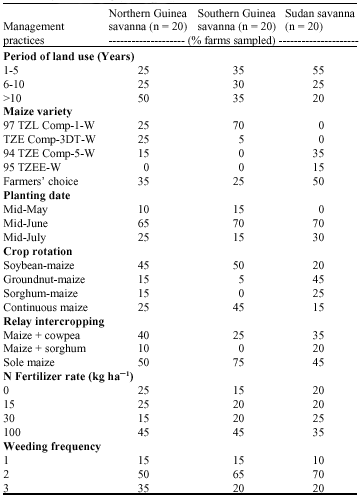 | |
uring the period of study, 15-25% of farmers in the three agro-ecosystems could not apply nitrogen fertilizer (Table 1). However, 100 kg N ha-1 was applied by 45% in NGS and by 35% in SS. The remaining 40-45% applied 15-30 kg N ha-1 and these rates were 70-85% less than the recommended rate of 100 kg N ha-1. About 10-15% of the farmers conducted one hoe weeding during the cropping season (Table 1). The majority (50-70%) of the farmers conducted two hoe weedings, in the three ecological zones, but more farmers in NGS conducted three hoe weedings probably because of increased land use intensification in the zone.
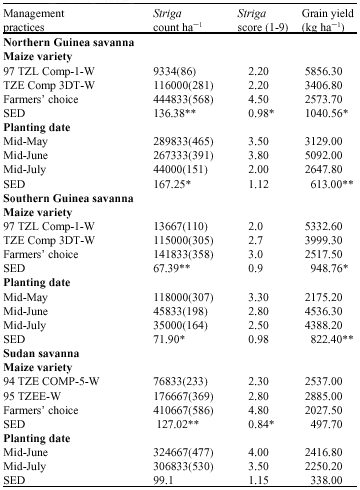
Influence of farmers` crop management practices on Striga infestation and grain yield: The Striga resistant maize variety 97 TZL Comp-1-W significantly reduced Striga plants ha-1 (p<0.01) and host damage score (p<0.05) more than the drought-tolerant maize variety TZE Comp-3DT-W or the farmers` choice in the NGS and SGS (Table 2). Emechebe and Ahonsi (2002) reported 97 TZL Comp-1-W as a long-duration type that showed fewer attacks in terms of the number of emerged Striga plants than the common local varieties. These confirm reports from Kim (1994) and Kim et al. (1997) that genetic variability exists among maize germplasm in their response to S. hermonthica parasitism. The use of varieties resistant or tolerant to Striga has been recommended as the most practical approach for resource-poor smallholder farmers in Africa (Kim, 1991). Grain yield ha-1 was significantly higher (p<0.05) for the Striga resistant variety than for the drought tolerant variety or the farmers` choice.
Planting maize in mid-July significantly (p<0.05) reduced Striga count compared to planting in mid-May or mid-June in NGS and SGS (Table 2). However, grain yield ha-1 was significantly (p<0.01) higher for mid-June planting than the other planting dates in the two ecologies. This confirms the study of Weber et al. (1995) who reported that farmers plant early (mid-June) because they obtained higher maize yield with early planting to capture N flush during this period in the savannas and in most cases the maize is harvested before Striga reproduction thus reducing the seed bank. Parker and Riches (1993) reported that the intensity of S. hermonthica infestation is highest in earliest plantings where rainfall is mono-modal, as in the study area. This implies that early planting could result in an increase in Striga infestation, as the host is able to produce adequate stimulants to promote Striga seed germination and enable more haustoria to attach (Emechebe et al., 1991). Although late planting reduce infestation because of shortening of the period of Striga conditioning and increase in rainfall later in the season, the delay results in reduced grain yield as observed in NGS.
| Table 2: | Effect of maize variety and planting date on Striga count ha-1, Striga score and grain yield (kg ha-1) in farmers` fields in Guinea and Sudan savannas |
 | |
| Significant: *: p<0.05, **: p<0.01, values in parenthesis are square root transformed value of Striga counts | |
In SS, Striga count and host damage score (p<0.05) on the Striga tolerant maize variety 94 TZE Comp-5-W and the extra early maturing variety 95 TZEE-W were significantly less than on the farmers` choice (Table 2). The variety 94 TZE Comp-5-W has been reported to be tolerant to Striga (Jennifer Kling, Personal Communication), while 95 TZEE-W, though not tolerant, escapes damage because of its ability to grow faster and complete its life-cycle before Striga begins to attach and draw assimilates. These varieties undergo senescence before Striga plants are able to produce seeds, thus reducing the seed bank in the soil. The ability of these varieties to escape Striga damage is attributed to several mechanisms. These range from short growth cycle (escape mechanism), root architecture (fewer roots in the upper soil layer), early growth and vigour, to physiological resistance to the phytotoxic effects caused by Striga parasitism (Oswald and Ransom, 2001).
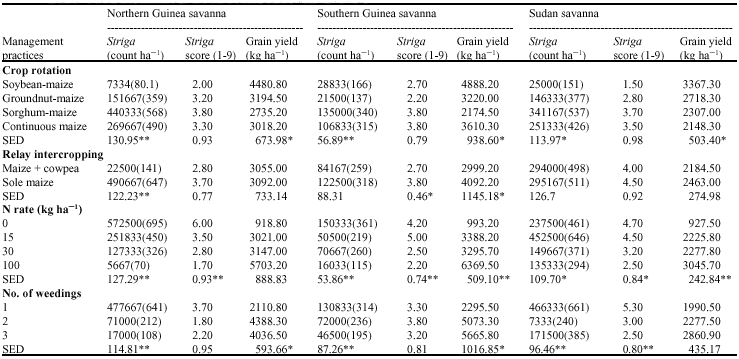
Rotating maize with soybean (Glycine max (L.) Merrl.) significantly reduced Striga plants ha-1 in all the zones (Table 3). The practice of continuous maize cropping or sorghum-maize rotation (Sorghum bicolor (L.) Moench) recorded significantly higher Striga counts than soybean-maize or groundnut-maize rotation (Arachis hypogaea L.). However, continuous maize cropping had slightly lower Striga count than sorghum-maize rotation. Striga scores were slightly lower for legume-maize than cereal-cereal rotations. Similarly, Kureh et al. (2005) reported a reduction in Striga infestation and damage in maize when sown after soybean or cowpea. Grain yield ha-1 was significantly (p<0.05) higher for soybean-maize rotation than for any of the cereal-cereal rotations. The lowest (p<0.01) grain yield was observed for sorghum-maize rotations (2.2-2.7 t ha-1) in the Guinea savannas and for continuous maize system (2.1 t ha-1) in the SS. The yield increase for maize following soybean or groundnut was attributed to a combination of reduced S. hermonthica parasitism and improved nitrogen supply.
The present study did not measure the N contribution from the preceding soybean crop but the variety used, TGX-1448-2E, is late maturing and significantly reduced Striga infestation and increased maize grain yield more than continuous mono cropping of maize or sorghum. Singh et al. (2003) showed that planting medium or late maturing soybean for one season resulted in an addition of N to the soil, as grain legumes release N through the roots during the growth period or through their crop residues after decomposition. Agboola and Fayemi (1972) reported that this N, after the decomposition of leaves, roots and nodules, might accrue more to the subsequent crop than the companion crop.
The preceding crop of soybean or groundnut in the present study probably provided more N to maize through crop residues after decomposition, as observed from the negative influence it had on Striga infestation and the increase in grain yield. Apart from increasing soil N balance, soybean suppresses Striga emergence by causing suicidal germination of Striga seeds (Carsky et al., 2000).
Relay intercropping of maize with cowpea (Vigna unguiculata (L.) Walp.) reduced (p<0.01) Striga count by 19 to 78% more than sole cropped maize in NGS and SGS (Table 3). In addition, slightly lower values were observed for maize + cowpea intercrop than sole maize in SS. Although grain yield ha-1 was significantly (p<0.05) higher for sole maize than intercropped maize in SGS, no significant difference was observed in NGS and SS. Similarly, intercropping maize with cowpea reduced (p<0.05) Striga score in SGS and slightly lower value was observed in NGS. Intercropping cereals with legumes is a traditional system in the study area. This is done to diversify food production, reduce risk of crop failure and enable more efficient utilization of growth resources than is possible with sole cropping.
| Table 3: | Effects of crop rotation, relay inter cropping, nitrogen fertilizer rate and weeding frequency on Striga count ha-1, Striga score and grain yield (kg ha-1) of maize in farmers` fields in Guinea and Sudan savannas |
 | |
| Significant *: p<0.05, **: p<0.01, values in parenthesis are square root transformed value of Striga counts | |
Intercropping legumes with cereals could decrease the number of Striga plants leading to reduced Striga infestation in the following crop (Carsky et al., 1994). This may be due to the legume acting as a trap crop, suppressing Striga germination or producing a shading effect (Oswald et al., 2002). Beneficial effects of legumes, such as cowpea, have been demonstrated in many studies as grain legumes release N through the roots during the growth period. Others are of the view that N benefit may be due to a ‘sparing effect` whereby legumes, because of their ability to fix N, take up less N from the soil than cereals (Oswald et al., 2002). The N fixed and released by cowpea might also contribute to Striga suppression in intercropping since the amount of available N apparently affects Striga density (Pieterse and Verkleij, 1991). Shading effect and/or suppression of emergence due to stimulatory effect on Striga seeds are probably more plausible explanations for the effect of cowpea on Striga infestation. This is because cowpea does not release much N into the soil during its growth (Van der Heide et al., 1985) and large amounts of N are usually required to reduce Striga density (Mumera and Below, 1993). The cowpea components in the relay were mostly the local varieties (Borno brown and Gwalam white) that are photosensitive, spreading and late maturing.
Application of higher amount of N fertilizer generally significantly reduced Striga count ha-1 (p<0.01) and Striga score (p<0.01) and increased grain yield ha-1 in the three ecologies (Table 3). The order of reduction in Striga population and Striga score with a corresponding increase in grain yield was 100 kg N >30 kg N >15 kg N >0 kg N ha-1. The benefits of N fertilization were more apparent between 0 kg N ha-1 and the highest nitrogen rate (100 kg N ha-1) as Striga count was lower by 43-89.3% and damage score by 46.8-71.7% at 100 kg N ha-1 than at 0 kg N ha-1. These results corroborate similar findings by Mumera and Below (1993), Kim et al. (1997) and Kureh et al. (2005) who reported that adequate N, especially Urea and legume-cereal rotation are effective in reducing Striga emergence, host damage and Striga dry weight in maize and sorghum. On the contrary, Kabambe et al. (2005) found fertilization had no effect on reducing the emergence of S. hermonthica and S. asiatica infestation in early maturing maize varieties, probably due to the earliness, which allows maize to escape Striga parasitism before the N, becomes effective. The practice of applying small doses of N in the form of urea (46%) N and compound (NPK) fertilizers may actually promote Striga infestation rather than reduce it, as observed for 15 kg N ha-1 in NGS and SS. However, the fact that a positive response to N was observed for as low as 30 kg N ha-1, clearly shows that inadequate soil nitrogen is a major constraint to maize production in the region. Pieterse and Verkleij (1991) cautioned that N fertilization of very infertile soils or low doses of N might stimulate Striga infestation. Kim et al. (1997) reported that 120 kg N ha-1 reduced Striga in maize hybrids.
Two or three hoe weedings significantly reduced (p<0.01) Striga count ha-1, more than one weeding (Table 3). Striga score was also reduced (p<0.01) by two or three weedings in SS, but no significant difference was observed in both NGS and SGS. However, grain yield ha-1 was significantly (p<0.01) increased with increase in weeding frequency in both Guinea savannas, but no such effect was observed in SS. The presence of weeds due to poor farm sanitation exacerbates the effect of Striga parasitism as weeds compete with crops for nutrients, moisture and light. Lagoke et al. (1991) and Mumera and Below (1993) reported that Striga infestation and host damage are usually more severe under abiotic stress such as low soil moisture and low N. Weber et al. (1995) reported that the later the last weeding the lower is the number of visible, emerged Striga plants. The removal of the Striga plants before flowering may reduce the Striga seed bank and subsequent infestation.
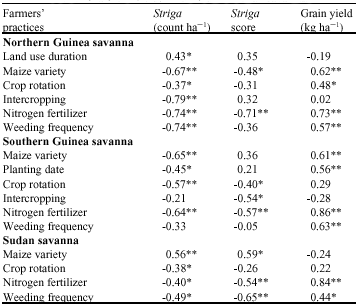
Linear relationships between farmer practices, Striga parameters and grain yield: The linear relationships between farmer management practices, Striga parameters and maize grain yield ha-1 in each of the three zones are shown in Table 4. In NGS, a prolonged period of land use was positively associated with Striga count (R = 0.43*). This suggests increased land use intensification, which puts more pressure on land, leading to a decline in soil fertility and an increase in Striga infestation in the zone. The practice of growing a Striga resistant maize variety in the zone was negatively associated with Striga count (R = -0.67**) and score (R = -0.48*) and positively correlated with grain yield ha-1 (R = 0.62**). Similarly, soybean-maize rotation was negatively correlated with Striga count (R = -0.37*) but positively associated with grain yield ha-1 (R = 0.43*) thus suggesting the influence of resistant varieties and legume-cereal rotation as an effective farmer practice for reducing Striga infestation and increasing grain yield. Relay intercropping of maize with cowpea was negatively associated with Striga count (R = -0.79**). Both Striga count (R = -0.74**) and Striga score (R = -0.71**) were negatively associated with an increase in the N fertilizer rate which was positively correlated with grain yield ha-1 (R = 0.57**).
| Table 4: | Linear correlation coefficient (r) of farmer crop management practices on Striga count ha-1; Striga score and grain yield of maize in farmers` fields in Guinea and Sudan savannas |
 | |
| **: Significant (p<0.01), *: (p<0.05). Values without asterisk have no significant linear correlation, df = 6 | |
The situation in SGS was similar to that in the NGS, as growing Striga resistant varieties was negatively associated with Striga count (R = -0.65**) and positively associated with grain yield ha-1 (R = 0.61**). Planting date was negatively associated with Striga count (R = -0.45*) and positively correlated with grain yield ha-1 (R = 0.56**) thus implying a wider scope for manipulating planting dates for Striga control due to the longer growing season in the zone. The practice of soybean-maize rotation was also negatively associated with Striga count (R = -0.57**) and Striga score (R = -0.40*) and intercropping maize with cowpea was negatively correlated with Striga score (R = -0.54*). Increasing N fertilizer rate was negatively associated with Striga count (R = -0.64**) and score (R = -0.57**) and positively associated with grain yield ha-1 (R = 0.86**), while more frequent weeding was positively correlated with grain yield ha-1 (R = 0.63**).
The maize varieties grown in SS were positively associated with Striga count (R = 0.56**) and score (R = 0.59**), because all the varieties grown were either tolerant or non-resistant and therefore allowed more Striga plants to emerge and enhanced host damage (Table 4). The maize variety 94 TZE Comp-5-W is Striga tolerant, the variety 95 TZEE-W is extra early, but neither tolerant nor resistant. The practice of legume-cereal rotation in the zone was negatively correlated with Striga count (R = -0.38*). Similarly, application of high rates of N fertilizer was negatively associated with Striga count (R = -0.40*) and host damage score (R = -0.54*) and positively correlated with grain yield ha-1 (R = 0.84**). Weeding frequency was negatively associated with grain yield ha-1, probably due to the negative correlation observed between weeding frequency with Striga count (R = -0.49*) and host damage score (R = -0.65**).
Some of the farmer practices surveyed such as use of a resistant variety, applying 100 kg N ha-1, legume-cereal rotation and 3-hoe weedings may have been integrated, as each was highly effective in reducing Striga infestation and increasing grain yield ha-1. Kim (1994) suggested that the ideal management for Striga control for resource poor farmers in Africa would be a soybean-maize rotation system, whether intercropping or rotation, choosing high yielding maize that is tolerant or resistant to Striga and has combined resistance to other major biotic stresses. The choice of an integrated Striga control package will depend on the level of severity of Striga infestation. In highly infested areas, Parker and Riches (1993) suggested growing a resistant variety, but when such a variety is not available, land fallowing or legume-cereal rotation for at least 3 years was recommended.
Dogget (1991) also suggested host plant resistance combined with improved soil fertility management or cereal-legume rotation and intercropping in which the legume acts as a trap crop. Schulz et al. (2003) and Ellis-Jones (2004) demonstrated on a small scale the agronomic and economic potential of an integrated Striga control package under farmer-managed conditions in northern Nigeria. Similar packages can be demonstrated in combination with soil fertility management under farmer conditions to reduce Striga infestation, reverse land degradation and improve crop production in the savanna zones of northeast Nigeria.
CONCLUSIONS
Farmers in the savanna zones of northeast Nigeria have diverse crop management practices that influence Striga infestation. The main farmer practices promoting Striga infestation in maize fields are prolonged period of land use, growing local or Striga tolerant maize varieties, continuous mono cropping of maize, inadequate or no N fertilization, early planting and poor farm sanitation. Consequently, growing Striga resistant maize varieties, using legume-maize rotation, relay intercropping of maize + legumes, late planting, adequate N fertilization and two or three hoe weedings would reduce Striga infestation, reverse land degradation and increase maize grain yield in the study area. These could serve as component technologies in an integrated Striga control package for combating the menace of the weed species in the region.
ACKNOWLEDGMENTS
The study was sponsored by PROSAB, a CIDA-funded project. The authors appreciate funding assistance from the project management and field assistance from extension agents and the participating farmers in the nine communities. The views expressed are not necessarily those of CIDA or PROSAB.
REFERENCES
- Agboola, A.A. and A.A.A. Fayemi, 1972. Fixation and excretion of nitrogen by tropical legumes. Agron. J., 64: 409-412.
Direct Link - Carsky, R.J., L. Singha and R. Ndikawa, 1994. Suppression of Striga hermonthica in sorghum using a cowpea intercrop. Exp. Agric., 30: 349-358.
CrossRef - Carsky, R.J., D.K. Berner, B.D. Oyewole, K. Dashiel and S. Schultz, 2000. Reduction of Striga hermonthica parasitism on maize using soybean rotation. Int. J. Pest Manage., 46: 115-120.
Direct Link - Dashiell, K., U. di Umba, J.G. Kling, A. Melake-Berham and D.K. Berner, 2000. Breeding for Integrated Management of Striga hermonthica. In: Breeding for Striga Resistance in Cereals, Haussmann, B.I.G., D.E. Hess, M.L. Koyama, L. Grivet, H.F.W. Rattunde and H.H. Geigerh (Eds.). Margraf Verlag, Germany, pp: 273-328.
- Dugje, I.Y., A.Y. Kamara and L.O. Omoigui, 2006. Infestation of crop fields by Striga species in the savanna zones of Northeast Nigeria. Agric. Ecosyst. Environ., 116: 251-254.
Direct Link - Ellis-Jones, J., S. Schulz, B. Douthwaite, M.A. Hussaini, B.D. Oyewole, A.S. Olarenwaju and R. White, 2004. An assessment of integrated Striga hermonthica control and early adoption by farmers in Northern Nigeria. Exp. Agric., 40: 353-368.
Direct Link - Emechebe, A.M. and M.O. Ahonsi, 2002. In vitro whole-seeding assays for studying differences in ability of non-host crop plants to cause germination of Striga hermonthica seeds. In: Improving and intensifying cereal-legume systems in the moist and dry savanna of West and Central Africa. Annual Report 2002, IITA, Ibadan, Nigeria, pp: 79-80.
- Emechebe, A.M., J. Ellis-Jones, S. Shulz, D. Chikoye and B. Douthwaite et al., 2004. Farmers= perception of Striga problem and its control in Northern Nigeria. Exp. Agric., 40: 215-232.
Direct Link - Kabambe, V.H., F. Kanampiu, S.C. Nampuzi and A.E. Kauwa, 2005. Evaluation of the use of herbicide (Imazapyr) and fertilizer application in integrated management of Striga asiatica in maize in Malawi. Afr. J. Agric. Res., 2: 687-691.
Direct Link - Kim, S.K., V.O. Adetemirin and A.Y. Akintunde, 1997. Nitrogen effects on S. hermonthica infestation, grain yield and agronomic traits of tolerant and susceptible maize hybrids. Crop Sci., 37: 711-716.
Direct Link - Kureh, I., A.Y. Kamara and B.D. Tarfa, 2006. Influence of cereal-legume rotation on Striga control and maize grain yield in farmers fields in Northern guinea savanna of Nigeria. J. Agric. Rural Dev. Trop. Subtropics, 107: 41-54.
Direct Link - Mumera, L.W. and F.E. Below, 1993. Role of nitrogen in resistance to Striga parasitism of maize. Crop Sci., 33: 758-763.
Direct Link - Oswald, A. and J.K. Ransom, 2001. Response of maize varieties to Striga infestation. Crop Prot., 23: 89-94.
Direct Link - Oswald, A., J.K. Ransom, J. Kroschel and J. Sauerborn, 2002. Intercropping controls Striga in maize based farming systems. Crop Prot., 21: 367-374.
CrossRefDirect Link - Schulz, S., M.A. Hussaini, J.G. Kling, D.K. Berner and F.O. Ikie, 2003. Evaluation of integrated S. hermonthica control technologies under farmer management. Exp. Agric., 39: 99-108.
CrossRef - Singh, A., R.J. Carsky, E.O. Lucas and K. Dashiell, 2003. Soil N balance as affected by soybean maturity class in the Guinea savanna of Nigeria. Agric. Ecosyst. Environ., 100: 231-240.
CrossRefDirect Link - Van der Heide, J., A.C.B.M. van der Kruijis, B.T. Kang and P.L. Vlek, 1985. Nitrogen Management in Multiple Cropping Systems. In: Nitrogen Management in Farming Systems in Humid and Subhumid Tropics, Kang, B.T. and J. Van der Heide (Eds.). Institute of Fertility, Haren, The Netherlands, pp: 291-306.
- Weber, G.K., O. Elemo, S.T.O. Lagoke and S. Oikeh, 1995. Population dynamics and determinants of S. hermonthica on maize and sorghum in savanna farming systems. Crop Prot., 14: 283-290.
CrossRef