

B.S. Audu
Department of Zoology, University of Jos, P.M.B. 2084, Jos, Nigeria
K.M. Adamu
Department of Zoology, Delta State University, P.M.B. 1, Abraka, Delta State, Nigeria
S.A. Binga
Department of Zoology, University of Jos, P.M.B. 2084, Jos, Nigeria
International Journal of Zoological Research
Year: 2008 | Volume: 4 | Issue: 1 | Page No.: 42-47







ABSTRACT
A mixture of ensiled parboiled beniseed (Sesamum indicum) and raw African locust bean (Parkia biglobosa) replaced fishmeal in the diet of Oreochromis niloticus at 0, 30, 70 and 100% test materials inclusion levels. Each dietary treatment was randomly duplicated in tanks stocked with twenty fingerlings (2.71 ± 0.003 g) and fed three times (08:00, 14:00 and 18:00 h) to satiation for 56 days. The result revealed best live weight gain and feed utilization in the fish fed diet D4 followed by diet D1 and D3 with the least value recorded in fish fed diet D2 level. Generally, there was significant increase (p<0.05) in the weight gain in formulated diets (D4) and control. The result supports the suggestion that tilapia can be fed with mixture of ensiled parboiled beniseed and raw African locust bean which is hoped will reduce tremendously the over dependence on fishmeal protein and human utilization of the very scarce fish meal.
PDF Abstract XML References Citation
How to cite this article
B.S. Audu, K.M. Adamu and S.A. Binga, 2008. The Effect of Substituting Fishmeal Diets with Varying Quantities of Ensiled Parboiled Beniseed (Sesamum indicum) and Raw African Locust Bean (Parkia biglobosa) on the Growth Responses and Food Utilization of the Nile Tilapia Oreochromis niloticus. International Journal of Zoological Research, 4: 42-47.
DOI: 10.3923/ijzr.2008.42.47
URL: https://scialert.net/abstract/?doi=ijzr.2008.42.47
DOI: 10.3923/ijzr.2008.42.47
URL: https://scialert.net/abstract/?doi=ijzr.2008.42.47
INTRODUCTION
The high cost and scarcity of fishmeal have prompted world wide investigation into the ways of replacing fishmeal with less expensive foodstuff (Eyo, 1989). Lovel and Limsuwan (1982) have revealed the superiority of fishmeal in growth performance due mainly to its nutritional composition and its amino acid profile needed for optimum growth. However, it has been well established that in all fish diets, irrespective of the species, protein is the most important dietary nutrient and fish meal remain one of the major sources of dietary protein (Kaushik, 1989).
Plant protein sources such as Soya bean and groundnut cake have had favourable consideration as a replacement for fishmeal because of their high nutritive value and relative low cost as reported by Jackson et al. (1982). However, most of these plant protein sources are poor in one essential amino acids or the other. For instance, the protein content of beniseed was found to be rich in amino acids such as leucine, arginine and methionine but was relatively low in lysine (Arnon, 1972; Kochhar, 1981). Thus, no single oilseed meal can completely replace or supply the protein requirement of tilapia (Jauncey and Ross, 1982). Tacon et al. (1983), Nandeesha et al. (1991), Ofojekwu and Kigbu (2002) Mukhopadhyay and Ray (2005), Abimorad et al. (2007), Sá et al. (2007) and Martinez-Llorens et al. (2007) have reported similar work to evaluate the suitability of replacing partially fishmeal in digestibility study. The present research was conducted to evaluate the suitability of replacing partially and/completely fishmeal diet with plant protein sources (Ensiled parboiled beniseed (Sesamum indicum) and Raw African locust bean (Parkia biglobosa) on the growth response and feed utilization of the Nile tilapia (Oreochromis niloticus) under laboratory conditions.
| Table 1: | Preliminary crude protein composition of the test materials |
 | |
MATERIALS AND METHODS
The experiment was conducted in the undergraduate Research laboratory, Department of Zoology, University of Jos, Jos, Nigeria. A 56 day (June to August) growth trial test was conducted with a sum total of 360 mixed sex fingerlings of Oreochromis niloticus means weight (2.71 ± 0.003) g obtained from Rock water fish farm, Rayfield, Jos, Plateau State, Nigeria. The fingerlings twenty were stocked in each four green circular plastic tanks with replicate measuring 48 cm diameter, 24 cm depth and 30 L capacity. Water volume was maintained at 20 L with de-chlorinated municipal water supply. Fish were fed to satiation three times daily (08:00, 14:00 and 1800 h). After the last feeding, the tanks were cleaned up of any unconsumed feeds and fecal matter while lost water was replaced with dechlorinated municipal water. The temperature, pH, dissolved oxygen, free carbon (iv) oxide were determined fortnightly (Stirling, 1985). The water temperature was 22 ± 2 °C; pH was 6.60 ± 0.25, while dissolved oxygen was 2.01 ± 0.30 mg L-1. The photo period was natural and all tanks had the similar lighting condition. Fecal matters were collected by sieving through a sieve of 400 μm mesh size and oven dried. Pooled feces per treatment were kept for digestibility studies. Ten fishes were randomly selected and measured bi-weekly for weight verification to the nearest 0.1 g following method described by Ufodike and Matty (1993) and returned into their tanks before the next feeding. The mixed feeds ingredients were formulated into two batches. Batch A had 200 g of raw beniseed parboiled for 5 min, cooled and introduced into a bottle Stoppered and was allowed to stand for 7 days at 25 °C. The sample was then sun dried on screened surgical tray. Two hundred gram of batch B consisting of raw seeds of African locust bean were washed, screened sun dried and grinded using ceramic mortar before been sieved into fine powder with sieve of mesh size 400 μm.
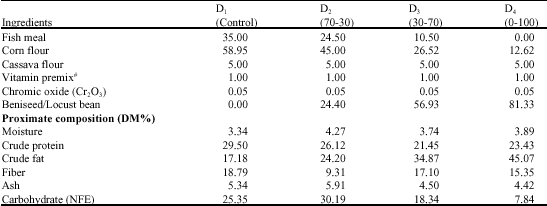
Four diets including control were prepared (pelleted) to contain mixture of the test ingredients and were used to substitute fishmeal at 0, 30, 70 and 100% test material inclusion resulting to 35% crude protein content required for tilapia growth (Jauncey and Ross, 1982). The proximate composition of the test diets and control were determined according to AOAC (1980) procedures. 0.05 g of inert material (chromic oxide) was added to determine protein digestibility following the methods suggested by Furukawa and Tsukahara (1996). The percentage composition of the test diets and control and the proximate composition of the four diets are shown in Table 1. There 3 fishes each were sacrificed for proximate analysis before and after the experiment according to the method described by AOAC (1980).
The significance difference (p = 0.05) of the result of mean weight at different level of treatment were tested using One way analysis of variance. Significance difference in the data was tested with student t-test. Growth indices, such as Specific Growth Rate (SGR), Feed Conversion Ratio, (FCR), Protein Efficiency Ratio (PER), Net Protein Utilization (NPU) were analyzed using appropriate formulae (Halver, 1989) while corrected mortality (Finney, 1971) and percentage Live Weight Gain (LWG) were also determined.
RESULTS AND DISCUSSION
The results of the proximate composition of the test diets and control were significantly different (p<0.05) ranging from 21.45-29.50% crude protein; 17.68-45.07% crude fat; 9.31-18.79% crude fibre; 4.42-5.91% ash; 3.34-4.27% moisture and 7.84-30.19% nitrogen free extract (Table 2).
| Table 2: | Ingredients and proximate compositions of experimental diets |
 | |
| #Vit. A, 5,000,000.00 I. U; Vit. B, 1,000,000.00 I. U; Vit E, 20,000 mg; Vit. K3 1,000.00 mg; pantothenic acid, 4,000.00 mg; Vit B1, 1,200.00 mg; Vit. B2, 2,400.00 mg; Vit. B6, 2,400.00 mg; Niacin 16,000.00 mg; Biotin, 32.00 mg; Vit. B12, 10.00 mg; Folic acid, 400.00 mg; Choline chloride, 120,000.00 mg, Manganese, 40,000.00 mg; Iron, 20,000.00 mg; Zinc, 18,000.00 mg; Copper, 800.00 mg; Iodine, 620.00 mg; Cobalt, 100.00 mg; Selenium, 40.00 mg | |
| Table 3: | Growth performance of Oreochromis niloticus exposed to the various formulated diet during the 8 weeks exposure period |
 | |
| Mean ± SE value obtained from 10 fish each from an aquarium with replicate | |
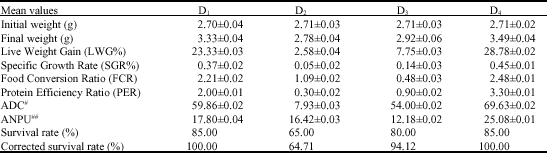
| Table 4: | Growth and feed utilization of Tilapia Oreochromis niloticus fed different formulated feed for 8 weeks |
 | |
| #: Apparent Digestibility Coefficient, ##: Apparent Net Protein Utilization | |
At the end of the exposure period 15, 45, 20 and 15% of mortalities where recorded in D1, D2, D3 and D4 experimental tanks respectively. However, using Abbott`s formula for corrected mortality revealed 35.29 and 5.88% mortalities in D2 and D3 experimental tanks only. Abbot`s formula for corrected mortality eliminates the factor that led to mortality in the experimental control tank as it relates to other experimental setup, respectively.
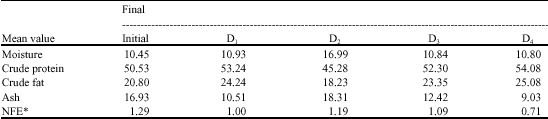
As a result of feeding the fish with the different level of formulated diet there was a significant difference (p<0.05) in the fish weight (Table 3) as well as feed utilization efficiency (Table 4). Growth indices such as LWG, SGR, FCR and PER did not differ significantly (p>0.05) in the fish fed test diets and control. The Apparent Digestibility Coefficient (ADC) values obtain were not statistically different (p>0.05) with the control ADC (59.86 ± 0.02). (Table 4) Similarly, Apparent Net Protein Utilization (ANPU) of different diet revealed insignificant difference (p>0.05) as compared to the control value (17.80 ± 0.04). The final fish moisture content revealed significance difference (p<0.05) when compared to that of the control (Table 5).
| Table 5: | Initial and final body composition of Tilapia fed various formulated diets for 8 weeks |
 | |
| *: Nitrogen Free Extract | |
The temperature range in this experimental set up is under the tolerance range for the test fish Oreochromis niloticus. The result obtained from the preliminary analysis of the test materials showed that the parboiled ensiled beniseed has a higher level of good quality protein (26.09%) compared to the protein content of the un-parboiled ensiled (17.00%) at p<0.05. The fermentation process is very essential because, it liberates more nutrients in the form of essential amino acids such as lysine, methionine and the production of more energy (Stainkraus, 1983). Though the fermentation lasted for only a week, it yielded a slight increase in the crude protein content of the un-ensiled beniseed to 1.4% and when extended, has been reported by Arnon (1972) and Kochhar (1981) to be within the range of 12.22 and 20.25%.
Highest Specific Growth Rate (SGR) was observed in D4 (0.45 ± 0.01), followed by D1 (0.37 ± 0.02) indicating better nutrient utilization. Yengkokpam et al. (2005) also deduce same from their findings when Catla catla fingerlings were fed different level of corn diet. The improved growth rate observed in D4 then D1 may also be ascribed to the good feed utilization by the experimental fish as evidenced by the recorded high values of FCR and PER. The high crude protein, crude fat with low moisture and fiber contents recorded in diet in D4 may be responsible for the improved growth rate observed.
High crude fat is known to enhance energy production and hence better growth rate. Therefore, the possible reason for D2 low performance could be due to its high content of crude fiber. Davies (1985) reported that higher fiber content impede fish growth.
Live Weight Growth (LWG) that follows D4 > D1 > D3 > D2 order in this experimental setup has been attributed to high fibre content of diet (Omoregie and Ogbemudia, 1993). However, this finding strongly accepts that deduction thus high LWG correlates high value of fibre content of diet.
Apparent Digestibility Coefficient (ADC) is thought to be an important tool to investigate the digestibility performance of food ingredients used in aquaculture. The value of ADC (D4 > D1 > D3 > D2) observed in this study was similar reported by Sá et al. (2007) when white sea bream Diplodus sargus juvenile were fed with varying level of dietary protein.
The need to use plant meal in combined form to produce the cheapest and required nutrient for fish cannot be overemphasized, thus the basis of this research which Kissil and Lupatsch (2002) reported less fish growth in fish growth in fish fed an 80% soy protein concentration than in fish fed with a control diet without soy protein, but when the gilthead sea bream Sparus aurata was completely replaced by a plant material mixture, the results were excellent.
The replacement of fishmeal by alternate sources of protein has met with varied degree of success, depending on the nature and composition of ingredients, inclusion level and method of processing. This study revealed clearly that the nature, source and composition of ingredient and their inclusion level affect the degree of digestibility. Thus ensiled parboiled beniseed Sesamum indicum and raw African locust been Parkia biglobosa have proven to be effective substitute for fish protein in Oreochromis niloticus after the 56 days of exposure.
REFERENCES
- Abimorad, E.G., D.J. Carneiro and E.C. Urbinati, 2007. Growth and metabolism of pacu (Piaractus mesopotamicus, Holmberg 1887) juvenile fed diets containing different protein, lipid and carbohydrate levels. Aquacult. Res., 38: 36-44.
CrossRefDirect Link - AOAC., 1980. Official Methods of Analysis. 13th Edn., Association of Official Analytical Chemist, Washington, DC., USA., pp: 56-132.
Direct Link - Wenk, C., 2001. The role of dietary fiber in the digestive physiology of the pig. Anim. Feed Technol., 90: 21-33.
CrossRef - Jackson, A.J., B.S. Capper and A.J. Matty, 1982. Evaluation of some plant proteins in complete diets for the tilapia Sarotherodon mossambicus. Aquaculture, 27: 97-109.
CrossRefDirect Link - Lovel, R.T. and T. Limsuwan, 1982. Intestinal synthesis and dietary nonessentiality of vitamin B12 for Tilapia nilotica. Trans. Am. Fish. Soc., 3: 485-490.
CrossRefDirect Link - Martinez-Llorens, S., A.V. Monino, V.J.M. Salvador, M.P. Torres and M.J. Cerda, 2007. Soyabeen meal as a protein source in gilthead sea bream (Sparus aurata L.) diets: Effects on growth and nutrient utilization. Aquacult. Res., 38: 82-90.
CrossRefDirect Link - Mukhopadhyay, N. and A.K. Ray, 2005. Effect of fermentation on apparent total and nutrient digestibility of linseed, Linum usitatissimum, meal in Rohu, Labeo rohita, fingerlings. Acta Ichthyol. Piscatoria, 35: 73-78.
Direct Link - Nandeesha, M.C., G.K. Srikanth, P. Keshavnath and S.K. Das., 1991. Protein and Fat Digestibility of Five Feed Ingredient by an Indian Major Carp, Catla catla (Hamilton). In: Fish Nutrition Re-Search in Asia. Proceedings of the 4th Asian Fish Nutrition Workshop, De Silva, S.S. (Ed.). Asian Fisheries Society, Manila, Philippines, pp: 75-81.
- Ofojekwu, P.C. and A.A. Kigbu, 2002. Effect of substituting fishmeal with sesame, Sesamum indicum (L.) cake on growth and food utilization of the Nile tilapia, Oreochromis niloticus. J. Aquat. Sci., 17: 45-49.
Direct Link - Sa, R., P. Pousao-Ferreira and A. Oliva-Teles, 2006. Effect of dietary protein and lipid levels on growth and feed utilization of white sea bream (Diplodus sargus) juveniles. Aquacult. Nutr., 12: 310-321.
CrossRefDirect Link - Sá, R., P. Pousao-Ferreira and A. Oliva-Teles, 2007. Growth performance and metabolic utilization of diets with different protein: Carbohydrate ratios by white sea bream (Diplodus sagus) juvenile. Aquaccult. Res., 38: 100-105.
Direct Link - Tacon, A.G.T., K. Jauncey, A. Falaye, M. Pantha, I. MacCowan and E.A. Stafford, 1983. The use of meat and bone meal, hydrolyzed feather meal and soya bean in practical fry and fingerlings diets for Oreochromis niloticus. Proceedings of the Symposium on Tilapia in Aquaculture, Nazareth, Isreal, May 8-13, 1983, Tel Aviv University of Israel, pp: 356-365.
- Ufodike, E.B.C. and A.J. Matty, 1983. Growth responses and nutrient digestibility in mirror carp (Cyprinus carpio) fed different levels of cassava and rice. Aquaculture, 31: 41-50.
CrossRefDirect Link - Yengkokpam, S., N.P. Sahu, A.K. Pal, S.C. Mukherjee and D. Debnath, 2005. Haematological and Hepatic changes in Catla catla fingerlings in relation to dietary sources and levels of gelatinized carbohydrate. Acta Ichthyologica Piscatoria, 35: 87-92.
Direct Link