

P. Soundarapandian
Center of Advanced Study in Marine Biology, Annamalai University, Parangipettai-608 502, Tamil Nadu, India
B. Gunalan
Center of Advanced Study in Marine Biology, Annamalai University, Parangipettai-608 502, Tamil Nadu, India
International Journal of Zoological Research
Year: 2008 | Volume: 4 | Issue: 1 | Page No.: 21-27







ABSTRACT
In the present study, an attempt has been made to culture the giant tiger shrimp, P. monodon in six ponds each with 0.8 ha near Alagankulam village of Ramanathapuram district, Tamil Nadu. The salinity of the six ponds was ranging between 16-30 ppt and pH was 7.6 to 8.0. Minimum 3.9 ppm dissolved oxygen and maximum 4.2 ppm was recorded during the culture period. The temperature was ranging between 27 to 30°C and the transparency was 35 to 50 cm. Harvesting was carried out in ponds 1, 2 at DOC 142 and 3, 4 at DOC 143 and 5,6 at DOC 149. Average body weights of the ponds 1, 2, 3, 4, 5 and 6 are 38.46, 40.00, 40.00, 37.00, 38.46 and 37.00, respectively. Highest survival 76% was recorded in pond 4 and the lowest survival 68% recorded in pond 1. The average survival for all six ponds was calculated as 72%. Maximum production was reported in pond 2 (2,154 kg) and minimum was in the pond 1 (1,874 kg). The total production in all ponds was 11,998 tons. The average body weight and average daily growth was calculated as 38.49 and 0.26 g, respectively in all ponds. The maximum amount of feed was consumed by the shrimps in pond 2 (2,940) and minimum was in pond 1 (2,550). The FCR for all ponds were 1.36. Maximum net profit was obtained from pond 2 (Rs. 3,91,940) and minimum was in the pond 1 (Rs. 2, 69,492). So it is confirmed that 12 m-2 is an ideal stocking density for the culture of P. monodon as evidenced from the net profit Rs. 19,18,710. To get this profit, proper water quality management and feed management is essential.
PDF Abstract XML References Citation
How to cite this article
P. Soundarapandian and B. Gunalan, 2008. Recent Technology for the Survival and Production of Giant Tiger
Shrimp Penaeus monodon along South East Coast of India. International Journal of Zoological Research, 4: 21-27.
DOI: 10.3923/ijzr.2008.21.27
URL: https://scialert.net/abstract/?doi=ijzr.2008.21.27
DOI: 10.3923/ijzr.2008.21.27
URL: https://scialert.net/abstract/?doi=ijzr.2008.21.27
INTRODUCTION
Shrimp is more popular source of protein food which commands high prices in the national and international markets. This great importance increased the exploitation of shrimp, which leads to sudden decline in natural stock. Thus, it has become imperative to culture commercially important shrimp species. India is rich in natural shrimp resources and nearly 52 species of shrimp are contributed in fishing (Swaminathan, 1980). Of these, 8 penaeid species are economically important and successful culture is practiced for two species viz., Peneaus monodon and P. indicus. The aquaculture industry is growing at an alarming rate surprising some major hurdles (disease out break and pollution) during its development (Ravindranath, 2001). The higher stocking densities and poor water quality management might be the reasons for disease outbreak and pollution. So sustainable shrimp farming is need of the hour to overcome the above said problem (Ganapathy, 2002; Reddy, 2004). Hence in the present study sustainable shrimp farming was practiced in six ponds of Ramanathapuram district of Tamil Nadu, India.
MATERIALS AND METHODS
Location of the Farm
The farm is located on the Northern bank of Nari Estuary in Athangkarai. The farm is situated about 3 km away from Alagankulam village. The southern side of the farm is elevated to a height of 3.5 m from Nari estuary. The experiment was conducted from March 2005 to February 2006. The total area covered is 4.2 ha of which water spread area are about 3.6 ha. Totally six ponds are there, each pond size is 0.6 ha.
Culture Pond
The ponds are rectangular in shape and semi intensive type with stocking densities of 12 post larvae m-2. The depth of pond was 1.2 m and pond bed slope 30 cm from inlet point towards outlet. Monk type outlet was constructed and it was opposite to the inlet. The dimension of the sluice was 2 m long, 0.7 m width and 2 m height. The shutter was made out of wooden planks, whereas the filter is made up of nylon mesh fitted in wooden frames. All ponds have a common drainage canal and the drainage canal is excavated on the eastern side of the ponds. The depth of drainage canal is constructed 2 feet below the culture pond bottom to facilitate easy flow of water from the individual ponds. The width of drainage canal is about 80 cm. Four numbers of paddle wheel aerators of 1 hp (team) Taiwan made were provided per pond. Aerators placed 5 m from the dike, about 30-40 m distance from each other. They were used to create the water current for the accumulation of black soil and waste in the center of the pond and also to increase the dissolved oxygen in the water column.
Pond Preparation
Soil Culture
Initially all the ponds of the present study was allowed to dry and crack to increase the capacity of oxidation of hydrogen sulphide and to eliminate the fish eggs, crab larvae and other predators. Then pond bottom was scrapped 2 to 4 cm by using a tractor blade to avoid topsoil. Then the pond bottom was ploughed horizontally and vertically a depth of 30 cm to remove the obnoxious gases, oxygenate the bottom soil, discoloration of the black soil to remove the hydrogen sulphide odour and to increase the fertility. The soil pH was recorded in the ponds with the help of cone type pH meter. The average pH was calculated from the collected data and required amount of lime was applied to neutralize the acid soil condition and increases the availability of nutrient.
Water Culture
The initial water levels in all ponds were maintained at 70 cm level. Required amount of organic fertilizers such as rice bran; groundnut oil cake, dry cow dung and yeast were soaked over night and applied the extract to all the ponds. The same procedure was continued for three days. After three days the water color turned to light green. Then water level was raised to 100 cm of the ponds and added urea and super phosphate to improve the primary production. Fertilization enhanced the optimal algal bloom in the ponds and the transparency in the ponds ranged from 33 to 36 cm. During the culture period lime was used to maintain the pH and algal bloom and chain dragging was done daily before stocking of seeds.
Stocking
The P. monodon (PL16 pass the PCR test and stress test) seeds were purchased from VSR hatchery, Mahabalipuram and were transported in oxygenated double-layered polythene bags with crushed ice packs between inner and outer covers of the bag and packed in a carton. The seeds were brought to the farm site and bags were kept in the pond water for some time to adjust the temperature. Then the pond water was added slowly into the seed bag to adjust the salinity and pH. Subsequently the seeds were released slowly in to the ponds. The stocking density per pond was 12 m-2 (72,000 post larvae pond-1).
Water Quality Management
The water level was measured by using a standard scale with cm marking. The water salinity, pH, temperature, dissolved oxygen and transparency was measured by using a hand refractometer, pH pen, thermometer, dissolved oxygen meter and secchi disc, respectively.
Water Exchange
During the first 3-4 weeks of culture, water exchange is not required. Water was exchanged five days once or depends upon the water and shrimp quality. The purpose of water exchange is to maintaining water quality and also to stimulate molting of the shrimp, resulting in acceleration of growth and production.
Feed Management
Feed management plays a major role in the shrimp culture. CP (Tirawan) feed was used during the entire cycle, distributed manually by using of boat. During the first month after stocking, feeding rates were based on estimated survival and feeding tables and distributed four times per day. After 30th DOC, daily rations were adjusted using feed trays and increased to five times per day there after.
Monitoring of Growth
Cast net was used to measure the growth rate of shrimps. The first sampling was taken after 40th day of culture and number of individuals and the average body weights were recorded in each sampling. Sampling was regularly performed every ten days until harvest.
Harvesting
A bag net was fitted on outlet canal with 20 numbers mesh of width 1 m and length of 4 m. The water level in the ponds was reduced from 1 m to 60 cm and then out let was opened and shrimp were caught and collected.
RESULTS
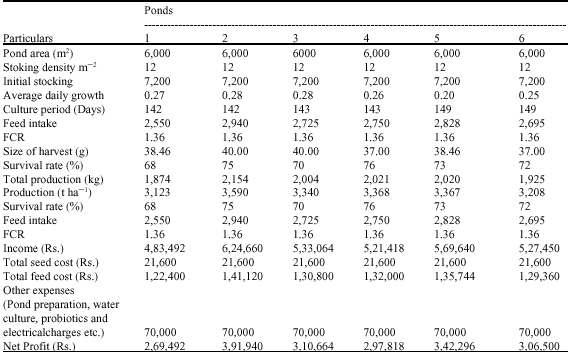
The salinity of the experimental pond was ranged from 16-30 ppt throughout the culture period. The pH recorded during the culture period was from 7.6 to 8.0. The dissolved oxygen was ranging between 3.9 to 4.2 ppm in all culture ponds. The temperature of the pond water was ranged between 27 to 30°C. Transparency was ranges from 35 to 50 cm during the culture period (Table 1). Harvesting was carried out in ponds 1, 2 at DOC 142 and 3, 4 at DOC 143 and 5, 6 at DOC 149. Average body weights of the ponds 1, 2, 3,4, 5 and 6 were 38.46, 40.00, 40.00, 37.00, 38.46 and 37.00, respectively. Highest survival was recorded in pond 4 (76%) and the lowest survival was recorded in pond 1 (68%). The average survival for all six ponds was calculated as 72%. Maximum production was reported in pond 2 (2,154 kg) and minimum was in the pond 1 (1,874 kg). The total production in all ponds was 11,998 kg. The maximum amount of feed was consumed by the shrimps in pond 2 (2,940) and minimum was in pond 1 (2,550). The FCR for all ponds were calculated as 1.36. Maximum net profit was obtained from pond 2 (Rs. 3, 91940) and minimum was in the pond 1 (Rs. 2, 69,492). However, the net profit from all ponds was Rs. 19,18,710 (Table 2).
| Table 1: | Water quality parameters of the culture ponds |
 | |
| Table 2: | Harvest details of P. monodon in culture ponds |
 | |
DISCUSSION
There has been a considerable increase in the culture of brackishwater shrimp due to its taste, market demand both national and international markets. In order to prevent many problems due to shrimp culture, sustainable shrimp farming is the need of the hour. Ideal pond size for shrimp culture was 1 or less than 1 ha (Ramanathan et al., 2005). In the present investigation also 6 ponds were used for shrimp culture and each pond size was 0.6 ha. Evethough shrimps are bottom dwelling organisms, the depth and volume of water in a pond has certain physical and biological consequences. The volume of water behaves like a buffer, which prevents weather fluctuations from influencing the environment in which shrimp lives. The ideal water depth is between 0.8 to 1.5 m depending upon the stage of culture. It is recommended that a minimum depth of 1 m will be maintained at operational level. In the present study 100 cm water level was maintained in all ponds throughout the culture period. The stocking density between 10-20 post larvae m-2 is ideal for successful shrimp farms (Ramanathan et al., 2005). In the present study the seeds were stocked at the stocking density of 12 m-2 in all ponds.
The maintenance of good water quality is essential for optimum growth and survival of shrimps. The levels of physical, chemical and biological parameters control the quality of pond waters. The level of metabolites in pond water can have an adverse effect on the growth. Good water quality is characterized by adequate oxygen and limited level of metabolites. Excess feed, faecal matter and metabolites will exert tremendous influence on the water quality of the shrimp ponds. Hence critical water quality parameters are to be monitored carefully as adverse conditions may be disastrous effect on the growing shrimps (Ramanathan et al., 2005).
Salinity is important parameters to control growth and survival of shrimps. At high salinity the shrimps will grow slowly but they are healthy and resistance to diseases. If the salinity is low the shell will be weak and prone to diseases. The salinity of the present study was maintained 16-30 ppt in all ponds. Muthu (1980) and Karthikean (1994) recommended a salinity range of 10-35 ppt was ideal for P. monodon culture. While Chanratchkool et al. (1994) and Rajalakshmi (1980) maintained the salinity of 10-30 and 15-20 ppt, respectively. Chen (1980) opined that salinity ranges of 15-20 ppt are optimal for culture of P. monodon. There are few reports (Shivappa and Hambry, 1997; Ramakrishna Reddy, 2000; Collins and Russel, 2003), which stated that P. monodon adapted quite well in freshwater conditions also because of its wide range of salinity tolerance.
pH is one of the vital environmental characteristics, which decides the survival and growth of shrimp under culture; it also affects the metabolism and other physiological process of shrimps. The optimum range of pH 6.8 to 8.7 should be maintained for maximum growth and production (Ramanathan et al., 2005). In the present study pH was ranging between 7.6 to 8.0 for all culture ponds. Saha et al. (1999) noticed the pH of 8.11 to 8.67 in low saline ponds. Ramakrishna Reddy (2000) was recommended pH of 7.5 to 8.5 for P. monodon culture. The pH of pond water is influenced by many factors, including pH of source waters and acidity of bottom soil and shrimp culture inputs and biological activity. The most common cause of low pH in water is acidic bottom soil, liming can be used to reduce soil acidity. In most common cause of high pH is high rate of photosynthesis by dense phytoplankton blooms. When pH is high water exchange will be better choice (Boyd, 2001).
Dissolved oxygen plays an important role on growth and production through its direct effect on feed consumption and maturation. Oxygen affects the solubility and availability of many nutrients. Low levels of dissolved oxygen can cause damages in oxidation state of substances from the oxidized to the reduced form. Lack of dissolved oxygen can be directly harmful to shrimps and cause a substantial increase in the level of toxic metabolites. Low-level of oxygen tension hampers metabolic performances in shrimp and can reduce growth and molting and cause mortality (Gilles Le Molluae, 2001). The dissolved oxygen in all the culture ponds in the present study was ranging between 3.9 to 4.2 ppm (Table 1).
Water temperature is probably the most important environmental variables in shrimp cultures, because it directly affects metabolism, oxygen consumption, growth, molting and survival. In general, a sudden change of temperature affects the shrimp immune system. The optimum range of temperature for the black tiger shrimp is between 28 to 30°C (Ramanathan et al., 2005). The optimum range of temperature for P. monodon was between 26 to 33°C as observed in the present study (MPEDA, 1980).
The transparency is mainly depends on the presence of phytoplankton. The secchi disc reading should be between 30-40 cm (MPEDA, 1980). The optimum range of secchi disc reading is between 30 to 60 cm to the juvenile stage and between 25 to 40 cm to the sub adult and final stage. The transparency of the present study is 35 to 50 cm (Table 1). Ramakrishna Reddy (2000) also observed similar transparencies (35-50 cm) for his study. The reading less than 30 cm mean that the phytoplankton density is high. If it is more than 40 cm indicates, low population of phytoplankton. For the growth of phytoplankton adequate quality of sunlight is needed. Due to low intensity of light during the culture period, the plankton bloom was less. Hence, the transparency was more.
Feed is one of the essential inputs in shrimp production and increase profits. Feed management is highly subjective, as feed consumption cannot be directly observed. In the present study CP feeds was used for all ponds and the amount was followed as per feed chat. Maximum amount of feed was given to pond 2 followed by 5, 4, 3, 6 and 1. The FCR for all ponds were calculated as 1.36. Average Indian cultured food conversion ratios were varying between 1.5 to 1.75 (Paul Raj, 1999). Cheekait (1995) observed the food conversion ranges were varying from 1.50 to 1.55 when microencapsulated diets are used. Saha et al. (1999) observed that the food conversion ratios of 1.31 to 1.58 in low saline ponds and 1.35 and 1.68 in high saline ponds. Ramakrishna Reddy (2000) observed FCR of 1.58 for his study.
Periodic sampling is very vital for successful shrimp culture. It is recommended to do weekly or fortnightly sampling to check the health condition as well as to estimate the growth of shrimps. Sampling also helps to know the average weight and this would help in estimating the total biomass in the pond for better-feed management. Growth of shrimps depends mainly on pond water quality and effective management of feeding. It is observed that growth rate of shrimps in the present study is rapidly increasing after DOC 40 in all ponds due to the accurate feed manipulation by sampling.
In the present study higher survival (75%) was recorded in the pond 4 and the lower survival (68%) was in the pond 1. The survival ranging between 68-76% and the average survival for all the ponds were 72% (Table 2). Krantz and Norris (1975) stated that survival rates of 60 to 80% are to be expected for P. monodon under suitable rearing conditions. It was achieved because the stocking density of 5, 000 to 8,000 pls ha-1. In the present study also totally 7,200 pls were stocked for each ponds. Ramakrishna Reddy (2000) got 76% survival and average body weight of 35.22 g. According to him 70 -80% survival is possible if the idle conditions are maintained for P. modonon. In the present study the average body weight of the shrimps were calculated as 38 g.
The size of culture shrimps, market price and molting percentage of shrimps plays vital role in fixing the harvesting. So timely harvest is very essential in aquaculture system. The total production from all six ponds was 11,998 kg. So it is confirmed that 12 m-2 is an ideal stocking density for the culture of P. monodon as evidenced from the net profit Rs. 19, 18,710. To get this profit, proper water quality management and feed management is essential.
REFERENCES
- Chen, H.C., 1985. Water quality criteria for farming the grass shrimp, Penaeus monodon. Proceedings of the 1st International Conference on Culture of Penaid Prawns/Shrimps, December 4-7, 1984, Southeast Asian Fisheries Development Center, Iloilo City, Philippines, pp: 165.
Direct Link - Saha, S.B., C. Bhattacharyya and A. Choudhury, 1999. Preliminary observation on culture of Penaeus monodon in low-saline waters. Naga, 22: 30-33.
Direct Link