

Yamini R. Kumar
Department of Pharmacology, K.L.E. University�s College of Pharmacy, Bangalore-560010, Karnataka, India
G. P. Rajani
Department of Pharmacology, K.L.E. University�s College of Pharmacy, Bangalore-560010, Karnataka, India
International Journal of Pharmacology
Year: 2011 | Volume: 7 | Issue: 5 | Page No.: 616-622







ABSTRACT
The present study was aimed at evaluating analgesic and antiulcer activities of the ethanolic (BVE) and aqueous (BVA) extracts of root of Bauhinia variegata Linn., respectively in animal models. The analgesic activity was evaluated for its central and peripheral pharmacological actions by using Eddy’s hot plate method and acetic acid-induced writhing, respectively. The anti-ulcer activity was evaluated by using pylorus ligation, ethanol and aspirin induced ulcer models. The study was carried out in two different dose levels of 200 and 400 mg kg-1 body weight orally for both ethanolic and aqueous extracts, respectively. BVE and BVA did not produce any mortality up to 2000 mg kg-1. Dose dependent increase in latency of response in the hot plate method was observed with BVE 400 mg kg-1 and 81% inhibition in acetic acid induced writhings in mice was observed with BVA 400 mg kg-1. BVE and BVA at both the doses showed 99% protection in ethanol induced ulcer model. BVE 400 mg kg-1 showed 99.9% protection in aspirin induced ulcer model. Both BVE and BVA at the dose of 400 mg kg-1 showed 99.8% protection in pylorus ligation ulcer model. Pharmacological screening of the root extracts of Bauhinia variegata Linn. showed significant (p<0.001) dose dependent analgesic activity and significant (p<0.001) anti-ulcer activity when compared with reference standard. Presence of flavonoids might be responsible for these activities. NSAIDs are associated with side effects of gastric ulcers. BVE and BVA are reported to be plant-derived natural remedy having analgesic and anti-ulcer activities.
PDF Abstract XML References Citation
Received: April 15, 2011;
Accepted: May 19, 2011;
Published: July 23, 2011
How to cite this article
Yamini R. Kumar and G. P. Rajani, 2011. Analgesic and Anti-Ulcer Activities of Ethanol and Aqueous Extracts of Root of Bauhinia variegata Linn. International Journal of Pharmacology, 7: 616-622.
DOI: 10.3923/ijp.2011.616.622
URL: https://scialert.net/abstract/?doi=ijp.2011.616.622
DOI: 10.3923/ijp.2011.616.622
URL: https://scialert.net/abstract/?doi=ijp.2011.616.622
INTRODUCTION
Natural plants (cheaper accessibility and with fewer or no side effects) have emerged as a potential candidate (Karim et al., 2011). From time immemorial, plants have served as the primary source of medicine and food for man and they have continued to provide mankind with new, novel therapeutic remedies to date. The revival of interest in plant derived drugs is mainly due to the widespread belief that ‘natural medicines’ are safe and more dependable than the costly, synthetic drugs, many of which are toxic and possess adverse effects. Plants are being used in the traditional systems of medicine in many parts of the world, especially in rural communities, for the control, management and/or treatment of a variety of human and animal ailments. The current world wide trend towards utilization of plant-derived natural remedies has, therefore, created a dire need for accurate and upto date information on the properties and uses, efficacy, safety and quality of medicinal plant products (Ojewole, 2007).
The plant Bauhinia variegata Linn. belongs to Caesalpiniaceae family. It is a medium-sized, deciduous tree, found throughout India. It is traditionally used in bronchitis, leprosy and tumors. The stem bark is used as astringent, tonic and anthelmentic. Infusion of the leaves is used as a laxative and for piles. Dried buds are used in the treatment of worm infestations, tumours, diarrhoea and piles (Rajani and Ashok, 2009). The stem bark has been investigated and reported to have antitumour, antibacterial, antifungal, antiulcer and hepatoprotective activity. Flavanone glycoside from root is reported to have anti-inflammatory activity (Rajkapoor et al., 2003; Bodakhe and Ram, 2007). The stem bark is reported to contain 5,7 dihydroxy and 5,7 dimethoxy flavanone-4-O-α-L rhamnopyrosyl-β-D-glycopyranosides, Kaempferol-3-glucoside, lupeol and betasitosterol. Seeds contain protein, fatty oil containing oleic acid, linoleic acid, palmitic acid and stearic acid. Flowers contain cyanidin, malvidin, peonidin and kaempferol. Root contains flavanol glycosides (Yadava and Reddy, 2003).
Pain is an unpleasant sensory, emotional and subjective experience associated with actual or potential tissue damage or described in terms of such damage which cannot be objectively defined. As a symptom, pain demands instant relief and in practice its dramatic relief highly impresses a layman. Non steroidal Anti-Inflammatory Drugs (NSAID’s) are widely used in the treatment of pain, fever and inflammation. However, these drugs have side effects especially on the gastro intestinal tract (Odabasoglu et al., 2006). Through this study, evaluation of analgesic activity of Bauhinia variegata root was taken up.
Gastric hyperacidity and ulcer are very common cause of human sufferings today. Although prolonged anxiety, emotional stress, hemorrhagic surgical shock, burns and trauma are known to cause severe gastric irritation, the mechanism is still very poorly understood. Oxygen derived free radicals have been implicated in the pathogenesis of gastric damage caused by physical, chemical and psychological factors that leads to gastric ulceration in humans and experimental animals (Rao et al., 2004). Ulcers are believed to be the outcome of imbalance between aggressive factors and maintenance of mucosal integrity through endogenous defense mechanisms. To regain the balance, different therapeutic agents including plant extracts are used (Bandyopadhyay et al., 2000; Govindarajan et al., 2006). In view of the undesirable side effects and/or interaction of the drugs used for conventional therapy of ulcers the present work attempts to evaluate the antiulcer potential of Bauhinia variegata Linn.
MATERIALS AND METHODS
The study was conducted in the Pharmacology laboratory, Department of Pharmacology, K.L.E. University’s College of Pharmacy, Bangalore, India from 5th june 2008 to 28th February 2009.
Collection and extraction: Root of Bauhinia variegata Linn. was procured and authenticated from Regional Research Institute, Bangalore. The authenticated root was dried in shade, coarsely powdered and followed by extraction according to standard procedures using analytical grade solvents. Coarse powder of the root (1 kg) was Soxhlet extracted with 90% ethanol. The aqueous extract was prepared using the same marc by the process of maceration. The extracts obtained were concentrated under reduced pressure to yield ethanolic extract (4.2%) and the aqueous extract (2.4%).
Preliminary phytochemical screening of extracts: Qualitative chemical tests were conducted for ethanolic and aqueous extracts to identify the various phytoconstituents employing standard screening tests (Kokate, 2002). Ethanolic extract gave positive test for steroids, saponins, tannins, phenolic compounds and flavonoids where as aqueous extract gave positive test for saponins, tannins, reducing sugars and flavonoids.
Animals: Albino male wistar rats (150-200 g) and Swiss albino mice (18-25 g) were procured from a registered breeder. The animals were housed under standard condition of temperature (25±2°C) and relative humidity (30-70%) with a 12:12 light and dark cycle. The animals were fed with standard pellet diet and water ad libitum. All experiments were performed in accordance with the CPCSEA guidelines for the care and use of laboratory animals. Approval of the Institutional Animals Ethics Committee (IAEC) was taken for conducting analgesic and antiulcer activities.
Chemicals: Indomethacin (Micro Labs, India), Tramadol (Cadila, India), Aspirin (USV, India), Ethanol (SD Finechem Ltd., India) and Ranitidine (J.B. Chemicals and Pharmaceuticals Ltd., India) were used in the pharmacological studies.
Acute toxicity studies: Acute toxicity studies for aqueous and ethanolic extracts of Bauhinia variegata Linn. were conducted as per OECD, 2006 guidelines 423.
Analgesic activity
Acetic acid induced writhing test: The writhing test in mice was carried out using the method described by Vogel et al. (2002).
Eddy’s hot plate method: The hot plate method was carried out according to Somchit et al. (2004).
Antiulcer activity
Ethanol induced ulcers in rats: The ethanol induced ulcers in rats was carried out according to the method of Dordevic et al. (2007).
Aspirin induced ulcers in rats: Aspirin induced ulcers in rats were carried out according to Deshpande et al. (2003).
Effect on gastric secretion by pyloric ligation in rats: Pyloric ligation in rats was carried out according to Rao et al. (2004). Ulcer index was calculated and intensity of gastric lesions was assessed.
The number of ulcers was noted and the severity recorded with the following scores (Vogel et al., 2002).
Ulcer Index (UI): UI was calculated using the formula:
 |
where, UN = No. of ulcers/animal, US = Mean severity of ulcer score and UP = Percentage of animals with ulcer incidence.
Percentage protection of ulcer: Percentage protection was calculated using the formula:
 |
Statistical analysis: The data were expressed as Mean±SD. Results were analyzed statistically by GraphPad Prism software by one-way analysis of variance (ANOVA) followed by Dunnet and Tukey’s test. p-values <0.05 were considered as statistically significant.
RESULTS
Phytochemical screening: Preliminary phytochemical screening showed that the ethanolic extract contain steroids, saponins, tannins, phenolic compounds and flavonoids where as aqueous extract contains saponins, tannins, reducing sugars and flavonoids.
Acute toxicity studies (LD50): There was no change in normal behavioural pattern of extract treated animals and no sign and symptoms of toxicity were observed during the observations which was done continuously for the first two hours and then observed up to twenty four hours for mortality. The extracts were safe up to a maximum dose of 2000 mg kg-1 body weight.
Effect of BVA and BVE on acetic acid induced writhing test: Both aqueous and ethanolic extracts produced analgesic activity in a dose dependent manner. BVE 200 and 400, BVA 400 and indomethacin produced significant (p<0.01) decrease in writhings induced by acetic acid when compared to control. BVA 400 produced maximum (p<0.01) decrease in the number of writhes when compared with all other groups. The percentage decrease in writhing by various extracts was compared to that of the standard drug indomethacin. BVA 400 produced maximum percentage decrease in writhing which was better (p<0.01) than that of standard where as, BVE 400 produced decrease in writhing comparable (p<0.05) to that of standard (Table 1).
Effect of BVA and BVE on hot plate method: The ethanolic and aqueous extracts significantly and dose dependently protected the mice against thermally induced pain stimulus. All the extracts at various time intervals at which they were tested produced increase in reaction time. The comparison of analgesic activity with the standard drug Tramadol at various time intervals is as follows. At 30 min, only BVA 400 produced analgesic activity comparable (p<0.05) to that of standard.
| Table 1: | Effect of Bauhinia variegata Linn. root extracts and indomethacin on acetic acid induced writhes in mice |
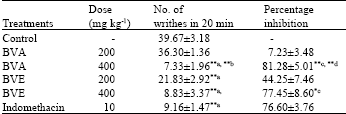 | |
| Values represent Mean±SD. Where, BVA 200 and 400, BVE 200 and 400 indicates Bauhinia variegata root aqueous and alcoholic extracts at doses 200 and 400 mg kg-1 body weight respectively. n = 6, *Symbols represent statistical significance. ** p<0.01., *p<0.05. ‘a’ as compared with control, ‘b’ is comparision of BVA 400 with other treatment groups, ‘c’ as compared with indomethacin and ‘d’ is comparision of BVA 400 with other treatment groups | |
The percentage protection against thermally induced pain stimulus by BVA 400 and the standard drug, tramadol was 85.35±5.21 and 69.84±6.75, respectively. At 45 min BVE 400 produced analgesic activity comparable (p<0.05) to that of tramadol, the percentage protection was 75.91±7.00 and 81.41±5.30, respectively. At 60 min BVE 200 and 400 produced analgesic activity comparable (p<0.05) to that of tramadol. At 90, 120 and 180 min, all extracts at all doses produced analgesic activity better (p<0.01) than tramadol (Table 2).
Effect of BVA and BVE on ethanol induced ulcers: Ranitidine, BVE and BVA at both the doses 200 and 400 mg kg-1 body weight produced significant (p<0.01) decrease in the ulcer score when compared to control. BVA and BVE at both the doses produced decrease in ulcer score comparable (p <0.05) to that of ranitidine. The percentage protection against ulcers by ranitidine, BVA and BVE at 200 and 400 mg kg-1 body weight were found to be 99.8, 99.45, 99.45, 99.6 and 99.72, respectively (Table 3).
Effect of BVA and BVE on aspirin induced ulcers: Significant (p<0.01) decrease in ulcer score was produced by ranitidine, BVE and BVA at both 200 and 400 mg kg-1 when compared to control. BVA 400 produced decrease in ulcer score comparable (p<0.05) to that of ranitidine. BVE 200 and 400 produced maximum decrease in ulcer score which was better (p<0.01) than ranitidine at both doses of aqueous extract. The percentage protection against ulcer by ranitidine, BVA and BVE at 200 and 400 mg kg-1 body weight were found to be 99.64, 66.3, 83.30, 96.31 and 99.90, respectively (Table 4).
Effect of BVA and BVE on pylorus ligation ulcer model: Aqueous and ethanolic extracts at both the doses 200 and 400 mg kg-1 body weight produced significant (p<0.01) decrease in ulcer score when compared to control.
| Table 2: | Analgesic effect of Bauhinia variegata Linn. root extracts and tramadol in mice by hot plate method |
 | |
| Values represent Mean±SD (n = 6) where, BVA 200 and 400, BVE 200 and 400 indicates Bauhinia variegata root aqueous and alcoholic extracts at doses 200 and 400 mg kg-1 body weight, respectively. *Symbols represent statistical significance. **p<0.01, *p<0.05 as compared with tramadol | |
| Table 3: | Effect of root extracts of Bauhinia variegata Linn. on ethanol induced gastric ulcers in rats |
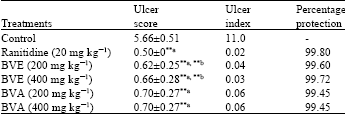 | |
| Values are the Mean±SD (n = 6), where, BVA 200 and 400, BVE 200 and 400 indicates Bauhinia variegata root aqueous and alcoholic extracts at doses 200 and 400 mg kg-1 body weight, respectively. *Symbols represent statistical significance. **p<0.01, *p<0.05 ‘a’ as compared with control and ‘b’ comparison of ethanolic extract with ranitidine and aqueous extract | |
| Table 4: | Effect of root extracts of Bauhinia variegata Linn. on aspirin induced gastric ulcers in rats |
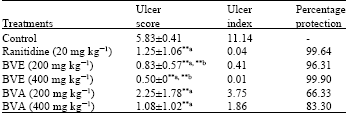 | |
| Values are the Mean±SD (n = 6), where, BVA 200 and 400, BVE 200 and 400 indicates Bauhinia variegata root aqueous and alcoholic extracts at doses 200 and 400 mg kg-1 body weight, respectively. *Symbols represent statistical significance. **p<0.01, *p<0.05 ‘a’ as compared with control and ‘b’ comparison of ethanolic extract with ranitidine and aqueous extract | |
| Table 5: | Effect of root extracts of Bauhinia variegata Linn. in pylorus ligation rat model |
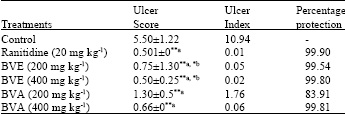 | |
| Values are the Mean±SD, n = 6, where, BVA 200 and 400, BVE 200 and 400 indicates Bauhinia variegata root aqueous and alcoholic extracts at doses 200 and 400 mg kg-1 body weight respectively. *Symbols represent statistical significance. ** p< 0.01., *p<0.05. ‘a’ as compared with control and ‘b’ comparison of ethanolic extract with ranitidine and aqueous extract | |
Ethanolic and aqueous extracts at both doses 200 and 400 mg kg-1 body weight produced decrease in ulcer score comparable (p<0.05) to that of ranitidine. The percentage protection against ulcer by ranitidine, BVA and BVE at 200 and 400 mg kg-1 body weight were found to be 99.9, 83.91, 99.81, 99.54 and 99.8, respectively. Both ethanolic and aqueous extracts at both the doses produced significant (p<0.01) decrease in gastric volume, total and free acidity indicating its anti secretory activity (Table 5, 6).
DISCUSSION
Antinociceptive or analgesic activity of Bauhinia variegata Linn. was evaluated using both chemical and thermal models of nociception in mice. Acetic acid induced writhing test is used for detecting both central and peripheral analgesics, where as hot plate model is more sensitive to centrally active analgesics. Acetic acid induced writhing test is very sensitive and able to detect anti-nociceptive effects of compounds at dose levels that may appear inactive in other methods like tail flick test (Bentley et al., 1981; Gupta et al., 2007). However, the test is not specific as it does not indicate whether activity is central and/or peripheral. The intraperitonial administration of acetic acid produces abdominal writhing response due to sensitization of chemosensitive nociceptors by prostaglandins (Owolabi and Omogbai, 2007). Acetic acid releases PGE2 and PGF2α as well as lipooxygenase product into the peritonedfal fluid. BVE and BVA at both the doses produced decrease in number of writhes. The abdominal constrictions produced after administration of acetic acid is related to sensitization of nociceptors to prostaglandins. It is therefore possible that the extracts exert their analgesic effect probably by inhibiting the synthesis or action of prostaglandins. The analgesic effect of the extracts may therefore be due to either its action on visceral receptors sensitive to acetic acid (Ibironke and Ajiboye, 2007) or due to the inhibition of the production of algogenic substances or the inhibition at the central level of the transmission of painful impulses.
Thermal induced nociception indicates narcotic involvement (Besra et al., 1996; Okokon et al., 2008). The ability of the extracts to prolong the reaction latency to thermally induced pain (Hot plate test) in mice further suggests central analgesic activity. Thermal nociceptive tests are sensitive to opioid μ receptors (Abbott and Young, 1988).
| Table 6: | Effect of root extracts of Bauhinia variegata Linn. on gastric secretion in pylorus ligation rat model |
 | |
| Values are the Mean±SD (n = 6), where, BVA 200 and 400, BVE 200 and 400 indicates Bauhinia variegata root aqueous and alcoholic extracts at doses 200 and 400 mg kg-1 body weight, respectively. *Symbols represent statistical significance. **p<0.01, *p<0.05 ‘a’ as compared with control and ‘b’ as compared with ranitidine | |
The extracts significantly and dose dependently increased the reaction time at the various time intervals at which they were tested. At higher doses the extracts showed activity which was comparable to that of tramadol and was better than tramadol at 90, 120 and 180 min. This indicates that the extracts exhibit analgesic effect by central action.
These reviews are in support of the results obtained by both the models and it can be concluded that the extracts may be showing analgesic activity both by peripheral and central mechanisms. Flavonoids, alkaloids and saponins were found to be present in the extracts during phytochemical tests. Of these, flavonoids are well known for their analgesic effect (Gupta et al., 2008). The analgesic effect of the extract may be due to the presence of flavonoids.
Aspirin induced ulcer models are commonly used to evaluate antiulcer activity. NSAID’s like aspirin is known to induce ulcers during course of anti-inflammatory therapy by inhibiting COX pathway. In stomach, prostaglandins plays a vital protective role, stimulates secretion of HCO¯3 and mucous, maintaining mucosal blood flow and regulating mucosal cell turnover and repair. Thus the suppression of prostaglandin synthesis by NSAID’s results in increased susceptibility to mucosal injury and gastroduedonal ulceration (Bandyopadhyay et al., 2000). It is also shown that ROS (Reactive oxygen species) possess an important role in pathogenesis of mucosal damage caused by aspirin besides inhibition of COX enzymes. Aspirin induced ulcers are mediated through tissue damaging free radicals which are produced from the conversion of hydroperoxyl to hydroxyl fatty acids which leads to cell destruction. The hydroperoxyl fatty acids are generated from degeneration of mast cells and generalized lipid peroxidation accompanying cell damage. Superoxides produced by peroxidases in the tissues might damage the membranes and stomach tissues by increasing lipid peroxidation (Odabasoglu et al., 2006; Umamaheswari et al., 2007). Mucosal damage by synthetic NSAID’s may involve the following one or more reasons: Inhibition of prostaglandin synthesis, increased acid secretion and back diffusion of H+ ions resulting in overproduction of LT and other products of 5-lipoxygenase pathway (Govindarajan et al., 2006) or involvement of free radicals. These reviews are in support of the results obtained by BVE and BVA. The results suggest possible involvement of prostaglandin and /mucus in antiulcer effect of extracts.
Ethanol induced gastric ulcers have been widely used for evaluation of gastroprotective activity. Ethanol is metabolized in the body and releases superoxide anion and hydroperoxy free radicals. It is found that O2 derived free radicals are implicated in the mechanism of acute and chronic ulceration in gastric mucosa and scavenging these free radicals can play an appreciable role in healing these ulcers. It also causes damage to gastric mucus depletion and free radical production. Control group treated with ethanol clearly produced the expected characteristic zone of necrotizing mucosal lesions. Both the extracts of Bauhinia variegata Linn. produced decrease in ulcer index comparable to that of ranitidine and afforded significant protection against ethanol induced ulcer. These results indicate that Bauhinia variegata Linn. displays an antiulcerogenic effect related to cytoprotective activity, since it significantly decrease ethanol induced ulcers. Due to the antioxidant property, Bauhinia variegata Linn. might have scavenged the free radicals produced by metabolism of ethanol and thereby healed the ulcers. These reviews are in support of the results obtained by BVE and BVA.
Pylorus ligation model is usually employed to observe the potential of anti ulcer drugs for their antisecretory activity by checking the gastric volume and its effect on gastric pH, total acidity and free acidity. Pylorus ligation induced ulcers are due to auto digestion of the gastric mucosa and breakdown of the gastric mucosal barrier (Bandyopadhyay et al., 2000) and also because of an increase in acid-pepsin accumulation due to pylorus obstruction and subsequent mucosal digestion (Umamaheswari et al., 2007). These reviews are in support of the results obtained by BVE and BVA. Extracts of Bauhinia variegata produced significant (p<0.01) decrease in gastric volume, total and free acidity indicating its anti-secretory activity also produced decrease in the ulcer incidence as evident by decrease in ulcer score and provided protection against ulcers. The current study is similar to the one that’s been reported by several authors, investigating the potential role of herbs for anti-ulcer effect (Sunilson et al., 2008).
CONCLUSION
Data obtained in the study indicated that the ethanol and aqueous extracts of root of Bauhinia variegata Linn. possess analgesic and anti-ulcer effects. It is assumed that presence of flavonoids might be responsible for analgesic activity which is most probably mediated via formation and release of various autacoids. The results also suggest anti-ulcer activity is probably due to possible involvement of prostaglandin and or mucus in antiulcer effect of extracts, or probably by its free radical scavenging effect or may be also due to its anti-secretory activity.
ACKNOWLEDGMENT
Authors acknowledge the support of Principal, K.L.E. University’s College of Pharmacy, Bangalore-560010, India for providing the facilities to carry out these investigations.
REFERENCES
- Abbott, F.V. and S.N. Young, 1988. Effect of 5-hydroxytryptamine precursors on morphine analgesia in the formalin test. Pharmacol. Biochem. Behav., 31: 855-860.
PubMed - Bandyopadhyay, S.K., S.C. Pakrashi and A. Pakrashi, 2000. The role of antioxidant activity of Phyllanthus emblica fruits on prevention from indomethacin induced gastric ulcer. J. Ethnopharmacol., 70: 171-176.
CrossRefPubMedDirect Link - Bentley, G.A., S.H. Newton and J. Starr, 1981. Evidence for an action of morphine and the enkephalins on sensory nerve endings in the mouse peritoneum. Br. J. Pharmacol., 73: 325-332.
CrossRefPubMedDirect Link - Besra, S.E., R.M. Sharma and A. Gomes, 1996. Antiinflammatory effect of petroleum ether extract of leaves of Litchi chinensis Gaertn. (Sapindaceae). J. Ethnopharmacol., 54: 1-6.
CrossRefDirect Link - Gupta, M., U.K. Mazumdar and P. Gomathi, 2007. Antiinflammatory and antinociceptive effects of Galega purpurea root. Int. J. Pharmacol., 3: 210-218.
CrossRefDirect Link - Bodakhe, S.H. and A. Ram, 2007. Hepatoprotective properties of Bauhinia variegata bark extract. Yakugaku Zasshi, 127: 1503-1507.
Direct Link - Deshpande, S., G.B. Shah, I. Deshpande and N.S. Parmar, 2003. Antiulcer activity of aqueous extract of Basella rubra in albino rats. J. Nat. Remedies, 3: 212-214.
Direct Link - Govindarajan, R., M. Vijayakumar, M. Singh, C.H.V. Rao, A. Shirwaikar, A.K.S. Rawat and P. Pushpangadan, 2006. Antiulcer and antimicrobial activity of Anogeissus latifolia. J. Ethnopharmacol., 106: 57-61.
CrossRefDirect Link - Odabasoglu, F., A. Cakir, H. Suleyman, A. Aslan, Y. Bayir, M. Halici and C. Kazaz, 2006. Gastroprotective and antioxidant effects of usnic acid on indomethacin-induced gastric ulcer in rats. J. Ethnopharmacol., 103: 59-65.
CrossRefPubMedDirect Link - Ibironke, G.F. and K.I. Ajiboye, 2007. Studies on anti-inflammatory and analgesic properties of chenopodium ambrosioides leaf extract in rats. Int. J. Pharmacol., 3: 111-115.
CrossRefDirect Link - Owolabi, O.J. and E.K.I. Omogbai, 2007. Analgesic and anti-inflammatory activities of the ethanolic stem bark extract of Kigelia africana (Bignoniaceae). Afr. J. Biotechnol., 6: 582-585.
CrossRefDirect Link - Rao, C.V., S.K. Ojha, K. Radhakrishnan, R. Govindarajan, S. Rastogi, S. Mehrotra and P. Pushpangadan, 2004. Antiulcer activity of Utleria salicifolia rhizome extract. J. Ethnopharmacol., 91: 243-249.
PubMed - Dordevic, S., S. Petrovic, S. Dobric, M. Milenkovic, D. Vucicevic, S. Zizic and J. Kukie, 2007. Antimicrobial, anti-inflammatory, anti-ulcer and antioxidant activities of Carlina acanthifolia root essential oil. J. Ethnopharmacol., 109: 458-463.
PubMed - Sunilson, J.A.J., R. Varatharajan, P. Jayaraj, T. John, J. Jisha and P. Promwichit, 2008. Gastroprotective and antioxidant activities of the roots of Hibiscus aculeatus roxb in rats. Int. J. Pharmacol., 4: 252-257.
CrossRefDirect Link - Umamaheswari, M., K. Asokkumar, R. Rathidevi, A.T. Sivashanmugam, V. Subhadradevi and T.K. Ravi, 2007. Antiulcer and in vitro antioxidant activities of Jasminum grandiflorum L. J. Ethnopharmacol., 110: 464-470.
CrossRefPubMedDirect Link - Okokon, J.E., B.S. Antia and E. Umoh, 2008. Analgesic and anti-inflammatory effects of ethanolic root extract of Hippocratea africana. Int. J. Pharmacol., 4: 51-55.
CrossRefDirect Link - Karim, A., M.N. Sohail, S. Munir and S. Sattar, 2011. Pharmacology and phytochemistry of Pakistani herbs and herbal drugs used for treatment of diabetes. Int. J. Pharmacol., 7: 419-439.
CrossRef - Gupta, M., B.P. Shaw and A. Mukherjee, 2008. Studies on antipyretic-analgesic and ulcerogenic activity of polyherbal preparation in rats and mice. Int. J. Pharmacol., 4: 88-94.
CrossRefDirect Link