

S.M. Raquibul Hasan
Department of Pharmacy, Jahangirnagar University, Dhaka, 1342, Bangladesh
M. M. Hossain
Department of Pharmacy, Jahangirnagar University, Dhaka, 1342, Bangladesh
R. Akter
Department of Pharmacy, Stamford University, Dhaka, 1217, Bangladesh
M. Jamila
Department of Pharmacy, Bangladesh University, Dhaka, 1207, Bangladesh
M. E.H. Mazumder
Discipline of Biomedical Science, University of Sydney, NSW 2141, Australia
M. A. Alam
Department of Pharmacy, Stamford University, Dhaka, 1217, Bangladesh
A. Faruque
Department of Pharmacy, Jahangirnagar University, Dhaka, 1342, Bangladesh
S. Rana
Department of Pharmacy, Jahangirnagar University, Dhaka, 1342, Bangladesh
S. Rahman
Department of Pharmaceutical Sciences, South Dakota State University, USA
International Journal of Pharmacology
Year: 2010 | Volume: 6 | Issue: 1 | Page No.: 63-67







ABSTRACT
Analgesic potential of the pet ether (PECB), chloroform (CCB), n-butanol (NBCB) and hydromethanolic (HMCB) fractions of the aerial parts of Commelina benghalensis Linn. was evaluated for centrally acting analgesic property using hotplate and tail immersion method and peripheral pharmacological actions using acetic acid-induced writhing test to scientifically validate some of the folkloric and ethnomedical uses of the plant. All fractions, at the dose of 200 and 400 mg kg-1 b.wt., displayed significant analgesic action in a dose dependent manner in the tested models. In acetic acid-induced writhing test, all extracts exhibited significant (p<0.05) reduction of writhing response in a dose dependent manner; the response decreased in the order Diclofenac-Na (76.16%) > CCB2 (68.8%) > NBCB2 (61.9%) > HMCB2 (52.8%) > PECB2 (48.0%). In hotplate and tail immersion method, all fractions caused a significant (p<0.0-0.001) increase in latency time and the results are comparable to the standard drug Nalbuphine. These results suggest significant analgesic potential of C. benghalensis and thereby justify its traditional uses in various types of pain.
PDF Abstract XML References Citation
How to cite this article
S.M. Raquibul Hasan, M. M. Hossain, R. Akter, M. Jamila, M. E.H. Mazumder, M. A. Alam, A. Faruque, S. Rana and S. Rahman, 2010. Analgesic Activity of the Different Fractions of the Aerial Parts of Commelina benghalensis Linn. International Journal of Pharmacology, 6: 63-67.
DOI: 10.3923/ijp.2010.63.67
URL: https://scialert.net/abstract/?doi=ijp.2010.63.67
DOI: 10.3923/ijp.2010.63.67
URL: https://scialert.net/abstract/?doi=ijp.2010.63.67
INTRODUCTION
Pain has been officially defined as an unpleasant sensory and emotional experience associated with actual or potential tissue damage. Pain is a warning signal and primarily protective in nature, but often causes discomfort. It is the most important symptom that brings the patient to physician. Excessive pain may be unbearable and cause other effect-sinking sensation, apprehension, sweating, nausea, palpitation and raise or fall in BP, tachypnea. Analgesics relieve pain as a symptom, without affecting its cause (Tripathi, 1999). Currently available analgesic drugs such as opiates and NSAIDs are not useful in all cases due to their side effect profile. Opiate analgesic such as morphine has strong addictive potential and other side effects including respiratory depression, drowsiness, decreased gastrointentinal motility, nausea and several alterations of endocrine and autonomic nervous system while NSAIDs are well known for their ability to produce gastrointestinal bleeding, ulceration etc (Mate et al., 2008; Almeida et al., 2001). Therefore, search for new analgesic drugs with promising pharmacological actions has become an urgent need.
Commelina benghalensis (family Commelinaceae), locally known as Dholpata, is a perennial herb native to tropical Asia and Africa. It is used in the Indian subcontinent as a folk medicine for the treatment of variety of ailments. The plant is used for mouth thrush (Ssenyonga and Brehony, 1993), inflammation of the conjunctiva, psychosis, epilepsy, nose blockage in children (Okello and Ssegawa, 2007), insanity (Tabuti et al., 2003) and exophthalmia. In China, C. benghalensis is used medicinally as a diuretic, febrifuge and anti-inflammatory (Deyuan and Robert, 2000). It is used as an animal fodder, eaten by humans as a vegetable in Pakistan, also used there medicinally, but with different purported effects, including as a laxative and to cure inflammations of the skin as well as leprosy (Qaiser and Jafri, 1975). Some previous phytochemical screenings on Commelina communis and Commelina undulata revealed the presence of anthocyanins and a dammarane type compound in this genus (Ghani, 2003). Literature search revealed no previous report on the analgesic activity of C. benghalensis. Therefore, the present study was designed to investigate the analgesic activity of the aerial parts of C. benghalensis in order to examine the pharmacological basis of the use of the plant in folk medicine for the treatment of pain.
MATERIALS AND METHODS
Plant material: The plant was collected from Old Elephant Road, Eskaton Garden, Dhaka in April 2008 when weed beds were in their maximum densities. The whole plant with leaves, stems and roots was collected and identified by experts in Bangladesh National Herbarium, Mirpur, Dhaka (Accession No. 32784). The plant was thoroughly washed with water; roots were discarded and the aerial parts were dried in hot air woven at 50°C for 3 days and at 40°C for the next 4 days.
Extraction and solvent-solvent partitioning: The dried aerial parts were coarsely powdered from which 83 g was extracted with a mixture of methanol: water (7:3, v/v) by a Soxhlet apparatus at 50°C. The solvent was completely removed and obtained 18 g (yield 21.7%) dried crude extract. Solvent-solvent partitioning was done using the protocol. The crude extract was dissolved in 10% aqueous methanol to make the mother solution which was partitioned off successively by three solvents namely pet ether (3x100 mL), chloroform (3x100 mL), n-butanol (3x100 mL). All the three fractions and the residual hydromethanol fraction were subjected to dryness under reduced pressure. The dried extracts thus obtained were used for investigation.
Animal: Swiss albino mice of either sex, 3-4 weeks of age, weighing between 20-25 g were used for the analgesic screening. The mice were collected from the animal research branch of the International Center for Diarrheal Disease and Research, Bangladesh (ICDDR, B). Animals were maintained under standard environmental conditions and had free access to feed and water ad libitum. The newly collected mice were acclimatized to the new environment for one week prior to the experiment.
Analgesic activity
Acetic acid-induced writhing test: The antinociceptive activity of the samples was studied using acetic acid-induced writhing model in mice (Ahmed et al., 2004). The animals were divided into control, positive control and test groups with five mice in each group. The animals of test groups received test samples at the dose of 200 and 400 mg kg-1 b.wt. Positive control group received standard drug Diclofenac-Na at the dose of 10 mg kg-1 b.wt. and vehicle control group was treated with 1% Tween 80 in water at the dose of 10 mL kg-1 b.wt. Test samples and vehicle were administered orally 30 min before intraperitoneal administration of 0.7% acetic acid but Diclofenac-Na was administered intraperitonially 15 min before injection of acetic acid. After an interval of 5 min, the mice were observed for specific contraction of body referred to as writhing for the next 10 min.
Hot plate method: The paws of mice are very sensitive to temperature at 55±0.5°C, which are not damaging to the skin. The animals were placed on Eddy’s hot plate kept at a temperature of 55±0.5°C. A cut off period of 15 sec (Franzotti et al., 2000), was observed to avoid damage to the paw. Reaction time was recorded when animals licked their fore or hind paws, or jumped prior to and 0, 30, 60 and 90 min after oral administration of the samples (Eddy and Leimbach, 1953; Kulkarni, 1999; Toma et al., 2003). The animals of test groups received test samples at the dose of 200 and 400 mg kg-1 b.wt. Positive control group and vehicle control group were treated with Nalbuphine (10 mg kg-1 b.wt.) and 1% Tween 80 in water (10 mL kg-1 b.wt.), respectively.
Tail immersion test: The procedure is based on the observation that morphine like drugs selectively prolongs the reaction time of the typical tail withdrawal reflex in mice (Toma et al., 2003). The animals of the control, positive control and test groups were treated with Nalbuphine (10 mg kg-1 b.wt.), 1% Tween 80 in water (10 mL kg-1 b.wt.) and test samples at the dose of 200 and 400 mg kg-1 b.wt., respectively. 1 to 2 cm of the tail of mice was immersed in warm water kept constant at 55°C. The reaction time was the time taken by the mice to deflect their tails. The first reading was discarded and the reaction time was recorded as a mean of the next three readings. A latency period of 20 sec was defined as complete analgesia and the measurement was stopped when the latency period exceeded to avoid injury to mice. The latent period of the tail-flick response was taken as the index of antinociception and was determined before and 0, 30, 60 and 90 min after the administration of drugs.
Statistical analysis: Statistical analysis was carried out using one-way ANOVA followed by Dunnet’s multiple comparisons. The results obtained were compared with the vehicle control group. The p<0.05 were considered to be statistically significant.
RESULTS AND DISCUSSION
Acetic acid-induced writhing in mice: The results showed that the different fractions of C. benghalensis at all doses produced significant (p<0.05) inhibition of writhing reaction in a dose dependent manner. The reference drug diclofenac sodium was more potent than the plant extracts at all dose levels (Table 1).
Hot plate test: The extracts were found to dose-dependently cause a prolongation of the hot plate latency. The response produced by the fractions was significant and comparable to the reference drug Nalbuphine (Table 2).
| Table 1: | Effect of C. benghalensis fractions on acetic acid-induced writhing in mice |
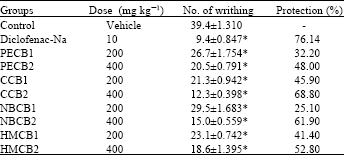 | |
| Values are Mean±SEM, (n = 5); *p<0.05, Dunnet test as compared to control. PECB: Pet ether fraction, CCB: Chloroform fraction, NBCB: n-butanol fraction and HMCB: Hydromethanol fraction of C. benghalensis; 1 = 200 mg kg-1 b.wt., 2 = 400 mg kg-1 b.wt. | |
Tail immersion test: The tail withdrawal reflex time after administration of the plant extracts was found to increase with increasing dose of the fractions. The result was statistically significant (p<0.001) (Table 3).
Commelina benghalensis has not been subjected to pharmacological investigations so far for analgesic screening to provide scientific justification to its traditional claim in various pains. All the fractions of C. benghalensis displayed significant analgesic action in a dose dependent manner in the tested models. Therefore, the present study has shown to establish remarkable analgesic potential of C. benghalensis using acetic acid-induced writhing test for visceral pain and hot plate plus tail immersion test for pain mediated by central activity.
Acetic acid-induced writhing in mice is a model of visceral pain which is highly sensitive and useful for screening analgesic drugs. C. benghalensis plant extracts caused dose-dependent antinociception against chemical induced pain in mice. Chloroform extract of the plant (CCB) at 400 mg kg-1 b.wt. was found to exhibit the highest (68.8 %) writhing response inhibitory effect.
Acetic acid-induced writhing model represents pain sensation by triggering localized inflammatory response.
| Table 2: | Effect of C. benghalensis fractions on hotplate latency in mice |
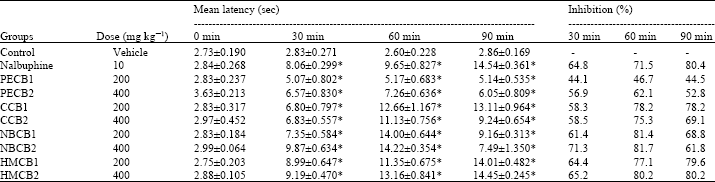 | |
| Values are Mean±SEM, (n = 5); *p<0.05, Dunnet test as compared to control; PECB: Pet ether fraction, CCB: Chloroform fraction, NBCB: n-butanol fraction and HMCB: Hydromethanol fraction of C. benghalensis; 1 = 200 mg kg-1 b.wt., 2 = 400 mg kg-1 b.wt. | |
| Table 3: | Effect of C. benghalensis fractions on tail withdrawal reflux in mice |
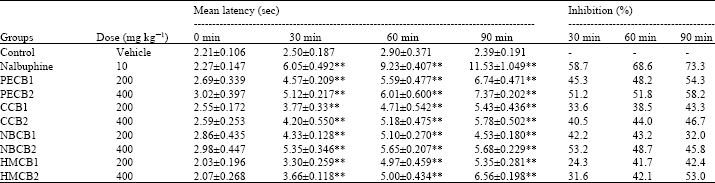 | |
| Values are Mean±SEM, (n = 5); **p<0.001, Dunnet test as compared to control. PECB: Pet ether fraction, CCB: Chloroform fraction, NBCB: n-butanol fraction and HMCB: Hydromethanol fraction of C. benghalensis; 1 = 200 mg kg-1 b.wt., 2 = 400 mg kg-1 b.wt. | |
Such pain stimulus leads to the release of free arachidonic acid from tissue phospholipid by the action of phospholipase A2 and other acyl hydrolases (Ahmed et al., 2006). The prostaglandins, mainly prostacyclin and prostaglandin-E have been reported to be responsible for pain sensation by exciting the A-fibres. Activities in the A ∂-fibres cause a sensation of sharp well localized pain. Any agent that lowers the number of writhing will demonstrate analgesia preferably by inhibition of prostaglandin synthesis, a peripheral mechanism of pain inhibition (Ferdous et al., 2008).
Commelina benghalensis is reported to contain sterols, alkaloids, caffeine, anthocyanins (water-soluble flavonoid pigments) and carotenoids (Samant and Pant, 2006; Raju et al., 2007). These compounds may be responsible for the analgesic activity. Flavonoids being powerful antioxidants (Brown and Rice-Evans, 1998; Vinson et al., 1995) are reported to play role in analgesic activity primarily by targeting prostaglandins (Rajnarayana et al., 2001; Ramesh et al., 1998). Carotenoids are also reported to possess antioxidant action (Krinsky, 2001). So it can be assumed that their Cyclooxygenase (COX) inhibitory activity and antioxidant activity may reduce the production of free arachidonic acid from phospholipid or may inhibit the enzyme system, which is responsible for the synthesis of prostaglandins and ultimately relive pain-sensation.
The extracts of C. benghalensis also produced dose dependent prolongation of hot plate latency. At 90 min, hydro methanol fraction of the plant (400 mg kg-1) produced the maximum pain inhibition (80.2%) which was almost equal to the standard drug nalbuphine that produced 80.4% pain inhibition. The hotplate test is supraspinally mediated and therefore a test of central activity. It is an established fact that any agent that causes a prolongation of the hot plate latency using this test must be acting centrally (Ibironke and Ajiboye, 2007).
The thermal stimulation in tail immersion test is also considered to be selective to screen out centrally acting analgesic activity. Tail withdrawal reflex data shows that at 90 min, the pet ether fraction produced maximum pain inhibition (58.2%) while the standard Nalbuphine produced 73.3% pain inhibition. Narcotic analgesics inhibit both peripheral and central mechanism of pain, while NSAIDs inhibit only peripheral pain (Elisabetsky et al., 1995; Pal et al., 1999). The fractions inhibited both types of pain, suggesting that the plant may act as a narcotic analgesic. However in hotplate test, the response produced was very strong and was comparable to the reference drug nalbuphine, which indicates that the plant is likely to have prominent central analgesic action. Overall, the analgesic action of C. benghalensis is assumed to be due to inhibition of prostaglandin synthesis, antioxidant action and its role on central analgesic mechanism.
CONCLUSION
In conclusion, it can be claimed that C. benghalensis possesses significant analgesic action which provides a scientific basis to the folkloric claim of the plant in the management of pain and similar ailments. However, a lot remains to find out the exact mechanism of analgesic action and to isolate the active phytoconstituent(s) responsible for such activity.
REFERENCES
- Ahmed, F., M.S.T. Selim, A.K. Das and M.S.K. Choudhuri, 2004. Anti-inflammatory and antinociceptive activities of Lippia nodiflora Linn. Pharmazie, 59: 329-330.
Direct Link - Almeida, R.N., R.N. Almeida, D.S. Navarro and J.M. Barbosa-Filho, 2001. Plants with central analgesic activity. Phytomedicine, 8: 310-322.
CrossRefPubMedDirect Link - Brown, J.E. and C.A. Rice-Evans, 1998. Luteolin rich artichoke extract protects low density lipoprotein from oxidation in vitro. Free Radic. Res., 29: 247-255.
CrossRef - Eddy, N.B. and D. Leimbach, 1953. Synthetic analgesics. II. Dithienylbutenyl- and dithienylbutylamines. J. Pharmacol. Exp. Ther., 107: 385-393.
PubMedDirect Link - Elisabetsky, E., T.A. Amador, R.R. Albuquerque, D.S. Nunes and A.D.C.T. Carvalho, 1995. Analgesic activity of Psychotria colorata (Willd. ex R. and S.) Muell. Arg. alkaloids. J. Ethnopharmacol., 48: 77-83.
CrossRefDirect Link - Franzotti, E.M., C.V.F. Santos, H.M.S.L. Rodrigues, R.H.V. Mourao, M.R. Andrade and A.R. Antoniolli, 2000. Anti-inflammatory, analgesic activity and acute toxicity of Sida cordifolia L. (Malva-branca). J. Ethnopharmacol., 72: 273-277.
CrossRefPubMedDirect Link - Ibironke, G.F. and K.I. Ajiboye, 2007. Studies on the anti-inflammatory and analgesic properties of Chenopodium ambrosioides leaf extract in rats. Int. J. Pharmacol., 3: 111-115.
CrossRefDirect Link - Mate, G.S., N.S. Naikwade, C.S.A.A. Chowki and S.B. Patil, 2008. Evaluation of anti-nociceptive activity of Cissus quadrangularis on albino mice. Int. J. Green Pharm., 2: 118-121.
Direct Link - Okello, J. and P. Ssegawa, 2007. Medicinal plants used by communities of ngai subcounty, apac district, northern uganda. Afr. J. Ecol., 45: 76-83.
CrossRef - Pal, S., T. Sen and A.K.N. Chaudhuri, 1999. Neuropsychopharmacological profile of the methanolic fraction of Bryophyllum pinnatum leaf extract. J. Pharm. Pharmacol., 51: 313-318.
CrossRefPubMedDirect Link - Ramesh, M., Y.N. Rao, A.V.N.A. Rao, M.C. Prabhakar, C.S. Rao, N. Muralidhar and B.M. Reddy, 1998. Antinociceptive and anti-inflammatory activity of a flavonoid isolated from Caralluma attenuata. J. Ethnopharmacol., 62: 63-66.
CrossRefDirect Link - Raju, M., S. Varakumar, R. Lakshminarayana, T.P. Krishnakantha and V. Baskaran, 2007. Carotenoid composition and vitamin A activity of medicinally important green leafy vegetables. Food Chem., 101: 1598-1605.
CrossRef - Rajnarayana, K., M.S. Reddy, M.R. Chaluvadi and D.R. Krishna, 2001. Biflavonoids classification, pharmacological, biochemical effects and therapeutic potential. Ind. J. Pharmacol., 33: 2-16.
Direct Link - Samant, S.S. and S. Pant, 2006. Diversity, distribution pattern and conservation status of the plants used in liver diseases/ailmentsin indian himalayan region. J. Mount. Sci., 3: 28-47.
Direct Link - Tabuti, J.R.S., K.A. Lye and S.S. Dhillion, 2003. Traditional herbal drugs of bulamogi, uganda: Plants, use and administration. J. Ethnopharmacol., 88: 19-44.
CrossRefDirect Link - Toma, W., J.S. Graciosa, C.A. Hiruma-Lima, F.D.P. Andrade, W. Vilegas and A.R.M.S. Brita, 2003. Evaluation of the analgesic and antiedematogenic activities of Quassia amara bark extract. J. Ethnopharmacol., 85: 19-23.
CrossRefDirect Link - Vinson, J.A., Y.A. Dabbagh, M.M. Serry and J. Jang, 1995. Plant flavonoids, especially tea flavonols, are powerful antioxidants using an in vitro oxidation model for heart disease. J. Agric. Food. Chem., 43: 2800-2802.
CrossRefDirect Link - Ssenyonga, M. and E. Brehony, 1993. Herbal medicine-its use in treating some symptoms of AIDS. Int. Conf. AIDS, 9: 75-75.
Direct Link
Md. Masud Reply
I am confused about the calculation of %inhibition at 90 min in Table 3. I am not finding here exact calculation.