

I.G. Adanlawo
Department of Biochemistry, Nutritional Biochemistry Unit, Department of Animal
Production and Health Sciences, University of Ado-Ekiti, P.M.B. 5363, Ado-Ekiti, Nigeria
F.A.S. Dairo
Department of Biochemistry, Nutritional Biochemistry Unit, Department of Animal
Production and Health Sciences, University of Ado-Ekiti, P.M.B. 5363, Ado-Ekiti, Nigeria
International Journal of Biological Chemistry
Year: 2007 | Volume: 1 | Issue: 1 | Page No.: 38-46







ABSTRACT
Proximate composition, amino acid profile, mineral and the anti-nutrient constituents of ginger root (Zingiber officinale, Roscoe) were determined. Twenty albino rats (Rattus nervegious) of Wistar strain with weight range 185±1.32-222±3.47 g were divided into five groups of four rats each and administered ethanolic extract of ginger root at 100, 200, 300, 400 and 500 mg mL-1 for a period of 28 days. The weight of the rats and the effect on the activities of aspartate transaminase (AST), alanine transaminase (ALT), alkaline phosphatase (AKP) and acid phosphatase (ACP) in tissues such as brain, heart, stomach, small intestine, liver, kidney and serum were evaluated. Ginger contained 5.28±0.43% crude protein (CP), 5.54±0.02% ether extract (EE), 5.97±0.04% ash and 66.26±1.03% total carbohydrate with coefficient of variation range 0.01-0.059%. The oxalate content was 4.55±0.07 mg g-1, phytin 28.83±0.73 mg g-1 while tannin was 0.26±0.06%. Phosphorus was 25.70±1.27%, Na, 40.96±1.95%, K, 37.34±1.18%, Ca, 35.66±1.09%, Mn, 19.60±0.62%, Zn, 4.06±1.99%, Fe, 1.44±0.07 and Cu, 0.76±0.07%. Glutamate had the highest amino acid content (11.17±0.22%) while glycine recorded the lowest (1.15±0.06%). Although the body weights of the rats were not significantly (p>0.05) influenced by the administration of ginger root, aspartate transaminase activity significantly increased (p<0.05) at 100 mg mL-1 for the liver (260.56±21.14 μL-1), brain (275.87±18.11 μL-1), kidney (295.24±30.91 μL-1) and serum (104.30±15.03 μL-1). The alanine transaminase activity was significantly highest (p<0.05) at 200 mg mL-1 for the liver (169.38±25.17 μL-1). It was 115.17±19.25 μL-1 for the brain at 400 mg mL-1 and 108.58±20.40 μL-1 for the heart at 300 mg mL-1 dosage. Serum and kidney had their highest (p<0.05) values of 42.37±5.18 and 112.81±13.09 μL-1, respectively on the control group. Alkaline phosphatase had the highest activity (p<0.05) at 400 mg mL-1 (290.32±27.44 μL-1) for the stomach while small intestine recorded 350.62±33.14 μL-1 at 500 mg mL-1 dosage. The brain and serum had 124.55±25.18 μL-1 at 100 mg mL-1 and 160.08±54.15 μ mL-1 at 400 mg mL-1, respectively. Stomach acid phosphatase recorded the highest (p<0.05) activity (163.07±12.04 μL-1) at 500 mg mL-1, small intestine had 198.95±35.27 μL-1 for the control group while serum indicated the highest value of 66.23±6.04 μ mL-1 at 200 mg mL-1 and 164.29±18.23 μ mL-1 at 100 mg mL-1 and at 200 mg mL-1, respectively. The study conclusively showed that ethanolic extract of ginger root did not have any debilitating effect on tissues such as the brain, liver, stomach, small intestine, kidney and the serum.
PDF Abstract XML References
How to cite this article
I.G. Adanlawo and F.A.S. Dairo, 2007. Nutrient and Anti-nutrient Constituents of Ginger (Zingiber officinale, Roscoe) and the Influence of its Ethanolic Extract on Some Serum Enzymes in Albino Rats. International Journal of Biological Chemistry, 1: 38-46.
URL: https://scialert.net/abstract/?doi=ijbc.2007.38.46
URL: https://scialert.net/abstract/?doi=ijbc.2007.38.46
INTRODUCTION
Ginger (Zingiber officinale, Roscoe) is an herbaceous rhizomatus perennial plant that is widely cultivated in warm climatic regions of the world such as Nigeria, Bangladesh, Taiwan, India, Jamaica and the United States of America. The rhizome contain a spectra of biologically active compounds such as curcumin, 6-gingerol i.e., [5-hydroxy-1-4-hydroxy-3-methoxy phenyl), 6-shogoals, zingiberene, bisaboline and several other types of lipids that confers on ginger the characteristic medicinal properties of being pungent and a stimulant (Yoshikawa et al., 1993; Bliddal et al., 2000).These properties have been reported to be responsible for its various medical applications as an analgesic, antiemetic, antiulcer, antipyretic, prostaglandin suppression and cardio depressant among many others (Mascolo et al., 1989; Phillips et al., 1993; Jana et al., 1999). Ginger is added to a wide range of food as an indispensable curry powder or sauces. They are also used to flavour bread, tea, carbonated drinks, biscuits, pickles and other confectionaries because of its aroma and flavour. Many of these products are on the shelves in shopping malls and open markets. Often time wastes of these products such as those of biscuits and other confectionaries are incorporated in animal feeds to reduce cost of production because of high demand for maize which is the main source of energy in animal feeds (Longe, 1986; Dairo and Ojekale, 2006).
Previous study indicated that the administration of aqueous extract of ginger to rat orally and intraperitoneally at two different levels of doses did not inflict any histopathological toxicity on the rat (Alnaqeeb et al., 2003). Even though the haemoglobin in the latter route of administration decreased significantly, some serum enzymes activity such as aspartate aminotransaminase (AST) (EC 2.6.1.1) alanine aminotransaminase (ALT) (EC 2.6.1.2) were affected whereas the liver acid phosphatase was not (Alnaqeeb et al., 2003). It is known that the potency of action of extract may be influenced by the mode of extraction (Stuffness, 1992). It becomes necessary therefore to investigate the effect of the alcoholic extract of ginger on the aminotransferases and the phosphatases in the serum and some internal tissues of importance such as the brain, liver, kidney, stomach, small intestine and the heart.
MATERIALS AND METHODS
Preparation of Ethanol Extract from Ginger
About 2 kg of dry ginger roots were obtained from the sellers of medicinal herbs in Oja Oba market in Ado-Ekiti. They were immediately taken to the Biochemistry Laboratory of the University of Ado-Ekiti. The ginger roots were washed, peeled and cut into small chips of 0.3 cm3 dimensions and sun dried for five days. About 1500 g of chips were soaked in a mixture of 950 mL of 95% ethanol and 50 mL of H2O. They were homogenized using a laboratory blender for effective extraction of constituents. The homogenized syrup was left for seven days after which the ethanol that now contained the constituents was removed using the soxhlet apparatus. After the seventh day, 50 g of the ethanol extract was weighed into two ml of ethanol and made up to 10 mL in a pyrex beaker using a 10 mL measuring cylinder to give a concentration of 500 mg mL-1. Forty grams of ethanol extract was measured into 2 mL of ethanol and also made up to 10 mL in a pyrex beaker to obtained 400 mg mL-1 of extract. Thirty grams was measured out and the above procedure repeated to get 300 mg mL-1. Twenty grams was measured to obtain 200 mg mL-1 while 10 g was measured from the ethanol extract to get 100 mg mL-1. The ethanol extract concentrations therefore were 100, 200, 300, 400 and 500 mg mL-1. The aliquots were stored at -20°C before use.
Experimental Design and Animal Management
Twenty-four albino rats, Rattus nervegious of weight range 185±1.32-222±3.47 g were obtained from the Department of Biochemistry, University of Ilorin in Nigeria. They were kept in individual metabolic cages where they were allowed 14 days to adjust to the environment and the feed. They were fed normal rat diet made up of 63% corn starch, 5% glucose, 10% sucrose, 5% cellulose, 10% groundnut oil, 2.25% bone meal, 4% vitamins and mineral premix and 0.5% salt. The diet contained 10% crude protein and 12.80 MJ/kg Metabolizable Energy (ME). The twenty-four albino rats were grouped into six with each animal becoming a replicate in a completely randomized design trial. Each group of the rat was given each of the prepared concentration of the ethanol extract i.e., 100, 200, 300, 400 and 500 mg mL-1. The last group was used as the control. The individual rat in each group was orally given 1 mL of the corresponding ethanolic extract that was pipette from the whole solution once on daily basis for a period of twenty-eight days. The control group was not given any of the extract. The entire experimental animals were allowed access to feed and water ad libitum.
Collection of Blood Samples, Serum and Tissue Homogenate Preparation for Enzyme Assay
At the twenty-eighth day of the experiment, the rats were fasted overnight in readiness for blood sample and internal tissues collection. Each of the rats was held by the tail, swung in a circle with care until unconscious. Blood sample was collected from the jugular veins into well labelled sample bottles. The blood was allowed to clot and centrifuged at 3500 rpm in a table Gallenkamp centrifuge for the collection of serum which was stored at -20°C prior to enzyme assay. Each of the rats was quickly dissected and the stomach, small intestine, kidney, liver, heart and the brain tissues were removed later and weighed wet. A portion of each of the weighed tissue was homogenized in a laboratory homogenizer (IKA-T25, UK Laboratory Technology Germany) in iced-cold 0.25 M sucrose solution (BDH Chemicals, Uk) for about 5 min. The homogenate was centrifuged at 10,000 rpm for 15 min and the supernatant used in the determination of aspartate aminotransaminase (EC 2.6.1.1), alanine aminotransaminase (EC 2.6.1.2), alkaline phosphatase (EC 3.1.3.1) and acid phosphatase (EC 3.1.3.2) using the enzyme analytical kits technique for serum, brain, heart, stomach, small intestine, liver and the kidney.
Proximate and Mineral Analysis
Sample of ginger made into chips as described above was pulverized into fine powder using a mortal and pestle and used for the determination of dry matter (DM), crude protein (CP), crude fibre (CF), ether extract (EE), ash and the total carbohydrate obtained by difference as described by AOAC (1995). The determination was done in triplicate. About 1 g of each of the triplicate dried samples in a crucible was ashed at 550°C in a Gallenkamp muffle furnace for 5 h. The ash was later dissolved in 100 mL volumetric flask with de-ionized water and 10 mL of concentrated hydrochloric acid was added and filtered. The filterate was made up to 50 mL with 0.1 M HCl. Calcium (Ca), manganese (Mn), zinc (Zn), iron (Fe) and copper (Cu) were determined using atomic absorption spectrophotometer (Perkin-Elmer model 403, Norwalk CT, USA). Sodium (Na) and potassium (K) were determined by using a flame photometer (model 405, Corning UK). Sodium chloride and potassium chloride were used to prepare the standards. Phosphorous was determined using the vanadomolybdate procedure.
Amino Acid Analysis
The amino acid profiles for the ginger samples were determined in triplicate using the pulverized portion from a mortal and pestle as earlier mentioned. They were hereafter hydrolyzed at 150°C for about 24 h. The hydrolysate was then cooled and transferred to a 50 mL flask. This was then diluted to volume with water in the flask and filtered. About 10 mL aliquot of the filtrate was then heated in a rotatory evaporator at about 40°C to remove excess acid and analyzed using HPLC Auto sampler (konton 460). Tryptophan was determined as described by Miller (1967) while cysteine was determined as cysteic acid and methionine as methionine sulphone. DL-Amino-n-butyric acid was used as internal standard to correct for the slight fluctuation in the amino acid peaks.
Anti-nutrient Analysis
Tannin, Phytin and Oxalate
About 200 g of the pulverized portion of the ginger sample was extracted using 10 mL 70% of aqueous acetone solution for two hours and the procedure of Mehansho et al. (1987) was used for the determination of tannin. The phytin content was quantified by adding 8 g of the milled sample soaked in 200 mL of 2% HCl and was allowed to stand for 3 h. The extract was filtered through a double layer filter paper. Fifty milliliter of the duplicate samples of the filtrate was pipette into 400 mL beaker. Ten milliliter of 0.3% ammonium thiocyanate was used as an indicator and 107 mL of distilled water added to obtain acidity of pH 4.5. Ferrous chloride solution containing 0.00195 g Fe mL-1 was then titrated against the solution of the test samples until a brownish yellow colouration persisted for 5 min. Phytin-phosphorous was determined and the phytin content calculated by multiplying by a factor of 3.55 as described by Young and Greaves (1940). Each milligram of iron is equivalent to 1.19 mg of phytin phosphorous.
A precipitate of oxalate of the pulverized ginger was effected in boiling solution containing a little ammonium chloride by a hot solution of CaCl2. The solution was cooled and then treated with rectified spirit. It was allowed to stand for about 30 min and later washed with warm water at about 55°C until the precipitate was free of chloride. The oxalate was then determined following the procedure of Oke (1969).
Statistical Analysis
All the data collected were subjected to ANOVA using SAS (1987) version 6.0 statistical package and the Duncan Multiple Range Test was used to separate the means where significant.
RESULTS AND DISCUSSION
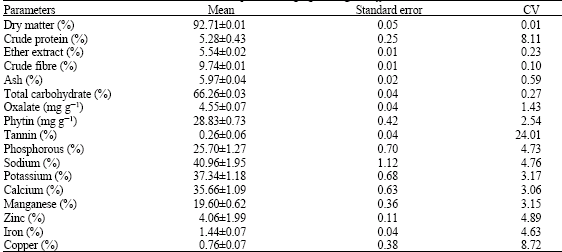
The result indicates that ginger is high in dry matter content (92.71±0.01%) but very low in crude protein (5.28±0.43%), ether extract (5.54±0.02%) and ash (5.97±0.04%) with Coefficient of Variation (CV) between 0.01-0.59% (Table 1). It is very high in total carbohydrate (66.26±1.03). The mineral values follow the order of Na > K > Ca > P > Mn > Zn > Fe > Cu. The values compared favorably with the findings of Adeyeye and Fagbohun (2005) but lower than the values recorded by Govindarajan (1982). The CP and the mineral values of ginger were obviously lower than those obtained for the oil seed vegetables and animals as noted in the reports of Aletor and Adeogun (1995), Fasuyi (2006) and Dairo and Adanlawo (2007) but were within the range for tuberous plants such as yam and cassava (Eka, 1998).
| Table 1: | Proximate, anti-nutrients and mineral composition of ginger (Zingiber officinale) |
 | |
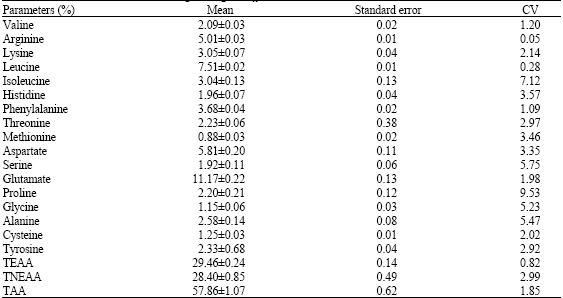
| Table 2: | Amino acid compositions, total amino acids (TAA), total essential amino acids (TEAA) and total non-essential amino acids (TNEAA) of Ginger (Zingiber officinale) |
 | |
The fat content was fairly high which may have been responsible for serving as the medium for most of the biologically active ingredients that are organic in structure. Earlier reports have shown that most of the biologically active substances are found in the oil content of the rhizome (Connell, 1970; Yoshikawa et al., 1993). The anti-nutrients analyzed namely, tannin (0.26±0.06%), phytin (28.83±0.73 mg g-1) and oxalate (4.55±0.07 mg g-1) have lower values than those obtained in legumes (Aletor and Omodara, 1994) but similar to the report of Nwinuka et al. (2005). Even though the anti-nutrients are present in the ginger rhizome, it may be for the defense of the stored reserves of food for the use of the plant (Smith, 1982; Oleszec et al., 1990) and the level at which they occur are safe for consumption by man and animals (Agbede, 2000; Nwinuka et al., 2005).
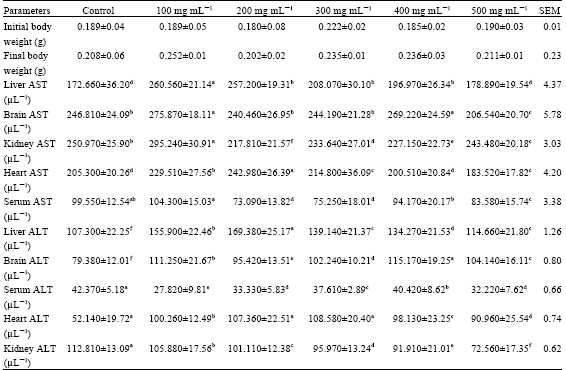
Glutamic acid was highest in the sample (11.17±0.13%) with a CV of 1.98% while glycine recorded the lowest (1.15±0.06%) with a CV of 5.23% (Table 2). These values are generally inferior to and lower than those obtained for legumes, vegetables and animals (Aletor and Adeogun, 1995; Adeyeye, 1997; Adeyeye and Afolabi, 2004; Fasuyi, 2006; Dairo and Adanlawo, 2007) but consistent with reports for some tubers (Eka, 1998). Ginger recorded low activities in some essential amino acids such as lysine (3.05±0.07%), methionine (0.88±0.03%) and cysteine (1.25±0.03%). Therefore its use in confectionaries may require supplementation with other rich sources. However its use as a spice in vegetable preparations will ameliorate the amino acids deficiency because of the superiority of the latter in amino acid composition. The Total Amino Acids (TAA) value is 57.86±1.07% with Total Essential Amino Acids (TEAA) content of 29.46±0.24% and Total Non-Essential Amino Acids (TNEAA) of 28.40±0.85%. Apart from the fact that ginger do not belong to high protein content plants, the low values observed might have been influenced by the soil and cultural practices, management and other environmental factors. The feeding of ethanolic ginger extract did not affect the body weight of the rats (p>0.05). This finding agreed with the report of Ahmed and Sharma (1997) that rats showed no increase in body weight when fed 5% ginger extract for four weeks except a significant decrease in blood glucose and serum cholesterol with increase in HDL-cholesterol. The enzyme activity measured for aspartate aminotransaminase (EC 2.6.1.1) was highest significantly (p<0.05) at 100 mg mL-1 in the liver, brain, kidney and the serum which almost consistently followed the same trend except for the heart at 200 mg mL-1 (Table 3). The enzyme activity significantly decreased as the ethanol extract administered orally increased while the values recorded for the control group was lower than all the other values except the brain. A rise in the activity of this enzyme implies damage to tissues such as the heart and the brain (Wada et al., 1971).
| Table 3: | Effect of different concentrations of ethanol extract of ginger (Zingiber officinale) on the body weight, aspartateaminotransaminase (ASPT), alanineaminotransaminase (ALT), alkaline Phosphatase (AKP) and acid, phosphatase (ACP) on serum, brain, heart, kidney stomach and small intestine |
 | |
| Means with different superscript in the same row differ significantly (p<0.05) | |
The result in this study showed that ethanolic extract of ginger root did not have any damage to the heart, brain and the kidney that are vital organs in the body. Therefore, the level of their consumption in foods may not have deleterious effect directly on these tissues. Alanine aminotransaminase (EC 2.6.1.2) activity is also presented in Table 3. The liver recorded significantly higher value (p<0.05) at ethanolic ginger extract rate of 200 mg mL-1 while the brain had the highest value (p<0.05) at 400 mg mL-1. Whereas the heart recorded the maximum ALT activity for ginger concentrations at 200 and 300 mg mL-1, the serum and kidney alanine transaminase was highest (p<0.05) for the control group of rats and decreased significantly as the extract concentration increased. The enzyme activity as indicated in the liver showed that effect of oral administration of ethanol ginger extract is not damaging to the rats. This is contrary to the report of Kasinath et al. (1997) who recorded an increased activity for aspartate aminotransaminase and alanine aminotransaminase when given high dose therapy of garlic (also a common spice plant) even though the dosage was not specified. It was however reported that liver toxicity was implicated in the study.
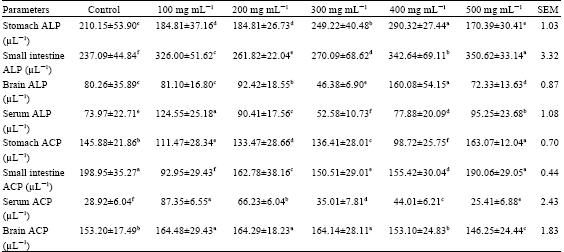
The alkaline phosphatase (EC 3.1.3.1) for the stomach, small intestine, brain and the serum were all significantly (p<0.05) influenced by the ginger ethanol extract (Table 4). While the enzyme activity was similar and highest in 400 and 500 mg mL-1 for the stomach; the small intestine recorded the highest value at 500 mg mL-1, the brain tissue had its highest activity at 400 mg mL-1 and the serum at 100 mg mL-1, respectively. In the case of acid phosphatase, the highest activity was noted in ethanol ginger extract of 500 mg mL-1 for the stomach with the control group recording the highest value for small intestine. Acid phosphatase activity was highest in the serum at 100 mg mL-1 while the brain had highest but similar values at 100, 200 and 300 mg mL-1. The chemical constituents of ginger such as gingerol and shagoal have been found to suppress gastric contraction (Suekawa et al., 1984).
| Table 4: | Effect of different concentrations of ethanol extract of ginger (Zingiber officinale) on, alkaline Phosphatase (AKP) and acid, phosphatase (ACP) in serum, brain, heart, kidney stomach and small and small intestine |
 | |
| Means with different superscript in the same row differ significantly (p<0.05) | |
However, oral administration indicated increased gastrointestinal motility activity which sets in motion spontaneous peristaltic movement. This obviously must be responsible for the observed increase in alkaline phosphatase activity at the highest ethanol extract concentration for improved food digestion and passage in the stomach and small intestine. Serum concentrations of the two phosphatases indicated a healthy rat with functional hepatobiliary system.
Conclusively, the proximate composition, mineral and amino acids constituents of ginger are not in a comparable quantity to the values obtained in vegetables and other plants or animals use as food raw materials either for man or livestock but rather useful for most of its medicinal use. Its low anti-nutrient content also supports its use both in animal and human herbal medicine. The study showed further that ethanol extract of ginger had minimal effect on the activity of the serum AST, ALT, AKP and ACP.
REFERENCES
- Adeyeye, E.I. and E.O. Afolabi, 2004. Amino acid composition of three different types of land snails consumed in Nigeria. Food Chem., 85: 535-539.
CrossRefDirect Link - Adeyeye, E.I. and E.D. Fagbohun, 2005. Proximate, mineral and phytate profiles of some selected spices found in Nigeria. Pak. J. Sci. Ind. Res., 48: 14-22.
Direct Link - Ahmed, R.S. and S.B. Sharma, 1997. Biochemical studies on combined effects of garlic (Allium sativum Linn.) and ginger (Zingiber officinale Rosc.) in albino rats. Ind. J. Exp. Biol., 35: 841-843.
PubMedDirect Link - Aletor, V.A. and O.A. Omodara, 1994. Studies on some leguminous browse plants, with particular reference to their proximate, mineral and some endogenous anti-nutritional constituents. Anim. Feed Sci. Technol., 46: 343-348.
CrossRefDirect Link - Aletor, V.A. and O.A. Adeogun, 1995. Nutrient and anti-nutrient components of some tropical leafy vegetables. Food Chem., 53: 375-379.
CrossRefDirect Link - AOAC., 1995. Official Methods of Analysis. 16th Edn., Association of Official Analytical Chemists, Washington, DC., USA.
Direct Link - Bliddal, H., A. Rosetzsky, P. Schlichting, M.S. Weidner and L.A. Andersen et al., 2000. A randomized, placebo-controlled, cross-over study of ginger extracts and Ibuprofen in osteoarthritis. Osteoarthritis Cartilage, 8: 9-12.
CrossRefPubMedDirect Link - Fasuyi, A.O., 2006. Nutritional potentials of some tropical vegetable leaf meals: Chemical characterization and functional properties. Afr. J. Biotechnol., 5: 49-53.
Direct Link - Govindarajan, V.S., 1982. Ginger-chemistry, technology and quality evaluation: Part 2. Crit. Rev. Food Sci. Nutr., 17: 189-258.
Direct Link - Jana, U., R.N. Chattopadhyay and B.P. Shaw, 1999. Preliminary studies on anti-inflammatory activity of Zingiber officinale Rosc., Vitex negundo Linn and Tinospora cordifolia (Willid) Miers in albino rats. Indian J. Pharmacol., 31: 232-233.
Direct Link - Kasinath, R.T., P.K. Joseph, K. Hebron, X.H. Zhang, M.J. Connock and D.J. Maslin, 1997. The effects of garlic oil upon serum indicators of liver function. Biochem. Soc. Trans., 25: 533S-533S.
PubMed - Mascolo, N., R. Jain, S.C. Jain and F. Capasso, 1989. Ethnopharmacologic investigation of ginger (Zingiber officinale). J. Ethnopharmacol., 27: 129-140.
CrossRefPubMedDirect Link - Nwinuka, N.M., G.O. Ibeh and G.I. Ekeke, 2005. Proximate composition and levels of toxicants in four commonly consumed spices. J. Applied Sci. Environ. Mange., 9: 150-155.
Direct Link - Suekawa, M., A. Ishige, K. Yuasa, K. Sudo, M. Aburada and E. Hosoya, 1984. Pharmacological studies on ginger. I. Pharmacological actions of pungent constitutents, (6)-gingerol and (6)-shogaol. J. Pharmacobiodyn., 7: 836-848.
PubMed - Yoshikawa, M., S. Hatakeyama, N. Chatani, Y. Nishino and J. Yamahara, 1993. Qualitative and quantitative analysis of bioactive principles in Zingiberis rhizoma by means of high performance liquid chromatography and gasliquid chromatography. On the evaluation of Zingiberis rhizoma and chemical change of constituentsduring Zingiberis rhizoma processing. Yakugaku Zasshi, 113: 307-315.
Direct Link - Young, S.M. and J.S. Greaves, 1940. Influence of variety and treatment on phytin content of wheat. Food Res., 5: 103-108.
CrossRefDirect Link