

Rajesh Kumar Verma
Central Institute of Medicinal and Aromatic Plants, P.O. Lucknow-226015, India
Ram SwaroopVerma
Central Institute of Medicinal and Aromatic Plants, Research Centre Pantnagar, Dairy farm Nagla (P.O), Uttrakhand 263149, India
Amit Chauhan
Central Institute of Medicinal and Aromatic Plants, Research Centre Pantnagar, Dairy farm Nagla (P.O), Uttrakhand 263149, India
Anand Singh
Central Institute of Medicinal and Aromatic Plants, Research Centre Purara, Bageshwar, Uttrakhand 263149, India
Laiq-ur Rahman
Central Institute of Medicinal and Aromatic Plants, P.O. Lucknow-226015, India
Alok Kalra
Central Institute of Medicinal and Aromatic Plants, P.O. Lucknow-226015, India
International Journal of Agricultural Research
Year: 2011 | Volume: 6 | Issue: 12 | Page No.: 830-839







ABSTRACT
Rose-scented geranium (Pelargonium graveolens L.) is a multi-harvest high value aromatic crop. Essential oil extracted through hydro-distillation of shoot biomass of geranium is used in fragrance, flavor and pharmaceutical industries. It is a vegetatively propagated (through rooted cutting) and initially slow growing. To utilize the crop resources, more efficiently and improve production potential a field experiment was conducted for two cropping years (2005-2006) in a temperate climate to evaluate the feasibility of intercropping of cabbage (Brassica oleracea L.var. capitata), cauliflower (Brassica oleracea L. var. botrytis), vegetable pea (Pisum sativum L.) and radish (Raphanus sativus L.) in rose-scented geranium. Plant canopy, leaf: stem ratio, biomass and oil yield of rose-scented geranium was significantly influenced by intercrops at first harvest while second harvest had no significant variation in plant height and canopy. Biomass and oil yield of rose-scented geranium was increased in all intercrops at the second harvest (after harvest of intercrops). Maximum biomass and oil yield was obtained in rose-scented geranium+vegetable pea (intercrop) treatment than sole rose-scented geranium. The resource use efficiency (LER, ATER and LUE %) and geranium oil equivalent yield (GEY) were higher in all intercrops treatments compared to sole. The study showed that C/G ratio in rose-scented geranium was also influenced by intercrops. The quality of geranium oil was good and readily accepted in the aroma industry.
PDF Abstract XML References Citation
Received: August 03, 2011;
Accepted: November 03, 2011;
Published: December 17, 2011
How to cite this article
Rajesh Kumar Verma, Ram SwaroopVerma, Amit Chauhan, Anand Singh, Laiq-ur Rahman and Alok Kalra, 2011. Biomass Yield, Essential Oil Yield and Oil Quality of Rose-scented Geranium (Pelargonium graveolens L.), Intercropped with Vegetables. International Journal of Agricultural Research, 6: 830-839.
DOI: 10.3923/ijar.2011.830.839
URL: https://scialert.net/abstract/?doi=ijar.2011.830.839
DOI: 10.3923/ijar.2011.830.839
URL: https://scialert.net/abstract/?doi=ijar.2011.830.839
INTRODUCTION
Intercropping, the practices of growing more than one crop in a field at the same time, was commonly used in the world. It continues to be widely used in much of the developing world, where farmers have only limited access to the agricultural equipment and products that transformed agriculture in the industrialized world (Willey and Cynthia, 1981; Horwith, 1985). A recent agriculture practice which typically uses monocultures, has increased yields enormously in the developed countries but the improvement has not been without its costs. The production and operation of modern tools and synthesis of fertilizers and insecticides cost an enormous amount of energy. Other costs can be high as well, ranging from soil erosion, less resources utilization efficiency, more weed competition and the cumulative effects of excess pesticides and fertilizer use, alternative are being sought that could maintain or improve yield potential and quality while minimizing negative environmental effects. One of these alternatives is intercropping rose-scented geranium with vegetables (Prakasa Rao et al., 1986). Intercropping with vegetables could lead to better land use efficiency as an important component of sustainable farming (Dhyani et al., 1995).
Rose-scented geranium (Pelargonium graveolens L.) is an important aromatic plants and its essential oil is widely used in high grade perfumery. Rose-scented geranium is commercially grown in South Africa and India (Rajeswara Rao et al., 2000). Rose-scented geranium is propagated vegetatively through rooted terminal stem cuttings. The transplanted cuttings have a characteristic to initial slow growth and are susceptible to weeds competition during the lag phase with reduced yield (Prakasa Rao et al., 1986; Rajeswara Rao, 2002; Rajeswara Rao et al., 1993). To utilize the uncovered inter row space, applied inputs such as irrigation water and fertilizers to control weeds and enhance productivity, attempt were made to grow short duration legumes, cowpea (Vigna ungiculata L.), blackgram (Vigna mungo L.), green gram (Vigna radiate L.), cluster bean (Cyamopsis tetragonoloba L.) or butter bean (Phaseolus luteus L.), spices like garlic (Allium sativum L.) and corn mint (Mentha arvensis L.) have been intercropped with rose-scented geranium (Prakasa Rao et al., 1986; Rajeswara Rao, 2000, 2002; Narayana et al., 1986; Ram and Kumar, 1998).
Similarly, for improving fodder production, controlling soil erosion and for reaping higher returns, rose-scented geranium was intercropped with fodder crops (Verma et al., 2009), lemon scented gum (Eucalyptus citriodora Hook.) (Singh et al., 1998b), blue gum (Eucalyptus globulus L.) and wattle (Acacia mearnsii L.) (Dhyani et al., 1995) has also been studied.
Rose-scented geranium and vegetables (cabbage (Brassica oleracea L. var. capitata), cauliflower (Brassica oleracea L. var. botrytis), vegetable pea (Pisum sativum L.) and radish (Raphanus sativus L.) can be grown during the winter season in the Himalayan region of India and they need proper management for their growth and yield. Vegetables take two to four months and rose-scented geranium five months to come to maturity for their first harvest and another four months for second harvest. The compatibility of these two crops as companion crops in an intrcropping system was not explored earlier.
The present investigation was initiated to evaluate the feasibility of growing a short duration vegetable crop during the initial lag phase of rose-scented geranium in such a way as not to affect the yield potential of (rose-scented geranium) intercropping systems.
MATERIALS AND METHODS
Experimental site: The field experiment was conducted during the two cropping years 2005-2006 and 2006-2007 at the experimental farm of the Central Institute of Medicinal and Aromatic Plants, Research Centre, Purara, Bageshwar, Uttrakhand, India. The location has a temperate climate. The study was laid out in a randomized complete block design with five treatments and four replications. The soil was a sandy loam with pH 6.6 (soil: water, 1:2.5), 0.43% organic carbon, 125 kg ha-1 available nitrogen, 9.6 kg ha-1 available P, 150 kg ha-1 exchangeable K. Treatments were: Sole crop of rose-scented geranium spaced at 60 cm between rows and 45 cm between plants and rose-scented geranium (60x45 cm) intercropped with cabbage (Brassica oleracea L. var. capitata cv. Diamond), Cauliflower (Brassica oleracea L. var. botrytis cv. Pusa Agahni), vegetable pea (Pisum sativum L cv. Arkel) and radish (Raphanus sativus L. cv. Pusa himani). In between two rows of planted rose-scented geranium one row of each of the vegetables was sown/planted. The number of plants/plot of rose-scented geranium was constant in all the treatments.
Field preparation and transplanting: Terminal stem cuttings of uniform size (9-10 cm length, 2-3 nodes and 2-3 terminal leaves) of rose-scented geranium cv. CIM-Pawan grown in polythene bags (10x16 cm diameter filled with native soil) were kept under partial shade and regularly watered. Healthy, profusely rooted, 60 days old cuttings and vegetables were planted in October and the first week of November in each cropping years 2005 and 2006, respectively. Crops were irrigated at 15 days intervals and kept weed free through frequent manual weeding. Each plot was 3x2 m and fertilized with 100 kg N (225 kg urea), 80 kg P (500 kg single super phosphate), 60 kg K2O (100 kg muriate of potash) ha-1 in each years. Intercrops received no extra fertilizers. Sowing, planting, harvesting, crop geometry and fertilizer application are given in Table 1.
Harvesting and yield advantage calculations: Rose-scented geranium was harvested twice each cropping year (first in March and second in June) and the herb was distilled in a field distillation unit operating on hydro-cum-steam distillation principle. The essential oil yield (kg ha-1) was calculated by multiplying the biomass yield by essential oil recovery from the distillation unit. Intercrops of radish, cabbage and cauliflower and vegetable pea were manually harvested in January, February and March, respectively.
To test the advantage of intercropping compared to monocropping, geranium oil equivalent yield (kg ha-1), Land Equivalent Ratio (LER), Area Time Equivalent Ratio (ATER) and Land Use Efficiency % (LUE %) were computed (Panda, 2005).
Geranium oil equivalent yield was calculated by multiplying yield with price of produce and divided by the price of geranium oil:
 |
where, Yab is the total biomass yield (first harvest+second harvest) (t ha-1) of rose-scented geranium in intercropping; Yaa is the total biomass yield (first harvest + second harvest) (t ha-1) of rose-scented geranium in monocropping; Yba is the yield (t ha-1) of intercrops in intercropping and Ybb is the yield (t ha-1) of intercrops in monocropping:
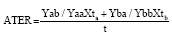 |
where, ta is the duration of rose-scented geranium in days; tb is the duration of intercrops in days and t is the total duration of intercropping system in days.
By using LER and ATER values, the land utilization efficiency % (LUE %) was calculated:
 |
Essential oil quality analysis: The GC analysis of the oil samples was carried out on a Nucon gas chromatograph model 5765 and Perkin-Elmer Auto XL GC equipped with FID and two different stationary phases, BP-20 (coated with a Carbowax 20M, 30 mx0.25 mmx0.25 μm film thickness) and PE-5 (60 mx0.32 mm; 0.25 μm film coating) fused silica capillary columns, respectively.
| Table 1: | Crop culture summery for rose-scented in geranium different intercrops |
 | |
| *Fertilizer application N: P: K @ 100:80:60 in sole geranium and intercrops, 1/3 N, Full P and K at planting, 1/3 N at last week of December and 1/3 N after intercrop harvest | |
Hydrogen was the carrier gas at 1.0 mL min-1. Temperature programming was done from 70°C-230°C at 4°C min-1 with initial and final hold time of 2 min (for BP-20) and from 70°C- 250°C at 3°C min-1 (for PE-5). Split ratio was 1: 30. The injector and detector temperatures were 200°C and 230°C on BP-20 and 220°C and 300°C on PE-5 column, respectively. The GC-MS analysis of the oils was carried out on a Perkin-Elmer Turbomass Quadrupole Mass spectrometer fitted with PE-5 fused silica capillary column (50 mx0.32 mm; 0.25 μm film coating). The column temperature was programmed from 100 to 280°C at 3°C min-1, using helium as carrier gas at a flow rate of 1 mL min-1. The injector temperature was 220°C and MS conditions were: EI mode operating at 70 eV, ion source temperature was 250°C. Identification of components was done by comparing retention times of GC peak with those reference compounds run under identical conditions; by comparison of retention indices with literature data (Davis, 1990; Verma et al., 2010) by peak enrichment on co-injection of authentic samples, by comparing mass spectra of the peaks with MS Library search (NIST and Wiley). The peak area percentage was computed from the peak areas without applying FID response factor correction.
Statistical methods: Data were subjected to analysis of variance using the SPSS programme (version 13) as applicable to randomized block designs. Duncan’s multiple range tests was used to determine separate means.
RESULTS
Rose-scented geranium plant growth attributes: Intercropping of rose-scented geranium with cabbage, cauliflower, vegetable pea and radish had no significant effect on plant height at both harvest (first and second) as compared to sole crop in both year (Table 2). Plant height ranged from 48.5 to 52.2 cm in monocropping and geranium plus pea intercrop, respectively, amongst the all intercrops.
As leaves is the main source of oil in rose-scented geranium plant, the higher leaf: stem ratio is a desired component for oil yields. Intercrops significantly affected the leaf: stem ratio at the first harvest and ranged from 1.4 to 1.8 compared to 2.7 in the monocrop (Table 2). After the intercrops harvest reduce the plant height and increase the leaf stem ratio in all the treatments combination.
Plant spread (canopy) of rose- scented geranium in the first harvest was significantly reduced by intercropping with cabbage, cauliflower, vegetable pea and radish (Table 3). The average (two cropping year) decreases were: 5, 8, 27 and 25% in cabbage, cauliflower, vegetable pea and radish intercrop treatments, respectively. At the second harvest rose-scented geranium had no significant variation on plant spread with any intercrops over sole.
| Table 2: | Plant height and leaf:stem ratio of rose-scented geranium in different intercrops |
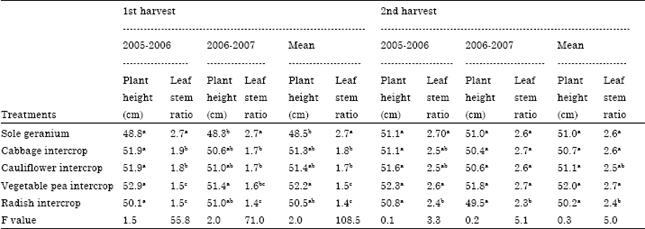 | |
| Mean fallowed by the same letter within one column (Plant height, Leaf Stem ratio) do not differ significantly at p = 0.05 | |
| Table 3: | Plant spread (cm) of rose -scented geranium in different intercrops |
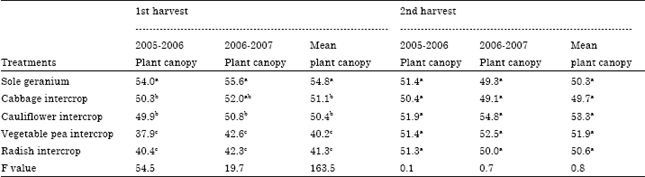 | |
| Mean fallowed by the same letter within one column (Plant canopy) do not differ significantly at p = 0.05 | |
| Table 4: | Variation in biomass yield (t ha-1) of rose-scented geranium in different intercrops |
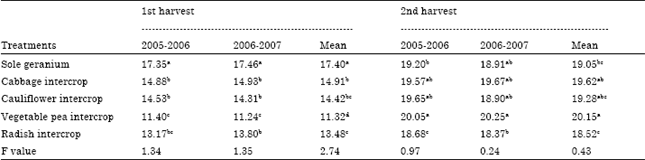 | |
| Mean fallowed by the same letter within one column are not differ significantly at p = 0.05 | |
Rose-scented geranium yield attributes: Intercropping of rose-scented geranium with cabbage, cauliflower, vegetables pea and radish led to significant reduction in biomass and oil yield in both the cropping years in comparison to sole crop in the first harvest (Table 4, 5). At first harvest the biomass yield (mean of two cropping year) reductions were: 14, 17, 38, 23% and oil yield were: 11, 18, 32, 22% in the cabbage cauliflower, vegetables pea and radish intercrop treatments, respectively, compared to sole crop. At the second harvest rose-scented geranium plus vegetable pea had higher biomass and oil yield.
| Table 5: | Variation in essential oil yield (kg ha-1) of rose-scented geranium in different intercrops |
 | |
| Values in a column fallowed by the same letter within one column are not significantly different at p = 0.0 | |
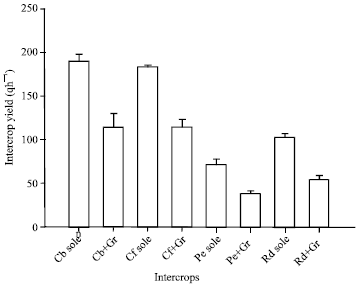 | |
| Fig. 1: | Yield variation in different intercropping systems. Data represents mean of two years and bar indicates standard error. ( Cb-Cabbage, Gr-Geranium, Cf-Cauliflower, Pe-Vegetable pea and Rd- Raddish). |
However, total biomass and oil yields of both cropping years (first harvest plus second harvest) was significantly less 5, 8, 14 and 12% and 5, 7, 11 and 12% in cabbage, cauliflower, vegetables pea and radish respectively, over sole crop of rose-scented geranium.
Intercrops yields: Intercrops yield varied in all intercropping systems of rose-scented geranium (Fig. 1). Yield variation of intercrops was 39.5, 37.7, 25 and 46.6% in cabbage, cauliflower, vegetable pea and radish, respectively over sole intercrops. Maximum reduction was obtained in radish followed by cabbage and cauliflower.
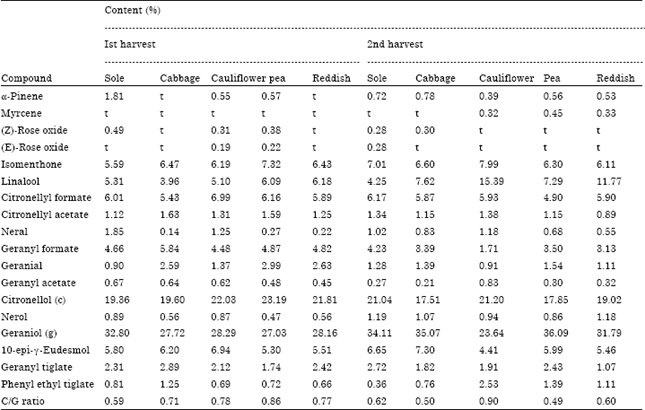
Rose-scented geranium essential oil composition: Hydro-distilled essential oil of rose-scented geranium obtained from intercropping and monocropping systems was analysed by GC and GC-MS and results are summarized in Table 6. The major constituents of the essential oils were geraniol (23.64-36.09%), citronellol (17.51-23.19%), linalool (3.96-15.39%), isomenthone (5.59-7.99%), citronellyl formate (4.90-6.99%), geranyl formate (1.71-5.84%) and 10-epi-γ-eudesmol (4.41-7.30%). Essential oil composition of sole and intercropped rose-scented geranium showed a considerable variation.
| Table 6: | Essential oil composition of rose-scented geranium (Pelargonium graveolens) as influenced by intercrops |
 | |
| t: Trace quantity | |
In first harvest, percentage of geraniol, nerol, geranyl acetate, neral (Z)-rose oxide and α-pinene was higher in sole crop than intercropped. However, its reverse was true for citronellol, isomenthone, geranial and citronellyl acetate i.e., these constituents were increased by introducing intercrops in rose-scented geranium. Similar to first harvest, the amount of geraniol (34.11%) was also found to be higher in sole crop compared to intercropped with cauliflower (23.64%) and reddish (31.79%) in second harvest, however, it was lesser than that observed in rose-scented geranium intercropped with cabbage (35.07%) and pea (36.09%.) in second harvest. Further, the percentage of citronellyl formate (6.17%) and geranyl formate (4.23%) was higher in sole crop, while the amount of linalool was dramatically higher (7.29-15.39%) in intercropped rose-scented geranium in second harvest. As far as the quality indicator, C/G ratio, for rose-scented geranium oil is concerned, it varied from 0.49 to 0.90 in present study. Interestingly, C/G ratio was found to be better in intercropped rose-scented geranium (0.71-0.86) than in sole (0.59) in first harvest. However, the situation was somewhat different in second harvest where C/G ratio was noted to be higher only in rose-scented geranium intercropped with cauliflower (0.90) than sole crop (0.62). However, C/G ratio of rose-scented geranium intercropped with reddish (0.60) was at par with sole in second harvest.
Resource use efficiency of intercrops: The resources (GEY, LER, ATR and LUE %) values were indicated that intercrops better than monocrops of rose-scented geranium (Table 7). The yield of different intercrops can not be compared directly either among themselves, or with oil yield of rose-scented geranium. Cauliflower intercrops gave maximum GEY (56%), followed by cabbage intercrop (49%) over sole crop.
| Table 7: | Variation in geranium equivalent yield (GEY) and resource use efficiency (LER, ATER and LUE %) of different intercropping system (Average of two cropping years) |
 | |
| Values in a column fallowed by the same letter within one column are not significantly different at p = 0.0 | |
The LERs were calculated for all combinations of intercropping. All intercrops gave LERs greater than 1.0. The largest LER (1.54) was obtained from the intercrop with cabbage followed by that with cauliflower. Area time equivalent ratio (ATER) of rose-scented geranium intercropping systems ranged from 0.7 to 0.8 over sole crop in the both years. The maximum land use efficiency% (LUE %) was obtained in cabbage (119%), followed by cauliflower (117%) intercrop.
DISCUSSION
This production system can improve income and establish new enterprises in the region. Intercropping of high value aromatic crops in existing cropping systems produced higher agronomic efficiency of crop.
The plant canopy and leaf: stem ratio was lower than that of sole geranium at the first harvest, probably due to competition of light, space, nutrition and other resources by intercrops at the first harvest. A similar observation was found in rose-scented geranium intercrops with fodder (Verma et al., 2009), corn mint (Mentha arvensis L.) (Rajeswara Rao, 2002) and Java citronella (Cymbopogon winterianus jowitt.) (Prakasa Rao et al., 1988). But plant height was not significantly influenced by intercrops at both harvests. Plant height of citronella (Cymbopogon winterianus jowitt.) was also not affected when intercrops with mint species (Kothari et al., 1987; Singh and Shivraj, 1998; Singh et al., 1998b).
The results indicated that vegetables intercrop provided additional yield of vegetables. Nevertheless, there is some loss of rose-scented geranium yield (herb and oil yield) from first harvest if rose-scented geranium is intercropped with vegetables. Vegetable pea and radish were showed more competition than other vegetable intercrop at the first harvest of rose-scented geranium. Vegetable pea and radish, fast growing and quickly covering inter-and intra-row spaces restricted growth and plant canopy of rose-scented geranium. Biomass and oil yield loses of rose-scented geranium was reported in intercrop with cow pea and black gram (Prakasa Rao et al., 1984) and green gram (Prakasa Rao et al., 1986). Similar results were reported in other aromatic grass like vetiver (Vetiveria zizanioides (Linn)), palmalrosa (Cymbopogon martini Roxb.), when intercropped with pulses and vegetables decreased yield (Rajeswara Rao, 2002; Rajeswara Rao et al., 1993; Prakasa Rao et al., 1994; Singh et al., 1998a). Since the yield of rose -scented geranium was affected at first harvest by intercropping with vegetables, the additional vegetables yields and higher selling price of vegetables could influenced the geranium equivalent yield (GEY). At second harvest yield of rose-scented geranium was significantly improved in all intercrops treatments except radish intercrop. A maximum increase was obtained in vegetable pea intercrop followed by cabbage intercrop. Among all the treatments, vegetable pea thus proved to be the most suitable intercrop with rose-scented geranium. This may be due to the chemical and biological changes of the soil and the availability of nitrogen by the legumes crops (Verma et al., 2009) to rose-scented geranium at second harvest since vegetable pea, cabbage and cauliflower are less competitive and complete their life cycle much earlier than the rose-scented geranium, providing enough time to recover the competitive experiences and to grow resulting in more yield than the sole geranium. A similar observation was found in rose-scented geranium intercrop with cornmint (Rajeswara Rao, 2002; Singh and Ram, 1991; Singh et al., 1990).
It is imperative to mention here that the geranium oil possesses C/G ratio equivalent to one is considered as the oil with best odour quality and hence, preferred by industry (Southwell et al., 1995). C/G ratio in rose-scented geranium is also influenced by date of planting, post harvest storage and temperature (Doimo et al., 1999; Ram et al., 2005; Verma et al., 2010). However, present study showed that C/G ratio in rose-scented geranium is also influenced significantly by growing geranium with vegetables as intercrops. Finally, it can be conclude that quality of geranium oil can be good by introducing vegetables as intercrops.
All the intercrops proved more efficient in utilizing resources and showed higher values of LER, ATER and LUE % than sole. The sustainability of any intercrops like cabbage, cauliflower, vegetable pea and radish will improve economics, equity and opportunities for producer.
ACKNOWLEDGMENTS
The author thanks to Director, CIMAP, Lucknow and CSIR, New Delhi, India for providing facilities and encouragement.
REFERENCES
- Davies, N.W., 1990. Gas chromatographic retention indices of monoterpenes and sesquiterpenes on methyl silicon and Carbowax 20M phases. J. Chromatogr. A, 503: 1-24.
CrossRefDirect Link - Doimo, L., D.C. Mackay, G.B. Rintoul, B.R.D. Aray and R.J. Fletcher, 1999. Citronellol: Geraniol ratios and temperature in geranium (Pelargonium hybrid). J. Hortic. Sci. Biotech., 74: 528-530.
Direct Link - Horwith, B., 1985. A role for intercropping in modern agriculture. Bioscience, 35: 285-291.
Direct Link - Prakasa Rao, E.V.S., M. Singh and R.S. Ganesha Rao, 1988. Intercropping studies in Java citronella (Cymbopogon winterianus). Field Crops Res., 18: 279-286.
CrossRefDirect Link - Ram, P., B. Kumar, A.A. Naqvi, R.S. Verma and N.K. Patra, 2005. Post-harvest storage effect on quantity and quality of rose-scented geranium (Pelargonium Sp.cv. Bourbon) oil in Uttaranchal. Flavour Fragrance J., 20: 666-668.
CrossRefDirect Link - Singh, A.K., M. Singh and K. Singh, 1998. Productivity and economic viability of Palmarosa-Pigeon pea intercropping system in the sub tropical climate of North India. J. Agric. Sci., 130: 149-154.
Direct Link - Singh, K., B.R. Rajeswara Rao, C.P. Singh, A.K. Bhattacharya and P.N. Kaul, 1998. Production potential of aromatic crops in the alleys of Eucalyptus citriodora in semi arid tropical climate of South India. J. Med. Aromat. Plant Sci., 20: 749-752.
Direct Link - Singh, K., V. Singh, A. Hussain and S.K. Kothari, 1990. Aromatic plants as efficient intercrops under poplars (Populus deltoids Bartram ex Marshall). Indian For., 116: 189-193.
Direct Link - Singh, M. and B. Shivraj, 1998. Intercropping studies in lemongrass (Cymbopogon flexuosus (Steud. Wats.). J. Agron. Crop Sci., 180: 23-26.
CrossRefDirect Link